Madrid · Self-guided audio walk

The Palace Quarter: Power, Stone, and an Egyptian Temple

A walk through Madrid's royal precinct, from a coffin-shaped opera house to an ancient Egyptian temple rebuilt for the sunset.

  • 6Stops
  • 2.2 kmDistance
  • 35+ minTime
The Palace Quarter: Power, Stone, and an Egyptian Temple

Photo by Tim Tregenza on Wikimedia Commons

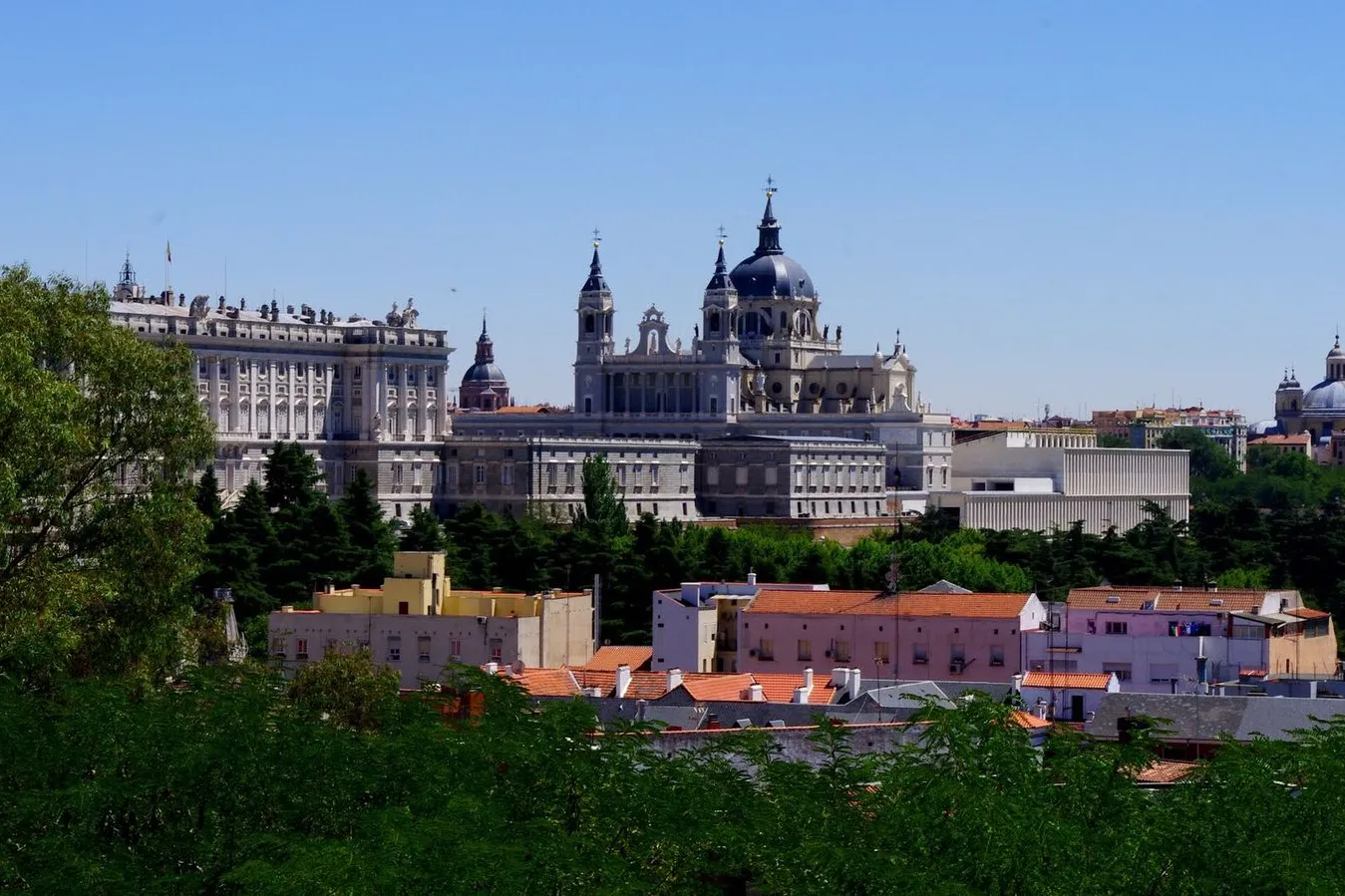
West of Calle Bailén, the ground rises toward the Royal Palace of Madrid, the largest palace in Western Europe. This self-guided loop takes you through the palace quarter: the Teatro Real opera house, the Plaza de Oriente with its rows of Visigothic kings, the palace itself with its 3,418 rooms, the Almudena Cathedral consecrated by Pope John Paul II in 1993, the formal Sabatini Gardens, and ends at the Templo de Debod, a 2nd-century BC Egyptian temple dismantled stone by stone and rebuilt above the Parque del Oeste. It is a walk about power, stone, and the strange things a capital collects.

Hear it on the street

Get the turn-by-turn audio guide in the app. The narration plays itself as you reach each stop, hands-free and offline.

Stop by stop

The route

Interactive map of the route. The full stop list below works without it.

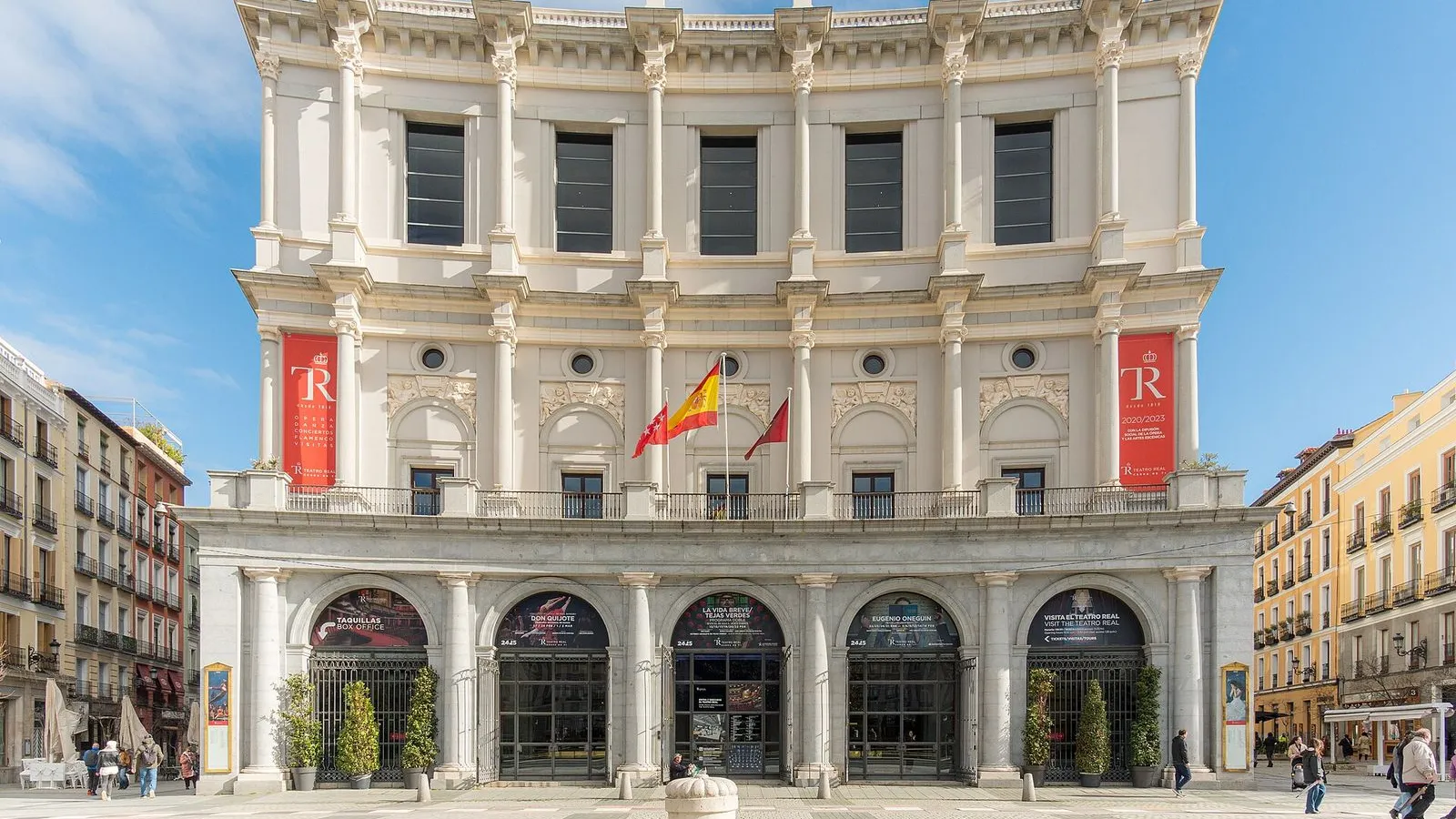
Teatro RealMust see

Photo by Fernando on Wikimedia Commons

Teatro Real

0:00

Madrid's opera house since 1850, built on the site of an old laundry and shaped like a coffin.

You are standing in Plaza de Isabel II, facing the Teatro Real, Madrid's opera house. The building has a strange shape, an irregular hexagon that people joke looks like a coffin. That shape was not a choice. When the architect Antonio López Aguado designed it in 1818, he had to squeeze it into a plot already hemmed in by the remodelling of Plaza de Oriente.

The first stone was laid on 23 April 1818 under Ferdinand VII, but the theatre did not open until 19 November 1850, Queen Isabella II's birthday. The inaugural opera was Donizetti's La favorite. Before this building, the site held the Caños del Peral theatre, named after a public laundry. Madrid's opera crowd once dressed for Donizetti and Verdi where women had scrubbed clothes.

The current theatre closed in 1925 after Metro construction damaged the structure, stayed shut for 41 years, reopened as a concert hall in 1966, and finally returned to opera in 1997 after a seven-year renovation. Today it seats 1,746 people and has one of the most advanced stages in Europe. Turn around now. The statue in the middle of the square is Isabel II herself, the queen who opened this place.

When you are ready, walk west toward the Royal Palace. The Plaza de Oriente opens up directly ahead.
≈3 min walk to the next stop
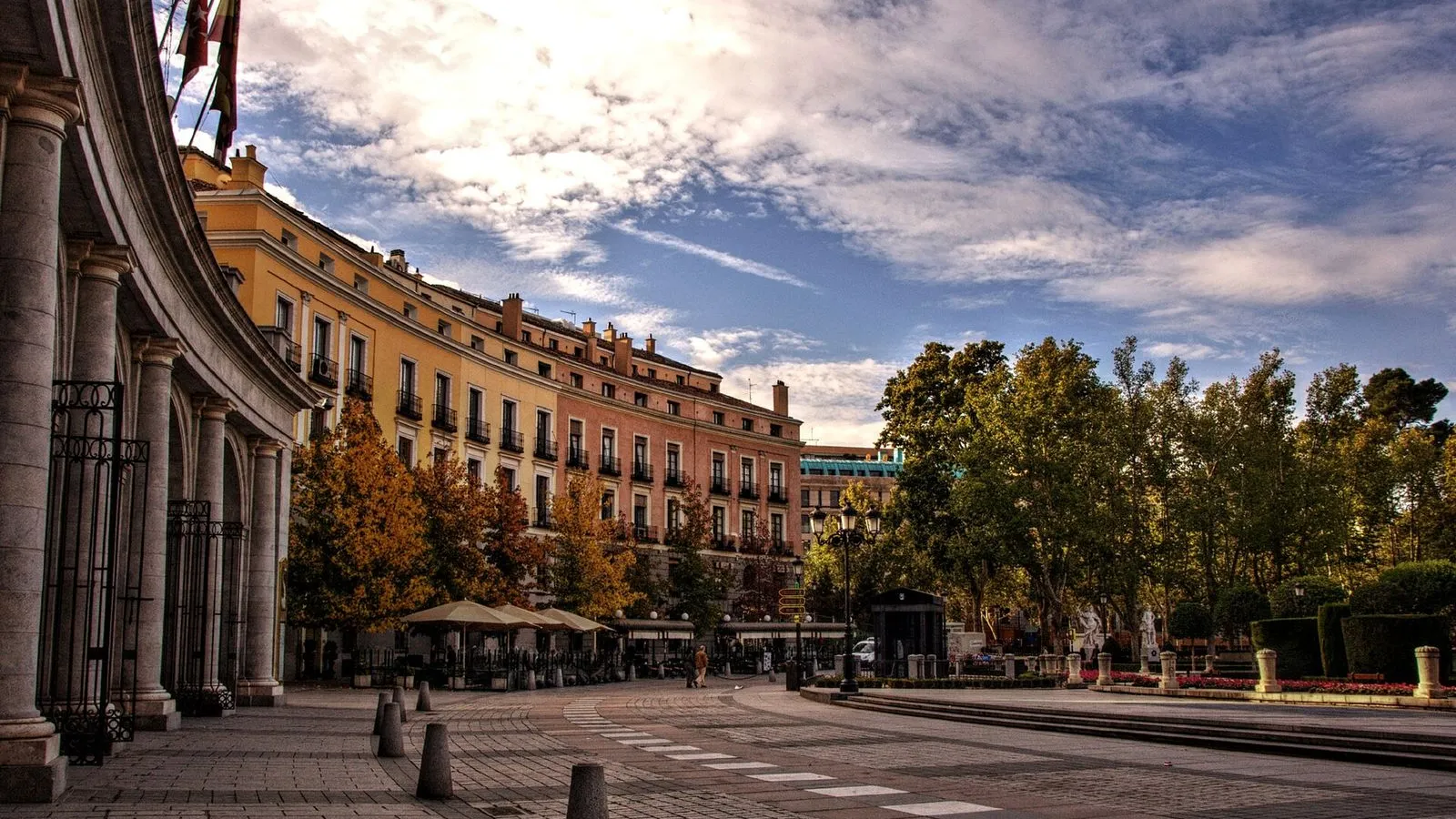
Plaza de OrienteMust see

Photo by Felipe Gabaldón on Wikimedia Commons

Plaza de Oriente

0:00

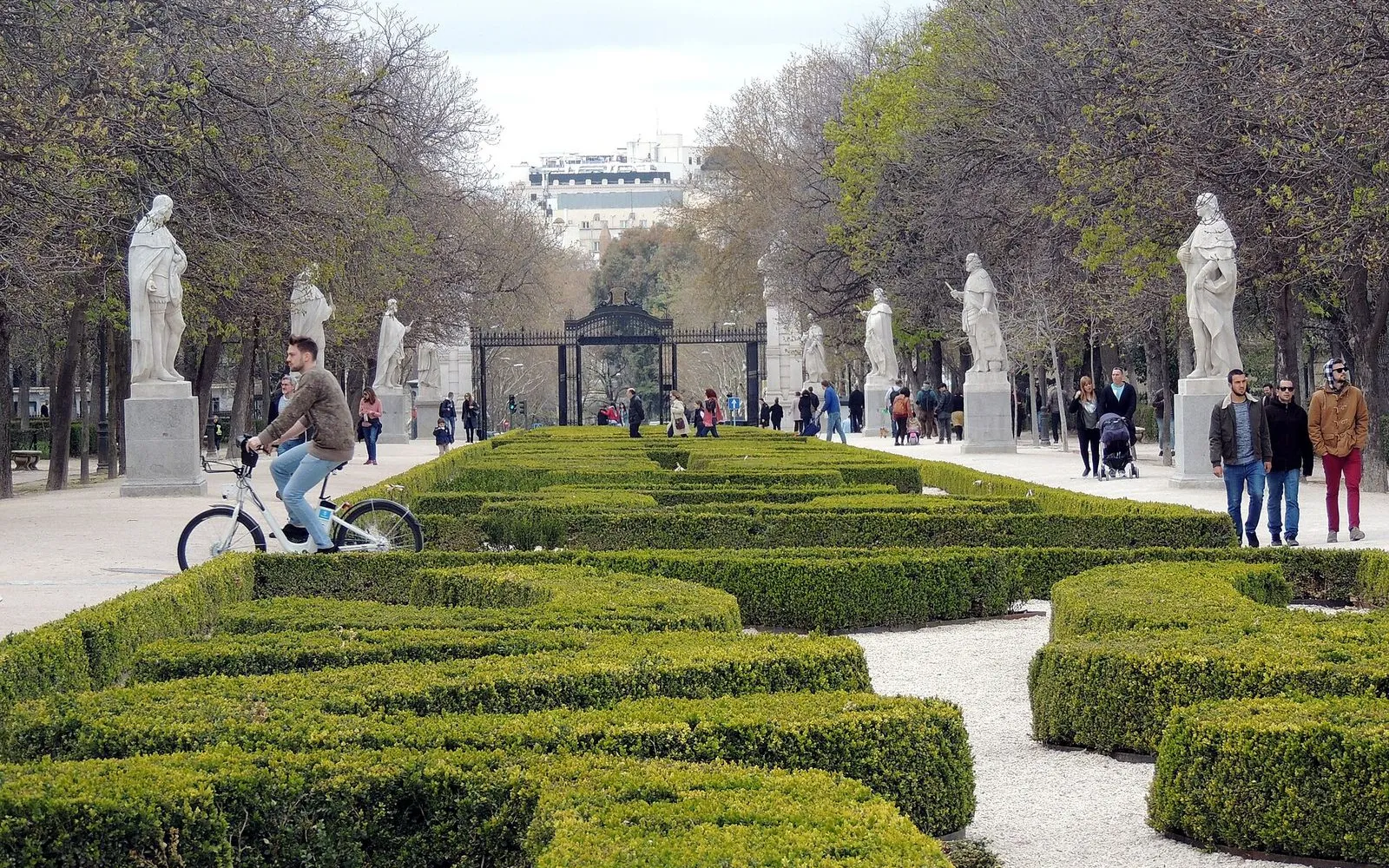
A monumental square designed in 1844, lined with twenty limestone statues of Spanish kings that were never meant to be here.

You are in the Plaza de Oriente, a square that did not exist until 1844. Before that, this was a tangle of medieval houses. Joseph Bonaparte, Napoleon's brother and briefly king of Spain, ordered them demolished. He wanted a grand open space facing the palace.

He was deposed before it was finished, and Queen Isabella II completed the job. Look at the two rows of limestone statues flanking the central gardens. There are twenty of them, five Visigothic kings and fifteen monarchs of the early Christian kingdoms of the Reconquest. They were carved between 1750 and 1753, not for this square but for the palace roof.

The original plan called for 108 statues along the parapet, but the architects worried the weight would collapse the structure. So most were stored away and later scattered across Madrid. These twenty ended up here in 1844. Look closely: the heads are interchangeable.

They were carved to be seen from the street far below, not from five metres away. Some are genuinely ugly. That is not a flaw; it is evidence of their original purpose. In the centre stands the equestrian statue of Philip IV.

It is the work of Pietro Tacca, based on a painting by Velázquez, and it was the first equestrian statue in the world where the horse rears on its hind legs without additional support. Galileo helped with the engineering. When you are ready, cross the square toward the palace gate.

≈3 min walk to the next stop
Palacio RealMust see

Photo by Tomas Martinez on Unsplash

Palacio Real

0:00

The largest palace in Western Europe, with 3,418 rooms, built on the ashes of the old Alcázar that burned on Christmas Eve 1734.

You are standing before the Royal Palace of Madrid. With 135,000 square metres of floor space and 3,418 rooms, it is the largest palace in Western Europe. The Spanish royal family does not live here; that happens at the Zarzuela Palace outside the city. This building is used for state ceremonies, banquets, and receiving foreign heads of state.

The palace occupies the site of the old Alcázar, a fortress that began as a 9th-century Muslim watchtower and grew into the Habsburg royal residence. On Christmas Eve 1734, a fire broke out in the rooms of the court painter Jean Ranc. The warning bells were mistaken for the call to mass, so no one came. The doors stayed shut to prevent looting, trapping people inside.

The fire burned for four days. Las Meninas was saved by throwing it out a window. Over 500 other paintings were lost. Philip V, the first Bourbon king, ordered a new palace in stone so it could never burn again.

Construction began in 1738 and finished in 1764. The architect Filippo Juvarra drew the first plans, but he died before work started. His pupil Giovanni Battista Sacchetti carried them out, with later contributions from Ventura Rodríguez and Francesco Sabatini. Charles III was the first monarch to live here.

Fifty rooms are open to the public. Inside you will find the main staircase by Sabatini, the Royal Chapel by Ventura Rodríguez with frescoes by Corrado Giaquinto, and the Stradivarius collection of string instruments. The palace also holds paintings by Caravaggio, Velázquez, Goya, and the world's only complete set of Stradivarius string quartets. Take your time inside.

When you come out, your next stop is the cathedral just to the south.

≈4 min walk to the next stop
Free preview ends here · stops 4 to 6 continue in the app

Catedral de la Almudena

Madrid's cathedral, consecrated by Pope John Paul II in 1993 after more than a century of construction.

in app

Jardines de Sabatini

Neoclassical gardens built in the 1930s on the site of the royal stables, trimmed and terraced against the palace's north face.

in app

Templo de Debod

An actual Egyptian temple from the 2nd century BC, dismantled stone by stone, gifted by Egypt, and rebuilt above the Parque del Oeste.

in app
Good to know

Before you go

Do I need to book the Royal Palace in advance?

Strongly advised, especially from April to October and on weekends. The ticket desk queue can run 30 to 45 minutes. Book on the Patrimonio Nacional site; a self guided entry is €18. EU and Latin American citizens can enter free Monday to Thursday from 17:00 to 19:00 (16:00 to 18:00 in winter), but you still need to queue at the ticket office.

SourcePatrimonio Nacional
Is the Templo de Debod worth the walk?

Yes, for two reasons. First, a 2nd century BC Egyptian temple standing above a Madrid park is genuinely strange and wonderful. Second, the view from the terrace at sunset, with the palace and cathedral silhouetted to the east, is the best free panorama in the city. Go an hour before sunset.

Provenance · last verified August 18, 2026

Built from the Wayside route itself: the stops, their order, and the walk between them.

Photo by Tim Tregenza on Wikimedia Commons · CC BY-SA 3.0

Photo by Fernando on Wikimedia Commons · CC BY-SA 4.0

Photo by Felipe Gabaldón on Wikimedia Commons · CC BY 2.0

Photo by Tomas Martinez on Unsplash

Photo by Nicolas Vigier on Wikimedia Commons · CC0

Photo by Jose Luis Cernadas Iglesias from Coruña, España on Wikimedia Commons · CC BY 2.0

Photo by Felipe Gabaldón on Wikimedia Commons · CC BY 2.0

Photo by Tinou Bao on Wikimedia Commons · CC BY 2.0

Photo by Jorge Láscar on Wikimedia Commons · CC BY-SA 2.0

Photo by FEDERICO JORDÁ from MADRID, ESPAÑA on Wikimedia Commons · CC BY 2.0

Photo by Nicolas Vigier from Madrid, Spain on Wikimedia Commons · CC0

Coming soon

Wayside isn't in the app stores yet, but it's in the works. Check back soon.