Madrid · Self-guided audio walk

Newcomers' Madrid: From Barley Square to Lavapiés

A walk through the Madrid that has always absorbed newcomers, from a medieval grain market to a self-run tobacco factory.

  • 7Stops
  • 2 kmDistance
  • 35+ minTime
Newcomers' Madrid: From Barley Square to Lavapiés

Photo by Nicolas Vigier from Madrid, Spain on Wikimedia Commons

South of Calle Atocha, Madrid sheds the grand boulevards and turns medieval. This walk follows the city's oldest instinct: absorbing newcomers. It starts on a square that was once a barley market and a site of public executions, climbs a street that traces a 12th-century moat, and dips into the Sunday chaos of El Rastro. It crosses into Lavapiés to stand before a workers' tenement from 1839 with its long wooden balcony, then reaches a vast tobacco factory that once employed 6,000 women and is now a self-managed cultural centre covered in street art. It ends on a sloping plaza where Senegalese groceries sit next to old-man bars and new-wave cafés. Seven stops, roughly 140 minutes, one story: the Madrid that has always made room.

Hear it on the street

Get the turn-by-turn audio guide in the app. The narration plays itself as you reach each stop, hands-free and offline.

Stop by stop

The route

Interactive map of the route. The full stop list below works without it.

Plaza de la CebadaMust see

Photo by Tamorlan on Wikimedia Commons

Plaza de la Cebada

0:00

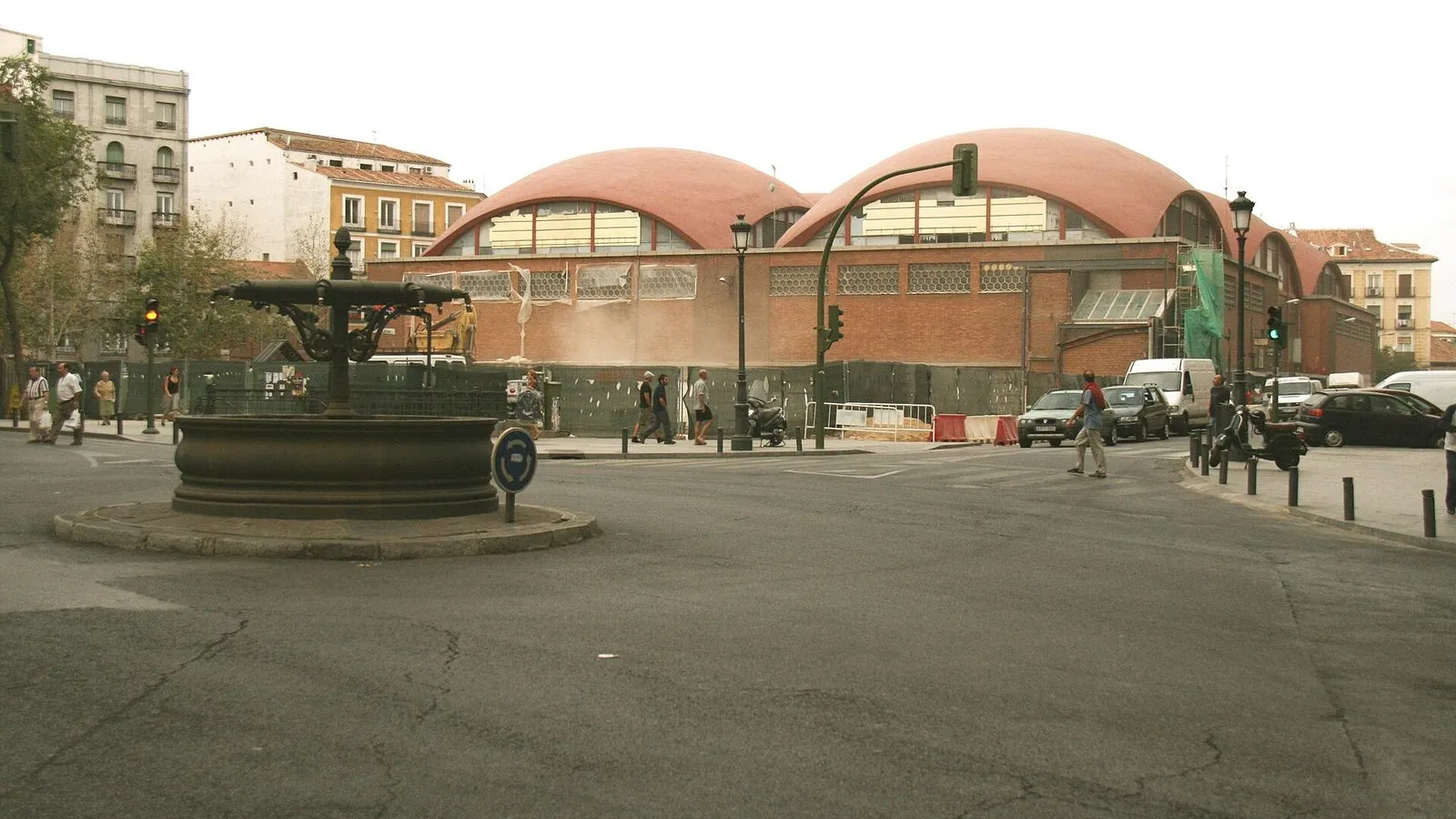
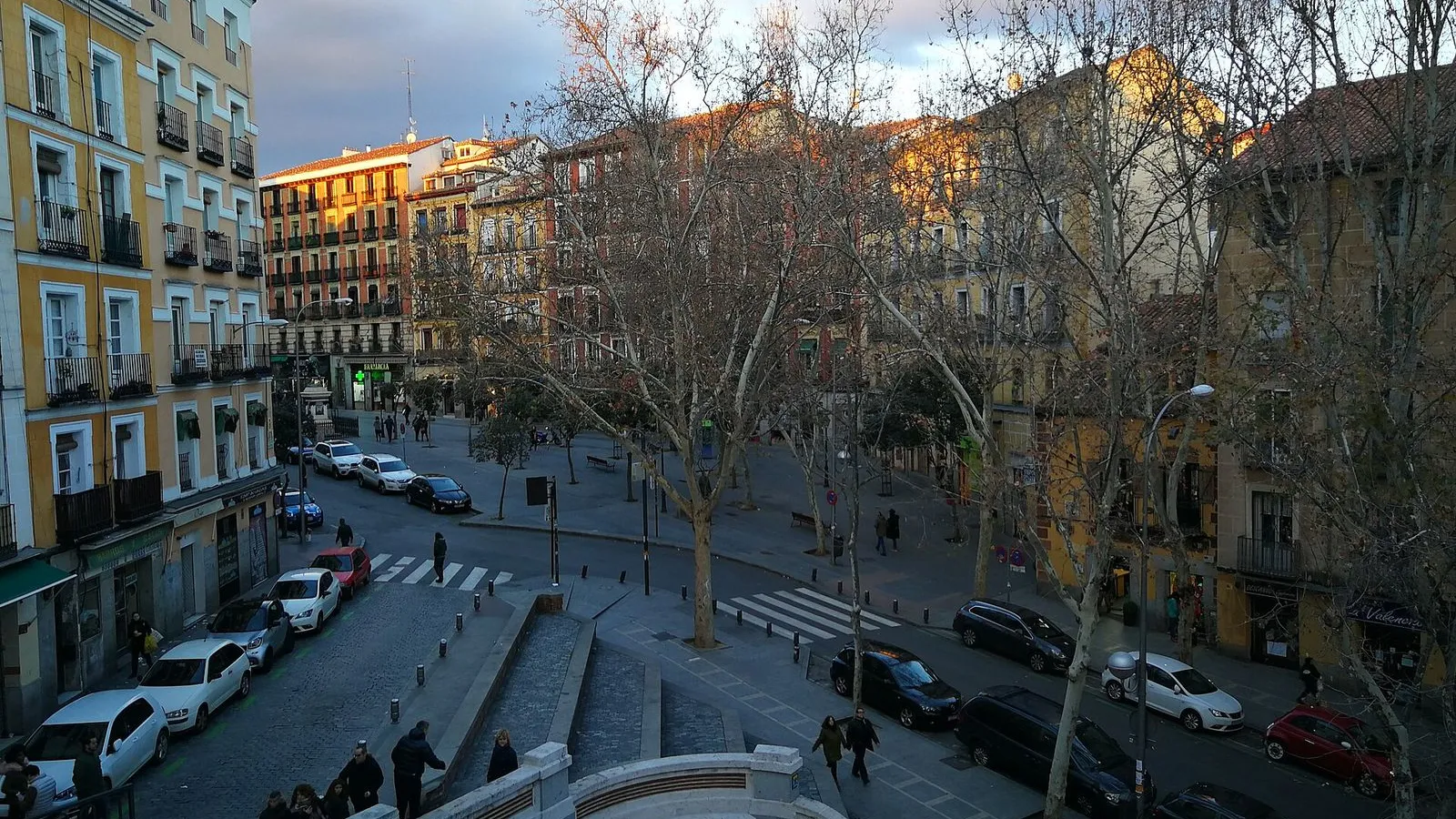
A wide, sloping square that was Madrid's barley market from the 16th century. It later served as a site of public executions and now fronts the red-domed Mercado de la Cebada.

You are standing on a wide, sloping plaza whose name means barley. From the 16th century, farmers brought their grain, vegetables, and salted pork here to sell. The barley was sorted into lots: some for the king's cavalry, some for the parish priests of San Andrés, Santa María, and San Justo. In the early 19th century this square took on a darker role.

In 1823 General Rafael del Riego was hanged here, his only crime having tried to bring a constitution to Spain. The glass-and-iron market hall that opened in 1875 was modelled on Les Halles in Paris. It was torn down in the 1950s and replaced by the red-domed building you see on your left, the Mercado de la Cebada. It is still a working neighbourhood market: fishmongers, butchers, fruit stalls, and a few wine bars under the vaulted ceiling.

To its right, the newer granite block is the municipal sports centre, built on what was briefly the Campo de Cebada, a community-run square with picnic tables and guerrilla gardens. Turn around and look north. The narrow street mouth ahead of you is where you are headed next.
≈2 min walk to the next stop
Cava BajaMust see

Photo by jafsegal (Thanks for the 4,5 million views) on Openverse

Cava Baja

0:00

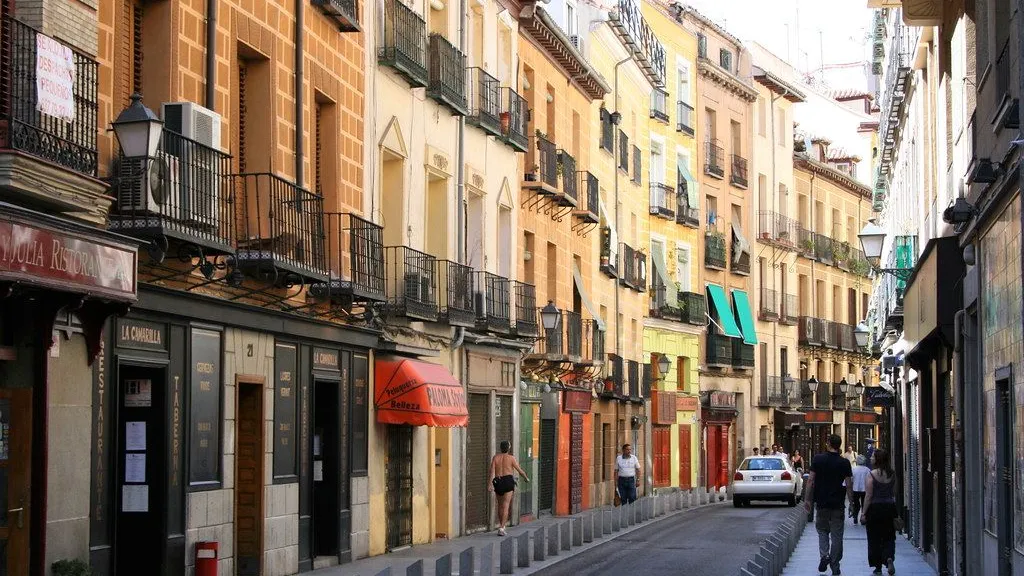
A 300-metre street that traces a 12th-century moat. Once lined with inns for muleteers and merchants, it now holds more than 50 tapas bars and some of Madrid's oldest taverns.

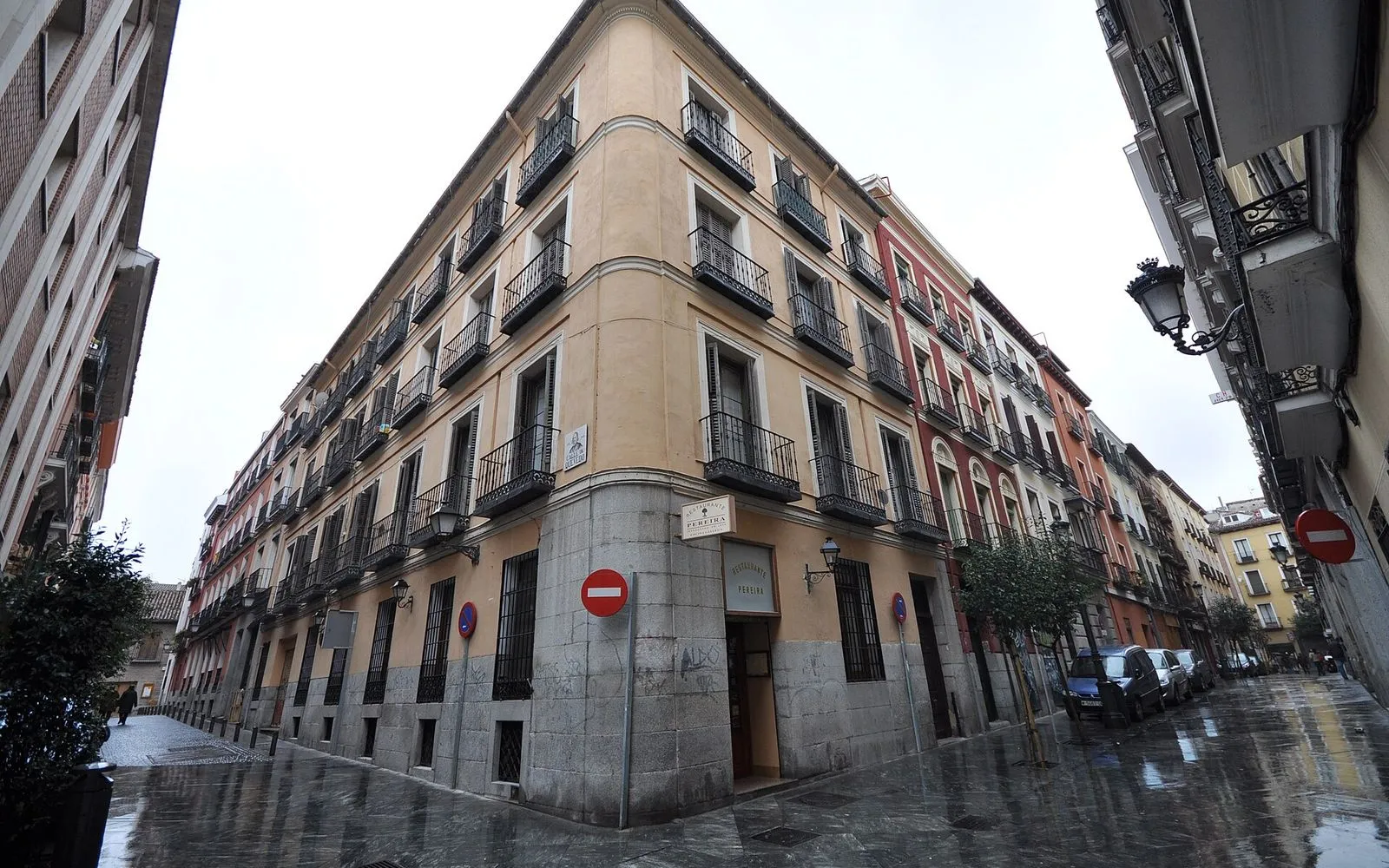
You are walking the line of Madrid's 12th-century Christian wall. Cava means moat, and this street traces the defensive ditch that ran outside it. For centuries this was the main entry point into the city from Toledo and the south. Muleteers, merchants, and travellers arrived here and needed food, drink, and a bed.

The inns that served them became the taverns that still line this street. Look at the low doorways and thick plastered walls. They are not decoration. Some of these buildings predate modern Madrid by centuries.

At number 30, La Posada del Dragón has a glass floor that lets you see the medieval city wall beneath the dining room. The Real Pósito, Madrid's great grain silo, once stood on this street before it moved to Calle Alcalá in 1660. Today Cava Baja packs more than 50 tapas bars into 300 metres. The taverns are not performing tradition.

They are continuing it. Walk the full length of the street. When you reach the top, turn right onto Calle de San Millán.

≈4 min walk to the next stop
Plaza de CascorroMust see

Photo by María Sacristán on Wikimedia Commons

Plaza de Cascorro

0:00

A small square crowned by a bronze statue of Eloy Gonzalo, a young soldier from the Cuban war. This is the head of El Rastro, Madrid's oldest flea market.

The bronze soldier on the plinth is Eloy Gonzalo, a young private who in 1897 walked into a rebel-held village in Cuba with a can of gasoline and set it alight, dying in the act. His heroism gave the square its name: Cascorro is the Cuban town where it happened. The statue has stood here since 1902. This plaza is the head of El Rastro, Madrid's oldest and largest flea market.

On Sunday mornings the square fills with stall holders and bargain hunters, and the noise rolls down the hill behind you. Even on a quiet weekday you can feel the gradient. The streets sloping away south and east are the market's natural channels. When you are ready, face the statue and take the street that descends directly behind it: Ribera de Curtidores.

≈4 min walk to the next stop
Free preview ends here · stops 4 to 7 continue in the app

Ribera de Curtidores

Tanners' Bank, the spine of El Rastro. On Sundays this cobbled street becomes a cascade of antiques, junk, and noise that has run since the 18th century.

in app

La Corrala

A workers' tenement built in 1839, with a long wooden balcony around a courtyard. It was declared a National Monument in 1977 after residents fought to save it.

in app

Tabacalera

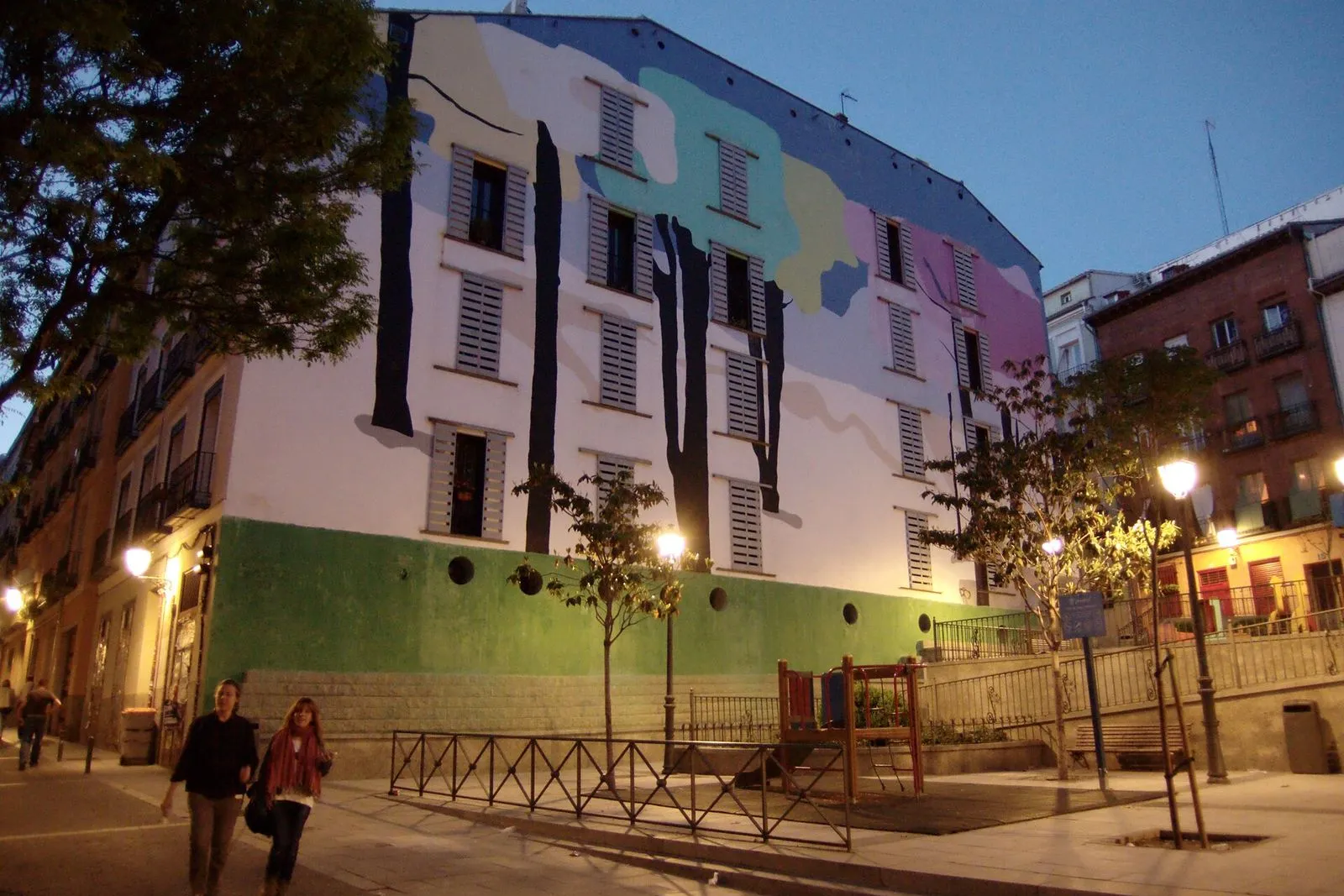
A vast former tobacco factory built in 1781 that once employed 6,000 women. Since 2010 it has been a self-managed social centre with a huge outdoor mural wall.

in app

Plaza de Lavapiés

The sloping heart of Lavapiés, a square where old-man bars, Senegalese groceries, and new-wave cafés share the same cobbles. This neighbourhood has absorbed newcomers for five hundred years.

in app
Good to know

Before you go

When is El Rastro flea market open?

El Rastro runs every Sunday and public holiday from roughly 9:00 to 15:00. The main spine is Ribera de Curtidores, but it spills into the side streets. Go early for the best antiques and fewer crowds. The surrounding streets are open every day with permanent shops.

Is Lavapiés safe?

Yes. Lavapiés is a working class, immigrant heavy neighborhood that has been absorbing newcomers for five hundred years. It is dense, lively, and perfectly safe during the day and evening. Like any crowded urban area, keep an eye on your belongings. The sloping Plaza de Lavapiés is a good place to sit with a beer and watch the neighborhood go by.

Provenance · last verified August 18, 2026

Built from the Wayside route itself: the stops, their order, and the walk between them.

Photo by Nicolas Vigier from Madrid, Spain on Wikimedia Commons · CC0

Photo by Tamorlan on Wikimedia Commons · CC BY 3.0

Photo by jafsegal (Thanks for the 4,5 million views) on Openverse · CC BY 2.0

Photo by María Sacristán on Wikimedia Commons · CC BY-SA 4.0

Photo by Nicolas Vigier on Wikimedia Commons · CC0

Photo by Jose Luis Cernadas Iglesias from Coruña, España on Wikimedia Commons · CC BY 2.0

Photo by Tim Tregenza on Wikimedia Commons · CC BY-SA 3.0

Photo by Felipe Gabaldón on Wikimedia Commons · CC BY 2.0

Photo by Tinou Bao on Wikimedia Commons · CC BY 2.0

Photo by Jorge Láscar on Wikimedia Commons · CC BY-SA 2.0

Photo by FEDERICO JORDÁ from MADRID, ESPAÑA on Wikimedia Commons · CC BY 2.0

Coming soon

Wayside isn't in the app stores yet, but it's in the works. Check back soon.