Madrid · Self-guided audio walk

Golden Age Shadows: Madrid's Literary Quarter

Walk the alleys where Cervantes, Lope de Vega, Quevedo, and Góngora lived, wrote, and quarreled.

  • 7Stops
  • 1 kmDistance
  • 20+ minTime
Golden Age Shadows: Madrid's Literary Quarter

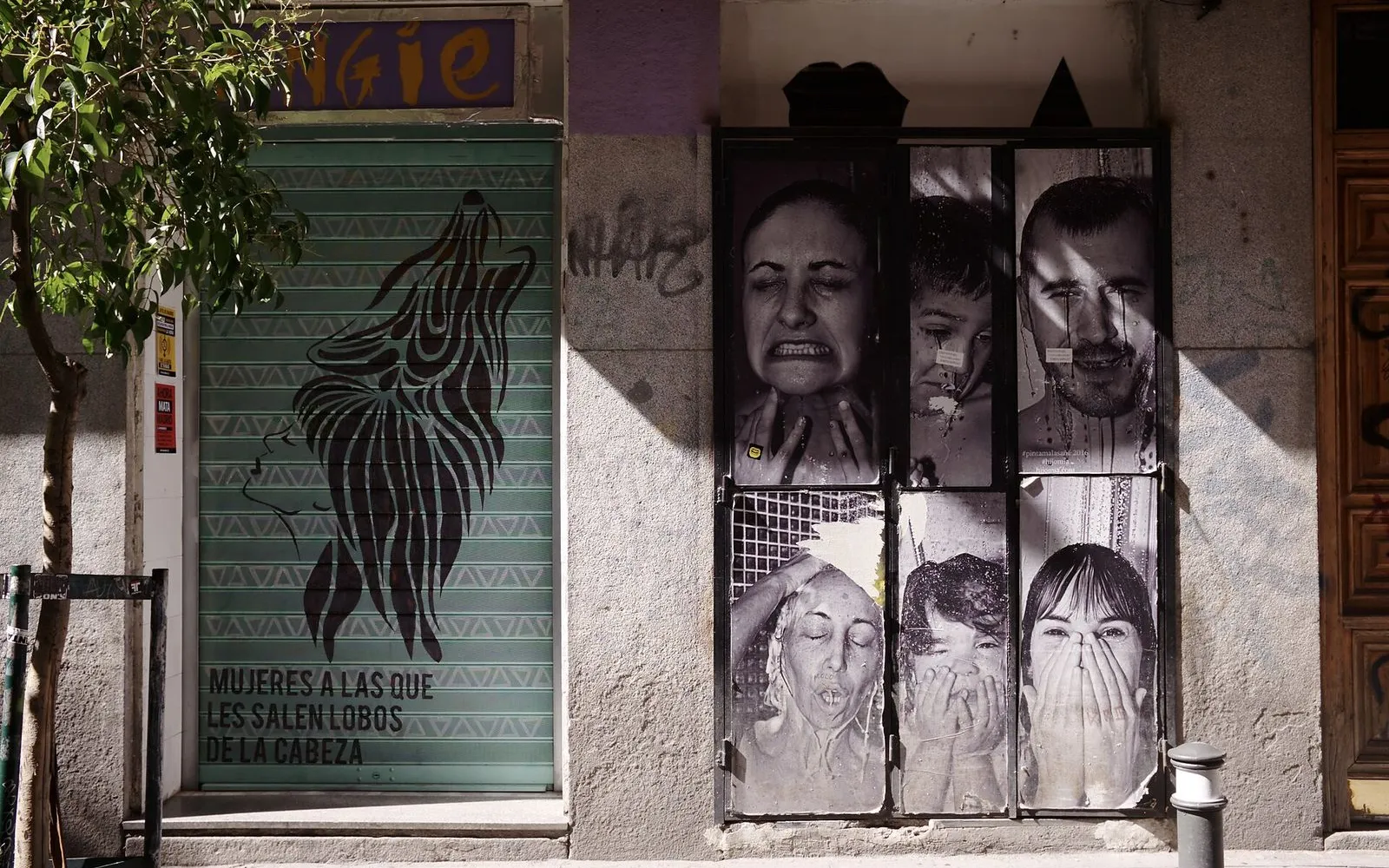
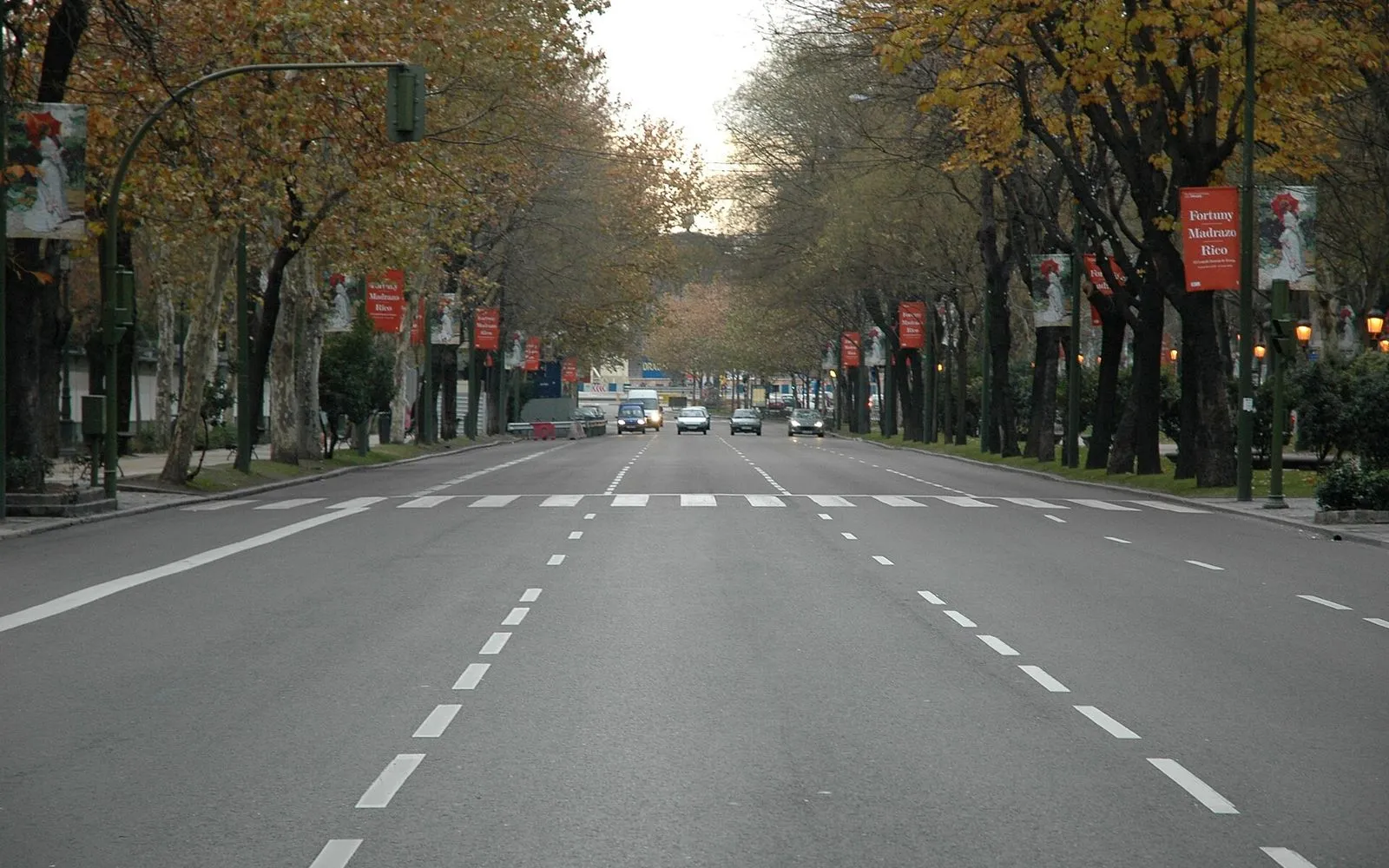
Photo by Jorge Láscar on Wikimedia Commons

In the early 1600s, a handful of streets between the Puerta del Sol and the Paseo del Prado held the densest concentration of literary talent in the Spanish-speaking world.

Cervantes died here. Lope de Vega kept a garden. Quevedo and Góngora traded insults in verse.

This short, dense walk threads through the Barrio de las Letras, from the plaza built over a demolished convent to the convent that still holds what may be Cervantes's bones. Along the way, the pavement itself speaks, in brass letters set into the stones of Calle Huertas.

Hear it on the street

Get the turn-by-turn audio guide in the app. The narration plays itself as you reach each stop, hands-free and offline.

Stop by stop

The route

Interactive map of the route. The full stop list below works without it.

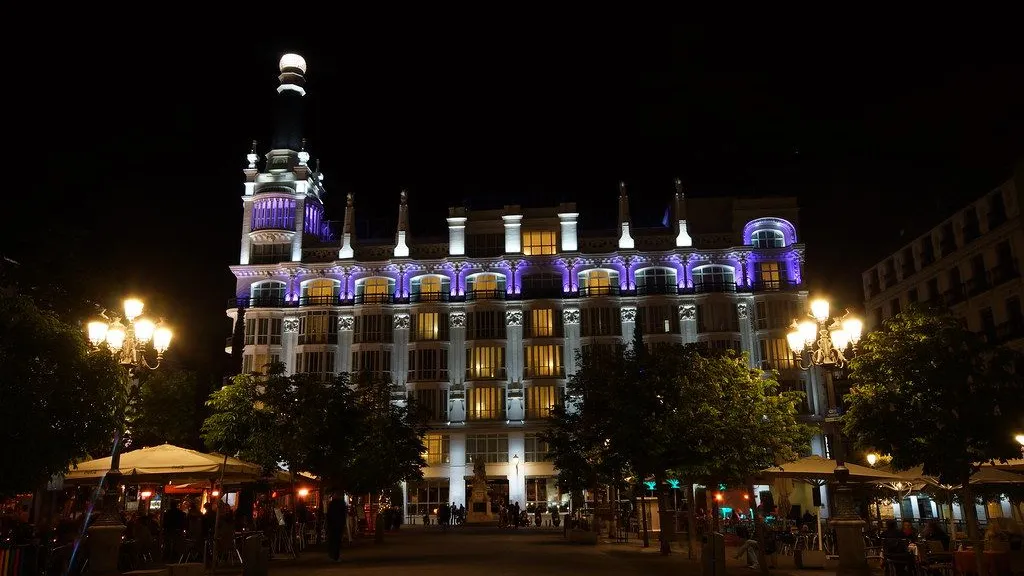
Plaza de Santa AnaMust see

Photo by Ronald van der Graaf on Openverse

Plaza de Santa Ana

0:00

The living room of the Literary Quarter, built over a demolished convent and anchored by the Teatro Español.

You are standing in Plaza de Santa Ana, the front room of the Barrio de las Letras. Before it was a square, this was the convent of Santa Ana, demolished in the nineteenth century. The theatre facing you, the Teatro Español, sits on the bones of something older: the Corral del Príncipe, one of Madrid's first open-air playhouses, where audiences stood in the courtyard to watch the latest from Lope de Vega or Tirso de Molina. Look at the statue across the square.

That is Federico García Lorca, a twentieth-century poet holding a lark about to fly. He belongs to a different century but the same street. The café terraces around you fill every evening with the same noise the Golden Age called the Mentidero: the murmuring of deals, gossip, and verse. This square was the hinge between two Madrids: the convent's silence behind you, and the theatre's noise ahead.
≈1 min walk to the next stop
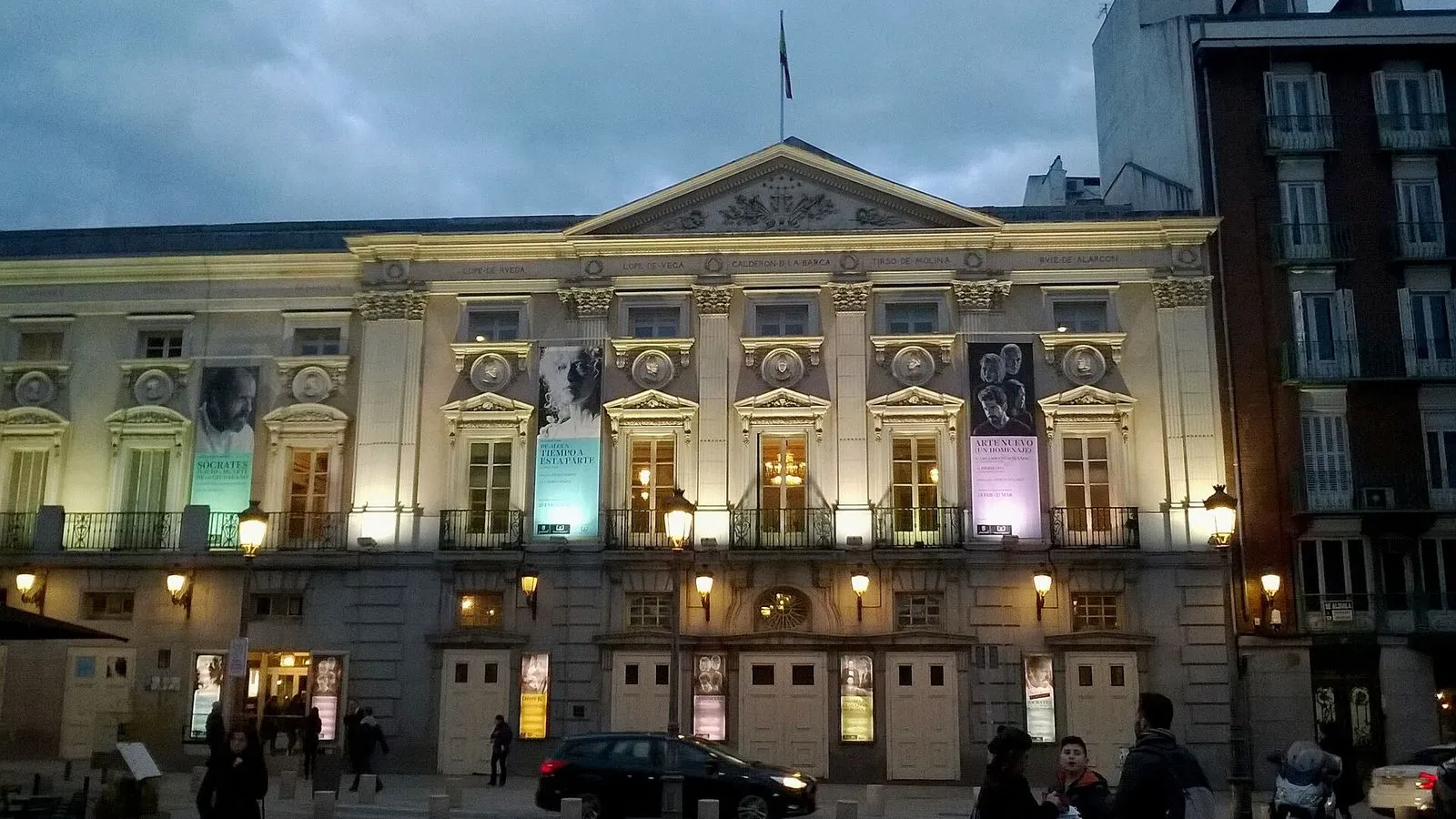
Teatro EspañolMust see

Photo by rene boulay on Wikimedia Commons

Teatro Español

0:00

Madrid's oldest working theatre, standing on the site of the Corral del Príncipe, where Golden Age plays first met an audience.

This is the Teatro Español, but in 1583 this spot was a courtyard surrounded by houses, a stage at one end and the sky for a roof. The Corral del Príncipe was Madrid's second permanent theatre, built when Lope de Vega was twenty-one. He wrote for this stage. So did Tirso de Molina, the friar who invented Don Juan.

Calderón de la Barca premiered Life Is a Dream here. The audiences were loud and stratified: standing in the pit, women in the cazuela gallery upstairs, nobles in the windows of the adjoining houses. The theatre burned and was rebuilt more than once. The neoclassical facade you see dates from the early nineteenth century.

But the stage still occupies the same ground where, four centuries ago, a character first spoke the words 'this is Madrid, the court of the Spanish monarchy.'

≈2 min walk to the next stop
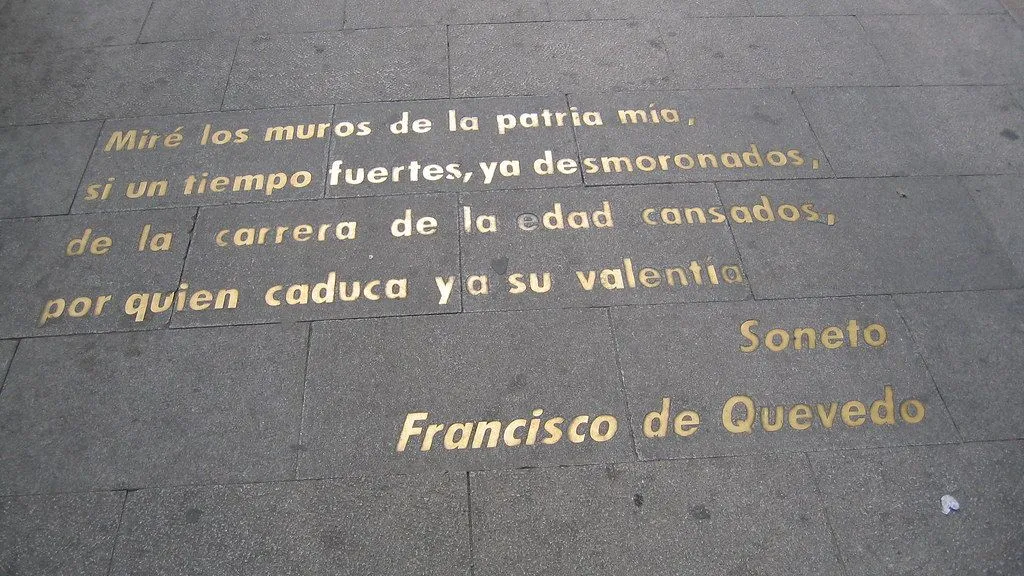
Calle HuertasMust see

Photo by pabsanch on Openverse

Calle Huertas

0:00

The main artery of the Literary Quarter, paved with brass verses from the poets who walked here.

The brass letters under your feet are not decoration. They are lines of verse, laid into the pavement by the Madrid city council as a tribute to the writers who lived and worked on these streets. You are walking on words by Cervantes, Quevedo, Góngora, Lope de Vega, and others who came later: Zorrilla, García Lorca, Pardo Bazán. The street is named Huertas, orchards, because this was farmland outside the medieval wall.

By the early 1600s it was the spine of the most literate neighborhood in the Spanish-speaking world. Quevedo and Góngora lived nearby and detested each other. Quevedo bought the house Góngora was renting just to evict him. Góngora called Quevedo a scurrilous drunk; Quevedo said Góngora had a nose so large it needed its own parish.

Their feud ran in verse, printed and sold on these corners. Walk slowly. Read a few of the brass lines. Step from one century to another without crossing a street.

≈4 min walk to the next stop
Free preview ends here · stops 4 to 7 continue in the app

Ateneo de Madrid

The leather-and-wood literary society founded in 1835, where Spain's finest minds have debated for nearly two centuries.

in app

Casa Museo Lope de Vega

The house Lope de Vega bought in 1610 and lived in for twenty-five years, with a walled garden that still blooms.

in app

Convento de las Trinitarias

The convent church where Cervantes was buried in 1616 and where, four centuries later, bone fragments possibly his were found in the crypt.

in app

Calle del León and Calle de Cervantes

The corner where Cervantes died in a rented room on April 22, 1616, a day after finishing his last dedication.

in app
Good to know

Before you go

Can I visit the house where Cervantes died?

The building at the corner of Calle del León and Calle de Cervantes is marked with a plaque but is a private residence and not open to the public. Cervantes died here in a rented room on April 22, 1616. The Convento de las Trinitarias, a few blocks away on Calle Lope de Vega, is where he was buried and where bone fragments possibly his were found in 2015.

What are the brass letters in the pavement on Calle Huertas?

They are lines of verse from the Golden Age writers who lived in the neighborhood: Cervantes, Lope de Vega, Quevedo, Góngora, and others. The words are set into the cobblestones in brass, and the street itself becomes a book. Look down as you walk.

Keep exploring

More walks in Madrid

Provenance · last verified August 21, 2026

Built from the Wayside route itself: the stops, their order, and the walk between them.

Photo by Jorge Láscar on Wikimedia Commons · CC BY-SA 2.0

Photo by Ronald van der Graaf on Openverse · CC BY 2.0

Photo by rene boulay on Wikimedia Commons · CC BY-SA 3.0

Photo by pabsanch on Openverse · CC BY 2.0

Photo by Nicolas Vigier on Wikimedia Commons · CC0

Photo by Jose Luis Cernadas Iglesias from Coruña, España on Wikimedia Commons · CC BY 2.0

Photo by Tim Tregenza on Wikimedia Commons · CC BY-SA 3.0

Photo by Felipe Gabaldón on Wikimedia Commons · CC BY 2.0

Photo by Tinou Bao on Wikimedia Commons · CC BY 2.0

Photo by FEDERICO JORDÁ from MADRID, ESPAÑA on Wikimedia Commons · CC BY 2.0

Photo by Nicolas Vigier from Madrid, Spain on Wikimedia Commons · CC0

Coming soon

Wayside isn't in the app stores yet, but it's in the works. Check back soon.