Self-guided walking tours in Madrid
8 walking toursMadrid, Spain
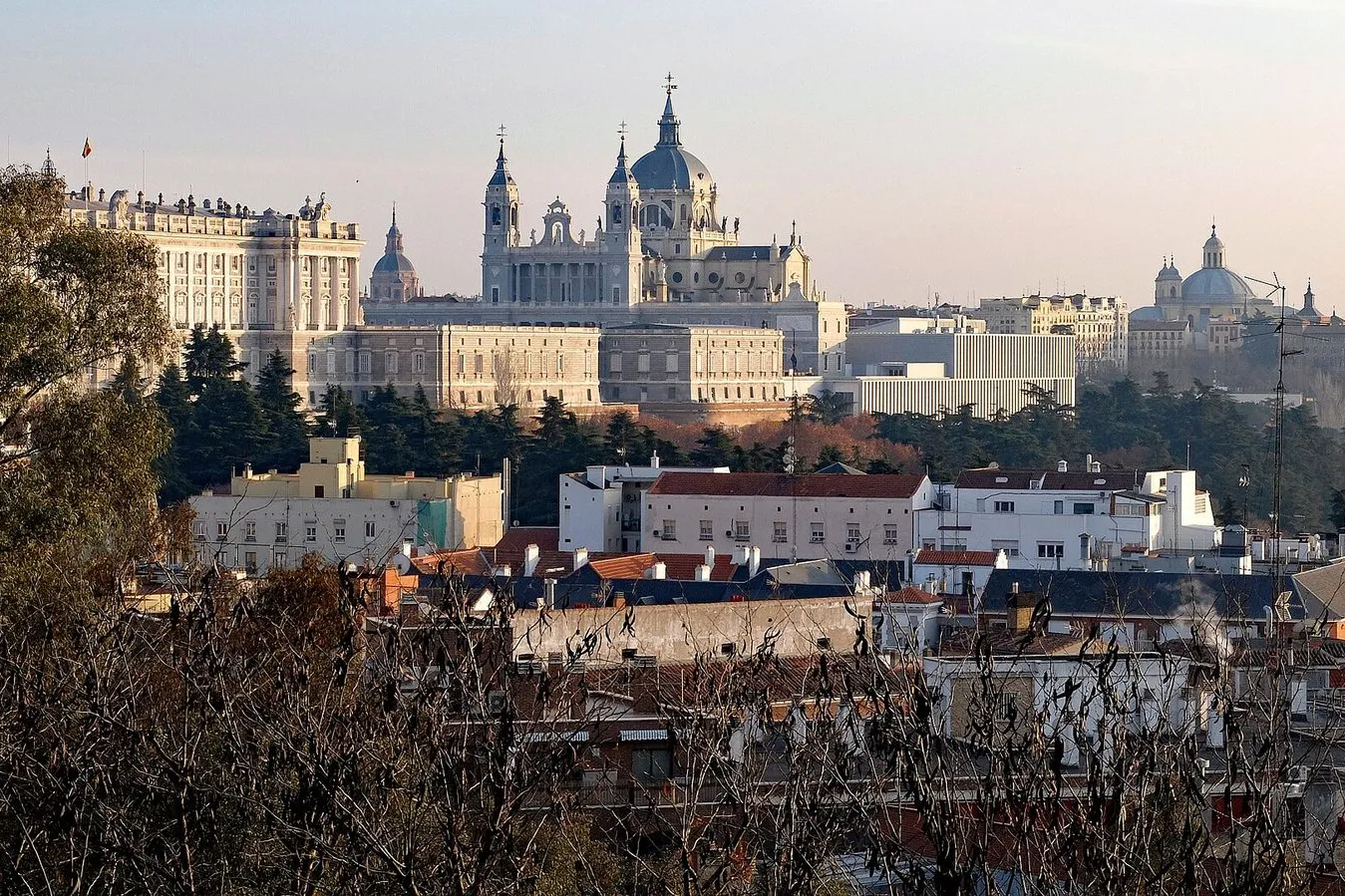
Photo by Unknown authorUnknown author on Wikimedia Commons
Madrid sits on a high plateau, and its center packs centuries into a walkable grid of narrow medieval lanes, Habsburg squares, and the grand Paseo del Prado, a tree-lined boulevard that became the world's first urban promenade of its kind. On foot you cross from the Royal Palace to the literary quarter where Cervantes died, through a park that was once the king's private retreat. A city best understood at street level.
- ItineraryOne day in MadridChurros at dawn, a palace by noon, the Prado at golden hour, and tapas on the streets where Cervantes walked.
- Know before you goMadrid practicalitiesEverything a first-time visitor to Madrid needs to know: getting in from Barajas, riding the metro, when to come, what to book ahead, and the small things that make the city work.
Tours in Madrid
 The essentials
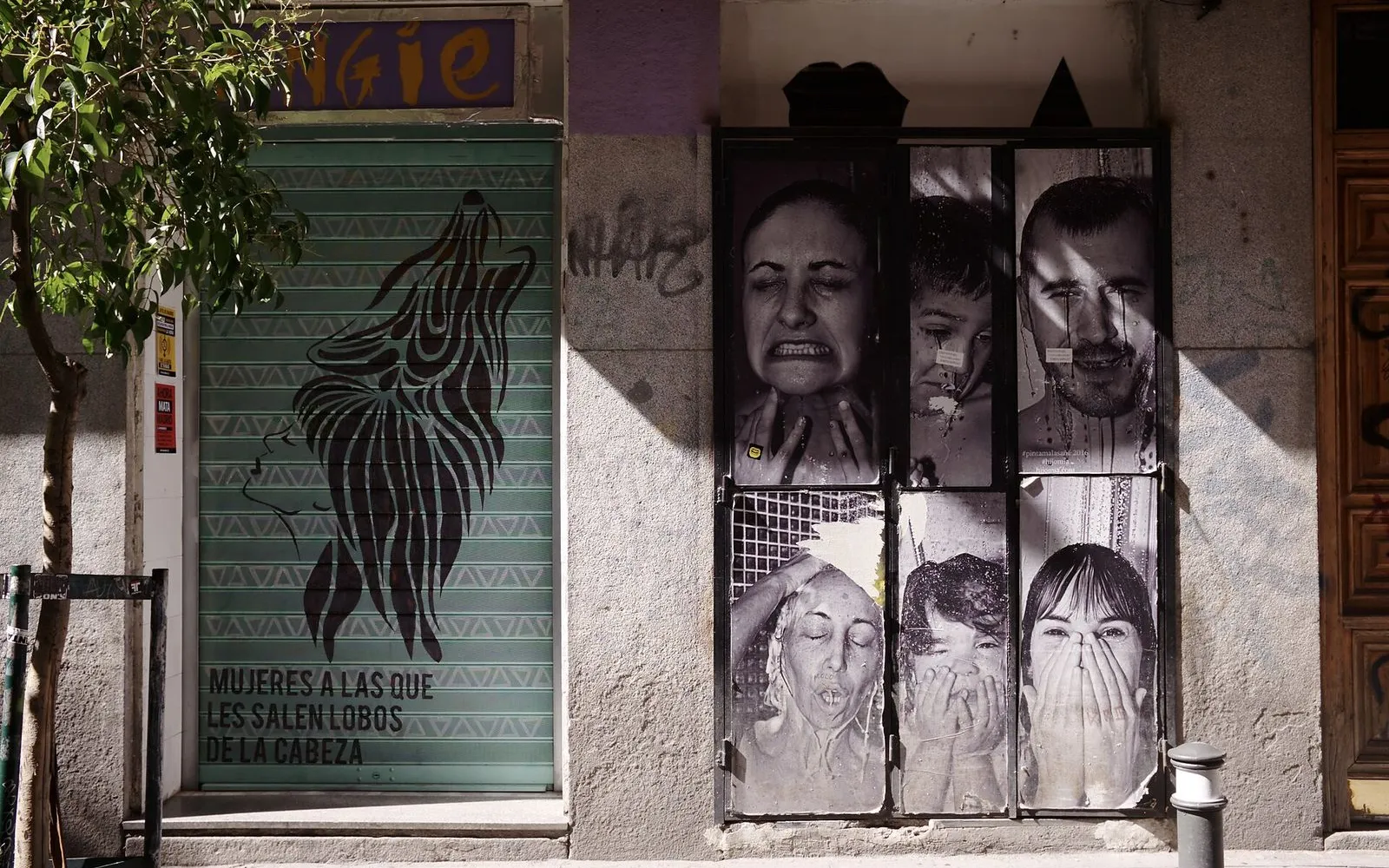
Dos de Mayo to Movida
One neighborhood. Two rebellions. Walk the Malasaña streets where Madrileños rose against Napoleon in 1808, then turned Madrid into Spain's countercultural capital after Franco.
 The essentials
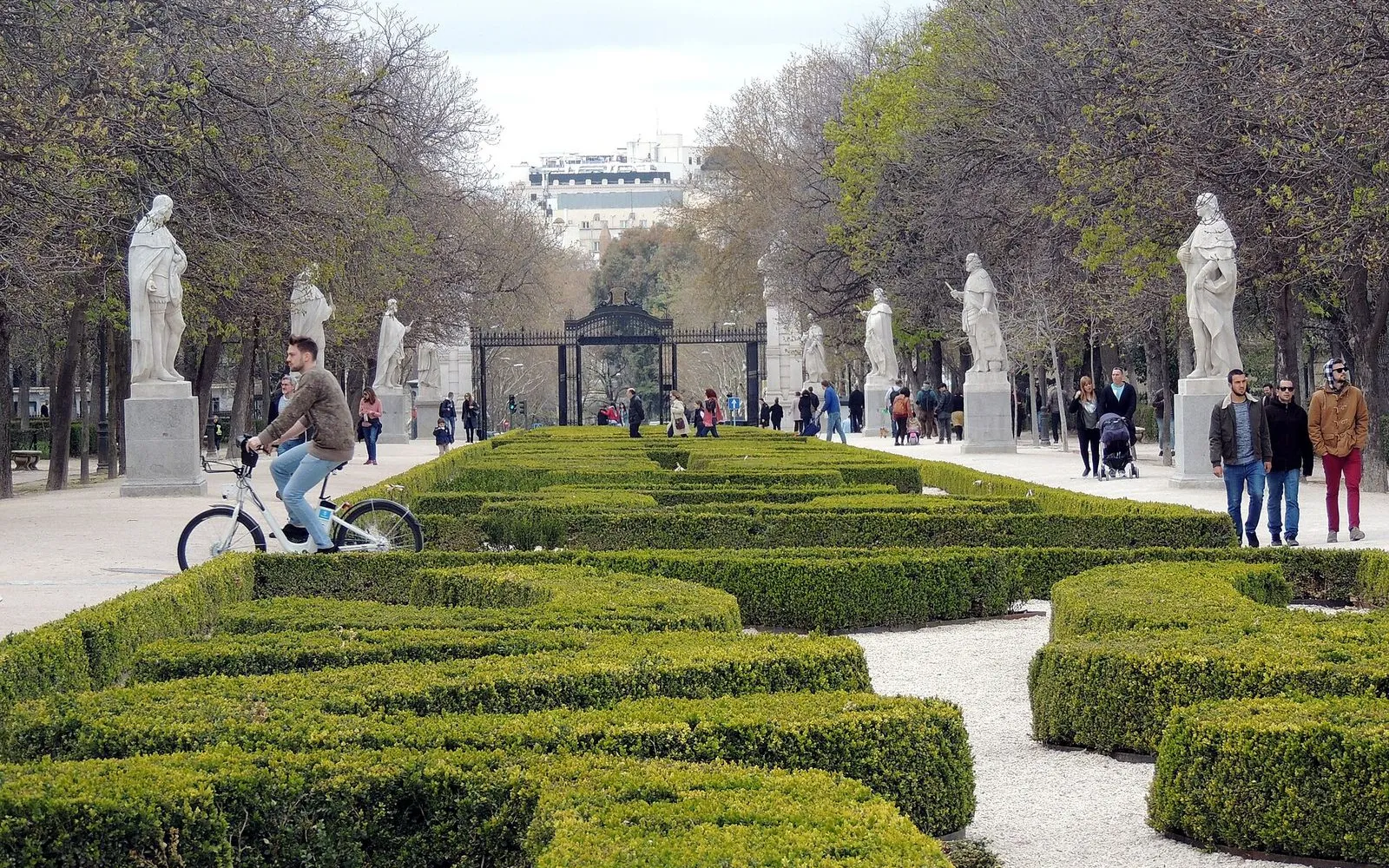
The King's Park and the Banker's Grid
From a royal lake where kings staged naval battles to the 19th-century grid built for Madrid's new money.
 The essentials
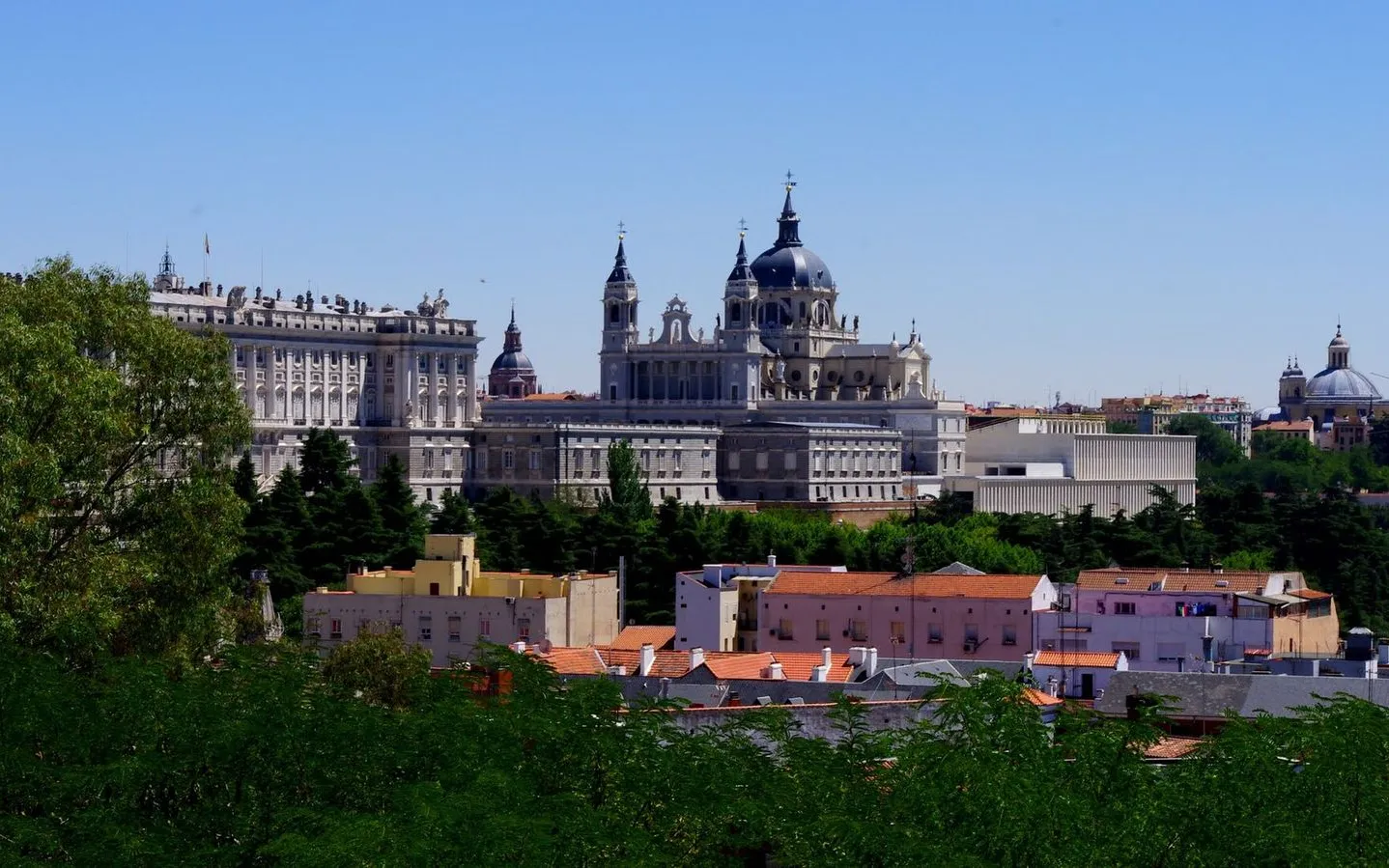
The Palace Quarter: Power, Stone, and an Egyptian Temple
A walk through Madrid's royal precinct, from a coffin-shaped opera house to an ancient Egyptian temple rebuilt for the sunset.
 The local mix
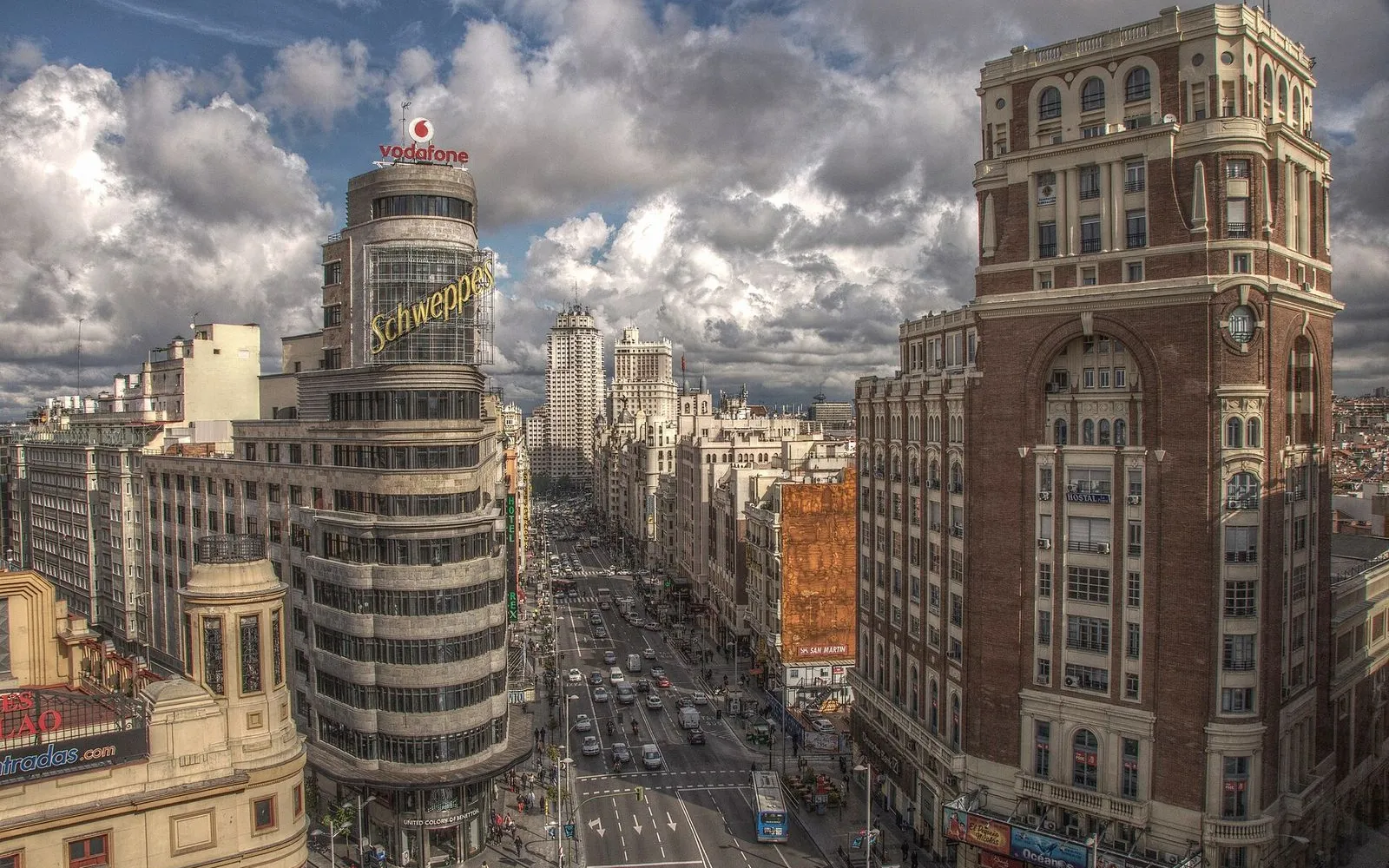
The Cut and the Quarter: Gran Vía to Chueca
Walk the great avenue that sliced through old Madrid, then step into the neighborhood that built a new identity in the space it left behind.
 The local mix
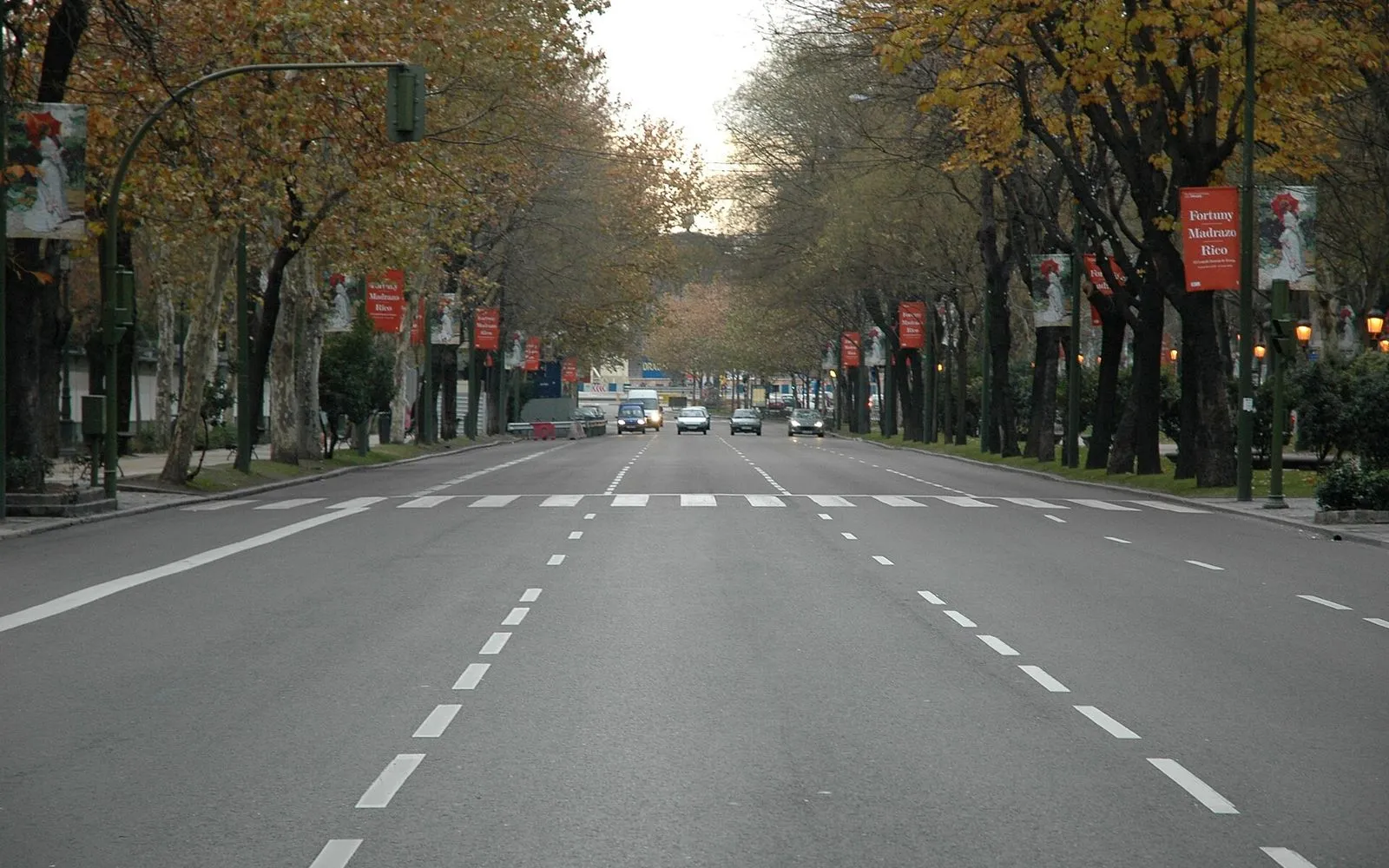
The Landscape of Light
Walk the Paseo del Prado as a street and an architectural set piece, from Cybele's fountain to the tropical garden inside Atocha station.
 The essentials
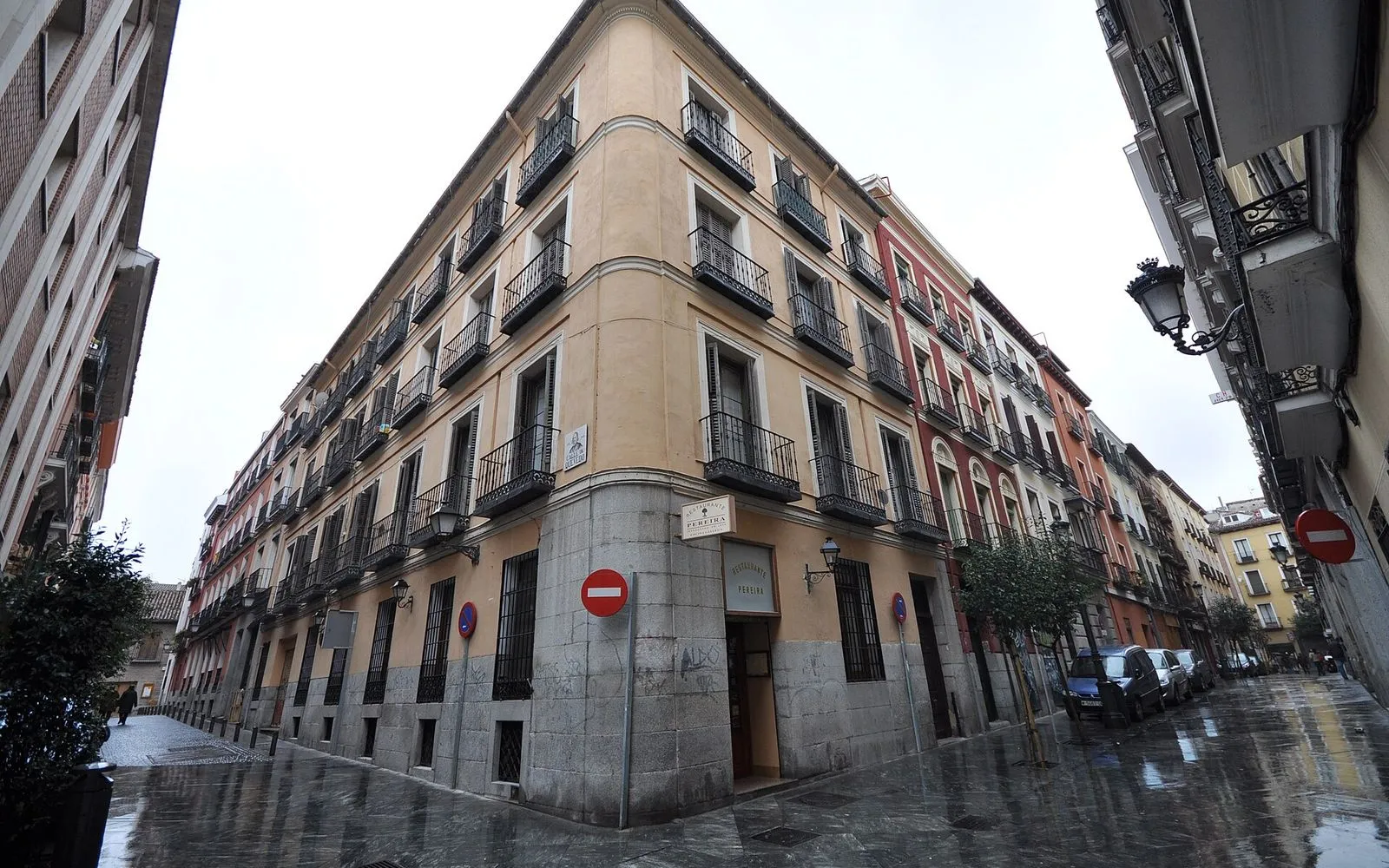
Golden Age Shadows: Madrid's Literary Quarter
Walk the alleys where Cervantes, Lope de Vega, Quevedo, and Góngora lived, wrote, and quarreled.
 The essentials
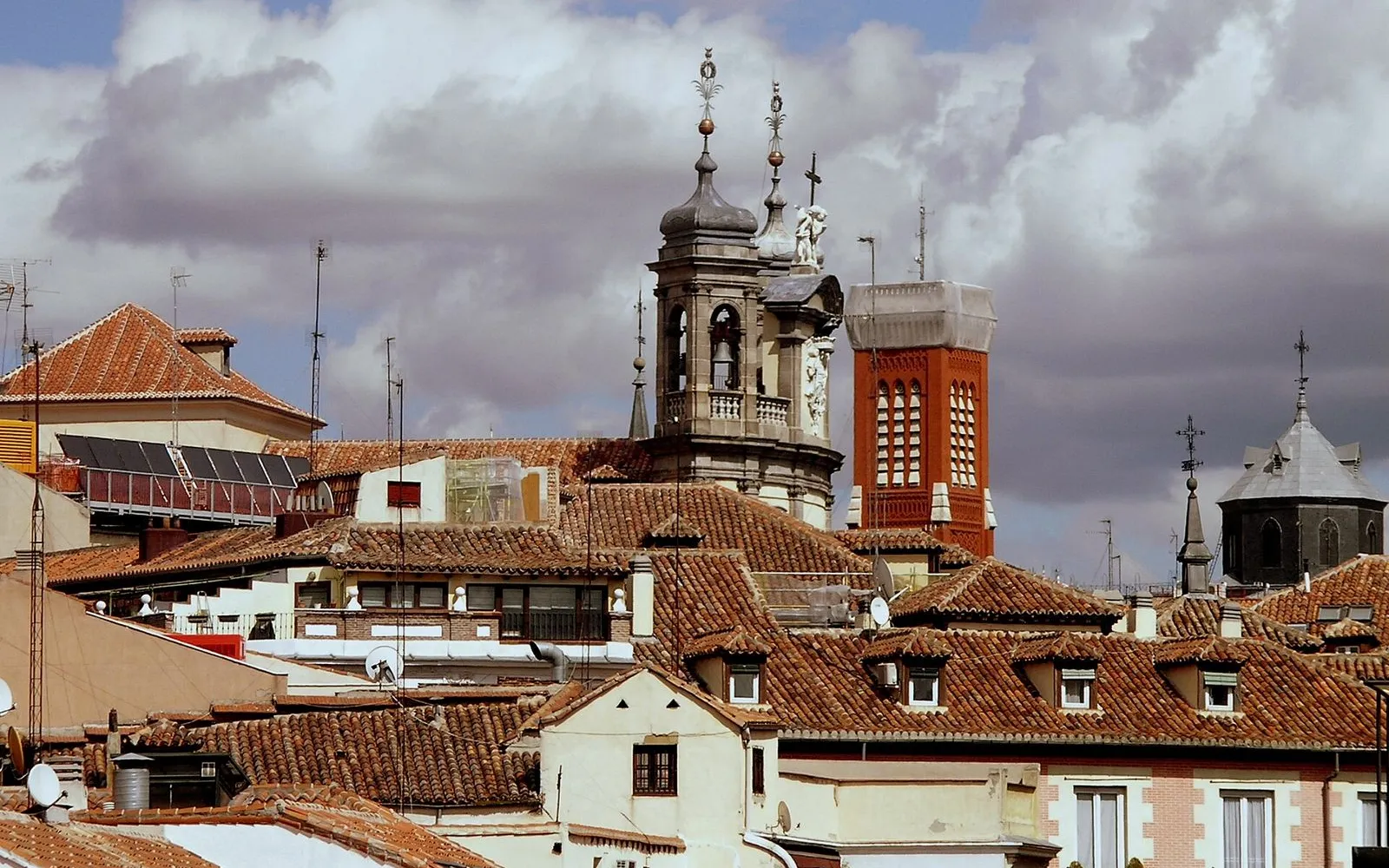
The Habsburg Heart: Madrid's Imperial Squares
Walk the tight weave of squares and passageways where an empire was ruled, and where madrileños still gather for chocolate, grapes, and gossip.
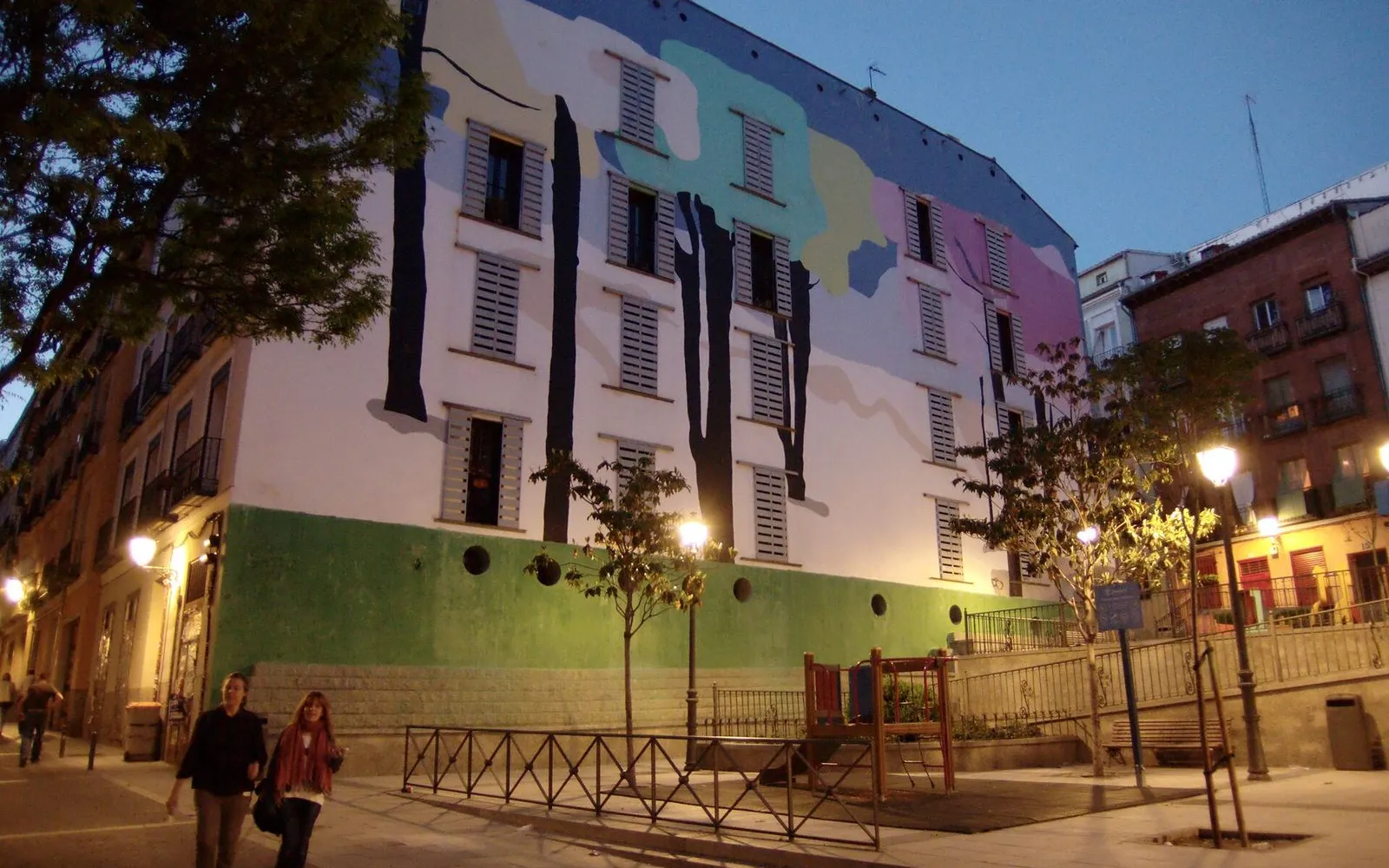 The essentials
Newcomers' Madrid: From Barley Square to Lavapiés
A walk through the Madrid that has always absorbed newcomers, from a medieval grain market to a self-run tobacco factory.
What you'll see
54 stops mapped across 8 walking tours in Madrid. A few of the places the routes take you past:
- San Antonio de los Alemanes
- Calle Velarde
- Plaza del Dos de Mayo
- Museo de Historia de Madrid
- Plaza de las Comendadoras
- Cuartel de Conde Duque
- Puerta de Alcalá
- Estanque del Retiro
- Palacio de Cristal
- Palacio de Velázquez
- Calle Serrano
- Mercado de la Paz
Before you go
Is Madrid a walkable city?
Madrid is one of the most walkable capitals in Europe. The historic center, from the Royal Palace to the Retiro Park, is compact and mostly flat. Most major sights sit within a 30 minute walk of Puerta del Sol. The metro fills the gaps cheaply when your feet need a rest, and the buses run late. The one thing that is not walkable is the heat: in July and August, plan your long walks for the morning and evening, and duck into a bar or a museum during the midday hours.
What is the best time of year to visit Madrid?
April, May, September, and October are ideal. Daytime temperatures hover between 18°C and 25°C (mid 60s to high 70s Fahrenheit), the terraces are open, and the light is long and golden. Spring brings the San Isidro festival in mid May with free concerts and chulapo dress. Autumn has fewer crowds and the same good weather. December is cold but the Christmas lights on Gran Vía and the Plaza Mayor market are worth a winter coat. July and August are hot, often above 35°C (95°F), and many smaller family run shops and restaurants close for the month.
Is Madrid safe?
Madrid is a safe city by any large capital standard. Violent crime is rare. The main risk for visitors is pickpocketing in crowded areas: Puerta del Sol, the Rastro on Sundays, the metro at rush hour, and any packed tapas bar. Keep your phone and wallet in a front pocket or a zipped bag, and do not leave a bag hanging on the back of a chair at a terrace. At night, the center stays busy and well lit until well past midnight, and walking alone in the Gran Vía, Huertas, or Chueca areas is normal and safe.
How does public transport work in Madrid?
The Madrid metro is clean, fast, and runs from 6:00 am to 1:30 am. A single Zone A ticket costs €1.50. If you plan to take more than five rides in a day, the 1 day Tourist Travel Pass at €10.30 for Zone A is better value and covers the airport supplement. You need a Tarjeta Multi card (€2.50 one time fee, valid 10 years) to load any ticket. Buses accept contactless bank cards directly. Cercanías commuter trains are useful for reaching Atocha, Chamartín, and the airport. Taxis have a flat €33 rate between the airport and anywhere inside the M30 ring road.
SourceTurismo MadridDo I need to speak Spanish to get around Madrid?
You can get through a short visit without Spanish. Museum staff, hotel desks, and younger waiters in the center usually speak some English. Menus in tourist zone restaurants are often bilingual. But a few words go a long way: "buenos días" (good morning), "por favor" (please), "gracias" (thank you), and "la cuenta, por favor" (the check, please). In neighborhood bars and markets away from the center, English thins out fast. Download an offline Spanish dictionary or use a translation app for menus in traditional taverns.
What is the tipping custom in Madrid?
Tipping is optional and modest. In a bar, leaving the small change from a coffee or a round of beers (10 to 20 cents) is normal. In a sit down restaurant, 5% to 10% is generous and appreciated but never expected. Service is included in the price by law. No one will chase you down the street for not tipping. If you pay by card, you cannot add a tip on the terminal; leave it in cash.
Do shops and restaurants really close in the afternoon for siesta?
Large department stores, chain shops, and supermarkets in the center stay open all day. Small independent shops, neighborhood bakeries, and some family run restaurants do close between roughly 14:00 and 17:00. Museum hours are continuous. The siesta as a national shutdown is mostly a cliché, but in a traditional neighborhood like Lavapiés or La Latina, you will find a shutter down after lunch. Plan your shopping for the morning or early evening.
Is Madrid tap water safe to drink?
Yes. Madrid tap water comes from the Sierra de Guadarrama and is clean, safe, and tastes good. Restaurants serve it free if you ask for "un vaso de agua del grifo." Many locals drink bottled water by habit, not necessity. Carry a refillable bottle; there are public fountains in most plazas, including Puerta del Sol and Plaza Mayor.
How do I get from the airport to the city center?
Four options. The Airport Express bus (€5) runs 24 hours from all terminals to Atocha and Cibeles, every 15 to 20 minutes. The metro (Line 8 to Nuevos Ministerios, then connect) costs €1.50 plus a €3 airport supplement; the Tourist Travel Pass covers the supplement. A Cercanías train runs from Terminal 4 to Atocha and Chamartín. A taxi costs a flat €33 to anywhere inside the M30 ring road. The bus is the best value for most visitors.
SourceTurismo Madrid
Walk Madrid
Get the audio guide in the app.
Every walk comes with offline maps, audio narration, and zero ads. No data needed once you download.
Provenance · last verified August 9, 2026
Built from the Wayside walking tours in this city and the stops they cover.
Photo by Unknown authorUnknown author on Wikimedia Commons · CC0
Photo by Nicolas Vigier on Wikimedia Commons · CC0
Photo by Jose Luis Cernadas Iglesias from Coruña, España on Wikimedia Commons · CC BY 2.0
Photo by Tim Tregenza on Wikimedia Commons · CC BY-SA 3.0
Photo by Felipe Gabaldón on Wikimedia Commons · CC BY 2.0
Photo by Tinou Bao on Wikimedia Commons · CC BY 2.0
Photo by Jorge Láscar on Wikimedia Commons · CC BY-SA 2.0
Photo by FEDERICO JORDÁ from MADRID, ESPAÑA on Wikimedia Commons · CC BY 2.0
Photo by Nicolas Vigier from Madrid, Spain on Wikimedia Commons · CC0