Madrid · Self-guided audio walk

The Landscape of Light

Walk the Paseo del Prado as a street and an architectural set piece, from Cybele's fountain to the tropical garden inside Atocha station.

  • 8Stops
  • 2.2 kmDistance
  • 35+ minTime
The Landscape of Light

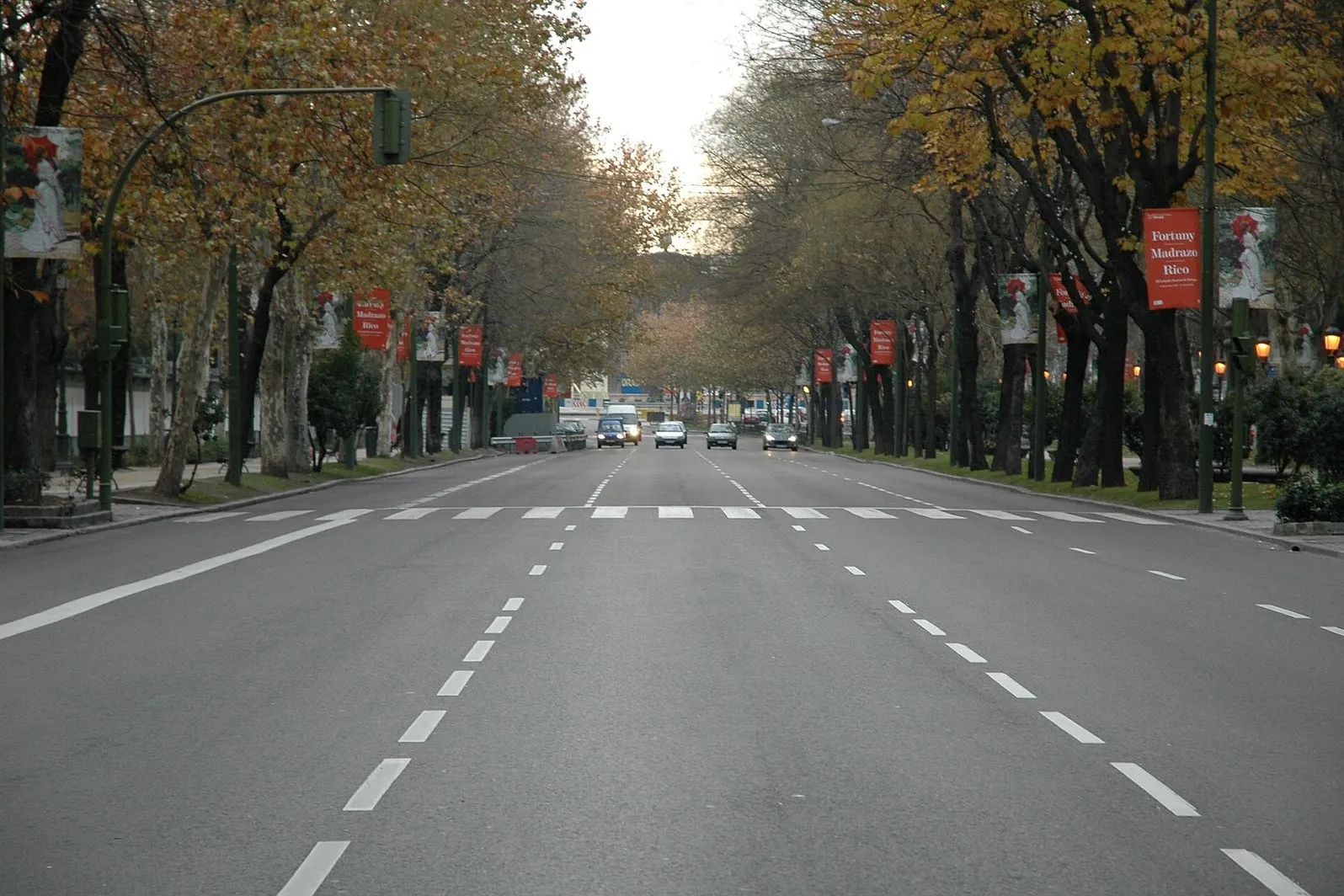
Photo by Tinou Bao on Wikimedia Commons

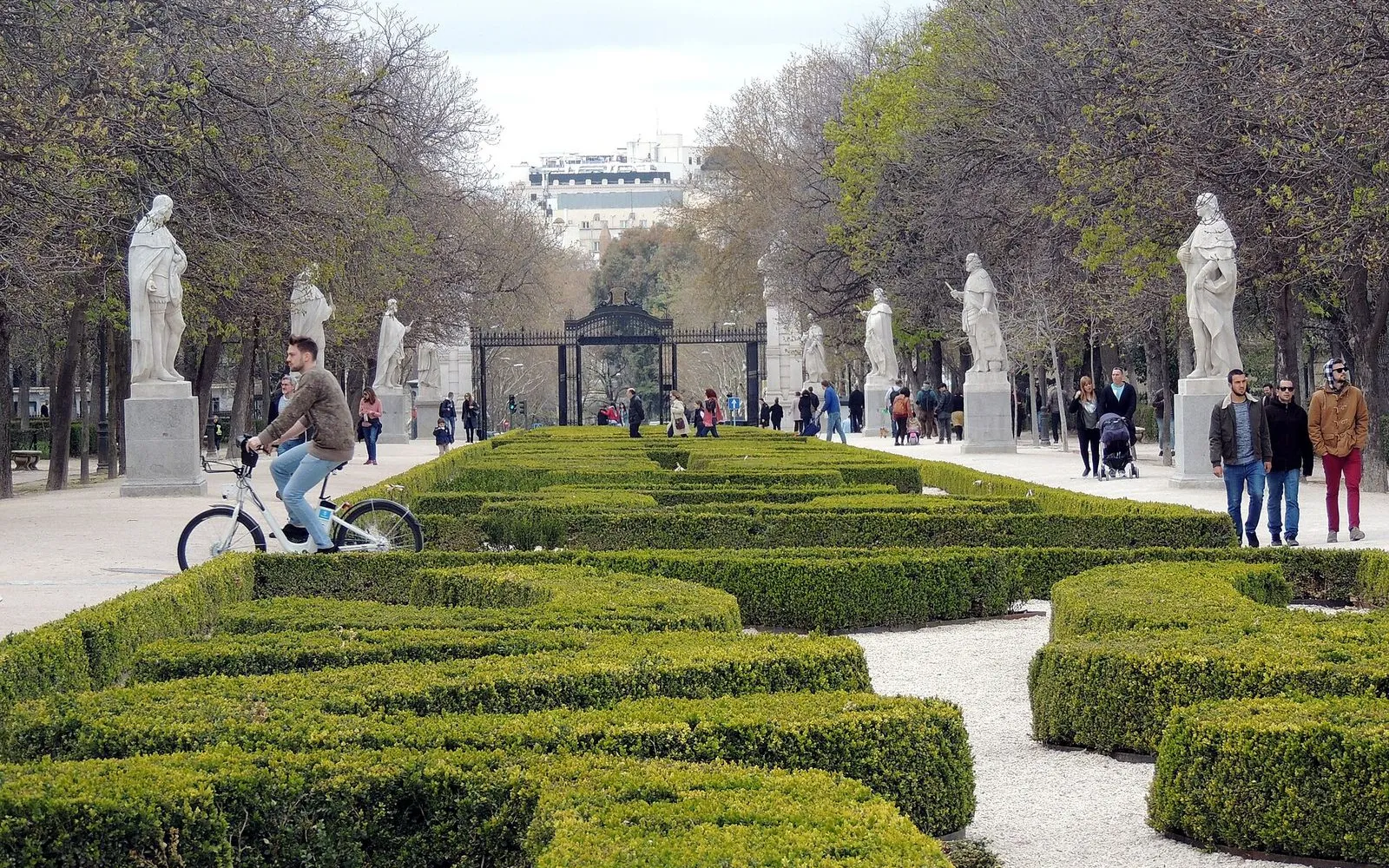
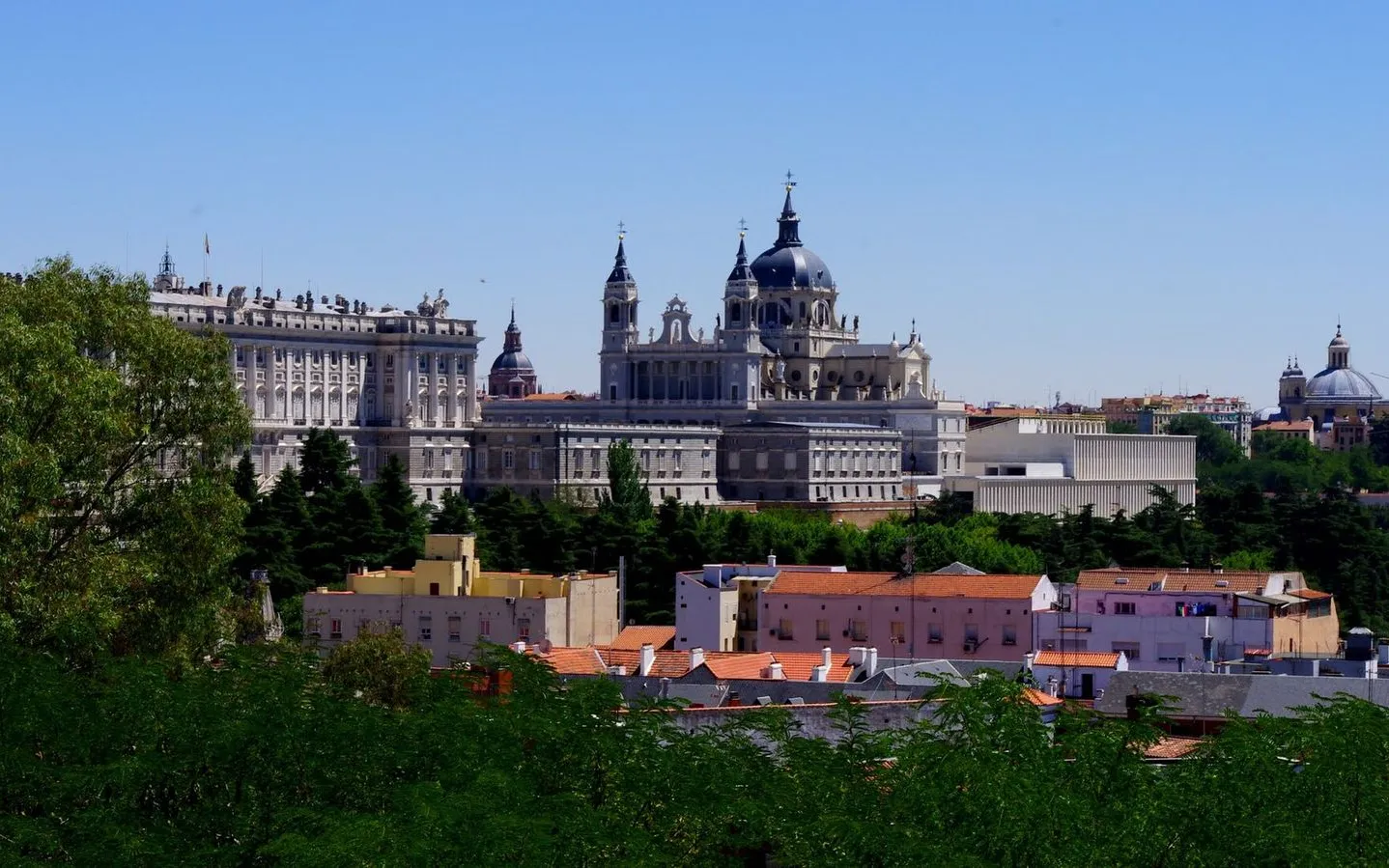
Madrid's Paseo del Prado is a UNESCO World Heritage cultural landscape, the prototype of the tree-lined urban avenue that spread through Hispanic America. This walk traces its two kilometers from Plaza de Cibeles to Atocha station, treating the boulevard itself as the subject. You pass the Thyssen, the Prado, and the Reina Sofía without stepping inside, reading each as a building: Villanueva's neoclassical temple, the old General Hospital, Jean Nouvel's red steel wing. Between them are fountains, a botanical garden, a living wall, and the width of a promenade laid out so a city could see and be seen. The walk ends inside an 1892 train shed filled with palms and a turtle pond.

Hear it on the street

Get the turn-by-turn audio guide in the app. The narration plays itself as you reach each stop, hands-free and offline.

Stop by stop

The route

Interactive map of the route. The full stop list below works without it.

Plaza de CibelesMust see

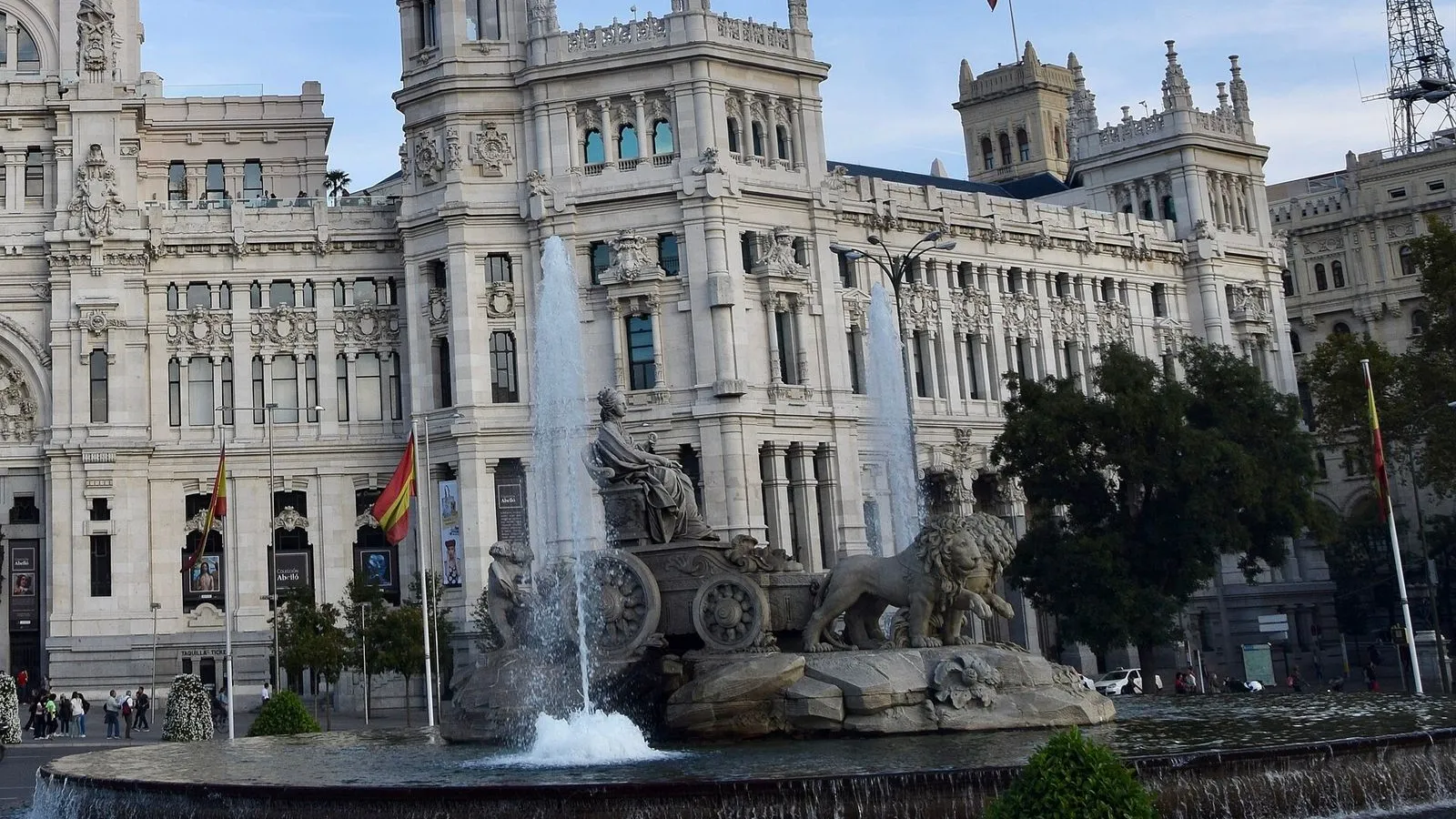
Photo by Ank Kumar on Wikimedia Commons

Plaza de Cibeles

0:00

The goddess Cybele rides her lion chariot at the head of the Paseo del Prado, surrounded by four landmark buildings. The fountain, carved in white marble in 1782, faces the wedding-cake façade of the Palacio de Cibeles.

You are standing at the northern gate of the Paseo del Prado, on a square named for the goddess at its center. Cybele rides a chariot pulled by two lions, carved in white marble from Montesclaros and installed here in 1782. Ventura Rodríguez designed the fountain, and it has been an emblem of Madrid ever since. Look around.

Four buildings frame the square: the Bank of Spain, the Buenavista Palace, the Linares Palace, and directly ahead of you the Palacio de Cibeles. That one, with its white neo-Plateresque façade and corner towers, opened in 1919 as the main post office. People called it the Cathedral of Communications. Today it is Madrid's city hall.

Step closer and find the iron-and-glass canopy over the old operations courtyard, now a public cultural center. The real subject of this walk begins behind you: the Paseo del Prado, a tree-lined avenue laid out in the sixteenth century as a place where anyone, regardless of class, could walk in the shade. UNESCO inscribed it as a cultural landscape in 2021, calling it the prototype of the Hispanic alameda. When you are ready, turn south and begin walking down Paseo del Prado.

The boulevard descends gently. Keep to the right-hand sidewalk.
≈6 min walk to the next stop
Museo Thyssen-BornemiszaMust see

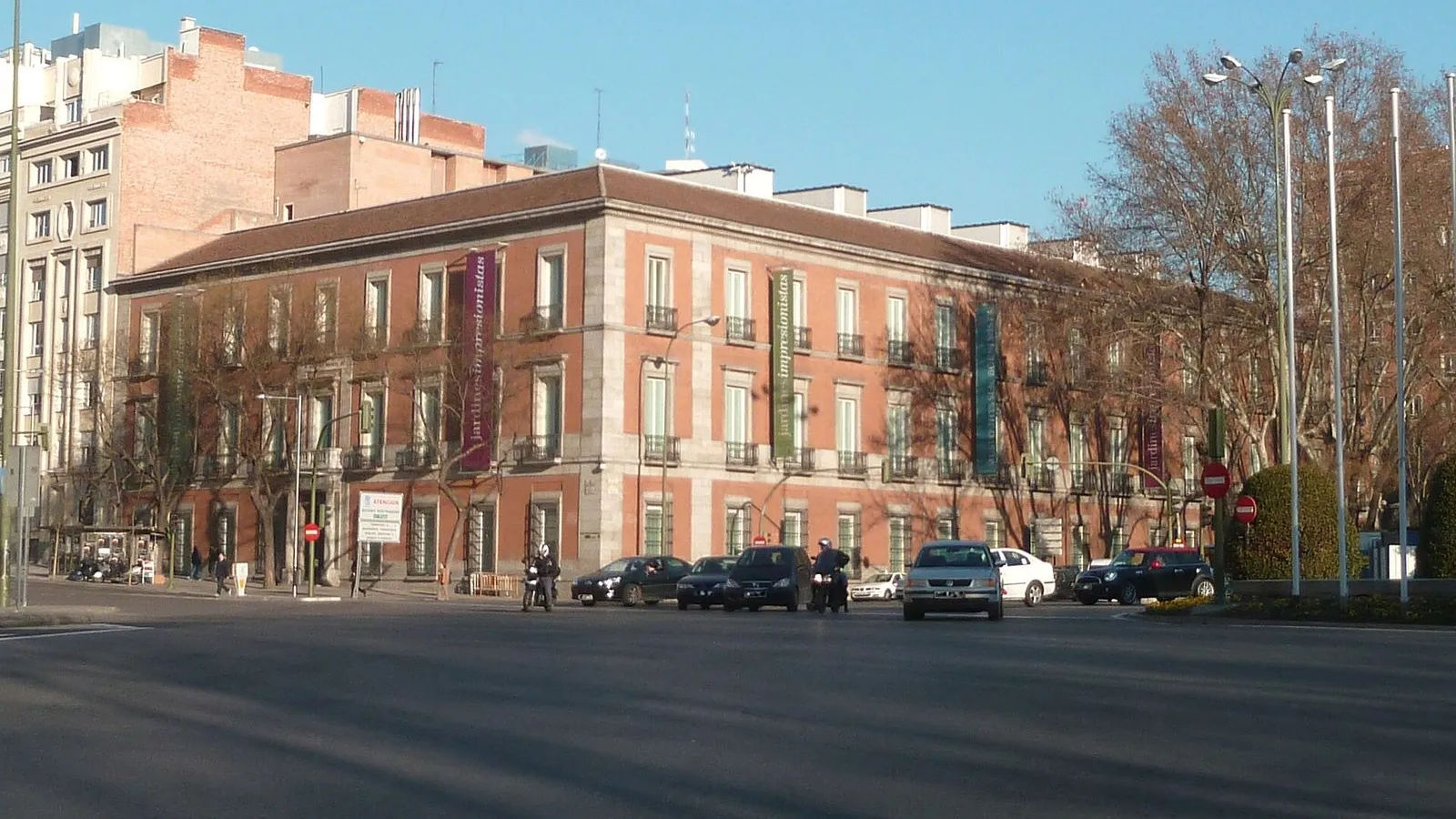
Photo by Zaqarbal on Wikimedia Commons

Museo Thyssen-Bornemisza

0:00

The Thyssen collection fills the Palacio de Villahermosa, an eighteenth-century ducal residence with a pink-and-cream neoclassical façade. Its door sits directly on the Paseo del Prado sidewalk.

You are looking at the Palacio de Villahermosa, an eighteenth-century ducal residence that became the Museo Thyssen-Bornemisza in 1992. The building is neoclassical, symmetrical, dressed in pale pink and cream. It reads as a palace because it was one. The Thyssen collection arrived here after the Spanish government bought it from Baron Hans Heinrich Thyssen-Bornemisza, filling a gap between the Prado's old masters and the Reina Sofía's twentieth century.

But you are not going inside today. Notice how the entrance sits flush with the boulevard, unlike the Prado farther south, which pulls back behind a plaza and a statue. This palace was built when the Paseo was already a fashionable address, and its architect pressed it right up to the promenade. Above the cornice, a balustrade runs the length of the roofline.

Count the windows: three stories, seven bays. The rhythm is calm and unshowy. Next, continue south. The Neptune fountain is about two hundred meters ahead, in the middle of the next roundabout.

≈2 min walk to the next stop
Fuente de NeptunoLocal pick

Photo by Rubén Vique on Wikimedia Commons

Fuente de Neptuno

0:00

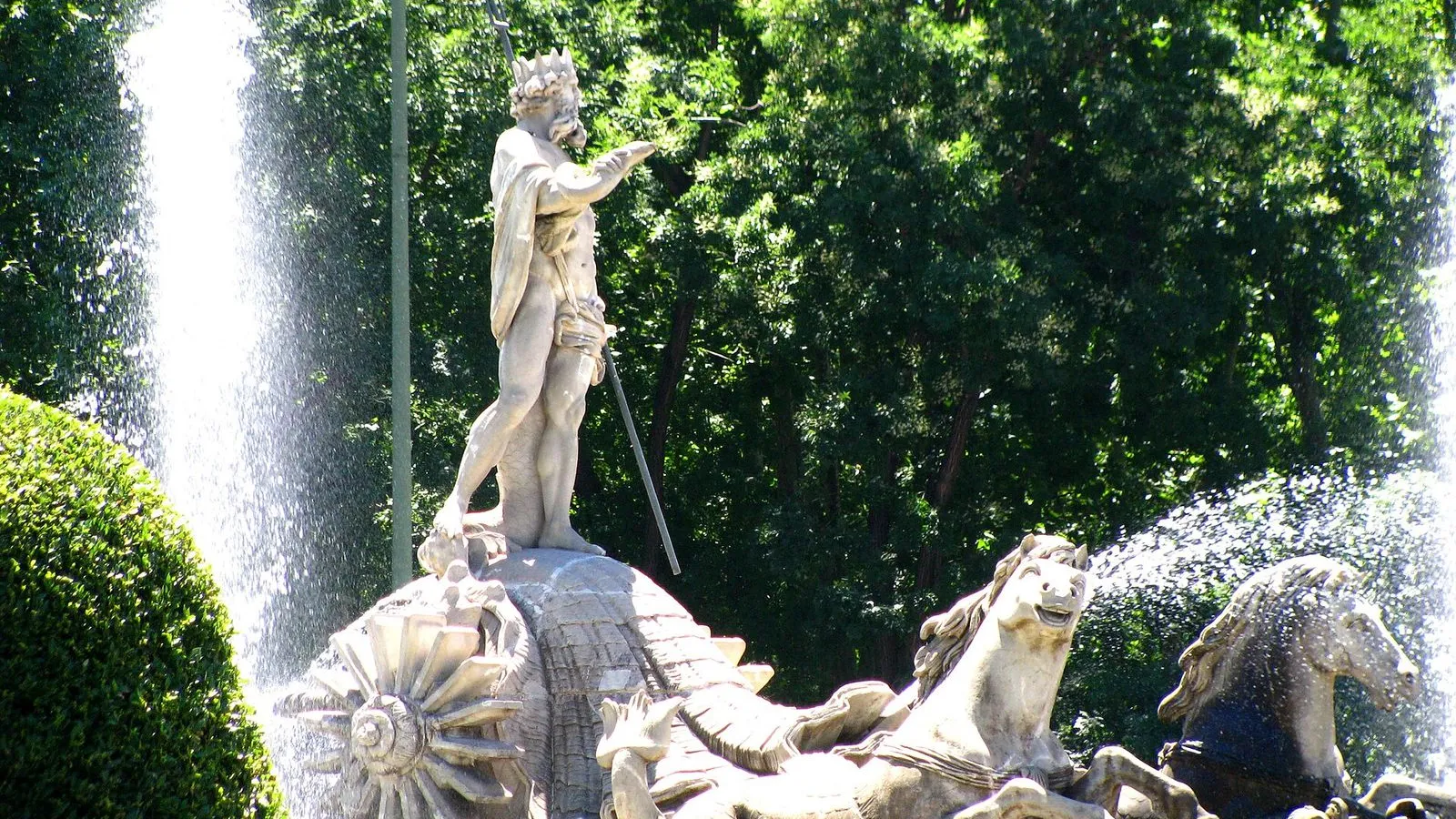
Neptune stands in the Plaza de Cánovas del Castillo, trident raised, at the midpoint of the Paseo del Prado. The white-marble fountain, completed in 1786, anchors the southern half of the Salón del Prado.

This is the Fuente de Neptuno, the second of the three great fountains Ventura Rodríguez designed for the Salón del Prado. Neptune grips a trident in one hand and a sea serpent in the other, all carved from Montesclaros marble like the Cybele fountain you saw at the start. The fountain was finished in 1786, two years after its sculptor, Juan Pascual de Mena, died. His pupils completed it.

The Plaza de Cánovas del Castillo around you is named for the nineteenth-century prime minister, but madrileños just call this spot Neptuno. It marks the midpoint of the Paseo, and it is where Atlético Madrid fans celebrate their titles, just as Real Madrid fans gather at Cibeles. Look south across the roundabout. That long, low neoclassical building with the columned portico is the Prado.

You will reach it next. Cross the plaza carefully and continue south. The Prado sits on your right, behind the statue of Velázquez.

≈4 min walk to the next stop
Free preview ends here · stops 4 to 8 continue in the app

Museo del Prado

Juan de Villanueva designed this neoclassical temple for the natural sciences in 1785. It opened as the Royal Museum of Paintings in 1819 and remains the anchor of the Paseo, its long granite-and-brick body stretched along the boulevard.

in app

Real Jardín Botánico

The Royal Botanical Garden occupies three terraced planes behind an eighteenth-century iron fence on the Paseo del Prado. Charles III moved it here in 1781 and had Juan de Villanueva and Francesco Sabatini lay it out by Linnaean taxonomy.

in app

CaixaForum Madrid

A former power station turned cultural center, CaixaForum faces the Paseo del Prado with a living wall by Patrick Blanc: 460 square meters of plants, no soil, 250 species growing straight up.

in app

Museo Reina Sofía

Spain's national museum of twentieth-century art occupies the old General Hospital, an eighteenth-century building by Hermosilla and Sabatini, with a red steel and glass addition by Jean Nouvel that opened in 2005.

in app

Estación de Atocha

Madrid's oldest railway station opened in 1892 with a wrought-iron and glass shed by Alberto de Palacio. Since 1992, the old train hall has housed a tropical garden with over seven thousand plants and a pond of turtles, free and open to the public.

in app
Good to know

Before you go

Does the Landscape of Light walk go inside the museums?

No. This walk treats the Paseo del Prado itself as the subject: the boulevard, the fountains, and the architecture. You pass the Thyssen, the Prado, and the Reina Sofía without stepping inside, reading each as a building. If you want to visit a museum, slot it before or after the walk.

Is Atocha station garden really worth a stop?

It is a train station with a pond full of turtles under palm trees, free and open every day. Yes, it is worth 15 minutes. The 1892 iron and glass shed by Alberto de Palacio, a pupil of Gustave Eiffel, is the same family of architecture as the great Victorian stations of London.

Keep exploring

More walks in Madrid

Provenance · last verified August 18, 2026

Built from the Wayside route itself: the stops, their order, and the walk between them.

Photo by Tinou Bao on Wikimedia Commons · CC BY 2.0

Photo by Ank Kumar on Wikimedia Commons · CC BY-SA 4.0

Photo by Zaqarbal on Wikimedia Commons · CC BY-SA 3.0

Photo by Rubén Vique on Wikimedia Commons · CC BY 2.0

Photo by Nicolas Vigier on Wikimedia Commons · CC0

Photo by Jose Luis Cernadas Iglesias from Coruña, España on Wikimedia Commons · CC BY 2.0

Photo by Tim Tregenza on Wikimedia Commons · CC BY-SA 3.0

Photo by Felipe Gabaldón on Wikimedia Commons · CC BY 2.0

Photo by Jorge Láscar on Wikimedia Commons · CC BY-SA 2.0

Photo by FEDERICO JORDÁ from MADRID, ESPAÑA on Wikimedia Commons · CC BY 2.0

Photo by Nicolas Vigier from Madrid, Spain on Wikimedia Commons · CC0

Coming soon

Wayside isn't in the app stores yet, but it's in the works. Check back soon.