Walking tours in Spain
Spain fills most of the Iberian Peninsula and reaches out to two archipelagos: the Balearics in the Mediterranean and the Canaries in the Atlantic, where the Teide volcano rises 3,715 meters. The land is high, around 660 meters on average, and varied: Pyrenean snow, olive groves rolling to the horizon, desert badlands, green Atlantic coast, and long Mediterranean beaches. Madrid has the Prado, Granada the Alhambra, Córdoba the Mosque, and Santiago de Compostela the cathedral that ends Europe's oldest pilgrim route. Eight centuries of Muslim rule shaped all of it, from the architecture to the rice and saffron in the kitchen. Meals are long and shared: paella, Iberian ham, gazpacho, octopus in Galicia, tapas at the bar. Life happens outside, in the plazas, and everyone else seems to be out there too.

Photo by Andy Arbeit on Unsplash
When is the best time to visit Spain?
Spring
- Months
- March to May
- Weather
- Spring is the rainiest stretch in the center and south: April is Madrid's wettest month at about 50 mm, and March is Seville's at about 90 mm, with warm, bright days in between.SourceHoliday-Weather.com: Madrid averagesHoliday-Weather.com: Seville averages
- Crowds
- Easter week, Semana Santa, is spring's busiest travel window, with processions pulling crowds in Seville, Málaga and beyond; book trains and hotels early. Coastal towns start filling on the first warm weekends.
Summer
- Months
- June to August
- Weather
- Heat builds inland: July averages about 25°C in Madrid and 28°C in Seville, where summer highs reach the mid to upper 30s. Barcelona's hottest month, August, averages about 24°C, and Málaga's July averages 25°C.SourceHoliday-Weather.com: Madrid averagesHoliday-Weather.com: Seville averagesHoliday-Weather.com: Barcelona averagesHoliday-Weather.com: Málaga averages
- Crowds
- Peak season on the coasts and islands, with the year's highest prices. Inland cities quiet down in August as locals head for the beach, and some small shops and family restaurants close for part or all of the month.
Autumn
- Months
- September to November
- Weather
- The Mediterranean takes its heaviest rain of the year in fall: October is Barcelona's wettest month, and November is Málaga's, at about 101 mm.SourceHoliday-Weather.com: Barcelona averagesHoliday-Weather.com: Málaga averages
- Crowds
- September and early October stay busy, especially on the coasts and in the cities, then crowds and prices fall through November. It is a good month for Seville, Granada and Madrid.
Winter
- Months
- December to February
- Weather
- Winters are mild in the south and cold in the center: January averages about 13°C in Málaga, 11°C in Seville, 10°C in Barcelona and 6°C in Madrid.SourceHoliday-Weather.com: Málaga averagesHoliday-Weather.com: Seville averagesHoliday-Weather.com: Barcelona averagesHoliday-Weather.com: Madrid averages
- Crowds
- Quiet outside the Christmas and New Year weeks and the Pyrenees ski season. City hotels offer their lowest rates, and some coastal hotels and restaurants shut until spring.
| Season | Months | Weather | Crowds |
|---|---|---|---|
| Spring | March to May | Spring is the rainiest stretch in the center and south: April is Madrid's wettest month at about 50 mm, and March is Seville's at about 90 mm, with warm, bright days in between.SourceHoliday-Weather.com: Madrid averagesHoliday-Weather.com: Seville averages | Easter week, Semana Santa, is spring's busiest travel window, with processions pulling crowds in Seville, Málaga and beyond; book trains and hotels early. Coastal towns start filling on the first warm weekends. |
| Summer | June to August | Heat builds inland: July averages about 25°C in Madrid and 28°C in Seville, where summer highs reach the mid to upper 30s. Barcelona's hottest month, August, averages about 24°C, and Málaga's July averages 25°C.SourceHoliday-Weather.com: Madrid averagesHoliday-Weather.com: Seville averagesHoliday-Weather.com: Barcelona averagesHoliday-Weather.com: Málaga averages | Peak season on the coasts and islands, with the year's highest prices. Inland cities quiet down in August as locals head for the beach, and some small shops and family restaurants close for part or all of the month. |
| Autumn | September to November | The Mediterranean takes its heaviest rain of the year in fall: October is Barcelona's wettest month, and November is Málaga's, at about 101 mm.SourceHoliday-Weather.com: Barcelona averagesHoliday-Weather.com: Málaga averages | September and early October stay busy, especially on the coasts and in the cities, then crowds and prices fall through November. It is a good month for Seville, Granada and Madrid. |
| Winter | December to February | Winters are mild in the south and cold in the center: January averages about 13°C in Málaga, 11°C in Seville, 10°C in Barcelona and 6°C in Madrid.SourceHoliday-Weather.com: Málaga averagesHoliday-Weather.com: Seville averagesHoliday-Weather.com: Barcelona averagesHoliday-Weather.com: Madrid averages | Quiet outside the Christmas and New Year weeks and the Pyrenees ski season. City hotels offer their lowest rates, and some coastal hotels and restaurants shut until spring. |
Highlights across Spain
- Puerta del Sol, Kilometer Zero of Spain's roads and the square where Madrid counts down to the New Year.
- Plaza Mayor, the arcaded square completed in 1619, with 237 balconies around the cobbles.
- Chocolatería San Ginés, pouring chocolate con churros in its pasadizo since 1894.
- The Mercado de San Miguel, a 1916 cast-iron hall where Madrid eats jamón and oysters standing up.
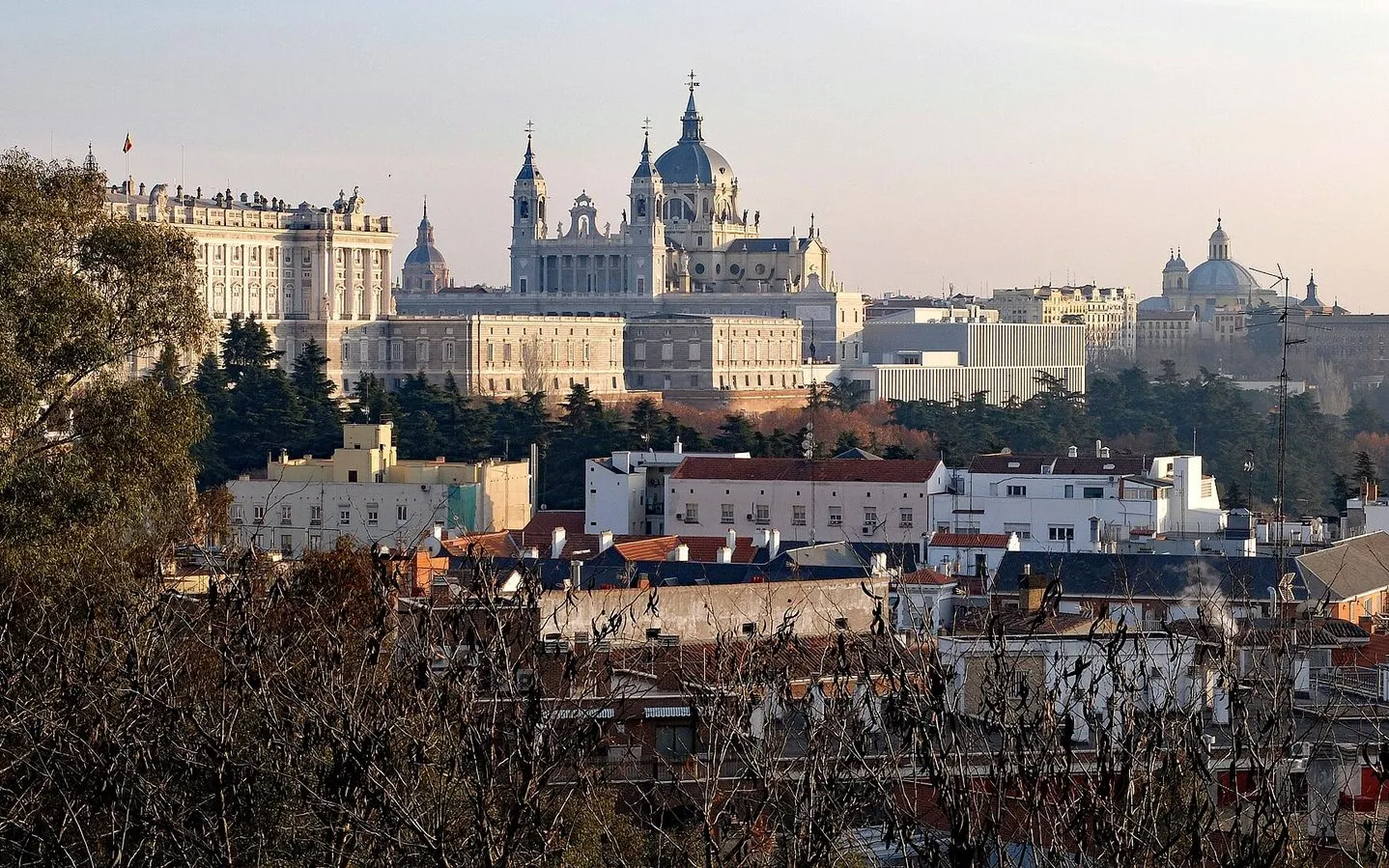
- The Palacio Real, the largest palace in Western Europe, with 3,418 rooms, and the Almudena beside it.
- The Templo de Debod, an Egyptian temple from the 2nd century BC rebuilt above the Parque del Oeste.
- The Paseo del Prado, a UNESCO World Heritage boulevard lined with the Prado, the Thyssen, and the Reina Sofía.
- El Retiro's great lake, dug in the 1630s, and the glass Palacio de Cristal mirrored in its pond.
- Plaza del Dos de Mayo, where Madrid rose against Napoleon in 1808 and the movida madrileña later took hold.
Where to walk in Spain
Planning a trip to Spain
Do I need a visa to visit Spain?
Spain is in the Schengen area, and travelers from the US, the UK, Canada, and most other visa-exempt countries can visit for short tourism stays without a visa, for up to 90 days within any 180-day period. The EU's ETIAS authorization is not yet in operation: no applications are being collected, and the official start date will be announced months in advance, so no extra document is needed right now.
SourceEuropean Commission ETIAS siteIs Spain expensive to travel in?
Spain is mid-range for Western Europe. Independent cost trackers put average mid-range spending at about €185 per person per day, with hotels and food each near €70 a day, and budget travelers average about €73 a day. On this route the big variables are train fares, which stay low when you book early, and entries like €26 for the Sagrada Família.
SourceBudget Your TripSagrada Família official ratesWhich cities should I visit in Spain?
Madrid and Barcelona are the two anchors of a first visit: Madrid for the Prado, the Royal Palace, and the old squares, Barcelona for the Sagrada Família, Gaudí's buildings, and the Gothic Quarter. This itinerary puts Valencia between them for the Central Market, the cathedral, the Turia Garden, and paella. Andalusia, with Seville, Granada, and Málaga, deserves a separate trip.
SourceSpain.infoWhen is the best time to visit Spain?
Spring and early autumn are the comfortable seasons for walking cities. Summer brings serious heat inland and in the south, with highs that can pass 35°C, while the Canary and Balearic Islands stay mild year-round.
SourceSpain.infoHow do I get between Madrid, Valencia, and Barcelona?
By high-speed train, station to station in the city centers. AVE and Avlo run from Madrid's Puerta de Atocha to Valencia in under two hours, and Euromed follows the coast on to Barcelona Sants in about three hours. Book ahead: the low-cost Avlo and OUIGO fares and the cheapest Euromed seats go first.
SourceRenfeRenfeOUIGOWhat should I book before I leave home?
The train legs, the Sagrada Família, and the Prado. High-speed tickets are cheapest months ahead, the Sagrada Família sells timed slots on its official site, and Prado tickets online cost €15 and skip the line, with free entry in the last two hours before closing.
SourceRenfeSagrada Família official ratesMuseo Nacional del PradoMore of Spain
- ItineraryOne week in SpainMadrid's old squares and the Prado, paella in Valencia, and Gaudí's Barcelona, all linked by high-speed trains.
- Know before you goSpain essentialsWhat to know before you go to Spain: entry rules and border checks, high-speed trains between cities, money, plugs, holidays and the best months to visit.

Plan your visit
Take Spain with you.
Download Wayside to walk Madrid's Habsburg heart, the palace quarter, and the Paseo del Prado, with every stop narrated on your phone.
Provenance · last verified September 27, 2026
Researched by Wayside, with every operational fact checked against the source.
SourcesEuropean Union: countries using the euroGOV.UK: Spain travel advice, moneyGOV.UK: Spain travel advice, safety and securityPower Plugs & Sockets: SpainAgència Tributària de Catalunya: tourist tax ratesBookcheckin: Catalonia and Balearic tourist tax calculatorABC: BOE confirms the 2026 holiday calendarAdministración.gob.es: Calendario Laboral 2026Your Europe: mobile roaming costs in the EUSeat 61: Spain by trainThe Local Spain: the Renfe Spain PassHoliday-Weather.com: Madrid averagesHoliday-Weather.com: Seville averagesHoliday-Weather.com: Barcelona averagesHoliday-Weather.com: Málaga averagesEuropean Commission ETIAS siteBudget Your TripSagrada Família official ratesSpain.infoRenfeRenfeOUIGOMuseo Nacional del Prado
Photo by Andy Arbeit on Unsplash
Photo by Unknown authorUnknown author on Wikimedia Commons · CC0