Madrid · Self-guided audio walk

Dos de Mayo to Movida

One neighborhood. Two rebellions. Walk the Malasaña streets where Madrileños rose against Napoleon in 1808, then turned Madrid into Spain's countercultural capital after Franco.

  • 6Stops
  • 2.3 kmDistance
  • 40+ minTime
Dos de Mayo to Movida

Photo by Nicolas Vigier on Wikimedia Commons

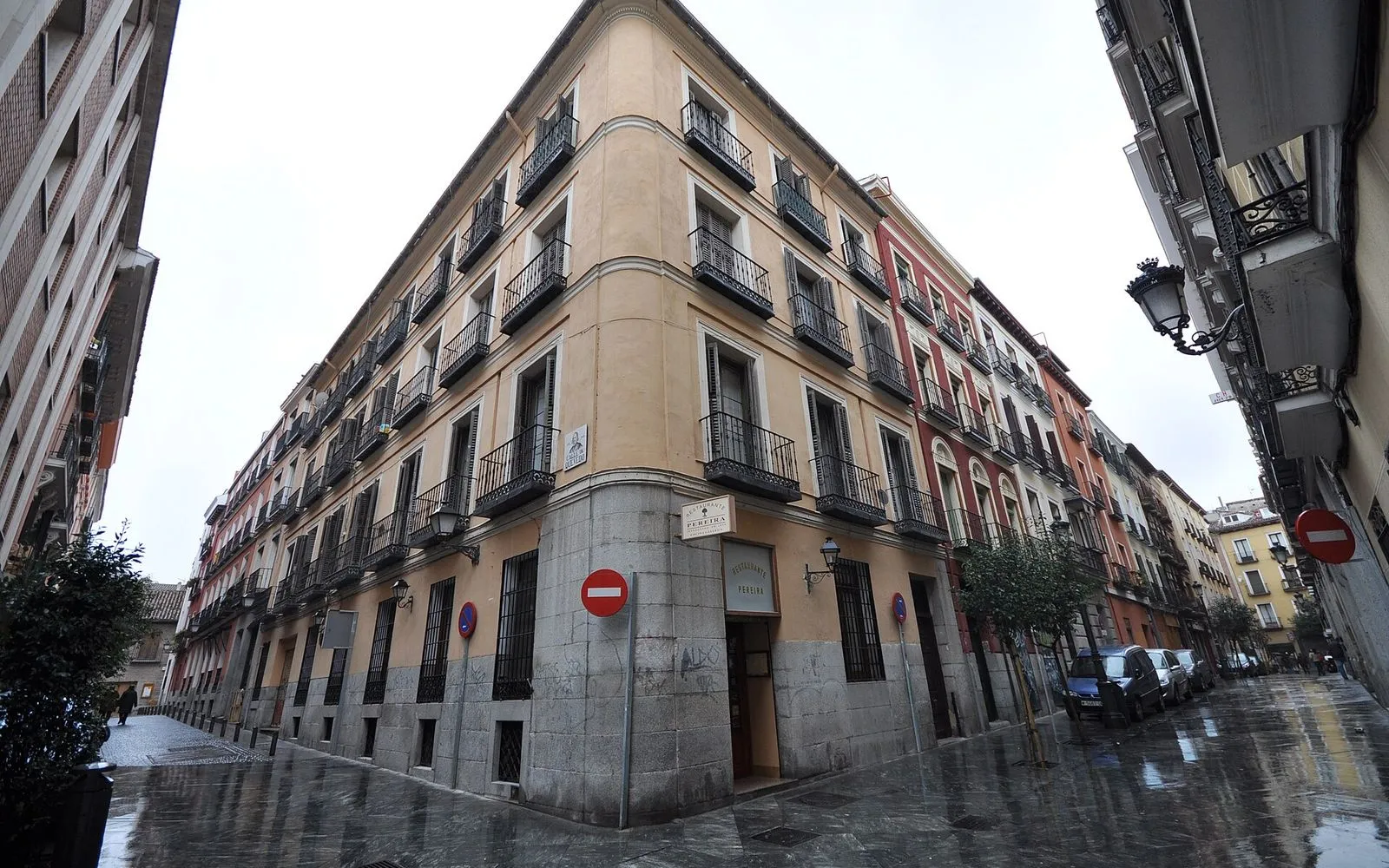
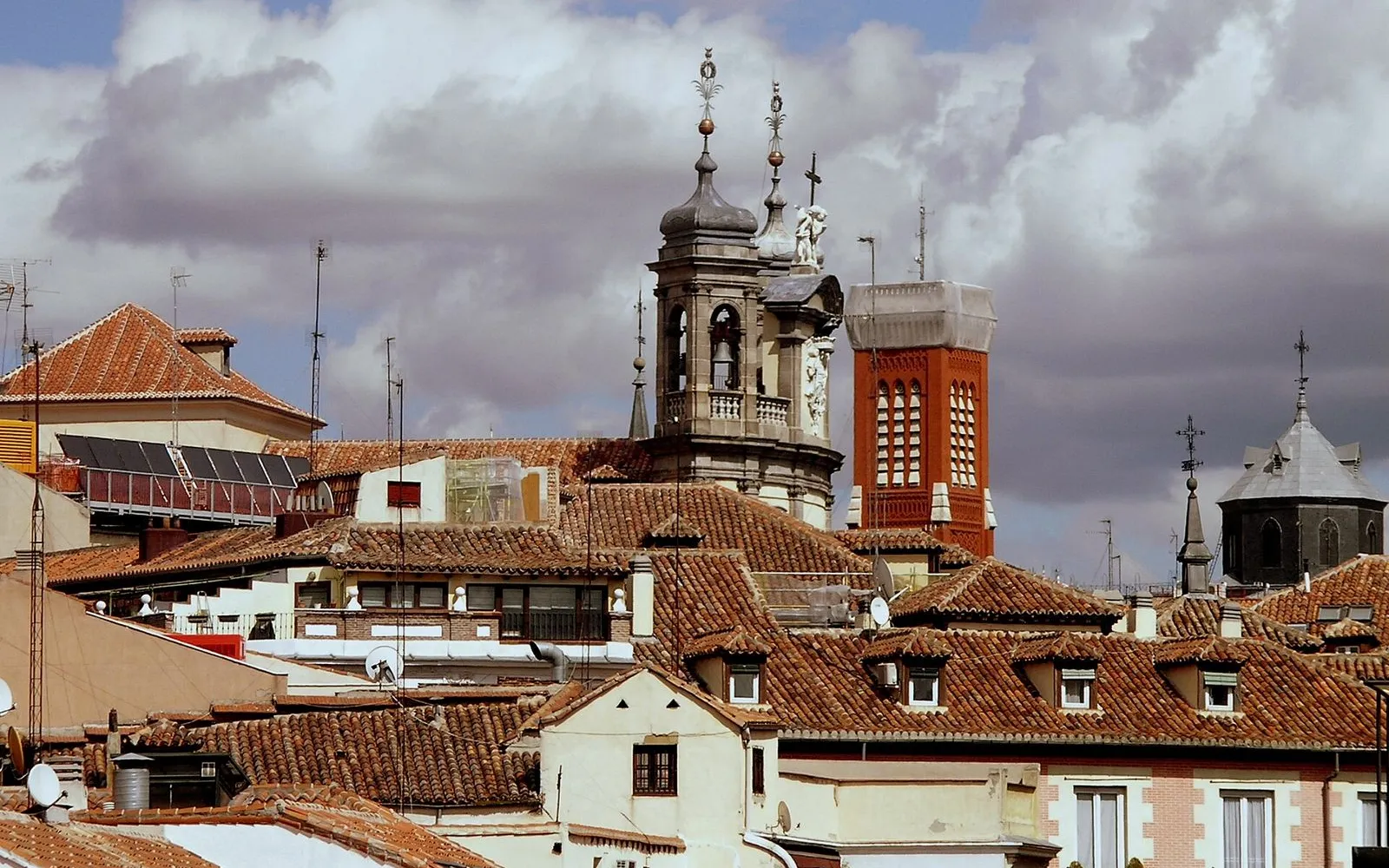
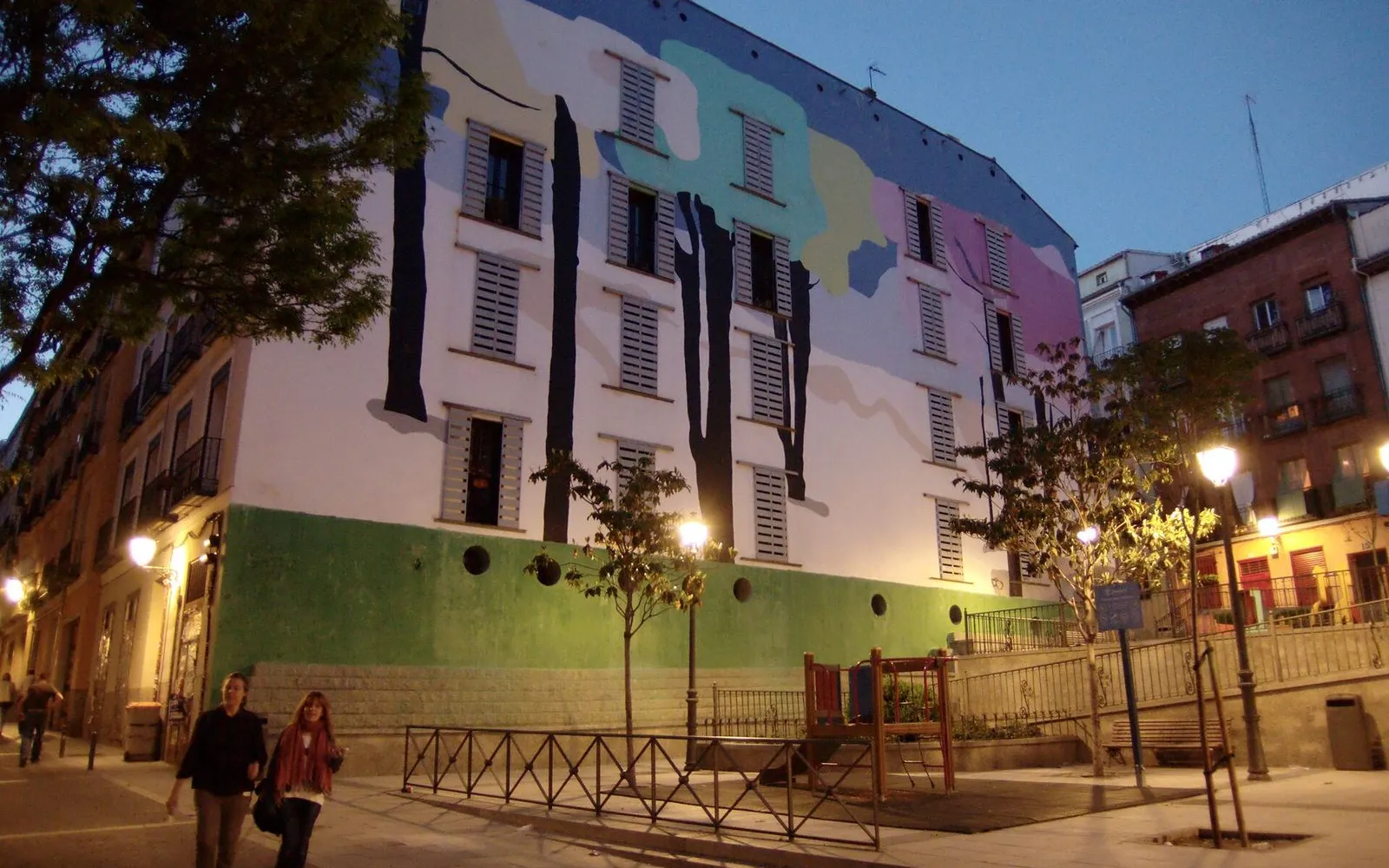
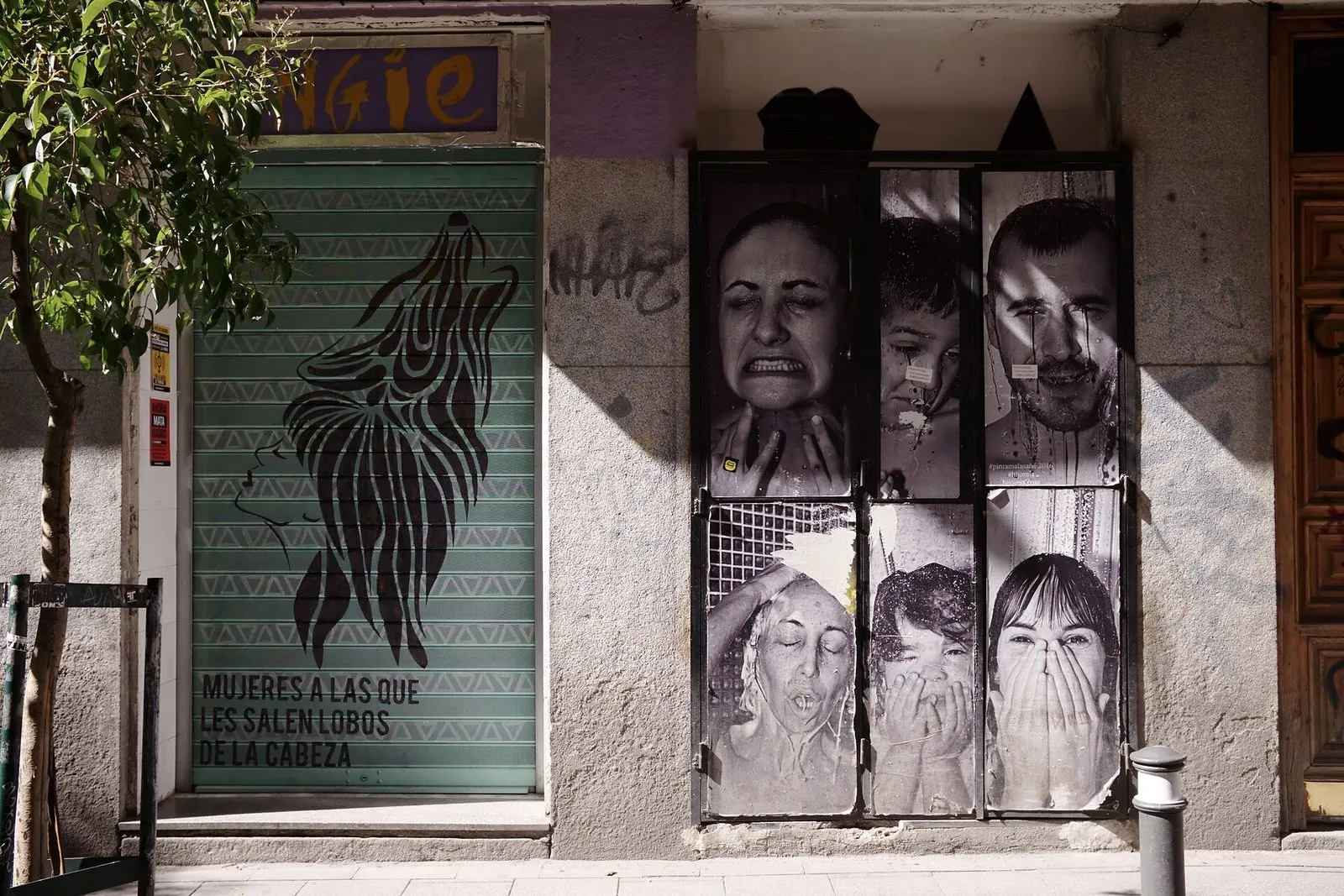
This walk weaves two revolutions through the same streets. The first is the Dos de Mayo uprising of 1808, when the people of Madrid took on Napoleon's army at the Monteleón artillery barracks. You will stand under the old barrack arch in the Plaza del Dos de Mayo, where captains Daoíz and Velarde made their stand, and walk streets named for the fallen. The second revolution is the movida madrileña, the explosion of music, art, and hedonism that erupted after Franco died in 1975 and turned Malasaña into the creative heart of a newly free Spain. You will pass the vintage shops of Calle Velarde, see the Baroque frescoes of San Antonio de los Alemanes, study the 1830 wooden model of Madrid before the Gran Vía tore through it, and finish at the vast Conde Duque barracks, once a Bourbon guardhouse, now a cultural center. About 100 minutes. A walk about resistance, military and cultural.

Hear it on the street

Get the turn-by-turn audio guide in the app. The narration plays itself as you reach each stop, hands-free and offline.

Stop by stop

The route

Interactive map of the route. The full stop list below works without it.

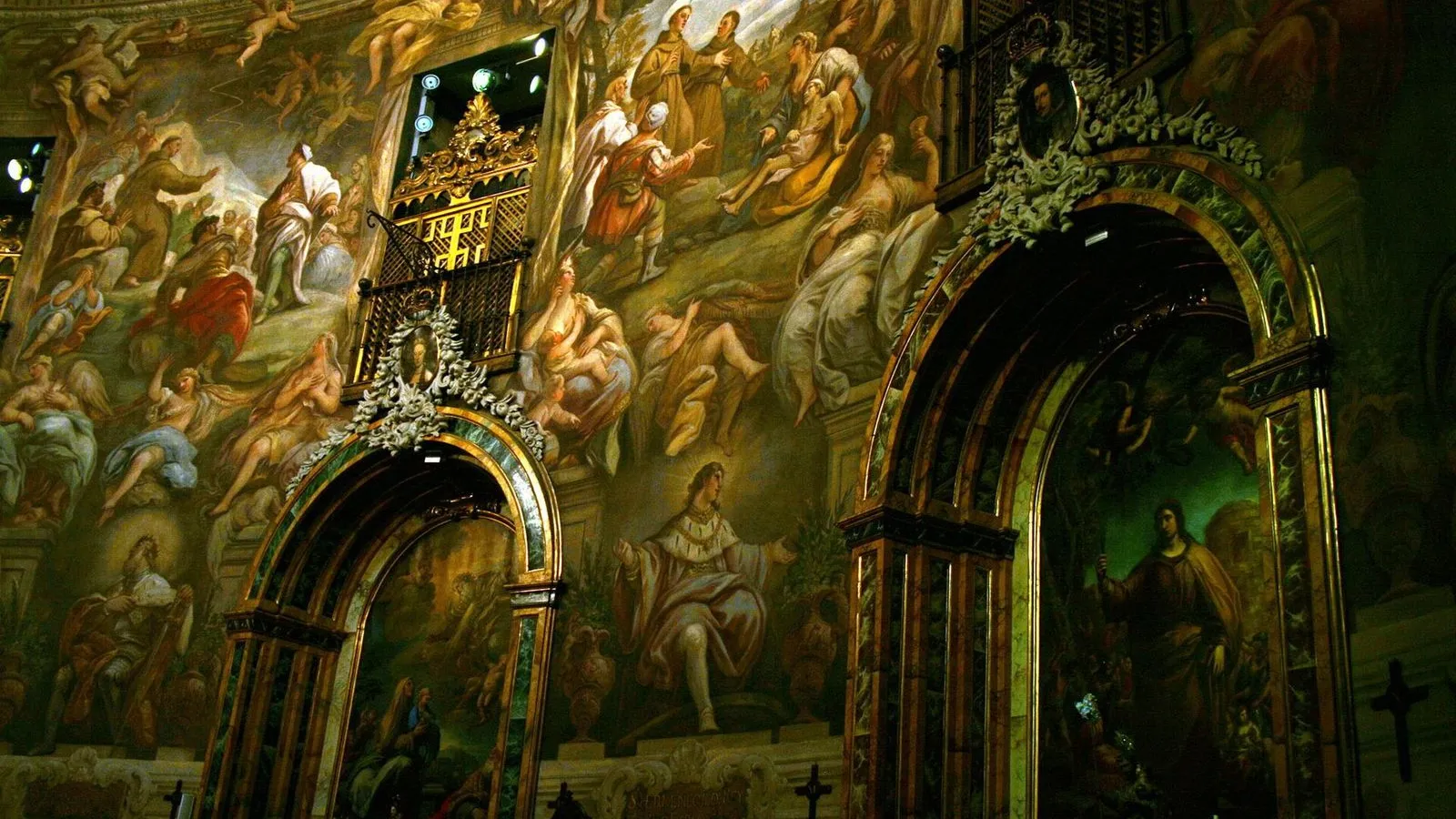
San Antonio de los AlemanesMust see

Photo by Enrique Cordero on Wikimedia Commons

San Antonio de los Alemanes

0:00

A 17th-century Baroque church with an elliptical plan and walls entirely covered in frescoes by Luca Giordano, Francisco Rizi, and Carreño de Miranda. The 'Sistine Chapel of Madrid.'

You are standing outside a church that hides one of the most surprising interiors in Madrid. From the street it looks unremarkable: plain brick, a modest portal on the corner of Calle de la Puebla and Corredera Baja de San Pablo. Step inside and the walls vanish under a single continuous fresco that climbs from the floor to the dome.

This is the only church in Madrid with an elliptical floor plan, built between 1624 and 1633 to a design by the Jesuit architect Pedro Sánchez. It is also the only church in the city whose interior is completely covered with frescoes. The artists who painted it include Luca Giordano, the Neapolitan court painter to Charles II whom the Spanish court nicknamed Luca fa presto, meaning Luca gets it done fast, and Francisco Rizi, who laid out the trompe l'oeil composition of the dome.

The church was first built for Portuguese immigrants, then given to the German Catholic community after Portugal broke from Spain in 1640. That is how San Antonio de los Portugueses became San Antonio de los Alemanes.

When you go inside, look up. Saint Anthony of Padua kneels on a cloud at the center of the dome, receiving the Christ child from the Virgin. Around him, painted across the upper walls, are the miracles of his life. The frescoes were commissioned by Philip IV around 1660. The building was declared a National Monument in 1973.

Before you leave, find the sacristy door. Behind it hangs the church's first altarpiece, a reminder that every layer of paint in this building was laid down over centuries, by hands that kept returning to the same walls.
≈8 min walk to the next stop
Calle VelardeLocal pick

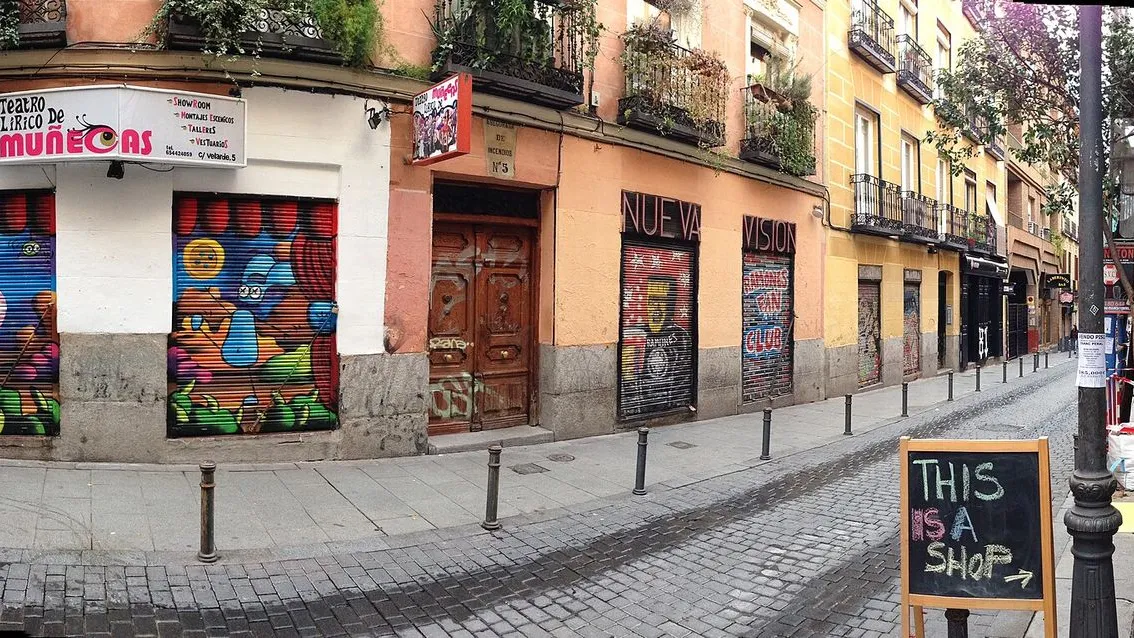
Photo by Alberto Cabello from Vitoria Gasteiz on Wikimedia Commons

Calle Velarde

0:00

A street named for Captain Pedro Velarde, who fell at the Monteleón barracks in 1808. Today its vintage shops and boutiques channel the creative energy of the movida madrileña.

You are walking down a street named for Captain Pedro Velarde, who died on May 2, 1808, defending the Monteleón artillery barracks against Napoleon's troops. Velarde was twenty-nine years old. He heard gunfire from the barracks while at his desk on nearby Calle San Bernardo, ran toward it, and gathered soldiers along the way. He was shot dead at the gate.

Now look around. Calle Velarde today is a parade of vintage clothing shops, independent boutiques, and small cafés. During the movida madrileña, the explosion of music and nightlife that erupted after Franco died in 1975, streets like this one filled with young people who had grown up under a dictatorship and were inventing a new culture in real time. Bands rehearsed in basements. Artists took over abandoned storefronts. The bars stayed open until dawn. The movida was loud, deliberately messy, and defiantly free.

A street named for a soldier of 1808 became, a century and a half later, a runway for the freaks and dreamers of a newly democratic Spain. That is the point of this walk: two revolutions on the same stones.

Walk slowly. The shops here change often, but the spirit does not. When you reach the end of the block, the street opens onto the Plaza del Dos de Mayo.

≈2 min walk to the next stop
Plaza del Dos de MayoMust see

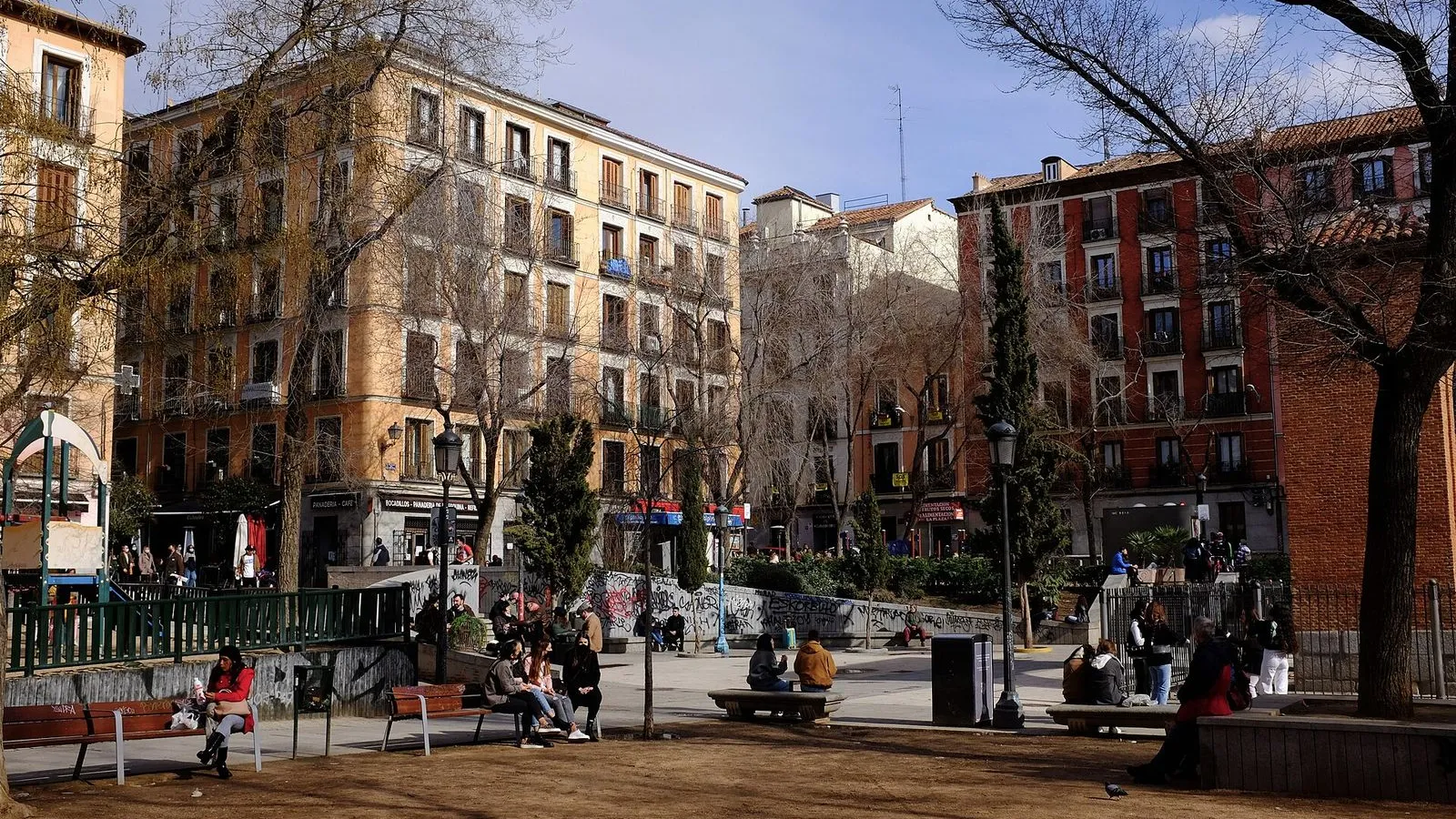
Photo by Nicolas Vigier on Wikimedia Commons

Plaza del Dos de Mayo

0:00

The square built on the site of the Monteleón barracks, where Daoíz and Velarde led the Dos de Mayo uprising of 1808. The original barrack arch and their marble monument stand at its center. Later, the epicenter of the movida madrileña.

You are standing in the Plaza del Dos de Mayo, the heart of Malasaña and the ground where Madrid's rebellion against Napoleon began.

The stone arch in front of you is the original entrance to the Monteleón artillery barracks. It was built in 1690 as the gateway to a palace, later converted into a munitions depot. On the morning of May 2, 1808, captains Luis Daoíz and Pedro Velarde disobeyed orders to stay in their quarters. They opened the armory, distributed weapons to civilians, and mounted a defense that killed more than thirty French soldiers before the barracks fell. Velarde was shot at the gate. Daoíz died of his wounds that night.

Under the arch stands a marble sculpture carved by Antonio Solá in 1830. It shows the two captains side by side. Look closely at the hands. The sword Daoíz held has been broken off and replaced so many times over the years that locals now joke it is a moving sculpture: sometimes a sword, sometimes a beer can, sometimes a bouquet.

After 1868, the ruined barracks were demolished and this square was laid out to honor the uprising. The streets that radiate from it bear the names of the fallen: Daoíz, Velarde, Ruiz, Malasaña.

A hundred and sixty-seven years later, this plaza became the living room of the movida madrileña. Bands played their first gigs in the bars around you. Pedro Almodóvar shot scenes here. Young people gathered on these benches at all hours because, after four decades of dictatorship, simply being out in public at night felt like a political act.

The square still belongs to the people who use it. Sit on a bench for a few minutes. Watch the children chase footballs around the arch, the teenagers sharing bottles on the steps, the old men arguing at the café tables. The Dos de Mayo uprising was a military defeat that became a national myth. The movida was a cultural insurrection that became a way of life. Both started here.

≈5 min walk to the next stop
Free preview ends here · stops 4 to 6 continue in the app

Museo de Historia de Madrid

Madrid's city museum, housed in Pedro de Ribera's 1673 Baroque hospice. Its centerpiece: the 1830 wooden scale model of Madrid by León Gil de Palacio, showing every street before the Gran Vía.

in app

Plaza de las Comendadoras

A quiet pedestrian square facing the Convent of the Comendadoras de Santiago, founded in 1650. The church by the Olmo brothers (1697) and Sabatini's 1774 expansion frame one of Malasaña's most serene corners.

in app

Cuartel de Conde Duque

The vast Bourbon-era barracks designed by Pedro de Ribera (1717-1730), once Madrid's largest building. Saved from demolition in 1976, it now houses exhibitions, concerts, and the city archives.

in app
Good to know

Before you go

What is the Dos de Mayo and why does it matter?

On May 2, 1808, the people of Madrid rose up against Napoleon's occupying army. The uprising began at the Monteleón artillery barracks, now the Plaza del Dos de Mayo, where captains Daoíz and Velarde made their last stand. Goya painted it twice. The rebellion was crushed within hours but ignited the Peninsular War that eventually drove the French out of Spain.

What was the movida madrileña?

The movida was the explosion of music, art, nightlife, and sexual freedom that erupted in Madrid after Franco died in 1975. Malasaña was its epicenter. Bands like Alaska y los Pegamoides played in grimy bars, Pedro Almodóvar shot his first films on these streets, and a generation that had grown up under dictatorship discovered hedonism. The creative energy of that period still shapes the neighborhood's vintage shops, tattoo parlors, and late night bars.

Provenance · last verified August 18, 2026

Built from the Wayside route itself: the stops, their order, and the walk between them.

Photo by Nicolas Vigier on Wikimedia Commons · CC0

Photo by Enrique Cordero on Wikimedia Commons · CC BY-SA 2.0

Photo by Alberto Cabello from Vitoria Gasteiz on Wikimedia Commons · CC BY 2.0

Photo by Nicolas Vigier on Wikimedia Commons · CC0

Photo by Jose Luis Cernadas Iglesias from Coruña, España on Wikimedia Commons · CC BY 2.0

Photo by Tim Tregenza on Wikimedia Commons · CC BY-SA 3.0

Photo by Felipe Gabaldón on Wikimedia Commons · CC BY 2.0

Photo by Tinou Bao on Wikimedia Commons · CC BY 2.0

Photo by Jorge Láscar on Wikimedia Commons · CC BY-SA 2.0

Photo by FEDERICO JORDÁ from MADRID, ESPAÑA on Wikimedia Commons · CC BY 2.0

Photo by Nicolas Vigier from Madrid, Spain on Wikimedia Commons · CC0

Coming soon

Wayside isn't in the app stores yet, but it's in the works. Check back soon.