Chicago · Self-guided audio walk

The Skyscraper's First Mile

Walk the six blocks where the modern tall building was invented, from the Rookery's light court to the Willis Tower's sky-high reach.

  • 7Stops
  • 1.7 kmDistance
  • 30+ minTime
The Skyscraper's First Mile

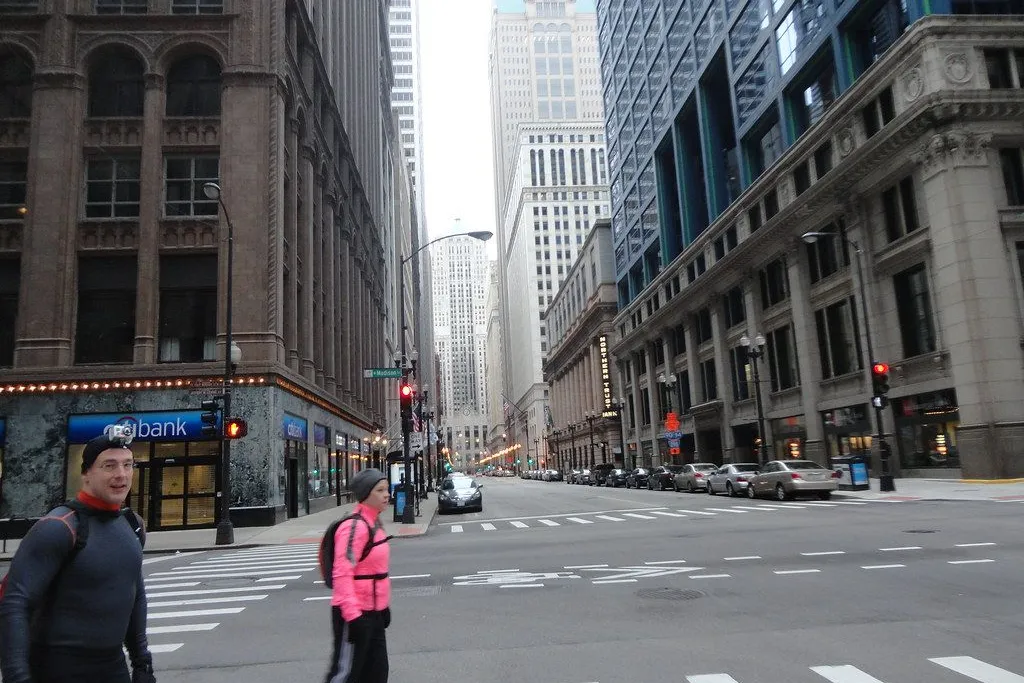
Photo by Chicago Running Tours & more on Openverse

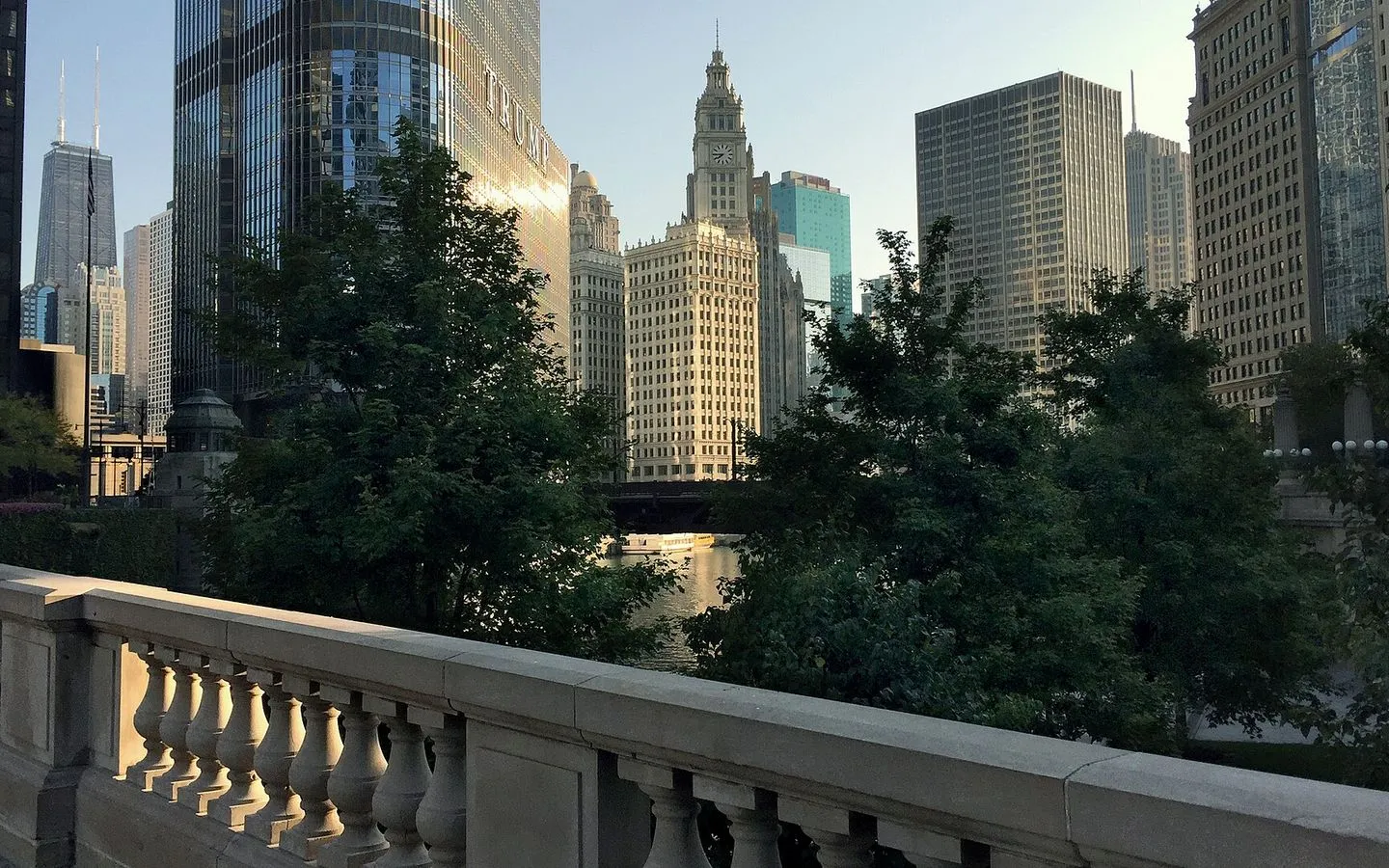
After the 1871 fire cleared four square miles, Chicago had to rebuild fast and build up. The Loop became a laboratory. In a handful of blocks, architects and engineers worked out the steel frame, the safety elevator, the floating foundation, the wind-braced portal arch, and the bundled tube. This walk traces that arc in seven buildings: Burnham & Root's Rookery and Monadnock, Holabird & Roche's Marquette and Old Colony, Atwood's neo-Gothic Fisher, Holabird & Root's Art Deco Board of Trade, and SOM's Willis Tower. Each stop solves a problem the last one exposed. Together they tell the story of how the tall building was invented, one block at a time.

Hear it on the street

Get the turn-by-turn audio guide in the app. The narration plays itself as you reach each stop, hands-free and offline.

Stop by stop

The route

Interactive map of the route. The full stop list below works without it.

Rookery BuildingMust see

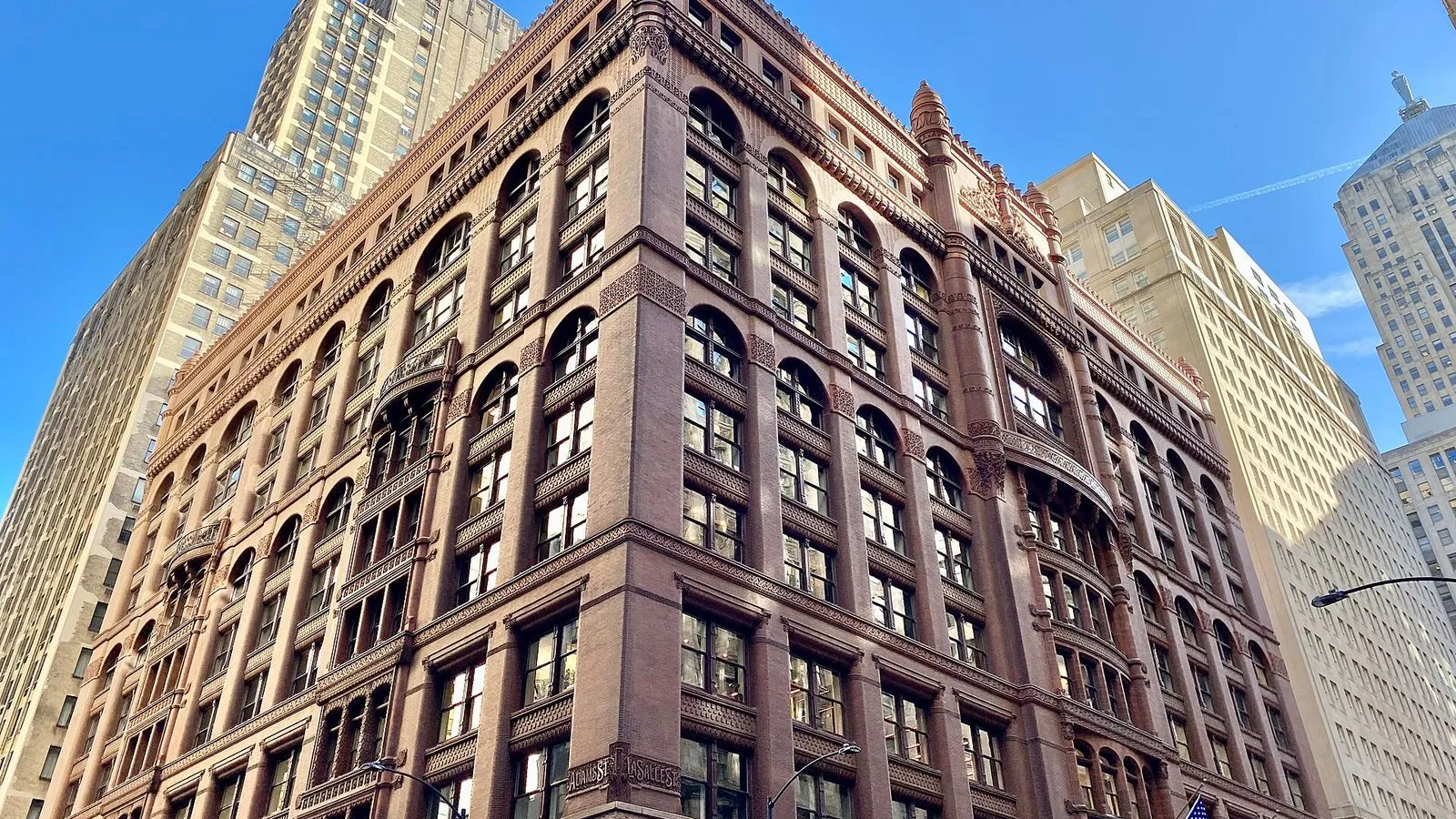
Photo by w_lemay on Wikimedia Commons

Rookery Building

0:00

Burnham & Root's 1888 hybrid of masonry and steel, centered on a glass-vaulted light court with a gilded Wright lobby.

You're standing at the Rookery, completed in 1888 by Daniel Burnham and John Wellborn Root. At eleven stories, it was one of the tallest buildings on earth the day it opened. The name comes from the temporary city hall and water tower that sat here after the 1871 fire, a spot so thick with pigeons that Chicagoans called it the rookery. Root carved two stone rooks into the LaSalle Street archway as a nod to that nickname.

Step inside the light court. Root designed the building as a hollow square so every office got daylight. The result is this two-story atrium, roofed in patterned glass and wrapped in wrought-iron galleries. In 1905, Frank Lloyd Wright was hired to modernize the lobby.

He covered Root's dark ironwork in white Carrara marble, incised with arabesques and filled with gold leaf. The effect is a room that glows even on an overcast day. Root also engineered a floating foundation of iron rails and concrete to spread the building's weight on Chicago's soft clay, a technique that let the city's towers climb higher than anyone thought possible.

≈2 min walk to the next stop
Chicago Board of Trade BuildingMust see

Photo by Dulcey Lima on Unsplash

Chicago Board of Trade Building

0:00

Holabird & Root's 1930 Art Deco terminal to the LaSalle Street canyon, capped by a copper pyramid and a faceless Ceres.

LaSalle Street ends here, at the Board of Trade, and the architects Holabird & Root made sure you knew it. Completed in 1930, this 45-story, 604-foot tower is pure Art Deco: gray Indiana limestone, geometric setbacks, and a copper pyramid roof. At the very top stands a 31-foot aluminum statue of Ceres, the Roman goddess of grain, by sculptor John Storrs. Her face is blank, not by accident.

Storrs left it featureless in the machine-age spirit of the style. Look at the clock above the main entrance. Two hooded figures flank it, one Babylonian holding wheat, the other a Native American holding corn, both carved by Alvin Meyer. The three-story lobby inside is a cathedral of commerce, with black and white marble, nickel trim, and a ceiling fixture that was the world's largest electric light when it was installed.

The Board of Trade replaced an earlier exchange building from 1885. By the time this one rose, Chicago's grain pits set world prices for corn, wheat, and soybeans. That wealth paid for every skyscraper you have walked past.

≈4 min walk to the next stop
Marquette BuildingMust see

Photo by Frederick Wallace on Unsplash

Marquette Building

0:00

Holabird & Roche's 1895 steel-frame innovator with an E-shaped plan, Chicago windows, and a Tiffany mosaic lobby.

Holabird & Roche finished the Marquette Building in 1895, and it solved a problem every tall office building faced: how to get daylight deep inside. The answer was an E-shaped floor plan. The three arms of the E wrap around two light wells, so nearly every office gets an outside wall. More daylight meant higher rents, and higher rents made the skyscraper pay.

Look at the windows. Those broad fixed panes with narrow operable sashes on each side are the first true Chicago windows, a signature of the school. The steel frame made them possible by freeing the facade from bearing weight. Now step into the lobby.

The hexagonal mosaic frieze above the elevator doors tells the story of Father Jacques Marquette, the French Jesuit who explored this region in 1674 and gave the building its name. Louis Comfort Tiffany's studio made these panels from lustered glass, mother-of-pearl, and semiprecious stones. The bronze portrait heads around the lobby, by Edward Kemeys, depict Native Americans, explorers, and animals. You are standing in a lobby that doubles as a museum of the Chicago School's artistic ambition.

≈3 min walk to the next stop
Free preview ends here · stops 4 to 7 continue in the app

Monadnock Building

The tallest load-bearing brick tower ever built (1891–93), with six-foot walls at the base and no exterior ornament.

in app

Old Colony Building

Holabird & Roche's 1894 tower that first used internal portal arches to brace a tall building against the wind.

in app

Fisher Building

D.H. Burnham & Company's 1896 neo-Gothic tower, expanded to 20 stories in 1907, the oldest surviving 18-story building in Chicago.

in app

Willis Tower

SOM's 1,451-foot bundled-tube tower (1973), the world's tallest building for 25 years, capping the Loop's architectural story.

in app
Good to know

Before you go

Can I go inside the buildings on this walk?

You can step into several lobbies during weekday business hours, including the Rookery's light court and the Marquette Building's Tiffany mosaic lobby. The one paid stop is the Willis Tower Skydeck, where a timed ticket starts at $32 for adults.

SourceSkydeck Chicago
Which stop is worth paying for?

The Skydeck. The street-level architecture is free to see, but the 103rd-floor view and the glass Ledge balconies 1,353 feet up are the payoff at the end of the walk. Buy a timed slot online, because entry periods sell out.

SourceSkydeck Chicago

Provenance · last verified August 10, 2026

Built from the Wayside route itself: the stops, their order, and the walk between them.

Photo by Chicago Running Tours & more on Openverse · CC BY 2.0

Photo by w_lemay on Wikimedia Commons · CC BY-SA 2.0

Photo by Dulcey Lima on Unsplash

Photo by Frederick Wallace on Unsplash

Photo by Acediscovery on Wikimedia Commons · CC BY 4.0

Photo by artistmac on Openverse · CC BY-SA 2.0

Photo by Ryan Dickey from Evanston, IL / Chicago, United States on Wikimedia Commons · CC BY 2.0

Photo by Ranjit Souri on Unsplash

Photo by artistmac on Openverse · CC BY-SA 2.0

Photo by David Paul Ohmer on Openverse · CC BY 2.0

Photo by Ben Collins-Sussman on Wikimedia Commons · CC BY 2.0

Coming soon

Wayside isn't in the app stores yet, but it's in the works. Check back soon.