Chicago · Self-guided audio walk

The Fire's Edge: Old Town and Lincoln Park

Wooden cottages the Great Fire spared, a church that rose from ashes, and a park where the dead once outnumbered the living.

  • 7Stops
  • 3.5 kmDistance
  • 55+ minTime

This walk traces the northern edge of the 1871 Chicago Fire, where a pocket of wooden workers' cottages and German beer-baron mansions survived by three blocks. Start in the Old Town Triangle, stroll Wells Street's brick lanes past St. Michael's Church, whose walls withstood the flames, then cross into Lincoln Park. Before it was the city's green front yard, this was the Chicago City Cemetery, and the Couch Mausoleum, a 50-ton stone vault from 1858, still sits near the Chicago History Museum as the one grave never moved. The Lincoln Park Conservatory's Victorian glass houses and the free zoo, open since 1878, anchor the northern end. You will walk about two miles in roughly two hours, through a Chicago built of wood, brick, and memory.

Hear it on the street

Get the turn-by-turn audio guide in the app. The narration plays itself as you reach each stop, hands-free and offline.

Stop by stop

The route

Interactive map of the route. The full stop list below works without it.

Old Town Triangle Historic DistrictMust see

Photo by Thshriver on Wikimedia Commons

Old Town Triangle Historic District

0:00

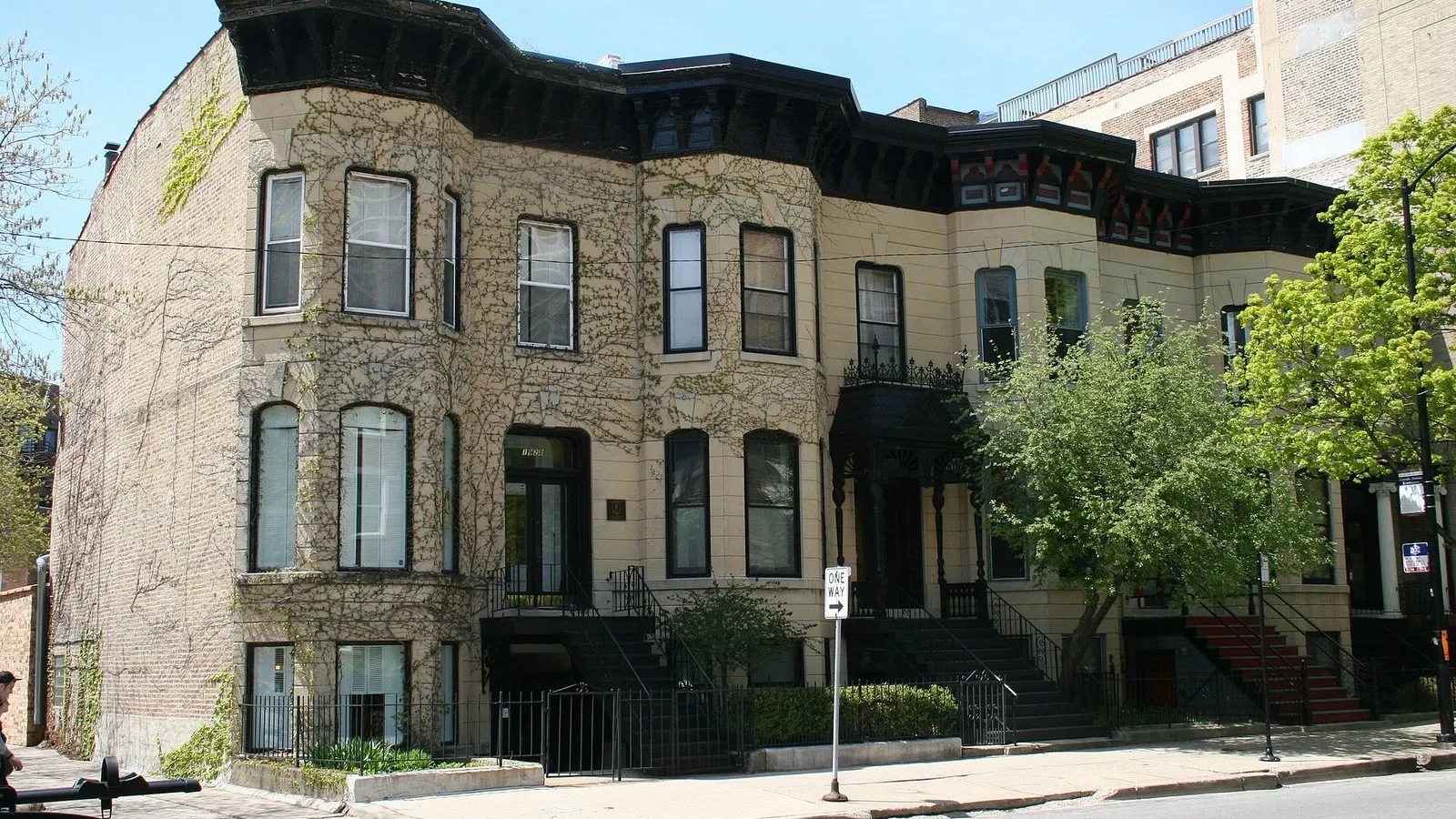
A wedge of wooden workers' cottages and brick row houses that the Great Fire of 1871 never reached, saved by three blocks and a political deal.

You are standing in the Old Town Triangle, a wedge of Chicago that looks nothing like the skyscraper city most visitors expect. This neighborhood was settled in the 1850s by German immigrants who built small wood-frame cottages on narrow lots, many of them workers at the nearby breweries and tanneries. On the night of October 8, 1871, the Great Fire roared north from the O'Leary barn, devouring block after block of wooden buildings. It stopped three blocks short of here.

In the weeks after, while downtown smoldered, Old Town struck a political deal to stay outside the new fire-code boundary that mandated brick and stone. So the cottages you see were rebuilt in wood, in the same modest Italianate style as before. Walk a few steps in any direction and you will spot them: two-story frame houses with pitched roofs, tall narrow windows, and front stoops set right against the sidewalk. In the 1940s, this became one of the country's first neighborhood preservation movements, long before historic districts were fashionable.

The locals have a saying: if you can hear the bells of St. Michael's, you are an Old Towner.
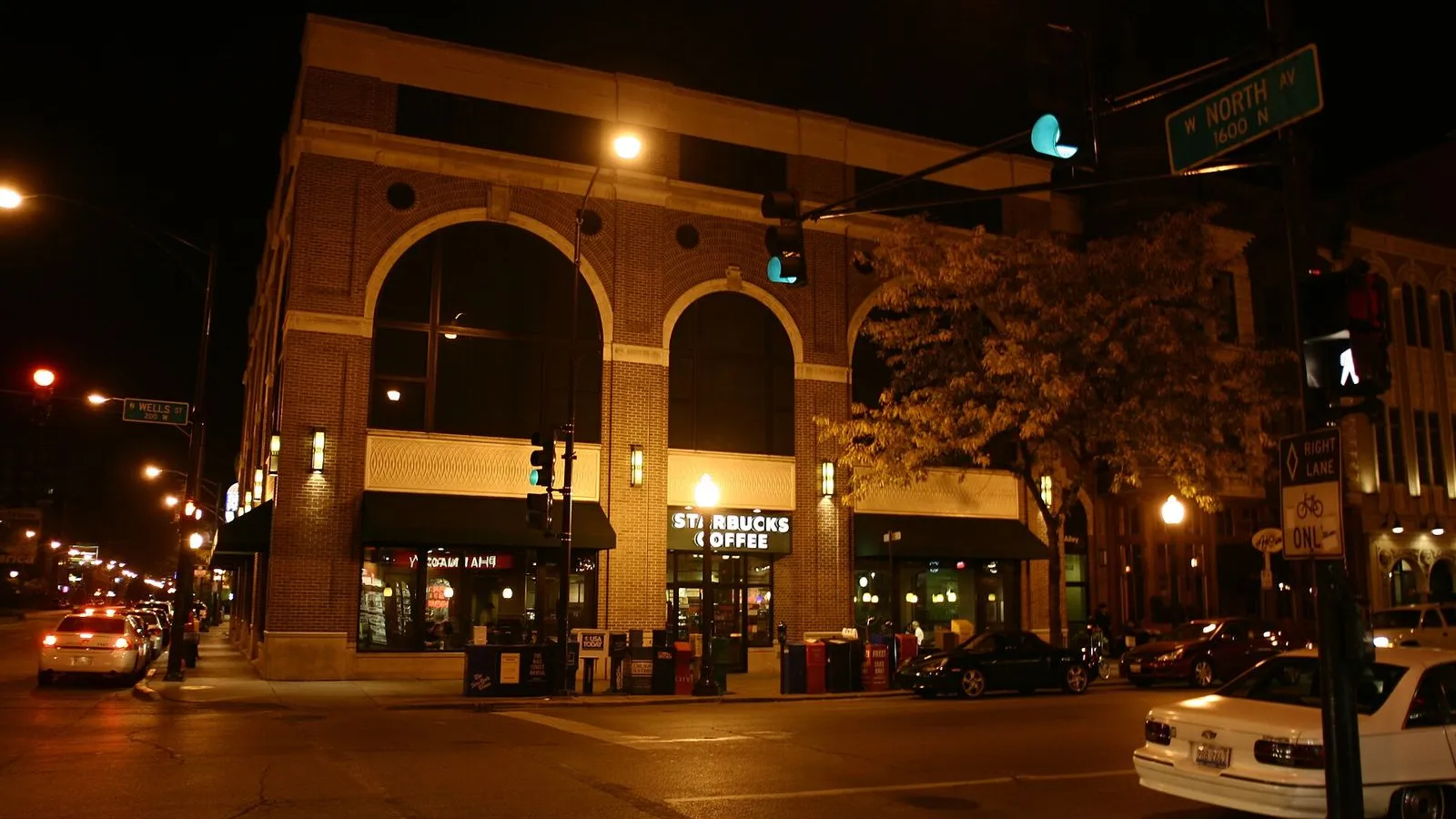
≈2 min walk to the next stop
Wells StreetLocal pick

Photo by User:Victorgrigas on Wikimedia Commons

Wells Street

0:00

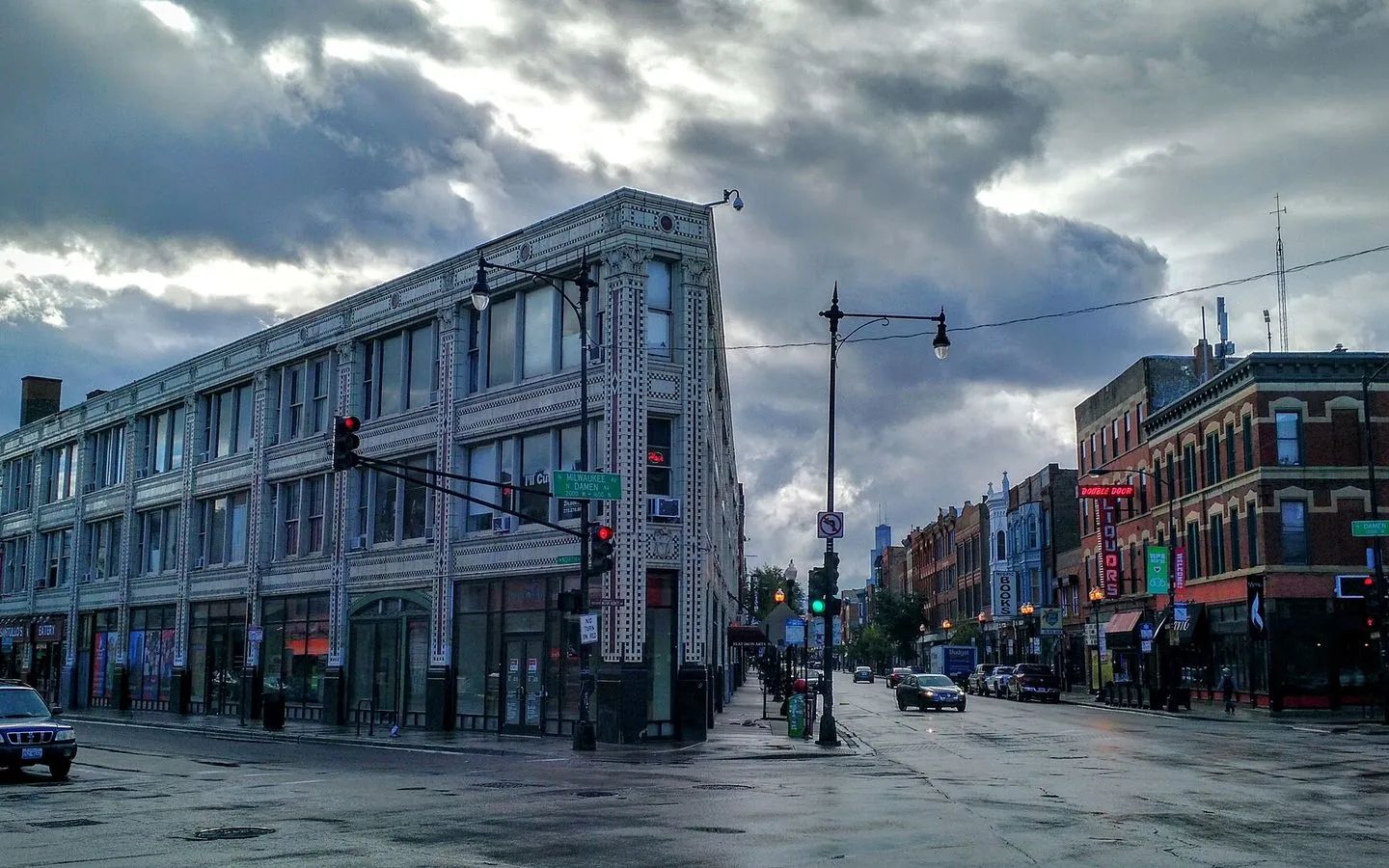
The brick-paved commercial spine of Old Town, lined with shops, restaurants, and bars in buildings rebuilt right after the 1871 fire.

You are on Wells Street, the main commercial thread that runs through the heart of Old Town. The brick paving under your feet is not a decorative choice. After the fire, the city mandated fireproof materials for new construction, and the streets got the same treatment. Look at the buildings lining both sides.

Most went up between 1872 and 1875, built by German immigrant families who lived above their ground-floor shops. A butcher might have run his counter where that coffee shop now stands; a bakery, where the wine bar pours. The two-story wood-frame storefronts with tall display windows and simple cornices are the same form you would have seen on any Chicago neighborhood street before the fire wiped most of them away. Keep an eye out for the fire relief cottages.

After the disaster, the Chicago Relief and Aid Society built thousands of small, sturdy wooden houses for families who had lost everything. At least one still stands on Wells Street, its compact footprint and steep gable a quiet reminder of a city that rebuilt itself in a hurry. This stretch has been a commercial strip for over 150 years, and it still feels like a neighborhood, not a set piece.

≈4 min walk to the next stop
St. Michael's ChurchMust see

Photo by Victorgrigas on Wikimedia Commons

St. Michael's Church

0:00

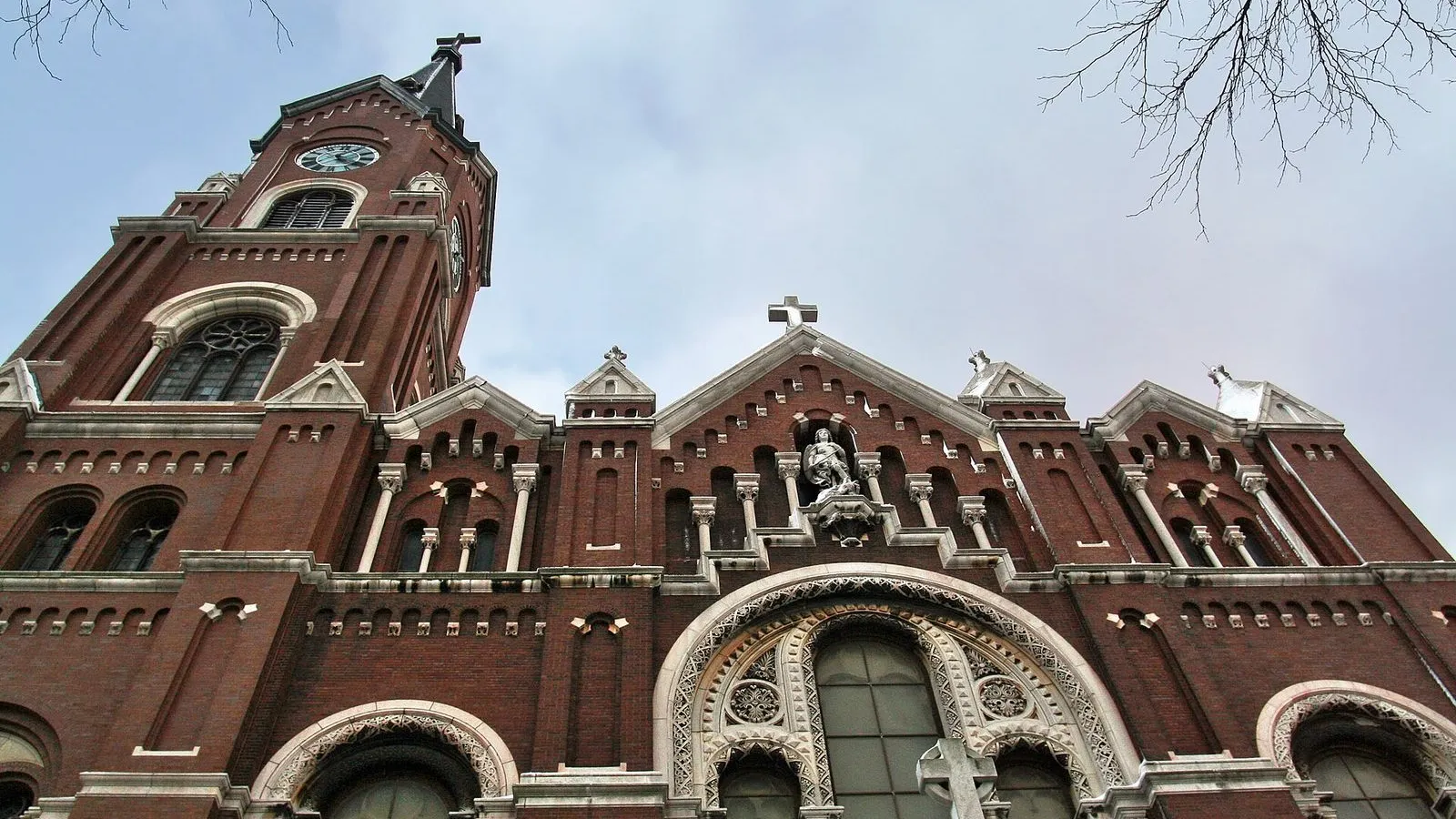
The red-brick Roman Catholic church whose walls survived the Great Fire; its 290-foot spire has anchored Old Town since 1888.

You are looking at St. Michael's Church, the spiritual and physical anchor of this neighborhood. The parish was founded in 1852 to serve the German immigrants who had settled here, on land donated by brewer Michael Diversey, whose name you will still see on a major Chicago street. The first church was a modest wooden building, but by 1869 the congregation had outgrown it and dedicated this far grander brick church with a 200-foot steeple.

For two years it was the tallest building in Chicago, taller even than the Water Tower. Then came the fire. On October 8, 1871, as the flames swept north, priests and parishioners packed the church's treasures into an oxcart and fled. By morning only the stone walls remained; the steeple had collapsed and the bells had melted into a fused mass in the rubble.

Rebuilding began within a week. The congregation incorporated the surviving walls into the new structure, and on October 12, 1873, the church was rededicated. In 1888 they added the 290-foot spire you see now, topped by a gilded cross and a clock built by the famed Milwaukee craftsman Mathias Schwalbach. Inside, five bells cast in 1876 still ring: St.

Michael, St. Mary, St. Joseph, St. Alphonsus, and St.

Theresa.

≈12 min walk to the next stop
Free preview ends here · stops 4 to 7 continue in the app

Chicago History Museum

Chicago's oldest cultural institution, founded in 1856, sitting on ground that was once the southern edge of the city cemetery.

in app

Couch Tomb

A 50-ton stone mausoleum from 1858, the only grave left behind when the city cemetery became Lincoln Park.

in app

Lincoln Park Conservatory

A Victorian glass conservatory with four show houses, open free to the public since the 1890s at the northern edge of the old cemetery grounds.

in app

Lincoln Park Zoo

One of the oldest zoos in North America, free since it opened with a pair of swans in 1868, now home to hundreds of species.

in app
Good to know

Before you go

How much of this walk is free?

Almost all of it. The Old Town streets, Lincoln Park, and the Couch Tomb are free to see from the paths, the Lincoln Park Zoo is free and open 365 days a year, and the Lincoln Park Conservatory is free with a timed reservation. The Chicago History Museum is the one stop with a paid ticket.

SourceLincoln Park ZooChicago Park District
Can I go inside the Couch Tomb?

No. It is a sealed stone vault from 1858, the one grave left behind when the city cemetery became Lincoln Park. You view it from the path beside the Chicago History Museum.

Provenance · last verified August 10, 2026

Built from the Wayside route itself: the stops, their order, and the walk between them.

Photo by Ranjit Souri on Unsplash

Photo by Thshriver on Wikimedia Commons · CC BY-SA 3.0

Photo by User:Victorgrigas on Wikimedia Commons · Public domain

Photo by Victorgrigas on Wikimedia Commons · Public domain

Photo by Acediscovery on Wikimedia Commons · CC BY 4.0

Photo by Chicago Running Tours & more on Openverse · CC BY 2.0

Photo by artistmac on Openverse · CC BY-SA 2.0

Photo by Ryan Dickey from Evanston, IL / Chicago, United States on Wikimedia Commons · CC BY 2.0

Photo by artistmac on Openverse · CC BY-SA 2.0

Photo by David Paul Ohmer on Openverse · CC BY 2.0

Photo by Ben Collins-Sussman on Wikimedia Commons · CC BY 2.0

Coming soon

Wayside isn't in the app stores yet, but it's in the works. Check back soon.