Walking tours in the United States
The United States is a country the size of a continent, and it behaves like one. The contiguous states alone stretch roughly 3,000 miles, taking in Atlantic salt marsh, Appalachian hardwood, Gulf bayou, prairie, desert, and the granite peaks of the Rockies. Its National Park System holds 433 units across more than 85 million acres, including Yellowstone and the volcanoes of Hawai'i. Cities change character with the map: Miami runs on Cuban coffee, New Orleans cooks Creole, San Antonio keeps its Spanish colonial plaza, Seattle lives on its harbor. History here is recent enough to stand in: colonial meeting houses, the lunch counters of the civil rights movement. American food is regional by instinct, shaped by people who arrived from everywhere, often not by choice. And traveling here means wide skies, long light, and a diner counter at breakfast where nobody hurries you.

Photo by Trent Erwin on Unsplash
When is the best time to visit the United States?
Spring
- Months
- March to May
- Weather
- Spring brings mild temperatures and blooming trees across much of the country, and it is a strong window for cities, road trips, and parks as they reopen.SourceTravelWithHello United States guide
- Crowds
- Crowds are moderate except during spring break weeks in March and April, when beaches and theme parks fill up and national park campgrounds book out as reservations open.
Summer
- Months
- June to August
- Weather
- Summer is hot almost everywhere; July is typically the warmest month, with average highs near 30°C (86°F), and the Atlantic hurricane season runs June 1 to November 30.SourcePackzup United States guideNOAA National Hurricane Center
- Crowds
- This is peak season: school holidays run from late May into early September, national parks and beaches reach capacity, and lodging and rental car prices hit their highest. Book permits and rooms months ahead.
Autumn
- Months
- September to November
- Weather
- Autumn brings cooler, steadier weather and fall color, but September 10 is the statistical peak of hurricane season, and storms remain possible through November 30.SourceNOAA National Hurricane Center
- Crowds
- Shoulder season pricing returns outside leaf-peeping country; New England's two weeks of fall color are that region's busiest and most expensive window of the year.
Winter
- Months
- December to February
- Weather
- Winter is cold and snowy across the North and mild in Florida and the Southwest; December through March is snow sports season in Colorado, Utah, and Vermont.SourceTravelWithHello United States guidePackzup United States guide
- Crowds
- The last two weeks of December bring the heaviest travel of the year; ski resorts and warm weather escapes fill for the holidays, and January into early February is the quietest stretch.
| Season | Months | Weather | Crowds |
|---|---|---|---|
| Spring | March to May | Spring brings mild temperatures and blooming trees across much of the country, and it is a strong window for cities, road trips, and parks as they reopen.SourceTravelWithHello United States guide | Crowds are moderate except during spring break weeks in March and April, when beaches and theme parks fill up and national park campgrounds book out as reservations open. |
| Summer | June to August | Summer is hot almost everywhere; July is typically the warmest month, with average highs near 30°C (86°F), and the Atlantic hurricane season runs June 1 to November 30.SourcePackzup United States guideNOAA National Hurricane Center | This is peak season: school holidays run from late May into early September, national parks and beaches reach capacity, and lodging and rental car prices hit their highest. Book permits and rooms months ahead. |
| Autumn | September to November | Autumn brings cooler, steadier weather and fall color, but September 10 is the statistical peak of hurricane season, and storms remain possible through November 30.SourceNOAA National Hurricane Center | Shoulder season pricing returns outside leaf-peeping country; New England's two weeks of fall color are that region's busiest and most expensive window of the year. |
| Winter | December to February | Winter is cold and snowy across the North and mild in Florida and the Southwest; December through March is snow sports season in Colorado, Utah, and Vermont.SourceTravelWithHello United States guidePackzup United States guide | The last two weeks of December bring the heaviest travel of the year; ski resorts and warm weather escapes fill for the holidays, and January into early February is the quietest stretch. |
Highlights across the United States
- The Freedom Trail on the downtown blocks: Park Street Church, the Granary Burying Ground, and Faneuil Hall.
- Grand Central Terminal's celestial ceiling, the New York Public Library's marble lions, and the elm tunnel of Central Park's Mall.
- Cloud Gate, the mirrored bean in Millennium Park, with the lakefront path behind it.
- The Venetian Pool in Coral Gables, carved from a coral-rock quarry in 1924.
- The Morse Museum in Winter Park, home to the largest Tiffany glass collection in the world.
- The Golden Gate Bridge on foot from Fort Point, out toward the south tower.
- The Venice Beach boardwalk and the old canals of Abbot Kinney's 1905 Venice of America.
- The Bellagio fountains and the 550-foot High Roller on the Strip walk.
- Pike Place Market and the Overlook Walk down to Elliott Bay.
- ʻIolani Palace, the only royal palace on U.S. soil, and the gilded Kamehameha statue facing it.
Where to walk in the United States
 7 tours
 8 tours
 6 tours
 3 tours
 5 tours
 7 tours
 8 tours
 4 tours
 8 tours
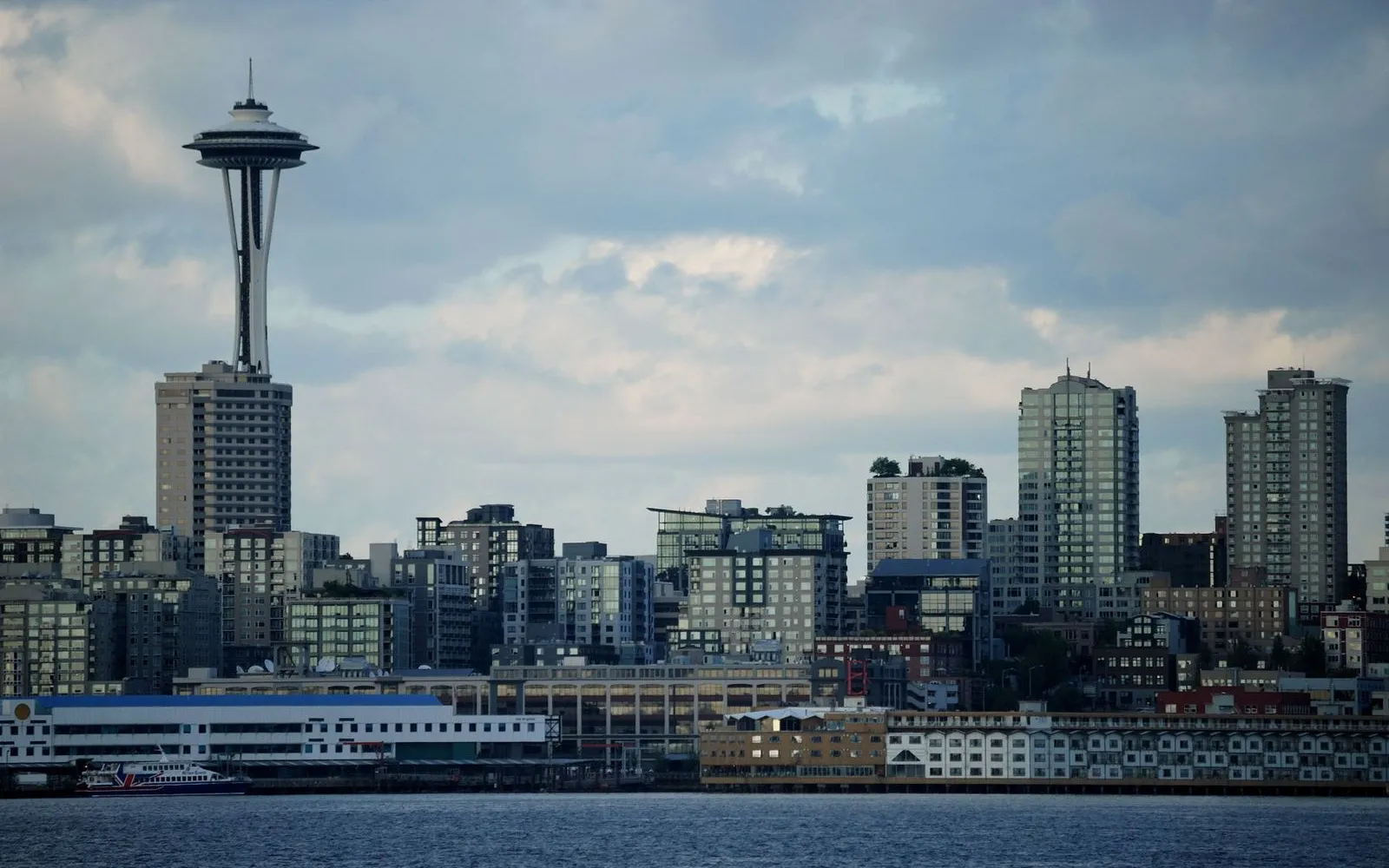 7 tours
Planning a trip to the United States
Do I need a visa to visit the United States?
Citizens of Visa Waiver Program countries do not need a visa for visits of 90 days or less. They need an approved ESTA instead, which costs $40.27, lasts two years or until the passport expires, and is applied for online; allow up to 72 hours for processing and use the official government site rather than a lookalike service. Travelers from outside the program need a visitor visa from a U.S. embassy or consulate.
SourceOfficial ESTA Application WebsiteUSAGovIs the United States expensive to visit?
The United States can be expensive, and hotels decide most of it: the cheapest central double room averaged $375 a night in Boston and $338 in New York in October 2025, against $227 in Washington. Trains cost less when booked early, and the Smithsonian museums on the National Mall, along with Independence Hall and the Liberty Bell in Philadelphia, are free.
SourceCheapHotels.orgSmithsonian InstitutionNYC ItineraryWhich cities should I visit in the United States?
For a first week, take the Northeast Corridor: Boston, New York City, Philadelphia, and Washington sit on one rail line, each of them walkable, with Amtrak running multiple departures daily. California, Florida, and Hawaii each deserve a week of their own, and the other trips on this page sketch those routes.
SourceAmtrakDo I need a car in the United States?
The Northeast Corridor route works without a car: Amtrak connects the four city centers downtown to downtown, and the sightseeing happens on foot. Outside the corridor it depends on the region; California and Florida are easier with a car, while Honolulu and Chicago work well without one.
SourceAmtrakMore of the United States
- ItineraryOne week in The Northeast CorridorBoston to Washington by train, with a Philadelphia day trip and free Smithsonian museums at the finish.
- Know before you gothe United States essentialsVisa and ESTA rules, dollars and tipping, intercity trains and flights, plug adapters, holiday closures, and the seasons that shape where you go when.

Plan your visit
Take the United States with you.
Download Wayside for the Boston and New York City walking tours, with every stop mapped and narrated.
Provenance · last verified September 27, 2026
Researched by Wayside, with every operational fact checked against the source.
SourcesU.S. Customs and Border ProtectionCBP immigration fee notice (Federal Register)TravelWithHello United States guideTripCostGuide sales tax report (2026)Lonely PlanetGo2USA practical informationPackzup United States guideU.S. Environmental Protection AgencyNOAA National Hurricane CenterOfficial ESTA Application WebsiteUSAGovCheapHotels.orgSmithsonian InstitutionNYC ItineraryAmtrak
Photo by Trent Erwin on Unsplash
Photo by Sean Sweeney on Unsplash
Photo by Dylan LaPierre on Unsplash
Photo by Hunter Reilly on Unsplash
Photo by Tyler Hardie on Unsplash
Photo by Edgar Torabyan on Unsplash
Photo by Oskar Kadaksoo on Unsplash
Photo by Danny Best on Unsplash
Photo by Leslie Gray Photography on Unsplash
Photo by Andrew Whitmore on Unsplash
Photo by Dennis Hamilton on Wikimedia Commons · CC BY 2.0