Chicago · Self-guided audio walk

Hyde Park: Gothic Towers and the Ghost of the White City

Walk through the University of Chicago's limestone quadrangles, stand before a Frank Lloyd Wright masterpiece, and trace what the 1893 World's Fair left behind.

  • 6Stops
  • 3.1 kmDistance
  • 45+ minTime
Hyde Park: Gothic Towers and the Ghost of the White City

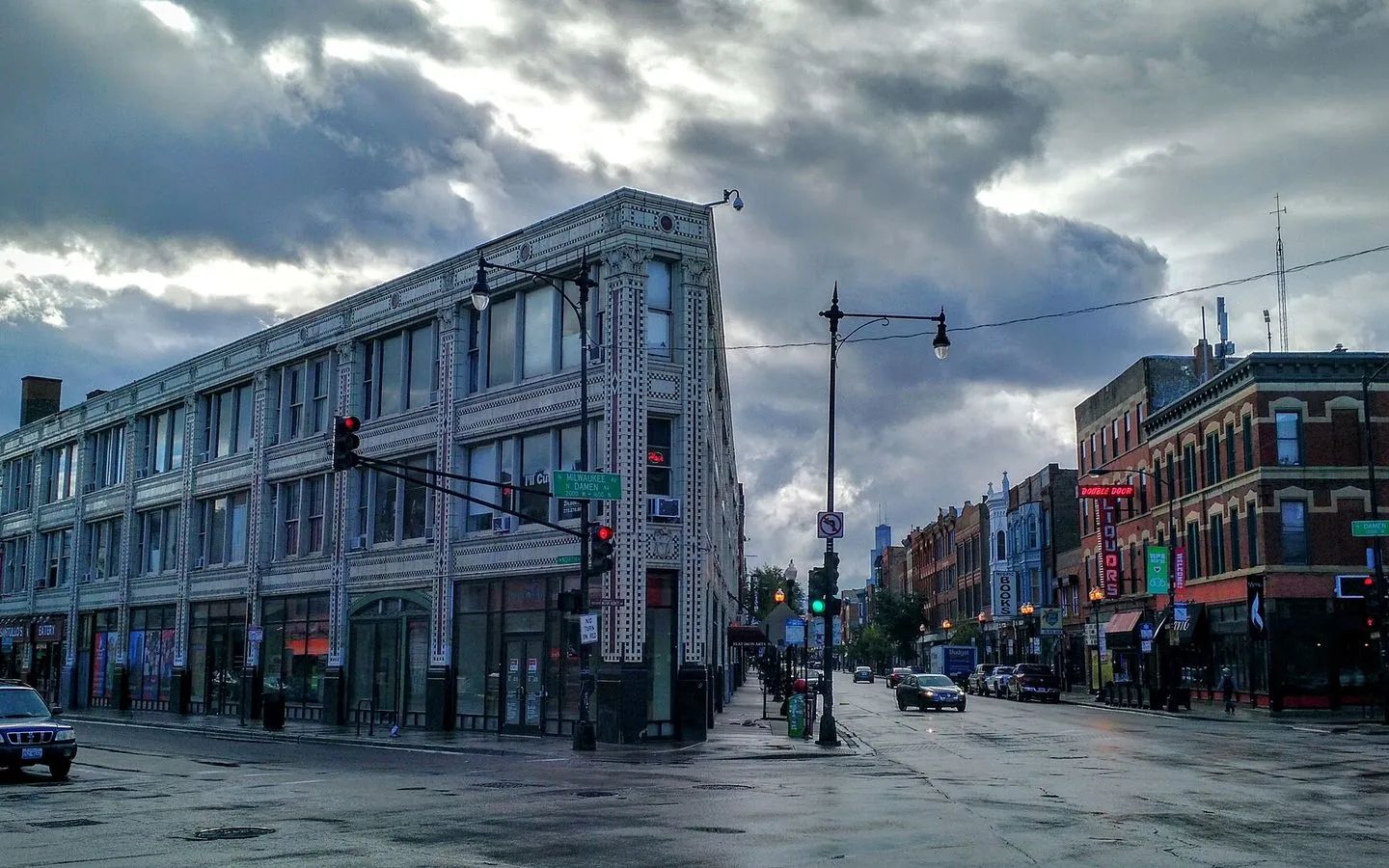
Photo by artistmac on Openverse

Hyde Park feels like a world apart, even though the Loop is a half-hour train ride north. This self-guided walk takes you through the University of Chicago's English Gothic quadrangles, built in gray Indiana limestone and known since the 1890s as the Gray City. You will stand beneath the carillon tower of Rockefeller Memorial Chapel, step inside Frank Lloyd Wright's Robie House, and walk the full length of the Midway Plaisance, the amusement strip that gave English the word midway. The route ends at the Museum of Science and Industry, the last building standing from the 1893 World's Columbian Exposition, and the quiet Osaka Garden on Jackson Park's Wooded Island. Along the way, you will hear how a marsh became the White City, why a Prairie house changed architecture forever, and what happens when a canal meant for gondolas becomes a mile of ice in winter.

Hear it on the street

Get the turn-by-turn audio guide in the app. The narration plays itself as you reach each stop, hands-free and offline.

Stop by stop

The route

Interactive map of the route. The full stop list below works without it.

University of Chicago Main QuadranglesMust see

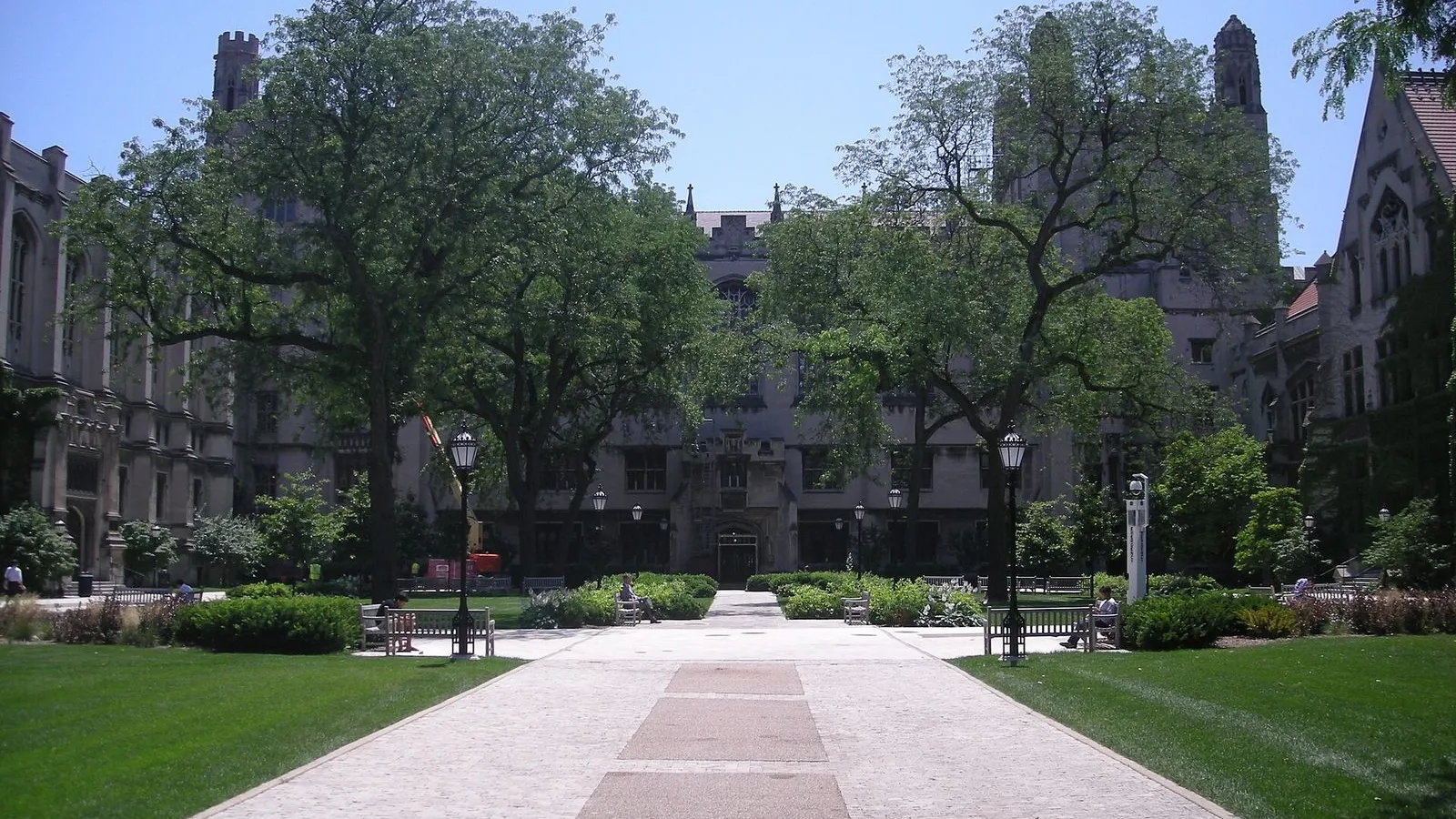
Photo by Michael Barera on Wikimedia Commons

University of Chicago Main Quadrangles

0:00

Gray Indiana limestone quadrangles in English Gothic style, built in 1892 and still the heart of the University of Chicago campus.

You are standing inside the Main Quadrangles, the original heart of the University of Chicago. Architect Henry Ives Cobb laid out these six interlocking courtyards in 1892, modeling them on the medieval colleges of Oxford and Cambridge. Every building you see is gray Indiana limestone, carved with gargoyles, griffins, and crockets. When the 1893 World's Columbian Exposition opened just across the Midway, its neoclassical pavilions were painted bright white, the White City.

The press immediately dubbed this campus the Gray City, and the name stuck. John D. Rockefeller put up the money and Marshall Field donated the land. Cobb designed eighteen of the original buildings, mixing Early English, Decorated, and Tudor Gothic into something entirely new.

The 215 acres of green space you are walking through have been a designated botanic garden since 1997. Look north and you can see the downtown skyline, about nine miles away, rising above the treetops like a second city. Walk east out of the quadrangles toward Woodlawn Avenue. The tall Gothic tower ahead is your next stop.
≈4 min walk to the next stop
Rockefeller Memorial ChapelMust see

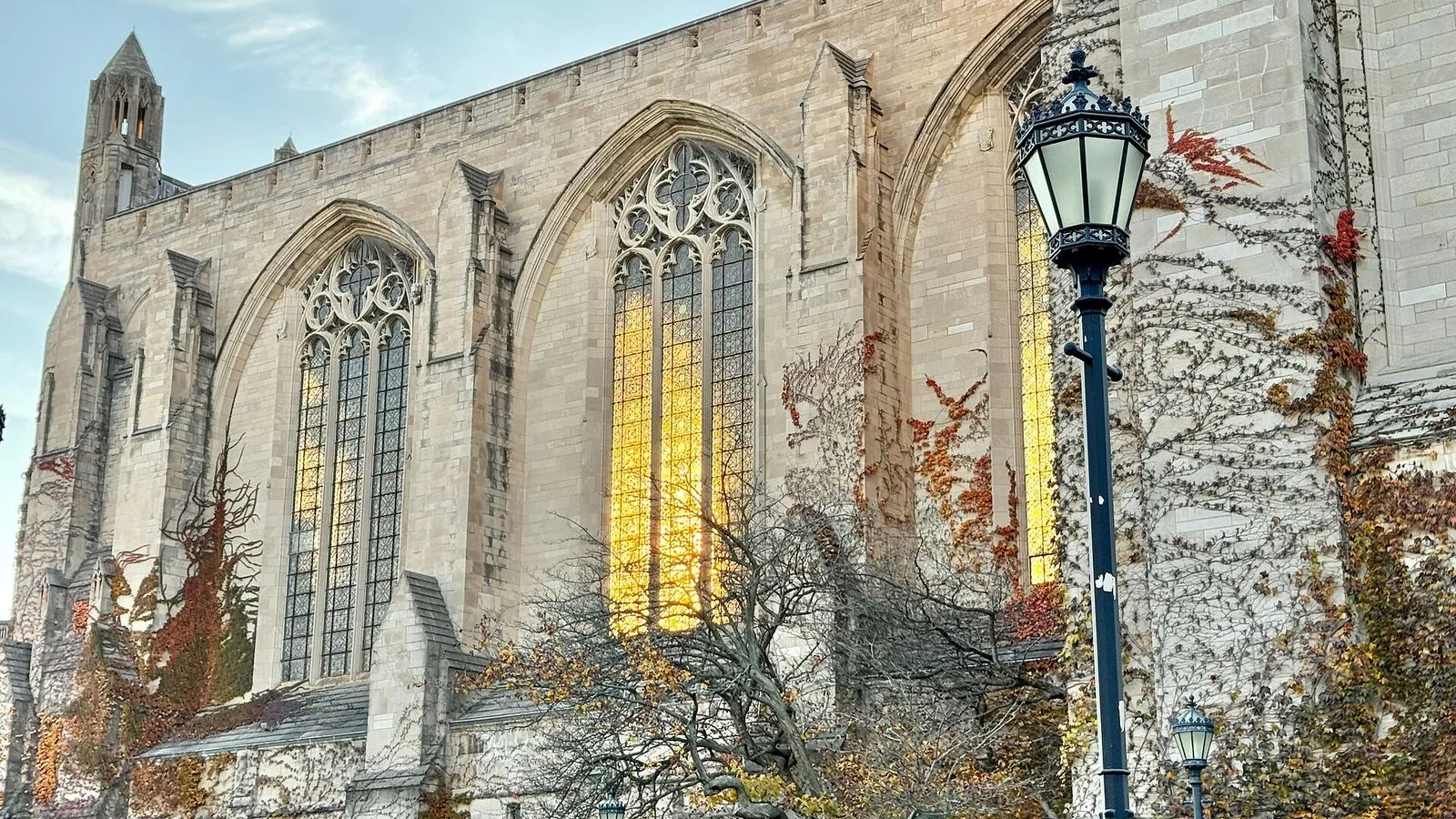
Photo by w_lemay on Wikimedia Commons

Rockefeller Memorial Chapel

0:00

A towering Gothic chapel with the second-heaviest carillon in North America, 72 bells and 100 tons of bronze.

This is Rockefeller Memorial Chapel, completed in 1928 and designed by Bertram Goodhue. It houses one of the great musical instruments of the world: the Laura Spelman Rockefeller Memorial Carillon. Seventy-two bells, cast over three years by the Gillett and Johnston foundry in Croydon, England, and installed in 1932. Together they weigh a hundred tons.

The largest bell, the bourdon, weighs eighteen and a half tons and sounds a low C-sharp. Only the carillon at Riverside Church in New York, its sister instrument, is heavier. The carillon plays every weekday at noon and five during the academic terms. Students can learn to play it, climbing 235 steps to the playing cabin.

The instrument was fully restored between 2006 and 2008 by Royal Eijsbouts of the Netherlands, with the smallest bells moved to the top of the frame so their sound could reach the ground. When you are ready, head south on Woodlawn Avenue. Number 5757, a block and a half down, is Frank Lloyd Wright's Robie House.

≈3 min walk to the next stop
Frederick C. Robie HouseMust see

Photo by w_lemay on Wikimedia Commons

Frederick C. Robie House

0:00

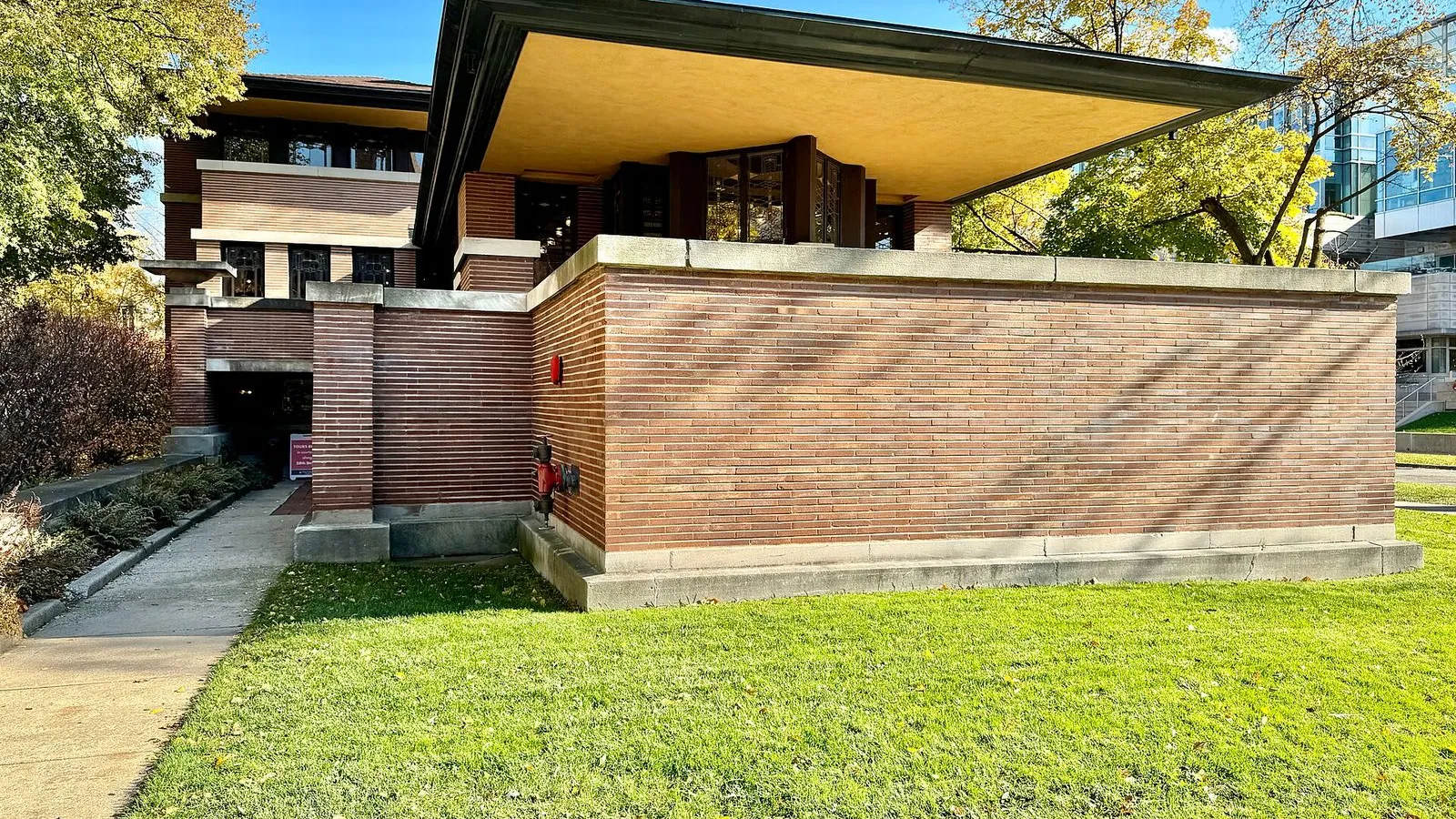
Frank Lloyd Wright's 1910 Prairie style masterpiece, a UNESCO World Heritage site with sweeping horizontal lines.

You are looking at the Frederick C. Robie House, finished in 1910 and widely considered the finest expression of Frank Lloyd Wright's Prairie style. The long, low roof, the bands of art glass windows, the brick that seems to hug the ground, Wright designed every detail to echo the flat Midwestern landscape. Frederick Robie was a bicycle manufacturer who wanted a modern home, and Wright gave him something that looked like nothing else in America.

The house is a series of horizontal planes sliding past each other. The entrance is hidden, tucked away so you discover it rather than face it. Inside, the spaces flow around a central hearth. Robie and his family lived here just fourteen months before financial trouble forced them to sell.

In 1957, the Chicago Theological Seminary planned to tear it down, and Wright himself, then ninety years old, came to protest. The house is now a National Historic Landmark and part of a UNESCO World Heritage listing. When the house was new, its windows looked out across open space toward the Midway Plaisance. Walk south half a block and you will step into it.

≈5 min walk to the next stop
Free preview ends here · stops 4 to 6 continue in the app

Midway Plaisance

The mile-long Olmsted green that was the 1893 World's Fair amusement strip, where the word midway was born.

in app

Museum of Science and Industry

The last building standing from the 1893 World's Fair, now one of the largest science museums in the world.

in app

Osaka Garden

A quiet Japanese garden on Jackson Park's Wooded Island, first planted for the 1893 World's Fair and still blooming today.

in app
Good to know

Before you go

Do I need to pay to see the University of Chicago campus?

No. The main quadrangles and the Midway Plaisance are open public ground. Rockefeller Memorial Chapel is free to visit during public hours, currently Tuesday through Friday from 11 a.m. to 5 p.m.

SourceUniversity of Chicago
Can I go inside the Robie House?

Interior visits run as guided tours through the Frank Lloyd Wright Trust, and the tours are small and fill up. Book ahead. The outside is visible from the sidewalk.

Provenance · last verified August 10, 2026

Built from the Wayside route itself: the stops, their order, and the walk between them.

Photo by artistmac on Openverse · CC BY-SA 2.0

Photo by Michael Barera on Wikimedia Commons · CC BY-SA 4.0

Photo by w_lemay on Wikimedia Commons · CC BY-SA 2.0

Photo by w_lemay on Wikimedia Commons · CC BY-SA 2.0

Photo by Acediscovery on Wikimedia Commons · CC BY 4.0

Photo by Chicago Running Tours & more on Openverse · CC BY 2.0

Photo by Ryan Dickey from Evanston, IL / Chicago, United States on Wikimedia Commons · CC BY 2.0

Photo by Ranjit Souri on Unsplash

Photo by artistmac on Openverse · CC BY-SA 2.0

Photo by David Paul Ohmer on Openverse · CC BY 2.0

Photo by Ben Collins-Sussman on Wikimedia Commons · CC BY 2.0

Coming soon

Wayside isn't in the app stores yet, but it's in the works. Check back soon.