Chicago · Self-guided audio walk

La Diez y Ocho: Pilsen's Living Gallery

A walk down 18th Street through Czech stonework, Mexican murals, and the best tacos in Chicago.

  • 6Stops
  • 5 kmDistance
  • 70+ minTime
La Diez y Ocho: Pilsen's Living Gallery

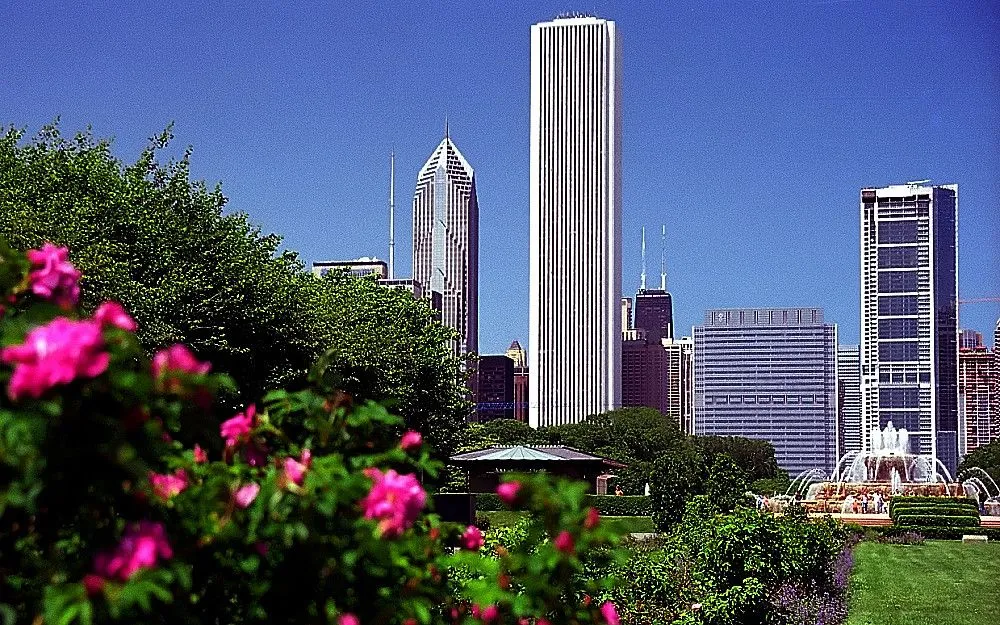
Photo by Acediscovery on Wikimedia Commons

Pilsen was built in the 1870s by Czech and Bohemian immigrants who named it after Plzeň and filled it with Romanesque storefronts and a grand opera house. Starting in the 1960s, Mexican families made it their own, covering the railroad viaducts and building walls with murals that have been repainted for fifty years. This walk follows 18th Street from Blue Island Avenue to Damen Avenue, through the National Museum of Mexican Art, past the murals of Throop and Wood, and into Plaza Tenochtitlan. It is a walk for your eyes and your appetite, and every stop has a good taco nearby.

Hear it on the street

Get the turn-by-turn audio guide in the app. The narration plays itself as you reach each stop, hands-free and offline.

Stop by stop

The route

Interactive map of the route. The full stop list below works without it.

18th Street at Blue Island AvenueMust see

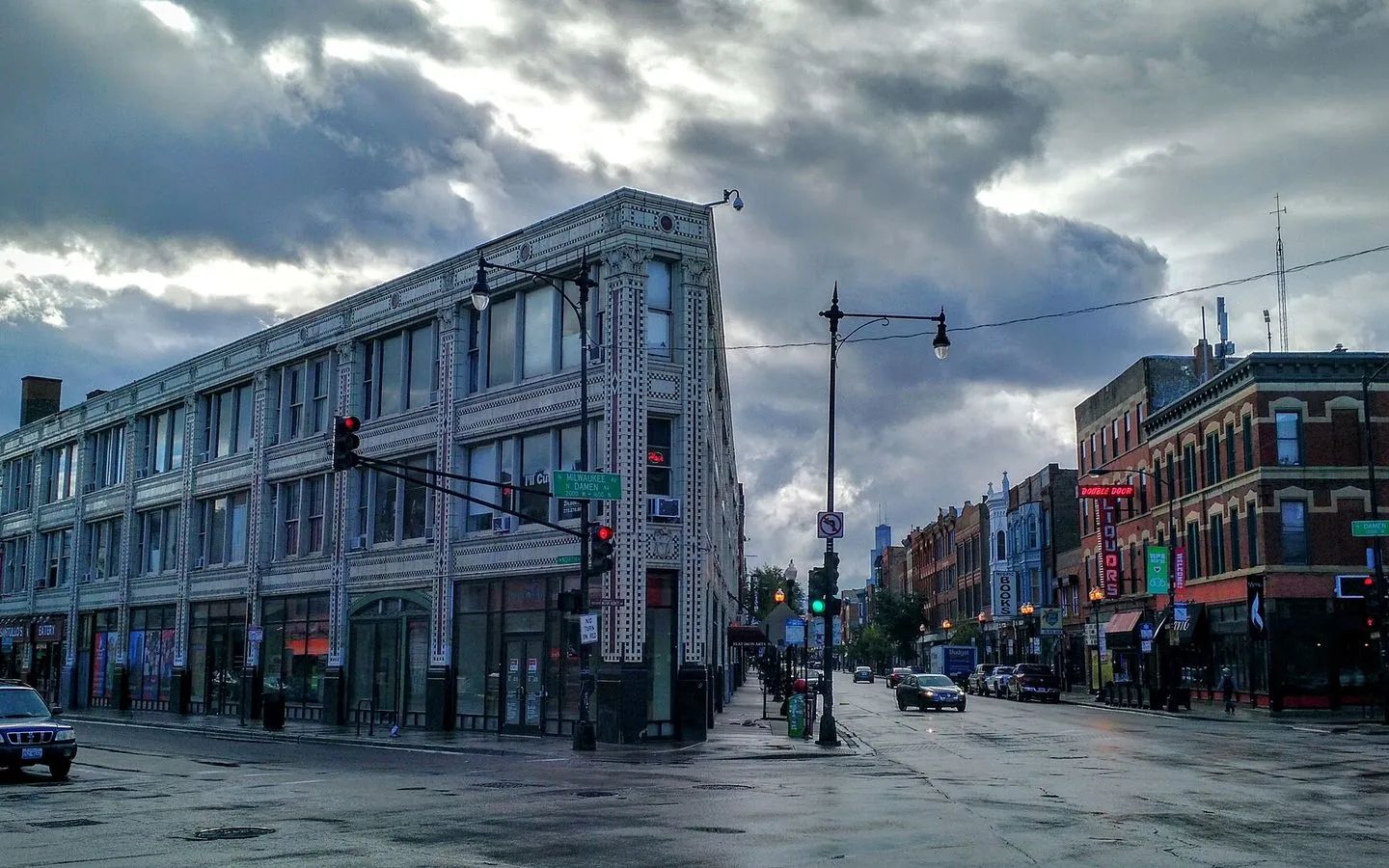
Photo by AlphaBeta135 on Wikimedia Commons

18th Street at Blue Island Avenue

0:00

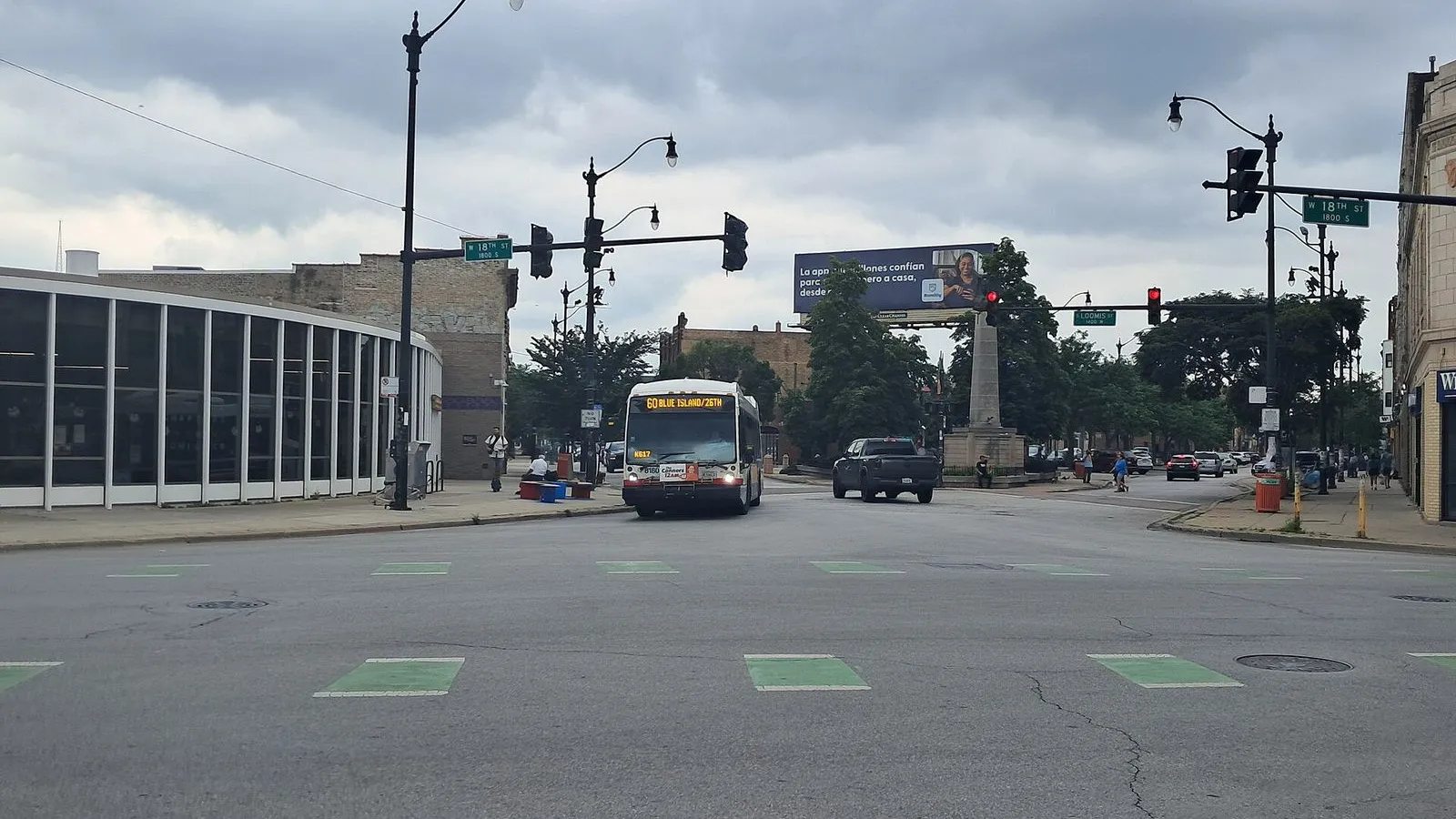
The crossroads where Pilsen's two identities meet: Czech brickwork above, Mexican color below, and a railroad viaduct painted and repainted for fifty years.

You're standing on 18th Street at Blue Island Avenue, the intersection that holds Pilsen together. Look up at the railroad viaduct. Its steel beams and concrete underbelly have been painted and repainted for fifty years. In every direction, the walls carry images: Aztec gods, revolutionary heroes, the faces of kids who grew up on these blocks.

This neighborhood was not always Mexican. It was built in the 1870s by Czech and Bohemian immigrants who came to work the lumber yards, the McCormick Reaper factory, and the railroads. They named it Pilsen after Plzeň, the second city of Bohemia, and they built it in their own image: ornate Romanesque storefronts, sokols, and a grand opera house you will see soon.

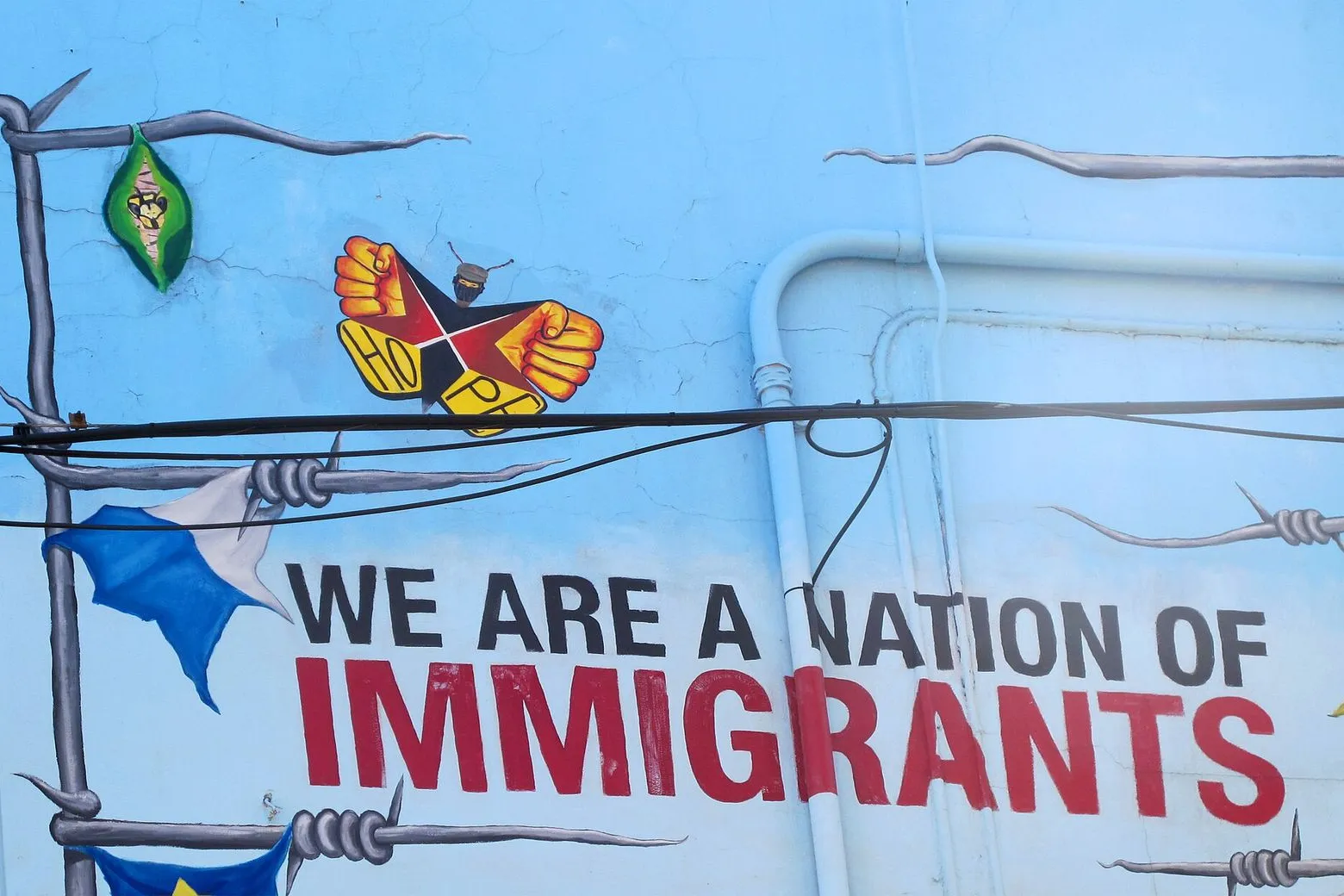
By the 1960s the factories had faded and Mexican families, displaced from the Near West Side by the construction of the UIC campus, began moving in. They brought new food, new music, and a tradition of painting their history on the walls. The viaduct you see has been a canvas since the 1970s, and the art on it has changed many times. Murals here are not monuments. They are conversation.
≈16 min walk to the next stop
National Museum of Mexican ArtMust see

Photo by Adam Jones from Kelowna, BC, Canada on Wikimedia Commons

National Museum of Mexican Art

0:00

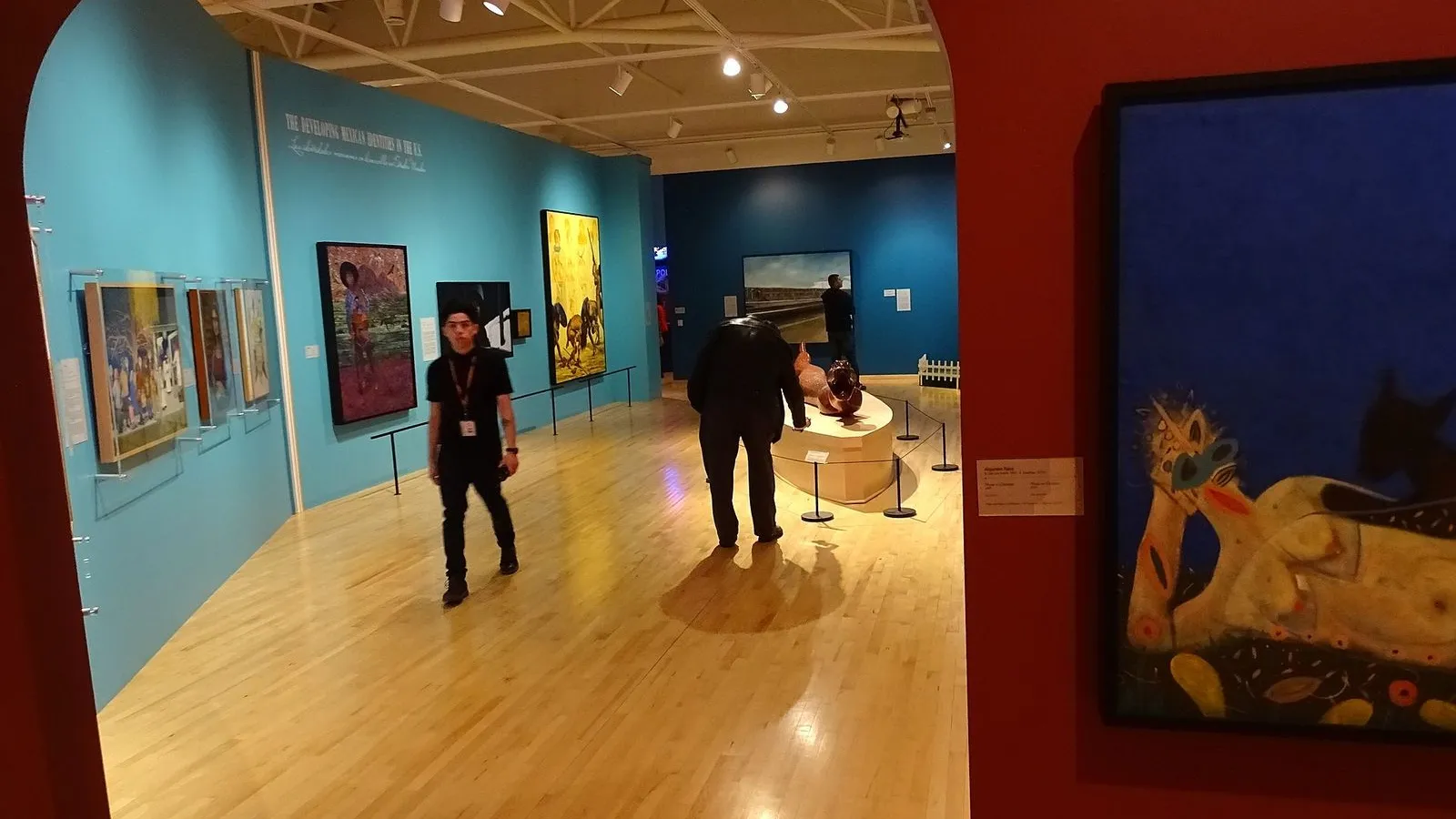
Free and open every day, the largest Latino cultural institution in the United States sits inside Harrison Park, holding 22,000 works of Mexican art.

You are standing in front of the National Museum of Mexican Art, inside Harrison Park. The facade draws from the stone friezes of Mitla in Oaxaca, and the whole building was once a park district boat craft shop. In 1982, a group of teachers led by Carlos Tortolero decided Mexican art deserved its own home. They signed a deal with the park district, converted this building, and opened in 1987.

Today it holds more than 22,000 pieces, from pre-Cuauhtemoc objects to contemporary Chicano work. The day of the dead exhibition each fall is legendary. The permanent collection spans ancient Mesoamerica, colonial silver, revolutionary prints, and the bright painting of the last forty years. And it is always free. Tortolero insisted on that from the start: the art belongs to the neighborhood, and nobody should have to pay to see their own culture on the walls.

The museum calls itself a first-voice institution. Mexican and Mexican American curators, artists, and educators decide what gets shown and how it gets described. It is the only Latino museum accredited by the American Alliance of Museums.

Spend time inside. Exit the park the way you came and walk east on 18th Street toward Allport.

≈22 min walk to the next stop
Thalia HallMust see

Photo by Unknown authorUnknown author on Wikimedia Commons

Thalia Hall

0:00

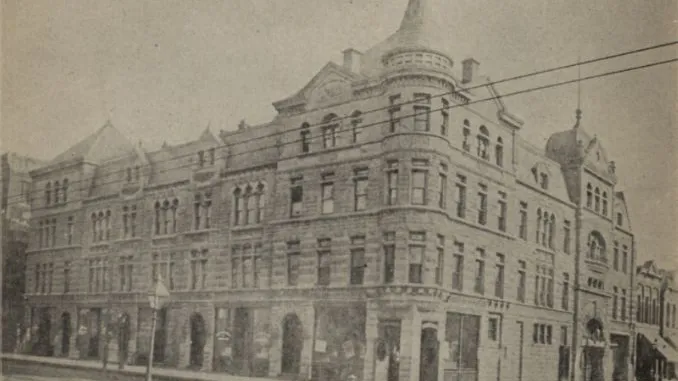
An 1892 Romanesque Revival opera house built by a Czech tavern keeper, modeled on the Old Opera House of Prague, now a landmark music venue.

This is Thalia Hall, the most beautiful building on 18th Street. John Dusek, a Czech saloonkeeper, hired Faber and Pagel to build it in 1892. They modeled the theater inside on the Old Opera House in Prague and faced the outside in rough-cut limestone with a corner turret and clustered columns. Dusek spent a hundred and forty-five thousand dollars, about twice what a hall like this typically cost. He wanted his neighbors to walk in and feel they were back in Bohemia.

In 1915, a meeting here helped draft the bill that led to an independent Czechoslovakia three years later. The hall hosted Shakespeare in the Bohemian language, Hungarian revolution anniversaries, and decades of weddings and union meetings. It closed to the public in the 1960s and sat dark for almost fifty years. Bruce Finkelman and Craig Golden, the team behind the Empty Bottle, bought it in 2013 and restored the theater to its old extravagance. The tin ceiling, the opera boxes, and the stained glass set into the ceiling all survive.

Today it books touring acts most nights. If a show is on, the room sounds as good as it looks.

From Thalia Hall, walk west on 18th Street. In the next two blocks, the walls become the show.

≈2 min walk to the next stop
Free preview ends here · stops 4 to 6 continue in the app

The 18th Street Murals

Since the 1970s, railroad viaducts and building walls along 18th Street have been a rolling open-air gallery. The paintings get repainted; nothing here is permanent.

in app

Plaza Tenochtitlan

A six-corner plaza anchored by an obelisk carrying a golden eagle with a snake in its beak, a gift from Mexico City to its sister city Chicago.

in app

Damen Avenue in Pilsen

Where 18th Street meets Damen Avenue, the Pink Line rumbles overhead and the layers of Czech brickwork and Mexican storefronts stack together in plain view.

in app
Good to know

Before you go

Is the National Museum of Mexican Art free?

Yes. The museum is free and open every day, and it holds 22,000 works of Mexican art inside Harrison Park. It is the largest Latino cultural institution in the United States.

Is this a good walk for food?

Yes. 18th Street runs through one of the best taco corridors in the city, and the murals and museums sit between taquerias, panaderias, and cafes. Eat as you walk; nothing on the route needs a reservation.

Provenance · last verified August 10, 2026

Built from the Wayside route itself: the stops, their order, and the walk between them.

Photo by Acediscovery on Wikimedia Commons · CC BY 4.0

Photo by AlphaBeta135 on Wikimedia Commons · CC BY 4.0

Photo by Adam Jones from Kelowna, BC, Canada on Wikimedia Commons · CC BY-SA 2.0

Photo by Unknown authorUnknown author on Wikimedia Commons · CC BY-SA 4.0

Photo by Chicago Running Tours & more on Openverse · CC BY 2.0

Photo by artistmac on Openverse · CC BY-SA 2.0

Photo by Ryan Dickey from Evanston, IL / Chicago, United States on Wikimedia Commons · CC BY 2.0

Photo by Ranjit Souri on Unsplash

Photo by artistmac on Openverse · CC BY-SA 2.0

Photo by David Paul Ohmer on Openverse · CC BY 2.0

Photo by Ben Collins-Sussman on Wikimedia Commons · CC BY 2.0

Coming soon

Wayside isn't in the app stores yet, but it's in the works. Check back soon.