 Must see
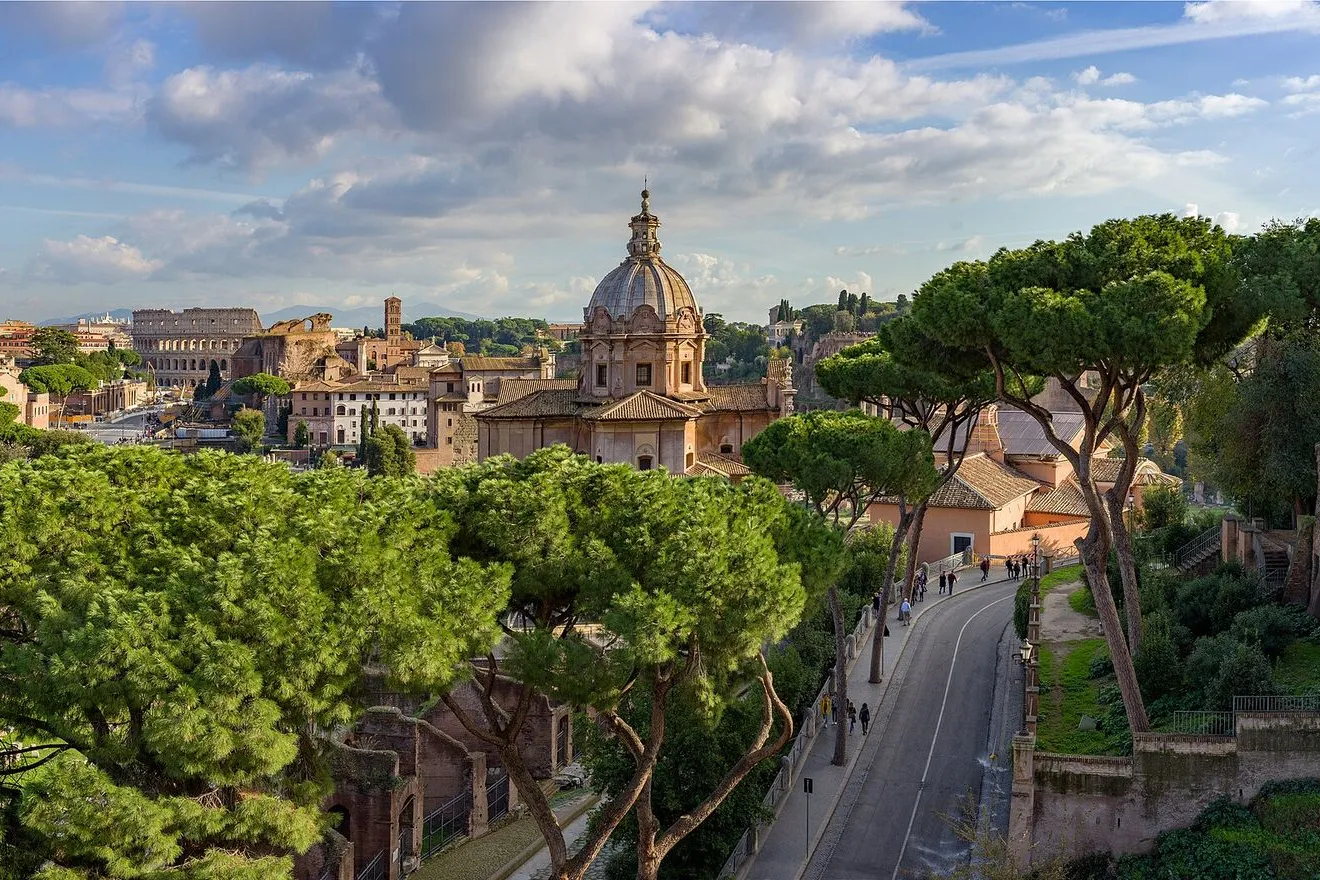
Photo by Matteo del Piano on Unsplash
Colosseum
The largest amphitheatre ever built, opened in 80 AD with one hundred days of games. Its outer wall once stood four stories high and could seat fifty thousand spectators.
You are standing in front of the Colosseum, the largest amphitheatre ever built. Construction started under Vespasian around 72 AD and finished in 80 AD under his son Titus. The site was a deliberate choice: Nero had taken this valley for his private lake, part of his vast Golden House. Vespasian drained it and gave the land back to the people.
The outer wall once rose four stories high, faced in travertine stone. Eighty arched entrances funnelled as many as fifty thousand spectators to their seats, arranged by social rank. The name Colosseum came later, from a colossal bronze statue of Nero that stood nearby. Look at the arena floor.
Most of the wooden surface is gone, exposing the hypogeum underneath: a two-level maze of tunnels, cages, and lifts where animals and gladiators waited. During the inaugural games, which lasted one hundred days, over nine thousand animals were killed. The Colosseum saw four centuries of use before falling silent. For centuries afterward it was a quarry, its stone carted off to build Saint Peter's and the Palazzo Venezia.
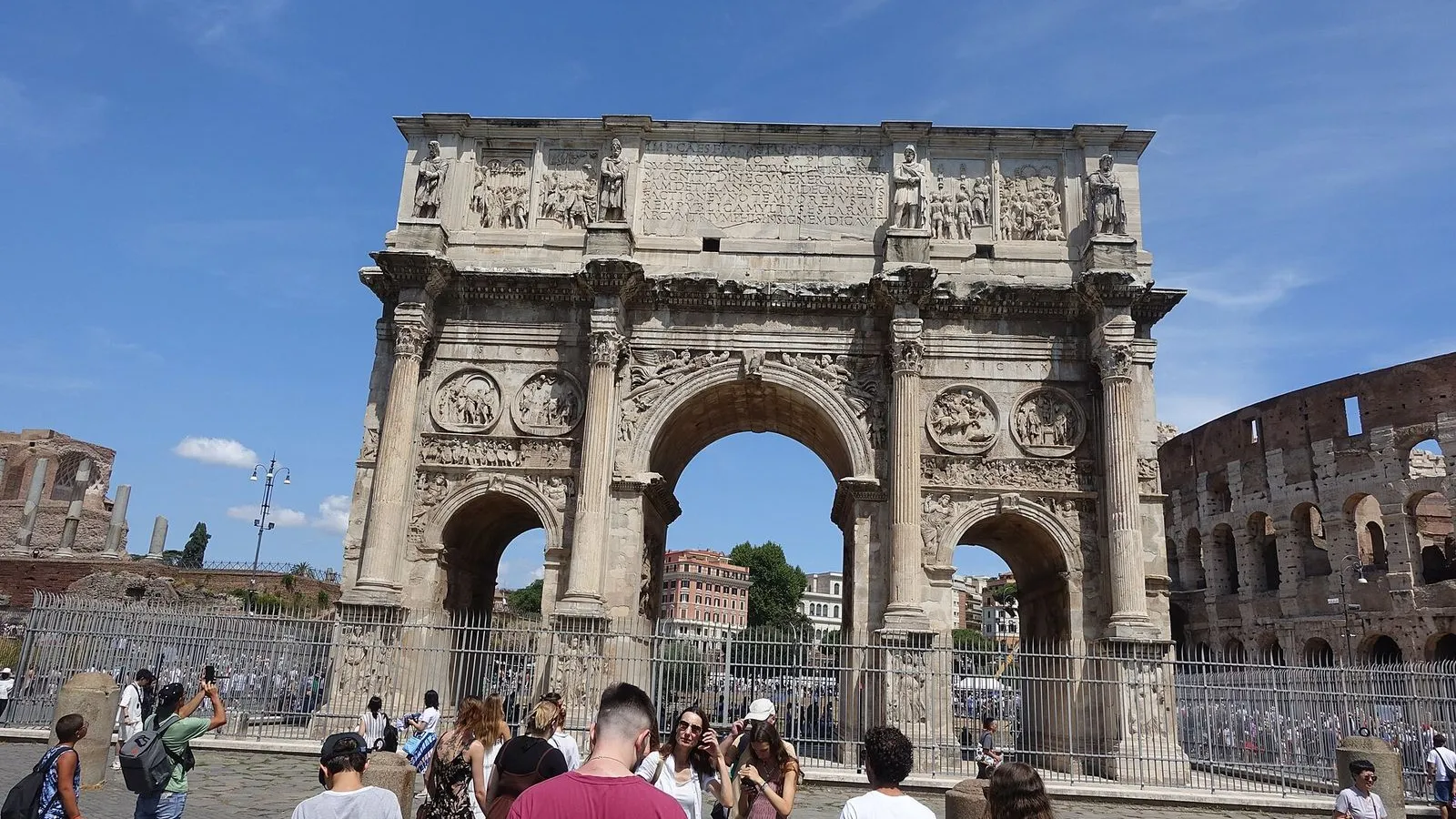
The missing southern side collapsed in an earthquake in 1349. When you are ready, turn toward the large arch just to the west. That is the Arch of Constantine.