Rome · Self-guided audio walk

The Trastevere Climb

Cross a Renaissance bridge, stand before Raphael's Galatea, then climb to the fountain that inspired the Trevi and the finest free panorama in Rome.

  • 6Stops
  • 2.4 kmDistance
  • 40+ minTime
The Trastevere Climb

Photo by Dguendel on Wikimedia Commons

Trastevere is the neighborhood Romans argue about: too many tourists now, they say, and they're half right. But the core still holds. This walk starts on Ponte Sisto, threads the lanes to the golden apse of Santa Maria in Trastevere, then slips into Villa Farnesina, where Raphael's frescoes hang in rooms that stay surprisingly quiet. From there the road climbs: Via Garibaldi winds uphill to the Fontana dell'Acqua Paola, the big fountain the Trevi was modeled on, and then to Piazzale Garibaldi on the Janiculum. The view from up here, St. Peter's dome to the Alban Hills, is the best free panorama in Rome. At noon a cannon fires, a ritual that began in 1847 and has echoed from this hill since 1904. Allow about two and a half hours for the climb and the descent.

Hear it on the street

Get the turn-by-turn audio guide in the app. The narration plays itself as you reach each stop, hands-free and offline.

Stop by stop

The route

Interactive map of the route. The full stop list below works without it.

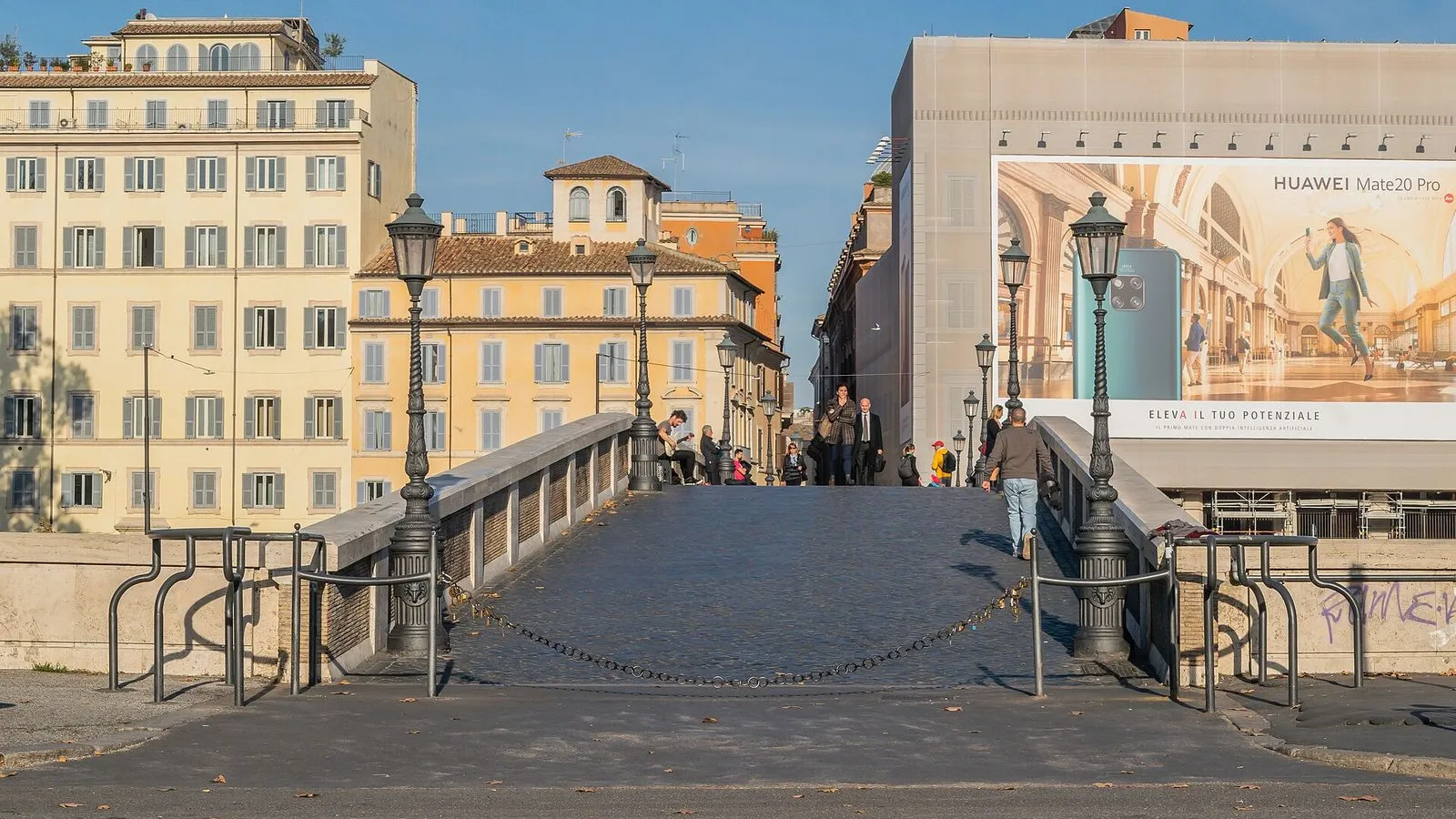
Ponte SistoLocal pick

Photo by Krzysztof Golik on Wikimedia Commons

Ponte Sisto

0:00

A Renaissance pedestrian bridge with a flood-warning oculus, built for Pope Sixtus IV in 1479 on Roman foundations.

You're standing on Ponte Sisto, the pedestrian bridge that links the centro storico to Trastevere. The bridge you're on was built between 1473 and 1479 for Pope Sixtus IV, the first stone bridge raised in Rome since the Empire. Look down at the central arch and you'll see a round opening Romans call the occhialone, the big eye. It was cut to relieve water pressure during floods, and for centuries it was the city's early-warning system: if the Tiber rose to that hole, you got ready to move your belongings upstairs.

The bridge carries eight pipes of Acqua Paola water beneath your feet, still feeding the left bank after four centuries. From here you can see the dome of St. Peter's framed between the plane trees. Take a last look at the river, then cross to the Trastevere side.
≈1 min walk to the next stop
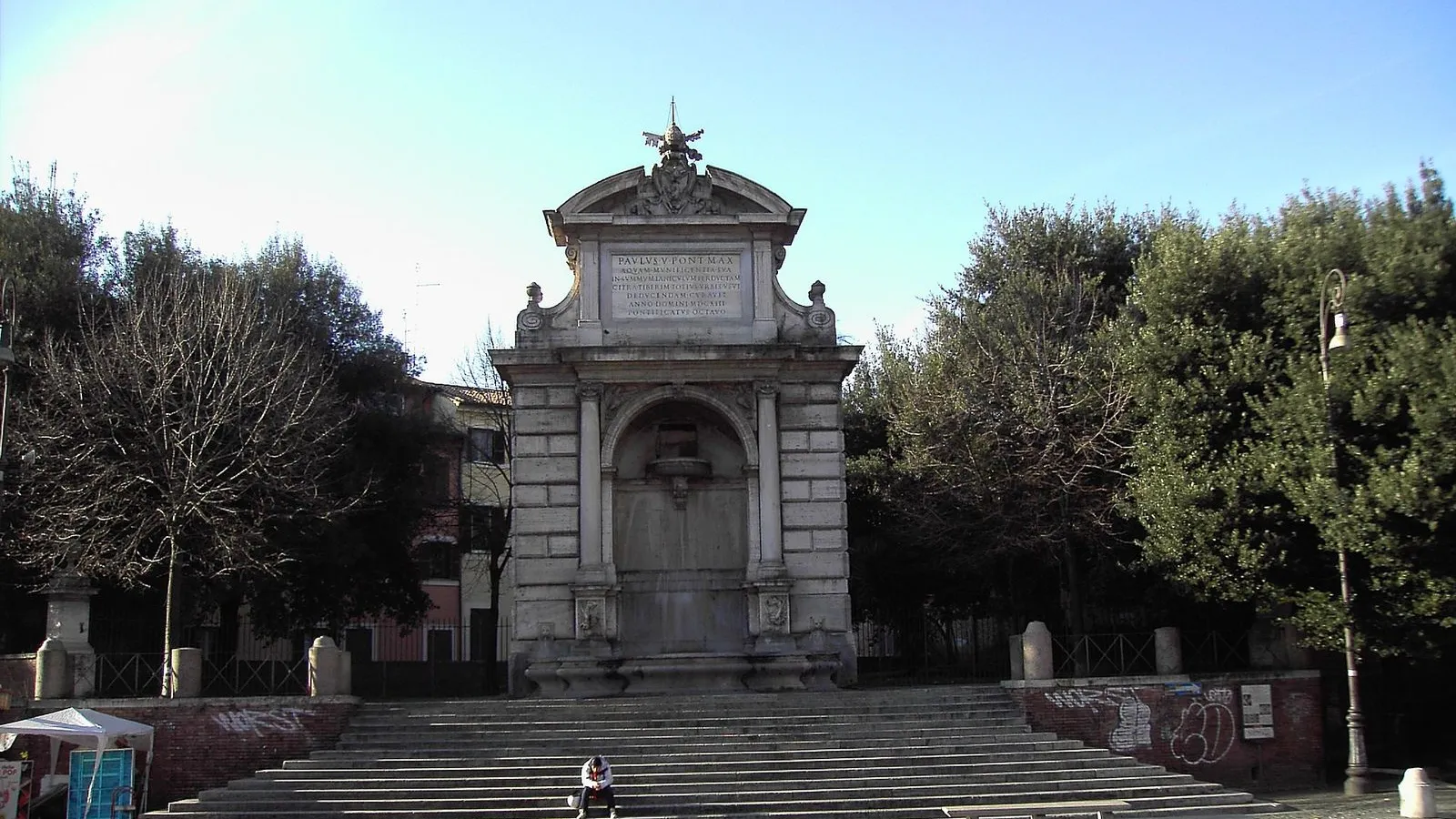
Piazza TrilussaLocal pick

Photo by user:Lalupa on Wikimedia Commons

Piazza Trilussa

0:00

Trastevere's front door, a stepped square centered on a 1613 fountain fed by the Acqua Paola aqueduct.

You've crossed into Trastevere. The square under your feet is Piazza Trilussa, a living room for the neighborhood. The fountain at the top of the steps is the Fontanone di Ponte Sisto, built in 1613 and moved here piece by piece in 1898 after the lungotevere embankments were built. It's fed by the same Acqua Paola aqueduct as the big fountain you'll see later on the Janiculum, and it marks the spot where the water jumps the river. On warm evenings this staircase fills with Romans nursing beers and listening to whoever shows up with a guitar. When you're ready, leave the square by the narrow street to the left of the fountain, Via della Lungaretta, and head toward the campanile you can see ahead.

≈4 min walk to the next stop
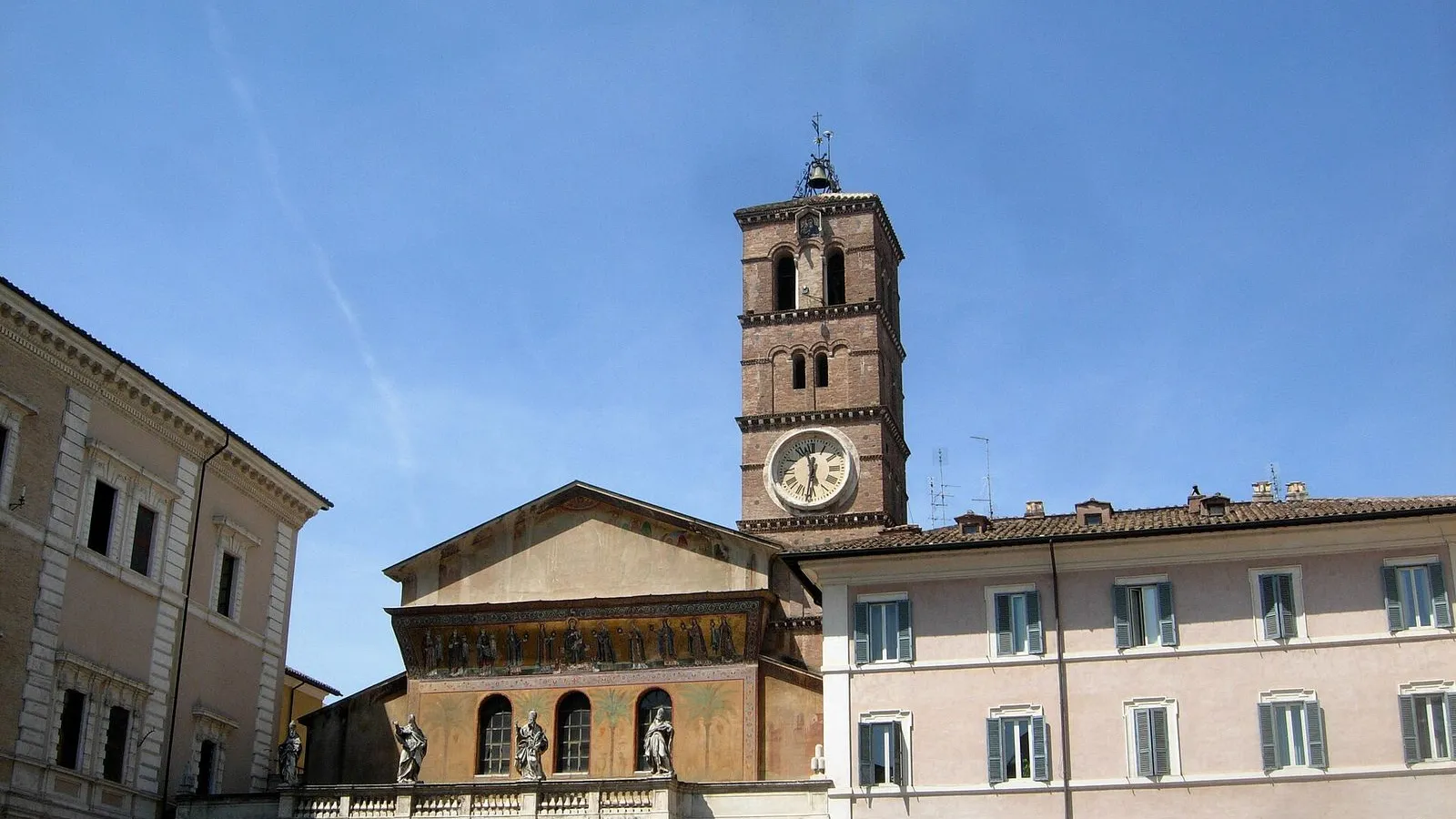
Santa Maria in TrastevereLocal pick

Photo by Acediscovery on Wikimedia Commons

Santa Maria in Trastevere

0:00

Rome's oldest Marian church, rebuilt in the 1140s, with a shimmering 12th-century apse mosaic of Christ and the Virgin enthroned together.

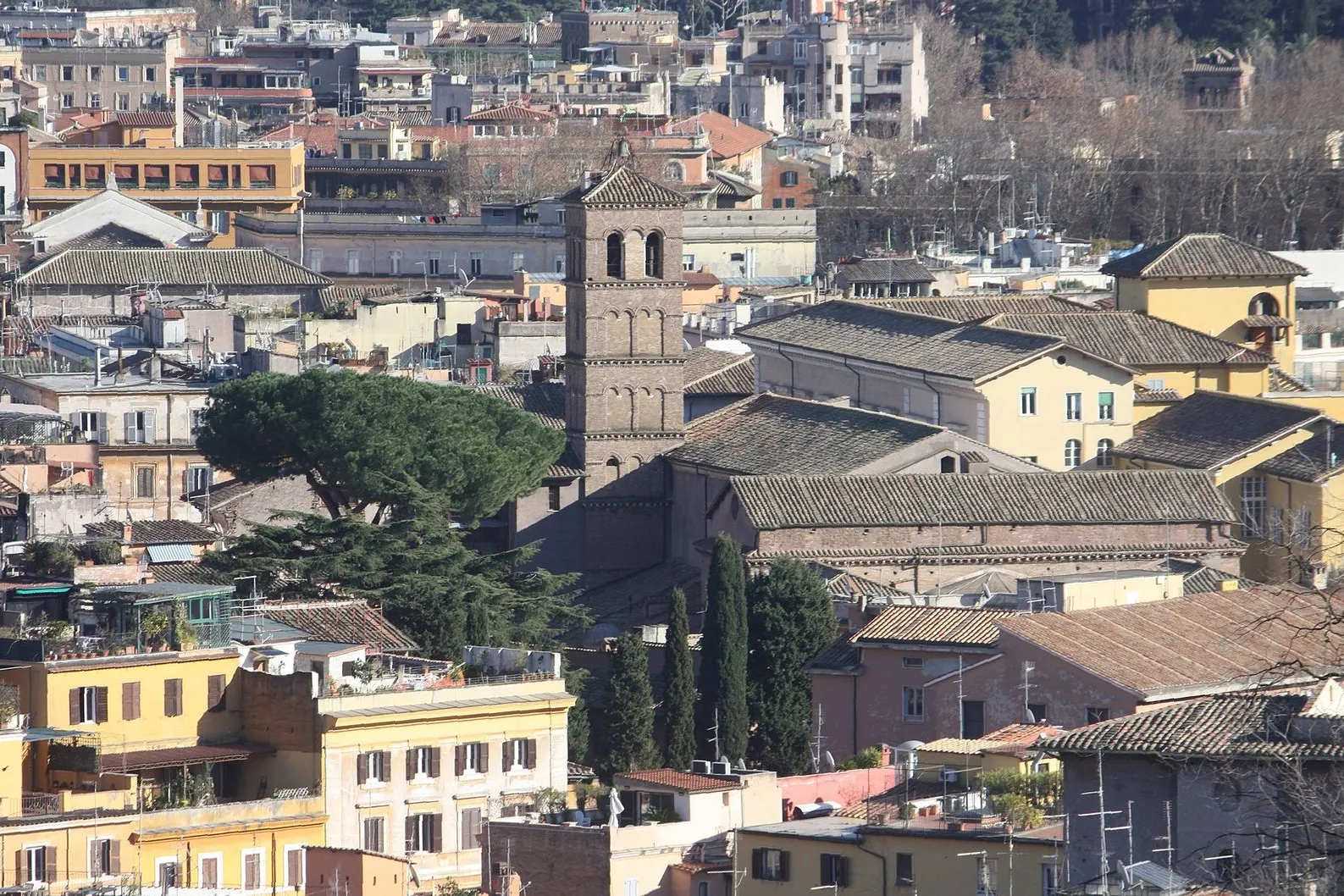
You're standing in Piazza Santa Maria in Trastevere, facing the oldest church in Rome dedicated to the Virgin. A church has stood on this spot since at least the 340s, though the building you see was rebuilt in the 1140s under Pope Innocent II. Step inside and let your eyes adjust. The apse mosaic is the reason you came.

Christ and Mary sit side by side on a single throne, an image drawn from the Song of Songs: she is both the Virgin and the Church itself. Below them, twelve lambs process toward the Lamb of God. The gold ground is not a flat sheet: the tesserae are set at slightly different angles so the surface shimmers even in low light. Below the main mosaic, six panels by Pietro Cavallini from the 1290s show scenes from Mary's life.

In the Nativity panel, notice Joseph sitting off to one side looking exhausted. Medieval viewers would have recognized him wrestling with doubt. Outside again, look up at the façade mosaic of the Virgin nursing the Christ child, one of the earliest images of its kind, with ten wise and foolish maidens flanking her. When you're ready, exit the piazza on the northwest side and follow Via della Paglia to Via della Lungara.

Villa Farnesina is a three-minute walk.

≈8 min walk to the next stop
Free preview ends here · stops 4 to 6 continue in the app

Villa Farnesina

A 16th-century banker's villa holding Raphael's Galatea, a Loggia of Cupid and Psyche, and Peruzzi's illusionistic Hall of Perspectives.

in app

Fontana dell'Acqua Paola

The monumental 1612 fountain that inspired the Trevi, a marble triumphal arch pouring Acqua Paola water into a vast semicircular basin.

in app

Piazzale Giuseppe Garibaldi

The Janiculum terrace, with Garibaldi's equestrian monument, 84 Garibaldini busts, and the best free panorama in Rome.

in app
Good to know

Before you go

How steep is the Trastevere climb?

The climb from Trastevere to the Janiculum via Via Garibaldi is steady but not punishing. The road switchbacks gently uphill and the gradient is moderate. Allow about 30 minutes from the bottom of Via Garibaldi to Piazzale Garibaldi. Benches and the Fontana dell'Acqua Paola break the climb into two natural stages. The view from the top is the best free panorama in Rome.

Is Villa Farnesina worth the entry fee?

Yes, and it is one of the quietest Renaissance sites in Rome. Raphael's Galatea fresco, the Loggia of Cupid and Psyche, and Peruzzi's illusionistic Hall of Perspectives hang in rooms that see a fraction of the Vatican's crowds. Entry is around €10 and the villa rarely requires a reservation.

SourceVilla Farnesina: official site
Keep exploring

More walks in Rome

From Foundation to Empire: Rome's Ancient WalkThe essentials

From Foundation to Empire: Rome's Ancient Walk

Walk Rome's history in order: from the Palatine's mythical hut to the Colosseum's arena.

9 stops2.4 km40+ min
Baroque Heart of the Campus MartiusThe essentials

Baroque Heart of the Campus Martius

From a morning market to the Spanish Steps, a walk through Rome's most beautiful piazzas, fountains, and domes.

6 stops2.4 km40+ min
From Michelangelo to the River: The Capitoline and the GhettoThe essentials

From Michelangelo to the River: The Capitoline and the Ghetto

Descend from Michelangelo's perfect piazza through the ancient Jewish quarter to the oldest bridge and the island of healing.

7 stops1.3 km25+ min
From the Aventine to Testaccio: Rome's Quiet Hill and the Mountain of ShardsThe essentials

From the Aventine to Testaccio: Rome's Quiet Hill and the Mountain of Shards

A downhill walk from a secret keyhole view of St. Peter's to an ancient trash heap made of 53 million olive oil jars, ending at Rome's best street-food market.

7 stops2.2 km40+ min
The Caelian Hill: Rome's Quiet SummitThe hidden side

The Caelian Hill: Rome's Quiet Summit

A climb through Rome's most layered hill, from an underground Mithraeum to the mother church of Catholicism.

5 stops2 km35+ min
The Pope's Backyard: From St. Peter's to the Bridge of AngelsThe local mix

The Pope's Backyard: From St. Peter's to the Bridge of Angels

The papal city from the street: Bernini's colonnade, Mussolini's boulevard, a secret escape route, and the angels on Hadrian's bridge.

6 stops1.9 km25+ min
Monti: Rome's First RioneThe local mix

Monti: Rome's First Rione

A 100-minute walk from the square where locals gather at sunset, through the streets where Julius Caesar grew up, to Michelangelo's Moses and a basilica ceiling that Romans say was gilded with the first gold from the Americas.

6 stops2 km30+ min

Provenance · last verified August 18, 2026

Built from the Wayside route itself: the stops, their order, and the walk between them.

Photo by Dguendel on Wikimedia Commons · CC BY 3.0

Photo by Krzysztof Golik on Wikimedia Commons · CC BY-SA 4.0

Photo by user:Lalupa on Wikimedia Commons · Public domain

Photo by Acediscovery on Wikimedia Commons · CC BY 4.0

Photo by Wolfgang Moroder on Wikimedia Commons · CC BY-SA 3.0

Photo by Nicola since 1972 on Openverse · CC BY 2.0

Photo by Nhartmannphotos on Wikimedia Commons · CC BY-SA 4.0

Photo by My Past from Norway on Wikimedia Commons · CC BY 2.0

Photo by Palickap on Wikimedia Commons · CC BY-SA 4.0

Photo by Diliff on Wikimedia Commons · CC BY-SA 3.0

Photo by Vadim Zhivotovsky on Wikimedia Commons · CC BY 3.0

Coming soon

Wayside isn't in the app stores yet, but it's in the works. Check back soon.