Self-guided walking tours in Grenoble
4 walking toursRhône-Alpes, France

Photo by Maxence Pira on Unsplash
Grenoble is the flattest city in France, spread across a valley floor where the Isère and Drac meet, with the Vercors, Chartreuse and Belledonne ranges closing the view at the end of every street. The city makes sense on foot: pedestrian lanes and market squares in the old town, the cable car bubbles rising to the Bastille, the narrow right-bank streets of Saint-Laurent, Berriat's working-class grid around its morning market. Distances are short.
- ItineraryOne day in GrenobleA market morning, an afternoon of free museums, street art before dinner and the cable car up the Bastille: one day in Grenoble, arranged around the hours that decide it.
- Know before you goGrenoble practicalitiesThe practical Grenoble briefing: airport shuttle and tram fares, the tourist tax on your bill, tap water, closures to plan around, and what to book before you arrive.
Tours in Grenoble
 The local mix
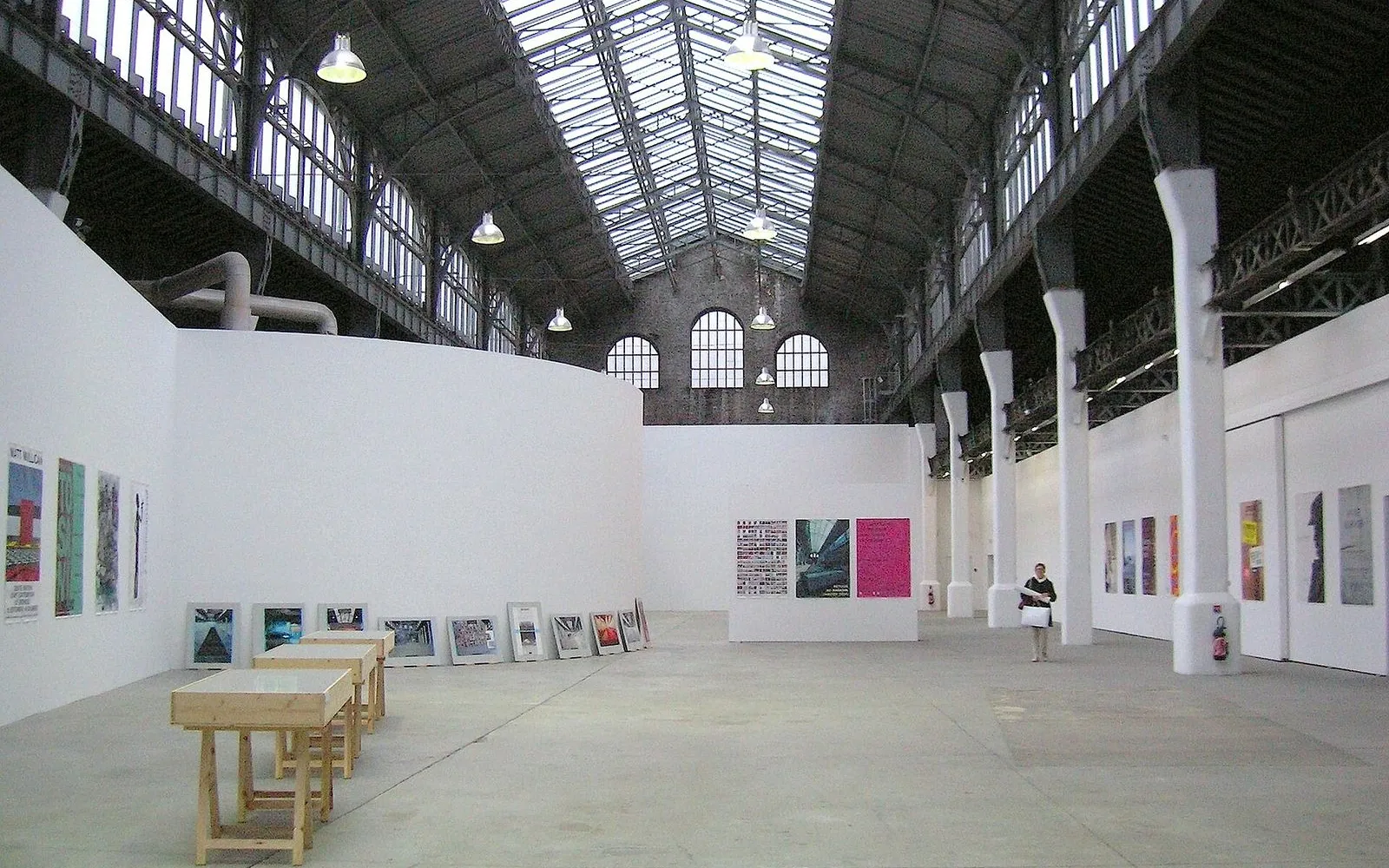
Berriat and the Saint-Bruno Market
A market, a church of molded cement, two murals on an old factory, and an Eiffel hall full of contemporary art: Grenoble's old factory quarter on a morning when the stalls are still up.
 The local mix
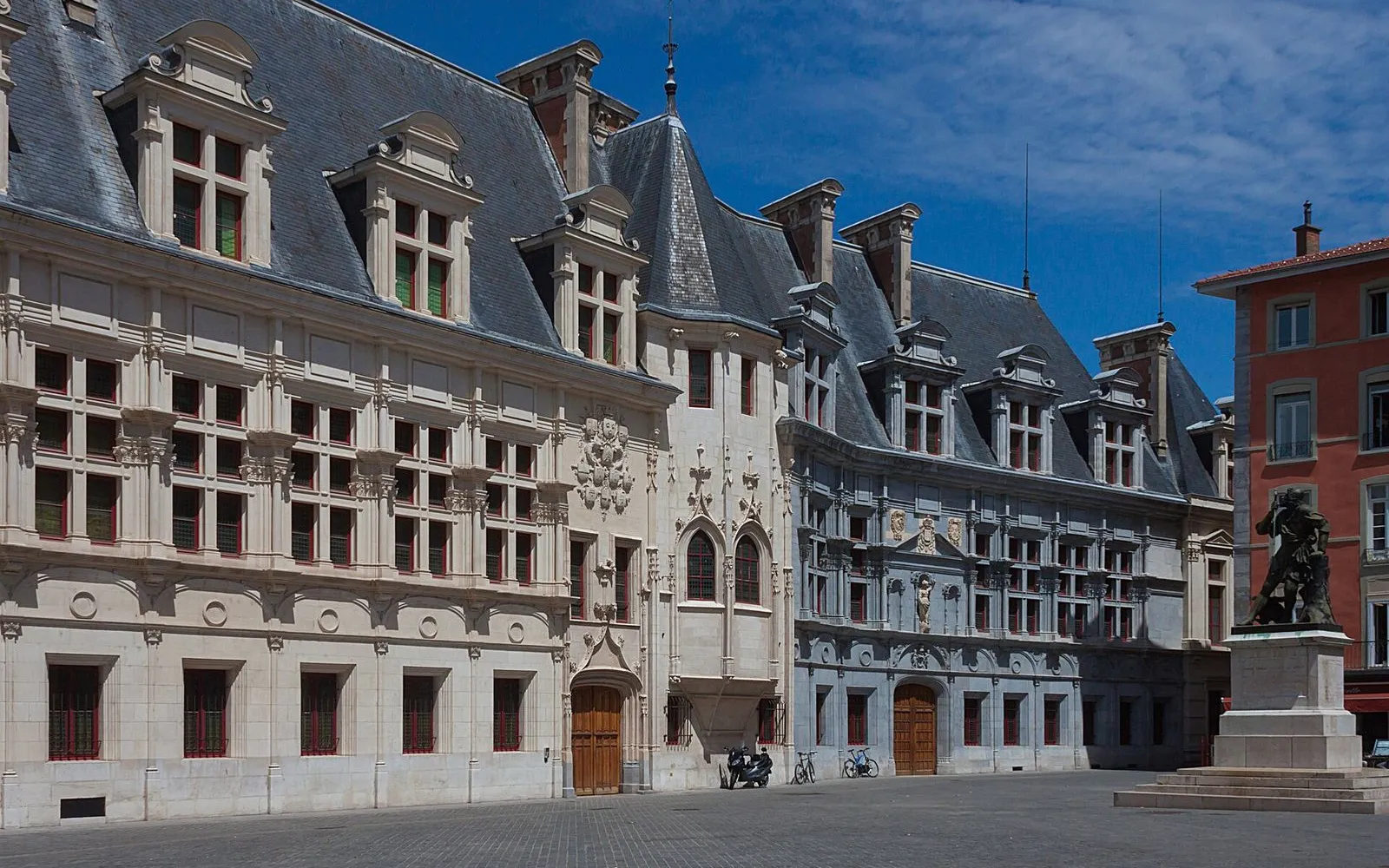
The Old Town and the Parliament Quarter
One loop through the old town: a duke's garden, an 1820s fountain, Stendhal's childhood flat, the Dauphiné's parliament palace, two markets, and a fourth-century baptistery dug up under the tram tracks.
 The hidden side
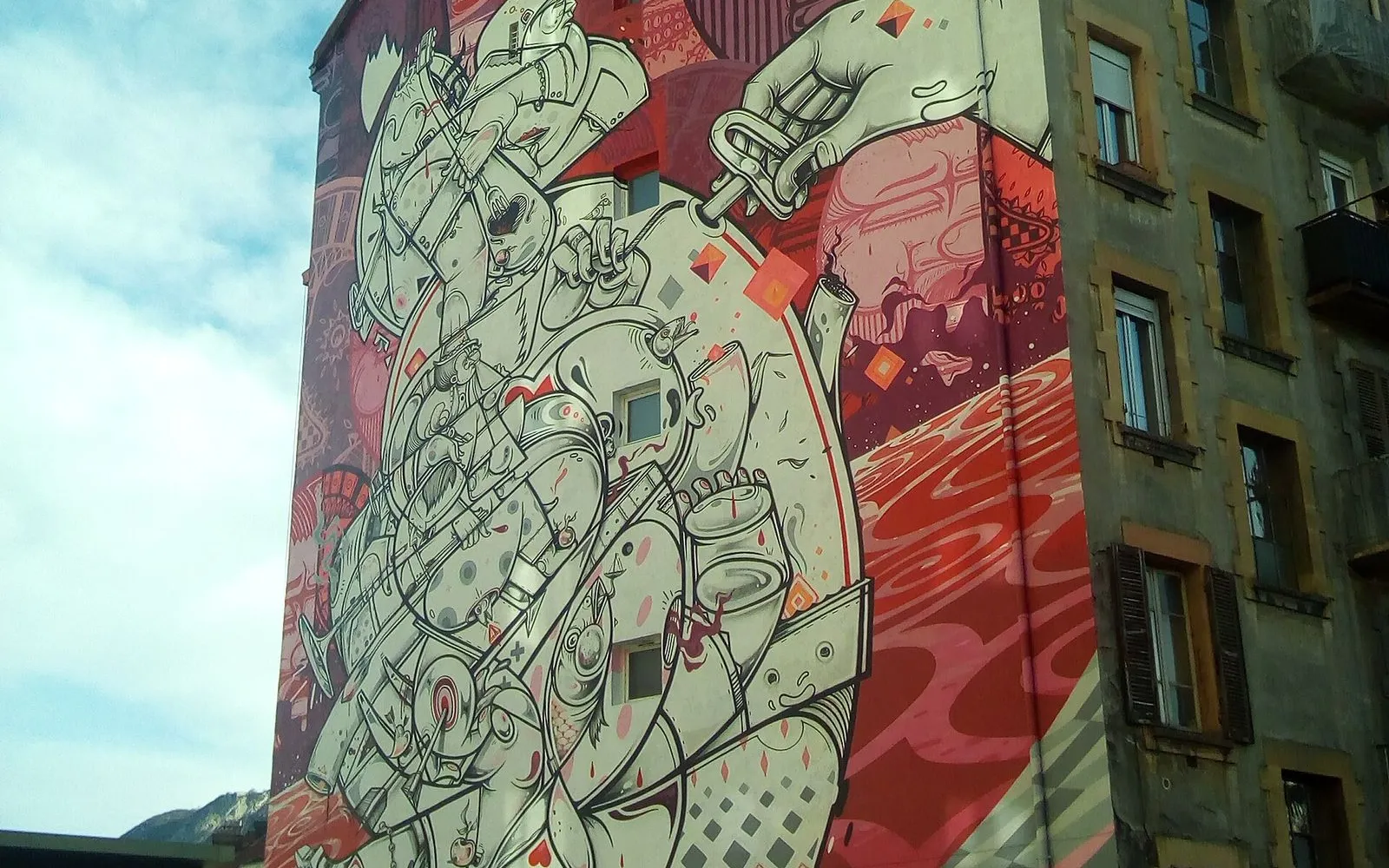
Street Art in Championnet
Championnet is a lived-in Grenoble quarter where garage doors, garden walls and blank gables carry the work of a street art festival running since 2015. Nothing to pay, and it's visible at any hour.
 The local mix
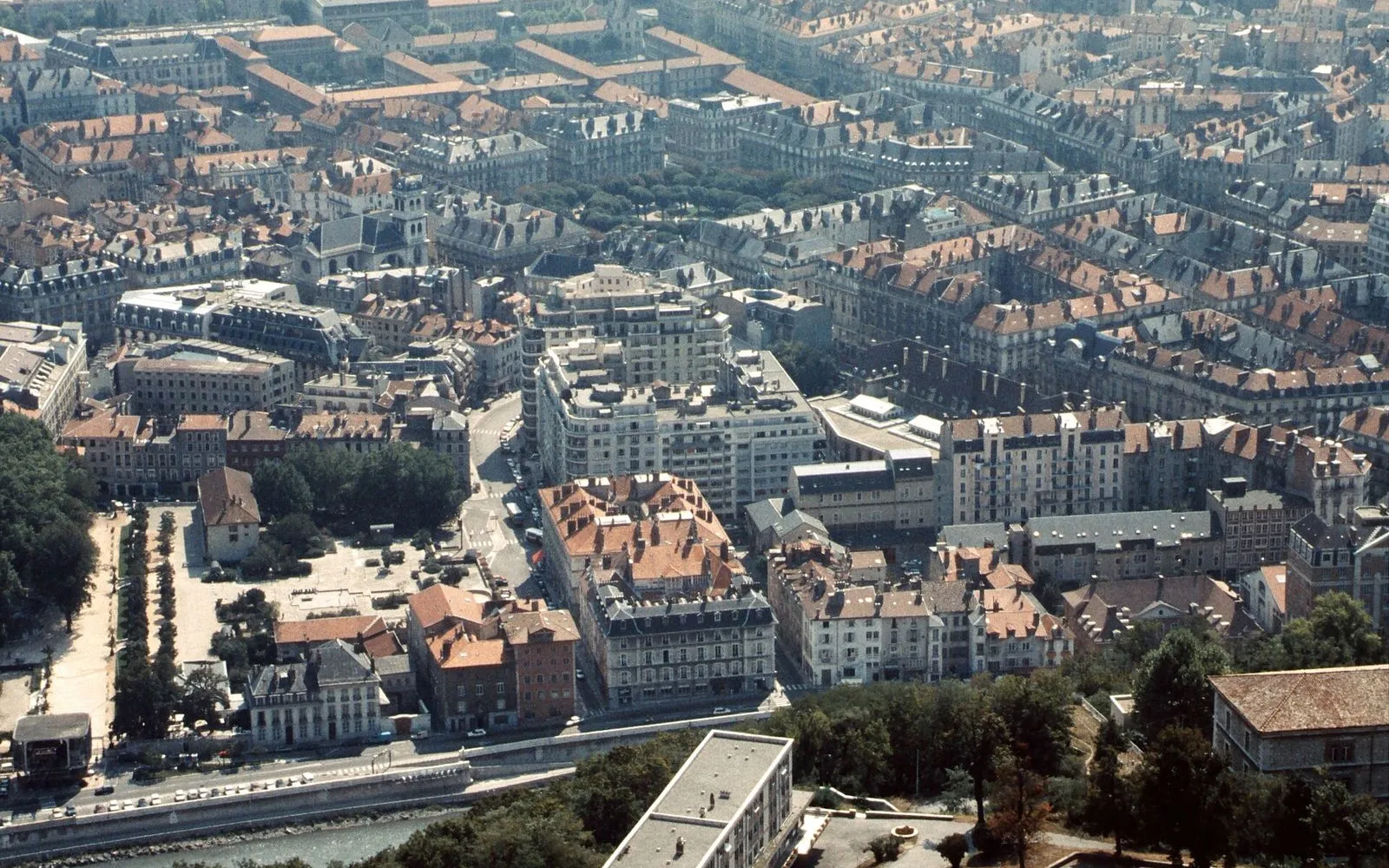
The Bastille and Saint-Laurent
Ride the bubbles up to the fort, then walk the whole city back down: forty-five minutes of stairs and paths from Haxo's ramparts to a sixth-century crypt on the old river lane.
What you'll see
23 stops mapped across 4 walking tours in Grenoble. A few of the places the routes take you past:
- Marché Saint-Bruno
- ARaymond building
- Neo Musty mural
- Le Magasin
- Jardin de Ville
- Fontaine Lavalette
- Musée Stendhal
- Palais du Parlement du Dauphiné
- Place aux Herbes
- Halles Sainte-Claire
- Musée de l'Ancien Évêché
- Musée de Grenoble
Before you go
Is Grenoble an easy city to explore on foot?
Grenoble is a walking city: the old town is a pedestrian knot of lanes and squares, the markets spill into them, and the Isère quays run along both banks. The only real climb is up to the Bastille, and the cable car handles that on this route. Watch your step on the cobbles and you won't need a car or a bus all day.
When is the best time to visit Grenoble?
The best times to visit Grenoble on foot are late spring and early autumn: mean highs reach 22.5°C in May and 23.8°C in September, against 28.6°C in July, and both fall outside the summer peak. Avoid January, when the cable car closes for maintenance, and August, when Spacejunk closes. For this one-day route, pick a Wednesday, Friday or Saturday: Mondays close the markets and several museums, Tuesdays close the Musée de Grenoble and Le Magasin, and the Stendhal flat opens only those three afternoons plus the first Sunday of the month.
SourceVille de Grenoble, marché et Halles Sainte-ClaireMusée de Grenoble, informations pratiquesSpacejunk GrenobleLa Bastille, horairesHow do I get around Grenoble without a car?
Grenoble is easy without a car: this day runs on foot with one cable car ride, and M réso trams and buses cover the rest of the city for €2 a ride, valid an hour with transfers. Trams serve the center if you're coming from farther out, and the market squares sit by tram stops: line B at Sainte-Claire by the Halles, line A by the tourist office on rue de la République. For the old town, the quays and the two quarters on this route, walking is the point.
SourceGrenoble Tourisme, marché place Sainte-ClaireAre Grenoble's museums free?
Several of Grenoble's museums are free. The Musée Stendhal, the Musée de l'Ancien Évêché, the Musée archéologique Saint-Laurent and the Musée des Troupes de Montagne cost nothing, and the Musée de Grenoble keeps its permanent collections free while charging for the main temporary exhibition, €14 full price and €7 reduced, free on the first Sunday of the month. Le Magasin asks €5, €3 reduced, also free on the first Sunday, and the cable car is €6.60 one way or €9.80 return.
SourceMusée StendhalMusée de Grenoble, informations pratiquesLe Magasin CNACLa Bastille, téléphérique de GrenobleHow much of Grenoble can one day cover?
One full day in Grenoble covers the old town, the Bastille and one or two of the quarters around them, which is what this itinerary is built to do: a market morning in Berriat, the historic center with its squares and museums, street art in Championnet, then the cable car to finish. The mountains that frame the city, the Vercors and the Chartreuse, are days of their own rather than add-ons to this one.
Is Grenoble safe for visitors, and is the Bastille walk hard?
Grenoble asks for the ordinary care of any French city: keep an eye on your bag in crowded markets and on transit, and you'll be fine. On this route the bigger risk is underfoot, since the old town is cobbled and the Bastille descent is steep, stepped and slick after rain. Wear shoes with grip, take it slowly, or ride the cable car back down.
SourceLa Bastille, FAQ
Walk Grenoble
Get the audio guide in the app.
Download the walks and follow the day stop by stop, with the route and the opening hours in your pocket.
More cities in France
Provenance · last verified September 27, 2026
Built from the Wayside walking tours in this city and the stops they cover.
Photo by Maxence Pira on Unsplash
Photo by Patafisik on Wikimedia Commons · CC BY-SA 4.0
Photo by User:Kyro on Wikimedia Commons · CC BY 3.0
Photo by Binnette on Wikimedia Commons · CC BY-SA 4.0
Photo by Lothar Weber on Wikimedia Commons · CC BY-SA 4.0