Grenoble · Self-guided audio walk

The Bastille and Saint-Laurent

Ride the bubbles up to the fort, then walk the whole city back down: forty-five minutes of stairs and paths from Haxo's ramparts to a sixth-century crypt on the old river lane.

  • 6Stops
  • 2.3 kmDistance
  • 35+ minTime
The Bastille and Saint-Laurent

Photo by Lothar Weber on Wikimedia Commons

Grenoble's classic half-day goes straight up and then walks back down. France's first urban cable car has run from quai Stéphane-Jay to the Bastille since 1934, and the spherical cabins date from 1976.

Up top, the fort General Haxo built between 1823 and 1848 holds a 360-degree view over the Isère valley and, on a clear day, Mont Blanc, plus the Musée des Troupes de Montagne in its casemates.

Then the descent: about forty-five minutes of stairs and paths dropping some 260 metres, past the terraced gardens of the Montée de Chalemont and the Musée dauphinois in its 1621 convent, down rue Saint-Laurent to the Passerelle Saint-Laurent and the sixth-century crypt of the Musée archéologique.

All three museums are free and closed on Mondays. The cable car shuts for a few weeks each January, so check the day's times.

Hear it on the street

Get the turn-by-turn audio guide in the app. The narration plays itself as you reach each stop, hands-free and offline.

Stop by stop

The route

Interactive map of the route. The full stop list below works without it.

Bastille Cable CarMust see

Photo by Tim Oldenkamp on Unsplash

Bastille Cable Car

0:00

France's first urban cable car, climbing from the quay since 1934

You're on the left bank of the Isère at quai Stéphane-Jay, and the glass bubbles overhead are the reason people stop here. This cable car opened on 29 September 1934, the first urban line in France and only the third in the world, after Rio de Janeiro and Cape Town. The spherical cabins came later, replacing the older boxy cars in 1976, and each one holds six people, so everybody gets a window. The roof of the station is a nod to the Tour de l'Isle, the tower standing in the river 300 metres upstream.

The ride takes three to four minutes and runs 700 metres across the Isère, so you look down on the water and over the roofs of Saint-Laurent before you arrive above the fort. Hours change with the season, and the line closes for a few weeks each January for maintenance, so check the day's times before you queue. On Mondays all three museums on this walk are shut. On the way up, the whole city drops away under your feet.

≈10 min walk to the next stop
Belvédère VaubanMust see

Photo by Marvin Radke on Unsplash

Belvédère Vauban

0:00

The fort's terrace, with the whole valley and Mont Blanc beyond

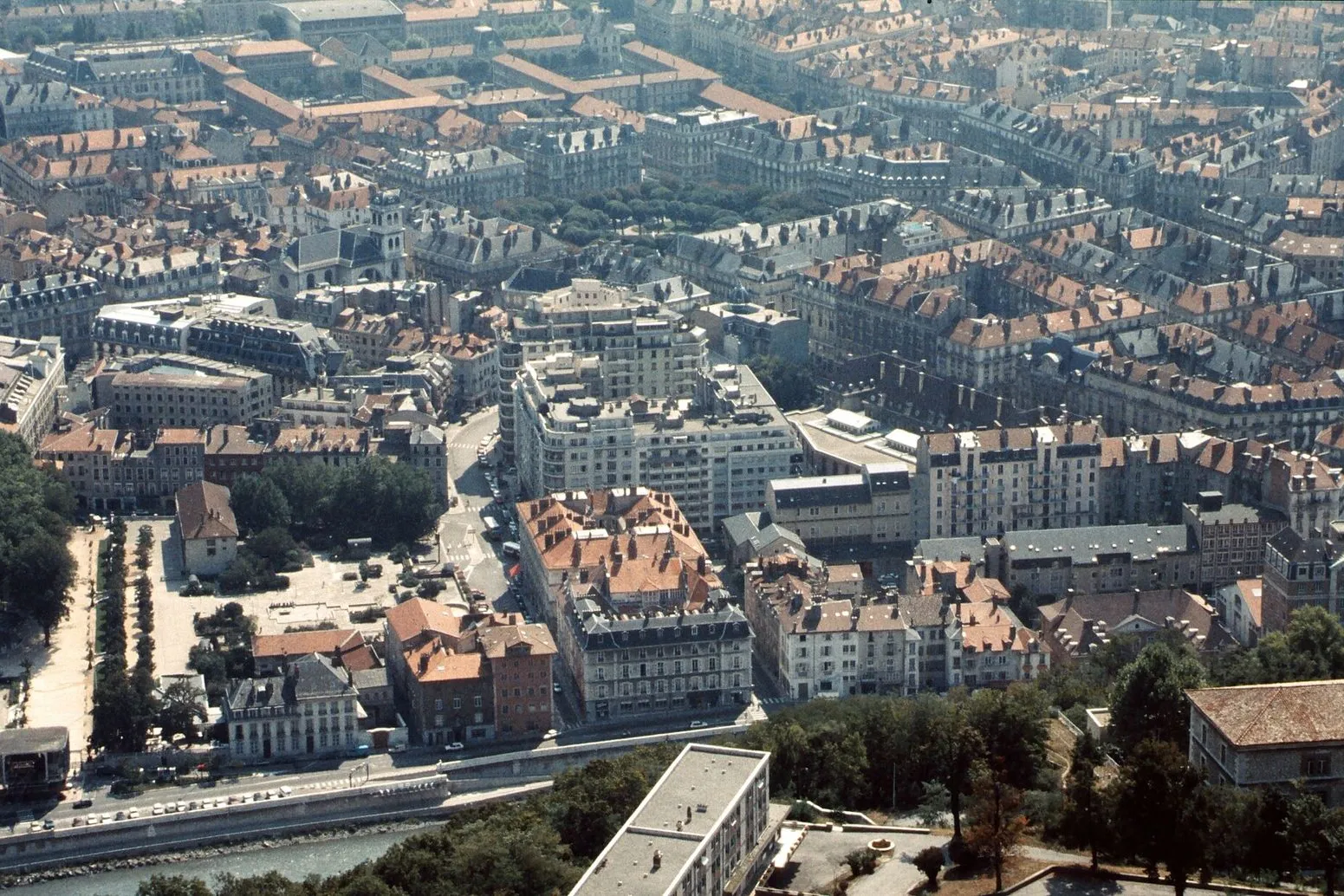
Step out of the upper station and the whole basin opens up. Haxo's fort was built between 1823 and 1848, and this terrace sits on the side that faces the city. What the gunners watched is what you get: the Isère coming down out of the Grésivaudan, the three ranges that ring the city, Vercors, Chartreuse and Belledonne, and on a very clear day Mont Blanc on the horizon. Straight below, the river bends through town and the roofs of Saint-Laurent sit under the walls, almost close enough to drop a stone on.

Now look at the stone under your feet: that is Haxo's work. The convent down the hill opened in 1621, the gate at the bottom of the lane went up in 1615, and the crypt you'll finish beside was built in the sixth century. The rest of the tour walks backwards through time, one staircase at a time.

≈1 min walk to the next stop
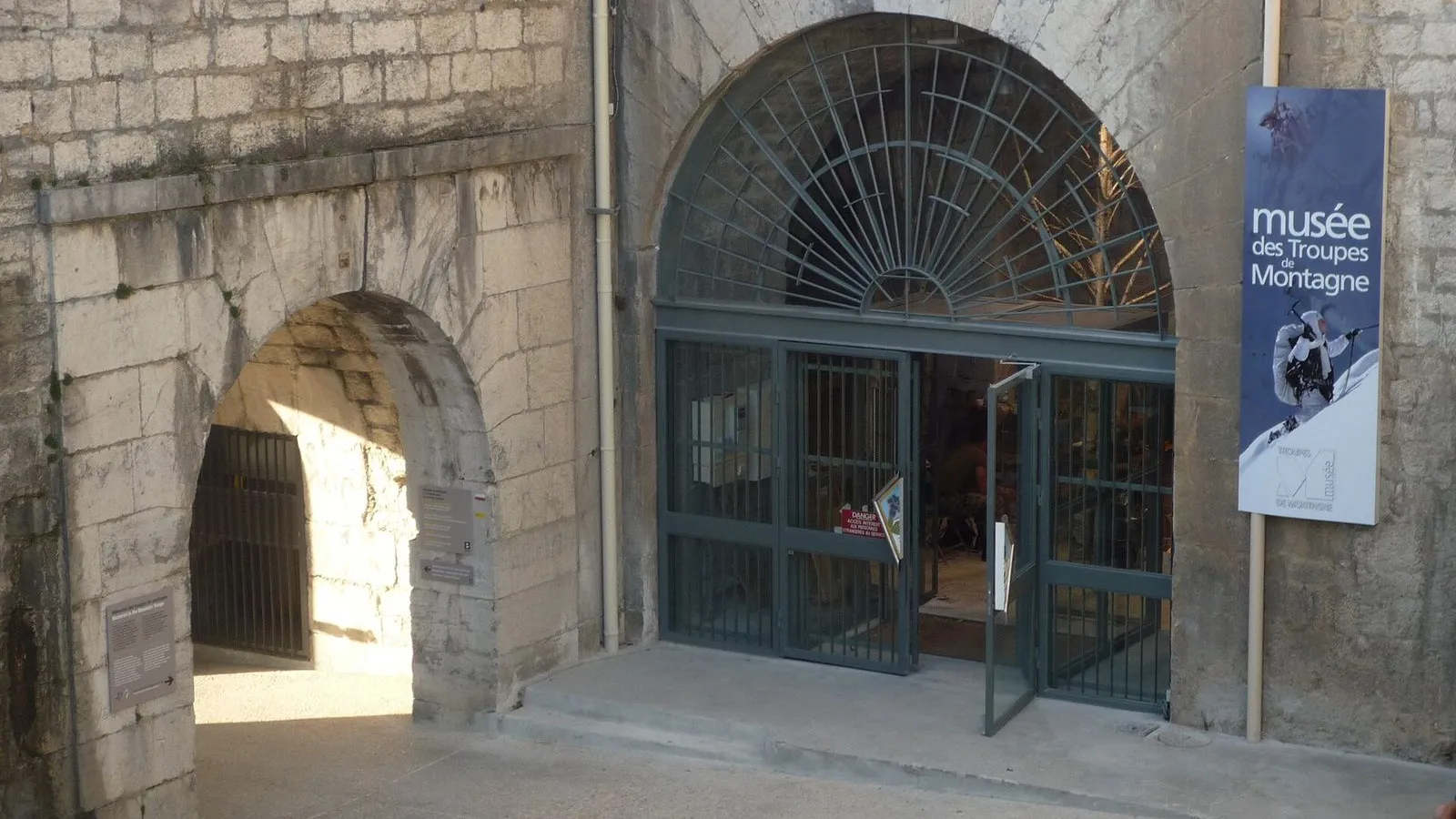
Musée des Troupes de MontagneLocal pick

Photo by Milky on Wikimedia Commons

Musée des Troupes de Montagne

0:00

Mountain troops, the Diables bleus, in the fort's casemates

The museum occupies the fort's casemates, the vaulted stone chambers built to shelter men and guns, so a visit puts you inside Haxo's defences as much as in a display. The subject is France's mountain infantry, the chasseurs alpins, the soldiers known as the Diables bleus. The museum began in 1988, the centenary of a branch of the army that dates from 1888, and it moved into these casemates in 2009 after the vaults were repaired. Inside there are about 600 square metres of weapons, equipment, maps and letters, with rebuilt scenes of daily life during the two world wars.

An audio guide in French, English, Italian or German rents for two euros. The museum is run by the army's 27th Mountain Infantry Brigade. Entry is free, as it is at the two other museums on this walk, and like them the museum closes on Mondays. Look at the walls on the way through: thick stone, low vaults, and openings meant for guns rather than visitors.

≈8 min walk to the next stop
Free preview ends here · stops 4 to 6 continue in the app

Musée dauphinois

A 17th-century convent of cloistered nuns, now a museum

in app

Passerelle Saint-Laurent

An 1837 suspension footbridge, looked at from the right bank

in app

Musée archéologique Saint-Laurent

A sixth-century crypt, free to enter, beside the old gate

in app
Good to know

Before you go

How much does the Bastille cable car cost?

The Bastille cable car costs €9.80 for an adult return and €6.60 one way; children 5 to 15 pay €5.10 return and €3.70 one way, and students €6.30 and €4.50. Tickets are sold at the bottom and top stations, with no reservation system, and a one-way ticket is all you need if you plan to walk down.

SourceLa Bastille, téléphérique de GrenobleLa Bastille, FAQ
When does the cable car run?

The Bastille cable car runs on a timetable that changes from month to month, so check the operator's calendar for your date; the last ascent leaves 15 minutes before closing. Outside April to September it doesn't run on Mondays, and it runs until midnight on Friday and Saturday evenings from February to December, with earlier finishes most other evenings. The line closes for several weeks of maintenance in January.

SourceLa Bastille, horaires
Are the museums near the Bastille free?

Yes, all three museums on the Bastille walk are free: the Musée des Troupes de Montagne in the fort, and the Musée dauphinois and the Musée archéologique Saint-Laurent at the bottom. Check each one's hours before counting on a visit; the fort museum, for instance, follows the cable car's seasonal calendar and shuts with it in January.

SourceMusée des Troupes de Montagne

Provenance · last verified September 27, 2026

Built from the Wayside route itself: the stops, their order, and the walk between them.

Photo by Lothar Weber on Wikimedia Commons · CC BY-SA 4.0

Photo by Tim Oldenkamp on Unsplash

Photo by Marvin Radke on Unsplash

Photo by Milky on Wikimedia Commons · Public domain

Photo by Patafisik on Wikimedia Commons · CC BY-SA 4.0

Photo by User:Kyro on Wikimedia Commons · CC BY 3.0

Photo by Binnette on Wikimedia Commons · CC BY-SA 4.0

Coming soon

Wayside isn't in the app stores yet, but it's in the works. Check back soon.