Grenoble · Self-guided audio walk

The Old Town and the Parliament Quarter

One loop through the old town: a duke's garden, an 1820s fountain, Stendhal's childhood flat, the Dauphiné's parliament palace, two markets, and a fourth-century baptistery dug up under the tram tracks.

  • 8Stops
  • 1.4 kmDistance
  • 25+ minTime
The Old Town and the Parliament Quarter

Photo by User:Kyro on Wikimedia Commons

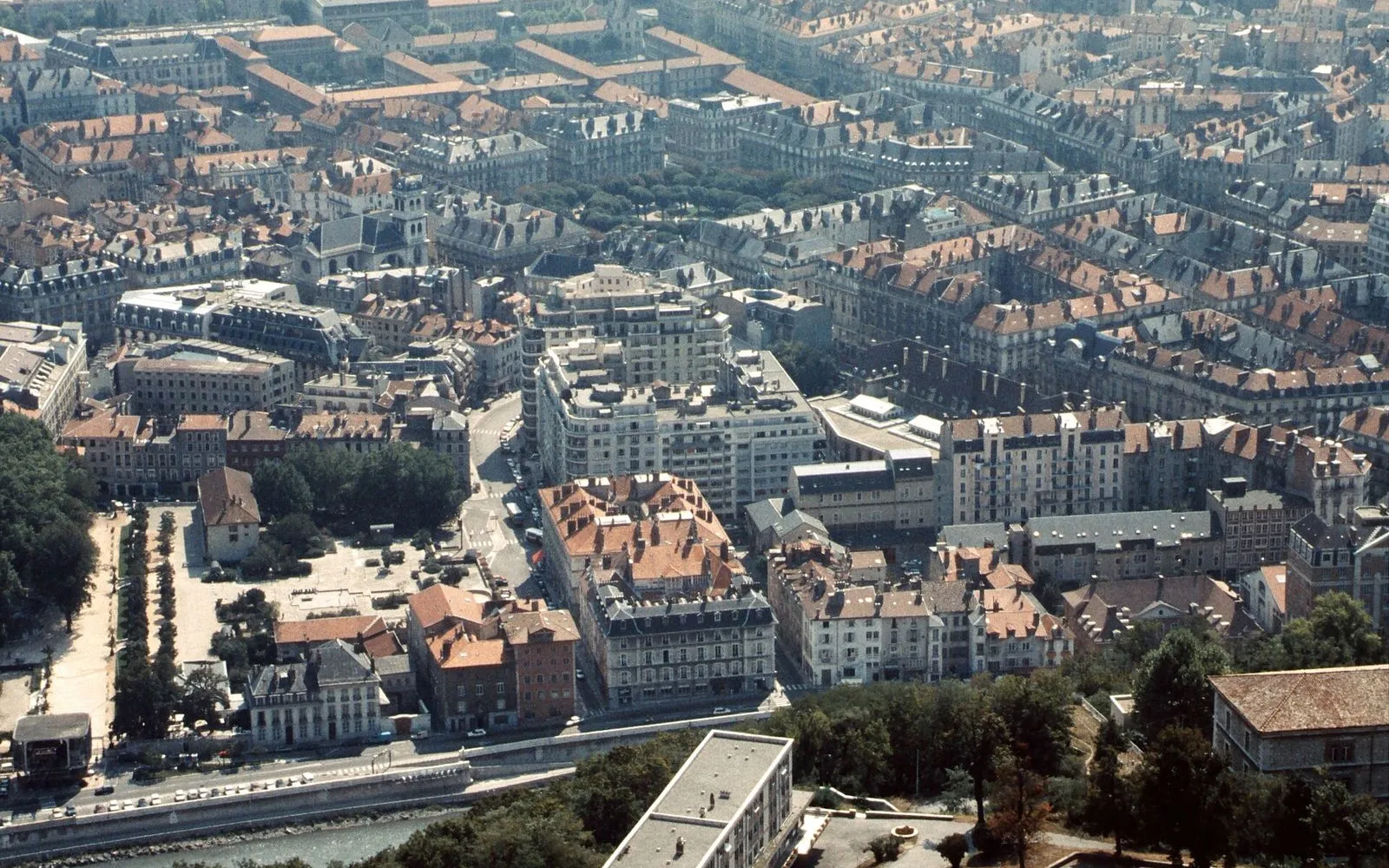
Grenoble's old town is a handful of pedestrian streets that hold nearly two thousand years of the city's life, and this loop walks them in an hour. It starts under the plane trees of the Jardin de Ville, a duke's garden that the city bought and opened to everyone in 1719, and crosses place Grenette, where the Lavalette fountain has thrown its jet since 1824.

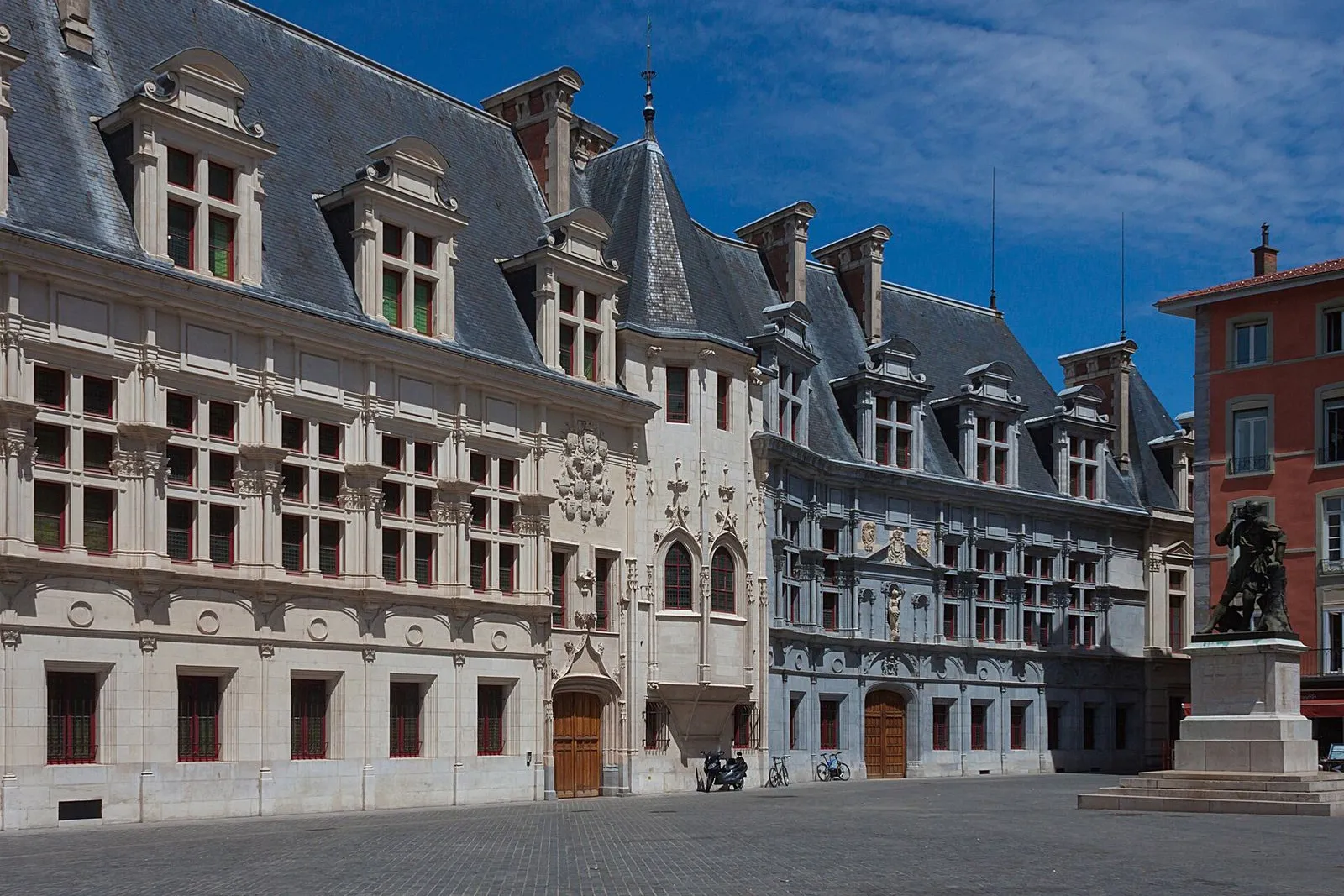
From there the Grande Rue climbs to the flat where Stendhal grew up in his grandfather's apartment, now a free museum, and on to place Saint-André, where the palace of the Parlement du Dauphiné faces the Café de la Table Ronde, pouring since 1739.

The walk ends through the market square, the 1874 market hall, the cathedral, and the crypt where tram diggers found a fourth-century baptistery, finishing at the Musée de Grenoble, founded in 1798 on the site of a Franciscan convent. Come on a Wednesday to Sunday morning to find both markets trading and the museums open, except the Stendhal flat, which opens only in the afternoon.

Hear it on the street

Get the turn-by-turn audio guide in the app. The narration plays itself as you reach each stop, hands-free and offline.

Stop by stop

The route

Interactive map of the route. The full stop list below works without it.

Jardin de VilleMust see

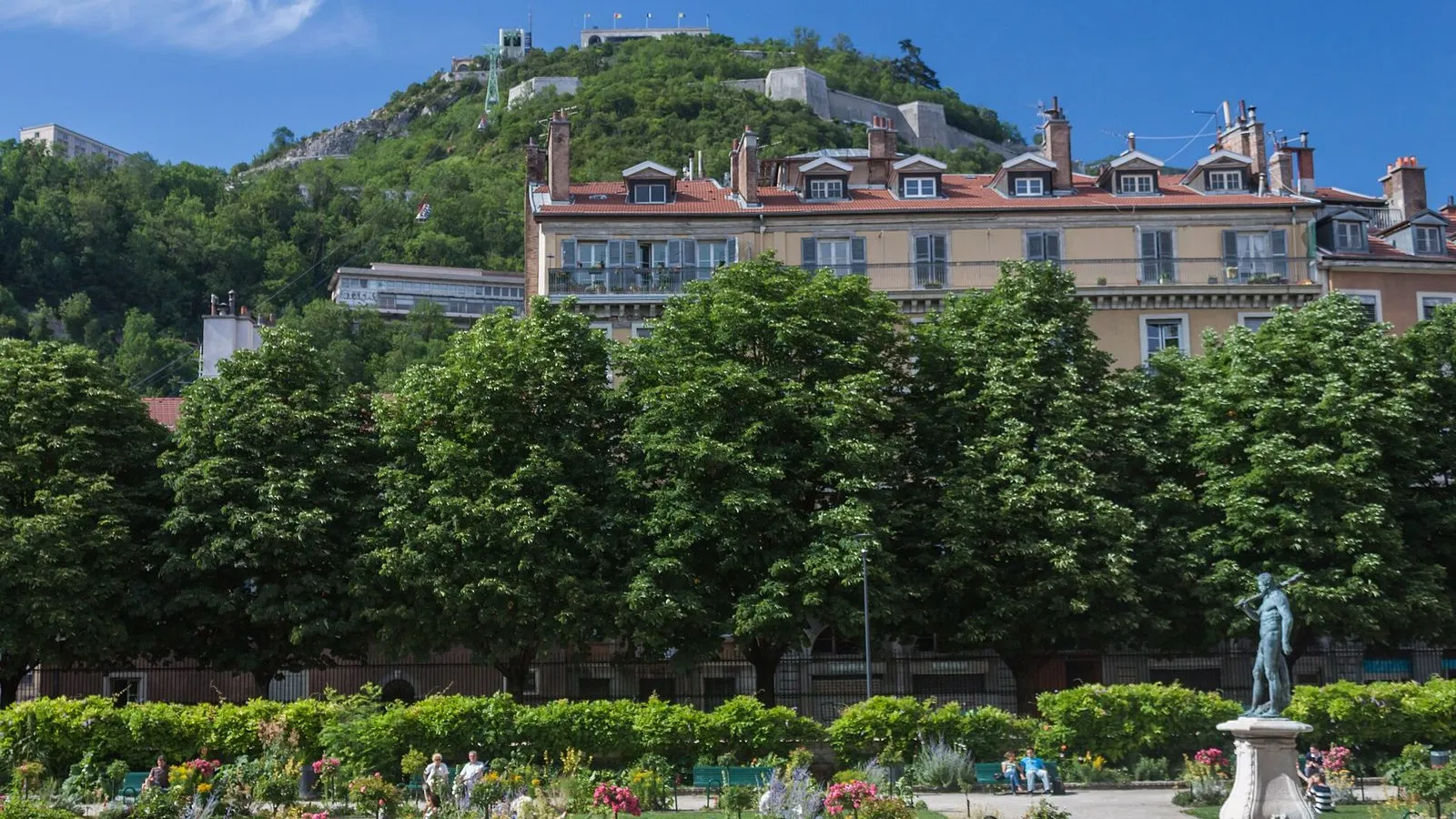
Photo by User:Kyro on Wikimedia Commons

Jardin de Ville

0:00

A duke's garden turned public park, with a bandstand under the old plane trees.

You're standing in a garden the city bought in 1719 and opened to the public, and the bandstand over your head is the second one on this spot: a stand for musicians went up in 1874, and the kiosk that replaced it in 1886 is what you see now. The ground under it is older than either. Until 1620 this was a meadow outside the Roman walls, the Près de la Trésorerie, where fairs too big for the market square set up their stalls; Catherine de Médicis is said to have walked here during a stay in the city. Then François de Bonne, Duke of Lesdiguières and governor of the Dauphiné, built his town house along the western edge and turned the meadow into his own garden, with terraces, orange trees in tubs, and a bronze Hercules long said to be his portrait. Around nine hundred trees were planted once the city took it over; about a hundred stand in the garden today, planes, limes and chestnuts, mostly in the wooded half to the south. That wood is why this corner of the old town has room in it.
≈3 min walk to the next stop
Fontaine LavaletteMust see

Photo by Eusebius on Wikimedia Commons

Fontaine Lavalette

0:00

The old grain square, its 1820s water tower and four bronze dolphins.

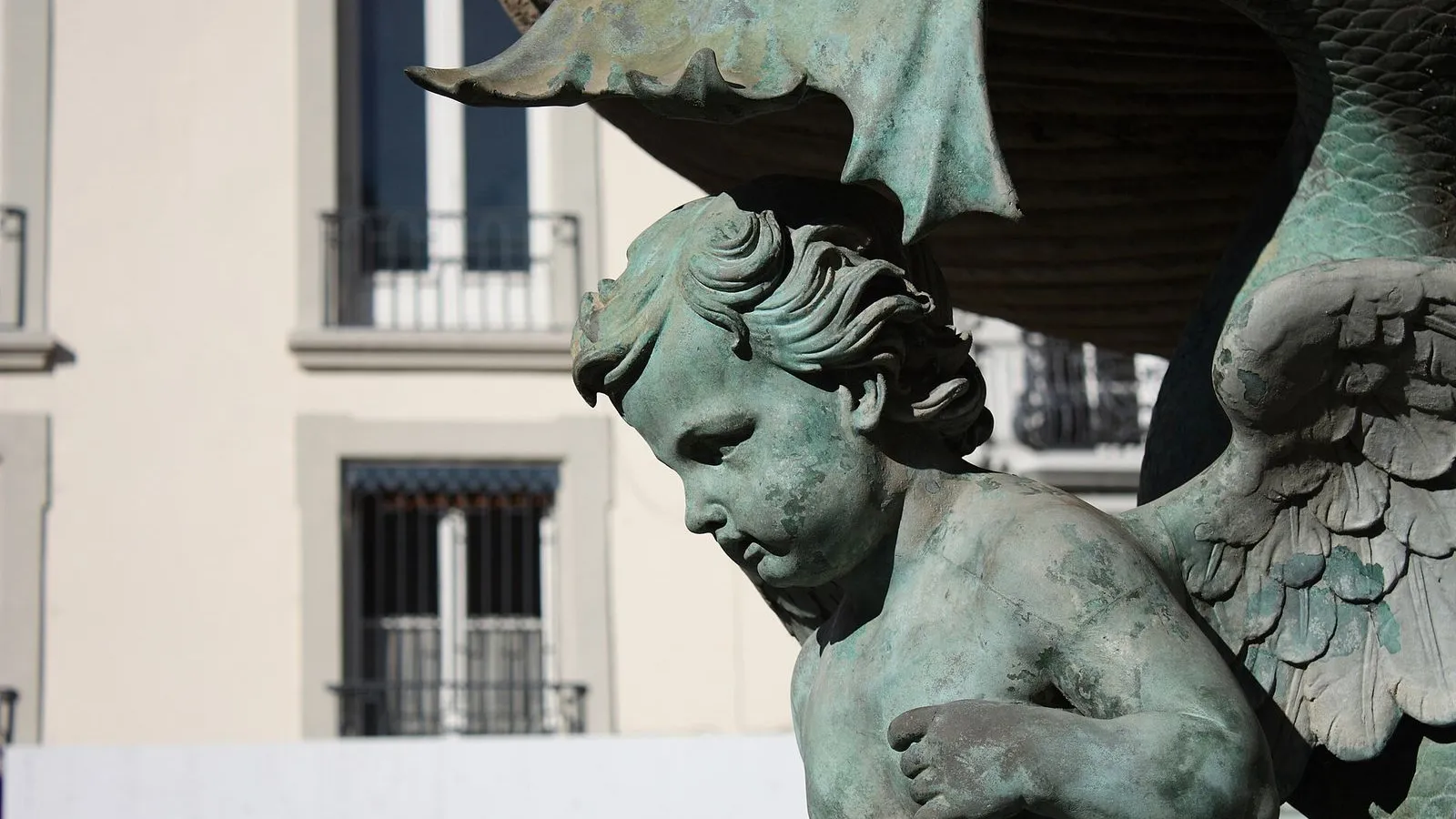
Place Grenette was Grenoble's main square from the 1600s, when it was still called the place du Breuil, and the business done here was grain and cattle rather than coffee. Now look at the middle of it. The Lavalette water tower was inaugurated in 1824, in the years when the marquis de Lavalette was mayor and Grenoble was getting its first network of piped water. Two basins are stacked one above the other, carved in the pale stone of Sassenage, and four bronze dolphins carry cherubs on their backs at the base; the dolphin is the emblem of the Dauphiné.

The bronze is by Victor Sappey, a sculptor from this city. The jet can reach twenty-two metres, which is worth watching on a windy morning. The name Grenette points at the grain that filled the square, and the fountain arrived when a market place was expected to look like something as well as sell something.

≈2 min walk to the next stop
Musée StendhalLocal pick

Photo by User:Kyro on Wikimedia Commons

Musée Stendhal

0:00

The flat where Stendhal grew up, free three afternoons a week.

Number 20 Grande Rue is the flat where Stendhal's mind was made. His mother died in 1790, when he was seven, and he left his father's stern house to be raised by his maternal grandfather, Dr Henri Gagnon. The apartment occupies two floors of two joined houses: one side faces place Grenette, the other looks into the Jardin de Ville, and the writer lived here until 1796. From these windows, aged five, he watched the Day of the Tiles in 1788, when the people of Grenoble pulled up the cobblestones and threw them from the rooftops at the king's troops.

The doctor's guests, arriving through the Grande Rue, became the boy's first specimens of provincial society. The museum is free and opens on Wednesday, Friday and Saturday afternoons and on the first Sunday of the month, from two to six. Stendhal was born a few doors away at 14 rue Jean-Jacques Rousseau, but this is the flat that put Grenoble into his books.

≈3 min walk to the next stop
Free preview ends here · stops 4 to 8 continue in the app

Palais du Parlement du Dauphiné

The Dauphiné's parliament palace, with France's second-oldest café facing it.

in app

Place aux Herbes

Fruit, vegetables and flowers every morning except Monday.

in app

Halles Sainte-Claire

An 1874 iron and glass hall that still sells food, closed on Mondays.

in app

Musée de l'Ancien Évêché

The bishops' palace and the fourth-century baptistery found under the tram line.

in app

Musée de Grenoble

Grenoble's art museum, founded in 1798 on a former convent site.

in app
Good to know

Before you go

When do the old town markets trade?

The place aux Herbes and Sainte-Claire markets run Tuesday to Sunday mornings, closing at 13:00, or 13:30 at weekends, and the Halles building on place Sainte-Claire also opens Tuesday to Friday afternoons, 15:30 to 19:00. Start the loop before the stalls pack up if you want the markets at their best.

SourceVille de Grenoble, marché et Halles Sainte-Claire
Can you visit inside the Palais du Parlement du Dauphiné?

No, the Palais du Parlement du Dauphiné opens only for reserved group visits booked through the tourist office, so the walk treats it as an exterior: the facade on place Saint-André and the Café de la Table Ronde opposite, which has poured since 1739.

When is the Musée Stendhal open?

The Musée Stendhal is free and opens Wednesday, Friday and Saturday plus the first Sunday of the month, 14:00 to 18:00. It closes on public holidays and over Easter, so a morning loop can't include it.

SourceMusée Stendhal

Provenance · last verified September 27, 2026

Built from the Wayside route itself: the stops, their order, and the walk between them.

Photo by User:Kyro on Wikimedia Commons · CC BY 3.0

Photo by User:Kyro on Wikimedia Commons · CC BY 3.0

Photo by Eusebius on Wikimedia Commons · CC BY 3.0

Photo by User:Kyro on Wikimedia Commons · CC BY 3.0

Photo by Patafisik on Wikimedia Commons · CC BY-SA 4.0

Photo by Binnette on Wikimedia Commons · CC BY-SA 4.0

Photo by Lothar Weber on Wikimedia Commons · CC BY-SA 4.0

Coming soon

Wayside isn't in the app stores yet, but it's in the works. Check back soon.