Milan · Self-guided audio walk

Mediolanum: The City Before the Duomo

Sixteen Roman columns, four ancient basilicas, and two thousand years of Milanese history, walked in two hours.

  • 6Stops
  • 2.2 kmDistance
  • 35+ minTime
Mediolanum: The City Before the Duomo

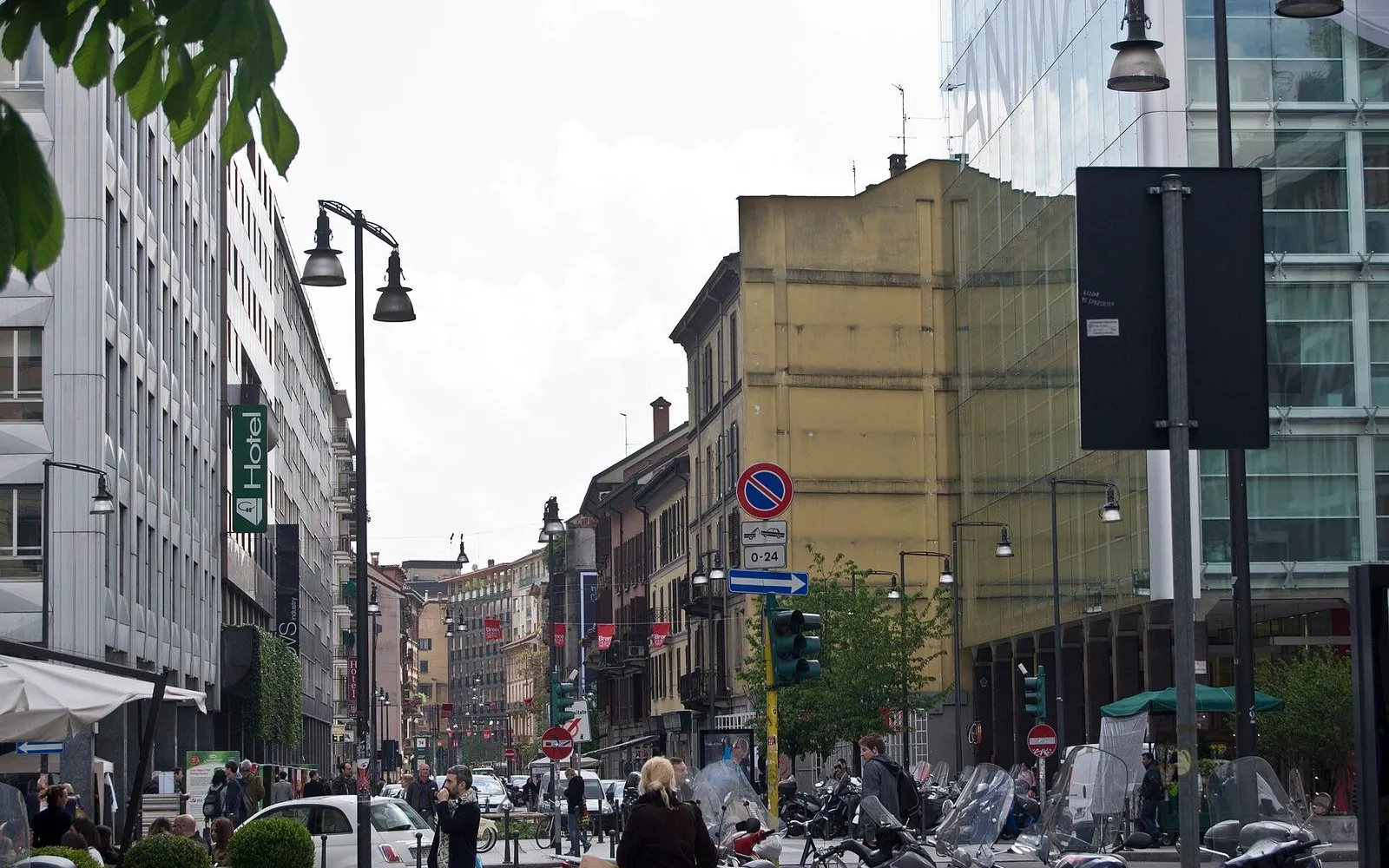
Photo by https://www.flickr.com/photos/belboo/ on Wikimedia Commons

Milan was Mediolanum, capital of the Western Roman Empire, long before the Gothic spires of the Duomo ever rose. This walk traces the city's oldest layer south of the centre, from the sixteen Corinthian columns that still face San Lorenzo to the Lombard Romanesque masterpiece of Sant'Ambrogio. Along the way you pass through a medieval gate, stand inside an imperial mausoleum with its original mosaics, and visit the church that once held the relics of the Three Magi. No Duomo, no Galleria, no fashion, just the ancient, quiet heart of the city.

Hear it on the street

Get the turn-by-turn audio guide in the app. The narration plays itself as you reach each stop, hands-free and offline.

Stop by stop

The route

Interactive map of the route. The full stop list below works without it.

Colonne di San LorenzoLocal pick

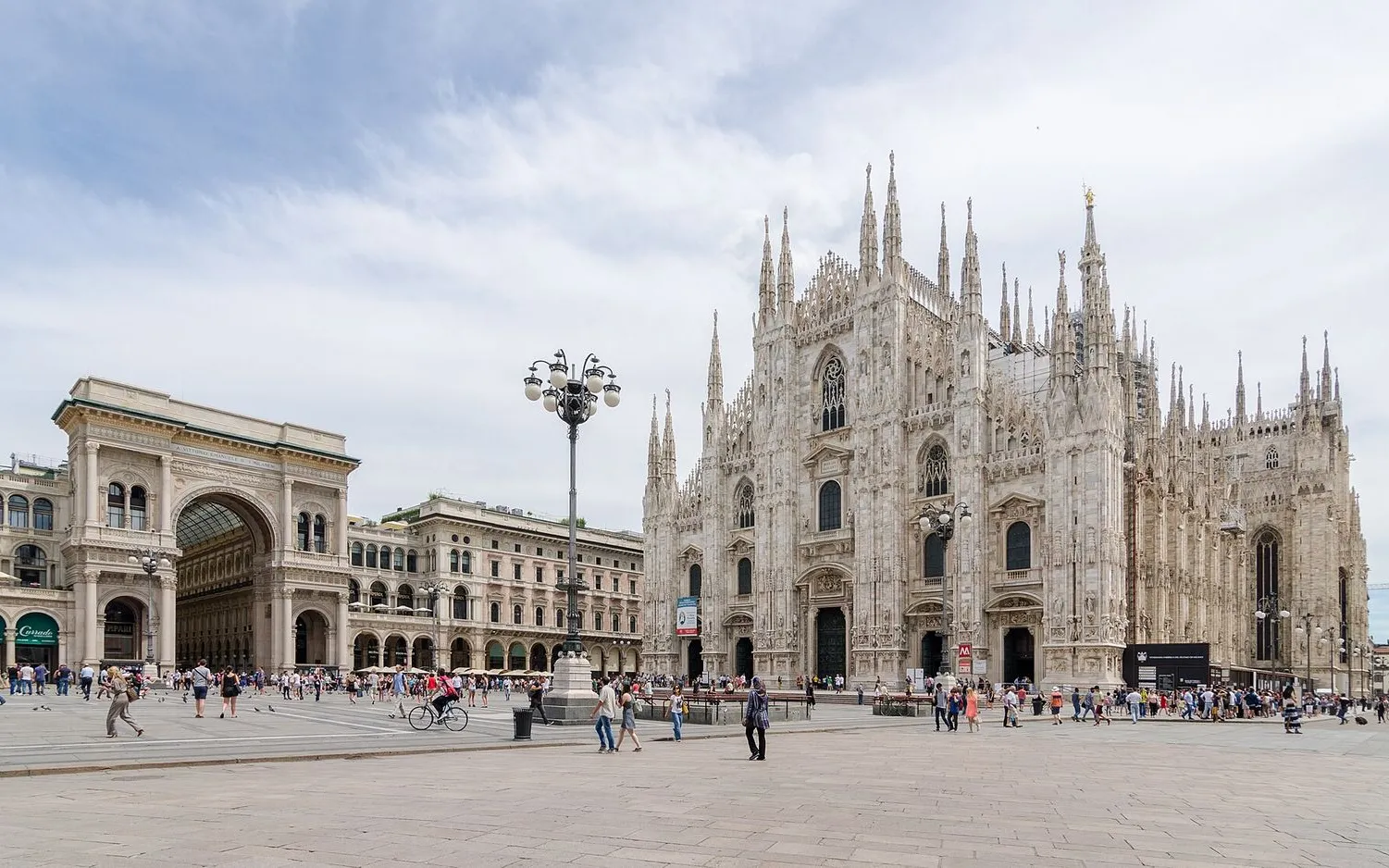
Photo by Ludvig14 on Wikimedia Commons

Colonne di San Lorenzo

0:00

Sixteen Roman Corinthian columns, salvaged from a 2nd-century pagan temple or bathhouse, have stood here since the 4th century. They once formed the grand entrance to the largest centrally planned church in the Western world.

You are standing in front of the Colonne di San Lorenzo, one of the very few pieces of Roman Mediolanum still standing above ground. There are sixteen of them, each about seven and a half metres tall, crowned with Corinthian capitals. Look closely at the capitals and you will notice they do not all match. They were salvaged from at least two different 2nd-century buildings, probably a temple and a public bathhouse, and brought here in the 4th century to form an atrium in front of the newly built basilica behind you.

The brick arch in the centre of the colonnade is medieval. Above it, if you look carefully, you can spot a tiny seventeenth column with a cross on top. Milanese legend calls it the hidden column, visible only to those who stand at the exact centre of the row. In the 16th century, the Spanish governor planned to demolish these columns to widen a procession route for King Philip II.

Ferrante Gonzaga refused, and they survived. The bronze statue of Emperor Constantine in the middle of the square is a modern copy of a late antique original in Rome, placed here in 1937. When you are ready, turn around and walk toward the large church behind the columns.
≈1 min walk to the next stop
Basilica di San Lorenzo MaggioreLocal pick

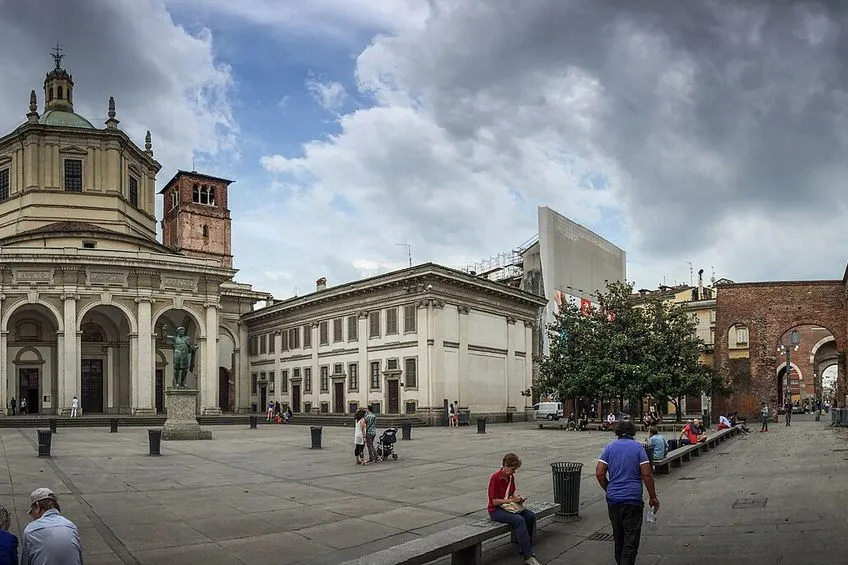
Photo by Warburg on Wikimedia Commons

Basilica di San Lorenzo Maggiore

0:00

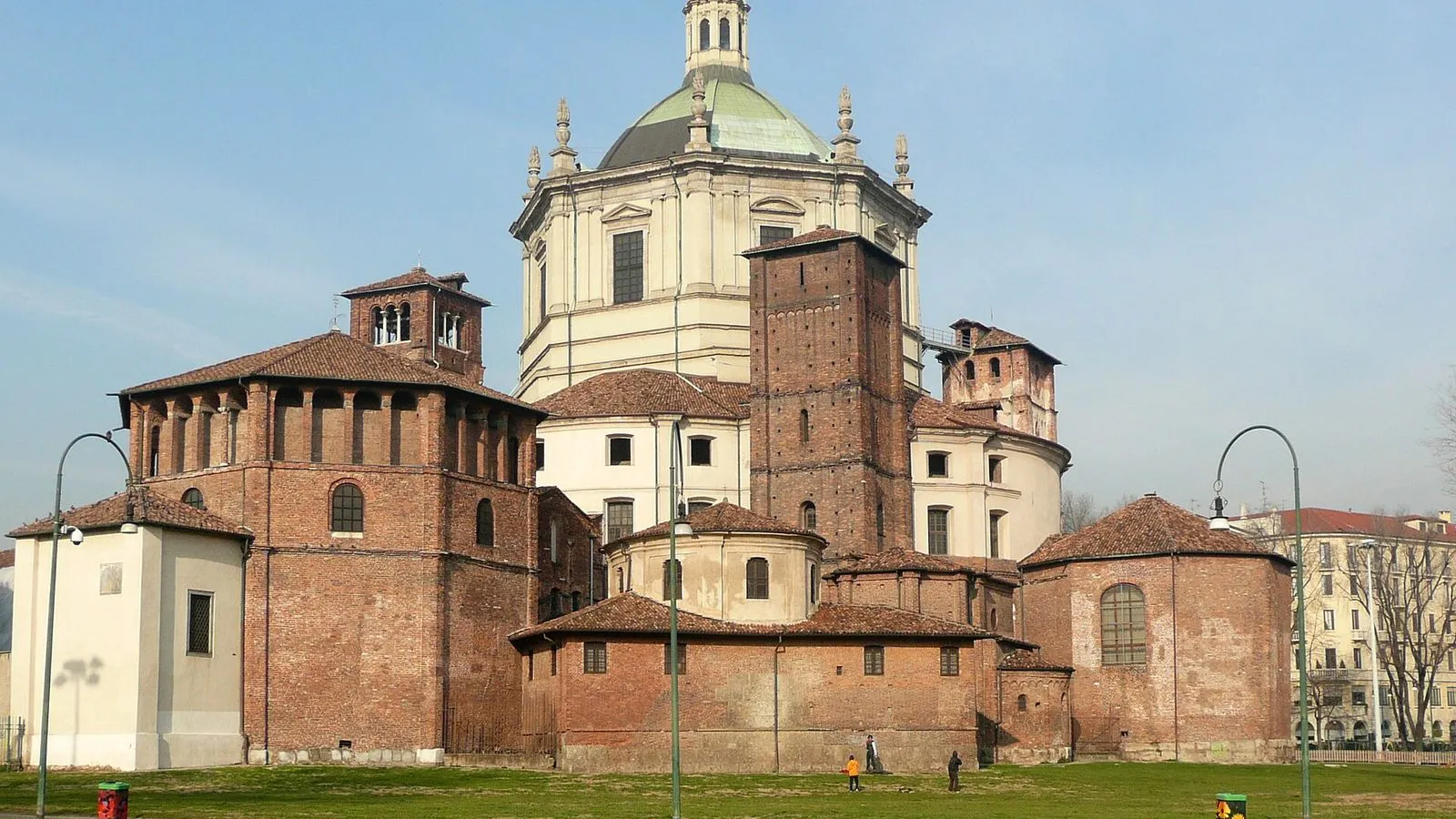
One of Milan's oldest churches, built in the late 4th or early 5th century. Its daring central plan, with four apses and corner towers, was the largest of its kind in the Western world. The Cappella di Sant'Aquilino preserves rare early Christian mosaics.

You are now inside the Basilica of San Lorenzo Maggiore. When it was built, around the late 4th or early 5th century, this was the largest centrally planned building in the entire Western world. The design is a tetraconch: a square core opening into four semicircular apses, with four corner towers. Nobody knows for certain who commissioned it, but its sheer scale tells you it was an imperial project.

Walk toward the south side of the church and find the entrance to the Cappella di Sant'Aquilino. This octagonal chapel was likely built as an imperial mausoleum, and it still holds some of the most precious early Christian mosaics in Milan. Inside, look up at the dome and the gallery. The walls were once covered in coloured marble and gold-ground mosaics.

What survives, particularly the figure of Christ among the apostles, is a rare window into the luxury of a late Roman imperial court. The chapel is dedicated to Saint Aquilinus, but that is a medieval name. Before then it was the chapel of Saint Genesius. Before even that, it was probably the tomb of a member of the imperial family.

The octagon has stood almost intact for sixteen centuries. Take your time with the mosaics.

≈2 min walk to the next stop
Porta TicineseLocal pick

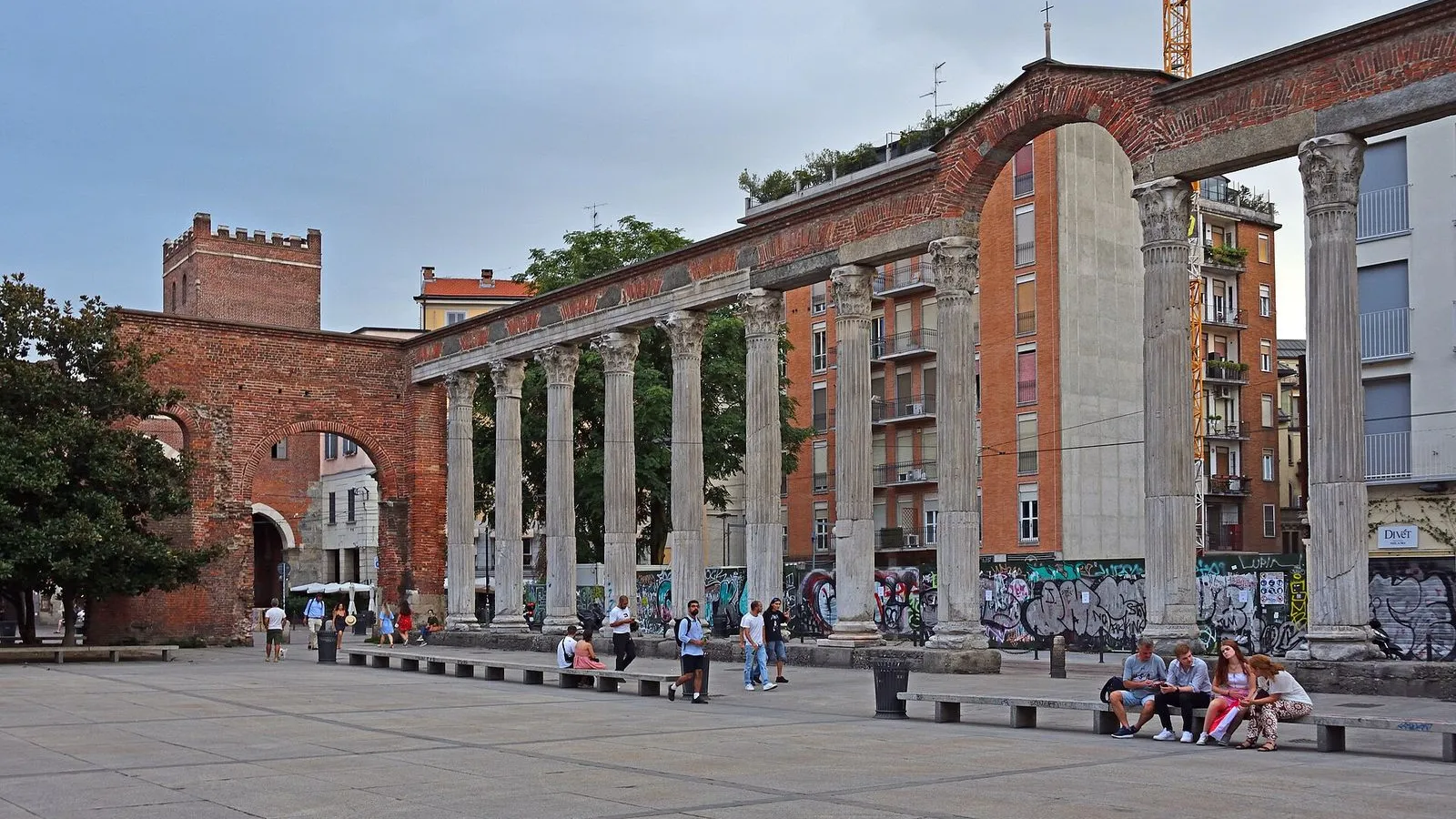
Photo by Paolobon140 on Wikimedia Commons

Porta Ticinese

0:00

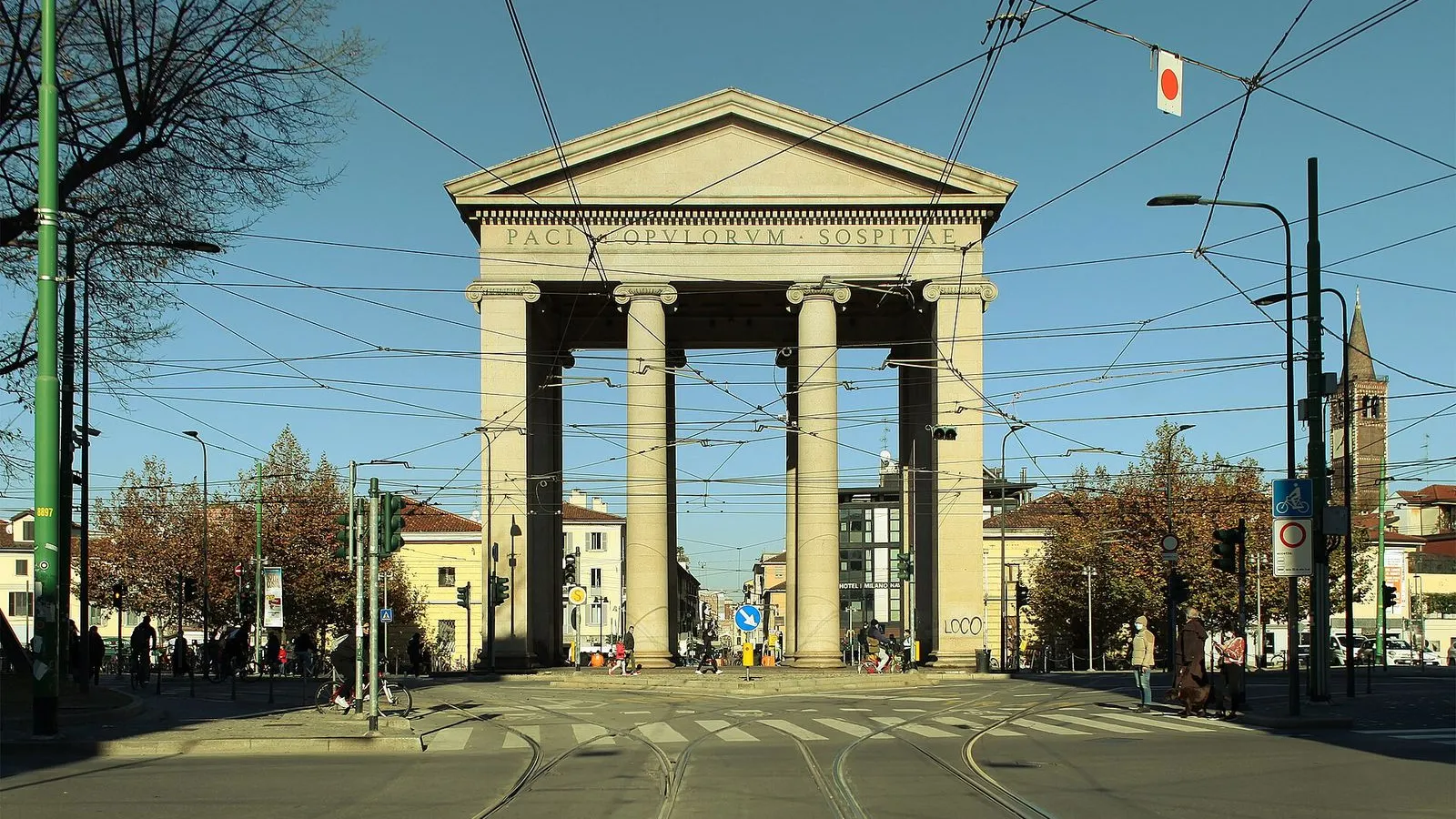
A 12th-century Gothic gate, one of only three surviving medieval gates of Milan. Restored in 1861, it once stood beside a navigable moat that ringed the city.

You are in front of the Porta Ticinese Medievale, the only medieval gate on this side of the city that still stands. Built in the 12th century as part of the city walls, it controlled the road to Pavia, which the Romans called the Via Ticinensis. The gate is Gothic, topped with swallowtail merlons, and for centuries it stood on the inner bank of a navigable moat. The moat is gone now, filled in to create the avenues you crossed to get here.

Look at the two smaller arches flanking the central passage. Those are not original. The architect Camillo Boito added them during a restoration in 1861, when the surrounding houses that had accumulated against the gate were stripped away. Before that, this was the only gate in Milan with a single opening, which is why locals called it Porta Cicca, from the Spanish word chica, meaning little.

The road you are on, Corso di Porta Ticinese, has been a major route into the city since Roman times. When you are ready, continue walking south along it. The bell tower you already see ahead belongs to the Basilica di Sant'Eustorgio.

≈7 min walk to the next stop
Free preview ends here · stops 4 to 6 continue in the app

Basilica di Sant'Eustorgio

Founded in 344 AD to house the relics of the Three Magi, this basilica holds the Renaissance Portinari Chapel with frescoes by Vincenzo Foppa and the Gothic tomb of Saint Peter Martyr.

in app

Basilica di Sant'Ambrogio

Milan's great Lombard Romanesque church, built by Saint Ambrose himself in the 4th century and rebuilt in the 11th and 12th. The atrium, the two bell towers, and the warm brickwork are unmistakable.

in app

Colonna del Diavolo

A Roman column beside Sant'Ambrogio with two deep holes. The legend says the devil, fighting Saint Ambrose, drove his horns into the stone and got stuck.

in app
Good to know

Before you go

Are the Colonne di San Lorenzo original Roman columns?

The sixteen Corinthian columns are original Roman, dating from the 2nd or 3rd century AD. They were salvaged from a pagan temple or bathhouse and reassembled here in the 4th century to form the monumental entrance to the Basilica of San Lorenzo. They have stood in this spot for roughly 1,600 years, surviving fires, invasions, and the tram line that now runs behind them.

Is Sant'Ambrogio free to enter?

Yes, the Basilica di Sant'Ambrogio is free. It is Milan's great Lombard Romanesque church, built by Saint Ambrose in the 4th century and rebuilt in the 11th and 12th. The atrium with its two bell towers, the warm brickwork, the ninth-century golden altar, and the crypt holding the remains of Saint Ambrose in a glass casket are all accessible without a ticket.

How old is the Basilica di San Lorenzo Maggiore?

The Basilica di San Lorenzo Maggiore was built in the late 4th or early 5th century AD, making it roughly 1,600 years old and one of the oldest churches in Milan. Its central plan with four apses and corner towers was the largest of its kind in the Western world at the time. The Cappella di Sant'Aquilino inside preserves rare early Christian mosaics, including a surviving depiction of Christ among the apostles from the 5th century.

Provenance · last verified August 18, 2026

Built from the Wayside route itself: the stops, their order, and the walk between them.

Photo by https://www.flickr.com/photos/belboo/ on Wikimedia Commons · CC BY-SA 2.0

Photo by Ludvig14 on Wikimedia Commons · CC BY-SA 4.0

Photo by Warburg on Wikimedia Commons · Public domain

Photo by Paolobon140 on Wikimedia Commons · CC BY-SA 4.0

Photo by JasonParis from Toronto, Canada on Wikimedia Commons · CC BY 2.0

Photo by Terragio67 on Wikimedia Commons · CC BY-SA 4.0

Photo by FlavMi on Wikimedia Commons · CC BY-SA 3.0

Photo by LucaChp on Wikimedia Commons · CC BY-SA 3.0

Photo by LucaChp on Wikimedia Commons · CC BY-SA 3.0

Photo by Steffen Schmitz on Wikimedia Commons · CC BY-SA 4.0

Coming soon

Wayside isn't in the app stores yet, but it's in the works. Check back soon.