 Must see
Photo by Jean-Christophe BENOIST on Wikimedia Commons
Palazzo di Brera
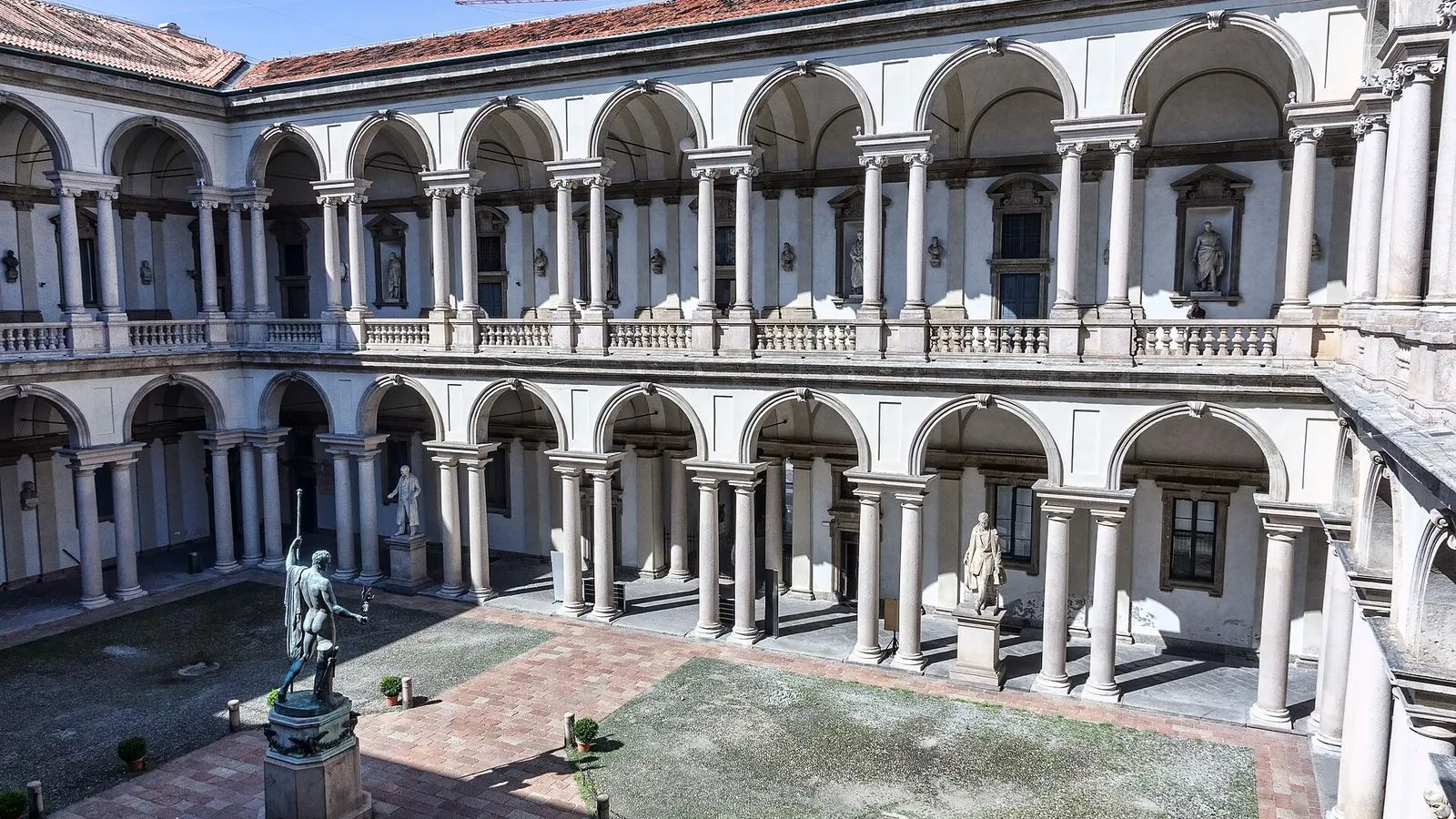
Step into the grand courtyard of Palazzo Brera, where a bronze Napoleon stands guard over one of Italy's finest art collections.
You are standing in the courtyard of Palazzo Brera, a place that has been a seat of learning since the Jesuits ran a college here in the 17th century. The building you see was shaped by two architects: Francesco Maria Richini gave it its sober bones, and Giuseppe Piermarini added the Neoclassical finish after 1773, when Empress Maria Theresa of Austria turned the former Jesuit college into a cultural campus. She packed it with an academy of fine arts, a library, an astronomical observatory, and the picture gallery that would become the Pinacoteca di Brera. The bronze figure in the centre is Napoleon, cast in Rome to a design by Antonio Canova and installed here in 1859.
He is shown as Mars the Peacemaker, a naked god holding a gilded Victory, which is about as subtle as Napoleonic propaganda gets. Look up at the monumental staircase behind him. The statues flanking it honor Cesare Beccaria and Giuseppe Parini, two of Milan's great 18th-century minds. The Pinacoteca, upstairs, holds Mantegna's Lamentation over the Dead Christ and Caravaggio's Supper at Emmaus.
If you have time later, go in. The collection was built not from a prince's vanity but from artworks confiscated when Napoleon suppressed religious orders across Lombardy, which is why so many of its masterpieces are large altarpieces.