Milan · Self-guided audio walk

Leonardo's Milan

The Last Supper, a duke's gift of vines, and the canals that shaped a genius.

  • 6Stops
  • 2 kmDistance
  • 35+ minTime
Leonardo's Milan

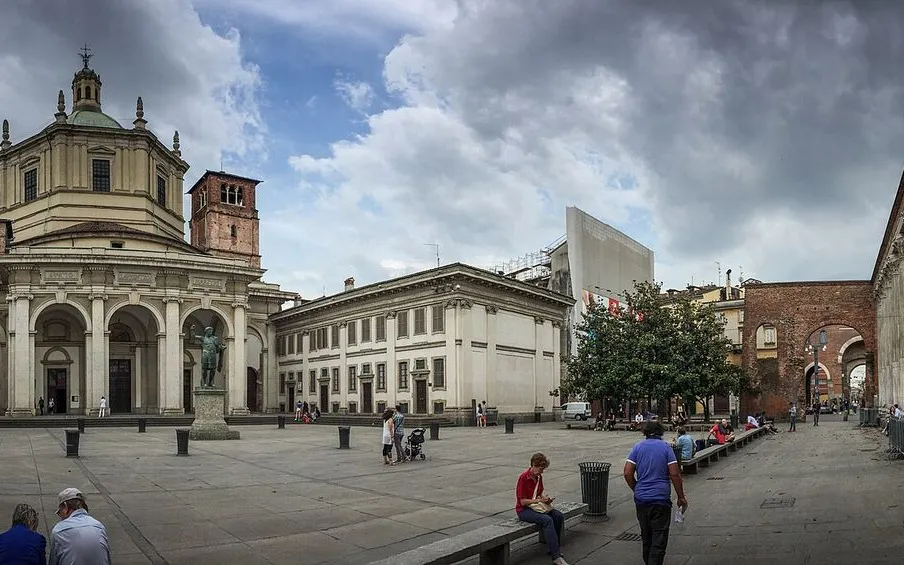
Photo by LucaChp on Wikimedia Commons

Leonardo da Vinci spent seventeen years in Milan, and this walk follows his footprints through the Corso Magenta neighborhood. You will stand before The Last Supper on its original refectory wall, walk the rows of the vineyard Duke Ludovico Sforza gave him as payment, and see his machines brought to life at the science museum. The tour ends inside San Maurizio, a church whose frescoes carry the direct influence of Leonardo's Milanese circle. Booking a timed ticket for The Last Supper weeks ahead is essential; the rest of the walk is yours at your own pace.

Hear it on the street

Get the turn-by-turn audio guide in the app. The narration plays itself as you reach each stop, hands-free and offline.

Stop by stop

The route

Interactive map of the route. The full stop list below works without it.

Santa Maria delle GrazieMust see

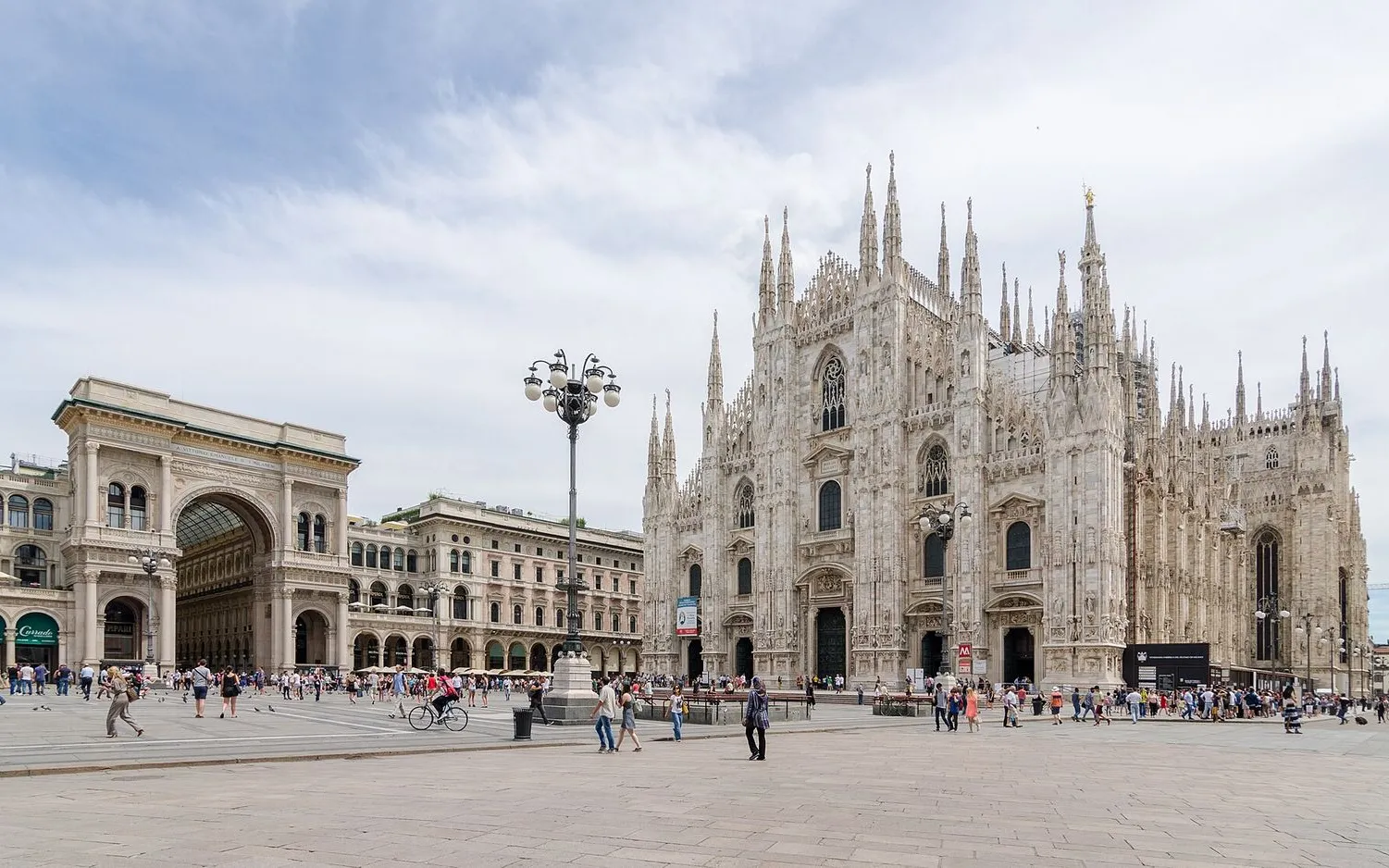
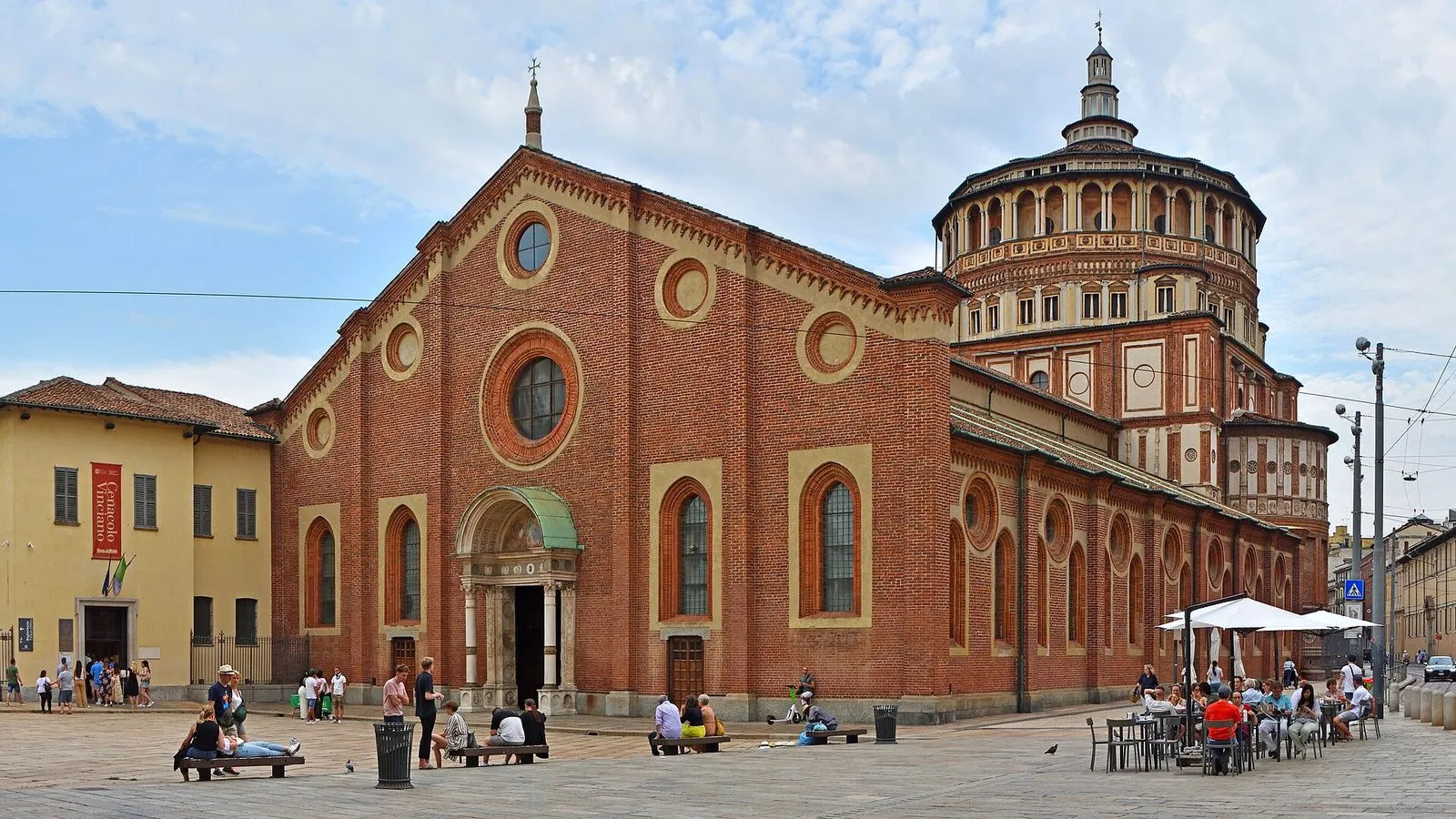
Photo by Ludvig14 on Wikimedia Commons

Santa Maria delle Grazie

0:00

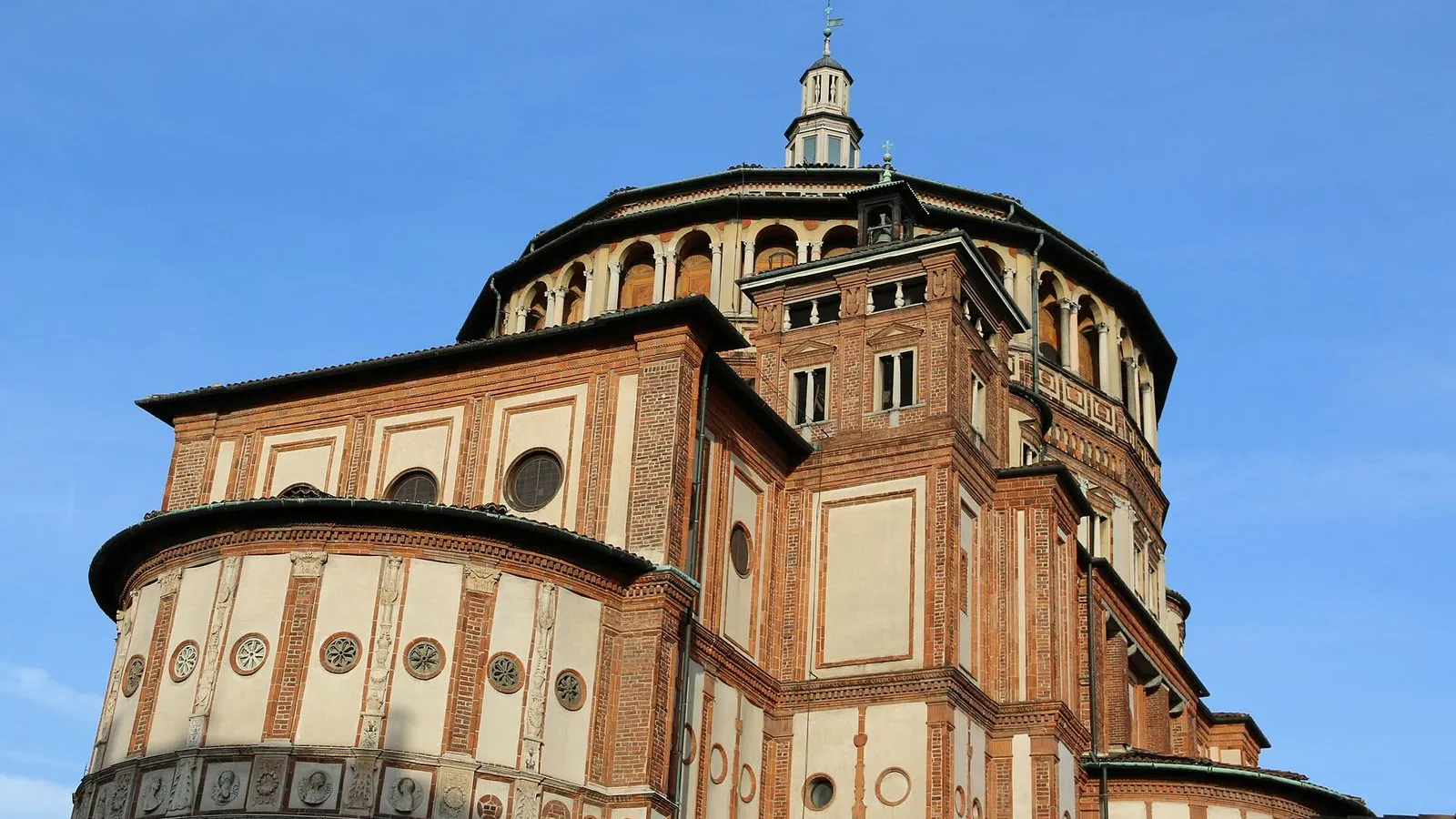
A UNESCO-listed Dominican church whose Bramante-designed tribune and dome crown one of Milan's most important Renaissance complexes.

You are standing in Piazza Santa Maria delle Grazie, facing a church that holds two architectural eras in one building. The Gothic nave, built by Guiniforte Solari starting in 1463, is sober Lombard brick. But look up. That luminous dome and the elegant tribune behind it are the work of Donato Bramante, commissioned by Duke Ludovico Sforza in the 1490s.

Sforza wanted this church to become his family mausoleum. His wife Beatrice d'Este is buried inside. Bramante's intervention turned a friars' church into a ducal statement: the dome is ringed with columns, the apse is broad and harmonious, and the cloister you will pass through to reach the refectory carries the same calm proportions. During the Allied bombing of August 1943, much of the complex was destroyed.

The refectory wall that held The Last Supper survived because the friars had sandbagged it. The church you see today has been carefully restored, but the scars of that night are part of its story.
≈2 min walk to the next stop
Cenacolo VincianoMust see

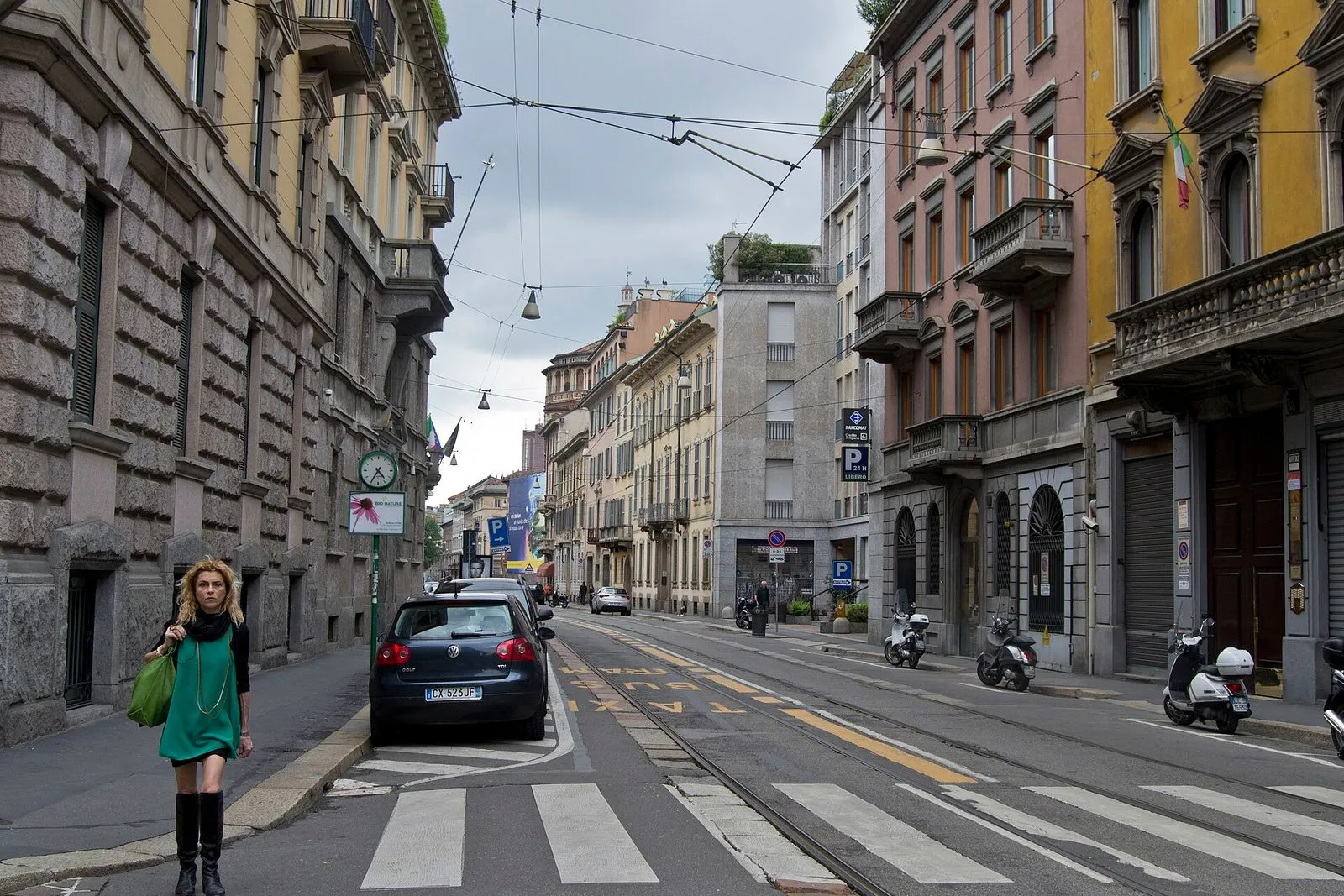
Photo by FrDr on Wikimedia Commons

Cenacolo Vinciano

0:00

Leonardo's masterpiece on the refectory wall, painted between 1495 and 1497, depicting the moment Christ announces a betrayal.

This is the refectory where Dominican friars ate their meals in silence. On the north wall, Leonardo da Vinci painted The Last Supper, not as a fresco but in tempera on a dry plaster surface, an experiment that began deteriorating within his own lifetime. He worked on it for roughly three years, and contemporaries wrote of seeing him climb the scaffolding at dawn and stand there for hours without lifting a brush, then suddenly paint furiously until dusk. The scene freezes the instant after Christ says, 'One of you will betray me.' The apostles surge into four groups of three, each reacting differently: shock, denial, anger, grief.

Judas, clutching a money bag, is the only one whose face falls into shadow. What you may not notice at first is the perspective. Every line of the painted room converges on Christ's right eye. Leonardo used the actual refectory's architecture as the starting point for his painted space, extending the real room into a painted one.

The work has survived floods, Napoleonic troops who used the room as a stable, and the 1943 bombing that tore away the opposite wall. The restoration completed in 1999 brought back colors hidden for centuries. Tickets must be booked months ahead and there are no same-day sales at the door, so unless you planned this one well before you arrived in Milan, you are seeing the church rather than the painting. Each visit inside lasts fifteen minutes.

≈2 min walk to the next stop
Casa degli AtellaniLocal pick

Photo by Carlo Dell'Orto on Wikimedia Commons

Casa degli Atellani

0:00

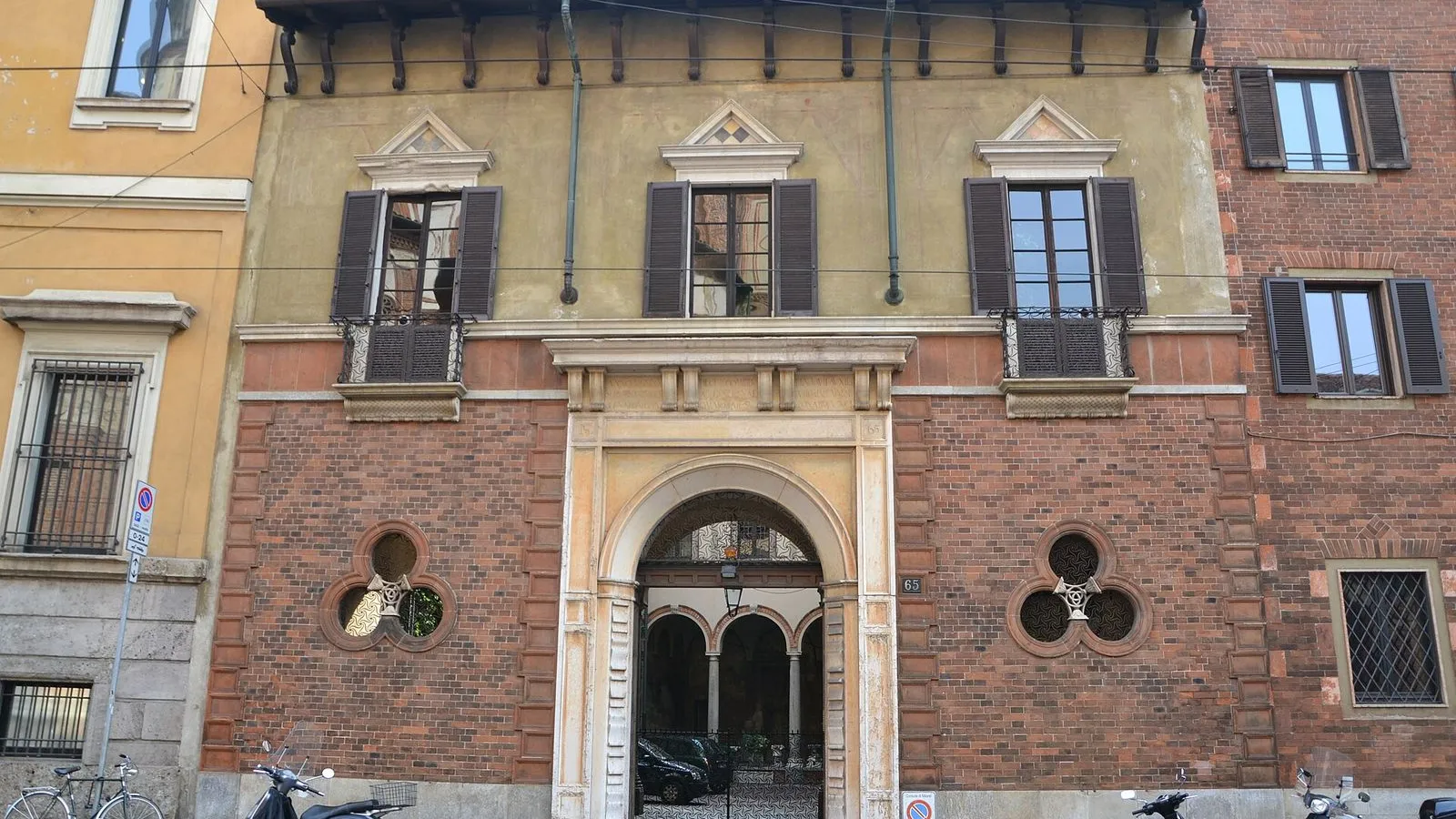
A Renaissance palace whose garden holds the replanted vineyard that Ludovico Sforza gave Leonardo in 1498.

This house was part of the Borgo delle Grazie, the neighborhood Duke Ludovico Sforza built up around the church to house his courtiers. He gave the property to the Atellani family, who filled it with parties that the chroniclers of the day described in detail. But what brings you here is behind the house. In 1498, as thanks for painting The Last Supper, Ludovico gave Leonardo a vineyard of about one hectare, roughly sixteen pertiche milanesi.

Leonardo walked these rows after long days on the scaffolding across the street. He was the son of a winegrowing family, and his notebooks are full of sketches of vines and observations about fermentation. When the French invaded Milan in 1499, Leonardo fled, but he never stopped caring about this vineyard. He fought to get it back after it was confiscated, and in his will, written a month before his death in Amboise in 1519, he divided it between his favorite pupil Salai and his servant Giovanbattista Villani.

The vineyard was forgotten for four centuries, then rediscovered in the 1920s. Genetics researchers identified the original grape as Malvasia di Candia Aromatica, and in 2015 it was replanted in the original rows. The first harvest since Leonardo's time came in 2018.

≈4 min walk to the next stop
Free preview ends here · stops 4 to 6 continue in the app

Corso Magenta

The elegant street that was once the Borgo delle Grazie, lined with noble palaces and the echo of Leonardo's daily walks.

in app

Museo Nazionale Scienza e Tecnologia

Italy's largest science museum, housed in a former Olivetan monastery, with the world's biggest permanent exhibition on Leonardo as engineer.

in app

San Maurizio al Monastero Maggiore

A 16th-century church whose frescoed interior is so richly painted that Milan calls it its Sistine Chapel.

in app
Good to know

Before you go

How far ahead do I need to book The Last Supper?

Tickets for The Last Supper are released in three-month blocks and sell out within hours for peak dates. You should book the moment tickets for your travel window go on sale, which is typically six to eight weeks before the start of the quarter. If the official site shows no availability, check back every Wednesday at noon Italian time, when additional tickets are released for the following week. Guided tours through licensed operators offer an alternative and often have separate allocations.

SourceCenacolo Vinciano Official Site
How much does The Last Supper ticket cost?

A standard timed-entry ticket to see The Last Supper costs €15 full price and €2 reduced. Children under 18 are free but still require a timed reservation. Official guided tours through the museum add roughly €10 to any ticket. Resale tours through third parties cost significantly more, often €50 to €80 per person, but include a licensed guide.

SourceCenacolo Vinciano VivaTicket
Is Santa Maria delle Grazie free?

The church of Santa Maria delle Grazie is free to enter and does not require a reservation. The Gothic nave and Bramante's Renaissance tribune are worth seeing on their own. The Last Supper is in the separate refectory building and requires its own timed ticket. You can visit the church without a Last Supper reservation, and the cloister behind the complex, known as the Chiostro delle Rane, is a peaceful free courtyard open during the day.

Provenance · last verified August 18, 2026

Built from the Wayside route itself: the stops, their order, and the walk between them.

Photo by LucaChp on Wikimedia Commons · CC BY-SA 3.0

Photo by Ludvig14 on Wikimedia Commons · CC BY-SA 4.0

Photo by FrDr on Wikimedia Commons · CC BY-SA 4.0

Photo by Carlo Dell'Orto on Wikimedia Commons · CC BY-SA 4.0

Photo by JasonParis from Toronto, Canada on Wikimedia Commons · CC BY 2.0

Photo by Terragio67 on Wikimedia Commons · CC BY-SA 4.0

Photo by FlavMi on Wikimedia Commons · CC BY-SA 3.0

Photo by LucaChp on Wikimedia Commons · CC BY-SA 3.0

Photo by https://www.flickr.com/photos/belboo/ on Wikimedia Commons · CC BY-SA 2.0

Photo by Steffen Schmitz on Wikimedia Commons · CC BY-SA 4.0

Coming soon

Wayside isn't in the app stores yet, but it's in the works. Check back soon.