Practical guide

Milan: know before you go

Airport trains, a tap-and-go metro, a tourist tax that climbed in 2025, and the one thing you must book before you leave home: the Milan you need to know before you go.

Milan

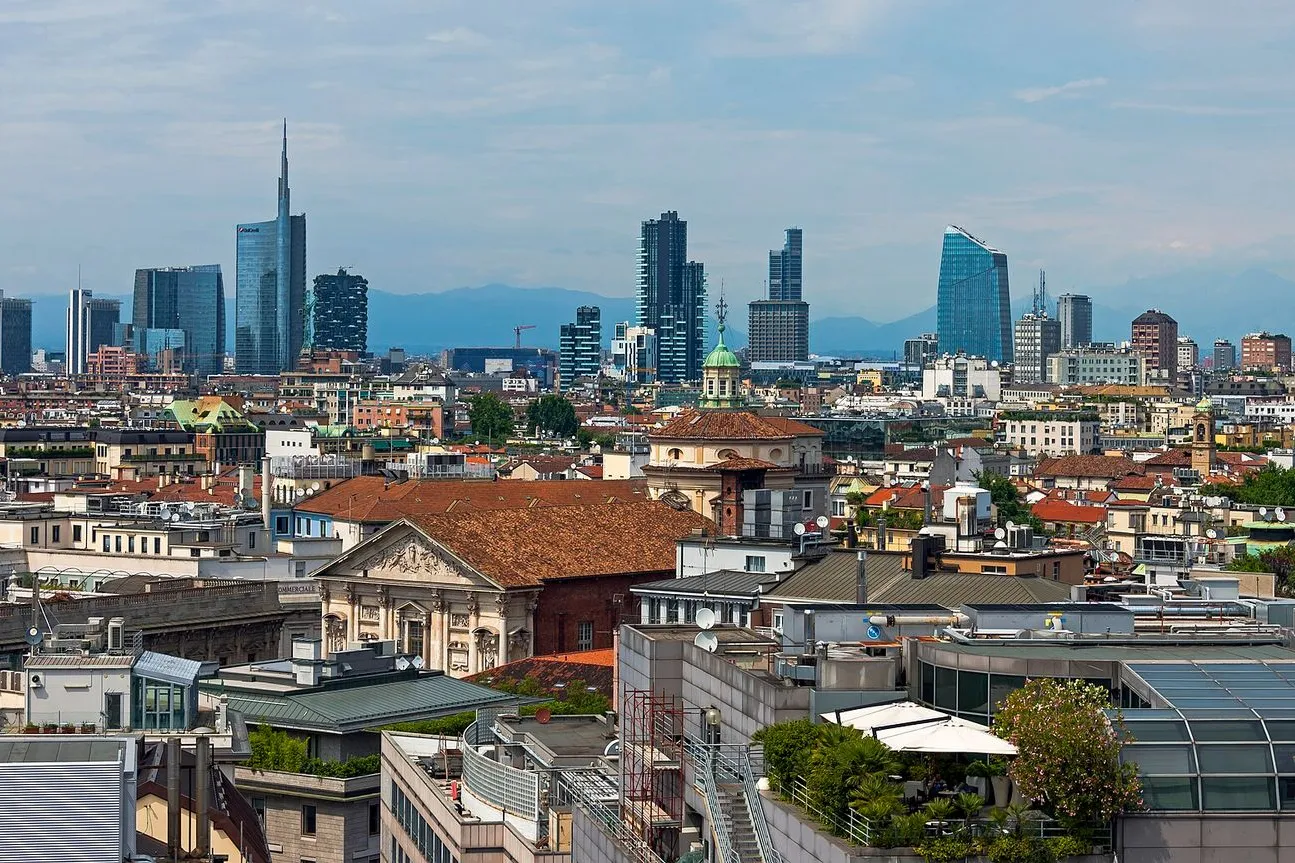
Photo by Daniel Case on Wikimedia Commons

Need to know

The essentials, first

Milan runs on its own rhythm: aperitivo at six, a citywide pause for August, and a metro that gets you from the Duomo to the Navigli canals in ten minutes. This page covers the practical stuff: getting in from three airports, how the metro and tram fare system works, what that line on your hotel bill is, and when the city is at its best and worst. For visa rules, the euro, plug types, inter-city rail, and Italy's national holidays, see the Italy country guide.

  • Milan charges a tourist tax of €3.50 to €7.00 per person per night in 2025, depending on your accommodation. The top rate applies to 4- and 5-star hotels; B&Bs and short rentals pay up to €6.30.SourceImmobiliare.it: Milan tourist tax 2025
  • Tap water in Milan is safe to drink and meets strict quality standards. The city regularly tests the supply and posts results publicly. Public fountains around the city are fine to refill from.SourceComune di Milano: drinking water safety
  • You can tap any contactless credit or debit card (Visa, Mastercard, American Express, Maestro) or your phone at metro turnstiles and on trams and buses. The system caps your daily spend at the €7.60 day-pass rate after four journeys.SourceATM Milano: contactless pay as you go
When to go

When is the best time to visit Milan?

Spring

Months
March to May
Weather
Mild and warming steadily. Average highs climb from about 13°C in March to 23°C in May. Rain is moderate, and late spring days can feel almost summerlike.SourceHoliday Weather: Milan averages
Crowds
Easter crowds are real. April brings Salone del Mobile (Design Week), when the whole city fills up and hotel prices spike. Late May is busy but more manageable.

Summer

Months
June to August
Weather
Hot and humid, with average highs around 28°C to 30°C in July and August. Afternoon thunderstorms are common. Air conditioning is not universal, so check your hotel listing.SourceHoliday Weather: Milan averages
Crowds
July is peak tourist season. August empties out as locals leave for Ferragosto; many neighborhood restaurants close, but the big sights stay open and lines shorten.

Autumn

Months
September to November
Weather
September starts warm, around 24°C, and cools to about 11°C by November. Rain picks up through the season; October is the wettest month.SourceHoliday Weather: Milan averages
Crowds
September brings Fashion Week and a fresh wave of visitors. October and November are quieter, with short museum queues and cooler walking weather.

Winter

Months
December to February
Weather
Cold and damp. Average highs sit around 6°C to 7°C, with lows near freezing. Snow is rare but possible; rain is frequent. Daylight is short, and the city feels quieter.SourceHoliday Weather: Milan averages
Crowds
Low season except for the run-up to Christmas and New Year. The first week of December hums with the Sant'Ambrogio holiday and the opening of the opera season at La Scala.
When to visit Milan, by season
SeasonMonthsWeatherCrowds
SpringMarch to MayMild and warming steadily. Average highs climb from about 13°C in March to 23°C in May. Rain is moderate, and late spring days can feel almost summerlike.SourceHoliday Weather: Milan averagesEaster crowds are real. April brings Salone del Mobile (Design Week), when the whole city fills up and hotel prices spike. Late May is busy but more manageable.
SummerJune to AugustHot and humid, with average highs around 28°C to 30°C in July and August. Afternoon thunderstorms are common. Air conditioning is not universal, so check your hotel listing.SourceHoliday Weather: Milan averagesJuly is peak tourist season. August empties out as locals leave for Ferragosto; many neighborhood restaurants close, but the big sights stay open and lines shorten.
AutumnSeptember to NovemberSeptember starts warm, around 24°C, and cools to about 11°C by November. Rain picks up through the season; October is the wettest month.SourceHoliday Weather: Milan averagesSeptember brings Fashion Week and a fresh wave of visitors. October and November are quieter, with short museum queues and cooler walking weather.
WinterDecember to FebruaryCold and damp. Average highs sit around 6°C to 7°C, with lows near freezing. Snow is rare but possible; rain is frequent. Daylight is short, and the city feels quieter.SourceHoliday Weather: Milan averagesLow season except for the run-up to Christmas and New Year. The first week of December hums with the Sant'Ambrogio holiday and the opening of the opera season at La Scala.
The practical guide

Everything to sort before you go

Getting in from the airport

Milan has three airports and a giant central train station. Malpensa (MXP) is the main intercontinental hub, about 50 km northwest. Linate (LIN) sits just 7 km east of the center and is the closest, handling mostly European flights. Bergamo Orio al Serio (BGY) serves budget carriers and is about 45 km northeast. Milano Centrale is the main rail station, with high-speed connections to Rome, Florence, Venice, and Turin. From any of the three airports, you can reach the center in under an hour without a car.

The Malpensa Express train runs from Malpensa Terminals 1 and 2 to Milano Cadorna (about 35 minutes) and Milano Centrale (about 50 minutes). A one-way adult ticket costs €15; children 4 to 13 pay €7.50, and under-3s ride free. SourceMalpensa Express: ticket prices

Linate Airport connects to the city center via the M4 (blue) metro line. The ride to San Babila in the city center takes about 12 minutes and costs a standard Mi1–Mi3 ticket (€2.20). SourceVisitMilano: getting around Milan

A taxi from Malpensa to central Milan costs a fixed €90. From Linate, the fare is metered and typically runs between €20 and €30 depending on traffic. SourceMilan and Beyond: is Milan safe (taxi fares)

Getting around

Milan's transit network is run by ATM and covers the city with four metro lines, an extensive tram network, and buses. The historic trams are as much a sight as a way to get around: orange 1920s cars on routes like the 1 and the 5. The metro is fast and frequent; trams are slower but cover neighborhoods the metro misses. A single ticket works across all three modes within the Mi1–Mi3 zone, which covers everything a visitor is likely to need. Tap any contactless card or your phone at the turnstile or on-board reader; the system applies the cheapest fare automatically.

A standard Mi1–Mi3 ticket costs €2.20 and is valid for 90 minutes on metro, trams, buses, and Trenord suburban rail within the city zone. SourceATM Milano: tickets and fares

A 24-hour day ticket costs €7.60. A 3-day ticket (valid three consecutive days from first use) is €15.50. A 10-journey carnet costs €19.50 but cannot be shared by multiple people at the same time. SourceATM Milano: tickets and fares

Contactless tap-to-pay works on all metro lines, trams, and buses. Use the same card or device all day; after four journeys the system caps at the €7.60 daily rate. Always tap out when exiting the metro or on designated surface lines, or you may be charged a penalty fare. SourceATM Milano: contactless pay as you go

Money and payments

The tourist tax in Milan is a per-person, per-night charge added to your accommodation bill at check-out. It applies to everyone 18 and older and is not included in most online booking prices, so budget for it separately. The city raised rates in 2025 using a provision tied to the Jubilee year, and another increase is planned for 2026 ahead of the Winter Olympics. Cards are accepted nearly everywhere in Milan, though small bars and market stalls may have a minimum (usually €5 or €10).

2025 tourist tax rates: €3.50 (1-star hotels), €4.90 (2-star), €6.30 (3-star), €7.00 (4- and 5-star hotels). B&Bs and short-rental homes (including Airbnb) pay €6.30 per person per night. SourceImmobiliare.it: Milan tourist tax 2025

Safety and common scams

Milan is a safe city for visitors. Violent crime is rare. The issue to watch for is pickpocketing, especially in crowded places: Milano Centrale station, the metro at rush hour, the Duomo square, and on the M1 and M3 lines. Keep your bag zipped and in front of you, and do not accept unsolicited help at ticket machines; scammers hang around Centrale and Duomo stations offering to assist, then demand money or lift your card. At night the center, Brera, and the Navigli are busy and well lit. Avoid the area directly around Centrale after dark, and steer clear of Quarto Oggiaro, Corvetto, and Barona, which have little for a visitor anyway.

Pickpocketing is most common on crowded metro trains, at Centrale station, and around the Duomo. Keep valuables secured and be wary of anyone offering unsolicited help at ticket machines. SourceMilan and Beyond: is Milan safe

Health and emergencies

Milan's tap water is clean, regularly tested, and safe to drink. You can refill a bottle at any of the city's public drinking fountains. Pharmacies (farmacia) are plentiful and marked by a green cross; they rotate night and weekend hours, and every pharmacy posts the nearest one that is open outside normal times. The European Health Insurance Card (EHIC) is accepted at public hospitals, but travel insurance is strongly recommended.

MM SpA, the city's water utility, conducts periodic quality checks on Milan's drinking water and publishes results online. The water meets all EU safety standards. SourceComune di Milano: drinking water quality

Staying connected

Milan has good 4G and 5G coverage across the city. Free WiFi is common in hotels, cafes, and at the main stations. The city also runs a public WiFi network called "Open WiFi Milano" with hotspots in the center and at major transport hubs. If you need a local SIM, TIM, Vodafone, and WindTre shops are everywhere; bring your passport, as it is required by Italian law to register a SIM.

Etiquette and tipping

Milan is Italy's most dress-conscious city. Locals dress sharply even for a grocery run, and you will feel out of place in sportswear at a restaurant in the evening. Aperitivo is the city's daily ritual: buy a drink between about 6 and 9 p.m. and you get access to a buffet of snacks. It is not a full dinner unless you pay for it, but at many bars it is substantial enough to replace a light meal. At a proper restaurant, bread is brought to the table without asking and a cover charge (coperto, usually €2 to €4) appears on the bill. Tipping is not expected; rounding up or leaving a euro or two for good service is appreciated but never required. On the metro, let passengers exit before you board, and stand on the right on escalators.

The language

Italian is the official language, and in Milan you will hear a fair amount of the Milanese dialect among older locals, though everyone speaks standard Italian. English is widely spoken in hotels, restaurants in the center, and at major sights, but less so in neighborhood trattorias and shops outside the tourist core. A few Italian phrases go a long way: "buongiorno" (good morning), "grazie" (thank you), "per favore" (please), and "il conto, per favore" (the bill, please). Milanese are direct and move fast; a brusque exchange is not rudeness, just pace.

Accessibility

Milan's newer metro lines (M4 and M5) are fully accessible with step-free access and level boarding. The older M1, M2, and M3 lines have elevators at many but not all stations; check the ATM website or app for real-time elevator status before you travel. Trams are a mixed bag: the modern low-floor trams are wheelchair accessible, but the iconic orange 1920s trams are not. The historic center has cobblestone streets in places like Brera and around the Navigli, which can be challenging for wheelchairs and strollers. Most major museums, including the Duomo (with a ramp entrance on the south side), Castello Sforzesco, and the Pinacoteca di Brera, have accessible entrances and elevators.

Public holidays and hours

Milan's own public holiday is December 7, the feast of Sant'Ambrogio, the city's patron saint. Schools and many offices close, and the day is marked by the opening of the opera season at La Scala, a major social event. Shops in the center generally stay open, but neighborhood businesses may shut. During Salone del Mobile (Milan Design Week, usually in April), the city is packed and hotel prices can triple; it is not a holiday, but it affects the city more than one. For national holidays that affect the whole country, see the Italy country guide.

What to book ahead

A few Milan sights sell out weeks in advance, and showing up without a ticket means you will not get in. The Last Supper (Cenacolo Vinciano) is the tightest ticket in town; reservations open in blocks and vanish within hours. The Duomo rooftop terraces are best booked ahead to skip the long ticket-office queue, especially in high season. La Scala opera and ballet tickets go on sale months before performances and sell quickly for popular productions. If you want to see the Brera Pinacoteca or the Museo del Novecento on a free-first-Sunday, arrive early. For design fans, Salone del Mobile events require separate registrations and often fill up. Book hotel rooms early if your dates overlap with Fashion Week, Design Week, or a major trade fair at Fiera Milano Rho.

Do it yourself

Follow it in the app

Download the VoiceMap app for GPS-triggered audio, offline maps, and turn-by-turn directions that play as you walk.

Coming soon

Wayside isn't in the app stores yet, but it's in the works. Check back soon.