Paris · Self-guided audio walk

Rain-Proof Paris: The Covered Passages

Shop like a 19th-century Parisian, sheltered from the rain beneath glass and iron.

  • 6Stops
  • 3.1 kmDistance
  • 45+ minTime
Rain-Proof Paris: The Covered Passages

Photo by Moonik on Wikimedia Commons

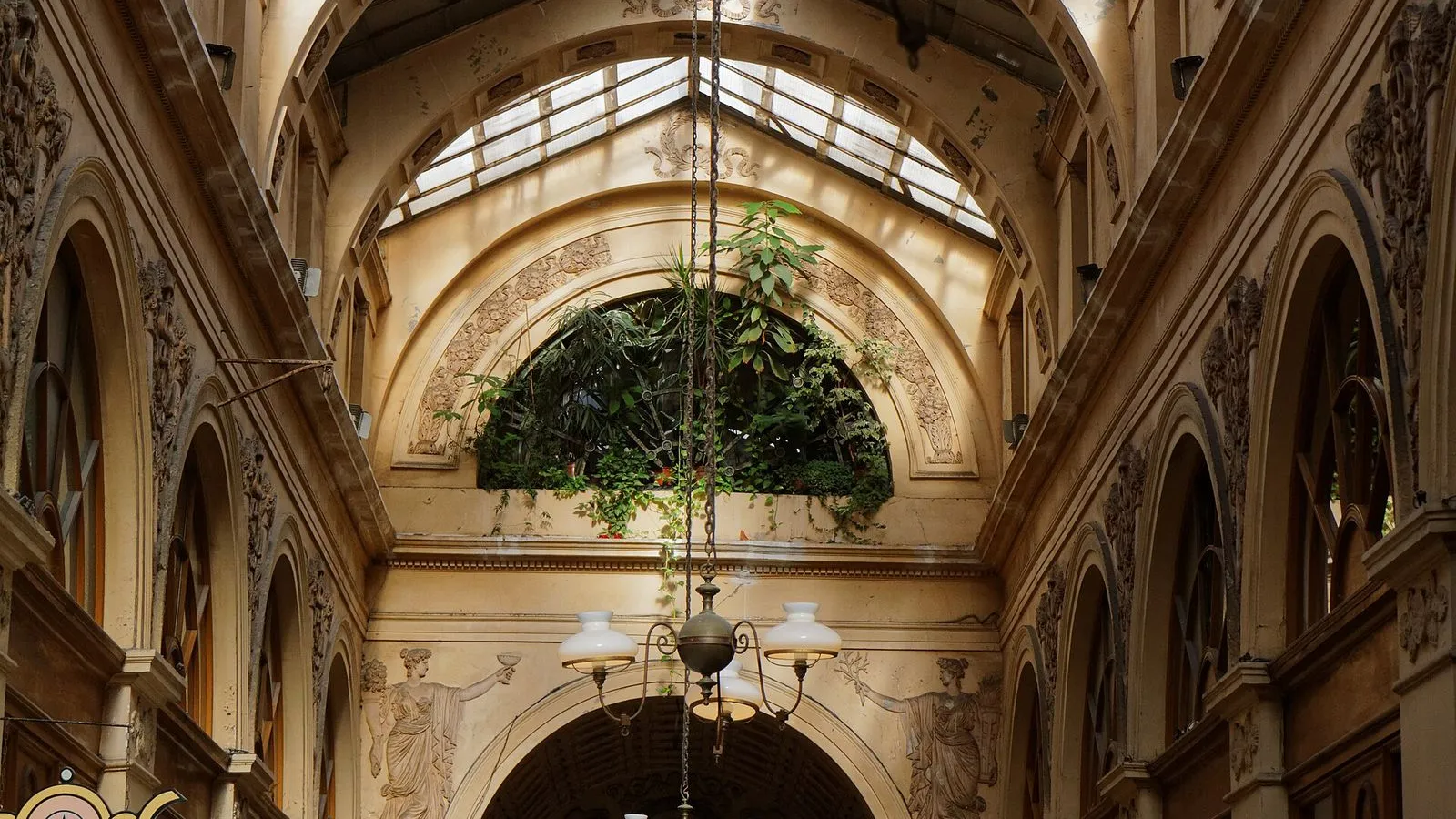
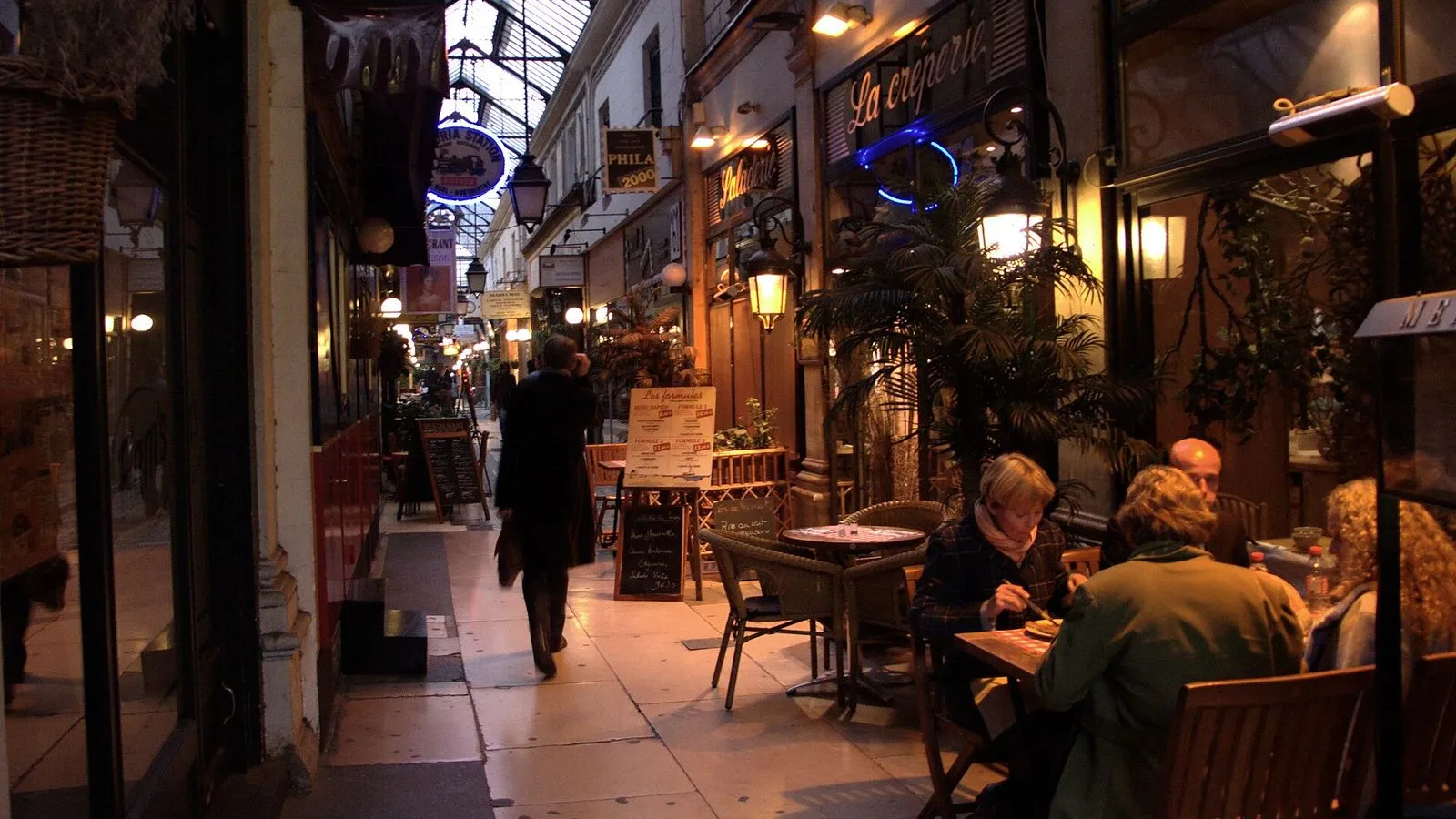
Before department stores, Parisians shopped in glass-roofed arcades lit by gas. This flat, two-and-a-half-kilometer walk threads the best surviving passages between the Palais-Royal gardens and the Grands Boulevards. You will step through Galerie Vivienne, where neoclassical goddesses celebrate commerce above a mosaic floor. You will browse stamp dealers in the Passage des Panoramas, the oldest covered passage in Paris, and walk the iron-and-glass ribs of the Passage Jouffroy, the first passage heated from below. Along the way, the column at Place Vendôme and the grand staircase of the Palais Garnier make their own case for stopping. The whole route works beautifully in the rain. In fact, it works better in the rain.

Hear it on the street

Get the turn-by-turn audio guide in the app. The narration plays itself as you reach each stop, hands-free and offline.

Stop by stop

The route

Interactive map of the route. The full stop list below works without it.

Palais-RoyalMust see

Photo by dalbera on Openverse

Palais-Royal

0:00

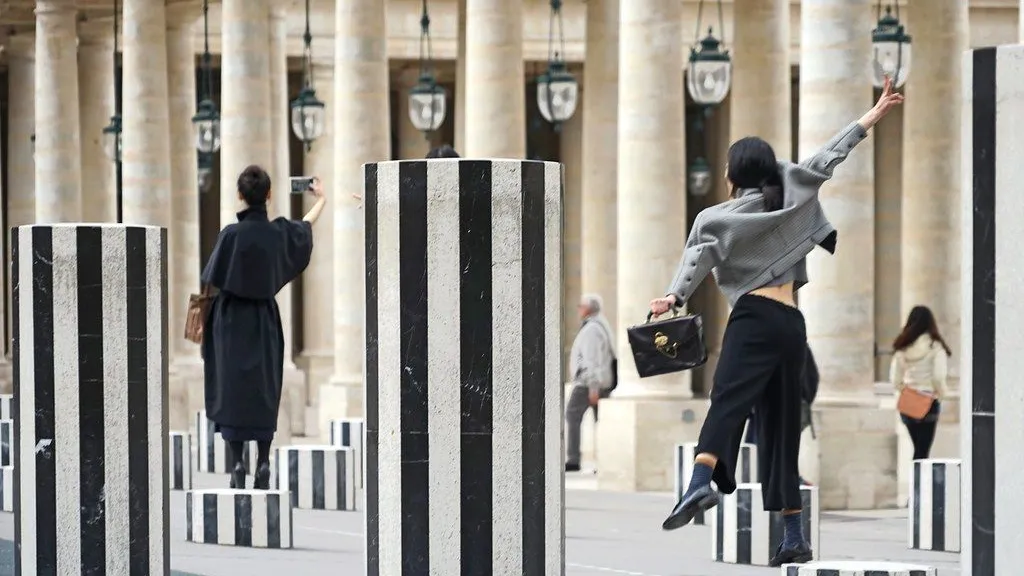
The palace gardens that gave Paris its first covered shopping arcades in the 1780s, now home to Daniel Buren's striped columns.

You are standing in the gardens of the Palais-Royal, a palace built for Cardinal Richelieu in the 1630s and later home to the Orléans branch of the royal family. The arcades that run along three sides of this garden are the reason you are here. In 1786, the Duke of Orléans, deep in debt, turned the ground floor into shops and cafés and rented them out. Paris had never seen anything like it: a place to stroll, shop, and gossip, all sheltered from the mud.

Those arcades were the prototype for every covered passage you will walk through today. Before you leave, walk to the southern courtyard to see Daniel Buren's 260 black-and-white striped columns, installed in 1986. They split opinion from day one, which was exactly the point. When you are ready, exit the garden at the northwest corner onto Rue de Beaujolais.
≈7 min walk to the next stop
Galerie VivienneMust see

Photo by Thesupermat on Wikimedia Commons

Galerie Vivienne

0:00

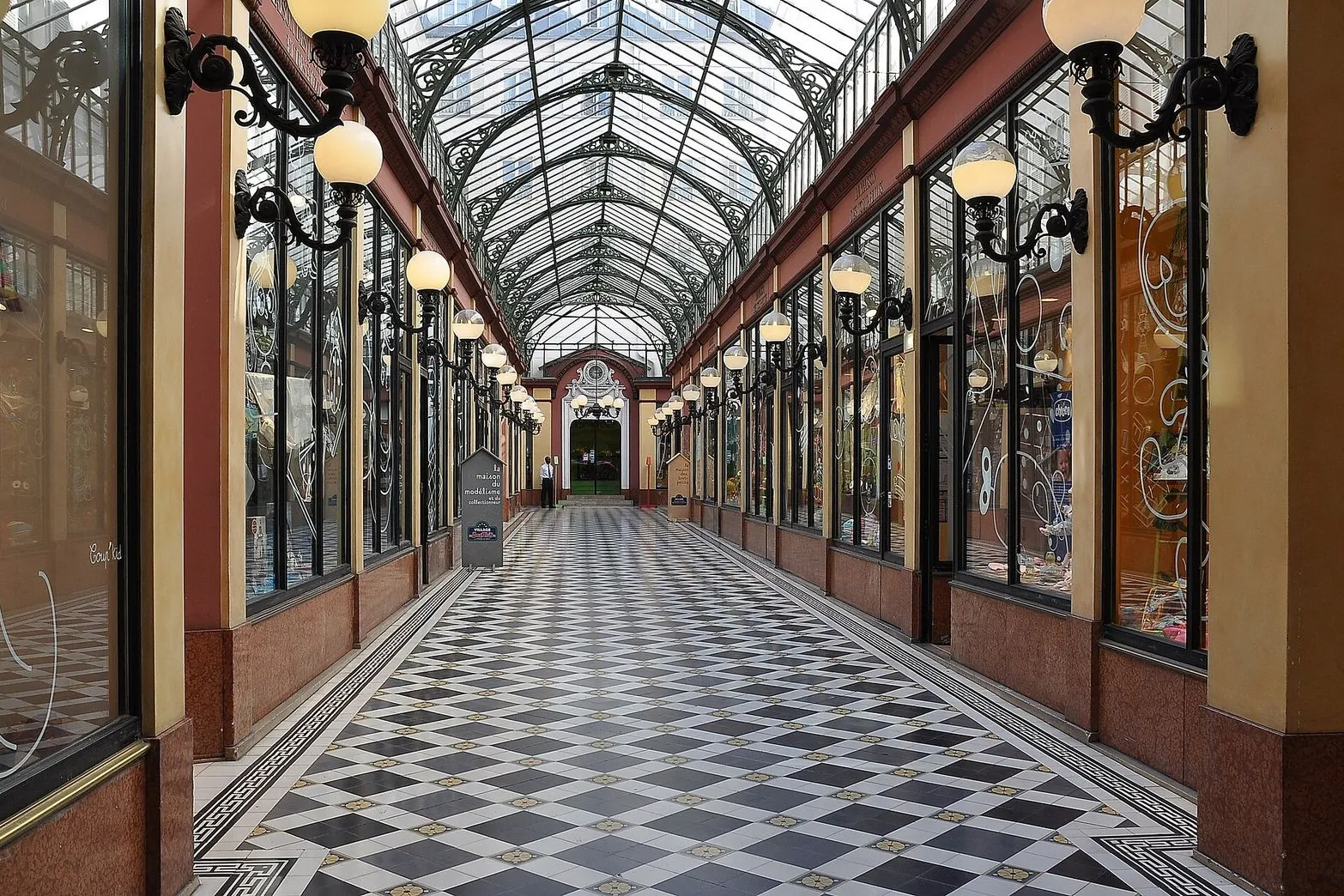
The most beautiful of the covered passages, opened in 1823, with a mosaic floor, a glass rotunda, and neoclassical goddesses of commerce.

You have just stepped into the Galerie Vivienne, built in 1823 by a notary named Marchoux who wanted to build the most beautiful passage in Paris. Look down first. The mosaic floor under your feet was laid by the Italian artisan Giandomenico Facchina: geometric patterns in terracotta, black, and cream. Now look up.

The glass dome at the rotunda floods the center of the gallery with daylight, and the neoclassical stucco reliefs along the upper walls show goddesses, eagles, and trailing vines, all in a Pompeian style that was wildly fashionable in the 1820s. At number 13, the monumental staircase leads to the former apartment of Eugène-François Vidocq, the ex-convict who became the world's first private detective. He lived here until his death in 1857. The bookstore Jousseaume, near the Rue des Petits-Champs entrance, has been selling books on this spot since 1826.

Take your time. When you are ready, exit onto Rue Vivienne and walk north toward the Grands Boulevards.

≈9 min walk to the next stop
Passage des PanoramasMust see

Photo by Nicolas Vigier on Wikimedia Commons

Passage des Panoramas

0:00

The oldest covered passage in Paris, opened in 1800, still lined with stamp dealers, old postcard shops, and the artists' entrance to the Théâtre des Variétés.

You are inside the Passage des Panoramas, the oldest covered passage in Paris. It opened in 1800, just a year after Napoleon seized power. The name comes from two large rotundas that once stood at the entrance, where the American inventor Robert Fulton displayed panoramic paintings of Paris, Rome, and Jerusalem while he waited for Napoleon to fund his steamboat. Napoleon said no.

Fulton left the panoramas behind and took his boat to London. The rotundas are gone, demolished in 1831, but the passage still feels like a place out of time. In 1817 it became the first public space in Paris lit by gas. The shops today are a peculiar mix: stamp dealers, old postcard sellers, a few autograph merchants.

The Théâtre des Variétés, which opened in 1807, still operates at the northern end; its artists' entrance is inside the passage. Émile Zola set a scene of his novel Nana here in 1867. Walk the full 133 meters. When you reach the Boulevard Montmartre exit, cross the street to the passage directly opposite: the Passage Jouffroy.

≈2 min walk to the next stop
Free preview ends here · stops 4 to 6 continue in the app

Passage Jouffroy

The first Parisian passage built entirely of iron and glass, opened in 1845, with underfloor heating and the Musée Grévin wax museum exiting into it.

in app

Palais Garnier

The Second Empire opera house with a grand staircase of white marble, a Chagall-painted ceiling, and the phantom's legendary chandelier.

in app

Place Vendôme

The most expensive rectangle of real estate in Paris, built by the architect of Versailles's Hall of Mirrors, with a column cast from twelve hundred captured cannons.

in app
Good to know

Before you go

Does the Covered Passages walk really work in the rain?

Yes. The glass-and-iron roofs of the passages were built for exactly that purpose in the early 19th century, so that Parisians could shop without getting wet. Galerie Vivienne, Passage des Panoramas, and Passage Jouffroy are all fully covered. The outdoor stretches between them are short. In heavy rain you spend maybe ten minutes total exposed. The walk works better in the rain than in bright sun, when the glass roofs turn the passages into greenhouses.

Are the passages open on Sundays?

Most of the passages themselves are open every day as public thoroughfares. The shops inside follow their own schedules: many close on Sundays, but the cafés, restaurants, and a few boutiques stay open. Galerie Vivienne is the best passage for a Sunday visit because its tea room and wine bar keep regular Sunday hours.

Keep exploring

More walks in Paris

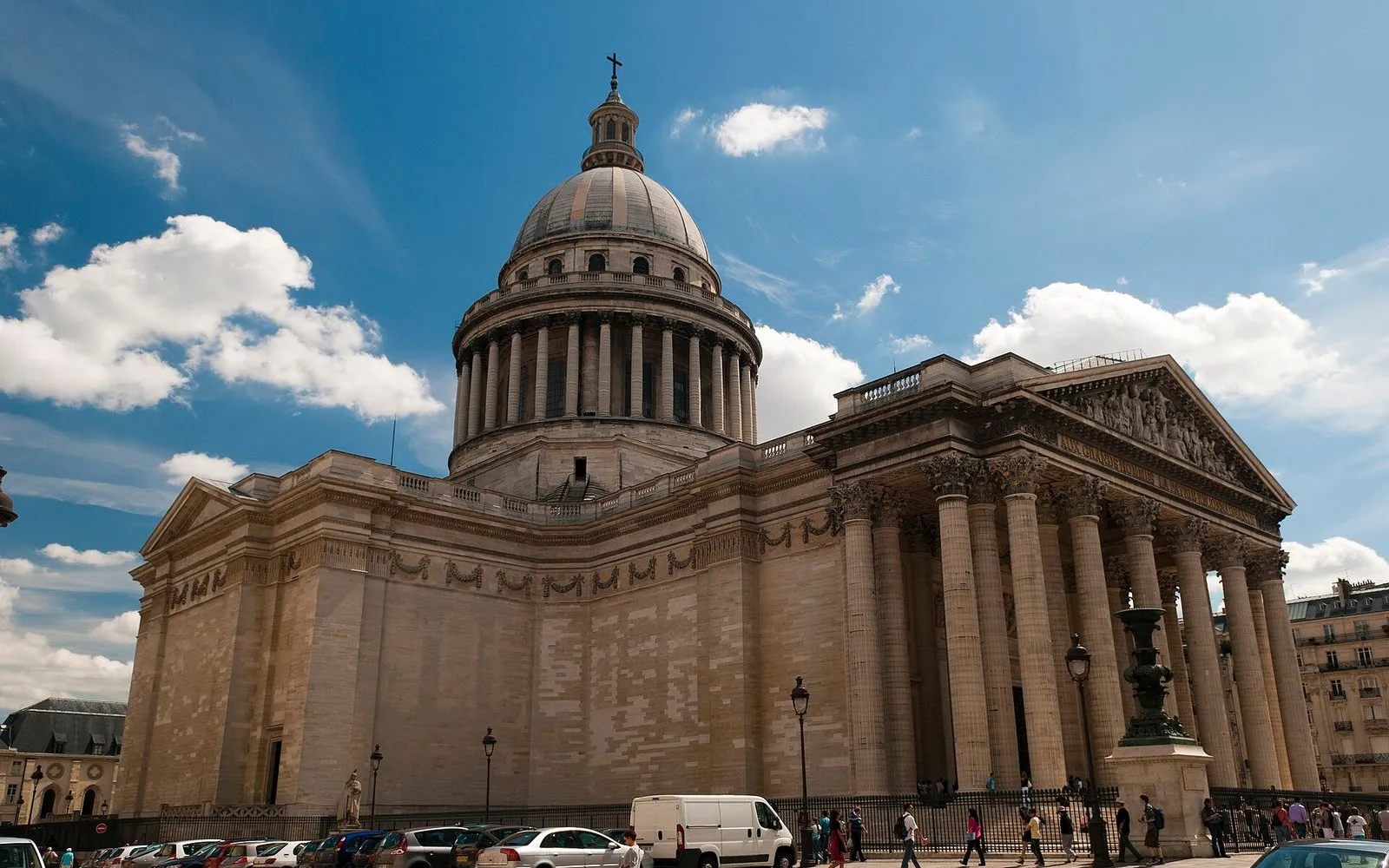
The Left Bank: Saints, Scholars, and the Lost GenerationThe essentials

The Left Bank: Saints, Scholars, and the Lost Generation

From a legendary bookshop to the café tables where existentialism was born, this walk traces the intellectual soul of Paris across one storied kilometer.

8 stops5 km75+ min
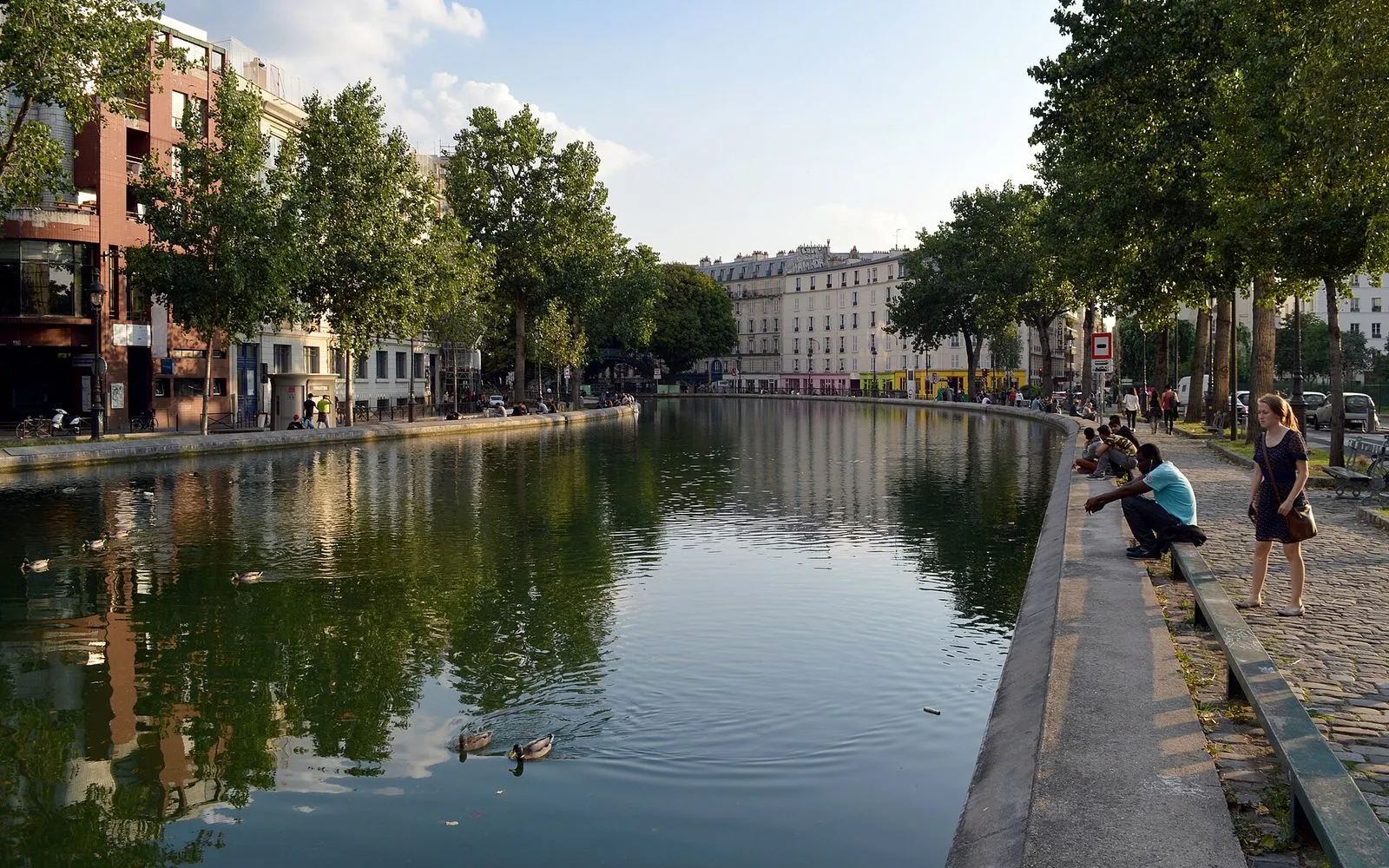
Canal to Belleville: The Paris Parisians KeepThe essentials

Canal to Belleville: The Paris Parisians Keep

From the locks of Canal Saint-Martin to the hilltop views of Belleville, five kilometers of real Paris. No selfie sticks, no postcards.

7 stops5.8 km85+ min
Le Marais: The Paris Haussmann Never TouchedThe essentials

Le Marais: The Paris Haussmann Never Touched

A Sunday walk through medieval lanes, aristocratic courtyards, and the Jewish Quarter, the slice of Paris the boulevards never erased.

8 stops5 km75+ min
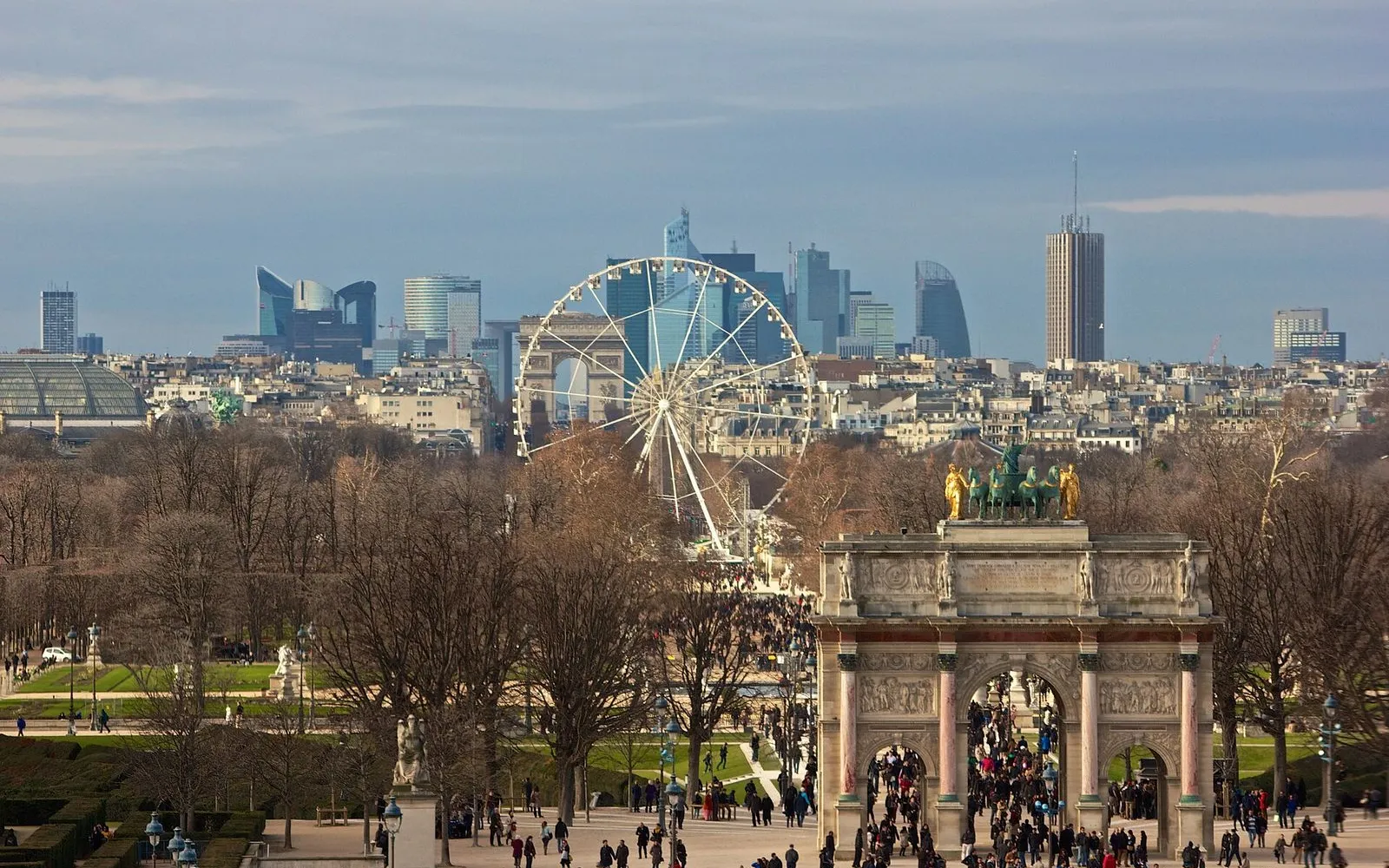
The Triumphal WayThe essentials

The Triumphal Way

From the Louvre to the Arc de Triomphe along the city's grandest sightline.

6 stops4.6 km65+ min
Art, Empire, and Iron: The 7th Arrondissement WalkThe essentials

Art, Empire, and Iron: The 7th Arrondissement Walk

Three great museums, Napoleon's tomb, the Eiffel Tower, and a market street where Parisians shop for dinner, all in one flat, walkable morning.

6 stops4.6 km65+ min
Montmartre: The Village on the HillThe local mix

Montmartre: The Village on the Hill

Climb through the old village that artists, winemakers, and rebels called home, from a wall of love to a hillside vineyard to the quiet back lanes most visitors never see.

8 stops2.3 km40+ min
The Two Islands: Paris Began HereThe essentials

The Two Islands: Paris Began Here

A walk across the two islands where Paris was born, from a king's jewel box of stained glass to a 17th-century village that still feels like a secret.

7 stops2.4 km40+ min

Provenance · last verified August 9, 2026

Built from the Wayside route itself: the stops, their order, and the walk between them.

Photo by Moonik on Wikimedia Commons · CC BY-SA 3.0

Photo by dalbera on Openverse · CC BY 2.0

Photo by Thesupermat on Wikimedia Commons · CC BY-SA 4.0

Photo by Nicolas Vigier on Wikimedia Commons · CC0

Photo by Michal Osmenda from Brussels, Belgium on Wikimedia Commons · CC BY-SA 2.0

Photo by DimiTalen on Wikimedia Commons · CC0

Photo by Moonik on Wikimedia Commons · CC BY-SA 3.0

Photo by Alexander Baxevanis from London, UK on Wikimedia Commons · CC BY 2.0

Photo by Basile Morin on Wikimedia Commons · CC BY-SA 4.0

Photo by Simon Infanger on Unsplash

Photo by Claude Attard from Toulouse, France on Wikimedia Commons · CC BY 2.0

Coming soon

Wayside isn't in the app stores yet, but it's in the works. Check back soon.