Paris · Self-guided audio walk

Le Marais: The Paris Haussmann Never Touched

A Sunday walk through medieval lanes, aristocratic courtyards, and the Jewish Quarter, the slice of Paris the boulevards never erased.

  • 8Stops
  • 5 kmDistance
  • 75+ minTime
Le Marais: The Paris Haussmann Never Touched

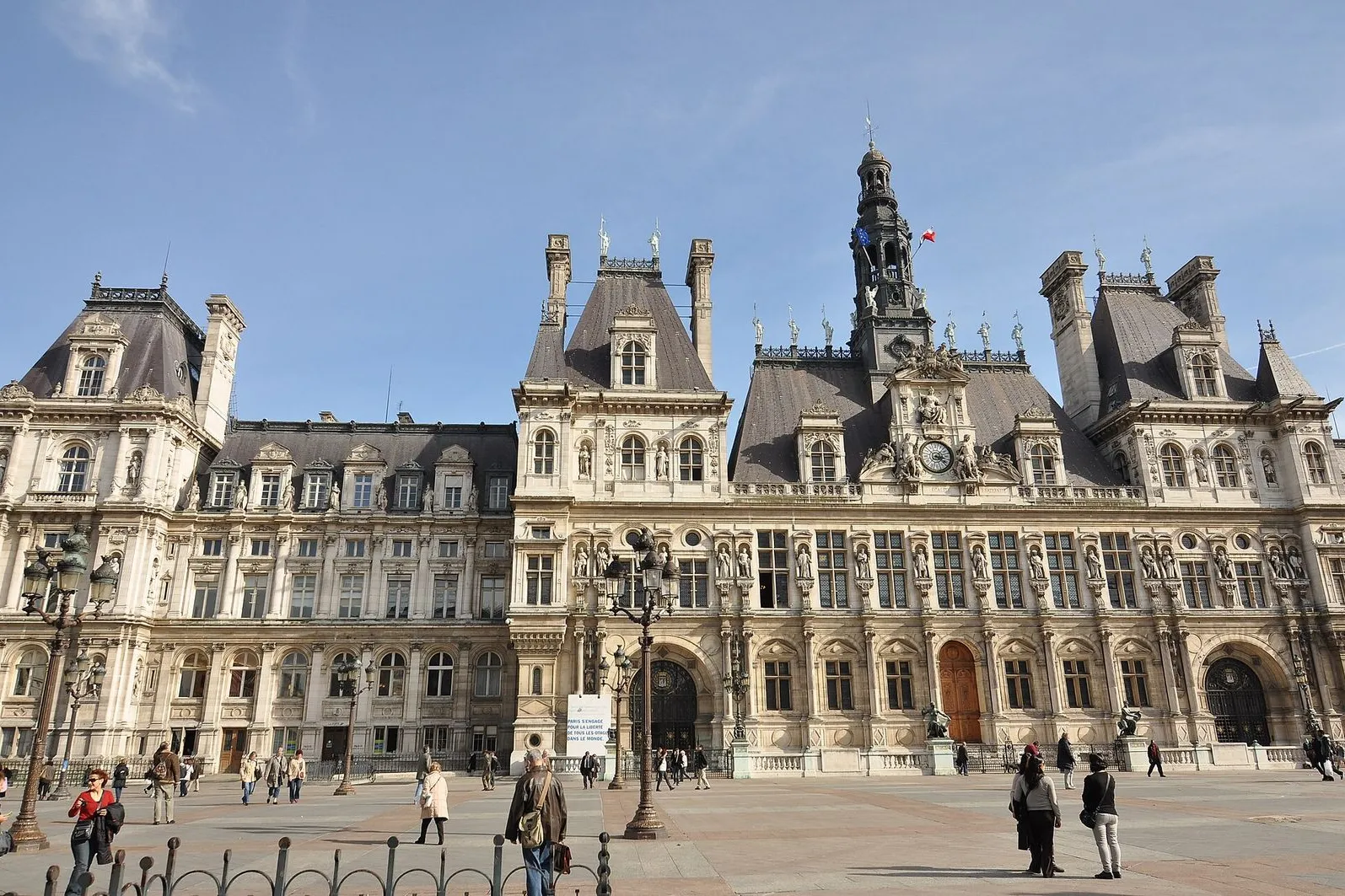
Photo by Moonik on Wikimedia Commons

When Baron Haussmann carved his grand boulevards through Paris in the 1850s and 60s, the Marais was largely spared. What remains is the city's largest intact patch of pre-revolutionary streets: narrow, twisty, and dense with centuries of living. This walk begins at the Hôtel de Ville, passes the lone Gothic tower of Saint-Jacques, then threads through the 17th-century hôtels particuliers, the Pletzl's falafel counters and Hebrew bakeries, and the rose-brick perfection of Place des Vosges. It ends at the inside-out Pompidou Centre: a building that, in its own way, is just as radical as anything the Marais has seen. Sunday is the day: the streets are calm, the shops on rue des Rosiers stay open, and the whole neighbourhood feels like a village.

Hear it on the street

Get the turn-by-turn audio guide in the app. The narration plays itself as you reach each stop, hands-free and offline.

Stop by stop

The route

Interactive map of the route. The full stop list below works without it.

Hôtel de VilleMust see

Photo by Moonik on Wikimedia Commons

Hôtel de Ville

0:00

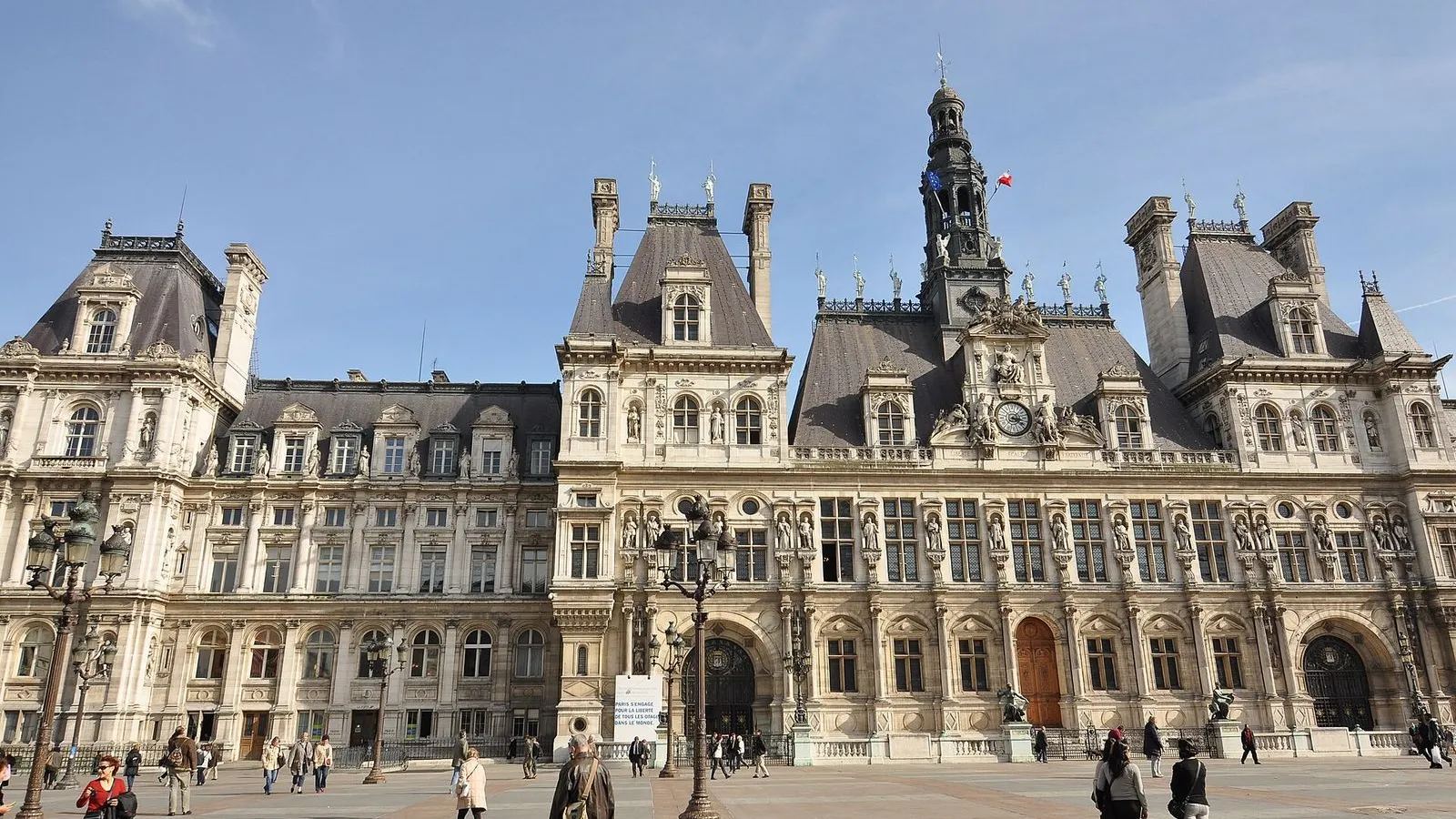
Paris city hall, a neo-Renaissance palace built on the site where public executions once drew crowds, and where the revolutionary Commune made its last stand in 1871.

You're standing on the Place de l'Hôtel de Ville, but for most of Paris's history this was the Place de Grève, the Strand, where the Seine lapped right up to a gravel beach. That beach became the city's default gathering point. Unemployed workers came here to find a day's labour, which is why the French word for a strike is still 'grève.' It was also the site of public executions from the 14th century right through to 1830. The last person to die here was a murderer named Lacenaire, and the crowds were so thick people rented windows in the surrounding buildings to get a view.

The building in front of you is the Hôtel de Ville, rebuilt identically after the original was torched in 1871 by the Paris Commune, revolutionaries who set fire to the city hall and much of central Paris rather than surrender. Look up at the roof: the 136 statues in the niches are of famous Parisians. Find the one of Étienne Marcel, the 14th-century provost who first turned this square into a seat of municipal power. When you're ready, turn left and follow Rue de Rivoli one block west to a small park on your right.
≈5 min walk to the next stop
Tour Saint-JacquesMust see

Photo by Jorge Láscar from Melbourne, Australia on Wikimedia Commons

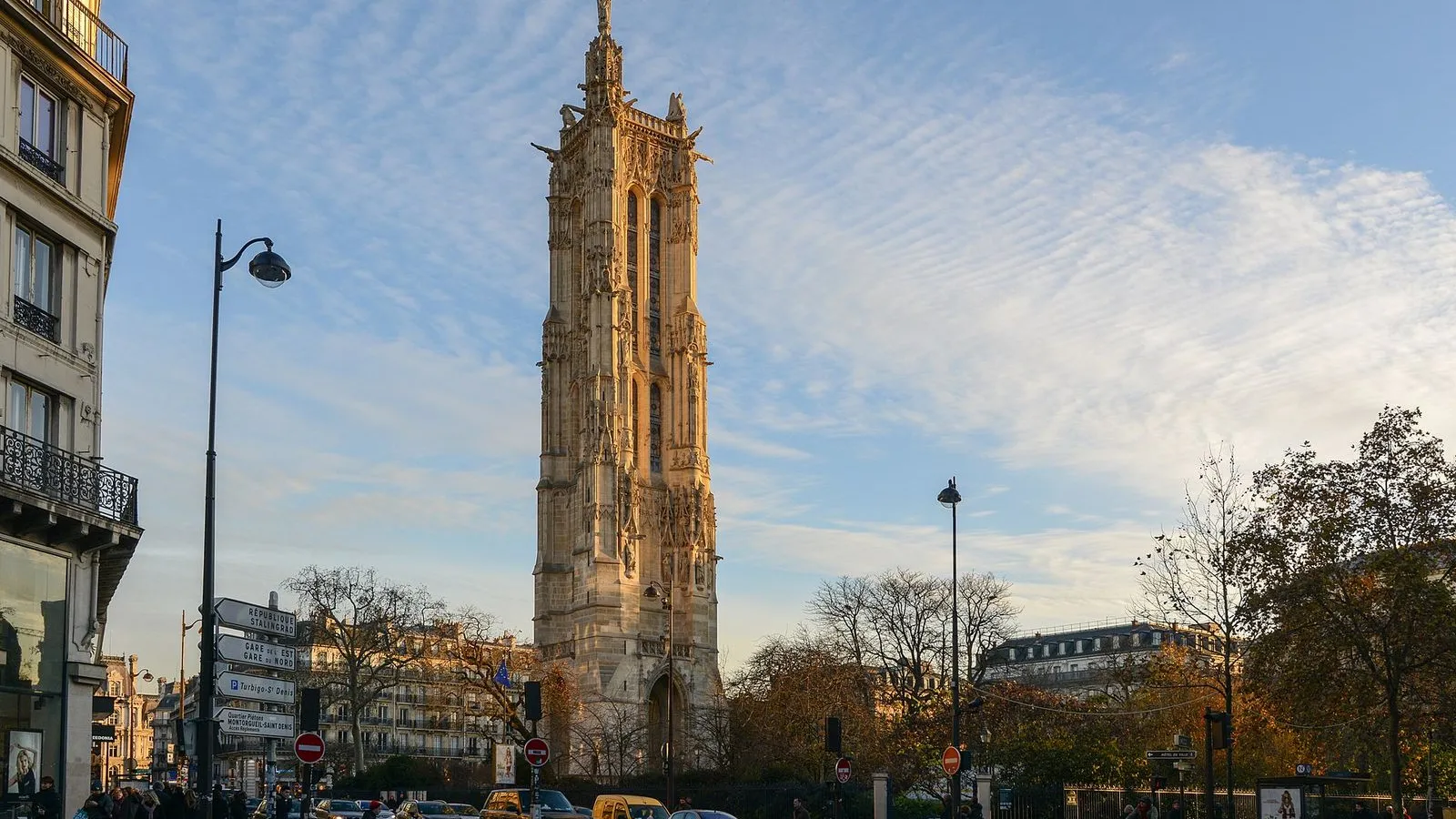
Tour Saint-Jacques

0:00

A 52-metre Flamboyant Gothic tower, all that remains of a 16th-century church where pilgrims gathered before setting out for Santiago de Compostela.

This tower stands alone in its own small square, and that loneliness is the whole story. It was once the bell tower of the Church of Saint-Jacques-de-la-Boucherie, Saint James of the Butchery, built between 1509 and 1523 and paid for by the wholesale butchers of the nearby Les Halles market. The church was the Paris gathering point for pilgrims walking the thousand miles to Santiago de Compostela. During the Revolution, the church was sold for stone and demolished, but the buyer's contract required him to leave the tower standing.

For a while it was used as a shot tower: workers poured molten lead from the top, and it formed perfect spheres as it fell 52 metres into water at the bottom. Look at the base and you'll see a statue of Blaise Pascal, who tested his theories of atmospheric pressure here, or possibly at another church, depending on which historian you ask. The four corners carry the symbols of the Evangelists: lion, bull, eagle, and angel. Walk around the tower slowly.

The gargoyles and the niches with their eighteen saints have all been restored, but the stonework itself is mostly original, early 16th century. When you're done, retrace your steps east along Rue de Rivoli, past the Hôtel de Ville, and continue straight as it becomes Rue Saint-Antoine. After about ten minutes, the church of Saint-Paul-Saint-Louis will rise on your left.

≈17 min walk to the next stop
Saint-Paul-Saint-LouisMust see

Photo by Lionel Allorge on Wikimedia Commons

Saint-Paul-Saint-Louis

0:00

The first church in Paris to abandon Gothic for Baroque, built by the Jesuits in the 1630s. Delacroix painted Christ in the Garden of Olives here, and you can still see it to the right of the altar.

Step inside. This church, finished in 1641, was the Jesuits' statement piece in Paris: the first church in the city to turn its back completely on the Gothic style. Instead it looks to Rome, directly inspired by the Gesù, the mother church of the Jesuit order. Cardinal Richelieu celebrated the inaugural Mass here.

Madame de Sévigné worshipped here. And in 1827, Eugène Delacroix painted 'Christ in Agony in the Garden of Olives' for the right-hand chapel, though what you see today may be a copy, as the original spends much of its time on loan. The dome is 55 metres high, though you cannot appreciate it from the street because the tall Baroque facade hides it. Walk up to the high altar and notice the white marble, the twisted columns, the sheer density of ornament.

The French Baroque never did restraint. Before you leave, find the plaque on the pillar near the entrance that marks where a Communard was shot in 1871. When the Commune fell, this church became a field hospital. Then step back outside and face the church.

To its right, the large building with the courtyard is the Lycée Charlemagne: a school that occupies what was once the Jesuits' professed house, where the priests who taught here actually lived.

≈9 min walk to the next stop
Free preview ends here · stops 4 to 8 continue in the app

Musée Picasso

Picasso's works fill the Hôtel Salé, a 17th-century mansion built by a salt-tax collector whose fortune crumbled when his patron, Nicolas Fouquet, fell from grace.

in app

Rue des Rosiers

The spine of the Pletzl, Paris's historic Jewish quarter since the 13th century, a narrow street of falafel counters, Hebrew bakeries, and shopfronts that open when the rest of Paris closes.

in app

Place des Vosges

Paris's oldest planned square, built by Henri IV in 1612, a perfect 140-metre square of rose brick, blue slate, and vaulted arcades. Victor Hugo wrote much of Les Misérables at number 6.

in app

Musée Carnavalet

Paris's history museum, housed in two Marais mansions. Its collection includes Proust's bedroom, Napoleon's campaign kit, and a Neolithic dugout canoe found in the Seine.

in app

Centre Pompidou

The inside-out building that scandalised Paris in 1977: its colour-coded pipes, escalator tubes, and rooftop views make it the loudest exclamation mark at the end of this walk through old Paris.

in app
Good to know

Before you go

What is the best day to walk Le Marais?

Sunday is the day. The streets are calm, most of the neighborhood shops are closed, but the rue des Rosiers in the Jewish Quarter stays lively. The falafel counters and Hebrew bakeries are open, Place des Vosges fills with picnickers, and the whole neighborhood feels like a village. On Saturdays the Marais is packed with shoppers and the narrow lanes can feel like rush hour.

Is the Musée Carnavalet free?

Yes. The Musée Carnavalet, Paris's history museum housed in two Marais mansions, offers free admission to its permanent collection. Temporary exhibitions carry a separate charge. It is open Tuesday through Sunday, 10:00 AM to 6:00 PM. The collection includes everything from a Neolithic dugout canoe found in the Seine to Proust's bedroom.

Provenance · last verified August 17, 2026

Built from the Wayside route itself: the stops, their order, and the walk between them.

Photo by Moonik on Wikimedia Commons · CC BY-SA 3.0

Photo by Jorge Láscar from Melbourne, Australia on Wikimedia Commons · CC BY 2.0

Photo by Lionel Allorge on Wikimedia Commons · CC BY-SA 3.0

Photo by Michal Osmenda from Brussels, Belgium on Wikimedia Commons · CC BY-SA 2.0

Photo by DimiTalen on Wikimedia Commons · CC0

Photo by Alexander Baxevanis from London, UK on Wikimedia Commons · CC BY 2.0

Photo by Moonik on Wikimedia Commons · CC BY-SA 3.0

Photo by Basile Morin on Wikimedia Commons · CC BY-SA 4.0

Photo by Simon Infanger on Unsplash

Photo by Claude Attard from Toulouse, France on Wikimedia Commons · CC BY 2.0

Coming soon

Wayside isn't in the app stores yet, but it's in the works. Check back soon.