Paris · Self-guided audio walk

The Left Bank: Saints, Scholars, and the Lost Generation

From a legendary bookshop to the café tables where existentialism was born, this walk traces the intellectual soul of Paris across one storied kilometer.

  • 8Stops
  • 5 kmDistance
  • 75+ minTime
The Left Bank: Saints, Scholars, and the Lost Generation

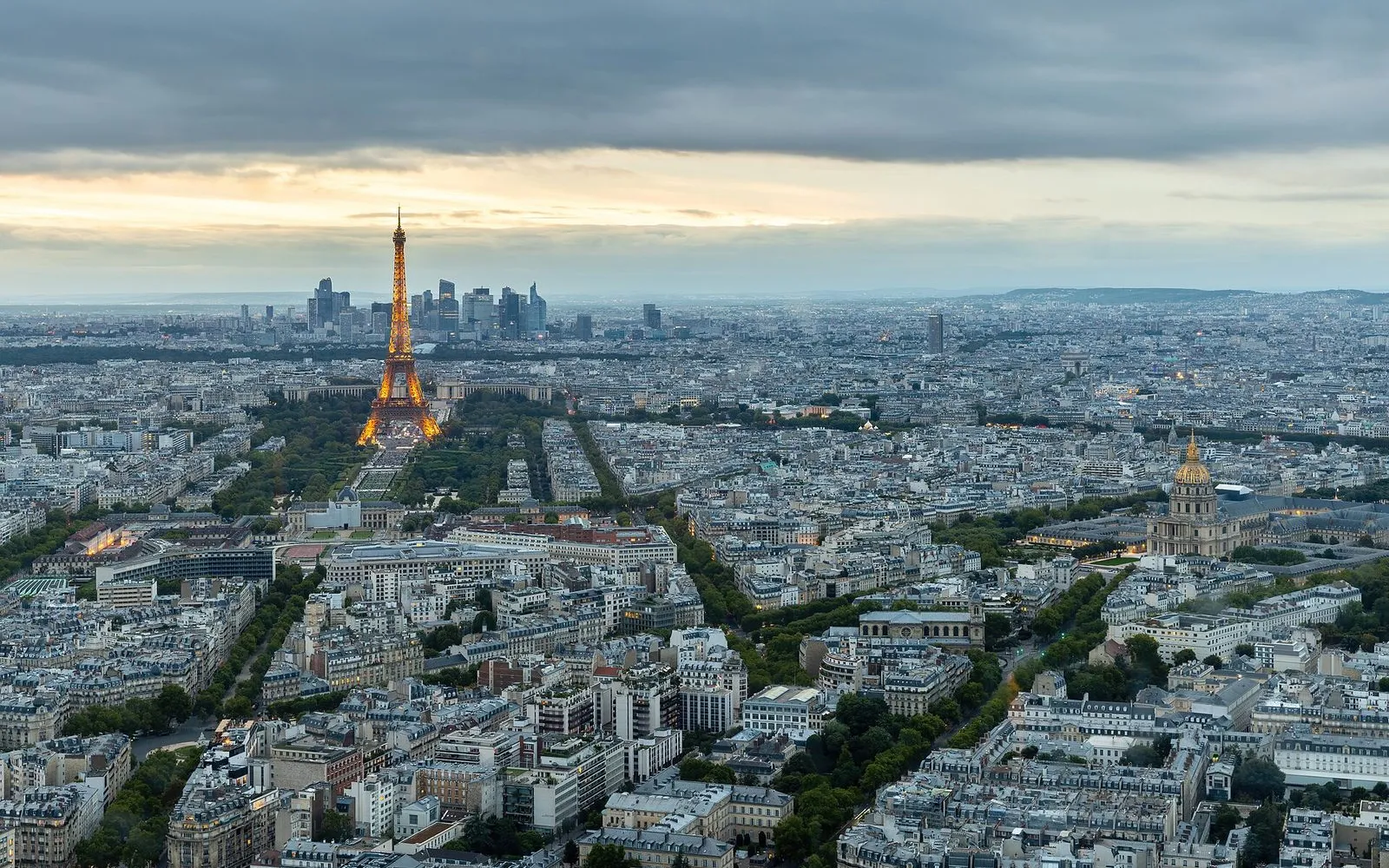
Photo by Michal Osmenda from Brussels, Belgium on Wikimedia Commons

The Left Bank earned its reputation honestly. This walk links the Latin Quarter's centuries of scholarship to Saint-Germain's twentieth-century literary afterlife. You begin at Shakespeare and Company, the English-language bookshop where generations of writers have slept among the shelves. From there you visit one of the oldest churches in Paris, climb the hill that saved the city from Attila, stand before the Panthéon where France buries its great minds, and pass through the Sorbonne's ancient courtyard. A Roman arena, the Luxembourg Gardens, and the vast mismatched towers of Saint-Sulpice mark the route before you arrive at Café de Flore, the corner where Sartre, de Beauvoir, and Hemingway turned coffee into literature. About four kilometers, mostly flat once you descend the Montagne Sainte-Geneviève. Choose either Café de Flore or Les Deux Magots at the end; they sit thirty meters apart and have been rivals for more than a century.

Hear it on the street

Get the turn-by-turn audio guide in the app. The narration plays itself as you reach each stop, hands-free and offline.

Stop by stop

The route

Interactive map of the route. The full stop list below works without it.

Shakespeare and CompanyMust see

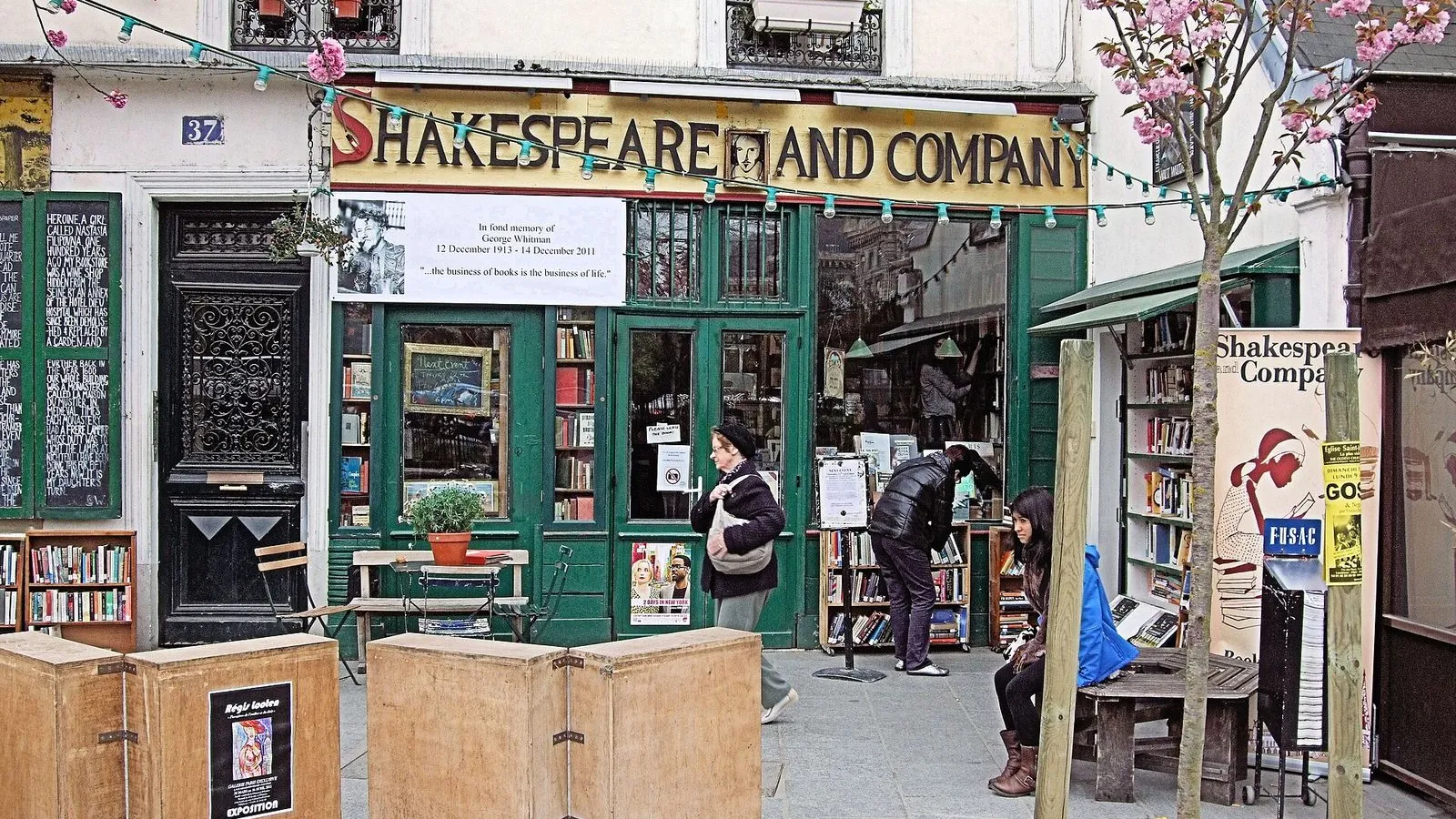
Photo by Jim Linwood from London on Wikimedia Commons

Shakespeare and Company

0:00

The legendary English-language bookshop where Joyce, Hemingway, and three generations of Tumbleweeds found a home among the shelves.

The green storefront in front of you, with its yellow sign and wooden benches, has been a home for English-language books and the people who read them since 1951. George Whitman founded this shop and called it Le Mistral at first. In 1964, on the 400th anniversary of Shakespeare's birth, he renamed it after Sylvia Beach's legendary bookstore, the one on rue de l'Odéon that published Joyce's Ulysses in 1922 when nobody else would. Whitman let young writers sleep among the shelves in exchange for a few hours of work and a promise to read a book a day.

More than 30,000 of them, nicknamed Tumbleweeds, have done exactly that. Look above the doorway to the reading library and you will see Whitman's motto: 'Be not inhospitable to strangers lest they be angels in disguise.' Step inside when you are ready. The shop still runs on that principle.
≈1 min walk to the next stop
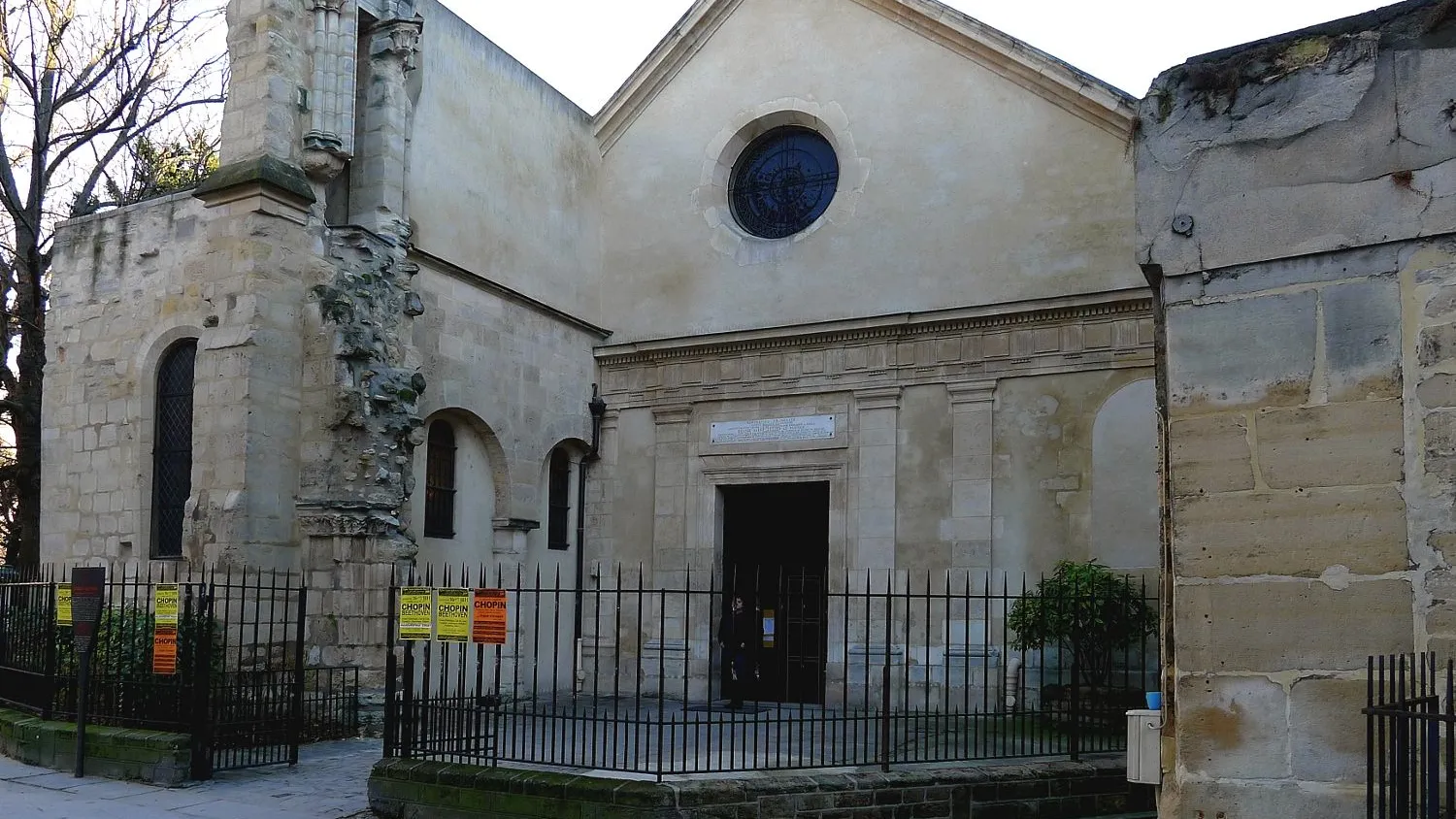
Saint-Julien-le-PauvreMust see

Photo by Mbzt on Wikimedia Commons

Saint-Julien-le-Pauvre

0:00

One of the oldest churches in Paris, begun in the 12th century and never finished, now home to Melkite Greek Catholic worship.

This is the oldest church in Paris still standing, begun around 1165 on the foundations of a sixth-century chapel. It was built under Louis VII, the same king who launched Notre-Dame, and the two churches rose at roughly the same time. But this one never got finished. You can see it in the proportions: the choir was meant to be three stories high, and the nave was supposed to have stone vaults that were never built.

What stands here instead is a quieter, smaller thing, and better for it. Since 1889 the church has belonged to the Melkite Greek Catholic community. The iconostasis inside, the screen of icons separating the nave from the sanctuary, follows the Byzantine rite. In the little park next door, Square René Viviani, you can find the oldest tree in Paris: a false acacia planted in 1601.

≈11 min walk to the next stop
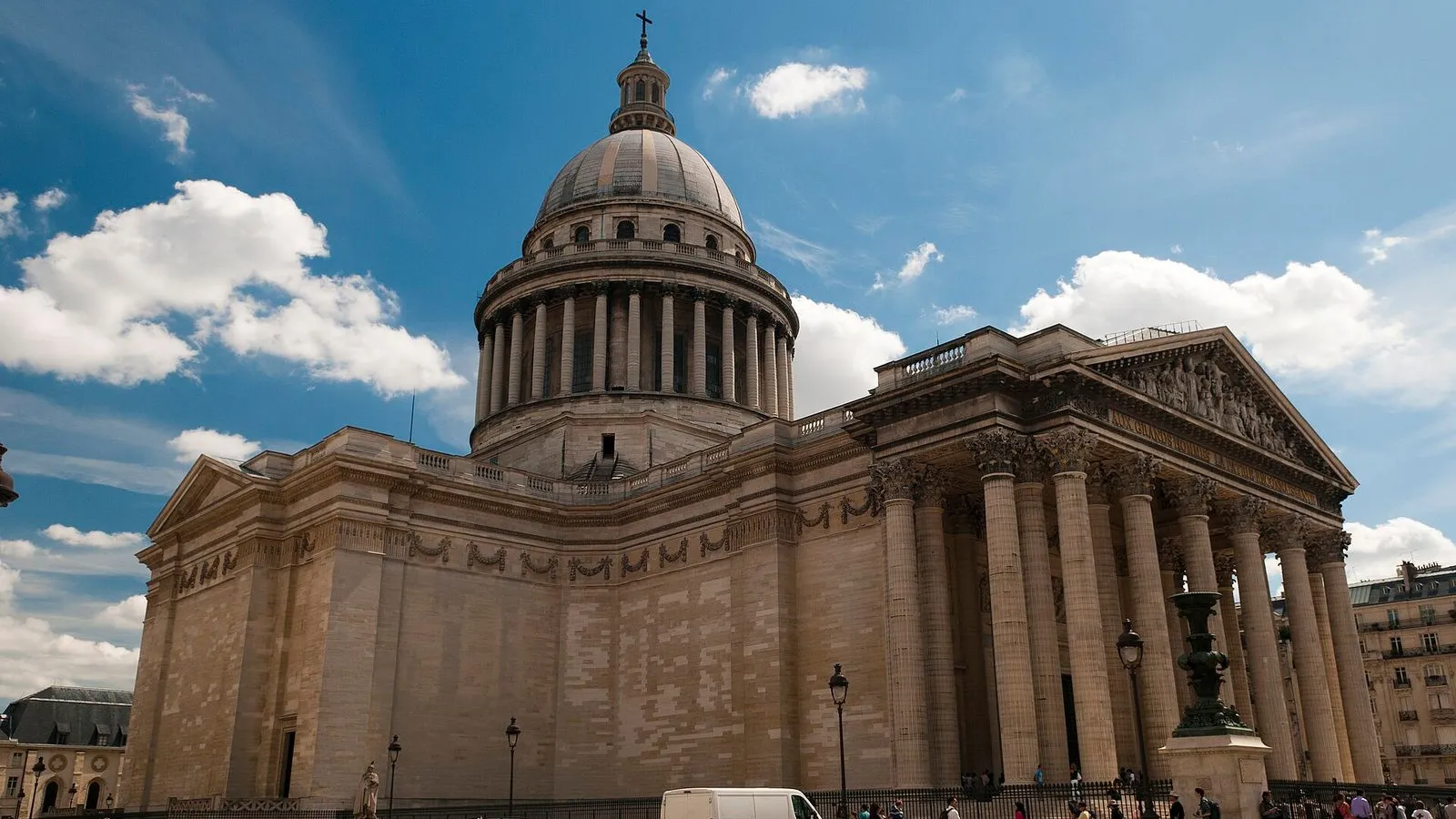
PanthéonMust see

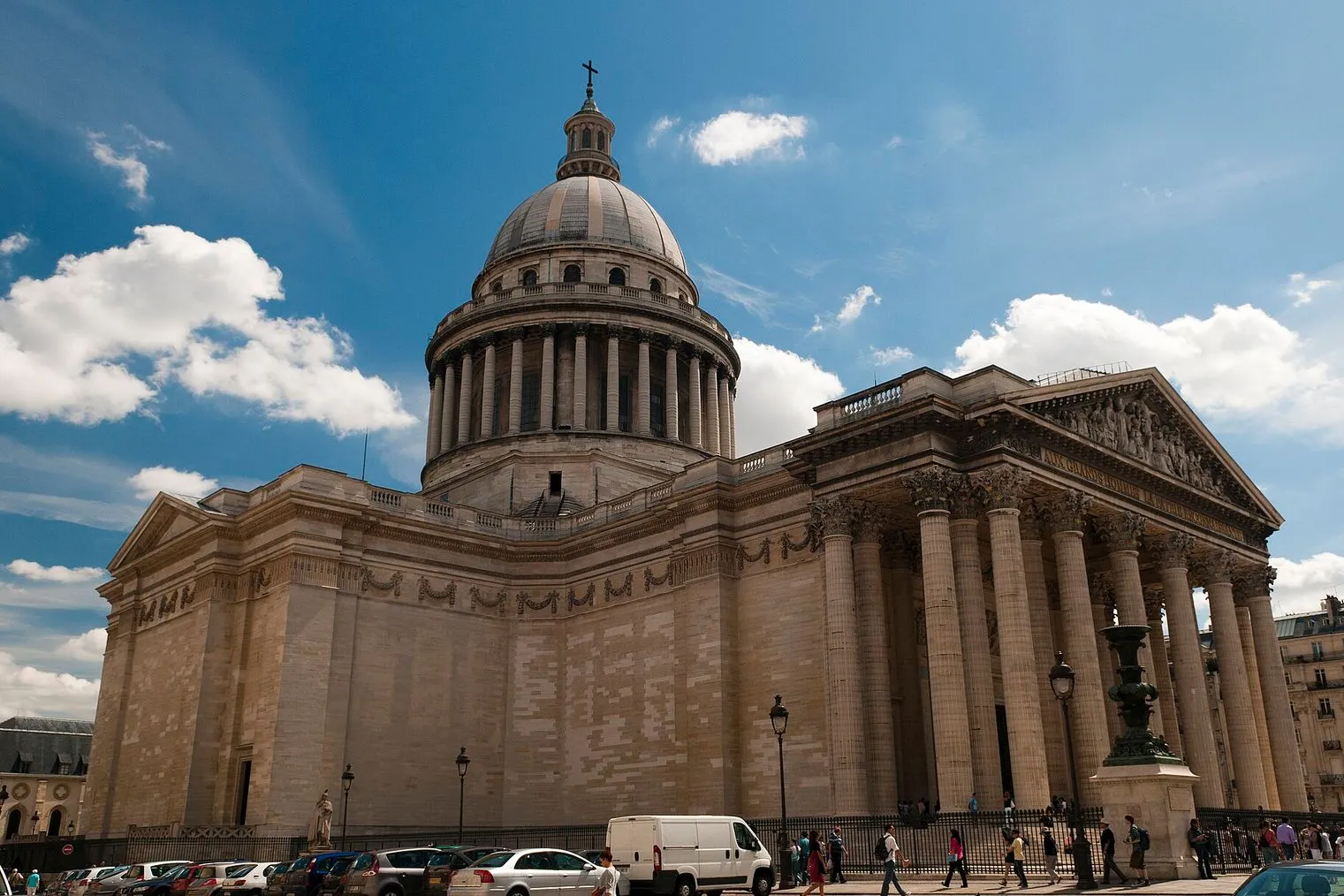
Photo by Michal Osmenda from Brussels, Belgium on Wikimedia Commons

Panthéon

0:00

France's secular mausoleum on the Montagne Sainte-Geneviève, built as a church and claimed by the Revolution for its great minds.

You are standing in front of the Panthéon, the building that dominates the Left Bank skyline. Louis XV commissioned it in 1755 as a church to honor Saint Geneviève, after he recovered from a serious illness and credited her intercession. The architect Soufflot designed a neoclassical temple with a dome inspired by St. Paul's in London and a portico borrowed from the Roman Pantheon.

But the Revolution got here first. In 1791, before the church was even finished, the National Assembly turned it into a mausoleum for the great men of the new republic. The inscription above the columns reads 'Aux grands hommes la patrie reconnaissante': to great men, a grateful nation. Inside are the tombs of Voltaire, Rousseau, Victor Hugo, Émile Zola, Marie Curie, and Louis Braille.

The dome you see is actually three domes nested inside one another. Soufflot cut through the inner two with an oculus so that, standing under the center, you can look straight up and see the paintings on the outermost shell.

≈5 min walk to the next stop
Free preview ends here · stops 4 to 8 continue in the app

Sorbonne

The historic heart of the University of Paris since 1257, rebuilt by Cardinal Richelieu and still the symbol of French academic life.

in app

Arènes de Lutèce

A first-century Roman amphitheater that held 15,000 spectators, lost for centuries under twelve meters of earth and now a neighborhood park.

in app

Jardin du Luxembourg

Marie de' Medici's Florentine garden, laid out in 1612 around the palace that now houses the French Senate.

in app

Saint-Sulpice

Paris's second-largest church, whose mismatched towers, Delacroix frescoes, and brass meridian line tell the story of a building no single architect ever controlled.

in app

Café de Flore

The corner café where Sartre wrote Being and Nothingness, de Beauvoir held court, and a generation turned coffee into a way of life.

in app
Good to know

Before you go

How long does the Left Bank walk take?

Allow three to three and a half hours at a relaxed pace with stops. The route is mostly flat once you descend the Montagne Sainte-Geneviève after the Panthéon. The Luxembourg Gardens invite a pause, and Saint-Sulpice rewards 20 minutes inside. Factor in time for the bookshop, the Roman arena, and the café at the end. This is a walk to linger on.

Is Shakespeare and Company free?

Yes. Shakespeare and Company is a working bookshop, free to browse. The shop opens daily at 10:00 AM and closes at 8:00 PM (7:00 PM on Sundays). The reading library upstairs is open to anyone who wants to sit and read. The shop has housed traveling writers, called Tumbleweeds, among its shelves since 1951. A Tumbleweed works a few hours a day in exchange for a bed among the books.

Provenance · last verified August 9, 2026

Built from the Wayside route itself: the stops, their order, and the walk between them.

Photo by Michal Osmenda from Brussels, Belgium on Wikimedia Commons · CC BY-SA 2.0

Photo by Jim Linwood from London on Wikimedia Commons · CC BY 2.0

Photo by Mbzt on Wikimedia Commons · CC BY-SA 3.0

Photo by DimiTalen on Wikimedia Commons · CC0

Photo by Moonik on Wikimedia Commons · CC BY-SA 3.0

Photo by Alexander Baxevanis from London, UK on Wikimedia Commons · CC BY 2.0

Photo by Moonik on Wikimedia Commons · CC BY-SA 3.0

Photo by Basile Morin on Wikimedia Commons · CC BY-SA 4.0

Photo by Simon Infanger on Unsplash

Photo by Claude Attard from Toulouse, France on Wikimedia Commons · CC BY 2.0

Coming soon

Wayside isn't in the app stores yet, but it's in the works. Check back soon.