Honolulu · Self-guided audio walk

Where the Kingdom Fell: Honolulu's Royal Mile

Palace, overthrow, and aftermath, seven stops in under a mile, through the densest cluster of Hawaiian history anywhere.

  • 7Stops
  • 1.6 kmDistance
  • 25+ minTime

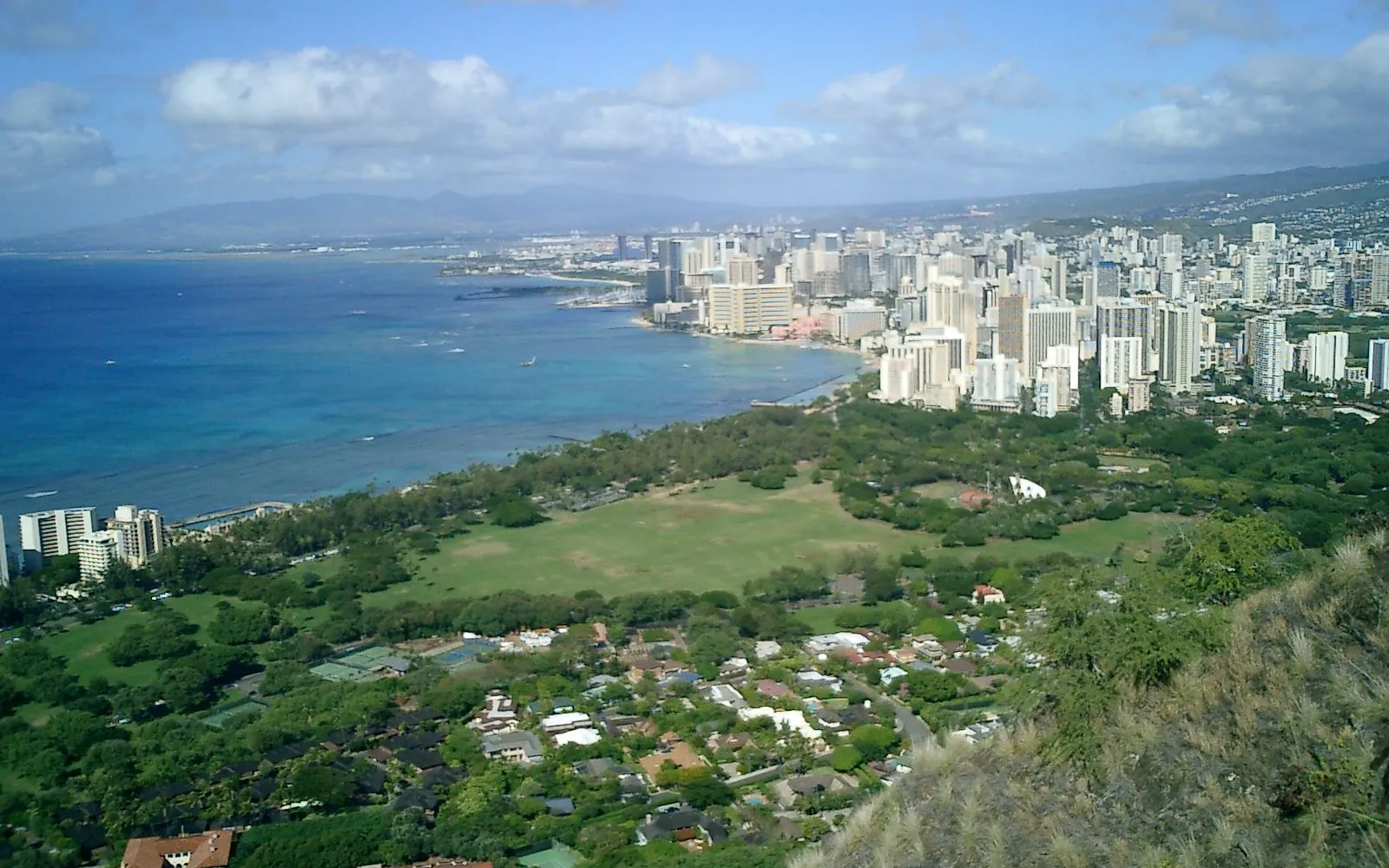
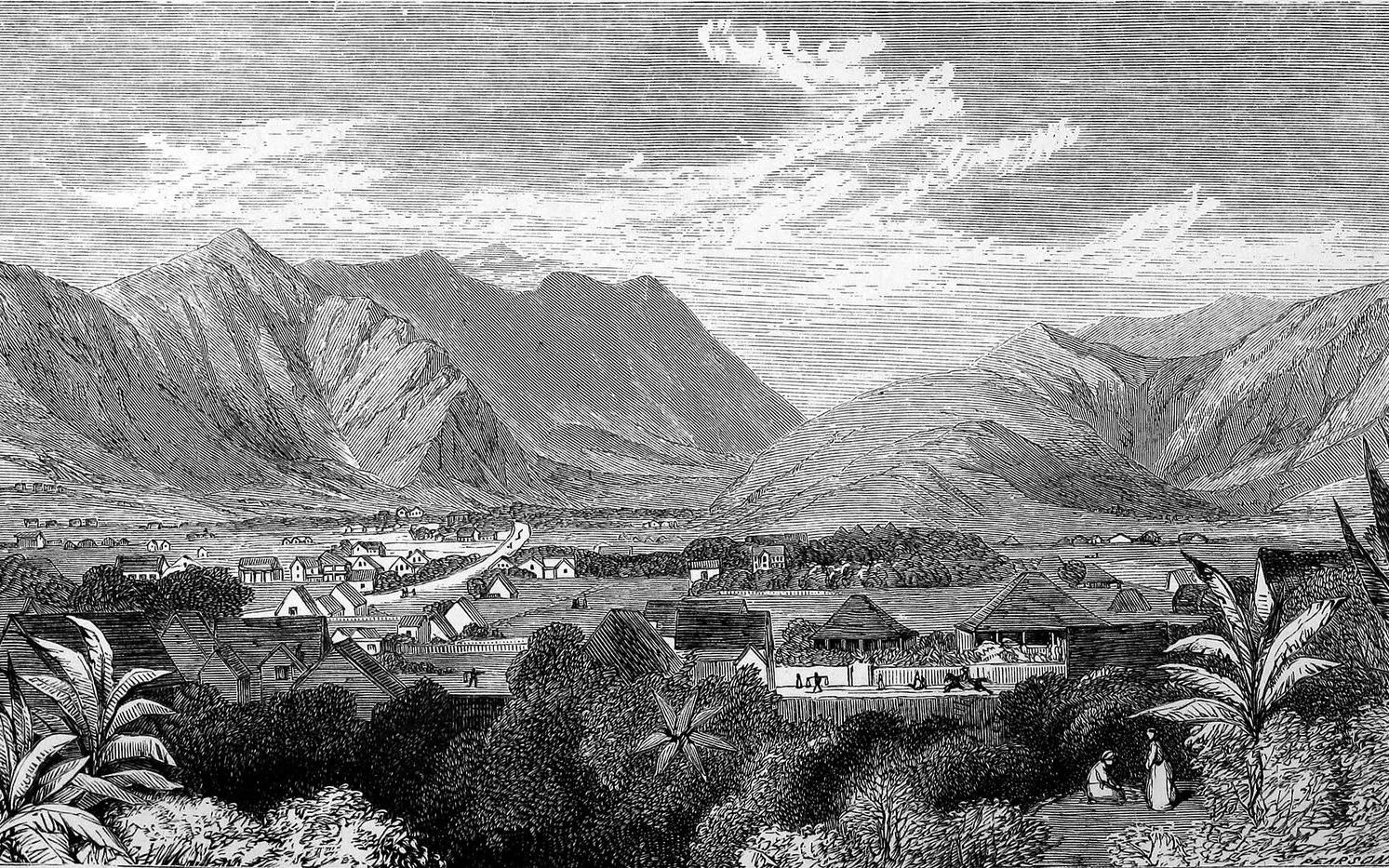
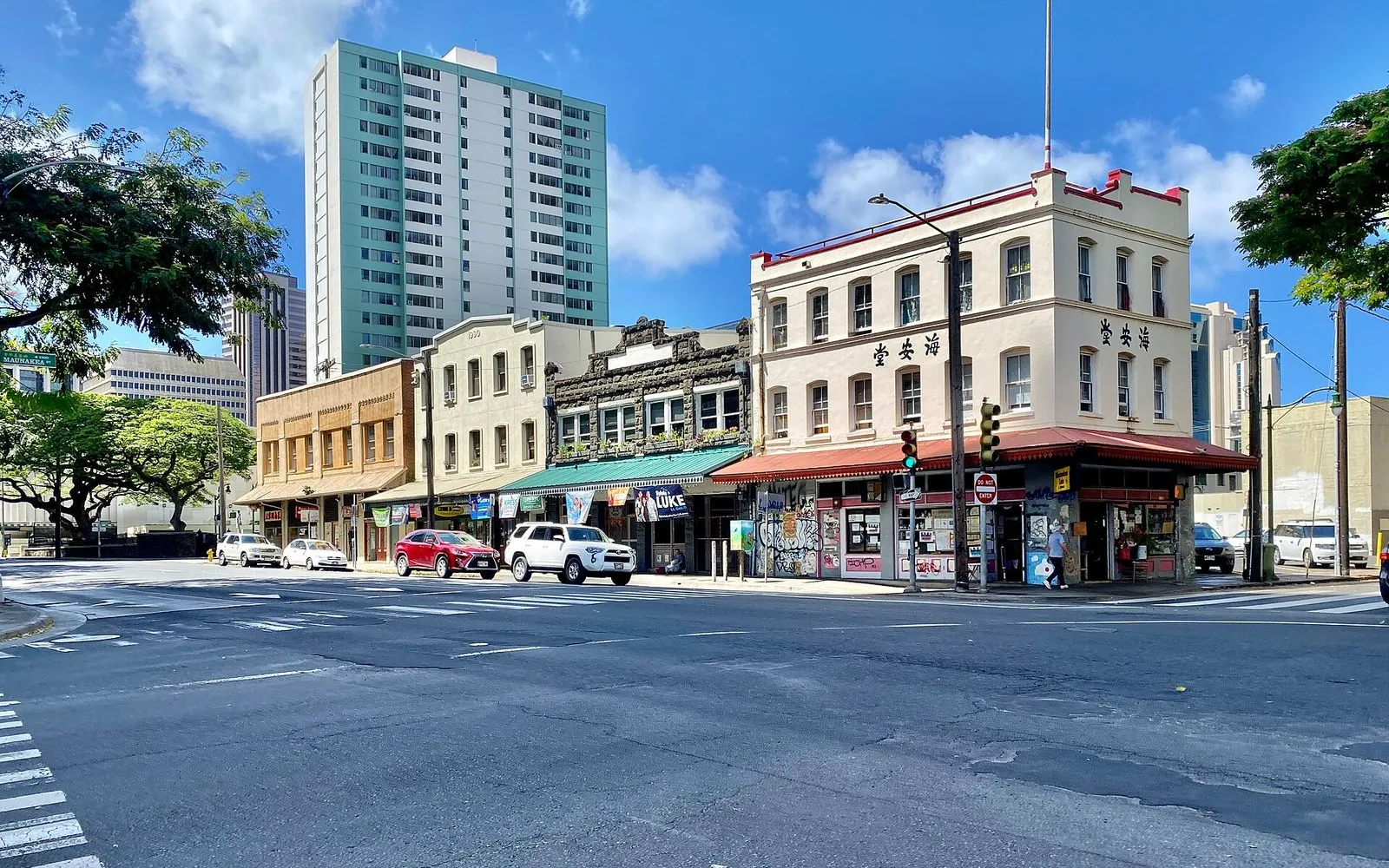
Downtown Honolulu holds the densest cluster of Hawaiian history anywhere, and this walk threads straight through its heart. In under a mile, you move from the throne room of the only royal palace on U.S. soil to the coral-block church where monarchs were baptized, married, and buried. You stand on the ground where the overthrow of 1893 was declared, and visit the queen's private home, where she lived out her last years under house arrest. The route ends at the modern State Capitol, with the Liliʻuokalani statue looking back toward the palace. Ninety-five minutes, seven stops, and a story still being reckoned with.

Hear it on the street

Get the turn-by-turn audio guide in the app. The narration plays itself as you reach each stop, hands-free and offline.

Stop by stop

The route

Interactive map of the route. The full stop list below works without it.

ʻIolani PalaceMust see

Photo by Nico Smit on Unsplash

ʻIolani Palace

0:00

The only royal palace on U.S. soil. Built by King Kalākaua in 1882 with electric lights before the White House. Later the prison of a deposed queen and the capitol of five successive governments.

Welcome to ʻIolani Palace, the only royal palace on U.S. soil. King Kalākaua built it in 1882, and he did not hold back. This building had electric lights before the White House did.

It had indoor plumbing and a telephone when both were still novelties. Kalākaua had traveled the world and wanted a palace that could look any European court in the eye. The style is called American Florentine, and no other building on earth uses it. Kalākaua died in 1891.

His sister Liliʻuokalani took the throne. Two years later, a group of American and European businessmen backed by U.S. Marines overthrew her. She surrendered from this building, to avoid spilling Hawaiian blood.

After the overthrow, the palace became the capitol of the Provisional Government, then the Republic, then the Territory, then the State of Hawaiʻi. For 87 years, Hawaiian governments operated from these rooms. In 1969 the state finally moved out, and a massive restoration brought the palace back to its 1882 appearance. Walk the grounds before you consider going inside.

The land under your feet was a heiau, a place of worship, long before any Western building stood here. The Coronation Pavilion on the lawn was built for Kalākaua's 1883 coronation. The barracks held the Royal Guard. Take your time.
≈2 min walk to the next stop
Kamehameha I StatueMust see

Photo by Balazs Barnucz on Wikimedia Commons

Kamehameha I Statue

0:00

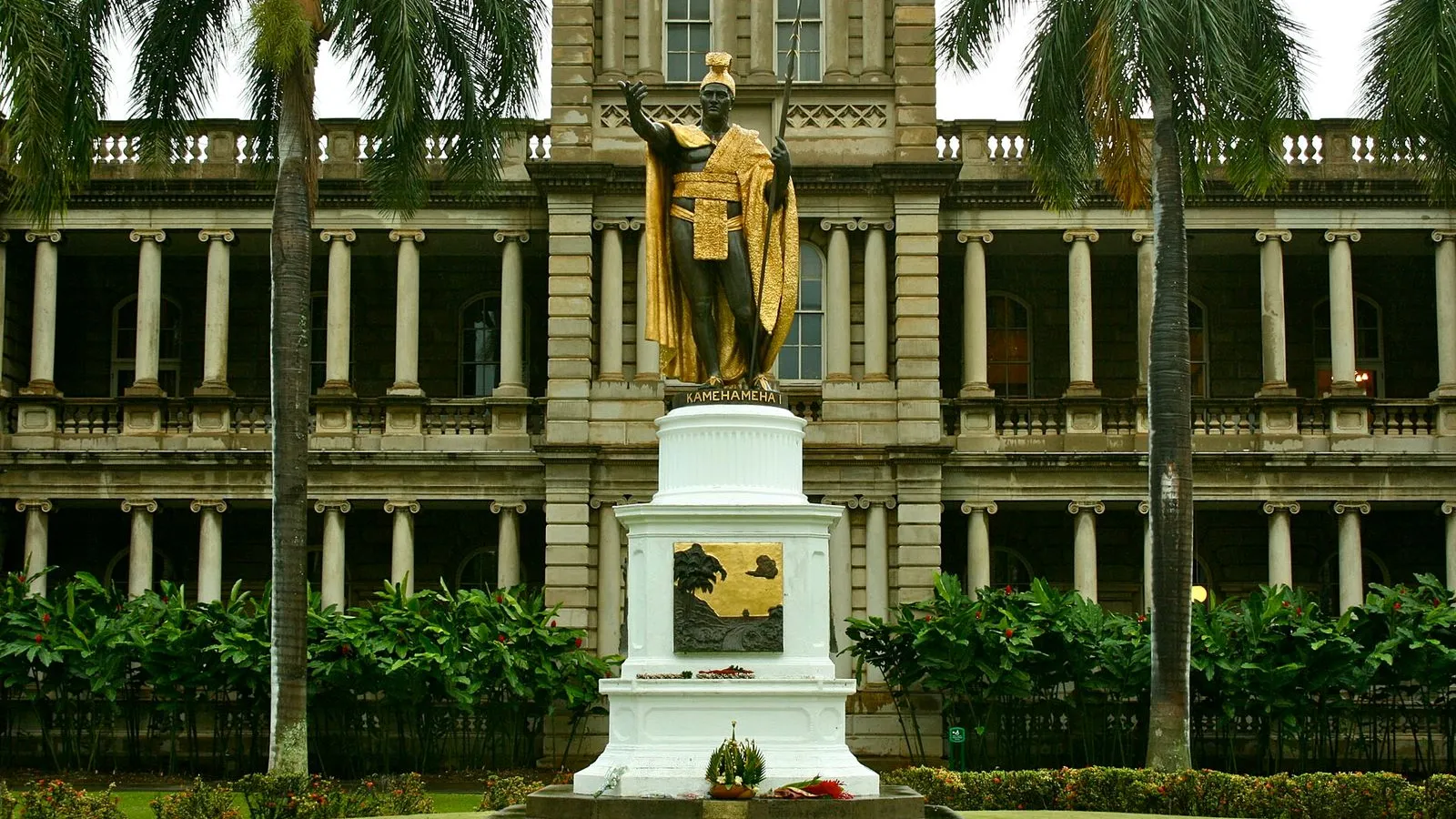
The gilded bronze of the king who unified the Hawaiian Islands. Draped in flower leis every June 11, this statue faces the palace, a warrior who built a kingdom, watching over its last seat.

Kamehameha the Great unified the Hawaiian Islands in 1810. This statue, by American sculptor Thomas Ridgeway Gould, shows him at the height of his power. His right hand holds a spear. His left is extended in a gesture of welcome.

The gold leaf catches the light differently at every hour. On June 11, Kamehameha Day, this statue is draped in dozens of fresh flower leis, some of them eighteen feet long. The building behind him, Aliʻiōlani Hale, is your next stop.

≈1 min walk to the next stop
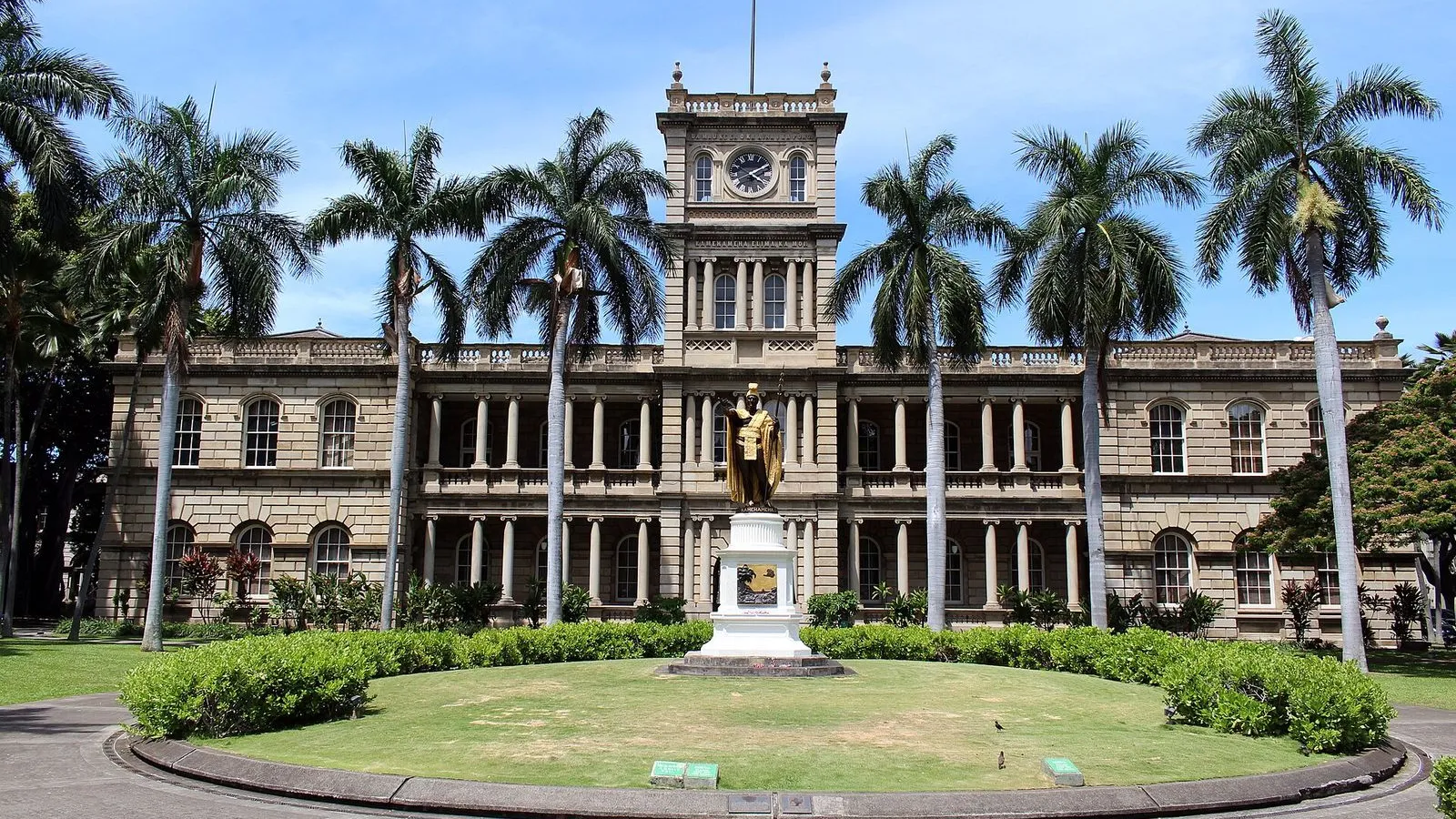
Aliʻiōlani HaleMust see

Photo by Coolcaesar on Wikimedia Commons

Aliʻiōlani Hale

0:00

The government building from whose balcony the overthrow of the monarchy was proclaimed on January 17, 1893. Now the Hawaiʻi State Supreme Court.

This is Aliʻiōlani Hale, named by Kamehameha V. It means House of the Heavenly King. For most of the Kingdom era this building held the legislature, the courts, and the executive departments, the working government of a sovereign nation. On January 17, 1893, the Committee of Safety walked into this building, read a proclamation from the balcony, and declared the monarchy overthrown.

The Honolulu Rifles, a volunteer militia backing the coup, camped in these halls. Across the street at the palace, the queen yielded under protest, to avoid any collision of armed forces. After the overthrow, this became the Judiciary Building. It still houses the Hawaiʻi State Supreme Court.

Look up at the clock tower; that clock has ticked through a kingdom, a republic, a territory, and a state.

≈2 min walk to the next stop
Free preview ends here · stops 4 to 7 continue in the app

Kawaiahaʻo Church

The Westminster Abbey of the Pacific. Built from 14,000 hand-chiseled coral blocks. Royal weddings, christenings, funerals, and the birthplace of Hawaiʻi's state motto.

in app

Hawaiian Mission Houses

The frame houses where New England missionaries lived and printed the first books in Hawaiian. A seedbed of literacy and, later, of the forces that would end the monarchy.

in app

Washington Place

Liliʻuokalani's private home for 55 years, from bride to queen to prisoner. Now the governor's mansion, it still holds the story of her arrest, trial, and final decades.

in app

Hawaiʻi State Capitol

The open-air capitol completed in 1969, with the Liliʻuokalani statue standing between it and ʻIolani Palace, a kingdom, a queen, and a state aligned in a single view.

in app
Good to know

Before you go

Do I need to take the Iolani Palace tour to appreciate the Royal Mile?

The palace tour adds depth you cannot get from the outside, but the walk works even without it. The grounds, the barracks, and the view of the palace from the street are free and moving on their own. The six other stops (the Kamehameha statue, Aliʻiōlani Hale, Kawaiahaʻo Church, the Mission Houses, Washington Place, and the Capitol) are all experienced from the outside at no cost.

Is the Royal Mile walk suitable for children?

Yes. The route is under a mile, flat, and broken into short segments. Iolani Palace welcomes children and provides strollers for the tour at no charge. Kawaiahaʻo Church and the Capitol grounds have shaded areas to sit. The Mission Houses have open green space. For younger kids, break the walk into two halves with a snack stop in between.

Provenance · last verified August 17, 2026

Built from the Wayside route itself: the stops, their order, and the walk between them.

Photo by Brandon Karaca on Unsplash

Photo by Nico Smit on Unsplash

Photo by Balazs Barnucz on Wikimedia Commons · CC BY-SA 3.0

Photo by Coolcaesar on Wikimedia Commons · CC BY-SA 4.0

Photo by kajikawa on Wikimedia Commons · CC BY 3.0

Photo by George Pearson / George Henry Burgess on Wikimedia Commons · Public domain

Photo by jijake1977 on Openverse · CC BY 2.0

Photo by Alexandra Nelson on Unsplash

Photo by w_lemay on Wikimedia Commons · CC BY-SA 2.0

Coming soon

Wayside isn't in the app stores yet, but it's in the works. Check back soon.