Honolulu · Self-guided audio walk

Kakaʻako's Living Gallery

A walk through Honolulu's warehouse district, where industrial walls became the city's largest canvases.

  • 6Stops
  • 2 kmDistance
  • 35+ minTime
Kakaʻako's Living Gallery

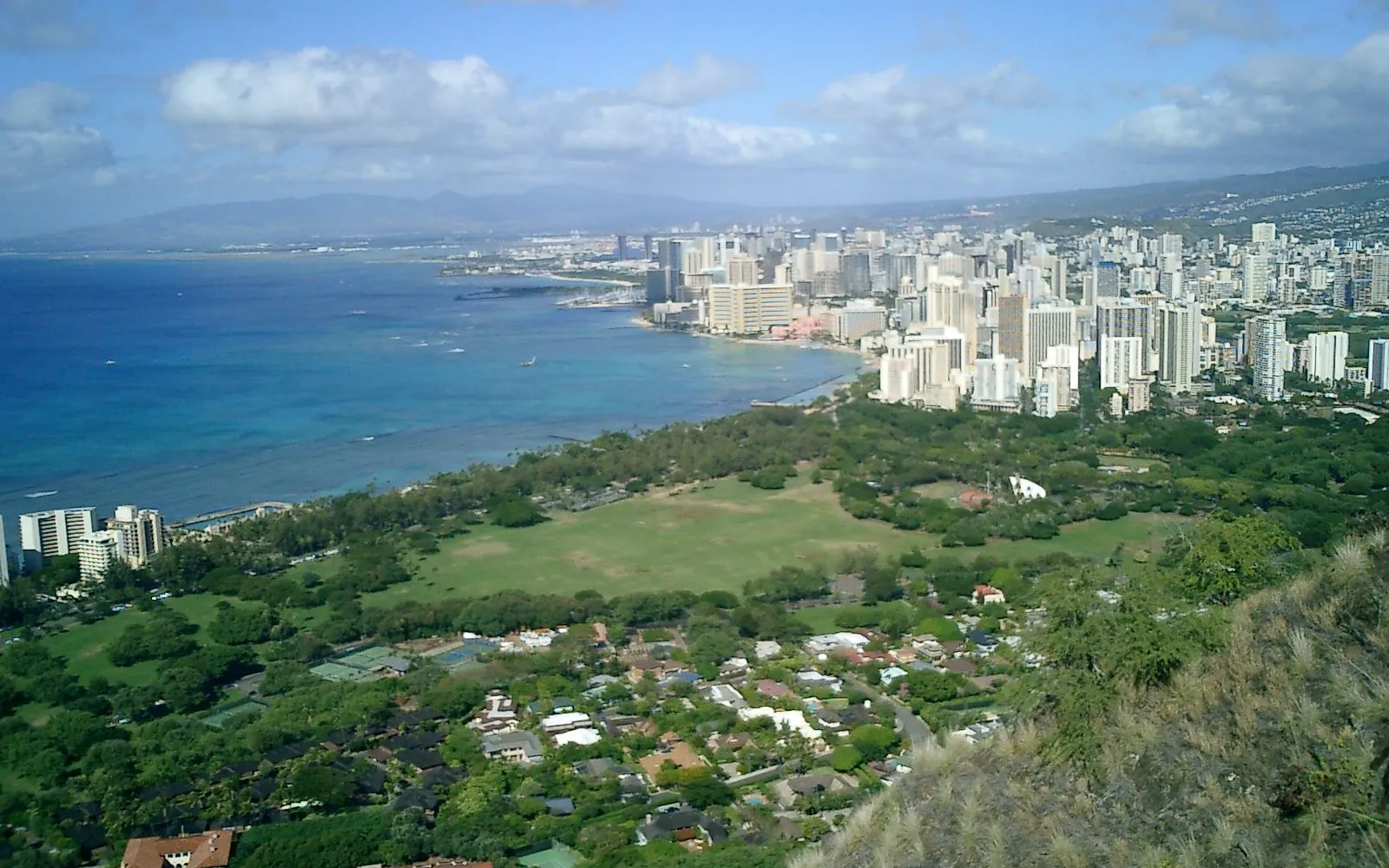
Photo by jijake1977 on Openverse

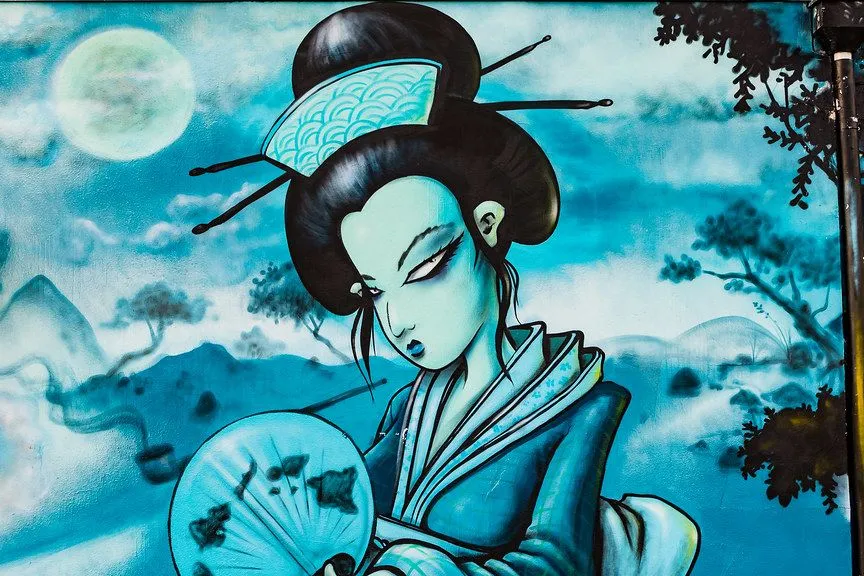
Kakaʻako was a quiet grid of auto body shops and lumber yards until 2011, when the POW! WOW! festival began painting its warehouse walls. Today Cooke Street, Auahi Street, and Pohukaina Street form an open-air gallery where murals cover entire block faces and the art changes every February.

This 90-minute walk starts at a historic Art Deco park, winds past the ever-shifting murals, and ends at Kewalo Basin, the fishing harbor that anchored this working-class neighborhood long before the first paint can arrived. Along the way you pass SALT at Our Kakaʻako, a shopping and dining complex carved from repurposed Quonset huts and warehouses, named for the salt ponds that once covered this low-lying coast.

Hear it on the street

Get the turn-by-turn audio guide in the app. The narration plays itself as you reach each stop, hands-free and offline.

Stop by stop

The route

Interactive map of the route. The full stop list below works without it.

Mother Waldron ParkMust see

Photo by Hunter Reilly on Unsplash

Mother Waldron Park

0:00

A 1937 WPA park named for the teacher who transformed Kakaʻako's children and gave the neighborhood its soul.

Mother Waldron Park opened in September 1937, a Depression-era project that cost fifty thousand dollars. The city put up thirty-two thousand; the federal Works Progress Administration covered the rest, labor included. Architect Harry Sims Bent gave the park its zigzag brick perimeter walls and rounded pergolas, a streamlined Art Moderne look that landed it on the National Register of Historic Places. The Royal Hawaiian Band played at the opening. Over two thousand people came.

The park is named for Margaret Waldron, a fourth-grade teacher at Pohukaina School just across the street. She arrived in 1913 and stayed twenty-one years. After class she organized football games, sewing circles, cooking clubs. She put a picture of the German Kaiser in a vacant lot and told the children to throw rocks at it to clear the playground of stones. The kids called her Mother. When she died in 1936, crowds of all races lined up at the hospital to pay respects. People still call her the patron saint of Kakaʻako.

This park sits at the edge of the mural district. From here you can see the first warehouse walls on Cooke Street waiting for you, painted and repainted every year since 2011.
≈1 min walk to the next stop
Cooke Street MuralsMust see

Photo by jdnx on Openverse

Cooke Street Murals

0:00

The spine of the mural district: warehouse walls carrying works by artists from Honolulu to Hong Kong, repainted each February.

Cooke Street between Pohukaina and Auahi is the densest stretch of street art in Honolulu. The festival that made this happen is called POW! WOW! Hawaii. It started in 2011 when local artist Jasper Wong and Kamea Hadar painted a single wall outside a café called Fresh Cafe. They liked what happened next: people stopped. They looked. They brought friends.

The next year Wong and Hadar asked other building owners for wall space. Most of Kakaʻako was light industrial at the time: auto repair shops, lumber yards, small warehouses. Landlords said yes. Within a few years POW! WOW! was flying in more than a hundred artists each February from Tokyo, London, São Paulo, Los Angeles, and putting them up on scissor lifts with cans of spray paint donated by City Mill.

A few things to know as you walk. Every mural you see could be different next month. The festival repaints walls annually, and property owners sometimes commission their own works between festivals. The art is legal: each wall is permitted. Lana Lane Studios, the POW! WOW! headquarters, is tucked into a side street just off Cooke. And the foot traffic these murals create has been a lifeline for the small businesses that survived here through the neighborhood's industrial decades. Walk slowly. Look up. The best pieces are often three stories tall.

≈6 min walk to the next stop
Auahi Street MuralsMust see

Photo by Hunter Reilly on Unsplash

Auahi Street Murals

0:00

The east-west artery of the mural district, where block-long warehouse walls carry ever-changing works framed by the old industrial skyline.

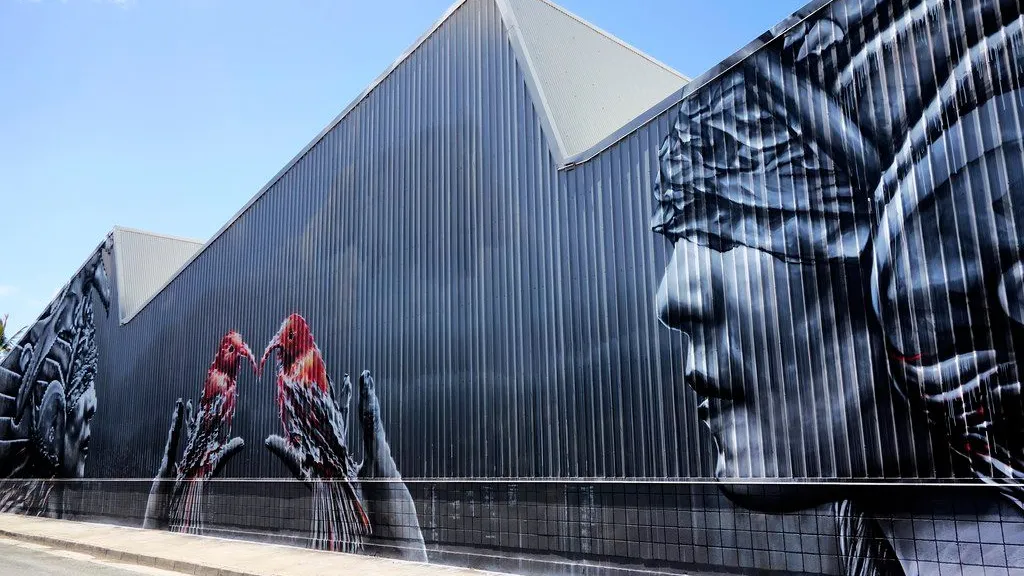
The murals on Auahi Street have a different rhythm from those on Cooke. The blocks are longer, the walls more continuous. Walking west, you pass a corrugated metal building on your left that once stored lumber for the Lewers and Cooke yard. In 2015 an artist from New Zealand painted its entire facade in a single week, working from a cherry picker while the trade winds blew.

Nearly every wall you see belongs to Kamehameha Schools, the largest private landowner in Hawaii. In the 1990s the trust began planning a mixed-use neighborhood here called Our Kakaʻako. The murals were not part of the original blueprint: they arrived from the ground up, a festival that grew until it became the identity of the place. Today the trust funds POW! WOW! and treats the art as an asset, not an afterthought.

Take a moment at the intersection of Auahi and Keawe. The building on the northwest corner has hosted a different mural every year since 2013. One year it was a thirty-foot portrait of a Hawaiian woman holding a calabash. The next, a geometric abstraction in coral pink and ocean blue. What you see today will almost certainly not be what someone sees next spring. That is the deal this neighborhood has made with its walls: nothing is permanent, and that is the point.

≈5 min walk to the next stop
Free preview ends here · stops 4 to 6 continue in the app

Pohukaina Street

A street named for calmness, once home to one of Oʻahu's oldest schools and now lined with murals you would miss from the main drag.

in app

SALT at Our Kakaʻako

Repurposed Quonset huts and warehouses turned into a shopping and dining block, named for the salt ponds that once shimmered here.

in app

Kewalo Basin Harbor

A working fishing harbor where sampans have unloaded tuna since the 1930s, bookending the walk where Kakaʻako's story began.

in app
Good to know

Before you go

When is the best time to see the Kakaʻako murals?

Any time of year, but the murals are freshest in February, right after the annual POW! WOW! festival paints new works across the district. Morning light on Cooke Street is best for photos. The walk is fully exposed, so avoid the midday heat if you can; late afternoon works well too.

Do I need a guide for the Kakaʻako mural walk?

No. The murals are on public walls along public streets. Just walk Cooke, Auahi, and Pohukaina streets and look up. Most murals are unsigned, but the style and scale speak for themselves. The walk ends at Kewalo Basin, where you can watch the fishing boats come in.

Provenance · last verified August 17, 2026

Built from the Wayside route itself: the stops, their order, and the walk between them.

Photo by jijake1977 on Openverse · CC BY 2.0

Photo by Hunter Reilly on Unsplash

Photo by jdnx on Openverse · CC BY 2.0

Photo by kajikawa on Wikimedia Commons · CC BY 3.0

Photo by George Pearson / George Henry Burgess on Wikimedia Commons · Public domain

Photo by Brandon Karaca on Unsplash

Photo by Alexandra Nelson on Unsplash

Photo by w_lemay on Wikimedia Commons · CC BY-SA 2.0

Coming soon

Wayside isn't in the app stores yet, but it's in the works. Check back soon.