London · Self-guided audio walk

Maritime Greenwich: Ships, Palaces, and the Prime Meridian

A half-day walk through the UNESCO World Heritage site where time begins, tea clippers raced, and a queen built England's first classical house.

  • 6Stops
  • 2.1 kmDistance
  • 35+ minTime
Maritime Greenwich: Ships, Palaces, and the Prime Meridian

Photo by Txllxt TxllxT on Wikimedia Commons

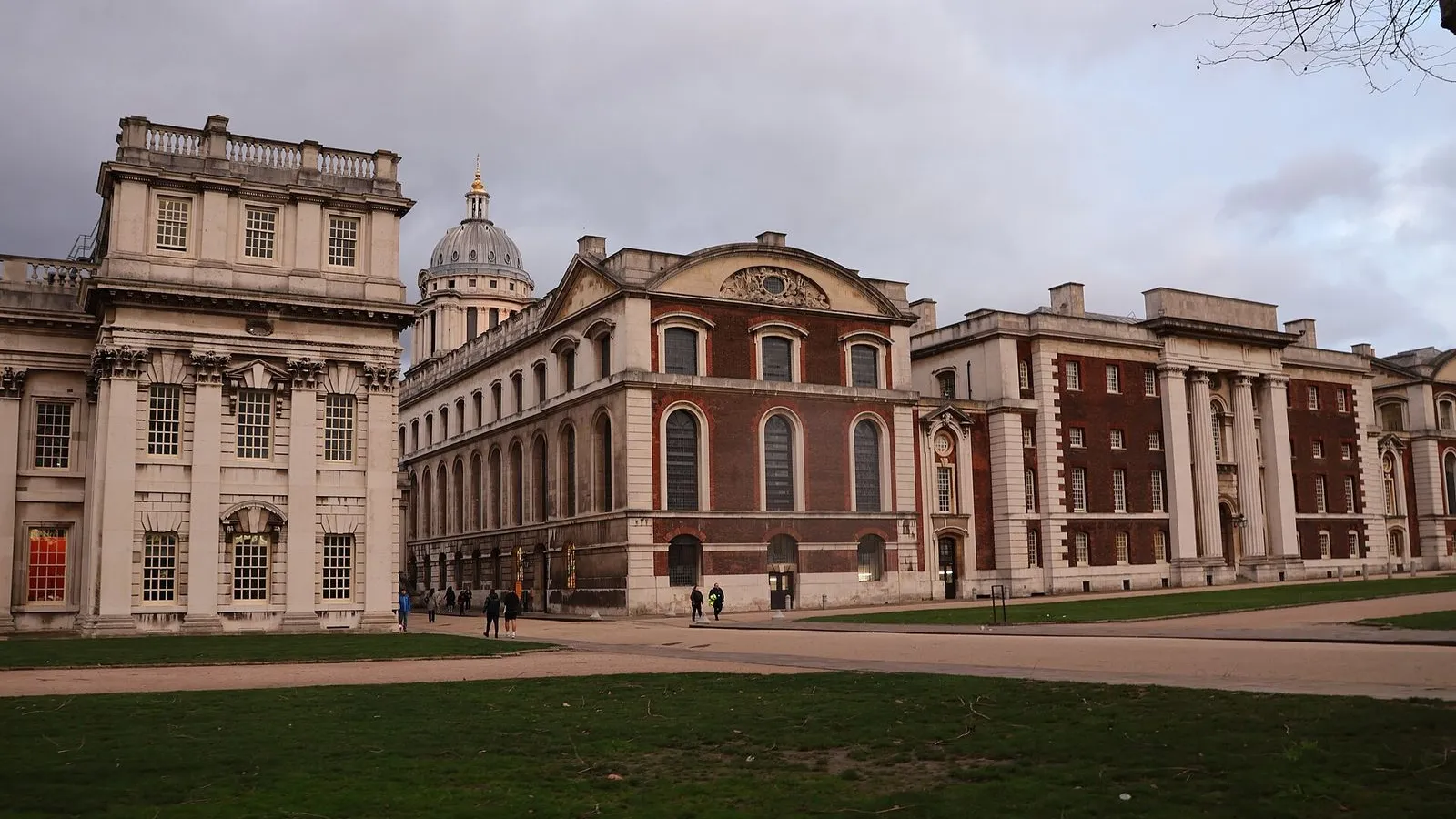
Greenwich packs more history into a single riverside mile than almost anywhere else in London. This walk starts beneath the hull of the Cutty Sark, the world's last surviving tea clipper, suspended in its glass-topped dry dock. From there you cross into the Old Royal Naval College, Sir Christopher Wren's baroque masterpiece, and stand under the painted ceiling that took James Thornhill nineteen years to finish. A few steps away sits the Queen's House, Inigo Jones's gleaming white Palladian villa that broke every Tudor rule when it rose here in the 1630s. The National Maritime Museum, the largest of its kind on earth, holds Nelson's Trafalgar coat with the bullet hole still visible in the left shoulder. A pause at Greenwich Market for food and craft stalls, then the climb through Greenwich Park to the Royal Observatory, where you stand on the Prime Meridian with one foot in each hemisphere and all of Maritime Greenwich spread out below you.

Hear it on the street

Get the turn-by-turn audio guide in the app. The narration plays itself as you reach each stop, hands-free and offline.

Stop by stop

The route

Interactive map of the route. The full stop list below works without it.

Cutty SarkMust see

Photo by DiscoA340 on Wikimedia Commons

Cutty Sark

0:00

The last surviving tea clipper, suspended in a glass-topped dry dock beside the Thames.

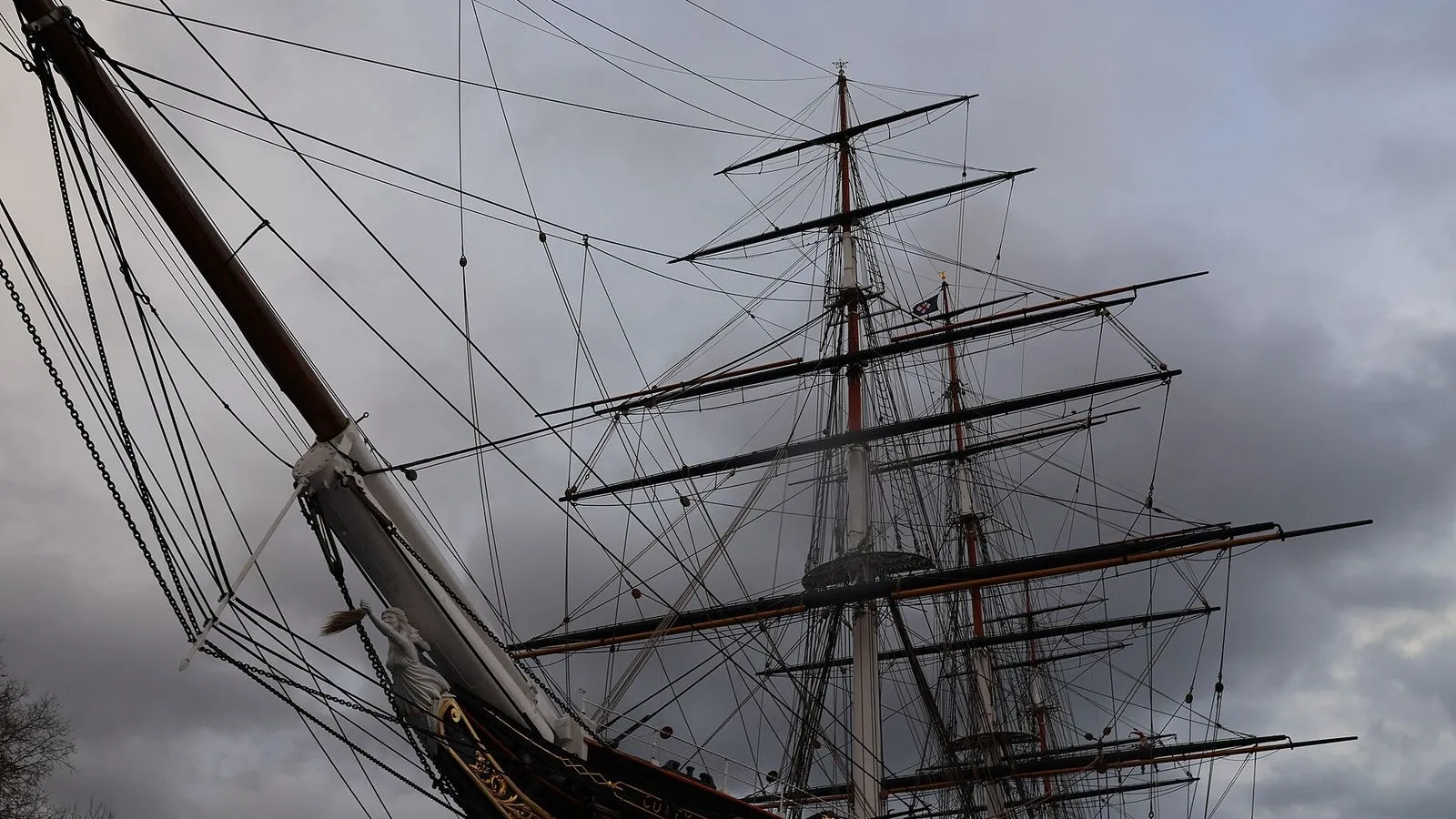
You are standing directly under the hull of the Cutty Sark, the world's only surviving extreme clipper. She was launched in 1869 on the River Clyde in Scotland, built for one purpose: to race tea from China to London faster than any other ship afloat. The first cargo of the season commanded the highest price, so speed was everything. Her hull is a composite of teak and rock elm on an iron frame, and when all thirty two thousand square feet of canvas were up, she could hit seventeen and a half knots.

The Suez Canal opened the same week she was launched, giving steamships a shortcut of three thousand miles and killing the tea race within a decade. So she switched to wool from Australia, and under Captain Richard Woodget she set a record passage of seventy-three days from Sydney to London. She survived dismasting in the First World War, a Portuguese renaming to Ferreira, and a devastating fire in 2007. More than ninety percent of her hull structure is original from 1869.

Look up through the glass canopy: eleven miles of rigging and the largest collection of ship figureheads in the world surround you.
≈5 min walk to the next stop
Old Royal Naval CollegeMust see

Photo by DiscoA340 on Wikimedia Commons

Old Royal Naval College

0:00

Wren's riverside baroque masterpiece, with the Painted Hall at its heart.

You are standing in the Painted Hall, often called Britain's Sistine Chapel. Sir James Thornhill spent nineteen years on this ceiling and these walls, from seventeen oh seven to seventeen twenty-six, covering thirty-seven hundred square metres with around two hundred figures. Gods, kings, queens, and mythical creatures swirl above you in a celebration of Britain's naval power and political stability. The central story marks the moment the United Kingdom was created and became a dominant European power.

Thornhill was paid one pound per square yard on the walls and three pounds on the ceiling, about one point four million pounds in today's money. He included his own portrait on the West Wall, standing near the royal family and gesturing toward the king. He was the first British artist ever knighted. This hall was meant to be a dining room for the Greenwich Pensioners, the retired sailors who lived here, but it was too grand.

It became a tourist attraction almost immediately. And in eighteen oh six, Lord Nelson's body lay in state right here before his funeral at Saint Paul's.

≈5 min walk to the next stop
Queen's HouseMust see

Photo by David Martin on Wikimedia Commons

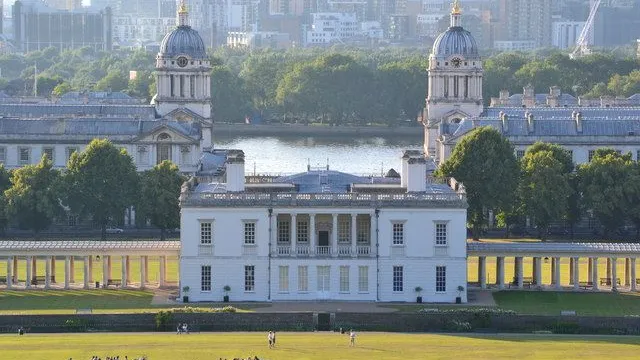
Queen's House

0:00

Inigo Jones's gleaming white Palladian villa, the first classical building in England.

You are looking at the building that changed English architecture. When the Queen's House was finished in the sixteen-thirties, it landed in Greenwich like a spaceship. Everything around it was red-brick Tudor, ramshackle and medieval. This was gleaming white, geometric, and classical.

Inigo Jones had studied the villas of Andrea Palladio in Italy and came back determined to bring that language to England. The Queen's House was the first Palladian building in the country, and it sparked a design revolution that would define the Georgian streets of London for the next two centuries. It was commissioned in sixteen sixteen by Anne of Denmark, wife of James the First, as a garden retreat. After she died, Henrietta Maria, wife of Charles the First, restarted the work and added the loggia.

Inside is the Great Hall, a perfect forty-foot cube in white and gold, and the Tulip Stairs, the first self-supporting spiral stair in Britain. The stairs are named for the flower pattern in the iron balustrade, though scholars now think the blooms are actually fleurs-de-lis, a nod to Henrietta Maria's French heritage. A photograph taken here in the nineteen sixties appeared to show ghosts on the stairs. Decide for yourself.

≈2 min walk to the next stop
Free preview ends here · stops 4 to 6 continue in the app

National Maritime Museum

The world's largest maritime museum, home to Nelson's Trafalgar coat with its bullet hole.

in app

Greenwich Market

A covered Victorian market filled with street food, crafts, and antiques in the heart of Greenwich town.

in app

Royal Observatory

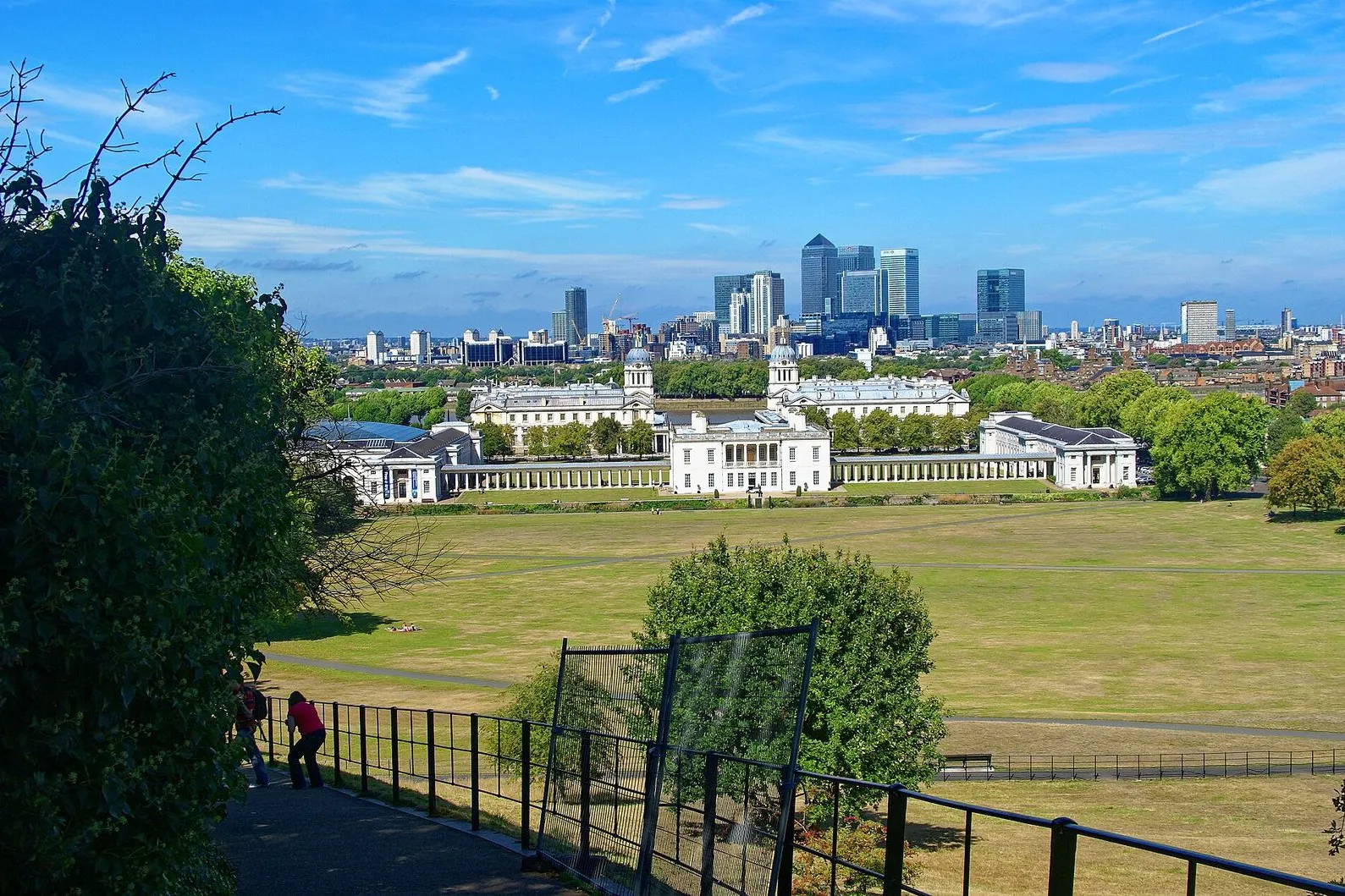
Stand on the Prime Meridian at the top of Greenwich Park with all of Maritime Greenwich and Canary Wharf before you.

in app
Good to know

Before you go

How do I get to Greenwich from central London?

The quickest route is the Thames Clipper river bus from Westminster, Embankment, or Tower piers. It takes about forty minutes and the views are excellent. You can also take the DLR from Bank or the Jubilee line to North Greenwich then a bus, but the river is half the experience. Greenwich is a half-day trip at minimum.

Is the Royal Observatory worth the climb?

The climb through Greenwich Park is steep but short, and the view from the top takes in the Old Royal Naval College, the Thames, Canary Wharf, and on a clear day all the way to the City. Standing on the Prime Meridian with one foot in each hemisphere is a good photograph. The observatory itself has Harrison's marine chronometers and the Great Equatorial Telescope.

Provenance · last verified August 9, 2026

Built from the Wayside route itself: the stops, their order, and the walk between them.

Photo by Txllxt TxllxT on Wikimedia Commons · CC BY-SA 4.0

Photo by DiscoA340 on Wikimedia Commons · CC BY-SA 4.0

Photo by DiscoA340 on Wikimedia Commons · CC BY-SA 4.0

Photo by David Martin on Wikimedia Commons · CC BY-SA 2.0

Photo by Miki Nishimura on Unsplash

Photo by Txllxt TxllxT on Wikimedia Commons · CC BY-SA 4.0

Photo by ricardo from London on Wikimedia Commons · CC BY 2.0

Photo by Ввласенко on Wikimedia Commons · CC BY-SA 3.0

Photo by Peter Trimming on Wikimedia Commons · CC BY-SA 2.0

Photo by beareye2010 on Wikimedia Commons · CC0

Photo by Scalondonuk on Wikimedia Commons · CC BY-SA 4.0

Coming soon

Wayside isn't in the app stores yet, but it's in the works. Check back soon.