London · Self-guided audio walk

Holborn's Quiet Side: From the Temple to Bloomsbury

A walk through legal London and literary homes, where Georgian squares and hidden gardens sit just off the city's rush.

  • 7Stops
  • 3.5 kmDistance
  • 55+ minTime
Holborn's Quiet Side: From the Temple to Bloomsbury

Photo by ricardo from London on Wikimedia Commons

Holborn and Bloomsbury sit between the City and the West End, a quiet pocket of legal London and literary homes. This walk threads together seven stops across about two and a half hours: a round church built by crusading knights, London's largest garden square, a house-museum crammed with curiosities, a private garden laid out by Francis Bacon, the only surviving London home of Charles Dickens, a leafy Bloomsbury square, and the British Museum. The Inns of Court are working legal institutions; the walk notes what a visitor may and may not enter. The streets are Georgian, the squares are green, and the whole route feels set apart from the rush.

Hear it on the street

Get the turn-by-turn audio guide in the app. The narration plays itself as you reach each stop, hands-free and offline.

Stop by stop

The route

Interactive map of the route. The full stop list below works without it.

Temple ChurchMust see

Photo by John Salmon on Wikimedia Commons

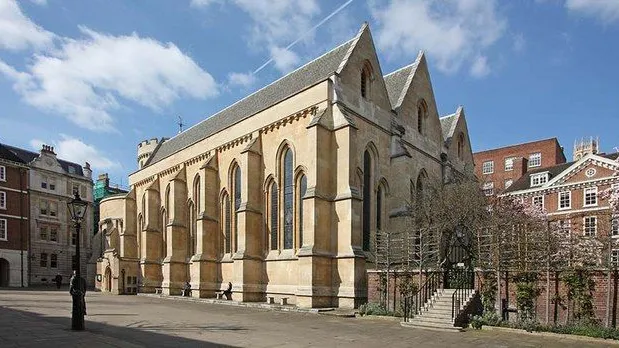
Temple Church

0:00

A round church built by the Knights Templar in the 12th century, tucked between Fleet Street and the Thames. Stone effigies of crusading knights lie on the floor of the circular nave.

You are standing outside Temple Church, and already you can see what makes it unusual. It is round. The Knights Templar built it in the 12th century as their English headquarters, and they modelled the circular nave on the Church of the Holy Sepulchre in Jerusalem. Patriarch Heraclius consecrated it on 10 February 1185.

Step inside and the first thing you notice is the floor. Nine stone effigies of knights lie right there, carved in the 13th century. The most famous is William Marshal, the first Earl of Pembroke, the man who negotiated Magna Carta in 1215. His funeral was held in this church.

After the Templars were suppressed in 1314, the church passed to the Knights Hospitaller and later to the lawyers of Inner Temple and Middle Temple, who still own it today. The church is open for sightseeing most weekdays from 10 to 4, admission five pounds. It is a working place of worship, so be ready for services or a lunchtime talk. If you cannot go inside, walk around the outside: the Norman doorway on the west side and the column with two Templar knights sharing a horse are worth the detour.

When you are ready, leave the churchyard through the Inner Temple lane toward Fleet Street.
≈9 min walk to the next stop
Lincoln's Inn FieldsMust see

Photo by Jim Linwood on Openverse

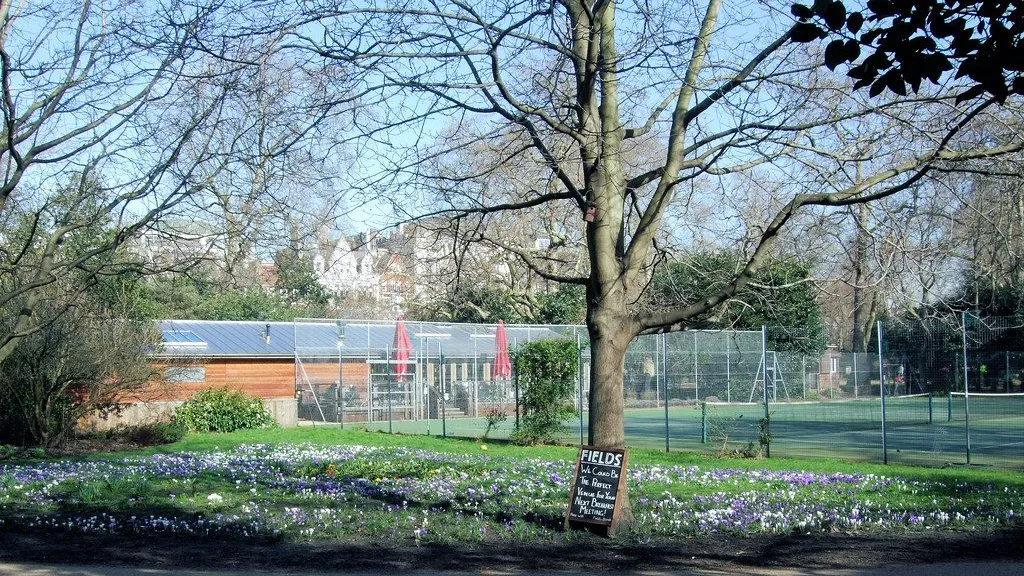
Lincoln's Inn Fields

0:00

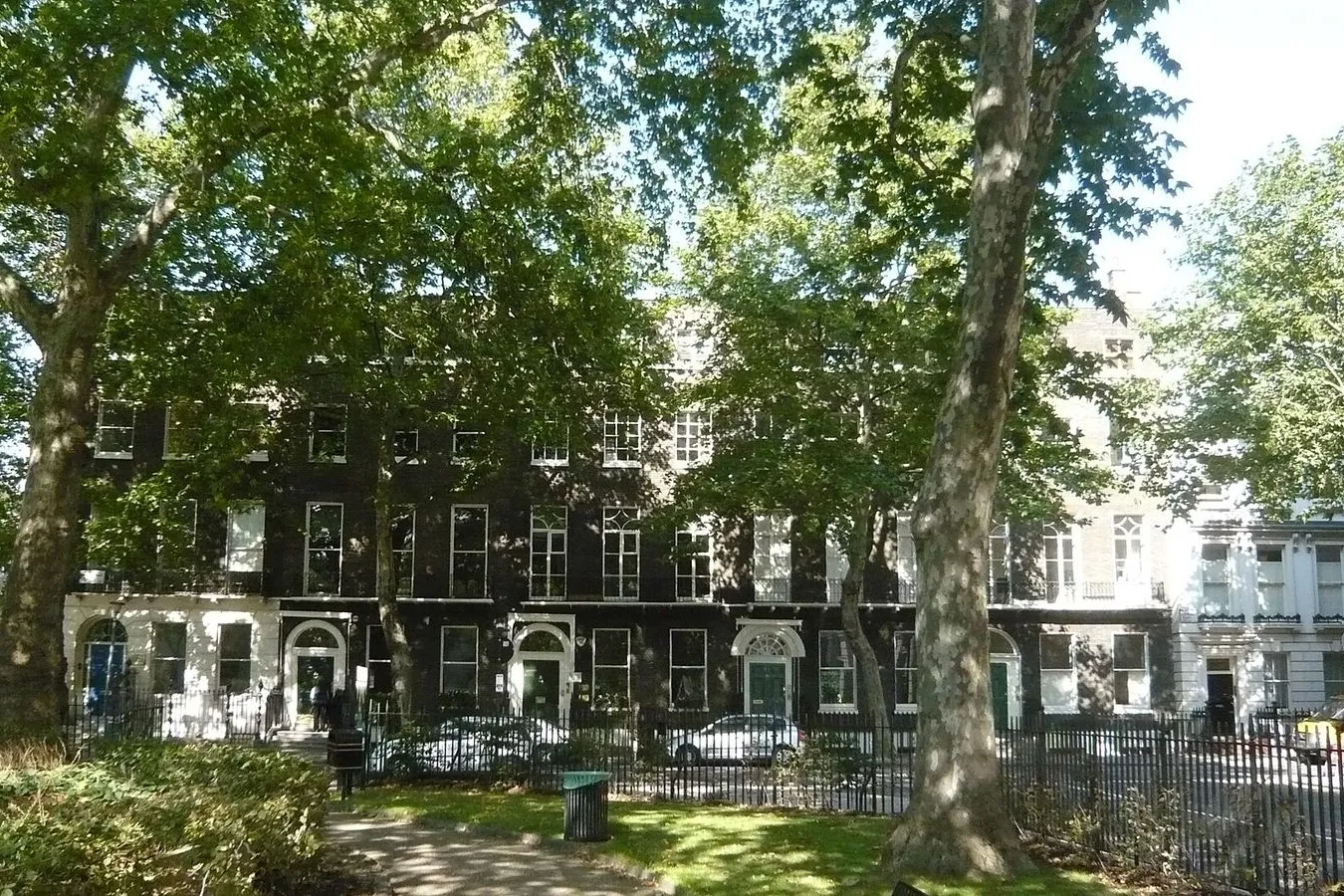
London's largest public square, laid out in the 1630s. A green rectangle ringed by Georgian houses, with mature plane trees, tennis courts, and a bandstand.

You are in Lincoln's Inn Fields, and it is hard to believe this was once a rough pasture where cattle grazed and public executions were held. The square was laid out in the 1630s by the developer William Newton, on the condition that the central space remain open to everyone. That bargain is why you can walk across this lawn today. Look around.

Lindsey House at numbers 59 and 60, with its clean classical facade, dates from 1640 and is often attributed to Inigo Jones. The building directly behind you, on the north side, is the Royal College of Surgeons. And across the square, at number 13, is your next stop: Sir John Soane's Museum. The Fields are a public park, open daily until dusk.

Feel free to cut diagonally across the grass or follow the gravel paths. When you are ready, head to the north side of the square, to the house with the Portland stone facade at number 13.

≈2 min walk to the next stop
Sir John Soane's MuseumMust see

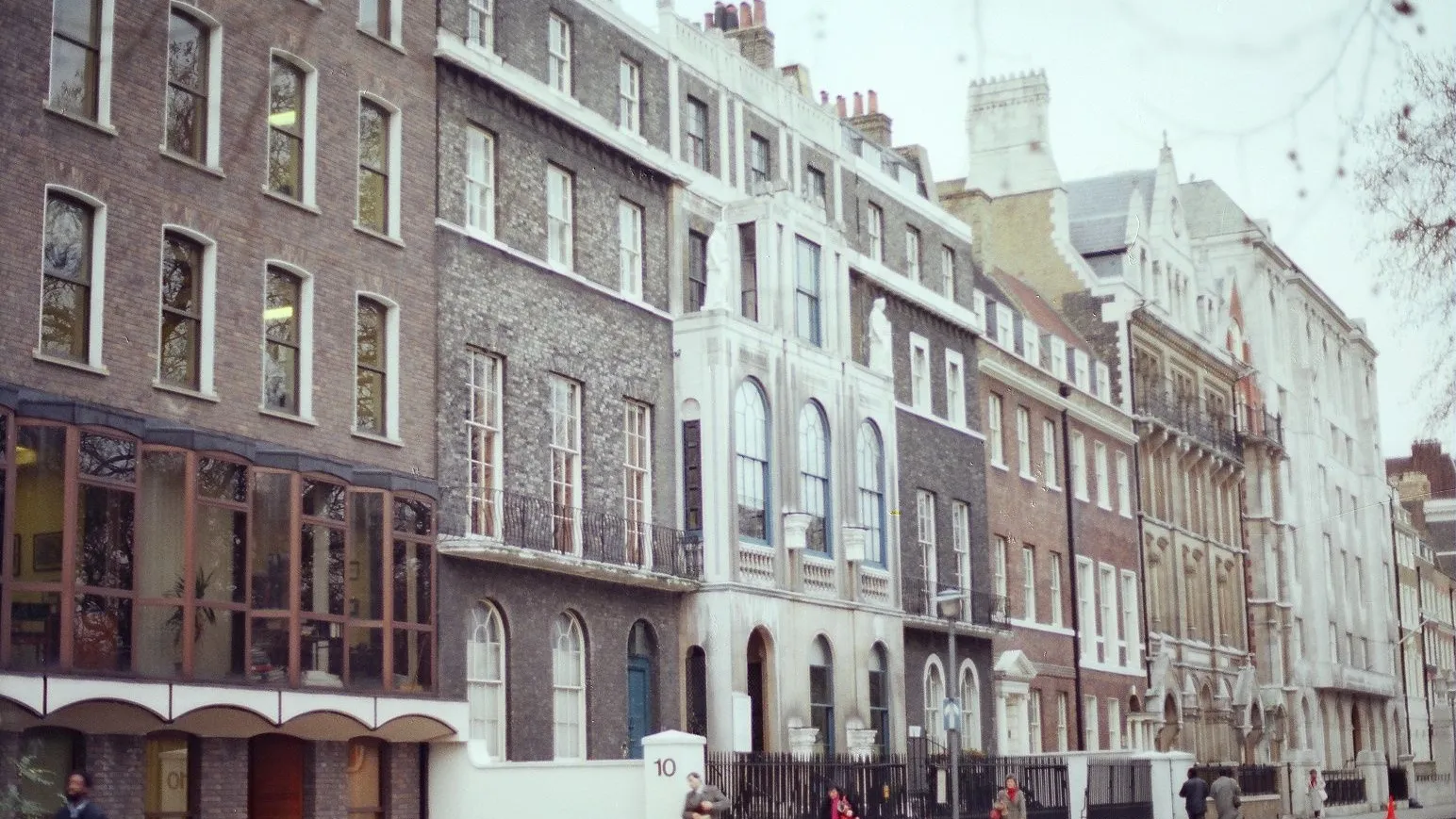
Photo by EuroAsia Vizion on Wikimedia Commons

Sir John Soane's Museum

0:00

The architect Sir John Soane's house, left exactly as it was at his death in 1837 and crammed with antiquities, paintings, and curiosities. Free entry.

Number 13 Lincoln's Inn Fields looks like a handsome Georgian townhouse. Inside, it is unlike any house you have ever been in. Sir John Soane was one of Britain's greatest architects, the man who designed the Bank of England, and he spent his whole life filling this house with things that fascinated him. The collection is packed into every room and corridor: Greek and Roman antiquities, architectural models in cork and plaster, paintings by Hogarth, Canaletto, and Turner.

The most astonishing object is the sarcophagus of the Egyptian pharaoh Seti I, carved from a single block of translucent alabaster and over three thousand years old. It sits in the Sepulchral Chamber, a basement room lit from above, like a tomb. The Picture Room is a trick of Soane's own devising: the walls are actually hinged panels that open to reveal three layers of paintings. The museum is free and open Wednesday to Sunday from 10 to 5.

No booking is needed, but the rooms are small and it fills up. Aim for a weekday morning if you can. When you leave, turn right onto Lincoln's Inn Fields and walk to its northeast corner.

≈7 min walk to the next stop
Free preview ends here · stops 4 to 7 continue in the app

Gray's Inn Gardens

The private gardens of Gray's Inn, known as The Walks, laid out by Sir Francis Bacon in 1608. Open to the public on weekday lunchtimes.

in app

Charles Dickens Museum

Dickens's only surviving London home, a Georgian terraced house on Doughty Street where he wrote Oliver Twist and Nicholas Nickleby.

in app

Russell Square

A large, leafy garden square in the heart of Bloomsbury, re-landscaped to echo Humphry Repton's early 19th-century design. A calm green pause before the British Museum.

in app

British Museum

One of the world's great museums, home to the Rosetta Stone, the Parthenon Marbles, and the glass-roofed Great Court. Free, and vast.

in app
Good to know

Before you go

Can I go inside the Inns of Court?

The Inns of Court are working legal institutions, not tourist attractions. Lincoln's Inn Fields is a public park. Gray's Inn Gardens, known as The Walks, are open to the public on weekday lunchtimes. Temple Church has set visitor hours. The surrounding streets and squares are public and walkable at any time. Respect the quiet of the courtyards and you will be welcome.

Is the British Museum included in this walk?

The Holborn walk ends at the British Museum. Entry is free and the collection is enormous. It opens daily from 10:00 to 17:00, with late opening on Fridays. If you plan to go inside, add at least two hours to the walk. The Rosetta Stone and the Parthenon Marbles are in the ground-floor galleries nearest the Great Court entrance.

Keep exploring

More walks in London

Provenance · last verified August 18, 2026

Built from the Wayside route itself: the stops, their order, and the walk between them.

Photo by ricardo from London on Wikimedia Commons · CC BY 2.0

Photo by John Salmon on Wikimedia Commons · CC BY-SA 2.0

Photo by Jim Linwood on Openverse · CC BY 2.0

Photo by EuroAsia Vizion on Wikimedia Commons · CC BY 2.0

Photo by Miki Nishimura on Unsplash

Photo by Txllxt TxllxT on Wikimedia Commons · CC BY-SA 4.0

Photo by Txllxt TxllxT on Wikimedia Commons · CC BY-SA 4.0

Photo by Ввласенко on Wikimedia Commons · CC BY-SA 3.0

Photo by Peter Trimming on Wikimedia Commons · CC BY-SA 2.0

Photo by beareye2010 on Wikimedia Commons · CC0

Photo by Scalondonuk on Wikimedia Commons · CC BY-SA 4.0

Coming soon

Wayside isn't in the app stores yet, but it's in the works. Check back soon.