London · Self-guided audio walk

The Grove: Windrush, Riots, and Carnival

Walk the streets that built Black Britain, from Windrush settlers to the birth of Notting Hill Carnival, on a route the guidebooks leave out.

  • 7Stops
  • 4.7 kmDistance
  • 70+ minTime
The Grove: Windrush, Riots, and Carnival

Photo by Scalondonuk on Wikimedia Commons

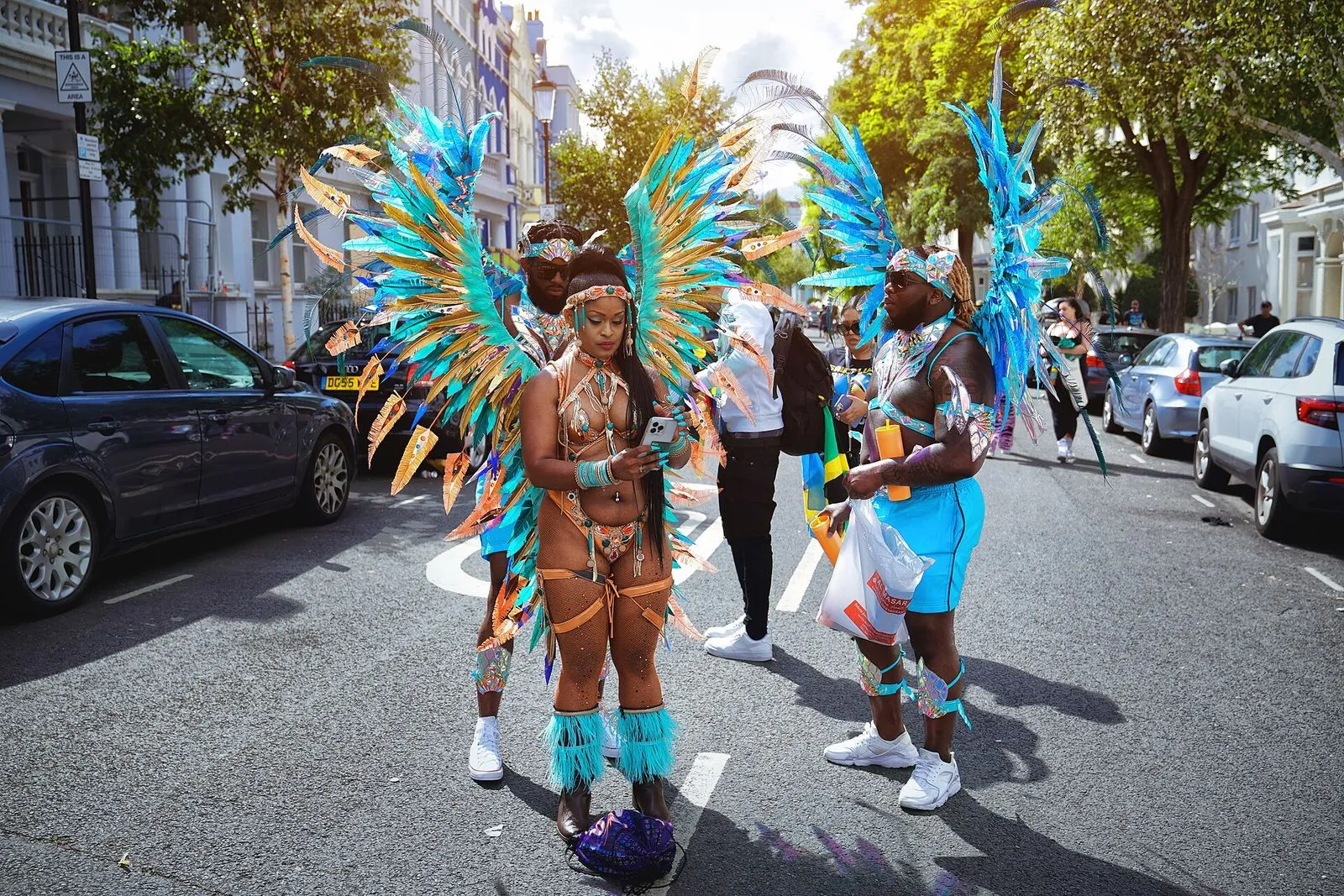
This walk runs the length of Portobello Road, Golborne Road, and Ladbroke Grove, but it is not about the antiques stalls or the pastel townhouses. It follows the Caribbean story of Notting Hill: the Windrush generation who settled here after the war, the 1958 race riots, the murder of Kelso Cochrane, Claudia Jones and the first Caribbean Carnival, the Mangrove Nine, and the steel bands that fill the streets every August. You will pass the plaques and the former community centres and the stretch of pavement where history happened. The shops and cafes you see are the latest layer. Underneath is a neighbourhood that fought for its place in the city and won.

Hear it on the street

Get the turn-by-turn audio guide in the app. The narration plays itself as you reach each stop, hands-free and offline.

Stop by stop

The route

Interactive map of the route. The full stop list below works without it.

Portobello Road MarketMust see

Photo by Roger Cornfoot on Wikimedia Commons

Portobello Road Market

0:00

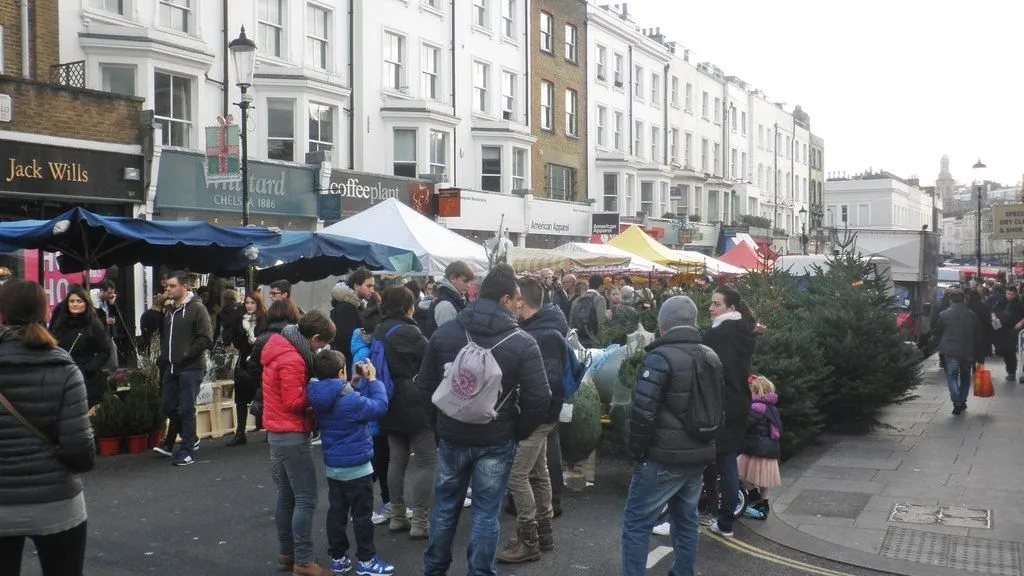
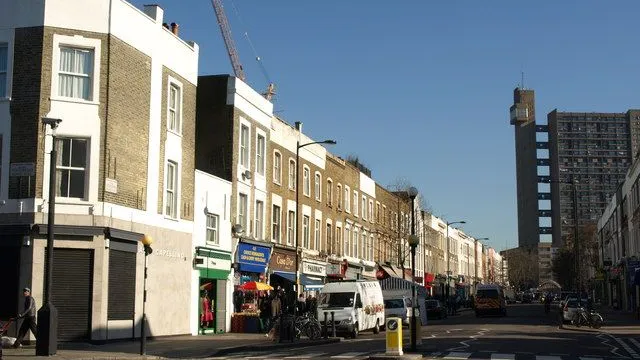
The south end of Portobello Road Market, where antiques stalls and the scent of street food mark the start of a walk through a deeper Notting Hill.

You are standing at the south end of Portobello Road, where the antiques stalls begin. On a Saturday this street is shoulder to shoulder with browsers and the air smells of street food. But the story of this walk starts earlier. Between 1948 and the early 1960s, thousands of people from the Caribbean arrived in Britain.

They were British citizens, invited to rebuild the country after the war. Many settled here, in Notting Hill and North Kensington, because the rooms were cheap. The houses were run down. Landlords crammed families into single rooms.

And in the windows of pubs and rented rooms, signs went up: No Blacks, No Irish, No Dogs. The market grew up around this community. Antiques dealers, fruit sellers, fabric stalls. The Caribbean newcomers opened cafes and record shops and barber shops.

This street has been a market since the 1870s, but the energy you feel here, the particular mix of people and sounds and food, that arrived with Windrush. Walk north. The stalls will thin out and the road will open up. Follow it about ten minutes, past the vintage clothes and the fruit and veg, until you reach the corner of Tavistock Road.
≈18 min walk to the next stop
Portobello RoadLocal pick

Photo by Megalit on Wikimedia Commons

Portobello Road

0:00

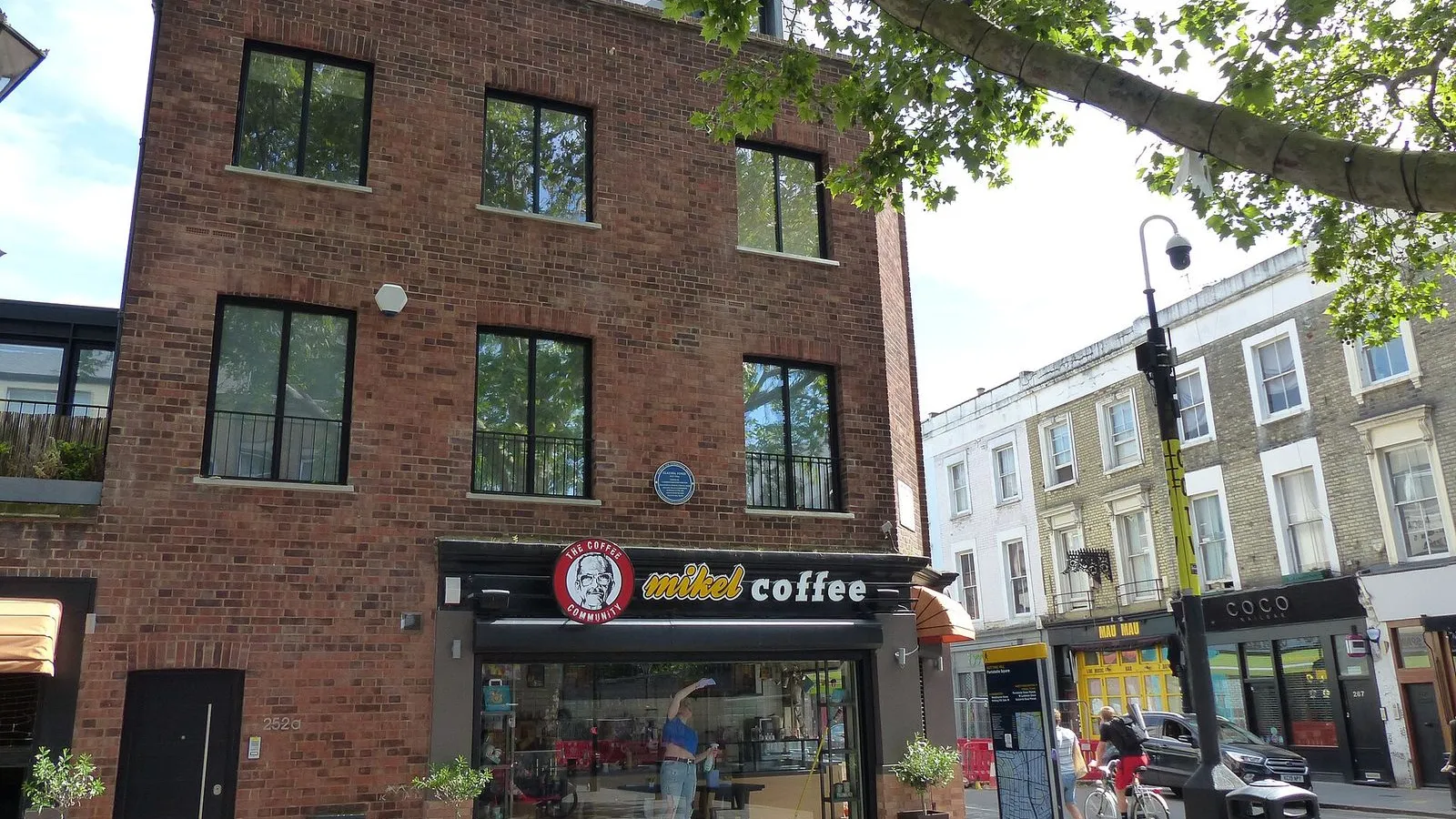
The Claudia Jones blue plaque marks the spot where the mother of Notting Hill Carnival is remembered. Her indoor Caribbean Carnival of 1959 answered racial violence with culture.

Find the blue plaque on the wall. Claudia Jones, 1915 to 1964. Mother of Caribbean Carnival in Britain. Claudia Jones was a Trinidadian journalist and activist.

She was deported from the United States during the McCarthy era and found refuge in London. In 1958, the year of the Notting Hill race riots, she founded the West Indian Gazette, Britain's first major Black newspaper. After the riots, she asked a clear question: how do you fight a climate of racial violence without violence? Her answer was culture. In January 1959, in the middle of a London winter, she staged the first Caribbean Carnival at St Pancras Town Hall.

Steel bands, calypso singers, dancers. The BBC filmed it. She wrote in the programme: a people's art is the genesis of their freedom. The indoor carnival ran every year until her death in 1964.

Two years later, the first outdoor street festival took place on these roads. That is the Notting Hill Carnival you know today. Jones never saw it go outdoors. But the plaque is here because this is the neighbourhood her work belonged to.

Just up the road from here was Back-a-yard, a community advice centre that became the Black People's Information Centre. It was one of several self-help organisations that grew out of the Grove's activist spirit. Turn north and keep walking. The road becomes Golborne Road.

≈2 min walk to the next stop
Golborne RoadLocal pick

Photo by Derek Harper on Wikimedia Commons

Golborne Road

0:00

A blue plaque at 36 Golborne Road remembers Kelso Cochrane, the Antiguan carpenter whose murder in 1959 became a turning point for race relations in North Kensington.

Look for the blue plaque at number 36, on the wall of what is now a bar and restaurant. Kelso Cochrane, 1927 to 1959. Antiguan carpenter, fatally wounded on this site. It happened just after midnight on the 17th of May 1959.

Kelso Cochrane was walking home from Paddington General Hospital, where he had been treated for a fractured thumb. At the junction of Golborne Road and Southam Street, a gang of white youths set upon him. One of them stabbed him with a stiletto knife. He was 32.

The police called it a robbery gone wrong. The community knew it was a racist murder. No one was ever convicted. Over 1,200 mourners, Black and white, followed his coffin along Ladbroke Grove to Kensal Green Cemetery.

People describe that funeral as a proto-Carnival procession, a moment when grief turned into a public refusal to be intimidated. It shifted something in the neighbourhood. The North Kensington Law Centre, the first neighbourhood law centre in the country, opened on this road not long afterwards. Grassroots Storefront, a community hub run on pan-African principles, was here too.

The plaque was put up in 2009, the 50th anniversary of his death. When you are ready, walk south down Ladbroke Grove.

≈8 min walk to the next stop
Free preview ends here · stops 4 to 7 continue in the app

Ladbroke Grove

Ladbroke Grove gave the neighbourhood its activist name: the Grove. Site of the 1958 race riots, the 1963 civil rights march, and the Carnival's main parade route.

in app

All Saints Road

8 All Saints Road was the Mangrove restaurant, Frank Crichlow's Trinidadian community hub. The police raided it 12 times. The Mangrove Nine fought back and won.

in app

Westbourne Grove

Westbourne Grove is polished Notting Hill today, but in the 1970s it was part of the Carnival's extended route. The street holds both versions of the neighbourhood.

in app

Ladbroke Square

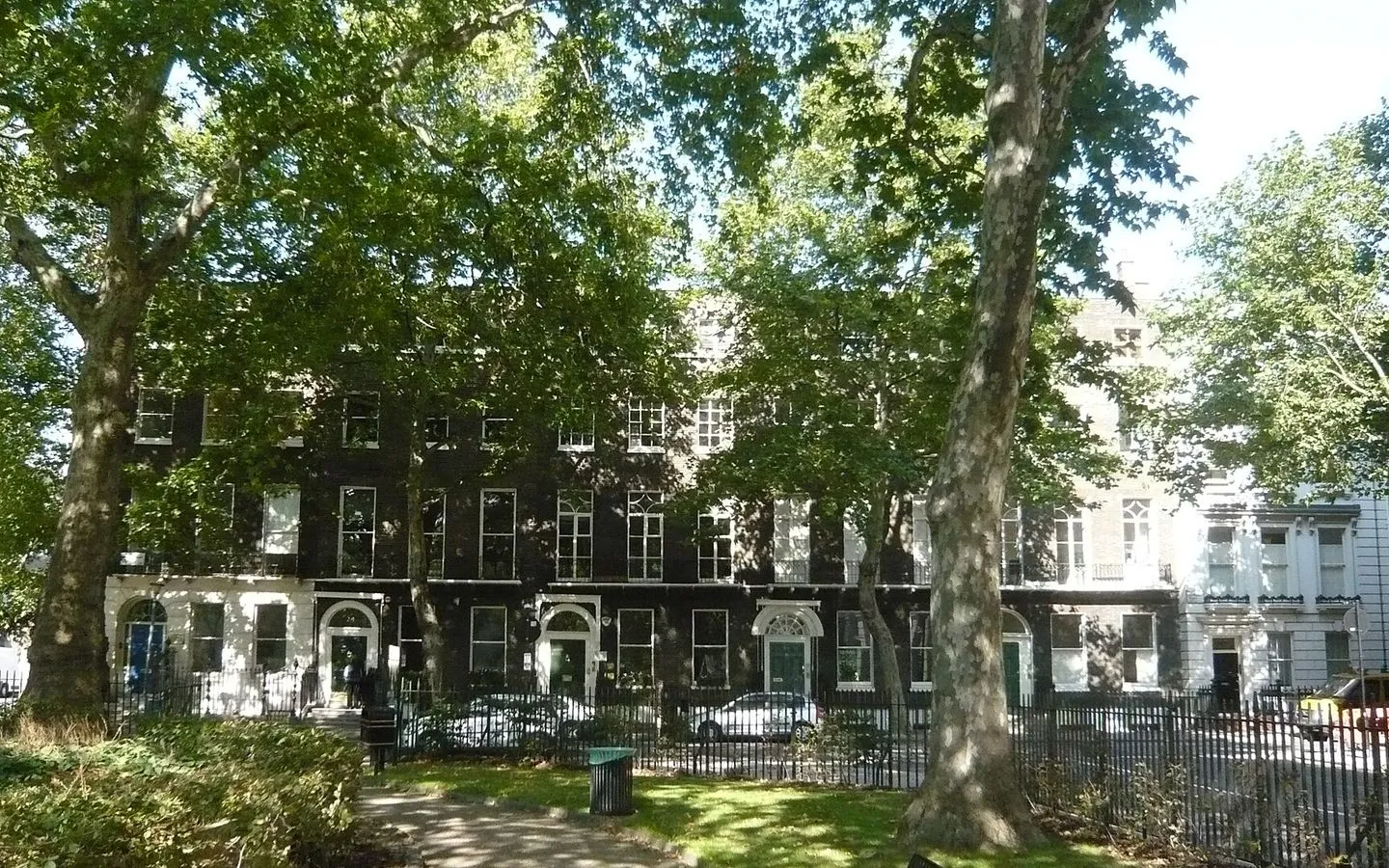
Ladbroke Square, one of London's largest private garden squares, offers a quiet end to a walk through the Grove's radical past.

in app
Good to know

Before you go

Is this walk about the antiques market?

No. Portobello Road Market is the starting point, but this walk tells the Caribbean story of Notting Hill: the Windrush generation who settled here after the war, the 1958 race riots, Claudia Jones and the birth of Notting Hill Carnival, the Mangrove Nine, and the community that fought for its place in the city. The antiques stalls are the surface layer. The walk goes deeper.

When is Notting Hill Carnival?

Notting Hill Carnival takes place on the Sunday and Monday of the August bank holiday weekend every year. It is Europe's largest street festival, with steel bands, sound systems, and elaborate costumes. The main parade runs along Ladbroke Grove. The rest of the year the neighbourhood is quieter, and the walk tells the story that the Carnival celebrates.

Keep exploring

More walks in London

Provenance · last verified August 9, 2026

Built from the Wayside route itself: the stops, their order, and the walk between them.

Photo by Scalondonuk on Wikimedia Commons · CC BY-SA 4.0

Photo by Roger Cornfoot on Wikimedia Commons · CC BY-SA 2.0

Photo by Megalit on Wikimedia Commons · CC BY-SA 4.0

Photo by Derek Harper on Wikimedia Commons · CC BY-SA 2.0

Photo by Miki Nishimura on Unsplash

Photo by Txllxt TxllxT on Wikimedia Commons · CC BY-SA 4.0

Photo by Txllxt TxllxT on Wikimedia Commons · CC BY-SA 4.0

Photo by ricardo from London on Wikimedia Commons · CC BY 2.0

Photo by Ввласенко on Wikimedia Commons · CC BY-SA 3.0

Photo by Peter Trimming on Wikimedia Commons · CC BY-SA 2.0

Photo by beareye2010 on Wikimedia Commons · CC0

Coming soon

Wayside isn't in the app stores yet, but it's in the works. Check back soon.