Florence · Self-guided audio walk

Santa Croce and Sant'Ambrogio

Florence's great tombs in the morning, then the east-side market where the city actually shops.

  • 5Stops
  • 1.3 kmDistance
  • 20+ minTime
Santa Croce and Sant'Ambrogio

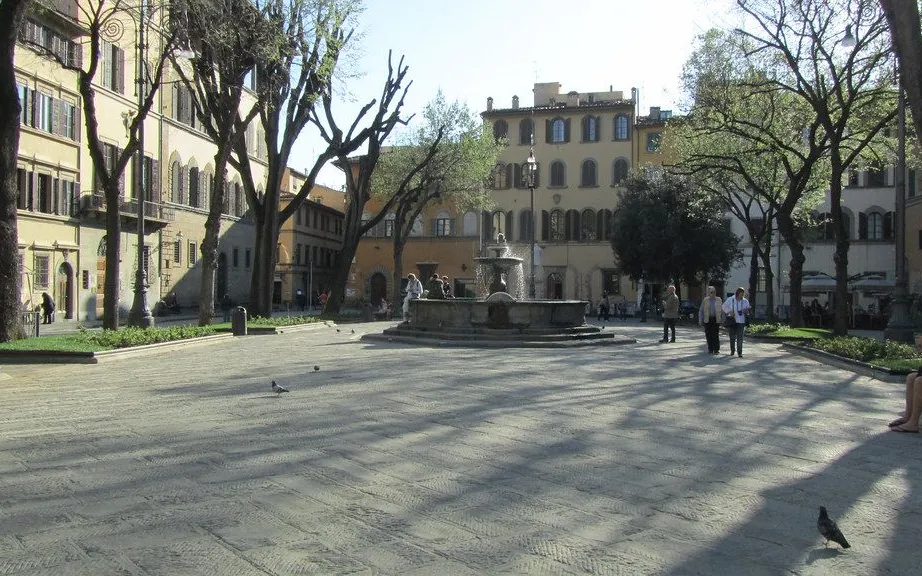
Photo by Txllxt TxllxT on Wikimedia Commons

This walk pairs two sides of the same neighborhood. It begins among the oldest stones in Florence, at the Bargello and the Badia Fiorentina, then turns to Santa Croce, the Franciscan basilica that keeps the tombs of Michelangelo, Galileo, and Machiavelli.

From there the route slips east, away from the monuments, into the streets where Florentines live. Piazza dei Ciompi keeps Vasari's old fish-market loggia, and the covered Sant'Ambrogio market opens at seven with butchers, cheese counters, and a lunch counter that has fed market workers since 1986. Allow about two hours, and try to finish before the market closes at two.

Hear it on the street

Get the turn-by-turn audio guide in the app. The narration plays itself as you reach each stop, hands-free and offline.

Stop by stop

The route

Interactive map of the route. The full stop list below works without it.

BargelloMust see

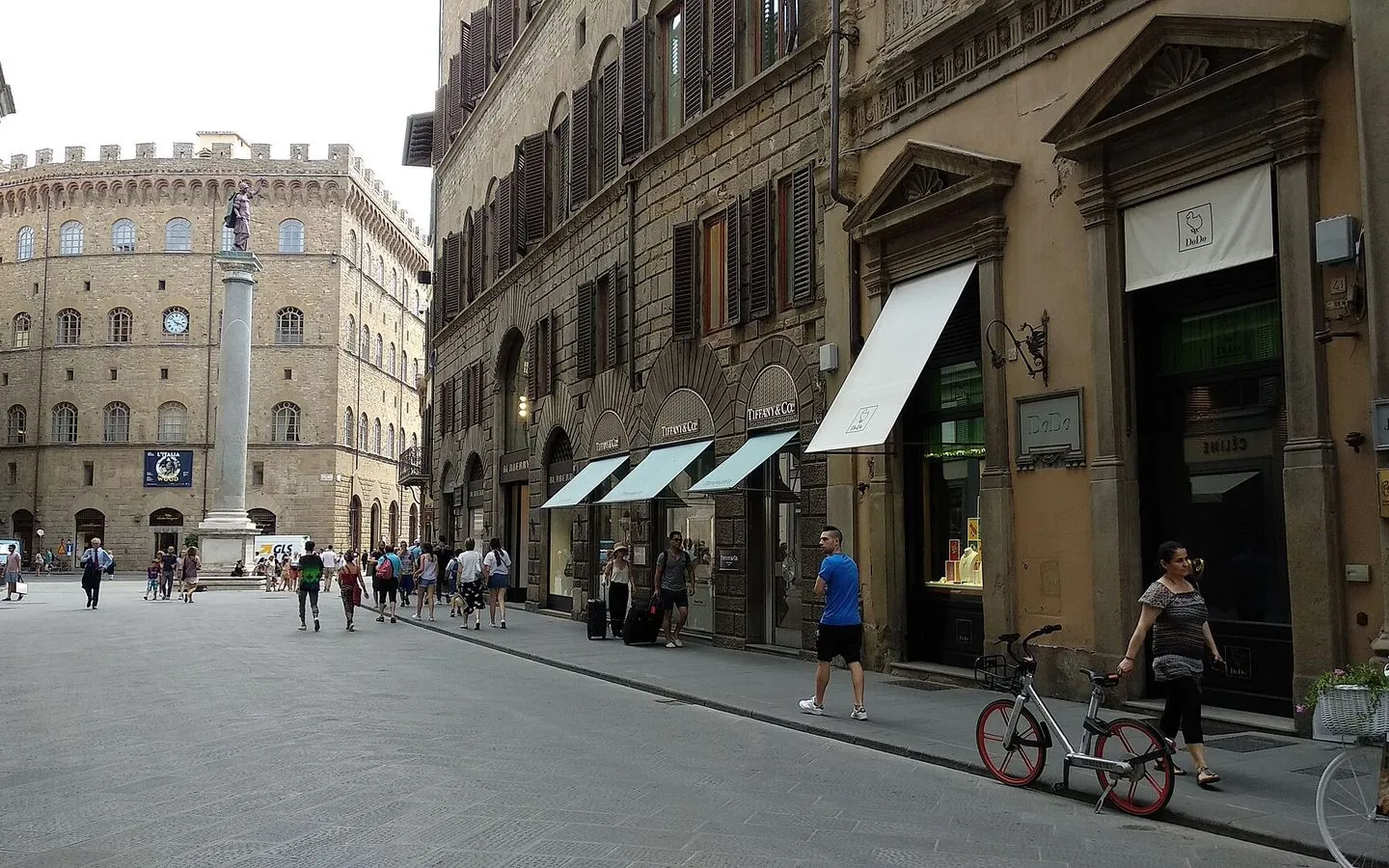
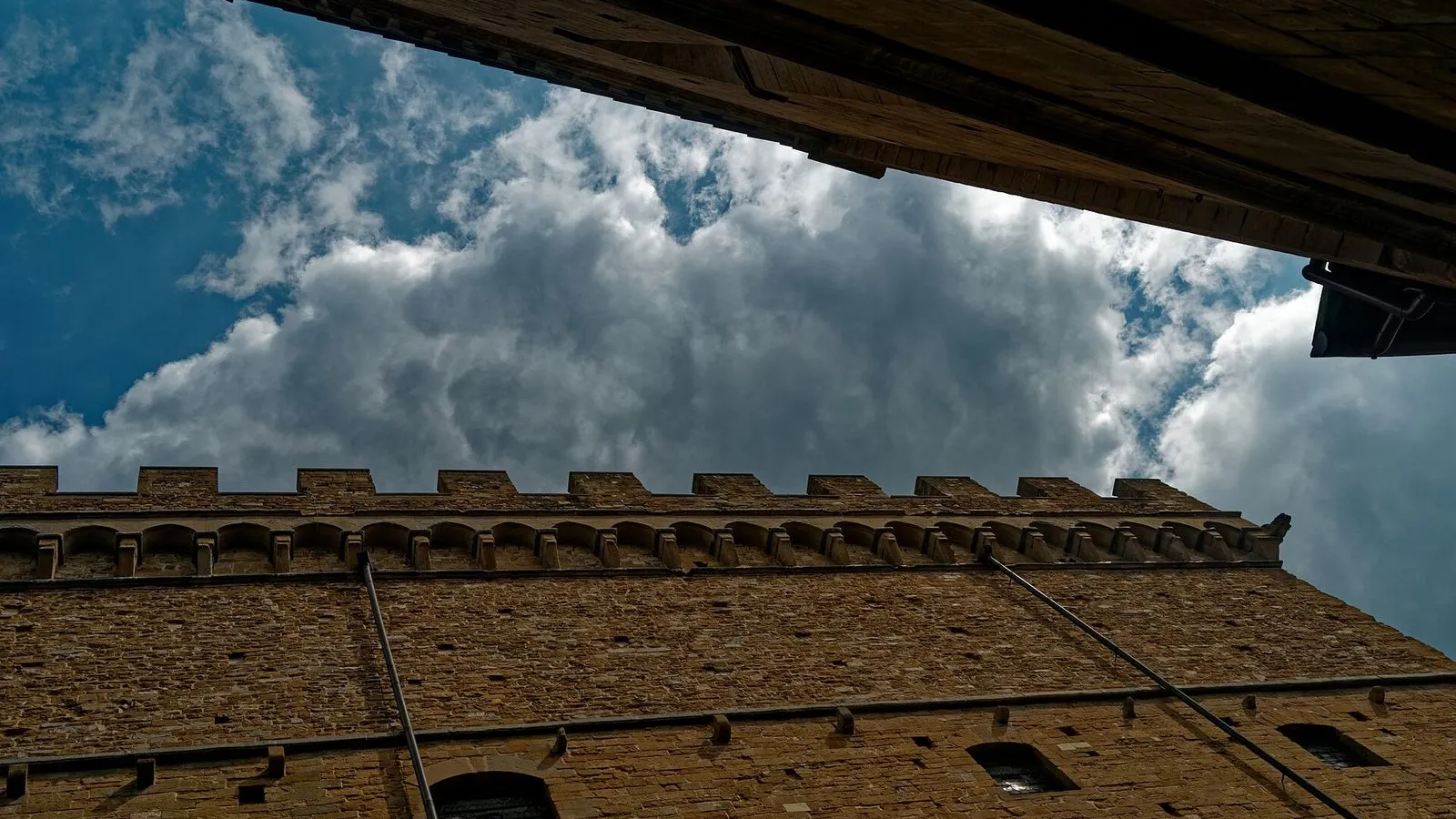
Photo by Txllxt TxllxT on Wikimedia Commons

Bargello

0:00

The city's oldest public building, begun in 1255, and now Italy's first national museum of sculpture.

You're standing outside the Bargello, the oldest public building in Florence, begun in 1255. For its first centuries it was the Palazzo del Podestà, home of the chief magistrate, and his coats of arms still crowd the courtyard walls. From 1574 the building became police headquarters and a prison, named after the bargello, the city's police chief. Executions took place in the courtyard until 1786.

In 1479 the Pazzi conspirator Bernardo Bandini Baroncelli was hanged from these walls, and Leonardo da Vinci sketched the body. Since 1865 it has been Italy's first national museum, and the sculpture inside is the real reason to step through the door: Donatello's bronze David, Michelangelo's Bacchus, Cellini's bronzes. If you go in, find the chapel where Giotto's workshop painted the oldest known portrait of Dante, a young man with a serious face. It links this old law court to the abbey you're about to cross toward, where Dante used to hear the monks sing.
≈1 min walk to the next stop
Badia FiorentinaMust see

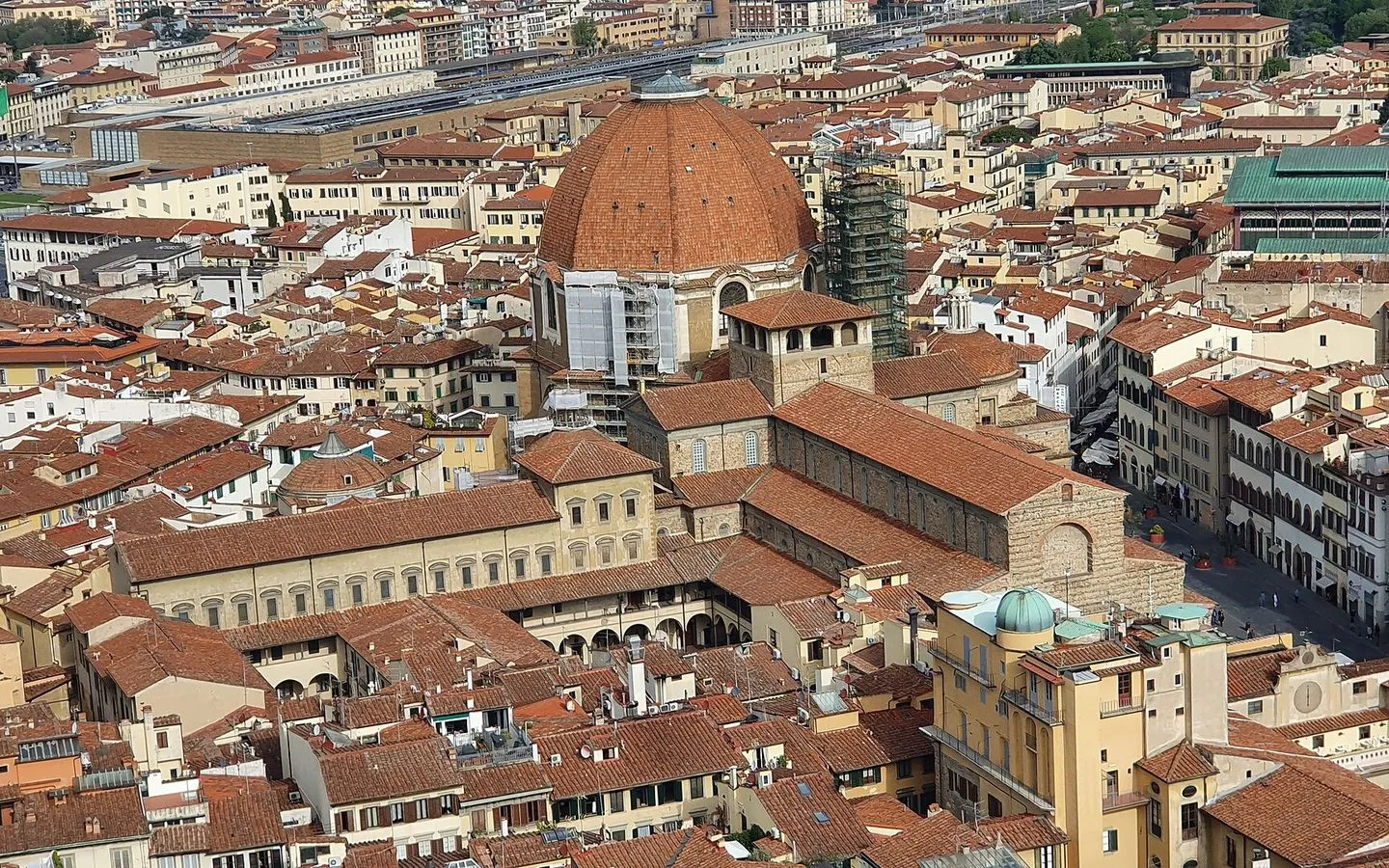
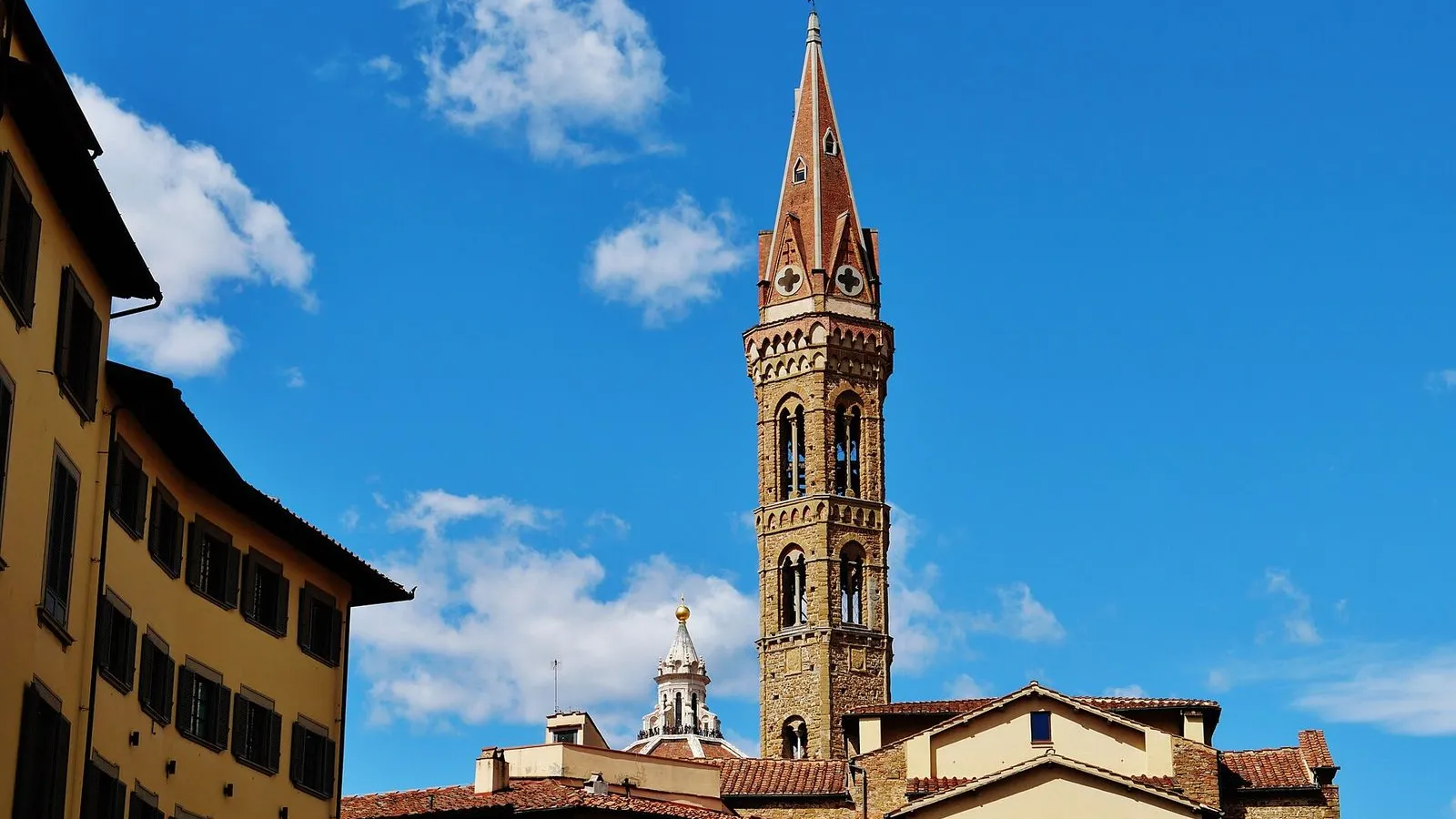
Photo by Zairon on Wikimedia Commons

Badia Fiorentina

0:00

A Benedictine abbey founded in 978 whose bells once set the rhythm of Dante's Florence.

Cross Via del Proconsolo and stand before the Badia Fiorentina, a Benedictine abbey founded in 978 by Willa, Countess of Tuscany. Badia is the Florentine word for abbey, and its official dedication is Santa Maria Assunta. Arnolfo di Cambio rebuilt the church in Gothic form around 1300, and the tall bell tower was finished between 1310 and 1330. For centuries its bells rang out the hours of the working day; Dante remembered them in the Paradiso, the terce and nones still ringing to all the town.

He grew up just across the street, and legend says he first saw Beatrice in this church. In 1373 Boccaccio gave the first public reading of the Divine Comedy in a chapel beside the north door. Inside, look for Filippino Lippi's Apparition of the Madonna to Saint Bernard, and if the cloister is open, the small orange garden around the Chiostro degli Aranci. The abbey still belongs to a living monastic community, so step lightly.

≈8 min walk to the next stop
Basilica di Santa CroceMust see

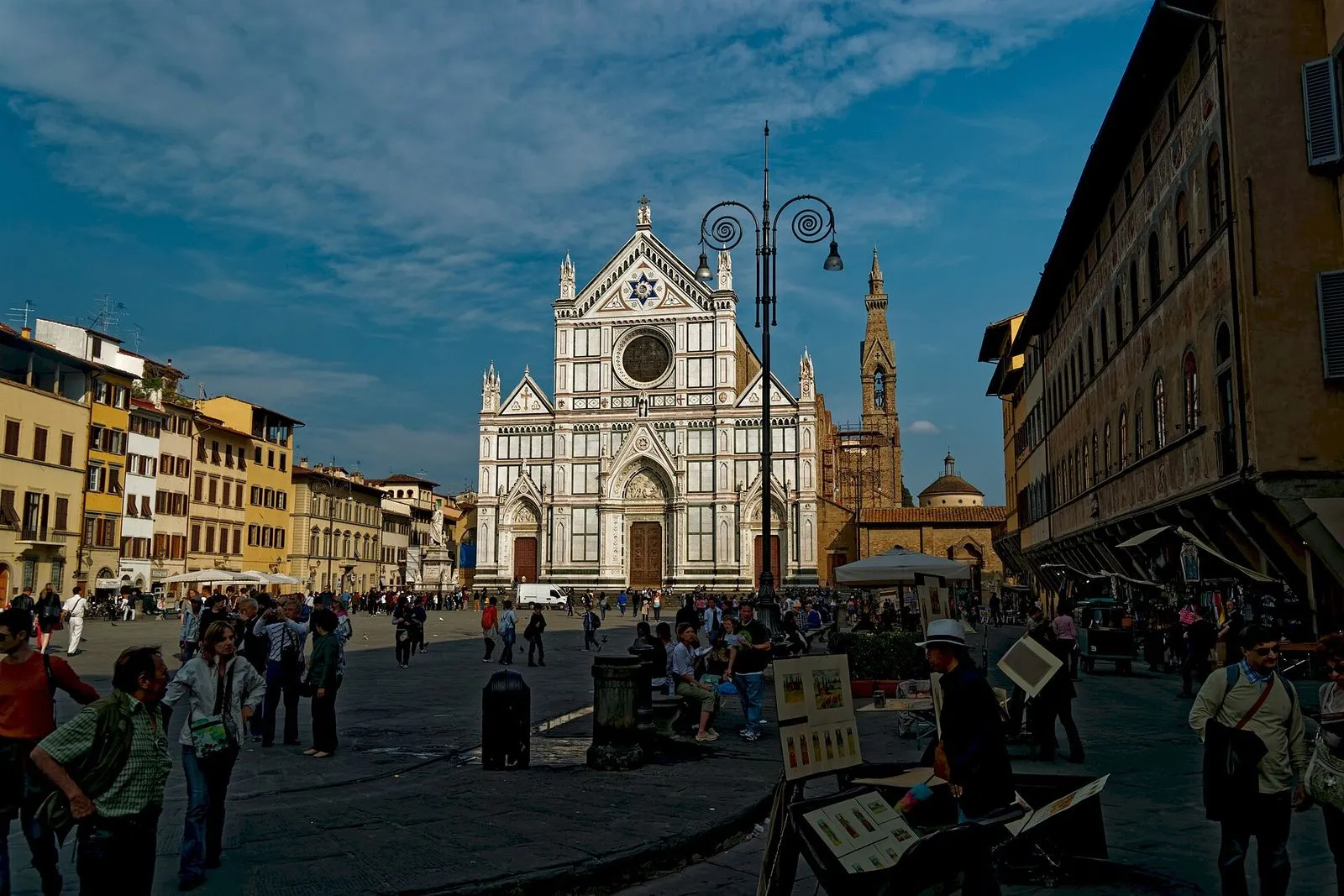
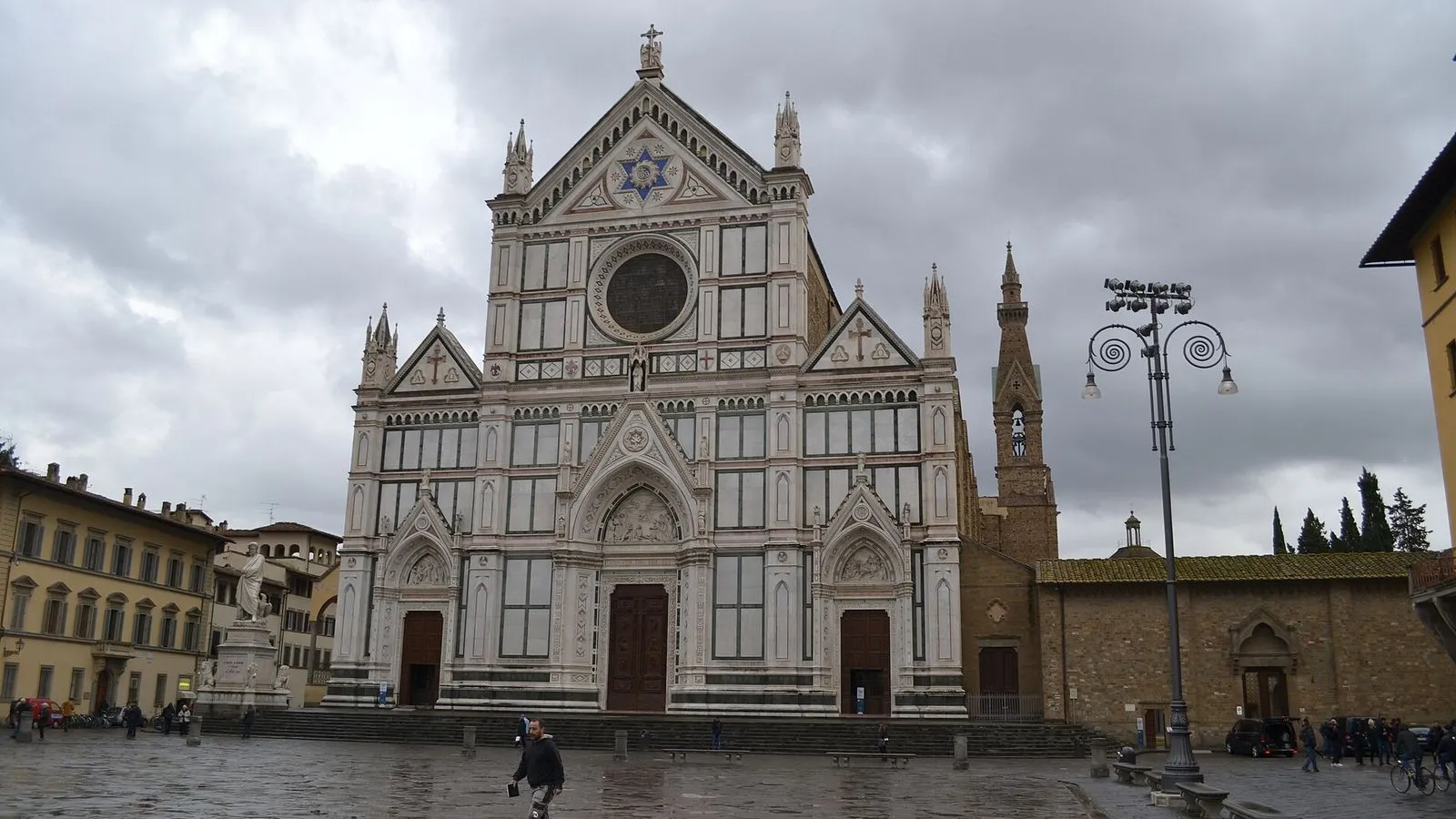
Photo by Larry Koester on Wikimedia Commons

Basilica di Santa Croce

0:00

Florence's pantheon, with the tombs of Michelangelo, Galileo, and Machiavelli under one Franciscan roof.

You're at Santa Croce, the great Franciscan church that Florence treats as its pantheon. Around two hundred and fifty graves still lie under the terracotta floor. The most famous began with Michelangelo, who died in Rome in 1564. His nephew brought the body home hidden in a bale, and the church was so crowded when it arrived that the corpse could hardly be moved to the sacristy.

His tomb, designed by Vasari, stands in the south aisle. Across the nave hangs Galileo's monument, put up only in 1737, nearly a century after he died in 1642, because church authorities resisted honoring a man suspected of heresy. Machiavelli waited even longer; he died in 1527 and got his tomb in 1787. Dante is not here.

His body stayed in Ravenna, and the church gave him an empty cenotaph in 1830. The marble facade was finished only in 1865, timed to the six hundredth anniversary of Dante's birth. In 1966 the Arno flooded the nave, and today you can still see water marks high on the walls.

≈6 min walk to the next stop
Free preview ends here · stops 4 to 5 continue in the app

Piazza dei Ciompi

A small square with Vasari's fish-market loggia, once the home of Florence's flea market.

in app

Sant'Ambrogio market

Florence's oldest food market, a working hall of butchers, cheese counters, and a market-worker lunch counter since 1986.

in app
Good to know

Before you go

When should I go to catch the market?

Sant'Ambrogio is a morning market, so go before midday to see the full counters, and stay for the market workers' lunch counter before the early afternoon close.

Is Santa Croce worth the entry fee?

Yes, if you want the tombs of Michelangelo, Galileo, and Machiavelli in one basilica. Full entry is €10, and it is open Monday to Saturday 9:30 AM to 5:30 PM.

SourceSanta Croce Opera: visit

Provenance · last verified August 20, 2026

Built from the Wayside route itself: the stops, their order, and the walk between them.

Photo by Txllxt TxllxT on Wikimedia Commons · CC BY-SA 4.0

Photo by Txllxt TxllxT on Wikimedia Commons · CC BY-SA 4.0

Photo by Zairon on Wikimedia Commons · CC BY 4.0

Photo by Larry Koester on Wikimedia Commons · CC BY 2.0

Photo by Joseph Quam on Unsplash

Photo by David Jones on Openverse · CC BY 2.0

Photo by Alexandra Smielova on Unsplash

Photo by Greenesol on Wikimedia Commons · CC BY-SA 4.0

Photo by Yair Haklai on Wikimedia Commons · CC BY-SA 4.0

Coming soon

Wayside isn't in the app stores yet, but it's in the works. Check back soon.