 Must see
Photo by Txllxt TxllxT on Wikimedia Commons
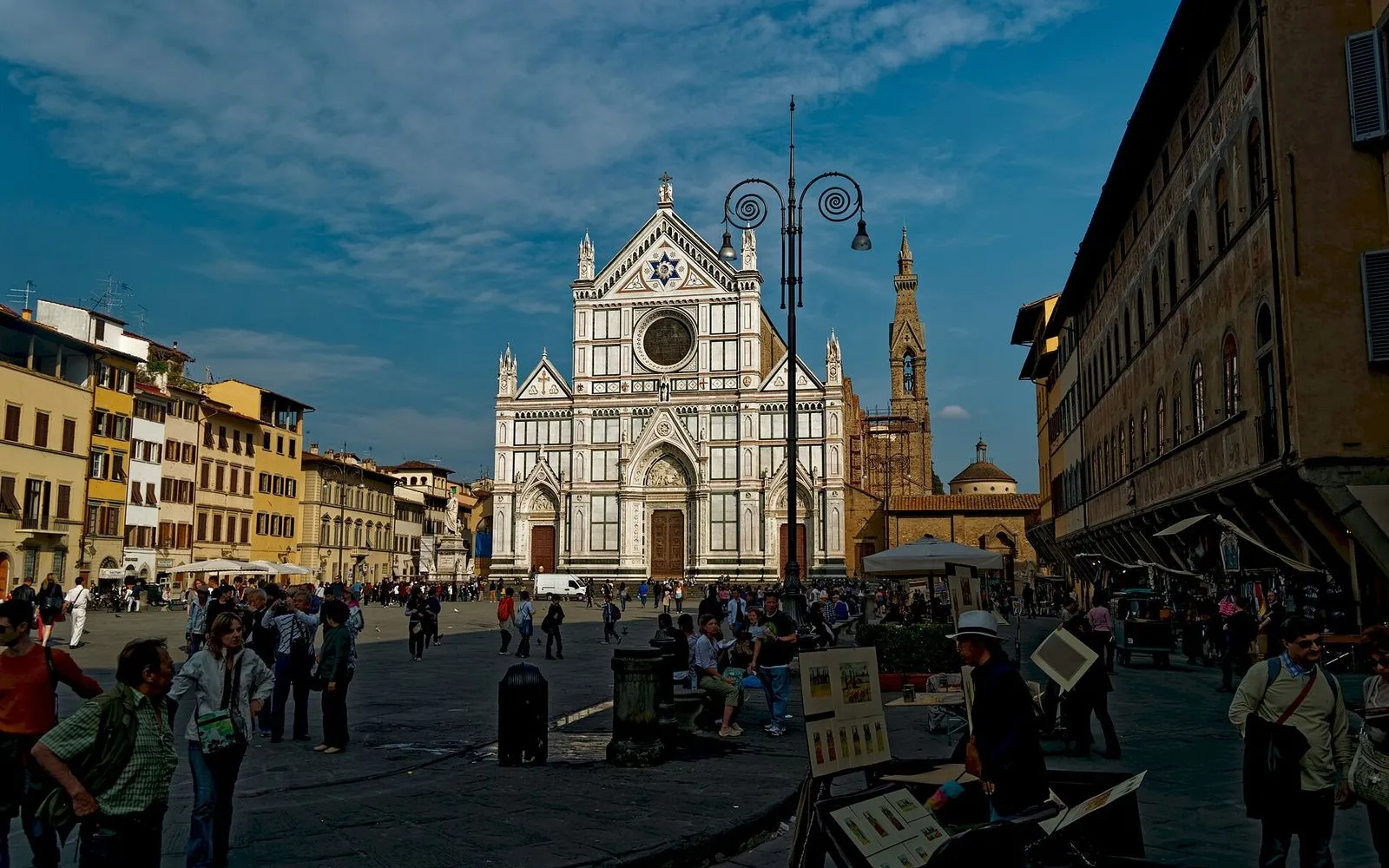
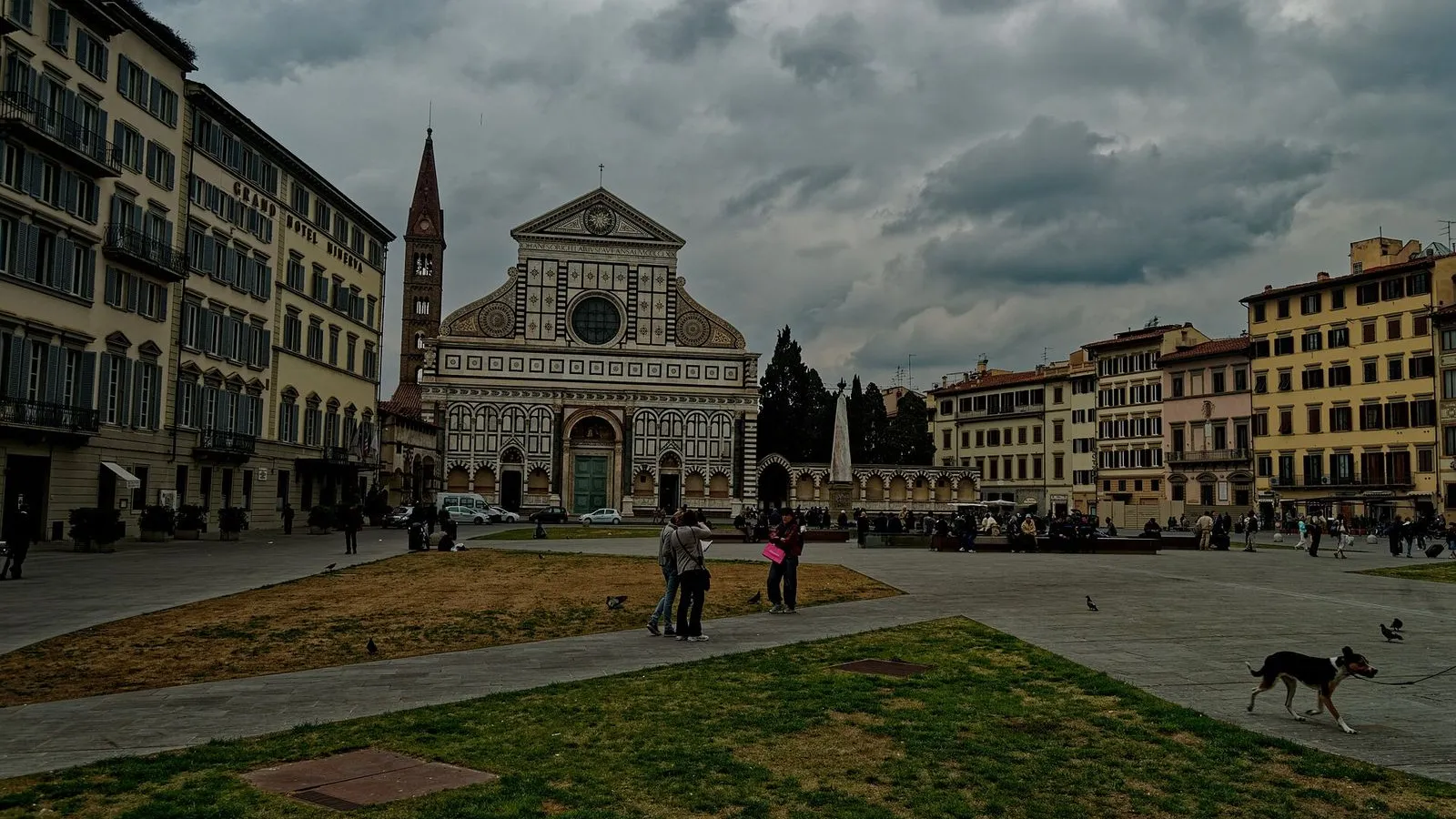
Basilica di Santa Maria Novella
The Dominican church whose frescoes taught Florence to paint depth, from Masaccio's Holy Trinity to Ghirlandaio's Tornabuoni Chapel.
You're standing before the Dominican church of Santa Maria Novella, begun in 1279 and consecrated in 1420. The lower half of the facade is medieval stone; the upper half, with its clean marble geometry, was finished by Leon Battista Alberti around 1470, and it became the pattern for church fronts across the Renaissance. Step inside and walk halfway up the left aisle. There, in the third arcade, hangs Masaccio's Holy Trinity, painted around 1427.
It is often called the first painting to use true linear perspective, and its barrel vault seems to open a real hole in the wall. Beneath the painted Christ sits a skeleton on a stone ledge, with the inscription, I was once what you are, and what I am you will become. Then turn toward the high altar. The Tornabuoni Chapel, the largest in the church, carries Ghirlandaio's frescoes of the lives of the Virgin and John the Baptist, painted from 1485 to 1490.
Look for the crowds of Florentines standing inside the biblical scenes; a young Michelangelo is said to have worked here as an apprentice.