 Must see
Photo by Yair Haklai on Wikimedia Commons
Palazzo Pitti
The colossal rusticated palace begun by banker Luca Pitti in 1458 and turned into the grand ducal seat of the Medici, now five museums in one.
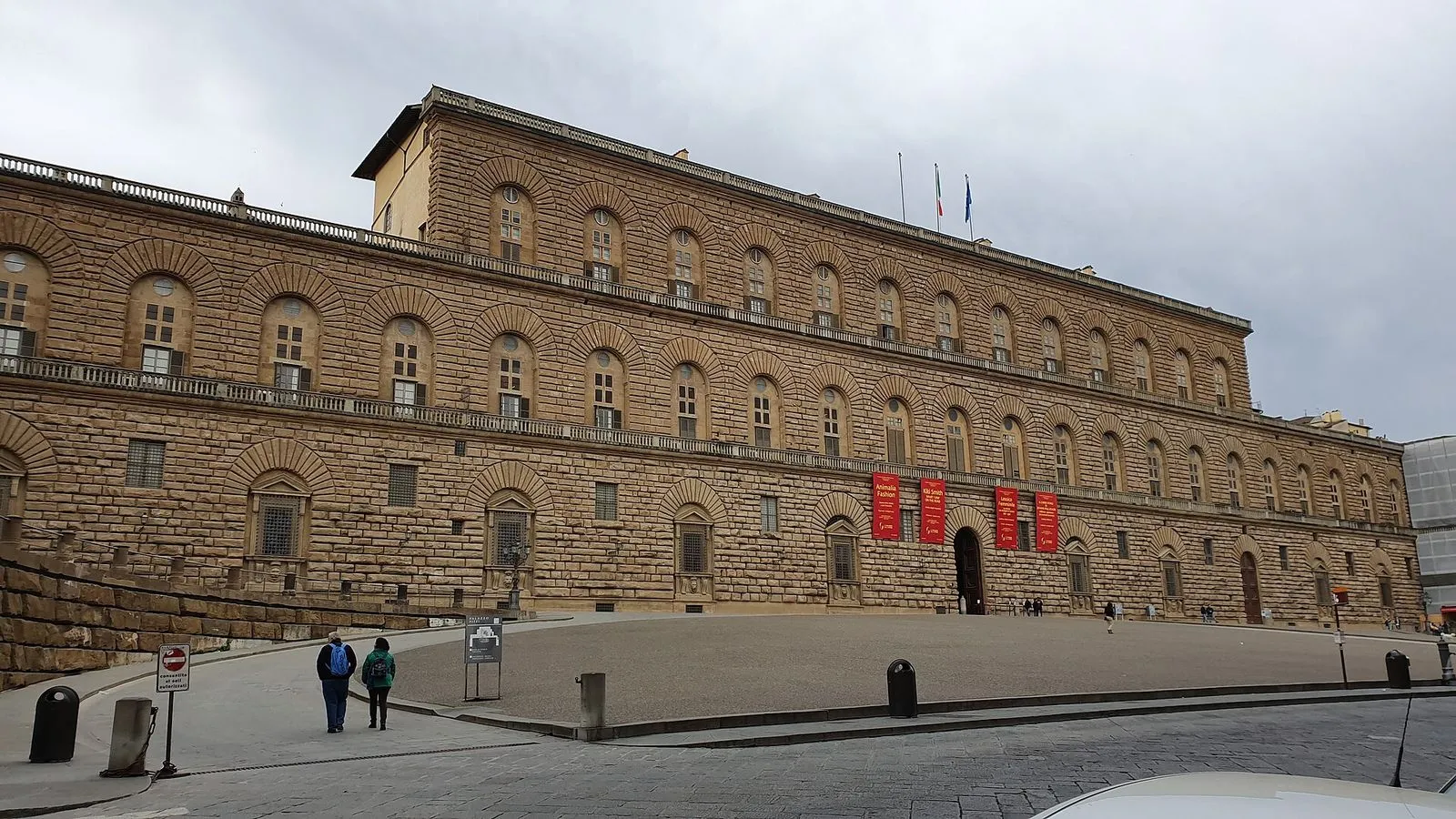
You're standing on the sloping piazza in front of Florence's largest palace. The building began in 1458 as the private home of Luca Pitti, a banker who wanted his windows bigger than the doors of the Medici palace across the river. Those giant rusticated blocks give the facade the look of a fortress, but this was pure domestic ambition. Pitti ran out of money before the roof went on and died in 1472 with the palace unfinished.
In 1549 Eleonora di Toledo, wife of Cosimo I de' Medici, bought the shell for nine thousand florins and turned it into the grand ducal residence. Her architects doubled it, added the courtyard, and laid out the Boboli Gardens behind. Three dynasties lived here: the Medici, the Habsburg-Lorraine, and the Savoy kings, including Victor Emmanuel II when Florence was briefly Italy's capital. Since 1919 it has belonged to the Italian state.
Today it holds five museums, but the facade you're looking at is still Luca Pitti's boast, three rows of seven arched windows repeated across the whole front.