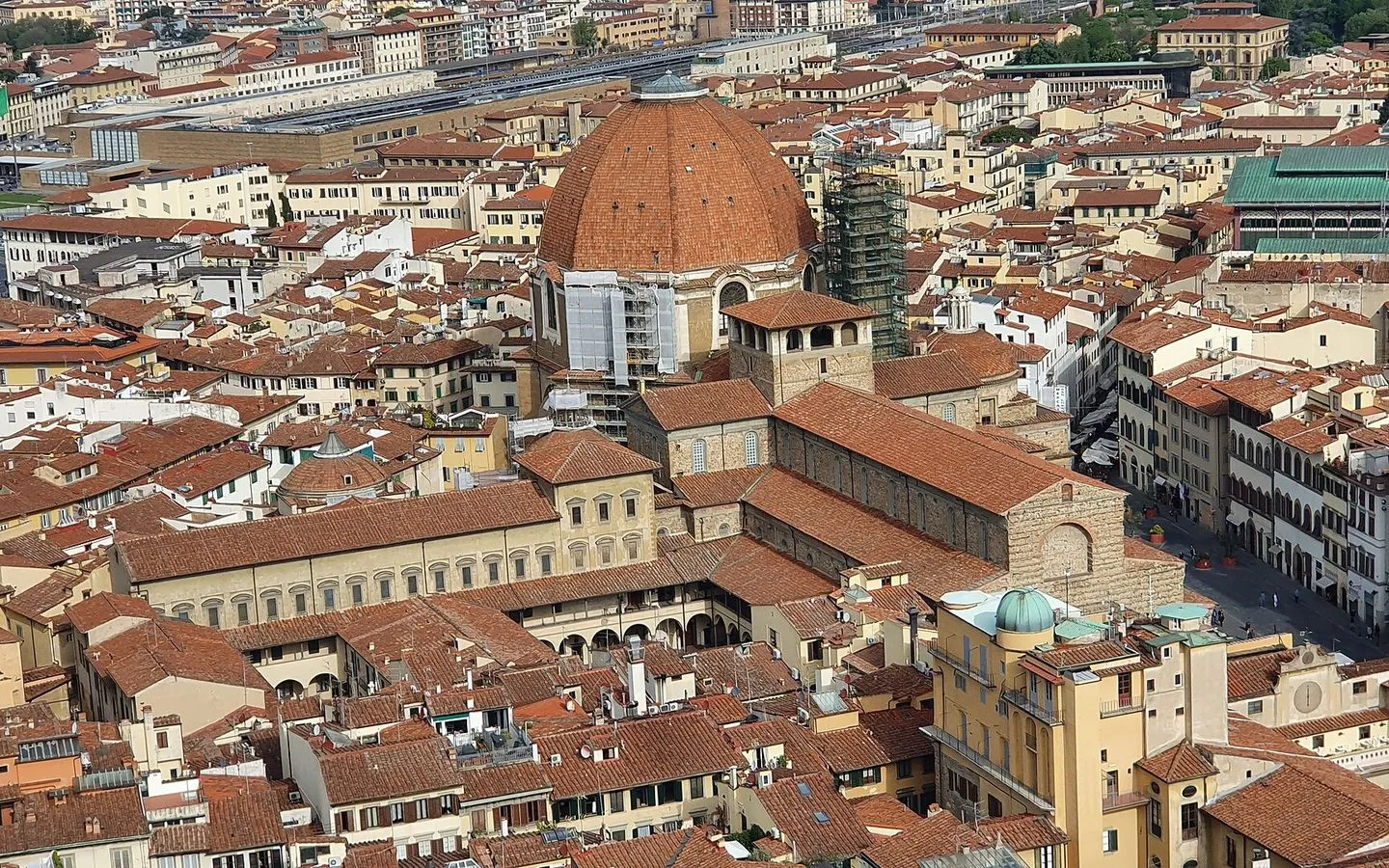
Florence · Self-guided audio walk

San Niccolo to San Miniato

The climb Florentines take for the view, up through a rose garden to a marble basilica.

  • 5Stops
  • 1.4 kmDistance
  • 25+ minTime

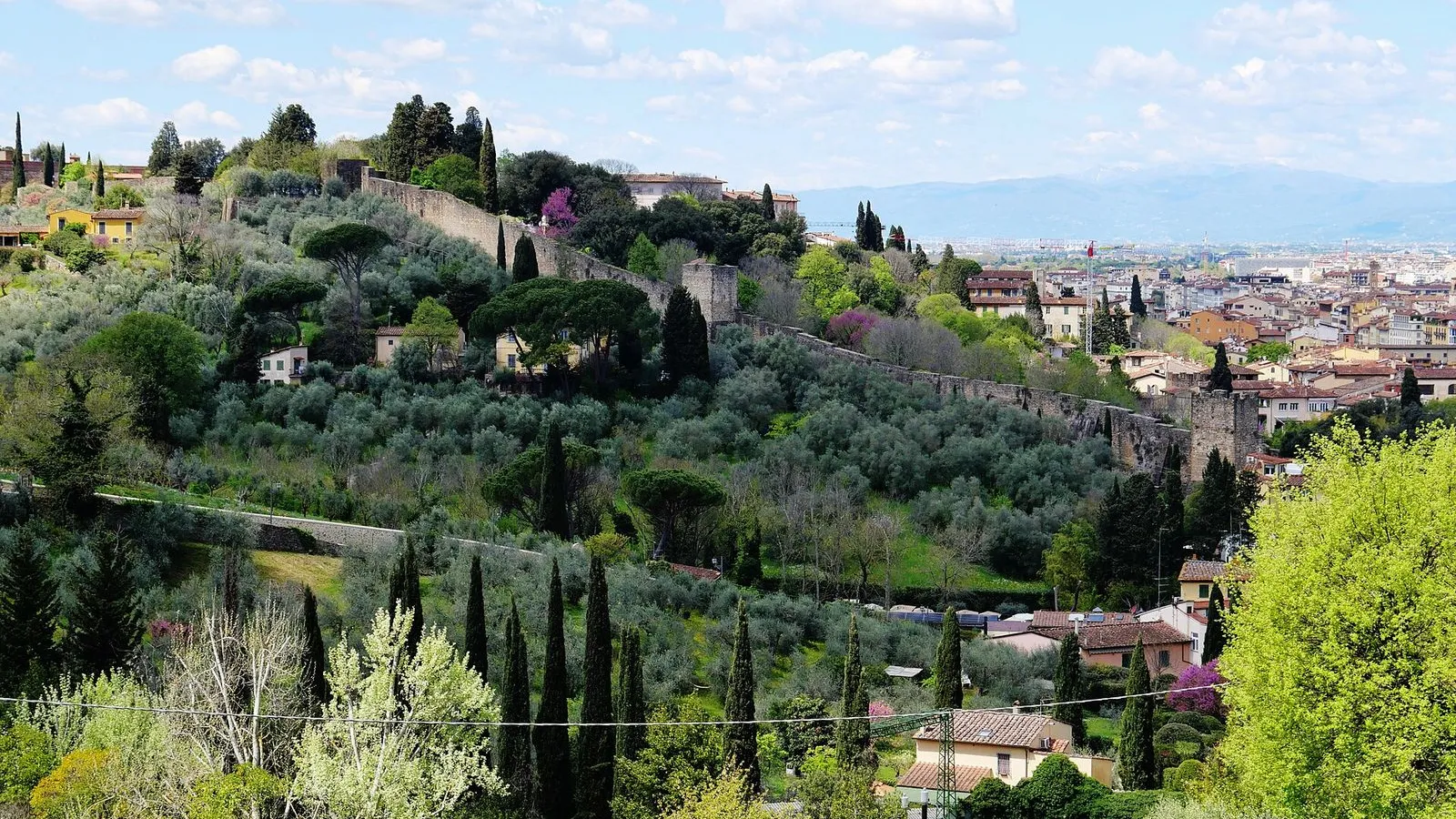
Florence keeps its best view at the top of a hill, and this walk reaches it the way the city does, slowly, through the Oltrarno. Start on Via di San Niccolò among the workshops and small trattorias, then pass under Porta San Niccolò, the one medieval gate that was never cut down to size. The Rampe del Poggi climb past grottos and fountains to the Giardino delle Rose, a terraced rose garden, and then to Piazzale Michelangelo and its bronze David above the red roofs. Keep going to San Miniato al Monte, a Romanesque basilica with a green and white marble facade, a 13th-century mosaic, and a crypt where the Olivetan monks still sing vespers in the late afternoon. Two hours is about right for the climb and the pauses.

Hear it on the street

Get the turn-by-turn audio guide in the app. The narration plays itself as you reach each stop, hands-free and offline.

Stop by stop

The route

Interactive map of the route. The full stop list below works without it.

Via di San NiccolòLocal pick

Photo by Txllxt TxllxT on Wikimedia Commons

Via di San Niccolò

0:00

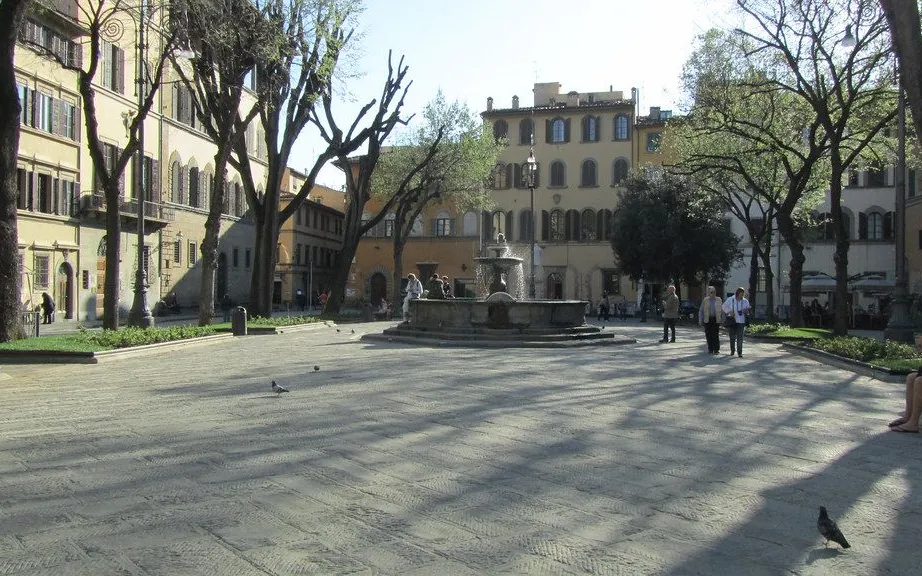
The Oltrarno's most village-like street, lined with workshops, restorers, and small trattorias.

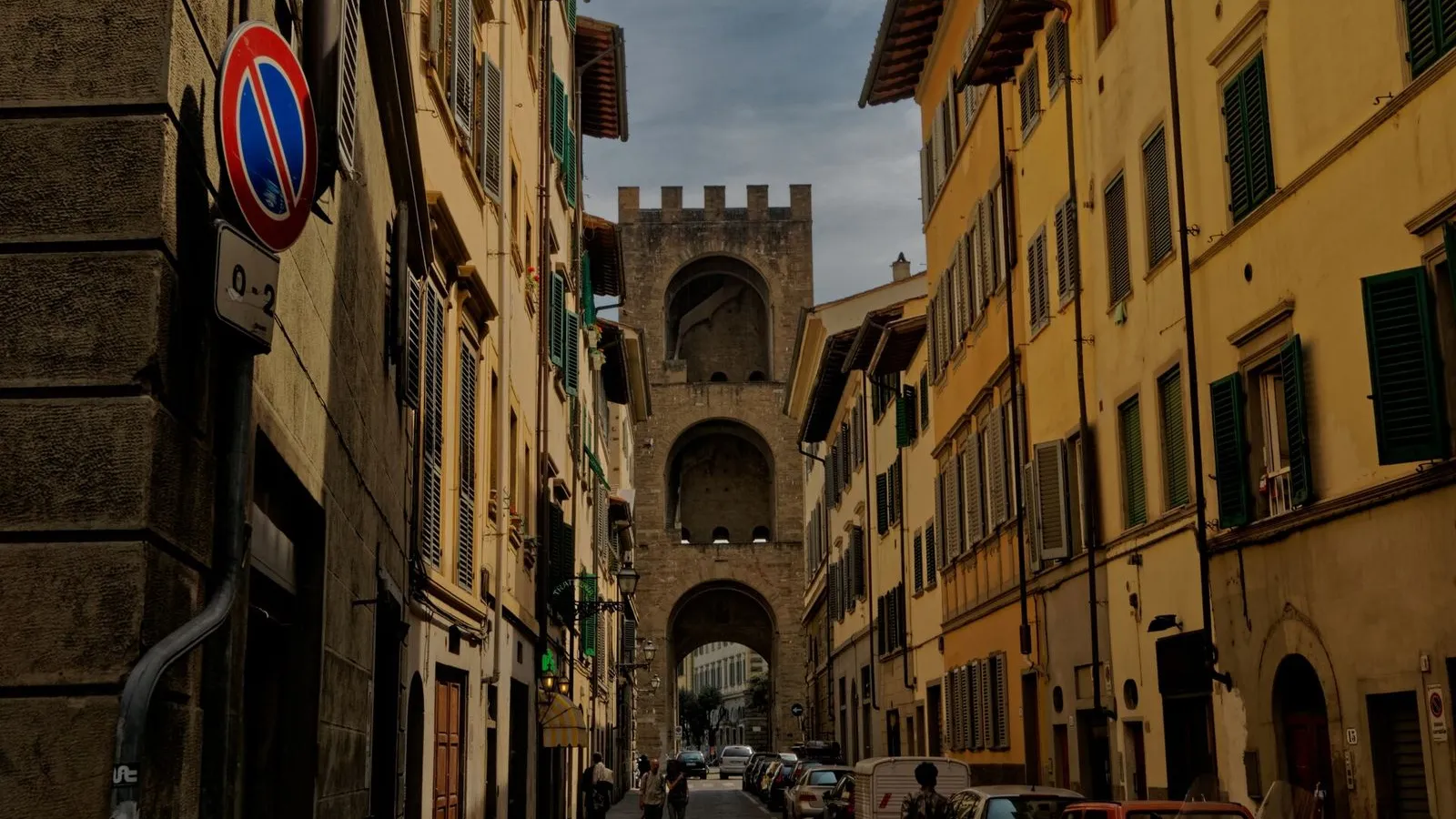
You're standing on Via di San Niccolò, the main street of the Oltrarno's most village-like quarter. It climbs gently from the Arno toward the old city gate, and for centuries it has been a street of workshops rather than palaces. Look at the ground floors as you pass. A frame maker, a restorer of old furniture, a leather worker, a tiny trattoria setting out its tables.

The street takes its name from Saint Nicholas and from the gate that once closed this end of the city every night. Until the 1800s the district sat outside the pull of the grand center, across the river and below the hill, and it kept its own slower rhythm. The river is behind you now, and the hills rise ahead. Follow the cobbles uphill toward the tall stone tower that looks too high for a gate.

That is Porta San Niccolò, your next stop.
≈4 min walk to the next stop
Porta San NiccolòMust see

Photo by PROPOLI87 on Wikimedia Commons

Porta San Niccolò

0:00

The one medieval gate of Florence never cut down to size, still standing at its full height.

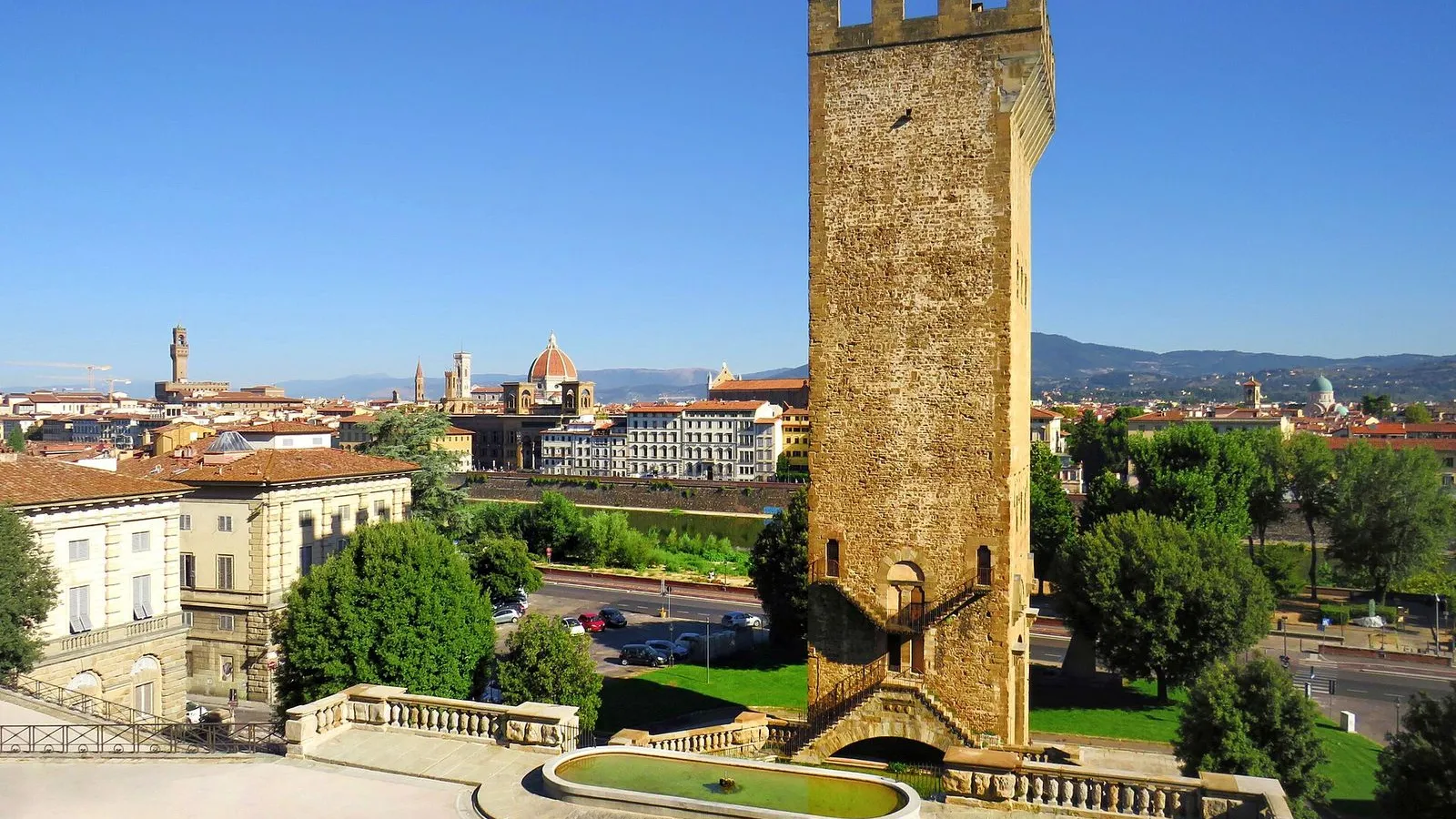
This tower went up in 1324 as part of the last ring of walls that Florence built around itself, a circle designed under Arnolfo di Cambio. It guarded the river and the road south, and it was never shortened. In 1529, before the imperial siege, the city lowered every other gate so an enemy could not use them for cover, but this one kept its height. That is why it looks more like a tower than a door.

You can count 160 steps to the top, and the summit has a 360-degree view, but the real detail is inside the arch. A detached 14th-century fresco shows the Madonna and Child between Saint John the Baptist and Saint Nicholas, the patrons of the city and this district. When Florence became the capital of Italy in the 1860s, the walls came down for the new boulevards, and the gate was left standing alone in Piazza Poggi. Behind it begin the Rampe del Poggi, the green staircases that climb to the view.

≈4 min walk to the next stop
Giardino delle RoseLocal pick

Photo by Zairon on Wikimedia Commons

Giardino delle Rose

0:00

A terraced rose garden below the panorama, planted by Poggi and full of bronze sculptures.

The Giardino delle Rose sits on the slope just below Piazzale Michelangelo, and it was made by the same hand. Giuseppe Poggi laid it out in 1865, the year Florence became the capital of Italy, on land that had belonged to the Oratorian fathers. Attilio Pucci planted the first rose collection, and the garden opened to the public in 1895 during the May Arts and Flowers Festival. It covers about one hectare in terraces, with more than 350 rose varieties, lemon trees, and small pools.

The Belgian artist Jean-Michel Folon left twelve bronze sculptures here, given by his widow, and they are easy to find. Partir is a huge empty frame on one of the terraces, set up so you can look through it at the Duomo. Je me souviens is a bronze man reading on a bench, with room for you to sit beside him. The roses are at their best from April to June, but the view works all year.

≈3 min walk to the next stop
Free preview ends here · stops 4 to 5 continue in the app

Piazzale Michelangelo

Florence's postcard terrace, with a bronze David and the whole city spread out below.

in app

San Miniato al Monte

A Romanesque basilica with a green and white marble facade, a crypt, and monks who sing vespers.

in app
Good to know

Before you go

Is the climb difficult?

It is a real climb, with ramps and steps up to Piazzale Michelangelo and more steps to San Miniato. Wear solid shoes and carry water in summer.

When should I go?

Go in the late afternoon so the sun hits the basilica's marble facade, and time your visit for vespers if you can. The basilica is free to enter.

SourceFlorence Awaits: San Miniato al Monte guide

Provenance · last verified August 20, 2026

Built from the Wayside route itself: the stops, their order, and the walk between them.

Photo by Alexandra Smielova on Unsplash

Photo by Txllxt TxllxT on Wikimedia Commons · CC BY-SA 4.0

Photo by PROPOLI87 on Wikimedia Commons · CC BY-SA 4.0

Photo by Zairon on Wikimedia Commons · CC BY 4.0

Photo by Joseph Quam on Unsplash

Photo by David Jones on Openverse · CC BY 2.0

Photo by Greenesol on Wikimedia Commons · CC BY-SA 4.0

Photo by Txllxt TxllxT on Wikimedia Commons · CC BY-SA 4.0

Photo by Yair Haklai on Wikimedia Commons · CC BY-SA 4.0

Coming soon

Wayside isn't in the app stores yet, but it's in the works. Check back soon.