San Francisco · Self-guided audio walk

The Mayor of Castro Street

Walk the blocks where Harvey Milk turned a camera shop into a movement and the Castro became the heart of gay San Francisco.

  • 6Stops
  • 1.3 kmDistance
  • 25+ minTime
The Mayor of Castro Street

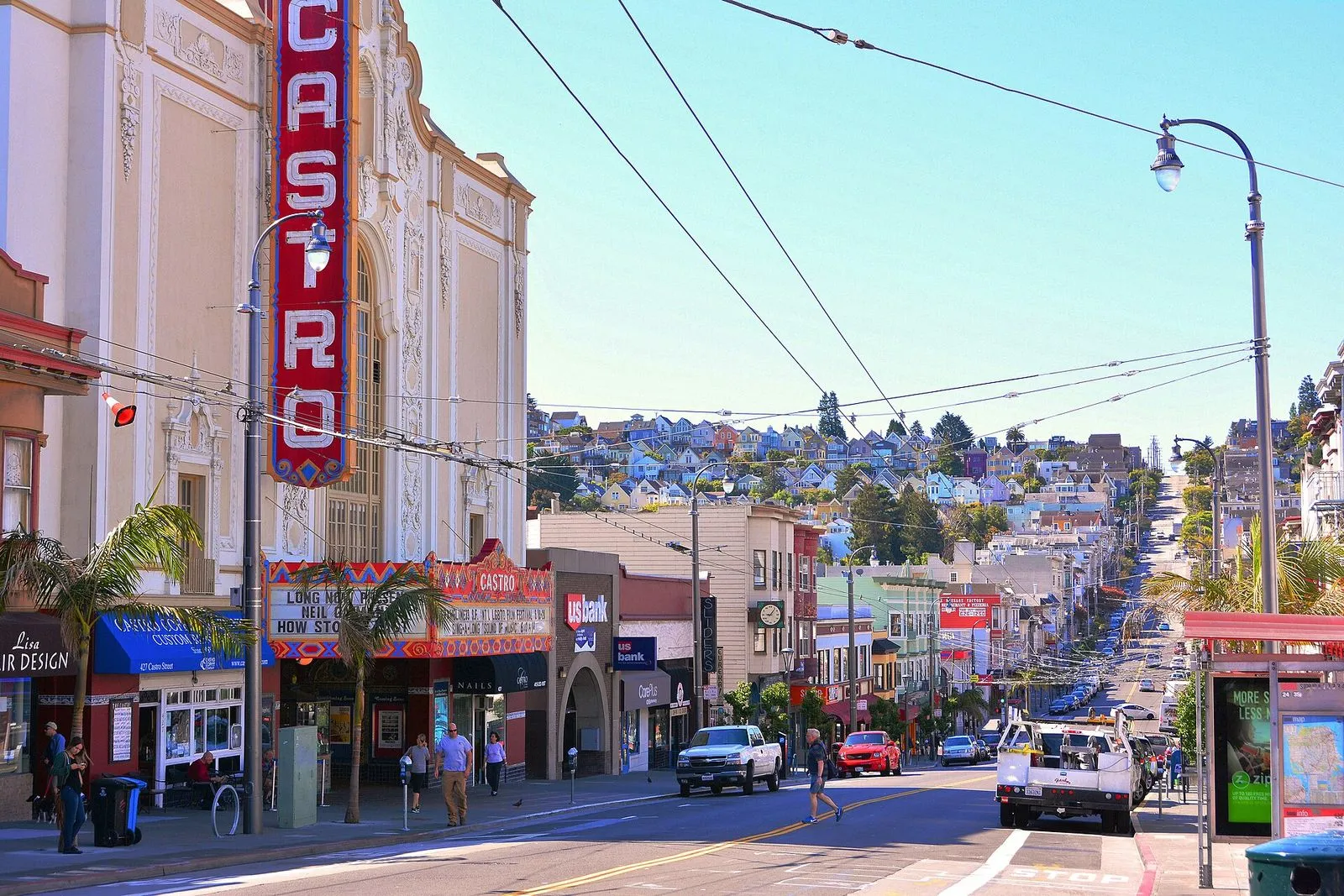
Photo by Mike McBey on Wikimedia Commons

Harvey Milk opened a camera shop at 575 Castro Street in 1972. From that storefront, he ran for office four times, built a political movement, and became the first openly gay man elected to major public office in the United States.

This walk traces his steps through the Castro: the plaza that bears his name, the shop where it all started, the theater that has anchored the street for over a century, the sidewalk plaques honoring LGBTQ pioneers, a Holocaust memorial, and the museum that preserves it all. Under a mile, mostly flat, about ninety minutes.

Hear it on the street

Get the turn-by-turn audio guide in the app. The narration plays itself as you reach each stop, hands-free and offline.

Stop by stop

The route

Interactive map of the route. The full stop list below works without it.

Harvey Milk PlazaLocal pick

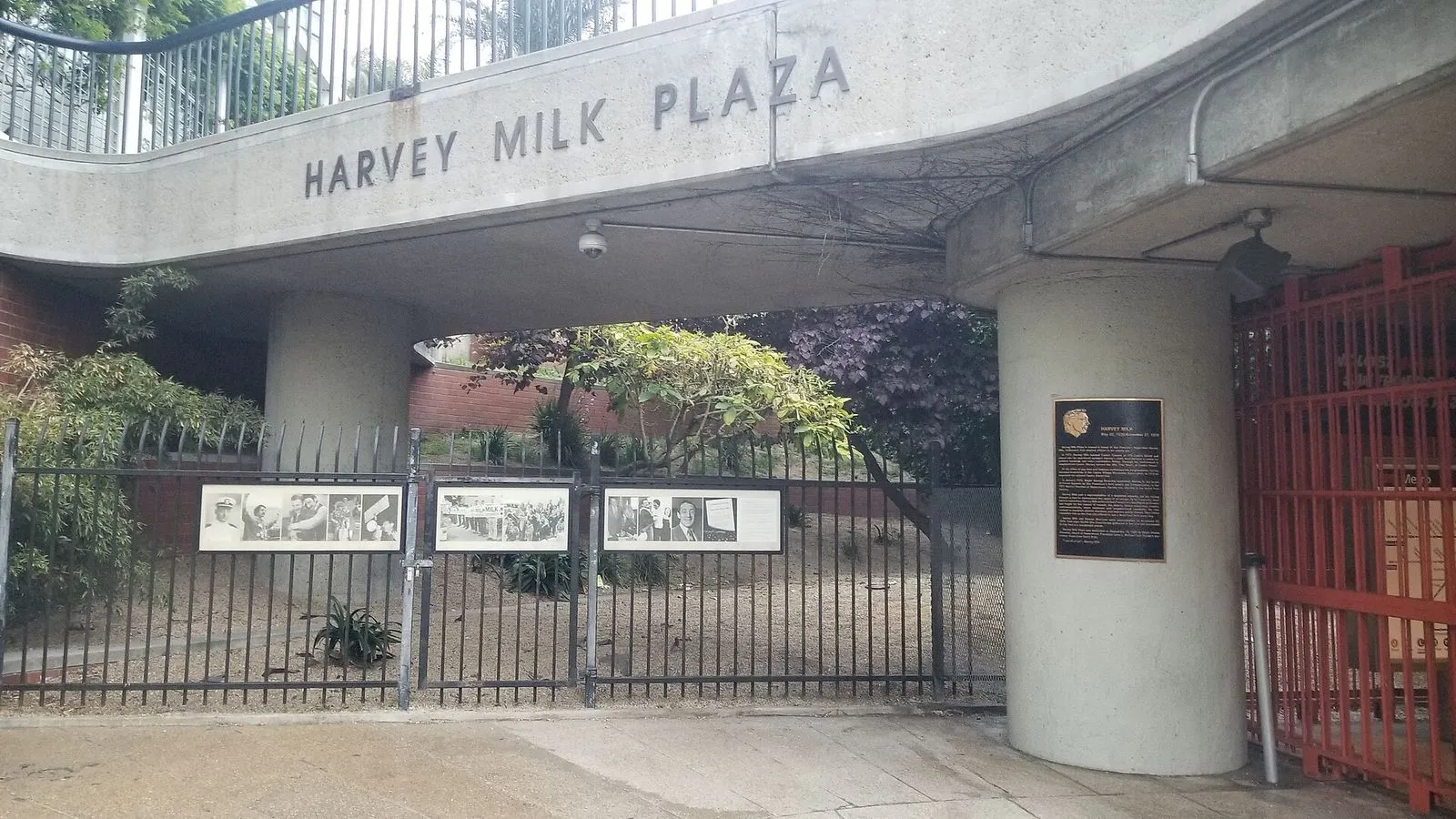
Photo by Gotrees4 on Wikimedia Commons

Harvey Milk Plaza

0:00

The gateway to the Castro, marked by Gilbert Baker's permanent rainbow flag installation, flying since 1997.

You're standing at the crossroads of Market and Castro, under the giant rainbow flag that has flown here since 1997. The flag is 20 feet tall and 30 feet wide, mounted on a 100-foot pole. Gilbert Baker designed the original rainbow flag in 1978 for San Francisco's Gay Freedom Day Parade. He simplified it from eight stripes to six so it could be reproduced more easily.

Baker never trademarked the flag. He wanted it to spread freely, and it did. This installation at Harvey Milk Plaza is the only permanent rainbow flag he ever created. The plaza itself was dedicated to Milk in 1985, five years after the Castro Muni station opened beneath it.

On the night of November 27, 1978, after Milk and Mayor George Moscone were shot at City Hall, a crowd gathered right here, then marched down Market Street in silence. Six months later, after Dan White was convicted of voluntary manslaughter instead of murder, thousands returned and the White Night Riot began at this intersection. Look at the bronze plaque at the base of the flagpole. It lists the openly LGBTQ elected officials who followed Milk, a reminder that the door he pushed open stayed open.
≈5 min walk to the next stop
Castro CameraLocal pick

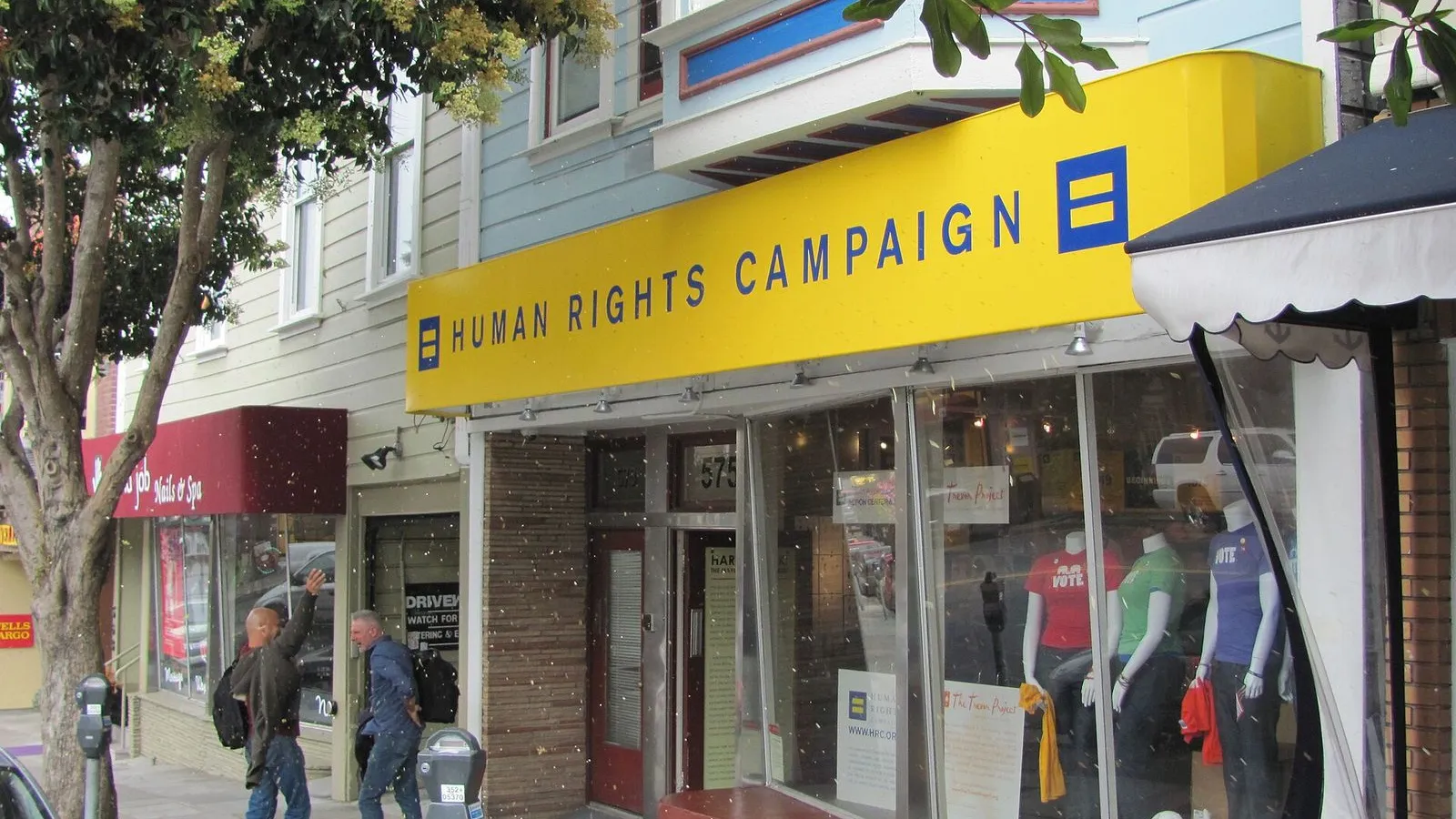
Photo by Reinhard Dietrich on Wikimedia Commons

Castro Camera

0:00

The storefront where Harvey Milk ran a camera shop and launched four political campaigns from 1972 to 1978.

You're looking at 575 Castro Street, the storefront that was Castro Camera. Milk and Scott Smith opened it in 1972, using the last thousand dollars of their savings. Milk was an amateur photographer who had been a Wall Street investment banker and a theater production assistant in New York before arriving in San Francisco at age 42. The shop wasn't just a business.

It became the neighborhood's informal city hall. New arrivals stopped here for advice. The front windows were a community bulletin board plastered with flyers for protests, meetings, and events. Milk ran all four of his campaigns from this room: for supervisor in 1973 and 1975, for state assembly in 1976, and finally the supervisor race he won in 1977.

He lived in the apartment upstairs. Daniel Nicoletta, the photographer who documented Milk's life, first met him as a customer here and later worked behind the counter. Cleve Jones and speechwriter Frank Robinson also passed through this door. The mural above the storefront shows Milk leaning out a window, smiling, wearing a T-shirt that reads 'You gotta give 'em hope.' It was dedicated in 1998, twenty years after his death.

The bronze plaque in the sidewalk tells the story. The storefront is now a Human Rights Campaign shop.

≈4 min walk to the next stop
Castro TheatreMust see

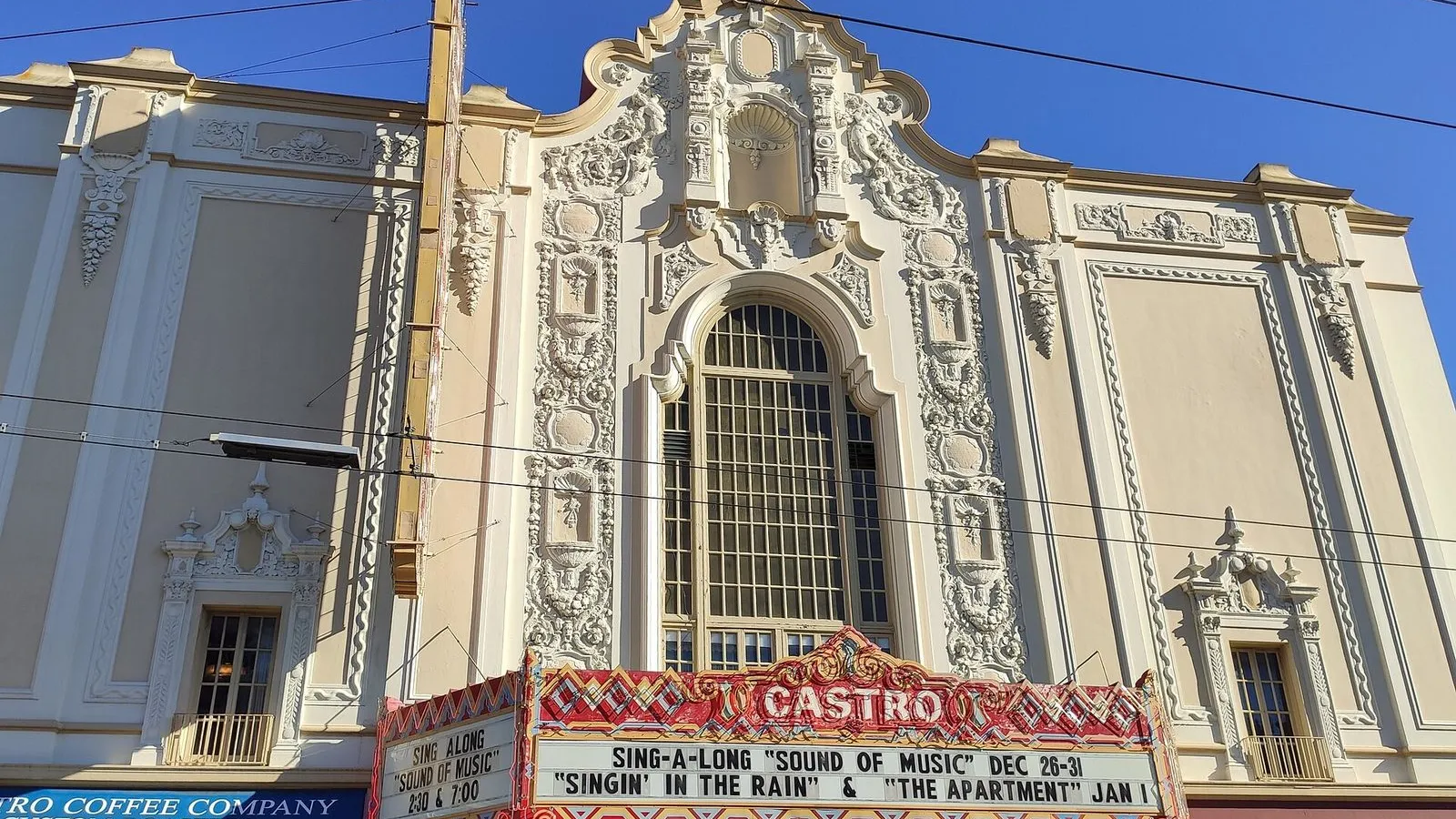
Photo by Américo Toledano on Wikimedia Commons

Castro Theatre

0:00

A 1922 movie palace with a landmark Art Deco marquee, the cultural anchor of Castro Street for over a century.

The Castro Theatre opened on June 22, 1922. The architect was Timothy Pflueger, who later designed the Paramount Theatre in Oakland. The building is a mix of Beaux-Arts and Spanish Baroque, but the feature everyone recognizes is the Art Deco marquee, added in 1937. It seats about 1,400 people.

The theater became a San Francisco historic landmark in 1977, the same year Harvey Milk won his supervisor seat. For decades it has been a cultural anchor of the neighborhood, hosting film festivals, sing-alongs, and the Frameline LGBTQ film festival. The Castro organist playing the Mighty Wurlitzer before screenings is a tradition that goes back decades. The Nasser family has owned the building since it opened.

Look up at the neon. The marquee has announced everything from silent films to the premiere of the movie 'Milk' in 2008, when Sean Penn and the cast walked this same sidewalk.

≈2 min walk to the next stop
Free preview ends here · stops 4 to 6 continue in the app

Rainbow Honor Walk

Forty-four bronze sidewalk plaques honoring LGBTQ pioneers who made significant contributions in their fields.

in app

Pink Triangle Park

The first permanent memorial in the United States dedicated to homosexual victims of the Nazi regime, dedicated in 2001.

in app

GLBT Historical Society Museum

One of the first standalone LGBTQ history museums in the world, housing Harvey Milk's personal effects and a fragment of the original 1978 rainbow flag.

in app
Good to know

Before you go

What is the best time of day to visit the Castro?

The Castro is lively from late morning through late evening. The GLBT Historical Society Museum is open Tuesday through Sunday, 11:00 a.m. to 5:00 p.m. (closed 1:00 p.m. to 1:30 p.m.). The Castro Theatre marquee is lit at night and the bars and restaurants along Castro and 18th Streets fill after 17:00. A weekday morning is quietest for the sidewalk plaques and the memorials.

SourceGLBT Historical Society Museum
Where can I learn more about Harvey Milk?

The GLBT Historical Society Museum on 18th Street houses Harvey Milk's personal effects, including the suit he was wearing when he was assassinated, and a fragment of the original 1978 rainbow flag. The museum is small and takes about an hour. Castro Camera at 575 Castro Street is now a retail space, but the sidewalk plaque outside marks where Milk ran his campaigns.

Provenance · last verified August 18, 2026

Built from the Wayside route itself: the stops, their order, and the walk between them.

Photo by Mike McBey on Wikimedia Commons · CC BY 2.0

Photo by Gotrees4 on Wikimedia Commons · CC BY-SA 4.0

Photo by Reinhard Dietrich on Wikimedia Commons · CC0

Photo by Américo Toledano on Wikimedia Commons · CC BY-SA 4.0

Photo by Leo_Visions on Unsplash

Photo by Adam Dillon on Unsplash

Photo by Dietmar Rabich on Wikimedia Commons · CC BY-SA 4.0

Photo by Cedric Letsch on Unsplash

Photo by Ligocsicnarf89 on Wikimedia Commons · CC BY 4.0

Photo by Steven Lek on Wikimedia Commons · CC BY-SA 4.0

Photo by Ken Lund from Reno, Nevada, USA on Wikimedia Commons · CC BY-SA 2.0

Coming soon

Wayside isn't in the app stores yet, but it's in the works. Check back soon.