Berlin · Self-guided audio walk

Bernauer Strasse: The Wall Through an Ordinary Street

Walk 1.4 kilometres along the Berlin Wall's most notorious stretch, from sealed windows and a blown-up church to the Sunday flea market where the death strip once was.

  • 6Stops
  • 3 kmDistance
  • 45+ minTime
Bernauer Strasse: The Wall Through an Ordinary Street

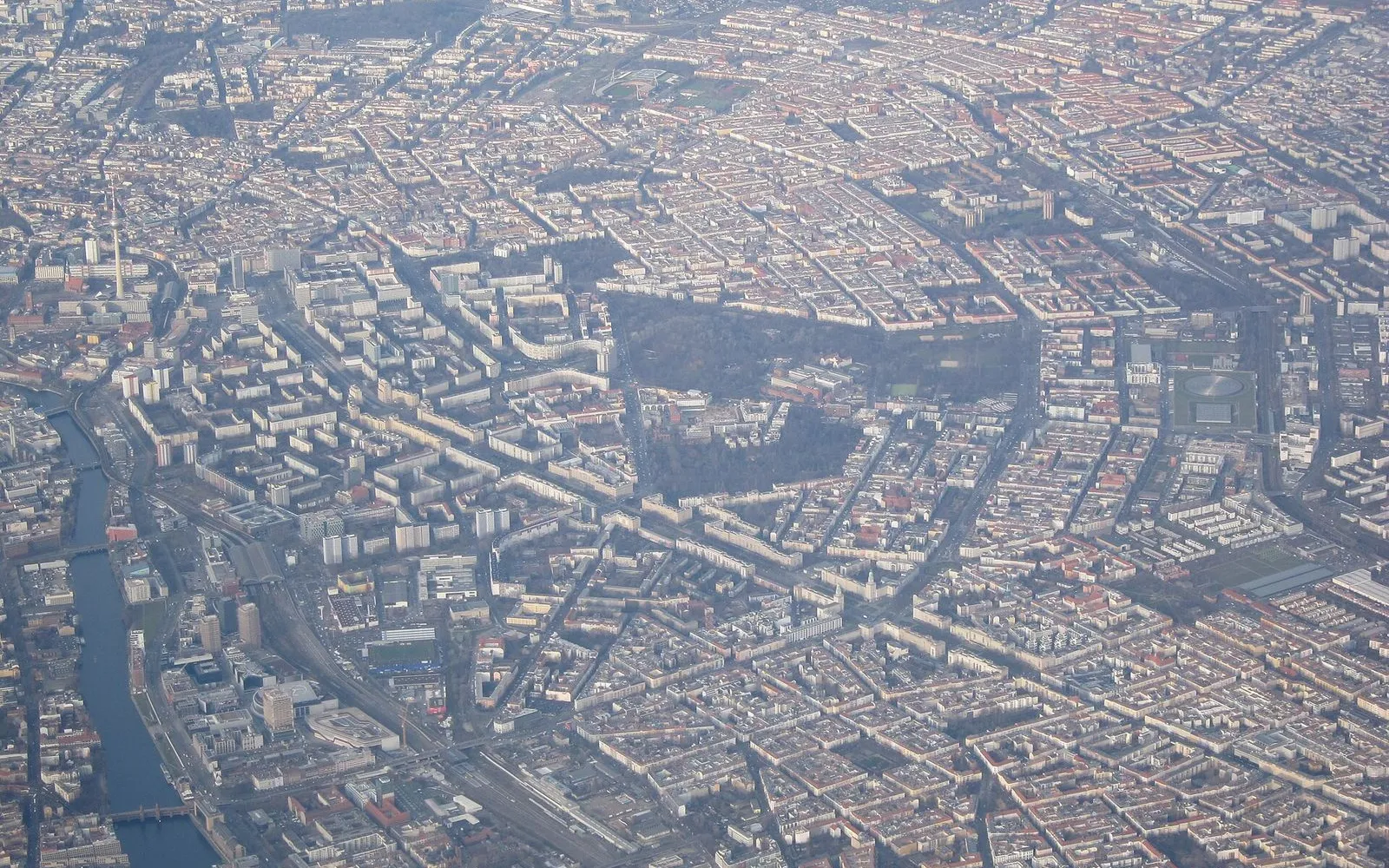
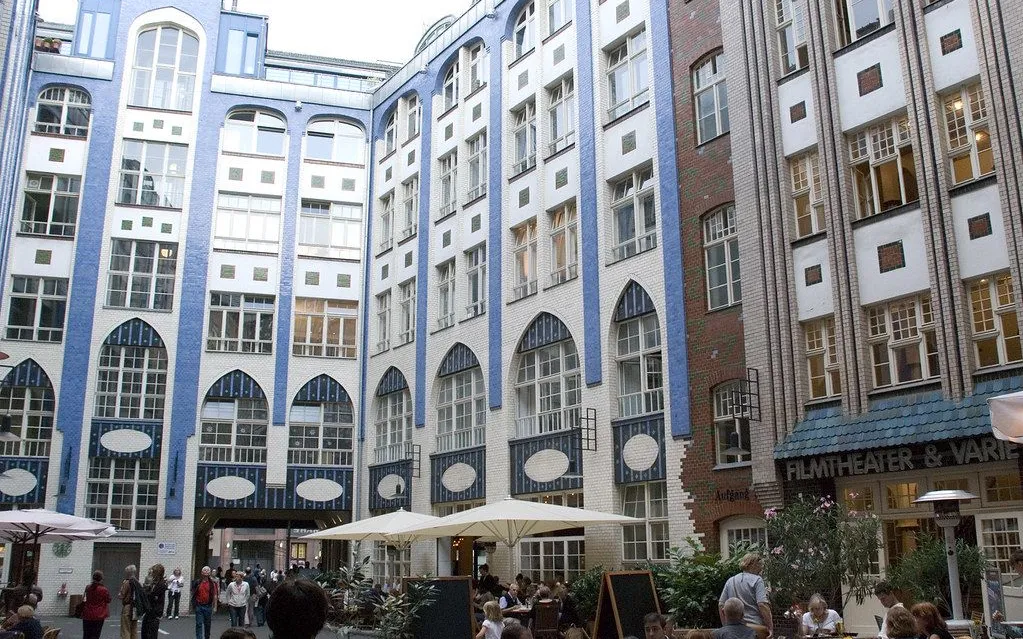
Photo by Ad Meskens on Wikimedia Commons

This self-guided walk follows the Berlin Wall Memorial along Bernauer Strasse, the only place where the full border strip survives: inner wall, death strip, watchtower, outer wall. In August 1961, people jumped from upper-floor windows into West Berlin fire nets as border guards bricked up the doors below. You walk past the Chapel of Reconciliation, built on the rubble of a church dynamited in 1985, the Window of Remembrance for the 140 who died at the Wall, the ghost-station exhibition at Nordbahnhof, and finish at Mauerpark, where the death strip is now a Sunday flea market and karaoke pit.

Hear it on the street

Get the turn-by-turn audio guide in the app. The narration plays itself as you reach each stop, hands-free and offline.

Stop by stop

The route

Interactive map of the route. The full stop list below works without it.

Gedenkstätte Berliner MauerMust see

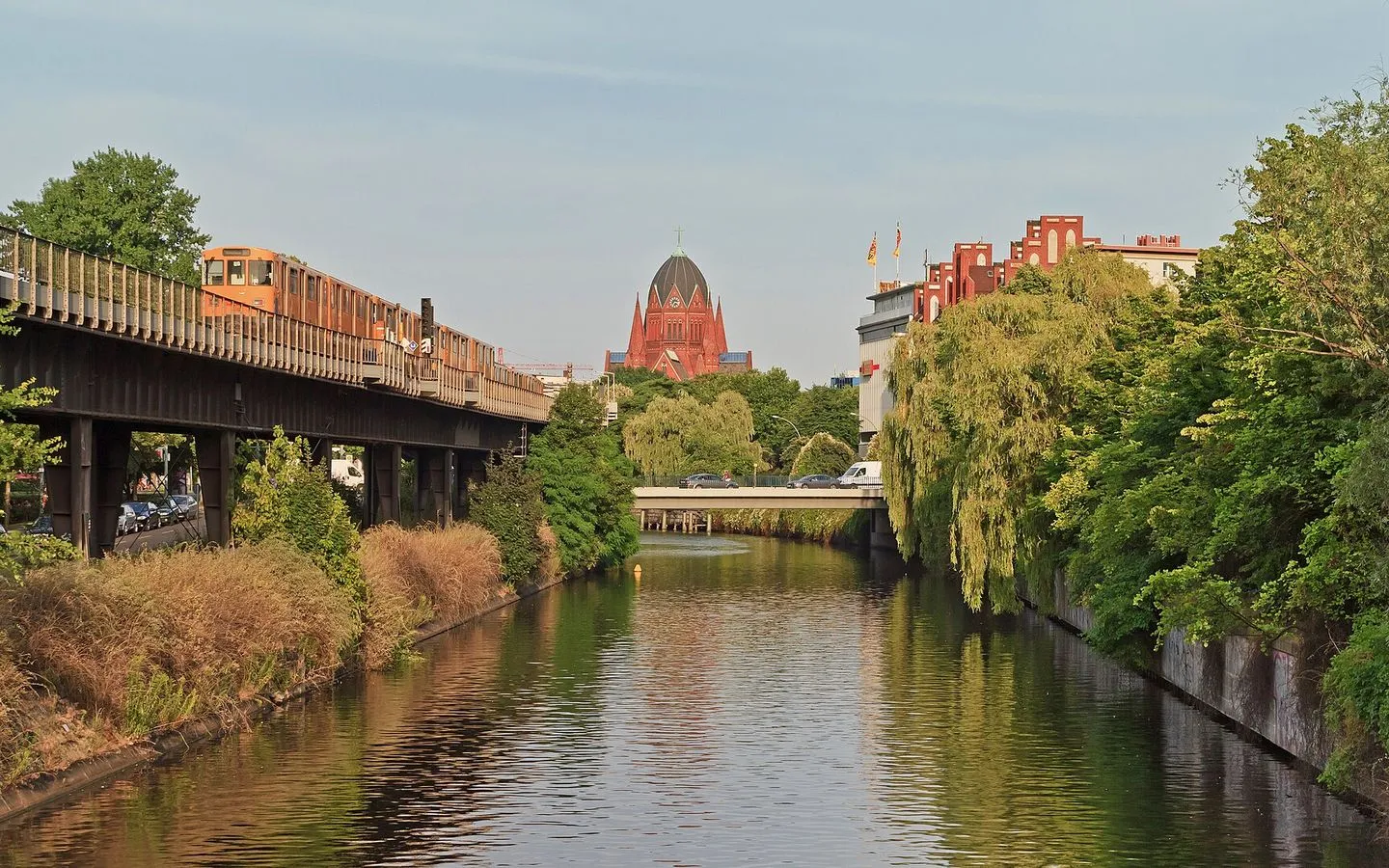
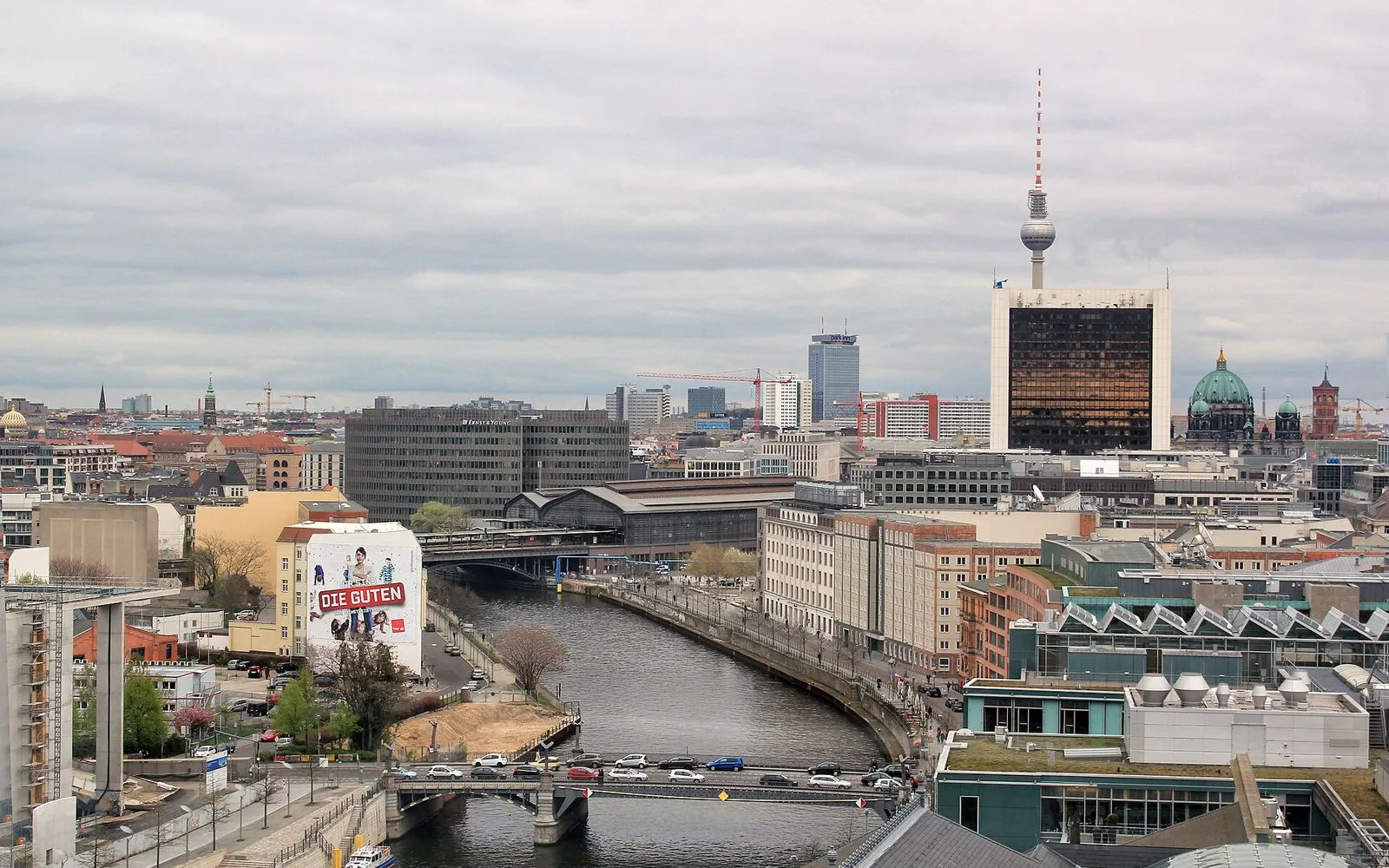
Photo by Ansgar Koreng on Wikimedia Commons

Gedenkstätte Berliner Mauer

0:00

Begin at the Visitor Centre for the introductory film and an overview of the 1.4-kilometre memorial, Berlin's central site of remembrance for the division.

You are at the Visitor Centre of the Berlin Wall Memorial, opened in December 2009. Head upstairs for the twelve-minute introductory film. It lays out how a city split in two overnight on 13 August 1961 and stayed that way for twenty-eight years. The computer animation 'Walled In' shows the border fortifications as they ran through this street: inner wall, patrol corridor, dog run, signal fence, outer wall.

The memorial stretches 1.4 kilometres along Bernauer Strasse. Of the roughly 155 kilometres of Wall that once circled West Berlin, this is the longest surviving section with all the elements still in place. Bernauer Strasse became the international face of the Wall because here the border did not cut through fields or industry. It ran through a street of apartment buildings. The south-side houses stood in East Berlin; the sidewalk below them was West Berlin. When the border was sealed, those upper windows became escape hatches. People jumped, used knotted bedsheets, were caught in rescue nets by West Berlin firemen.

Grab a map at the desk. The outdoor exhibition begins directly across the street. Cross Bernauer Strasse and enter the former death strip.
≈1 min walk to the next stop
Preserved Border StripMust see

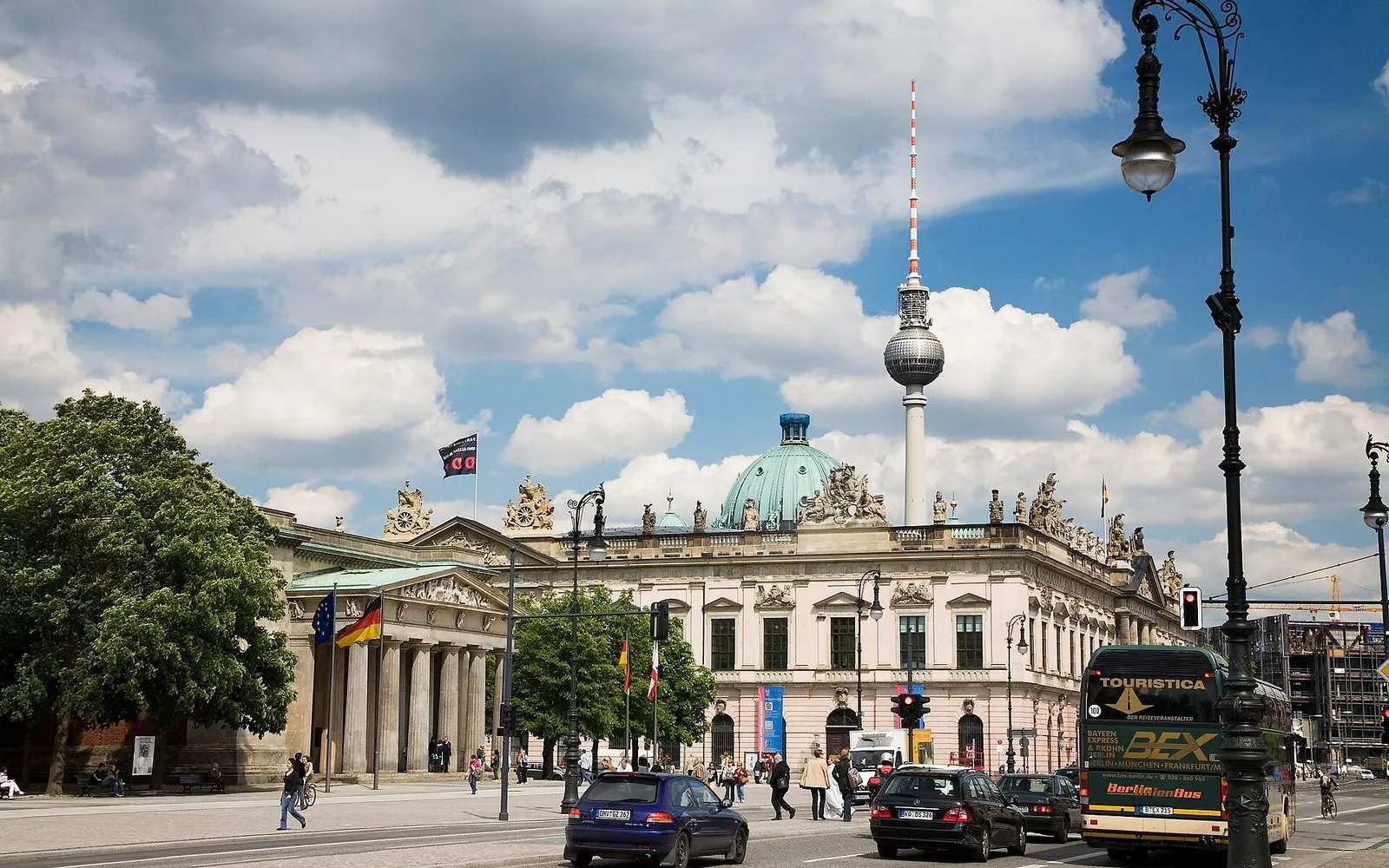
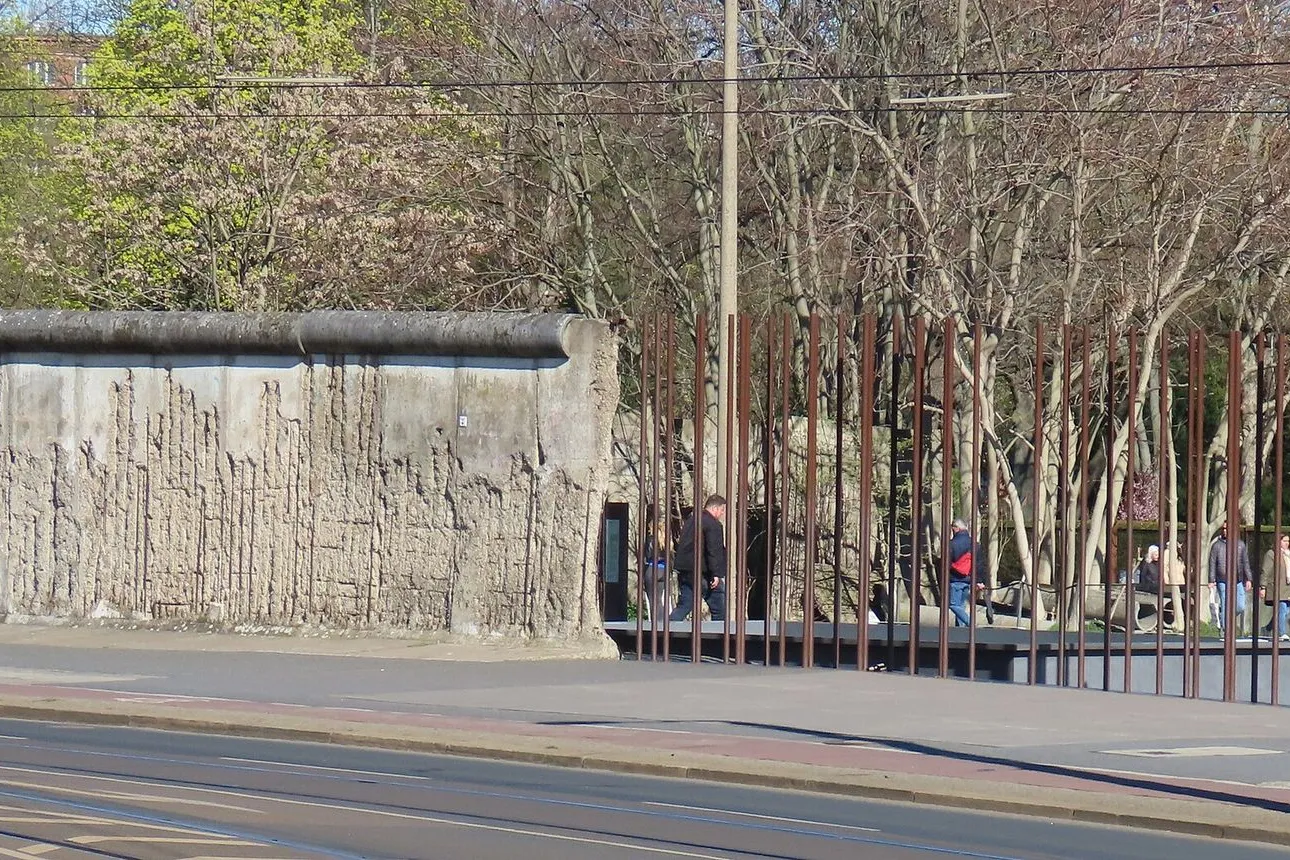
Photo by Brian Dooley on Wikimedia Commons

Preserved Border Strip

0:00

The only place in Berlin where all the border fortifications survive: inner wall, death strip, watchtower, outer wall: 212 metres of protected ground.

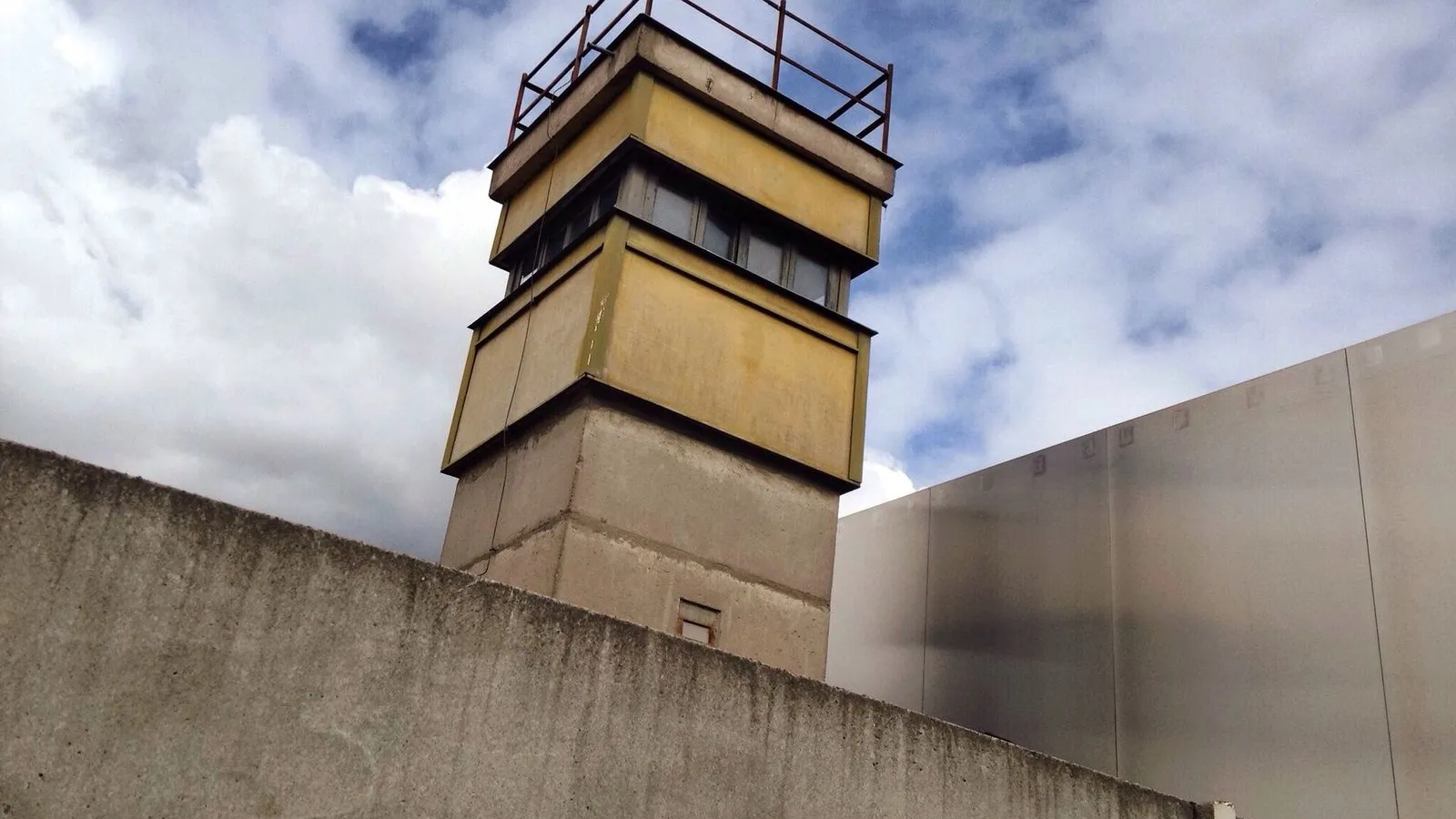
You are standing inside the death strip. Between 1961 and 1989, this was one of the most surveilled patches of earth on the planet. Ahead of you is the inner wall, the one East Berliners faced. Behind you is the outer wall, the one photographs made famous with its graffiti and its West Berlin audience.

Between them: the patrol corridor where guards walked with dogs, the signal fence that triggered alarms, the floodlights that turned night into day. This 212-metre section between Ackerstrasse and Bergstrasse was given protected status on 2 October 1990, one day before reunification. Local citizens and Pastor Manfred Fischer fought to save it from souvenir hunters chipping the concrete down to its steel ribs. Fischer lived next to this stretch and spent weeks arguing with what he called 'Wall peckers.' The concrete has been restored, but the rusted steel inside is original.

Look at the ground. You can still trace the patrol path. To your right, the foundations of apartment buildings whose facades formed the border wall until the early 1980s. Number 48 was where Ida Siekmann lived.

On 22 August 1961, nine days after the border closed, the 58-year-old threw her belongings from her third-floor window, jumped, and died on the pavement below: one day before her 59th birthday. She was the first person to die at the Berlin Wall. Walk the length of the strip. When you reach the far end, head toward the oval wooden chapel you see across the way.

≈3 min walk to the next stop
Kapelle der VersöhnungLocal pick

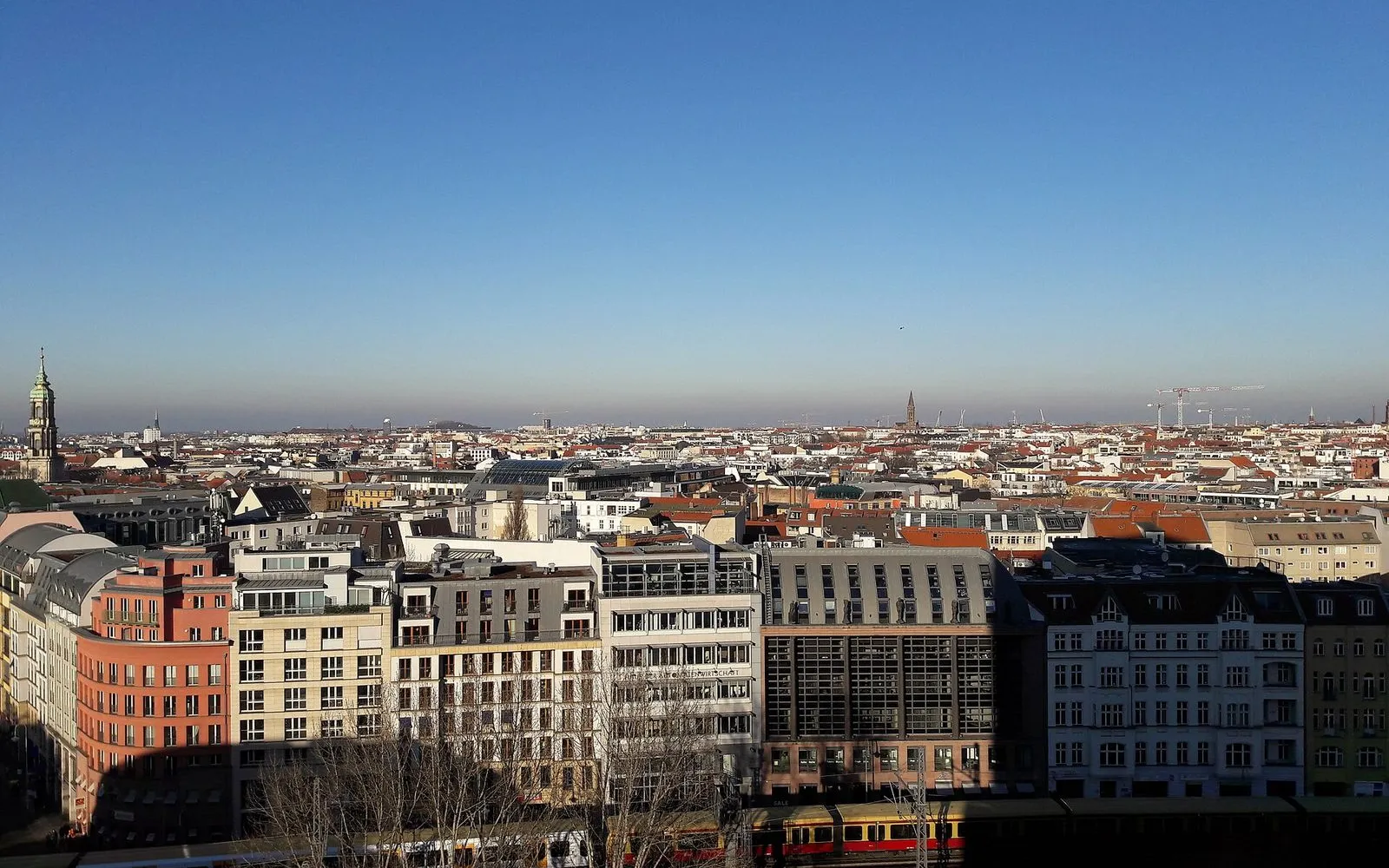
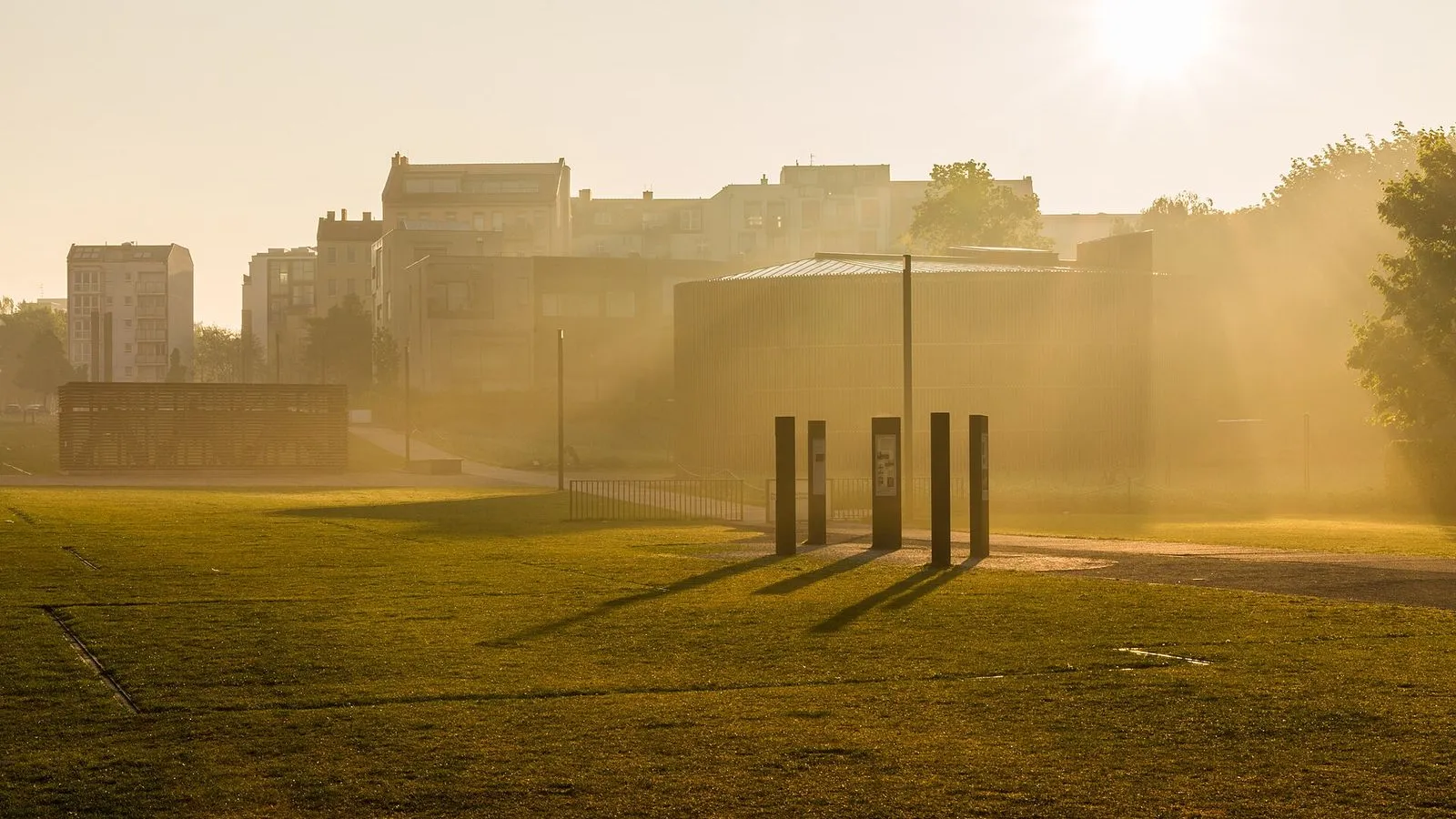
Photo by Gzen92 on Wikimedia Commons

Kapelle der Versöhnung

0:00

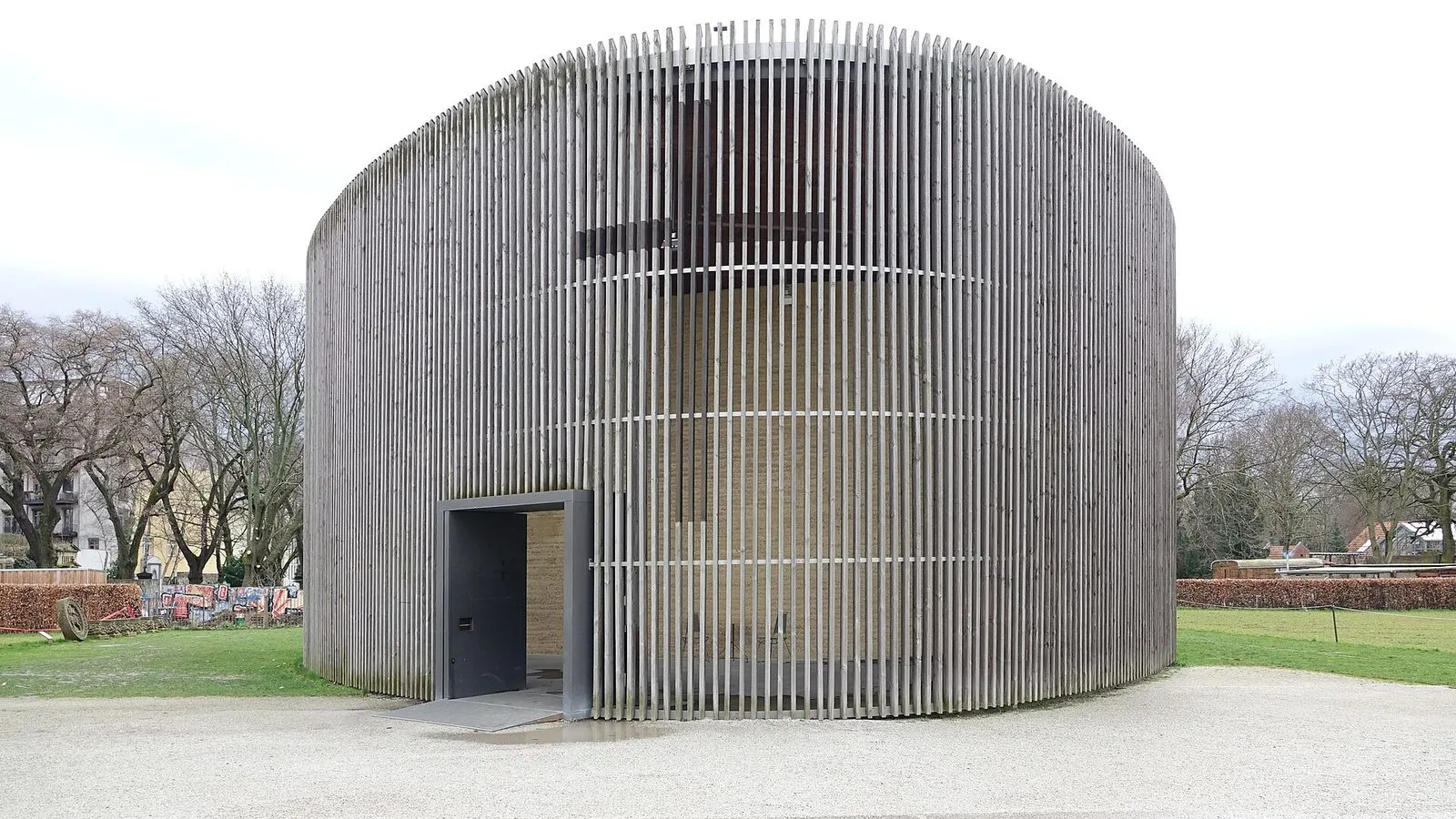
A chapel of rammed earth and wood, consecrated in 2000 on the foundations of a neo-Gothic church blown up by the GDR in 1985.

The Chapel of Reconciliation was consecrated on 9 November 2000, eleven years to the day after the Wall fell. Berlin architects Rudolf Reitermann and Peter Sassenroth designed the oval structure. Its inner walls are rammed earth, compressed clay mixed with fragments of the church that stood here before: brick chips, glass shards, splinters of wood. Two thirds of this building, by weight, is the rubble of its predecessor.

That predecessor was the Versöhnungskirche, a neo-Gothic brick church completed in 1894 to designs by Gotthilf Ludwig Möckel. Its 75-metre tower was a neighbourhood landmark. When the Wall went up in August 1961, the church found itself stranded in the death strip, cut off from its congregation. For twenty-four years it sat there, a red-brick ghost between the walls.

Border guards used its tower as a watch post. On 28 January 1985, the GDR detonated the church with 23.4 kilograms of explosives. The tower collapsed. The cross flew from its peak and landed in a cemetery grave, where East Berlin workers hid it until November 1989.

You can see that cross today, bent and scarred, in the rye field beside the chapel. Step inside. The old altar slab is set into the clay floor beneath the new altar. Daily prayers at noon remember those who died at the Wall.

≈5 min walk to the next stop
Free preview ends here · stops 4 to 6 continue in the app

Fenster des Gedenkens

The Window of Remembrance displays photographs of the 140 people who died at the Berlin Wall, arranged by year, with space for those yet unknown.

in app

Nordbahnhof

An S-Bahn station sealed from 1961 to 1989, now housing a free exhibition on Berlin's ghost stations and the divided underground.

in app

Mauerpark

The death strip reborn as Berlin's loudest Sunday ritual: flea market stalls, street food, and the bear-pit karaoke where anyone can sing.

in app
Good to know

Before you go

Is the Berlin Wall Memorial free?

Yes, the entire Gedenkstätte Berliner Mauer, including the visitor centre, the preserved border strip, the Window of Remembrance, and the Nordbahnhof ghost-station exhibition, is free. No ticket required.

When is the Mauerpark flea market?

Every Sunday, rain or shine, from roughly 8:00 to 18:00. The karaoke in the amphitheatre starts around 15:00 and runs until dusk. Arrive early for the market; arrive mid-afternoon for the singing.

Provenance · last verified August 18, 2026

Built from the Wayside route itself: the stops, their order, and the walk between them.

Photo by Ad Meskens on Wikimedia Commons · CC BY-SA 4.0

Photo by Ansgar Koreng on Wikimedia Commons · CC BY-SA 4.0

Photo by Brian Dooley on Wikimedia Commons · Public domain

Photo by Gzen92 on Wikimedia Commons · CC BY-SA 4.0

Photo by Olivier Cleynen on Wikimedia Commons · CC BY 4.0

Photo by A.Savin on Wikimedia Commons · CC BY-SA 3.0

Photo by Jorge Royan on Wikimedia Commons · CC BY-SA 3.0

Photo by MB-one on Wikimedia Commons · CC BY-SA 4.0

Photo by Pennello on Openverse · CC BY 2.0

Photo by Tanweer Morshed on Wikimedia Commons · CC BY-SA 3.0

Coming soon

Wayside isn't in the app stores yet, but it's in the works. Check back soon.