Berlin · Self-guided audio walk

Berlin: Power and Remembrance

A walk through the heart of Berlin traces how Germany remembers, and reckons with, the last century.

  • 6Stops
  • 2.5 kmDistance
  • 40+ minTime
Berlin: Power and Remembrance

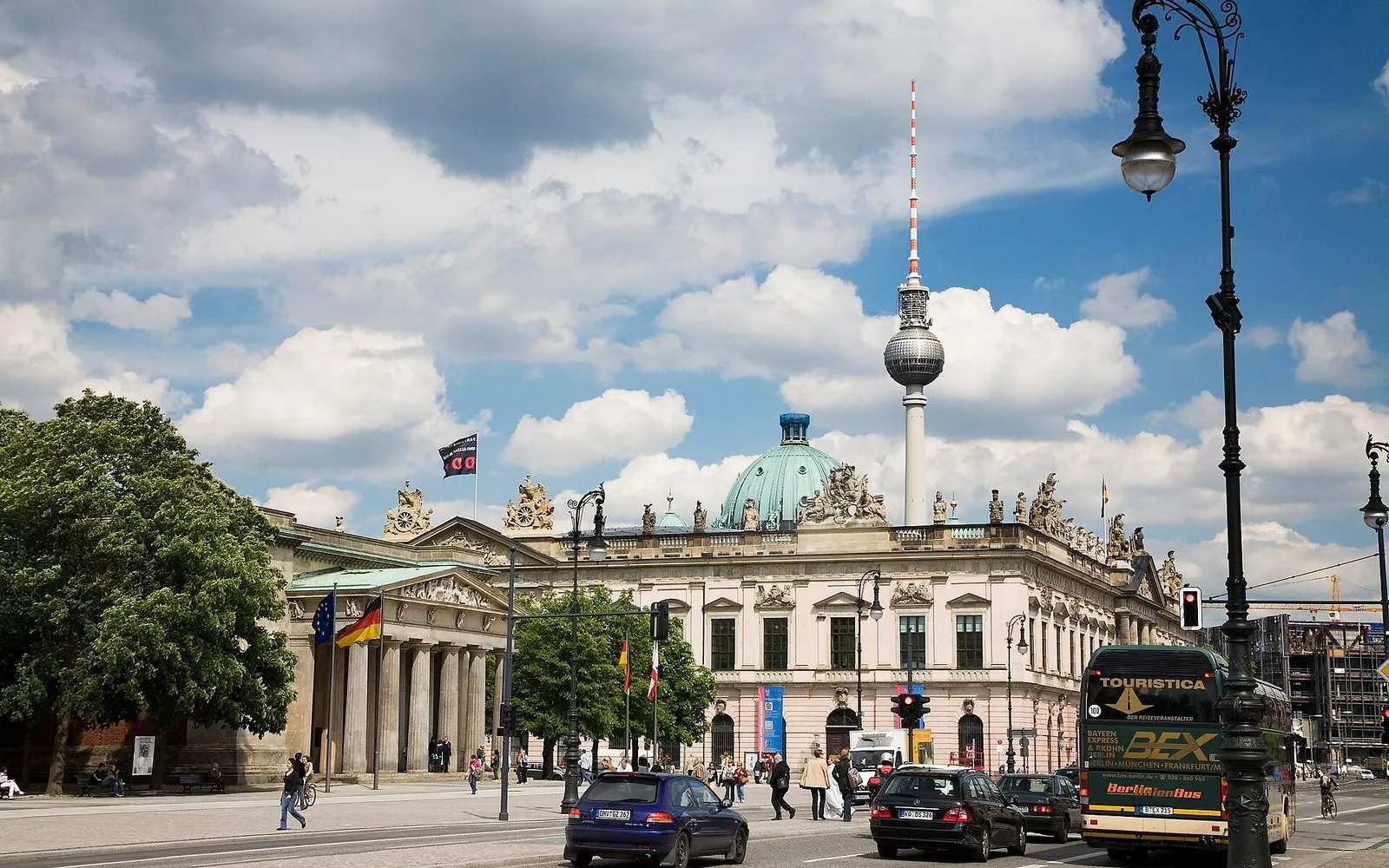
Photo by Tanweer Morshed on Wikimedia Commons

This walk crosses Berlin from the Reichstag to the Tiergarten, following the thread of twentieth-century power and its memorials. You stand inside Norman Foster's glass dome, where citizens literally look down on their parliament. You walk through Peter Eisenman's field of 2,711 concrete stelae, a memorial that offers no single meaning. You visit the site where the Gestapo and SS ran the machinery of genocide, now an unflinching exhibition. And you end among the trees of the Tiergarten, where the Victory Column and a Soviet war memorial share the same park. The route covers about four and a half kilometers. Take your time. The places ask for it.

Hear it on the street

Get the turn-by-turn audio guide in the app. The narration plays itself as you reach each stop, hands-free and offline.

Stop by stop

The route

Interactive map of the route. The full stop list below works without it.

ReichstagsgebäudeMust see

Photo by Jörg Braukmann on Wikimedia Commons

Reichstagsgebäude

0:00

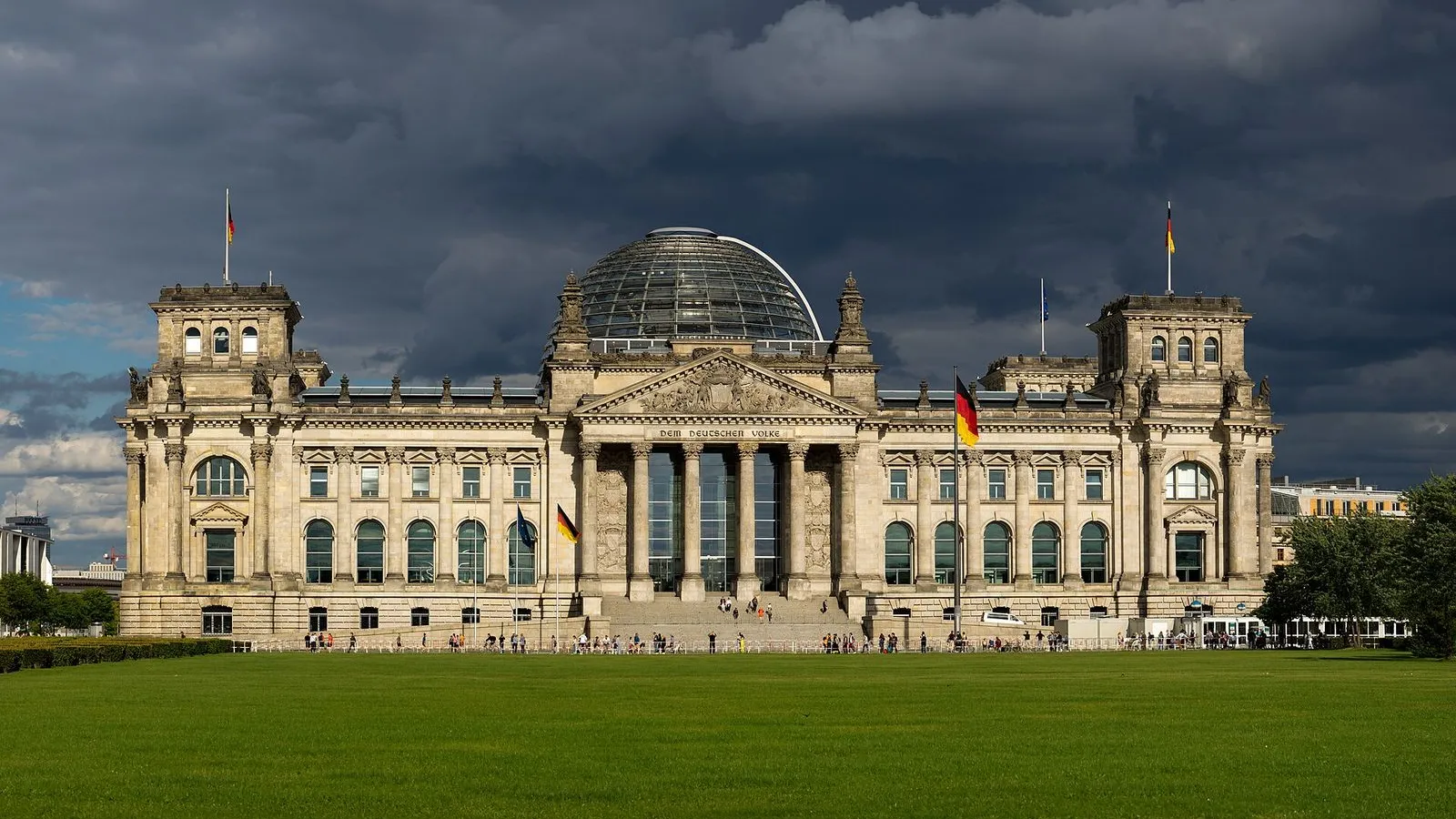
Germany's parliament, completed 1894. Foster's 1999 glass dome lets visitors walk a spiral ramp above the debating chamber.

You are standing before the Reichstag, seat of the German Bundestag. The inscription above the portico reads 'Dem Deutschen Volke', To the German People. It was added in 1916, during the First World War, and it has looked down on nearly every convulsion of modern German history. In November 1918, Philipp Scheidemann proclaimed the republic from a balcony here.

In February 1933, the building burned. The Nazis blamed communists, used the fire to gut civil liberties, and never returned the parliament to this chamber. At the war's end, Red Army soldiers raised the Soviet flag on the roof. For decades the building sat on the Cold War border, repaired but unused.

After reunification, Norman Foster rebuilt it from the inside out. The glass dome you see now sends daylight down through a mirrored cone into the debating chamber. The public walks a spiral ramp above the lawmakers' heads, a deliberate reversal: the people look down on the state, not the other way around. Registration is free but required in advance.

When you are ready, walk south toward the Brandenburg Gate.
≈9 min walk to the next stop
Denkmal für die ermordeten Juden EuropasMust see

Photo by Dietmar Rabich on Wikimedia Commons

Denkmal für die ermordeten Juden Europas

0:00

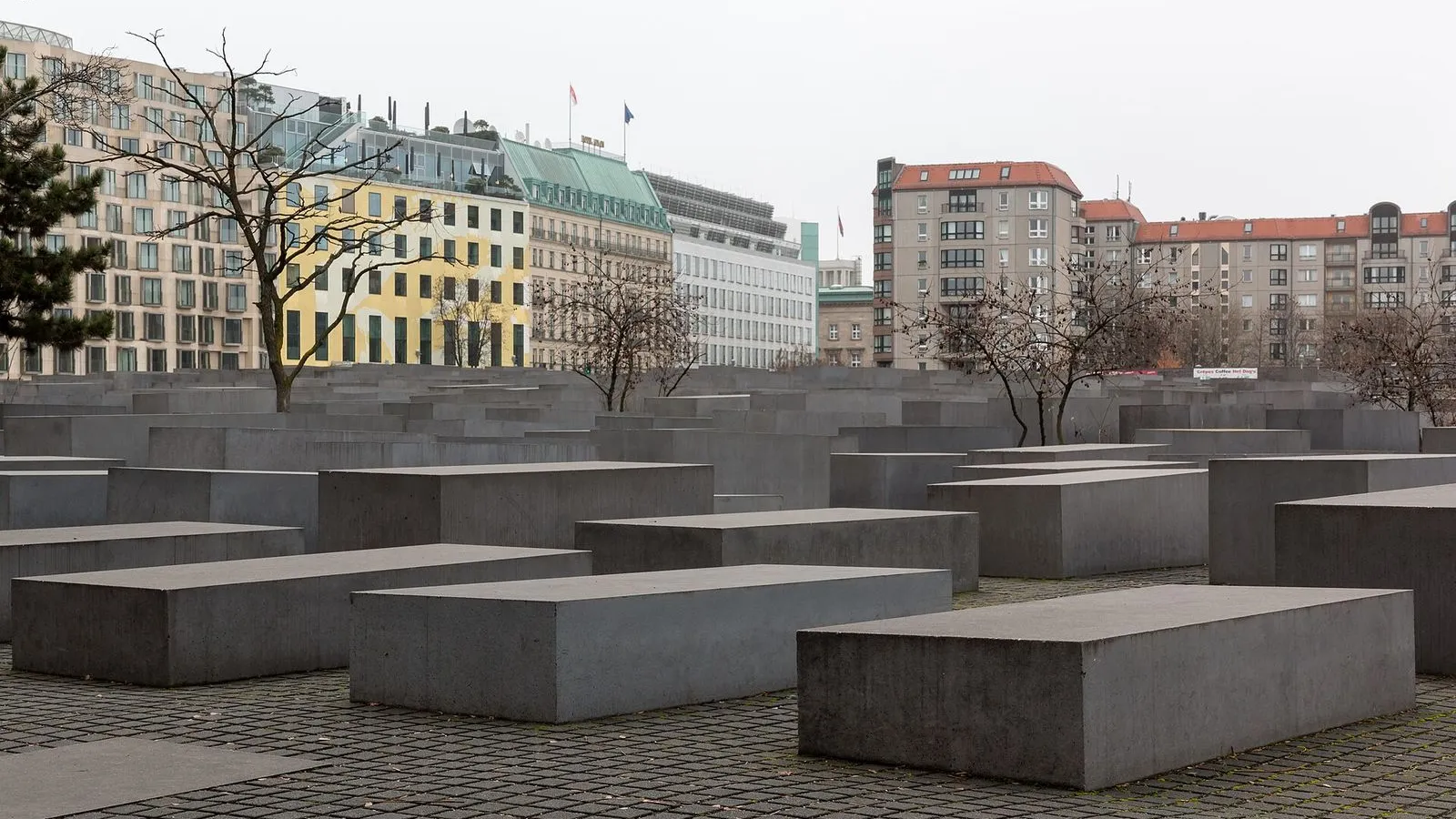
Peter Eisenman's 2,711 concrete stelae cover 19,000 square meters. No names, no inscription, an undulating labyrinth that disorients.

You have entered the Memorial to the Murdered Jews of Europe. There are 2,711 concrete stelae here, arranged on a gently sloping field. No two are exactly alike. They vary only in height, from ankle level to nearly five meters, and the ground beneath them rises and falls in waves.

Peter Eisenman, the New York architect, refused to assign a single meaning to the work. Walk between the columns and the city sound drops away. The gray blocks close in. The path narrows.

Eisenman wanted visitors to feel, in a bodily way, the loss of orientation that a memorial cannot state in words. Beneath the field, an information center documents the names, families, and sites of the Holocaust. But up here, in the cold geometry, there is only the weight of the unnamed. The stelae are treated with an anti-graffiti coating because the manufacturer of that coating, Degussa, was the same firm that produced Zyklon B during the war.

The memorial foundation knew this and chose to proceed. That decision is part of the memorial too. When you are ready, cross back to the eastern edge of the Tiergarten.

≈3 min walk to the next stop
Denkmal für die im Nationalsozialismus verfolgten HomosexuellenLocal pick

Photo by usbotschaftberlin on Wikimedia Commons

Denkmal für die im Nationalsozialismus verfolgten Homosexuellen

0:00

A concrete cube by Elmgreen & Dragset, opened 2008. Through a small window, a film of two men kissing loops endlessly.

This is the Memorial to Homosexuals Persecuted Under Nazism. The concrete cube was designed by the Scandinavian artists Michael Elmgreen and Ingar Dragset and opened in 2008, more than sixty years after the war ended. Its form deliberately echoes the stelae across the street, but it adds something those stelae lack: a small square window. Look through it.

You see a film of two men kissing, a loop that changes every two years. The current film is by the Israeli artist Yael Bartana. The kiss is not hidden. It is not abstract.

It is a real act of love, placed inside a block of concrete on the edge of the Tiergarten. Between 1933 and 1945, the Nazis convicted roughly 50,000 men under Paragraph 175, the law that criminalized homosexuality. Thousands were sent to concentration camps, where they wore a pink triangle. Many died.

The law stayed on the books in West Germany until 1969 and was not fully repealed until 1994. This memorial came late. A signboard nearby tells the fuller story in German and English. When you are ready, follow the path south toward Potsdamer Platz.

≈8 min walk to the next stop
Free preview ends here · stops 4 to 6 continue in the app

Potsdamer Platz

Once Europe's busiest square, then a Cold War wasteland. Now a corporate skyline by Piano, Jahn, and Rogers.

in app

Topographie des Terrors

An exhibition on the excavated Gestapo and SS headquarters. Photographs and cellars trace the machinery of Nazi terror.

in app

Martin-Gropius-Bau

A Renaissance Revival exhibition hall from 1881 by Martin Gropius, great-uncle of Bauhaus founder Walter Gropius.

in app
Good to know

Before you go

How do I book the Reichstag dome?

Register online at bundestag.de at least a few days ahead. You need the full name and date of birth of each visitor. Admission is free. If you arrive without a booking, try the Visitors' Service centre on Scheidemannstrasse, but same-day slots are rare.

SourceDeutscher Bundestag
Is the Holocaust Memorial suitable for children?

The outdoor field of stelae is open to all and children often run through the narrow passages. The underground Information Centre is more confronting and may not suit younger children. Use your judgment.

Provenance · last verified August 18, 2026

Built from the Wayside route itself: the stops, their order, and the walk between them.

Photo by Tanweer Morshed on Wikimedia Commons · CC BY-SA 3.0

Photo by Jörg Braukmann on Wikimedia Commons · CC BY-SA 4.0

Photo by Dietmar Rabich on Wikimedia Commons · CC BY-SA 4.0

Photo by usbotschaftberlin on Wikimedia Commons · Public domain

Photo by Olivier Cleynen on Wikimedia Commons · CC BY 4.0

Photo by Ad Meskens on Wikimedia Commons · CC BY-SA 4.0

Photo by A.Savin on Wikimedia Commons · CC BY-SA 3.0

Photo by Jorge Royan on Wikimedia Commons · CC BY-SA 3.0

Photo by MB-one on Wikimedia Commons · CC BY-SA 4.0

Photo by Pennello on Openverse · CC BY 2.0

Coming soon

Wayside isn't in the app stores yet, but it's in the works. Check back soon.