Berlin · Self-guided audio walk

Prenzlauer Berg: Preserved Streets, Hidden Histories

A walk through Berlin's largest surviving Gründerzeit quarter, from a leafy square to the churches that anchored the peaceful revolution.

  • 6Stops
  • 4.5 kmDistance
  • 65+ minTime
Prenzlauer Berg: Preserved Streets, Hidden Histories

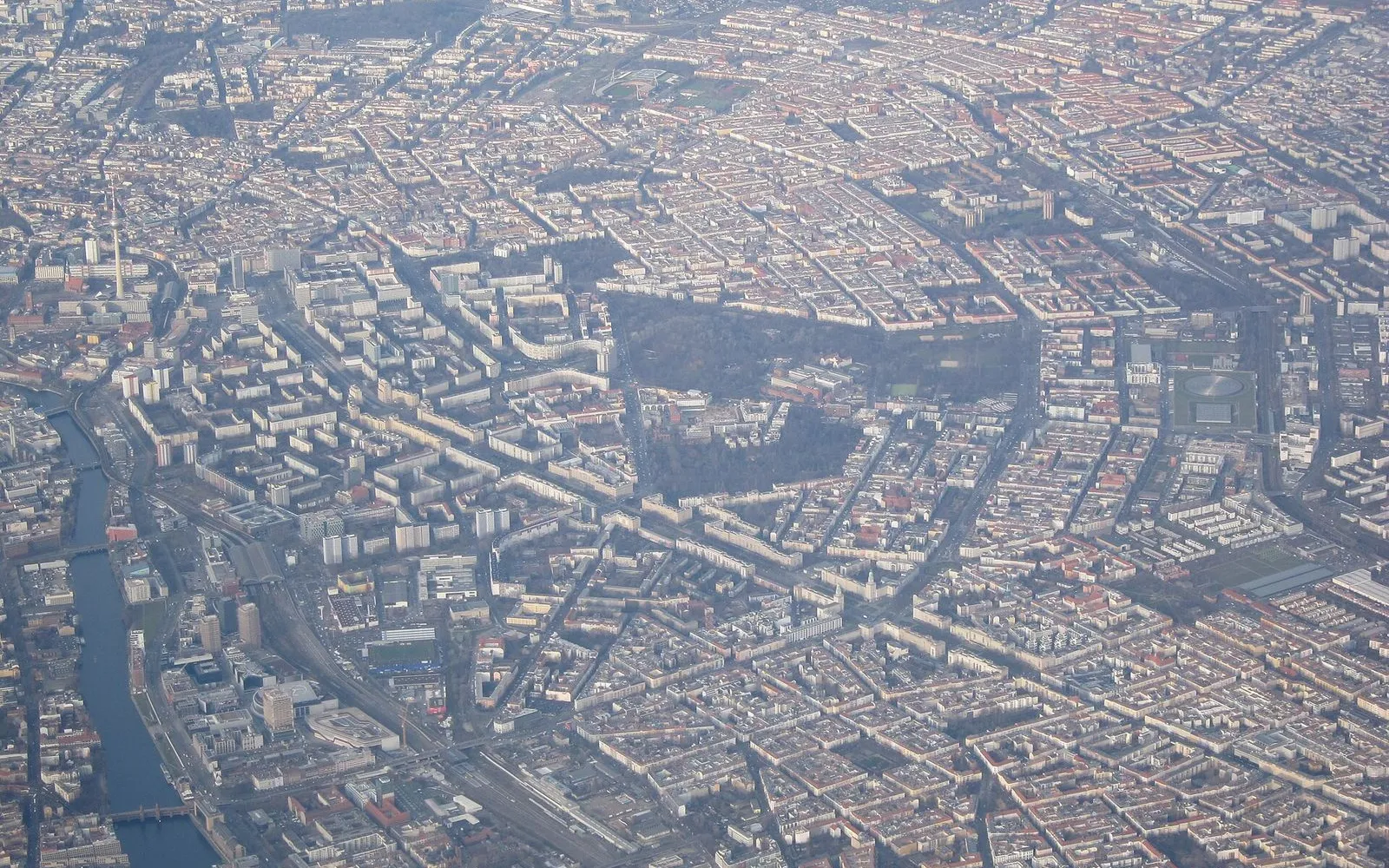
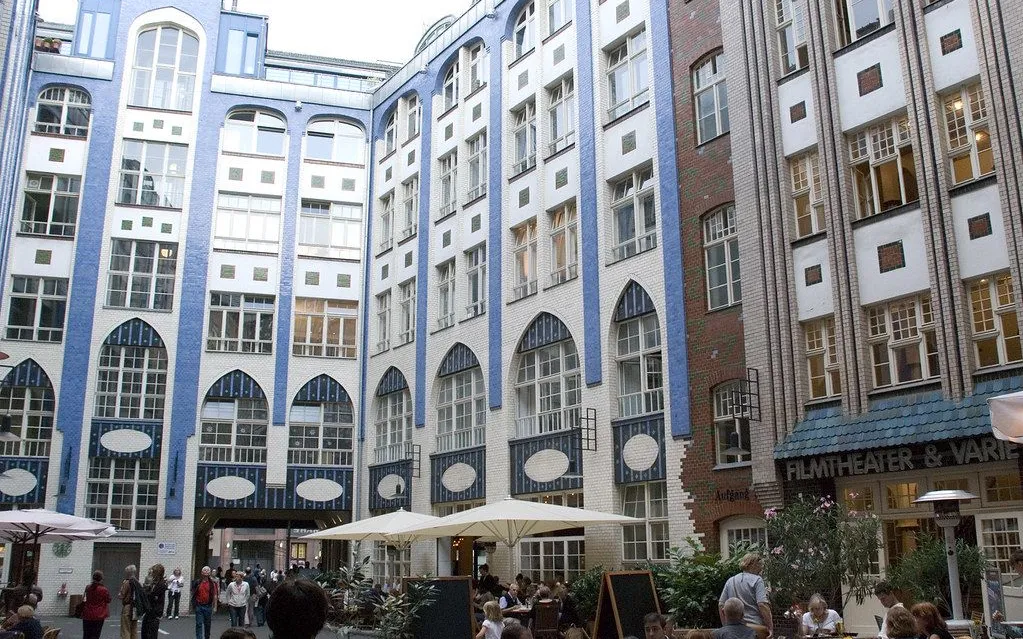
Photo by MB-one on Wikimedia Commons

Prenzlauer Berg survived the war almost intact, and this walk takes you through its quietest, most layered corners. You start at Kollwitzplatz, a triangular square where a Saturday organic market sprawls beneath the bronze gaze of Käthe Kollwitz. From there you pass Berlin's oldest water tower, a handsome brick cylinder with a brutal history in its cellar. Husemannstrasse shows you what a nineteenth-century Berlin street looked like before the bombs, restored by the East German state as a showpiece. The Kulturbrauerei, a vast brick brewery complex, now houses a free museum of everyday GDR life. You end at two churches: Zionskirche, where Dietrich Bonhoeffer once preached and where dissidents ran an underground environmental library in the 1980s, and Gethsemanekirche, whose candlelit vigils in 1989 helped bring down a regime. A hundred-minute ramble through stone, silence, and dissent.

Hear it on the street

Get the turn-by-turn audio guide in the app. The narration plays itself as you reach each stop, hands-free and offline.

Stop by stop

The route

Interactive map of the route. The full stop list below works without it.

KollwitzplatzLocal pick

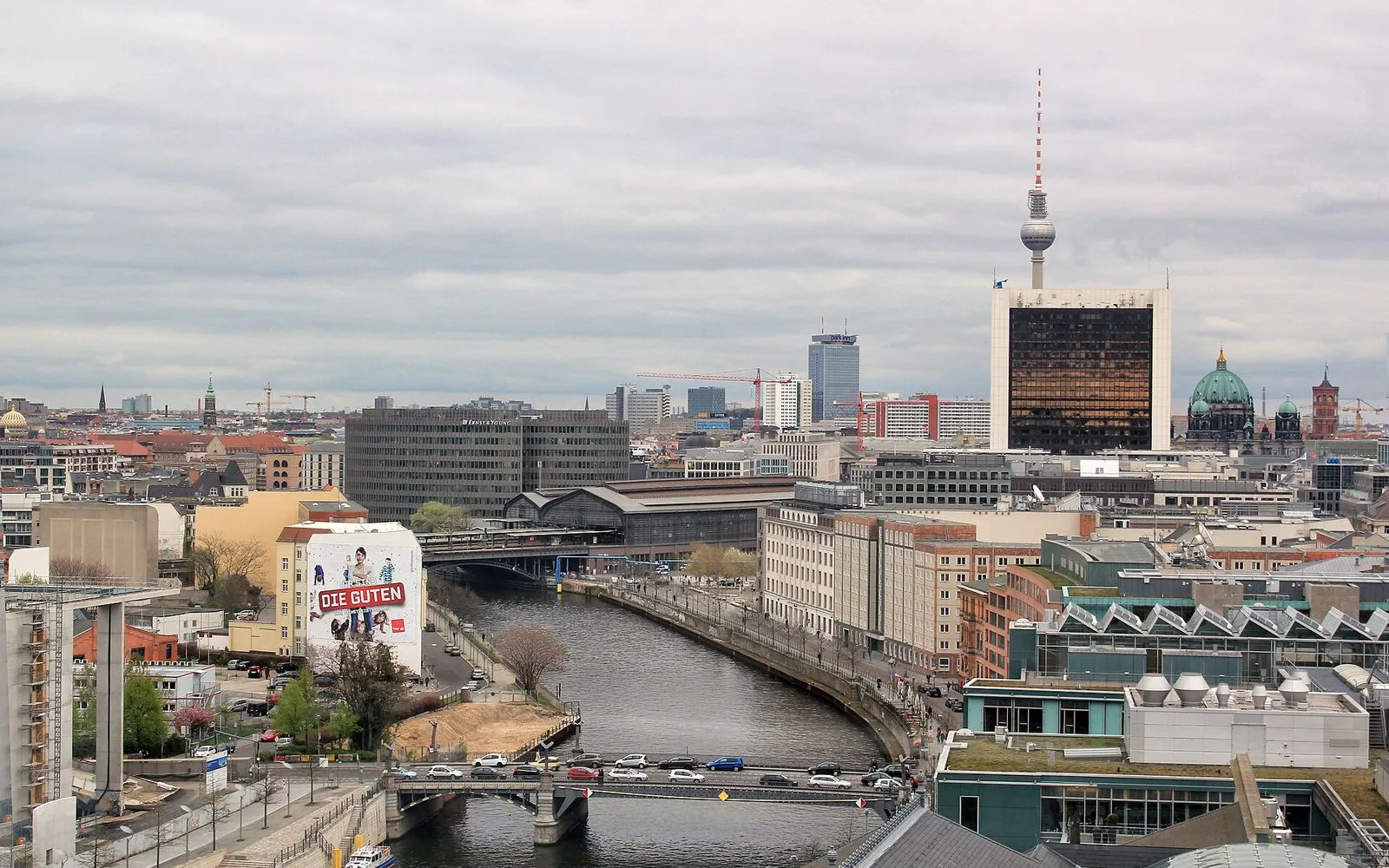
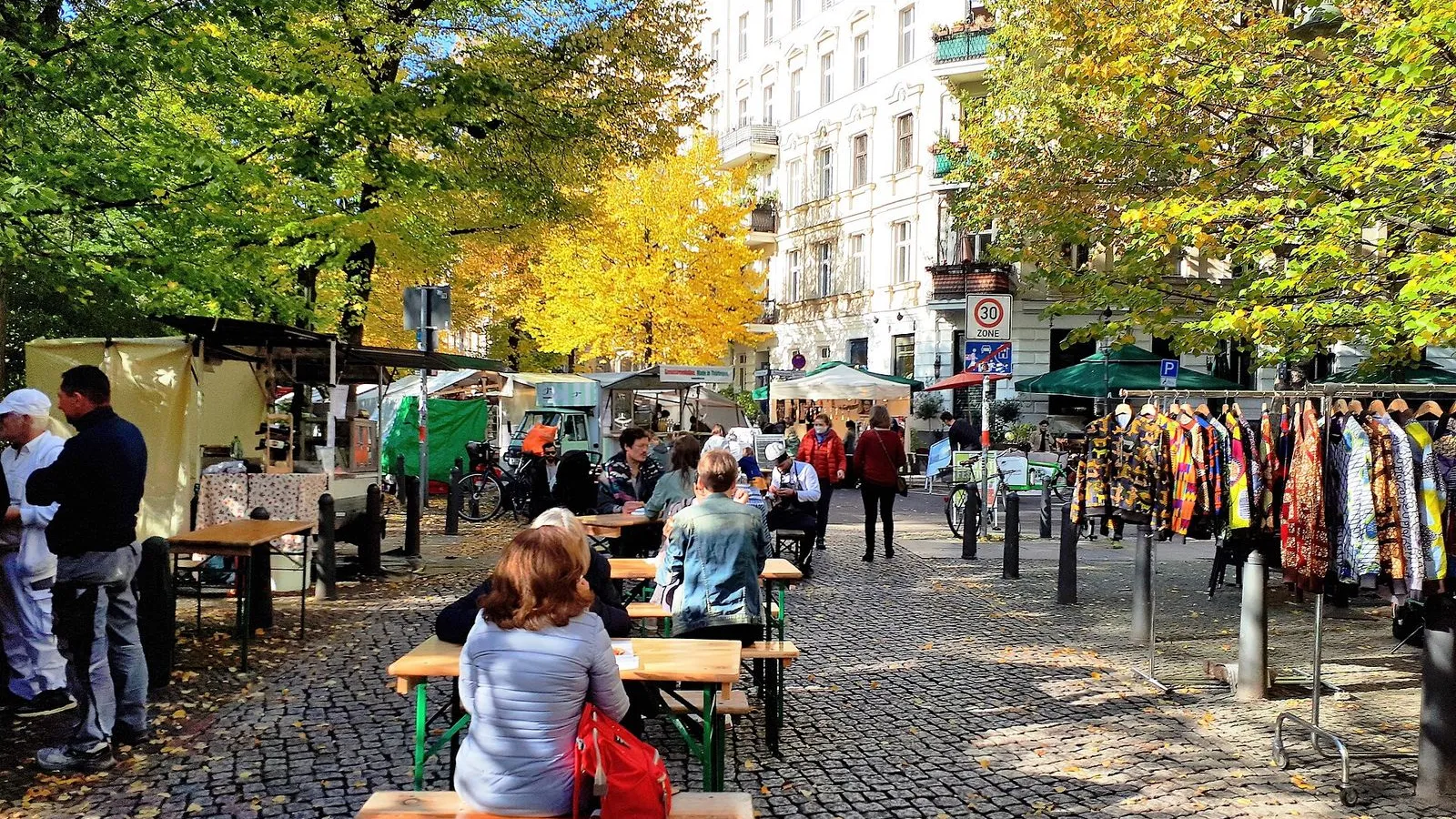
Photo by Fridolin freudenfett on Wikimedia Commons

Kollwitzplatz

0:00

A triangular Gründerzeit square named after the artist Käthe Kollwitz, with a Saturday organic market and a bronze sculpture of the artist at its heart.

You are standing on Kollwitzplatz, the leafy heart of the Kollwitzkiez. Until 1947 this was Wörther Platz, named after a battle in the Franco-Prussian War. The name changed to honor Käthe Kollwitz, the graphic artist and sculptor who lived in a house on the corner of what is now Kollwitzstraße from 1891 until it was bombed in 1943. Her husband Karl ran a medical practice here, serving the working-class families of the neighborhood.

The bronze figure you see in the center is by Gustav Seitz, erected in 1961. It shows Kollwitz seated, pensive, and local children treat it as a climbing frame. The square itself, about 6,000 square meters, was laid out between 1885 and 1887 as a typical Wilhelminian ornamental garden. It survived the war with remarkably little damage.

On Saturdays the organic market takes over, one of Berlin's best. On Thursdays there is a smaller eco-market. The stucco façades around you, the old linden trees, the playground: this is Prenzlauer Berg at its most lived-in.
≈4 min walk to the next stop
Wasserturm Prenzlauer BergLocal pick

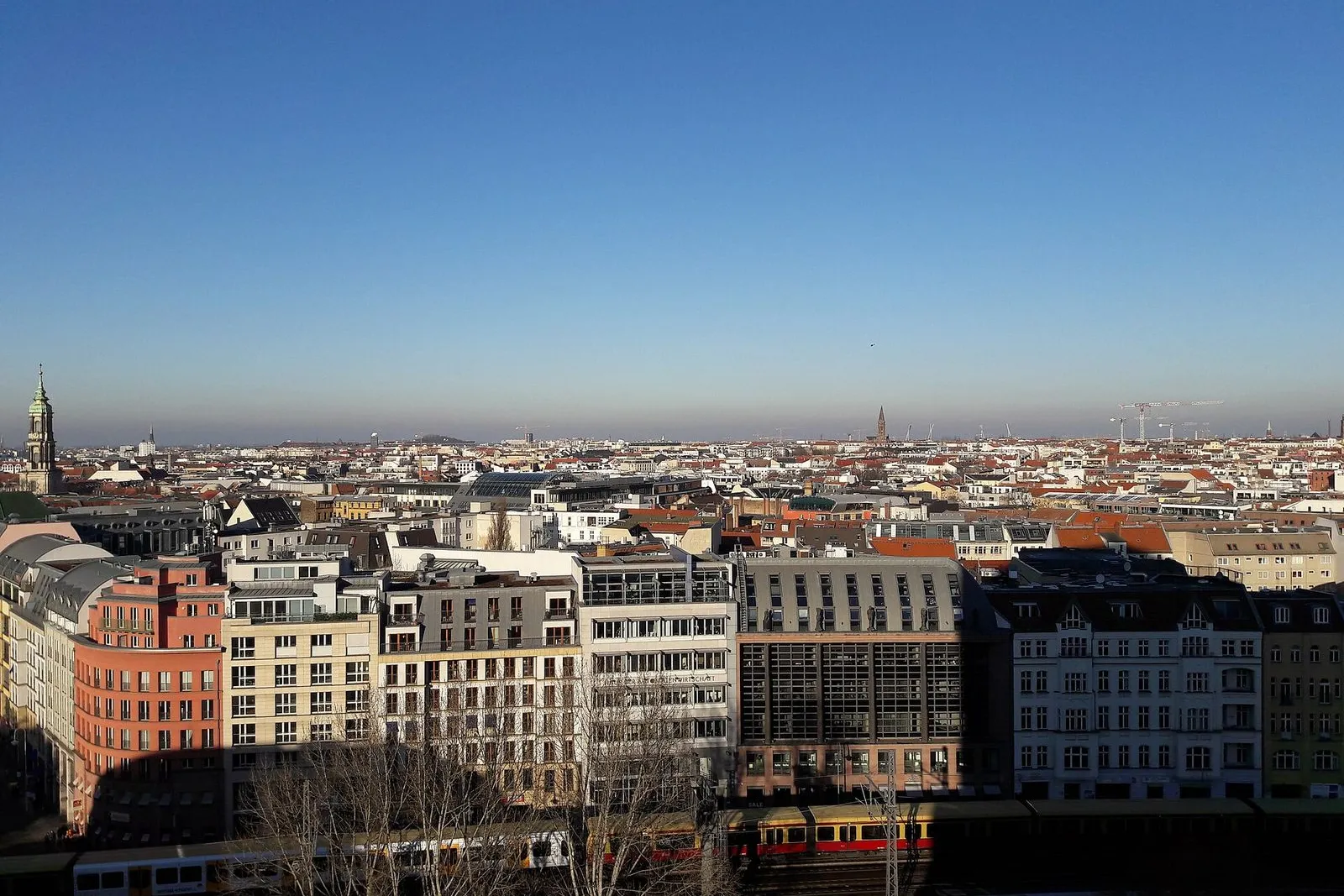
Photo by Joe Mabel on Wikimedia Commons

Wasserturm Prenzlauer Berg

0:00

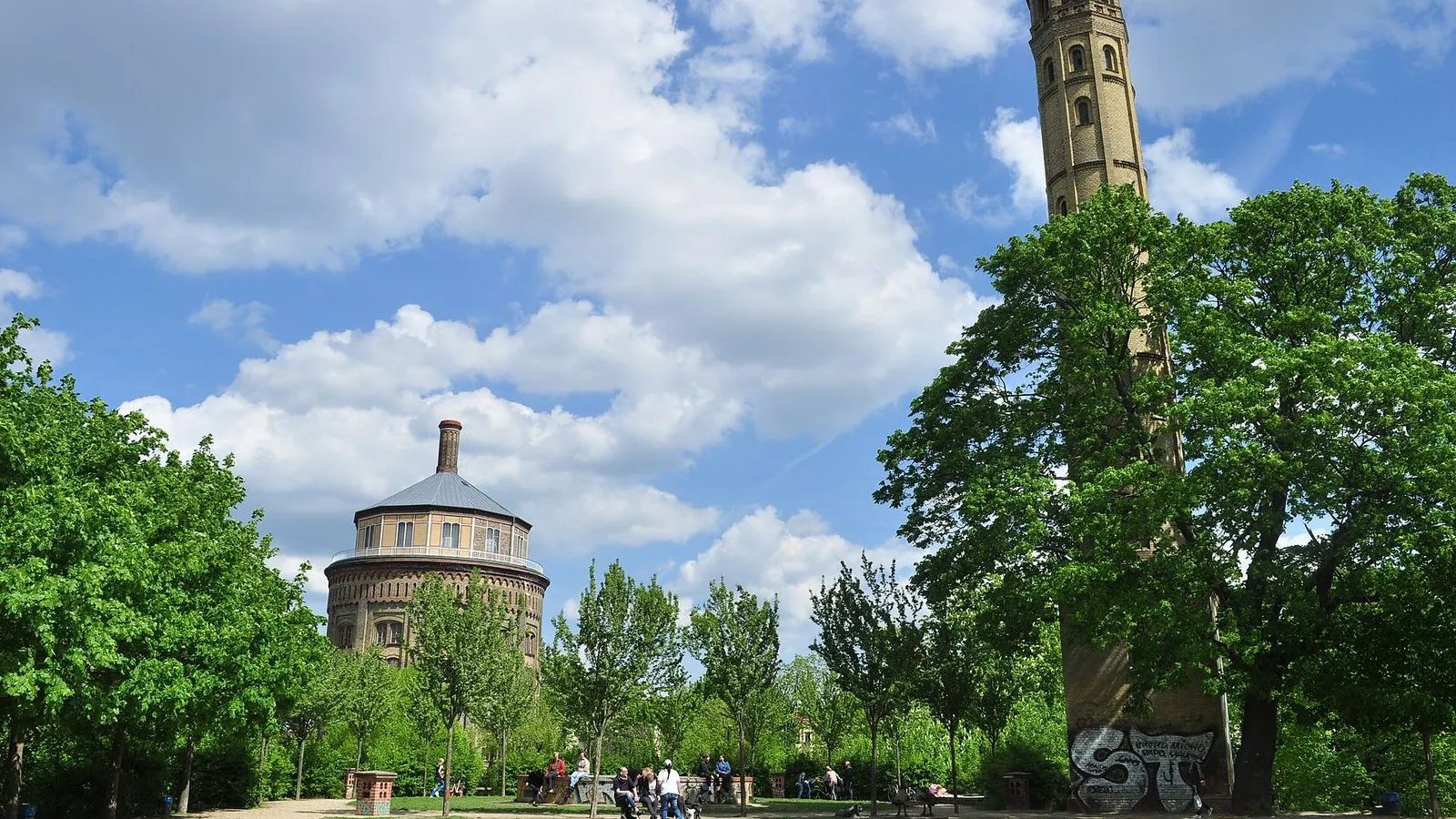
Berlin's oldest water tower, built in 1877, known locally as Fat Hermann and once the site of an early Nazi SA concentration camp.

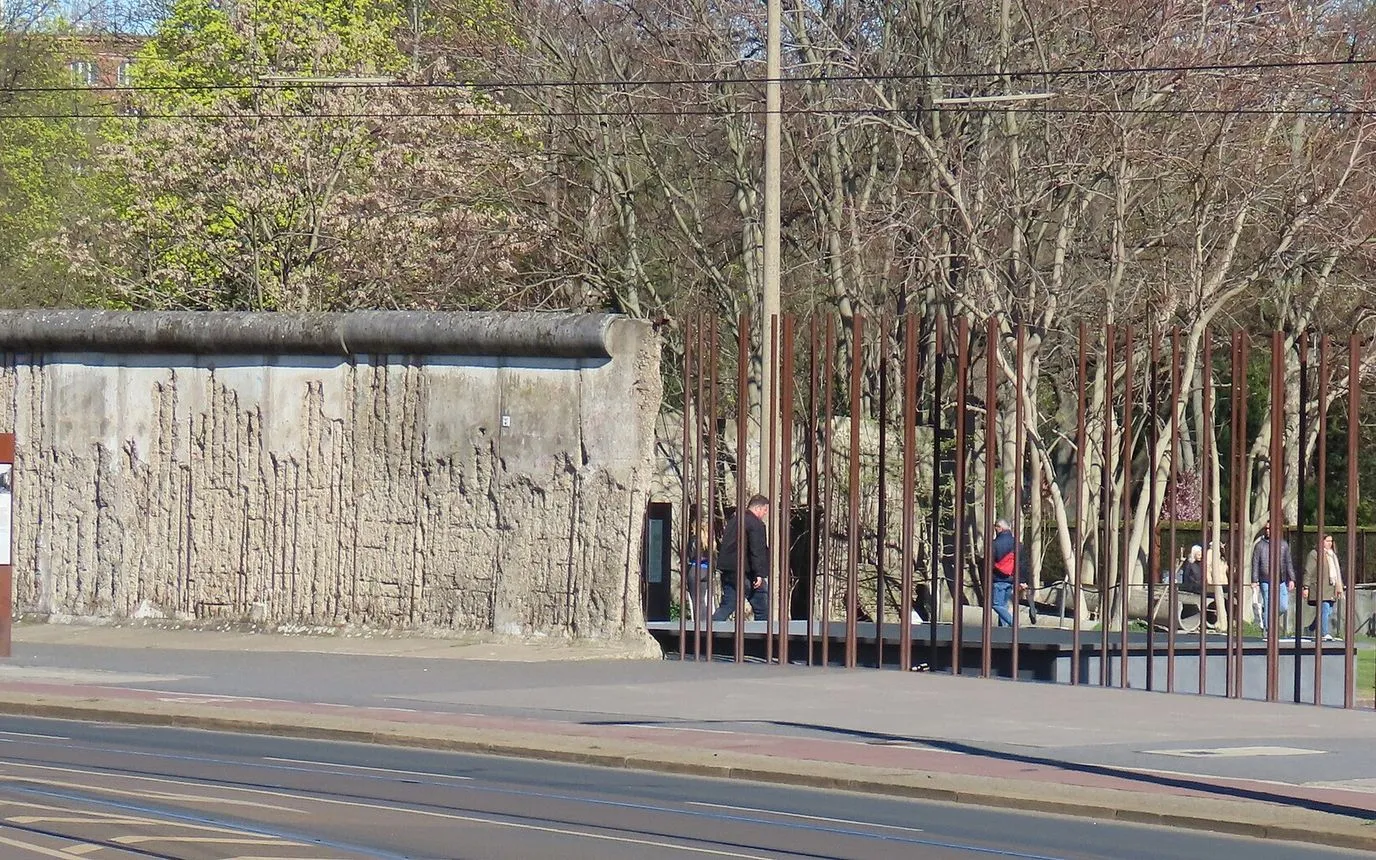
You are now at the foot of Berlin's oldest water tower. The brickwork is handsome, the proportions solid, and for decades it was the most visible landmark in Prenzlauer Berg. But look at the memorial wall on the grounds. In early 1933, just after the Nazis took power, the SA seized the machine house that stood right here and turned it into a wild concentration camp.

Communists, socialists, Jews, and anyone the new regime disliked were dragged inside, interrogated, tortured, and in many cases murdered. This was not a hidden atrocity. The SA chose this prominent site deliberately, to demonstrate its power and spread fear through the neighborhood. The camp operated only a few months before being converted into an SA recreation center, and the machine house was demolished in 1935.

By 1937 the grounds had become a public park. The memorial wall was installed in 1981 by a local anti-fascist committee. The tower itself kept supplying water until 1952. Today it contains apartments, and the underground reservoirs host art exhibitions and concerts in summer.

≈7 min walk to the next stop
HusemannstraßeLocal pick

Photo by Fridolin freudenfett on Wikimedia Commons

Husemannstraße

0:00

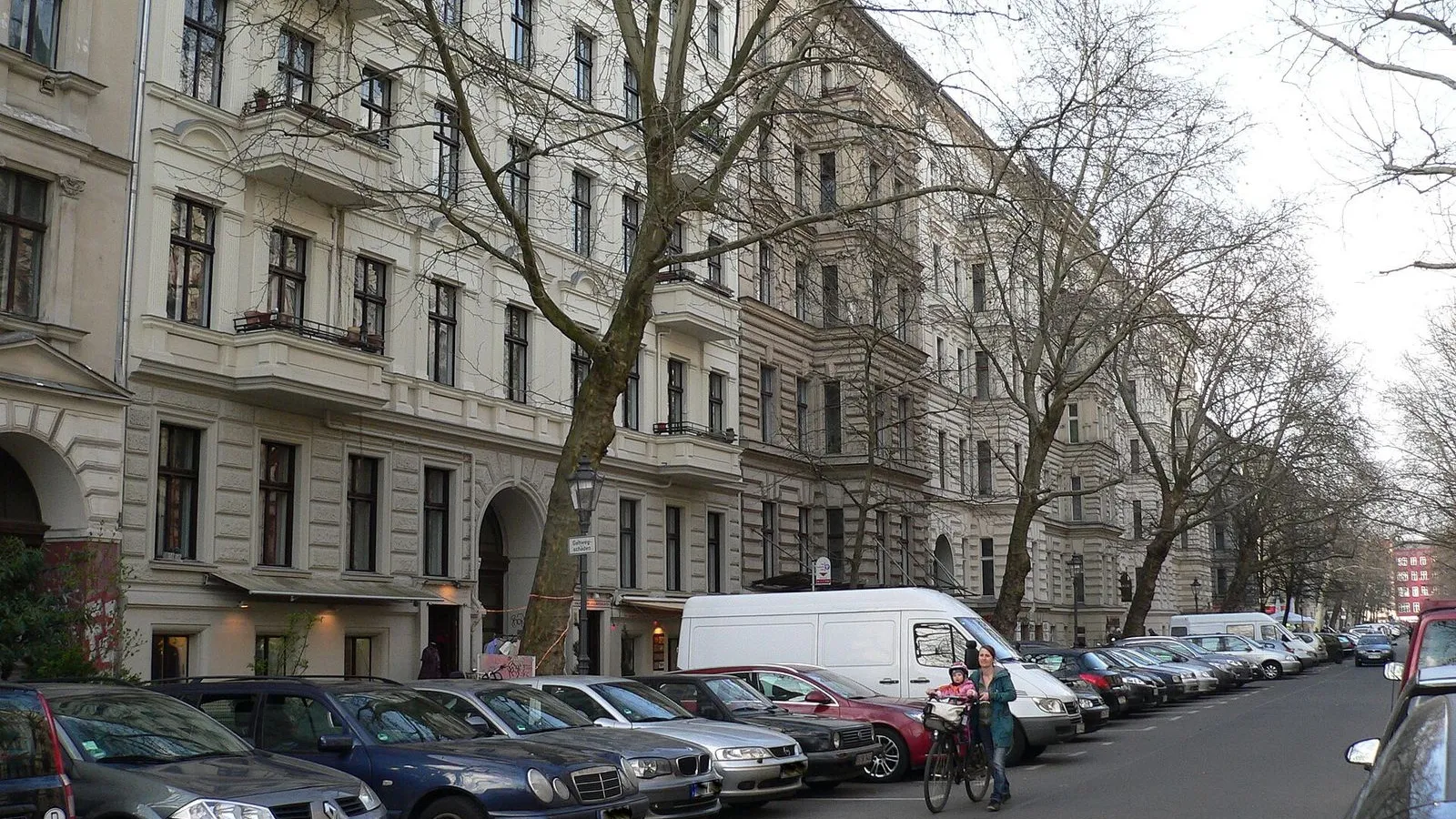
A restored nineteenth-century street, rebuilt by East Germany in 1987 as a showpiece of Gründerzeit tenement architecture.

You are walking down a street that looks almost exactly as it did in 1900. Husemannstraße was originally called Hochmeisterstraße, after the Grand Master of the Teutonic Order, and the first buildings went up in 1885. After the war the street survived with relatively little bomb damage, but by the 1970s it was in poor shape, like much of Prenzlauer Berg. What happened next was unusual.

Rather than demolish and replace, the GDR authorities decided to reconstruct the entire street authentically. The project began in 1984. Stucco was restored, courtyards were cleaned, shopfronts were rebuilt to period designs. Two museums opened in 1987: a barber museum at number 8 and a Museum of Berlin Workers' Life around 1900 at number 12.

Both are gone now, but the buildings remain under heritage protection, part of the Kollwitzplatz conservation area declared in 1990. Look at the decorative plasterwork above the windows, the wrought-iron balconies, the old shop signs. This is what much of Berlin looked like before the war. Husemannstraße is one of the few places where you can still walk through that city.

≈5 min walk to the next stop
Free preview ends here · stops 4 to 6 continue in the app

Kulturbrauerei

A sprawling brick brewery complex turned cultural quarter, housing a free museum of everyday life in the GDR.

in app

Zionskirchplatz

The square around Zionskirche, where Dietrich Bonhoeffer once worked and where the dissident Environmental Library fueled 1980s opposition.

in app

Gethsemanekirche

A neo-Gothic church that became a rallying point during the 1989 Peaceful Revolution, with candlelit vigils spilling into the streets.

in app
Good to know

Before you go

Is the Kulturbrauerei museum free?

Yes, the Museum in der Kulturbrauerei, which documents everyday life in the GDR, is free. It is part of the Haus der Geschichte foundation and has English labels throughout.

Is Prenzlauer Berg good for families?

Yes. Kollwitzplatz has a playground at its center, the streets are quiet and tree-lined, and the Saturday organic market is full of families. It is one of the most family-friendly neighborhoods in central Berlin.

Provenance · last verified August 18, 2026

Built from the Wayside route itself: the stops, their order, and the walk between them.

Photo by MB-one on Wikimedia Commons · CC BY-SA 4.0

Photo by Fridolin freudenfett on Wikimedia Commons · CC BY-SA 4.0

Photo by Joe Mabel on Wikimedia Commons · CC BY-SA 4.0

Photo by Fridolin freudenfett on Wikimedia Commons · CC BY-SA 3.0

Photo by Olivier Cleynen on Wikimedia Commons · CC BY 4.0

Photo by Ad Meskens on Wikimedia Commons · CC BY-SA 4.0

Photo by A.Savin on Wikimedia Commons · CC BY-SA 3.0

Photo by Jorge Royan on Wikimedia Commons · CC BY-SA 3.0

Photo by Pennello on Openverse · CC BY 2.0

Photo by Tanweer Morshed on Wikimedia Commons · CC BY-SA 3.0

Coming soon

Wayside isn't in the app stores yet, but it's in the works. Check back soon.