Brussels · Self-guided audio walk

Sablon & the Marolles

Two markets, one hill. Up top, chocolate and antiques at weekend prices. A few streets down, the daily brol of the Marolles. Time it for a market morning and the contrast is the whole walk.

  • 8Stops
  • 2.5 kmDistance
  • 40+ minTime
Sablon & the Marolles

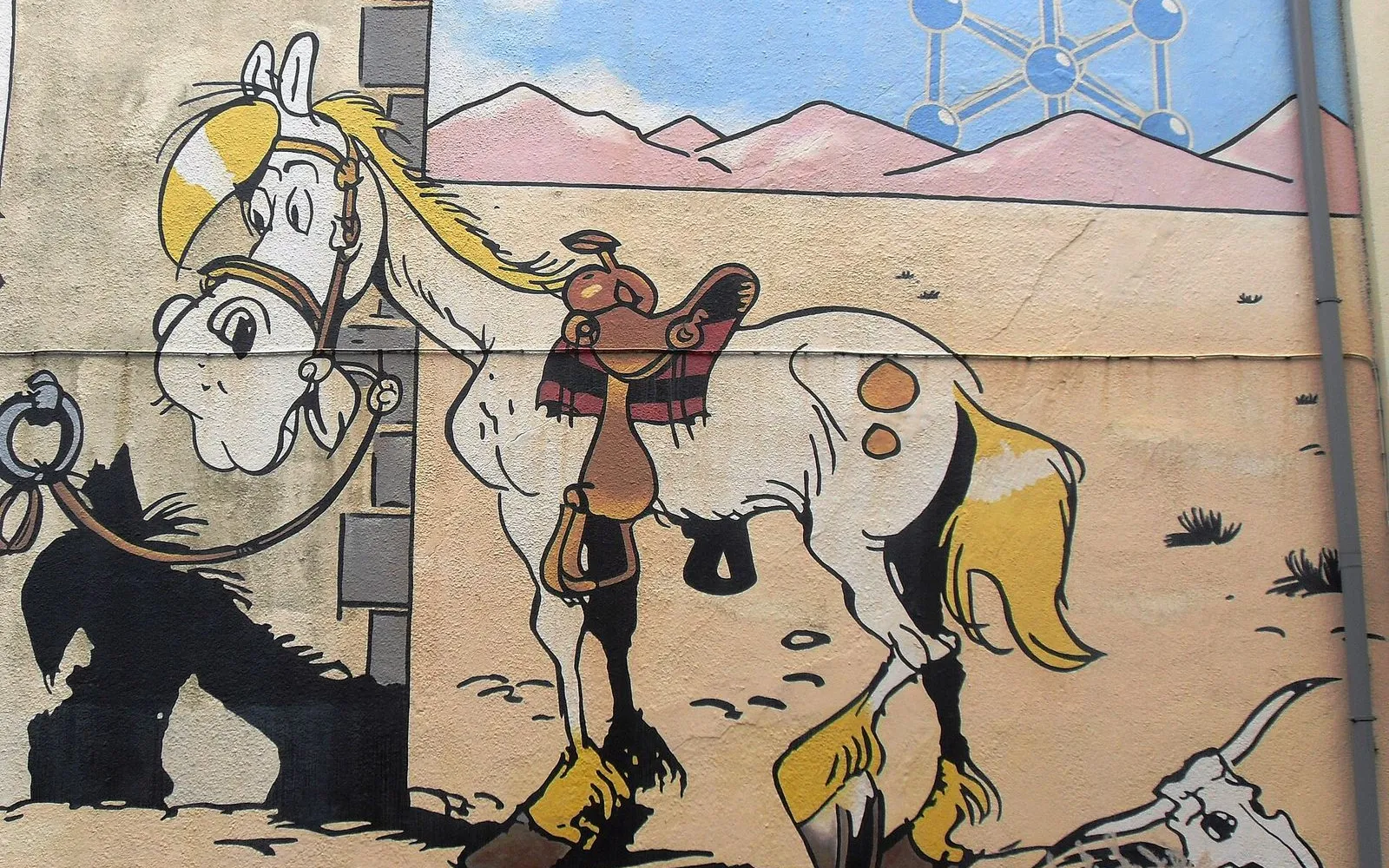
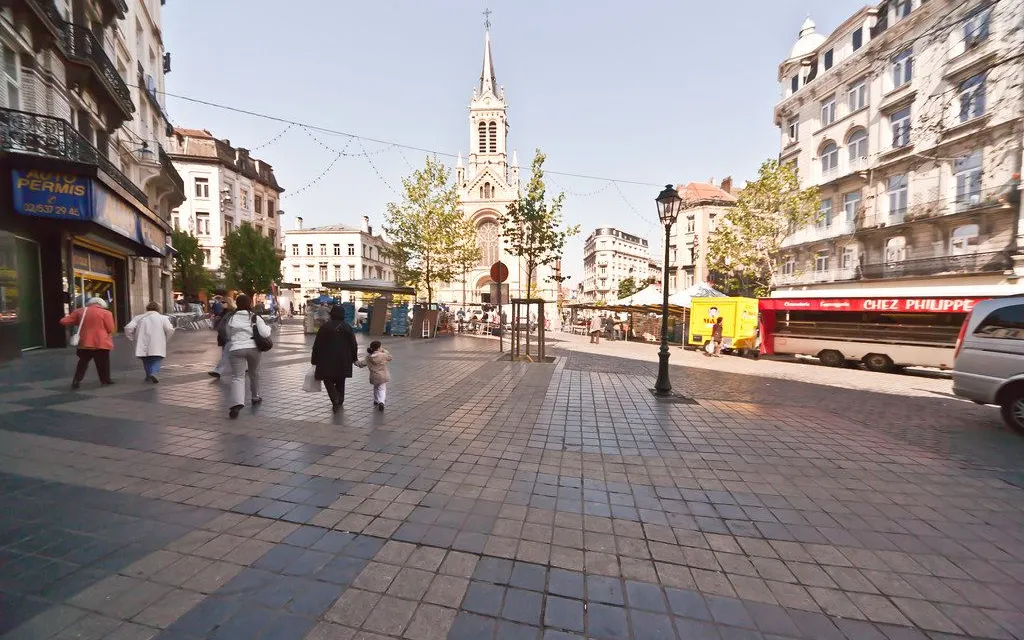
Photo by Flocci Nivis on Wikimedia Commons

Brussels is a city built on a slope, and this walk starts at the top of it. The Grand Sablon is where the aristocracy settled in the 15th century, and where chocolate and antiques are still sold today: Wittamer on the square since 1910, the weekend antiques market since 1960.

From there the route passes two churches and a walled garden of bronze trades, then climbs to the Place Poelaert terrace for the widest view in the city, with a free glass lift down into the Marolles.

Below is the other register. Rue Haute and rue Blaes carry cafés, old workshops and workers' housing; the Place du Jeu de Balle has held a daily flea market since 1873, more than 300 stalls, packed up by early afternoon. Notre-Dame de la Chapelle closes the loop, the church of the weavers and tanners who lived outside the city wall, with Pieter Bruegel the Elder buried inside.

Hear it on the street

Get the turn-by-turn audio guide in the app. The narration plays itself as you reach each stop, hands-free and offline.

Stop by stop

The route

Interactive map of the route. The full stop list below works without it.

Place du Grand SablonMust see

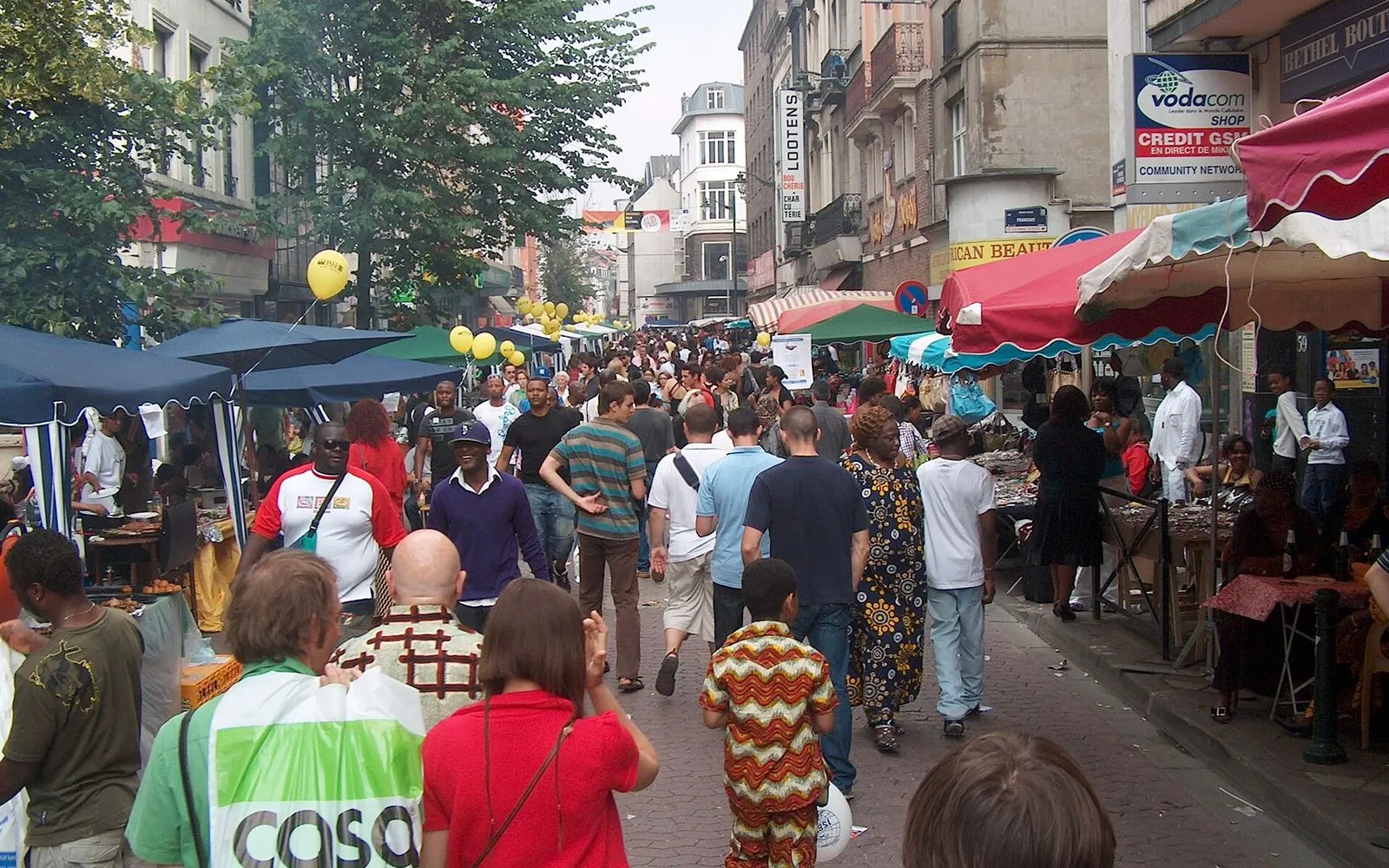
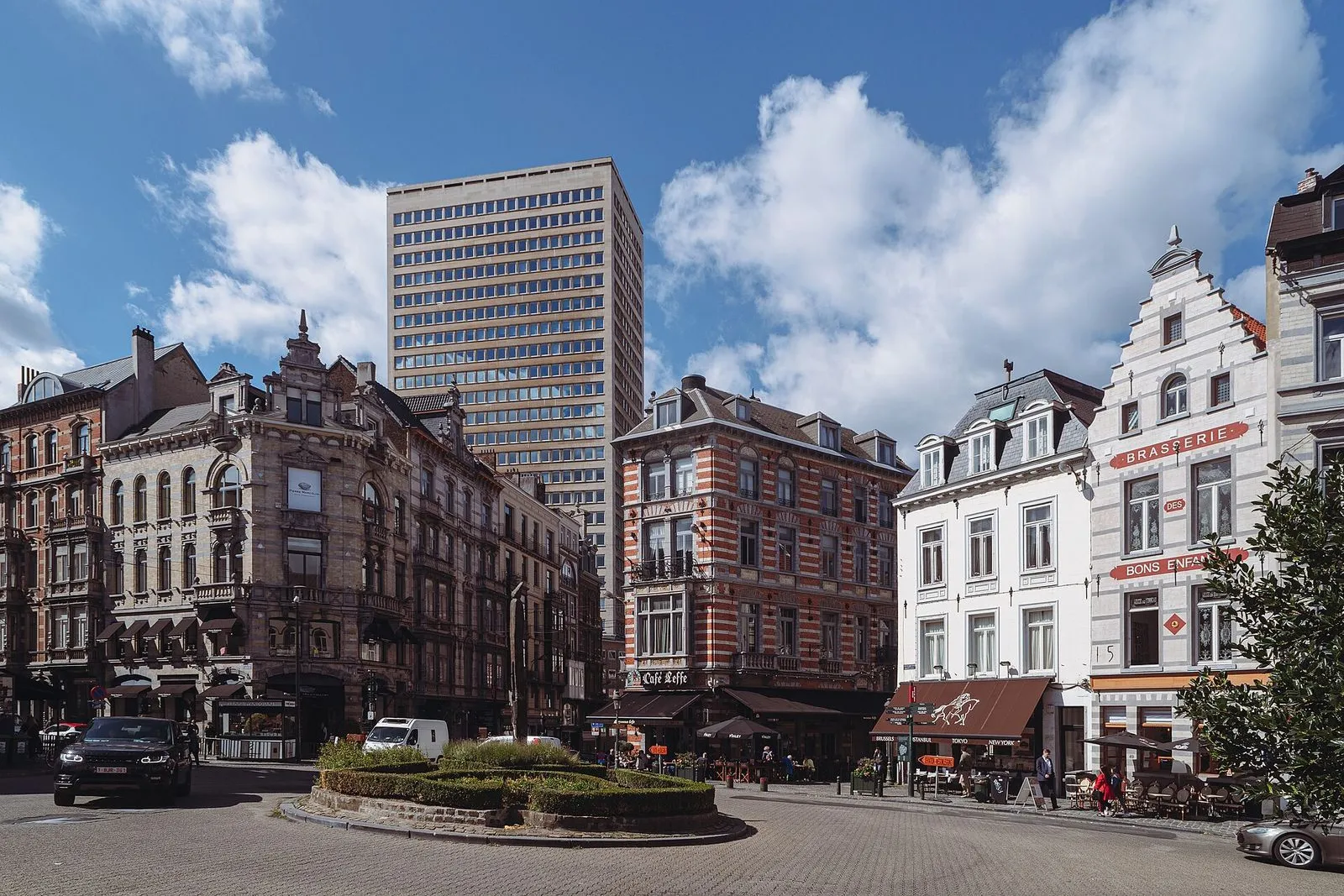
Photo by Luu on Wikimedia Commons

Place du Grand Sablon

0:00

Chocolate, antiques, and the square where noble families built their mansions

You're standing on the aristocratic hill of Brussels. From the 15th century, when this was pasture and kitchen gardens outside the first wall, noble families built their mansions around the church behind you, and the square has been trading ever since. Two trades run it now. At weekends the antiques dealers set out their stalls, and they have done it here since 1960.

Then there's the chocolate. Wittamer has been on this square since 1910, when the business was still a bakery, and Pierre Marcolini has shops a few steps away. Look at the houses above the market. The Ommegang paintings of 1615 show the mansions that once lined this square, and nearly all of them have since been rebuilt, so what you photograph is a 19th-century stage set with a 21st-century price list.

Hold on to that contrast. Walk down this hill and you land in the Marolles, where the market sells what other people threw away, every morning of the year, at prices the seller invents on the spot.
≈2 min walk to the next stop
Église Notre-Dame du SablonMust see

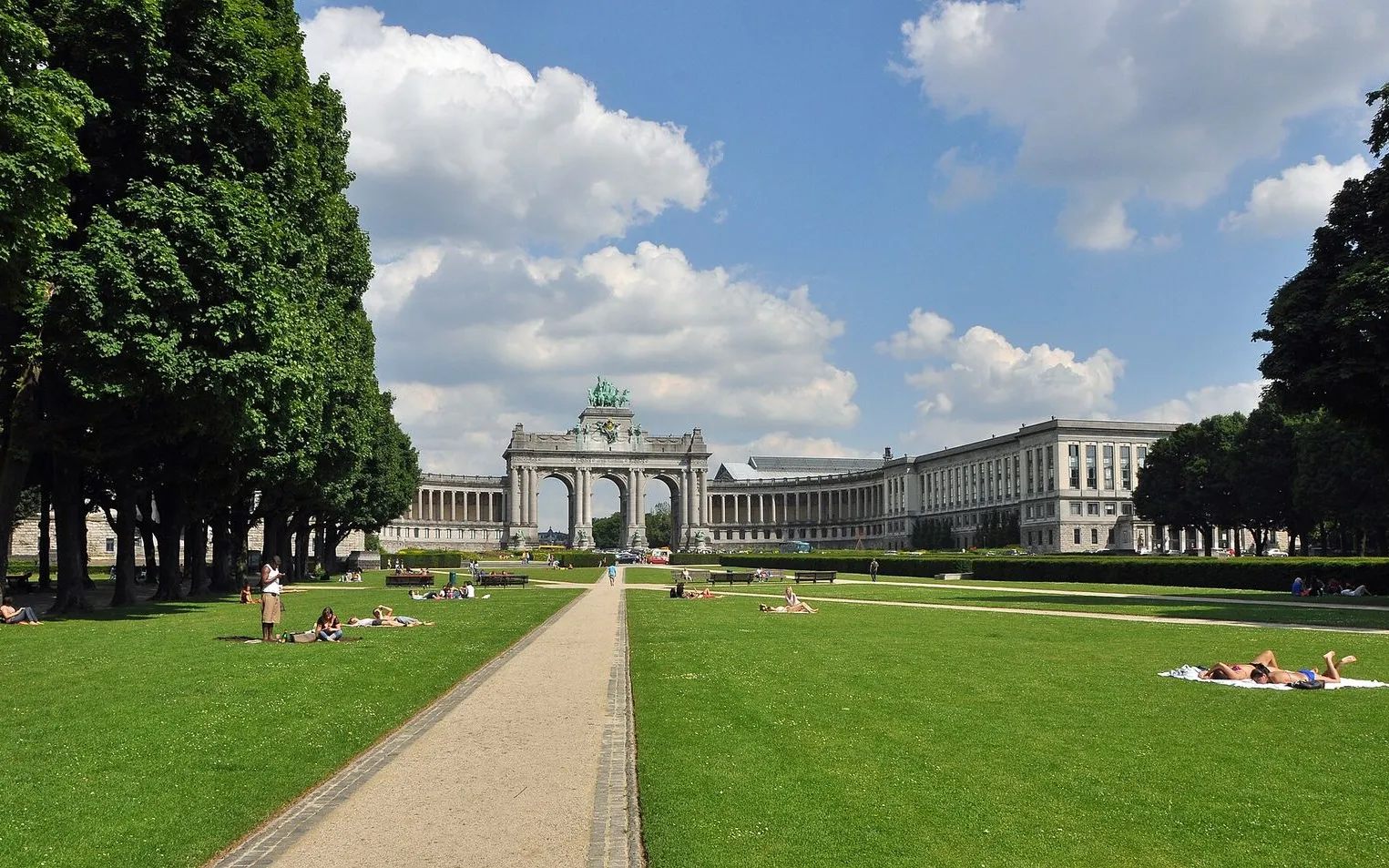
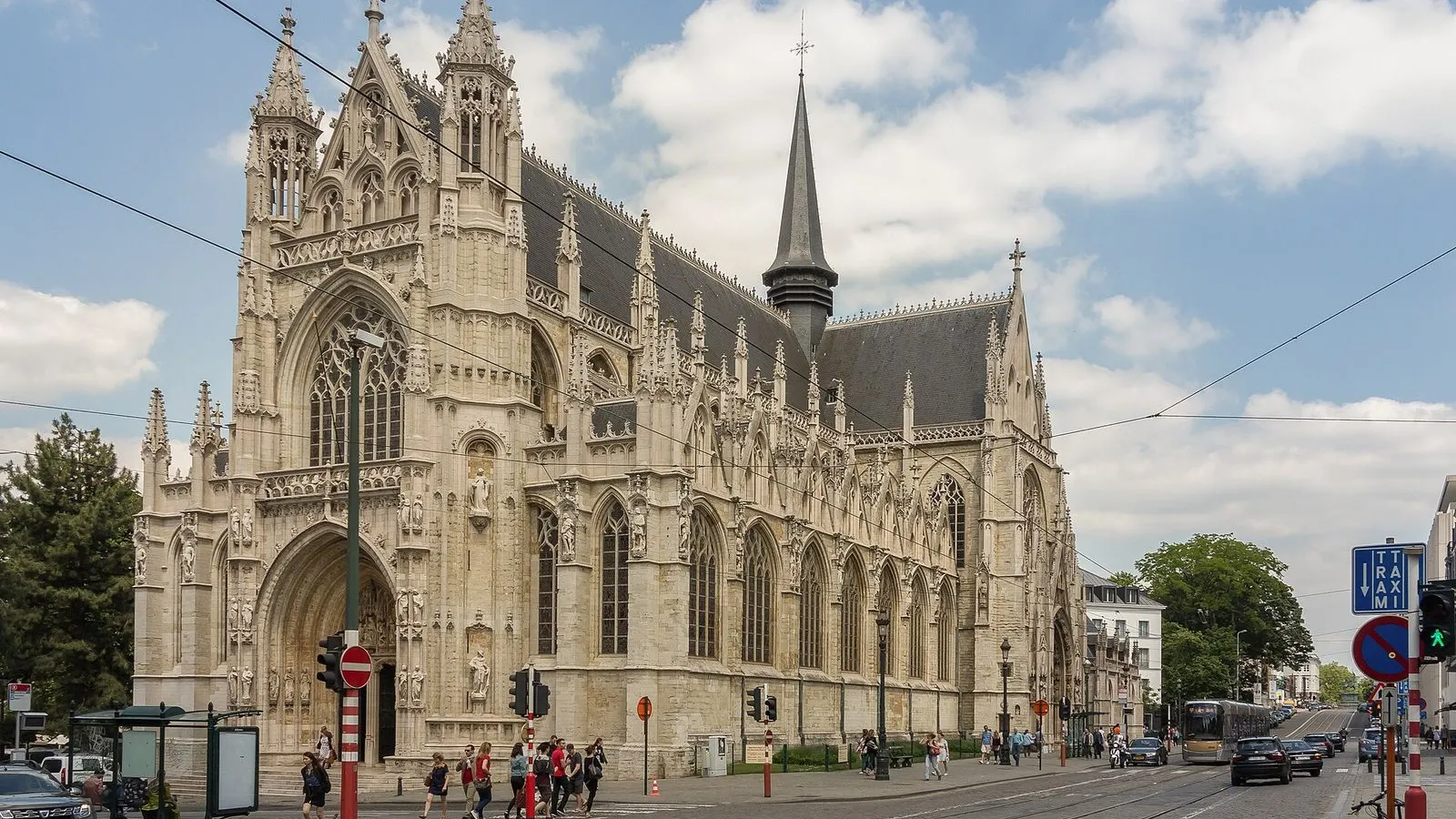
Photo by Michielverbeek on Wikimedia Commons

Église Notre-Dame du Sablon

0:00

The crossbowmen's church, paid for by pilgrims and a carried statue

This church was built with money from a crossbow. In 1304 the hospital of Saint John handed the crossbowmen's guild a patch of ground on the condition that they build a chapel, and they did, between 1304 and 1318. In 1348 a woman named Béatrice Soetkens brought a statue of the Virgin and Child here from Antwerp, saying the Virgin herself had told her to. The Ommegang procession still commemorates that arrival every summer.

Pilgrims paid for what you see now. In the early 15th century the guild began this bigger church, and the choir was finished by 1435. Marie of Hungary, sister of Charles the Fifth, was baptised in here in 1505, and Margaret of Austria came to pray. It is Brabantine Gothic, which means the stone is worked until it looks like lace and then left to go grey in the rain.

The guild that paid for it held its shooting contests at the tower. In 1615 the Archduchess Isabella brought the parrot down from the top of it with her first bolt, and that one shot made her popular.

≈2 min walk to the next stop
Square du Petit SablonLocal pick

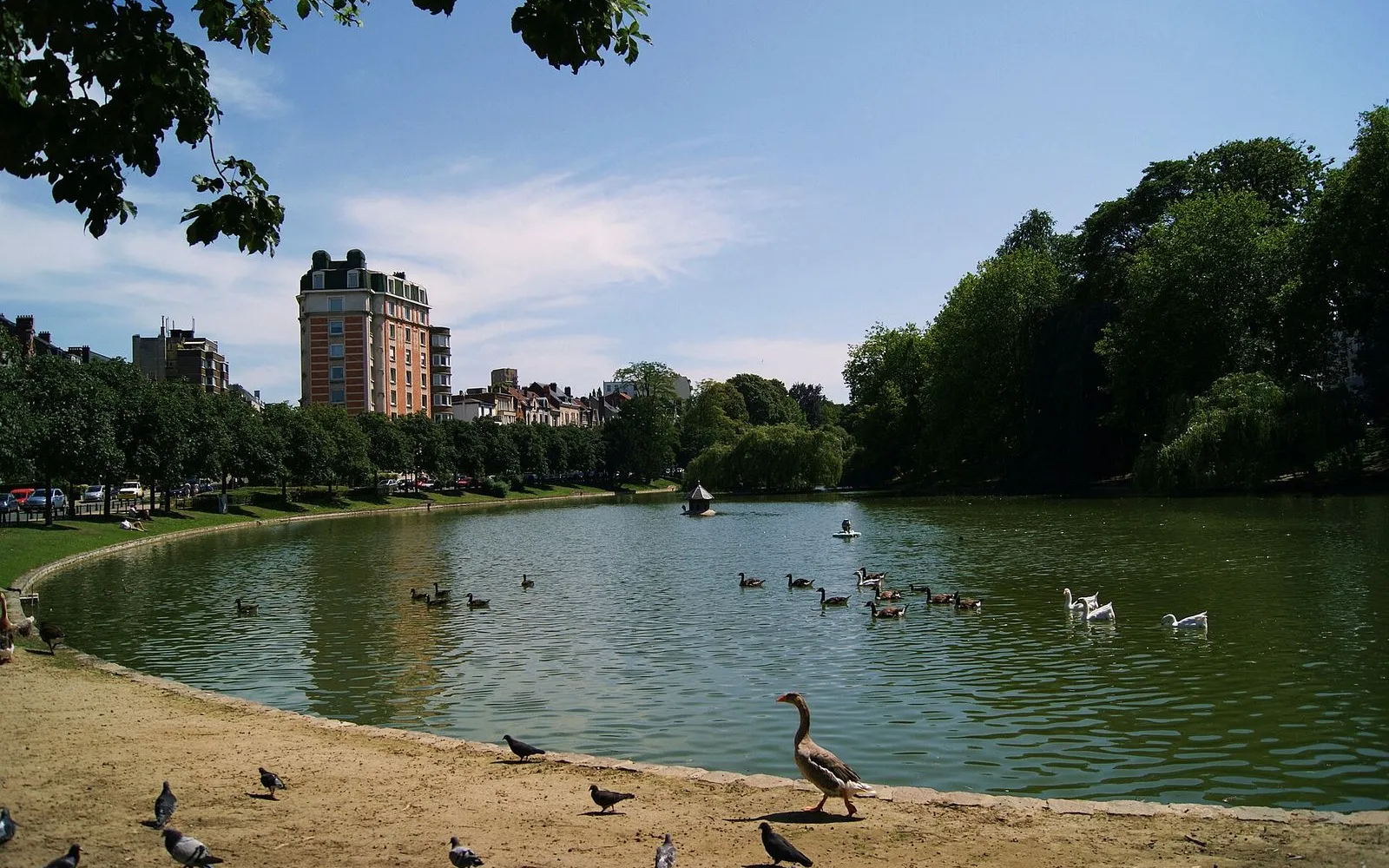
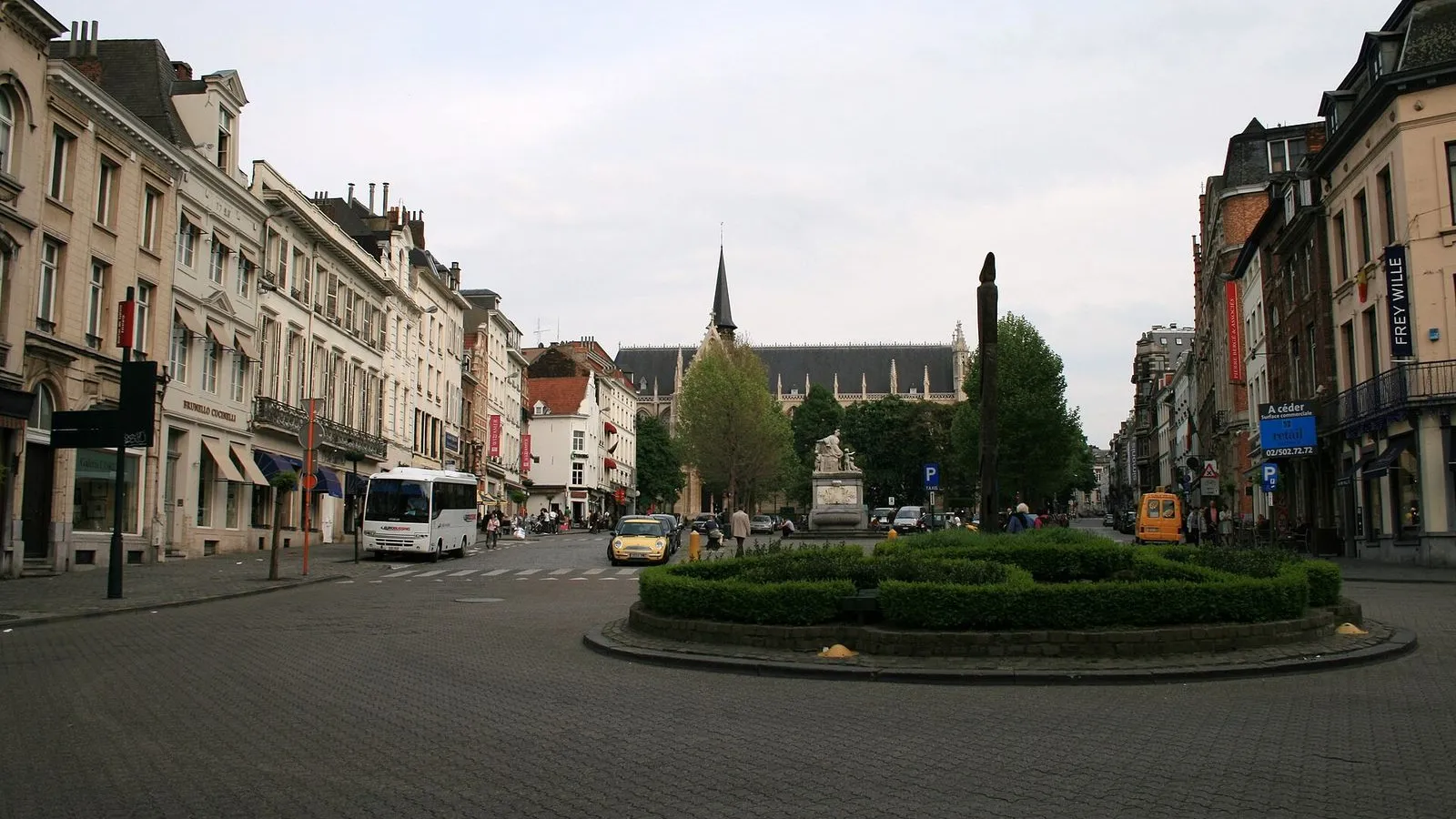
Photo by William Murphy from Dublin, Ireland on Wikimedia Commons

Square du Petit Sablon

0:00

A walled garden ringed with 48 bronze trades and two dead counts

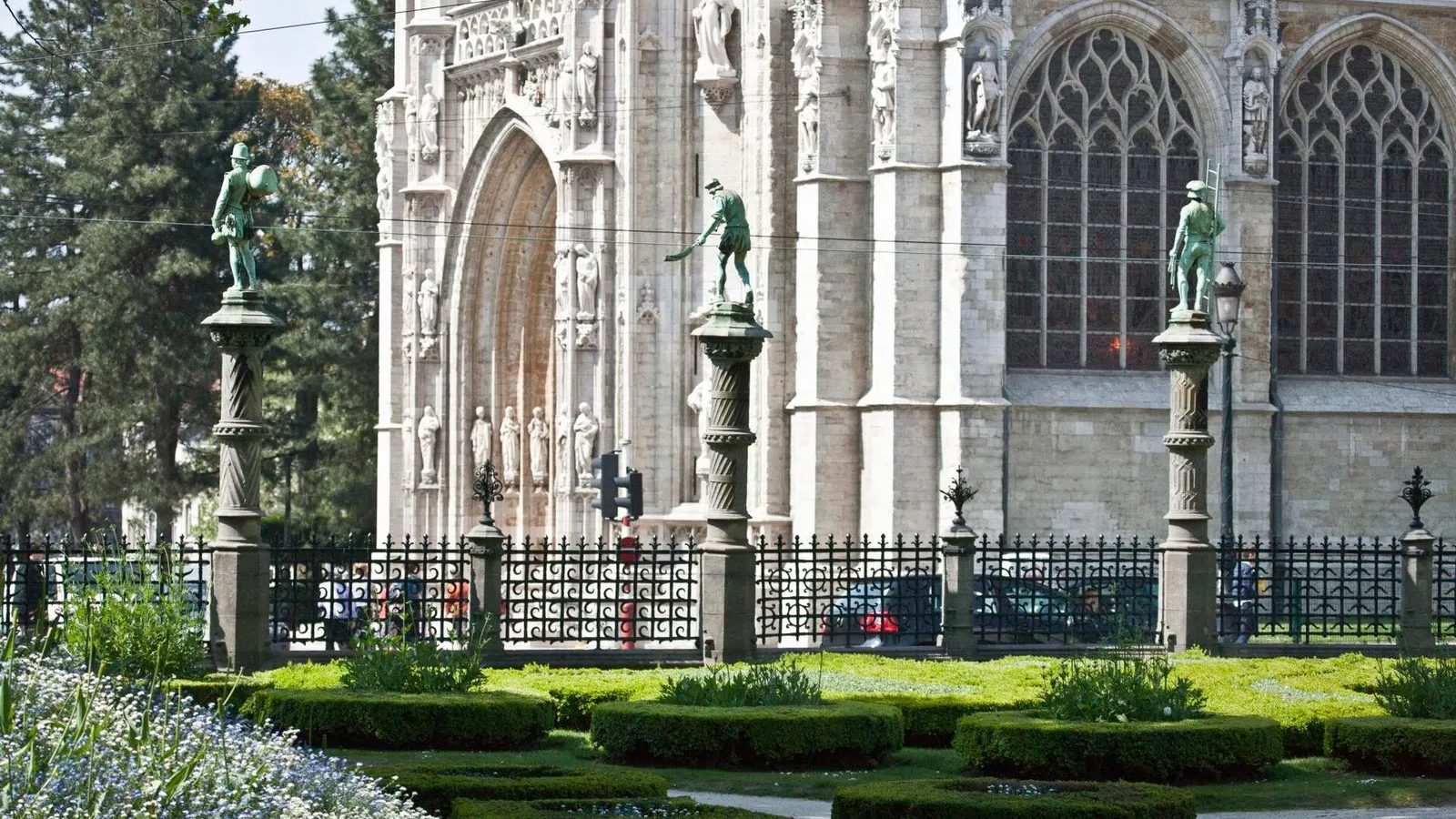
This garden was a cemetery for four hundred years. The hospital of Saint John buried its dead here from 1299, and after complaints from the noble neighbours the graves were moved out and the ground paved in 1704. What you see now was designed by the architect Henri Beyaert, whose plans date from 1876; the garden was finished and opened in 1890. The iron railing is the pleasure of the place.

Forty-eight bronze figures stand on its columns, and every one of them is a Brussels trade: bakers, brewers, tanners, glovers, goldsmiths, mirror makers. The painter Xavier Mellery drew all 48 so that no two would clash, and a group of sculptors made them. Find the masons and stonecutters; the man holding the compass has Beyaert's own face. At the back, the counts Egmont and Hornes walk towards the scaffold.

They were beheaded on the Grand-Place in 1568 on the orders of the Duke of Alba, and their monument was carried here from the spot where they died. Ten white marble figures of the 16th century surround them. Walk the fence slowly; the tools give each trade away.

≈6 min walk to the next stop
Free preview ends here · stops 4 to 8 continue in the app

Place Poelaert

The widest view in Brussels, and the palace that emptied the Marolles

in app

Rue Haute

The old Roman road down into the working district

in app

Place du Jeu de Balle

More than 300 stalls of brol, every morning of the year

in app

Rue Blaes

The street cut through in the 1850s, now cafés and antiques

in app

Église Notre-Dame de la Chapelle

The weavers' parish, with Pieter Bruegel the Elder buried inside

in app
Good to know

Before you go

When is the flea market at the Jeu de Balle?

The stalls go up every morning from around 6:00 and most traders pack away by about 14:00; the best pieces move before 10:00, and weekend mornings draw the biggest crowds. The square and its cafés carry on all day.

SourceSablon and Marolles local guide, brussels-trip.comJeu de Balle market page, localcooltour.com
Where should I buy chocolate on the Sablon?

Wittamer has been on the Grand Sablon since 1910, and Pierre Marcolini's shop at Place du Grand Sablon 39 sells pralines by weight from about €9 per 100 g.

SourceSablon and Marolles local guide, brussels-trip.com
Is the glass lift at Place Poelaert free?

The glass lift at Place Poelaert is free. It connects the Poelaert terrace, with its view over the lower town, to the Marolles below, and saves the climb between the two levels of the city.

Keep exploring

More walks in Brussels

Mont des Arts & the Royal QuarterThe essentials

Mont des Arts & the Royal Quarter

Brussels is a city on two levels. This walk climbs from the cathedral to the palace plateau, past a gallery that hides a whole floor, a garden built over a car park, and a square laid over a palace that burned in 1731.

7 stops1.9 km30+ min
Brussels in ComicsThe local mix

Brussels in Comics

Brussels put comics on its walls. More than fifty of them since 1991, when the city peeled off its advertising hoardings and painted over the damage. One loop from Horta's comic museum to the Gauls of Rue de la Buanderie.

8 stops2.7 km45+ min
Matongé & Saint-BonifaceThe hidden side

Matongé & Saint-Boniface

An hour through Brussels' African quarter and the neo-Gothic streets beside it: hairdressers and wax fabric, Congolese kitchens, then Art Nouveau façades and café terraces. Ten minutes from the Royal Quarter, it feels like another city.

7 stops1.8 km30+ min
Cinquantenaire Park & its MuseumsThe essentials

Cinquantenaire Park & its Museums

One esplanade, three museums, a park and a rooftop more than 60 meters above Brussels. Cars, marble, aircraft and a bronze chariot keep this walk interesting when the sky gives way.

5 stops1.1 km20+ min
Grand-Place & the Lower TownThe local mix

Grand-Place & the Lower Town

A first walk through the heart of Brussels: a glass-roofed arcade, the square rebuilt in stone after 1695, and the old harbour quays where the city's fish market once stood.

8 stops1.8 km30+ min
Ixelles Ponds, Flagey & Art NouveauThe local mix

Ixelles Ponds, Flagey & Art Nouveau

On foot from a Wednesday market square to a Cistercian abbey, along the valley the Maelbeek cut: Horta's first house, the ponds, and a street of facades you read from the pavement.

8 stops3.4 km55+ min
Saint-Gilles: Horta & the ParvisThe local mix

Saint-Gilles: Horta & the Parvis

A walk south of the centre through the streets where Belgium's Art Nouveau was built, covered in sgraffito you have to look up to see, and nearly lost, ending on the market square the neighbourhood still lives on.

8 stops4.1 km60+ min

Provenance · last verified September 27, 2026

Built from the Wayside route itself: the stops, their order, and the walk between them.

Photo by Flocci Nivis on Wikimedia Commons · CC BY 4.0

Photo by Luu on Wikimedia Commons · Public domain

Photo by Michielverbeek on Wikimedia Commons · CC BY-SA 4.0

Photo by William Murphy from Dublin, Ireland on Wikimedia Commons · CC BY-SA 2.0

Photo by TE LUN OU YANG on Unsplash

Photo by Ferran Cornellà on Wikimedia Commons · CC BY-SA 3.0

Photo by Varech on Wikimedia Commons · CC BY-SA 3.0

Photo by MJJR on Wikimedia Commons · CC BY 3.0

Photo by Virginia Marinova on Unsplash

Photo by Jopparn on Wikimedia Commons · CC BY-SA 3.0

Photo by infomatique on Openverse · CC BY-SA 2.0

Coming soon

Wayside isn't in the app stores yet, but it's in the works. Check back soon.