 Local pick
Photo by Stephane Mignon from Bruxelles, Belgique (Europe) on Wikimedia Commons
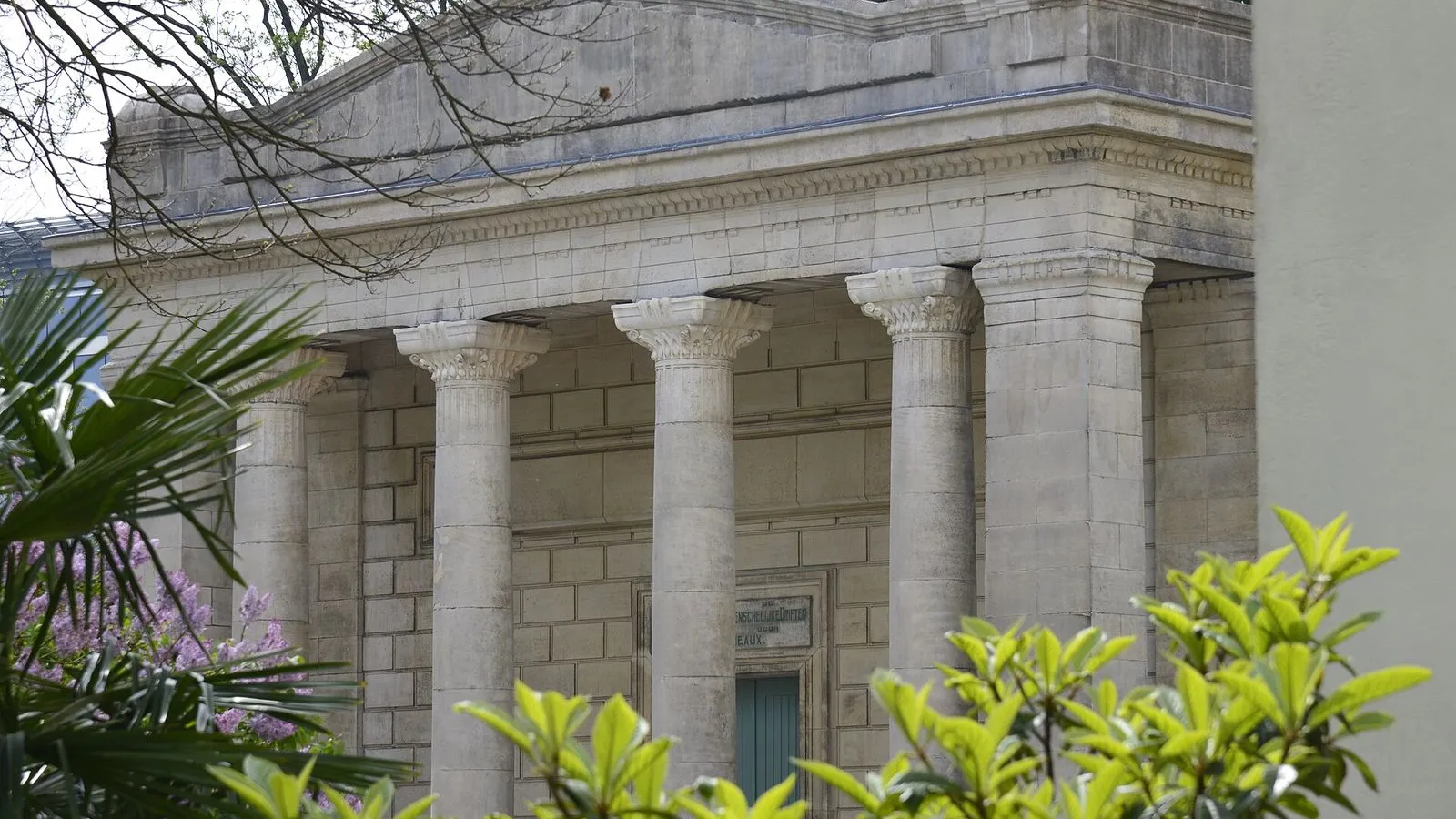
Pavillon des Passions humaines
Horta's first public building, hiding a marble relief that scandalized Belgium.
It cost 136,000 francs and it scandalized the country. In 1890 Leopold II commissioned the sculptor Jef Lambeaux to carve a vast marble relief about the pleasures and miseries of humanity, and Victor Horta, then a trainee in the office of the court architect Alphonse Balat, was handed his first public commission to build a small Greek temple around it. Lambeaux cut the relief out of seventeen blocks of Carrara marble. When the pavilion opened on 1 October 1899, the Catholic press called the work immoral, and three days later the open front had been boarded shut with planks.
Wood became a wall in 1909. In 1978 Belgium gave the pavilion to the king of Saudi Arabia, who handed it to the Islamic center next door, and a plan to take out the relief was stopped by the monuments commission. The doors open on only a few dates a year, so you will probably see it from the grass. Fifty meters away stands the Great Mosque, built as a Moorish pavilion for the 1897 world's fair to hold a painted panorama of Cairo and the Nile, and turned into a mosque in 1978, its 40 meter minaret rising above the trees.