Brussels · Self-guided audio walk

Saint-Gilles: Horta & the Parvis

A walk south of the centre through the streets where Belgium's Art Nouveau was built, covered in sgraffito you have to look up to see, and nearly lost, ending on the market square the neighbourhood still lives on.

  • 8Stops
  • 4.1 kmDistance
  • 60+ minTime
Saint-Gilles: Horta & the Parvis

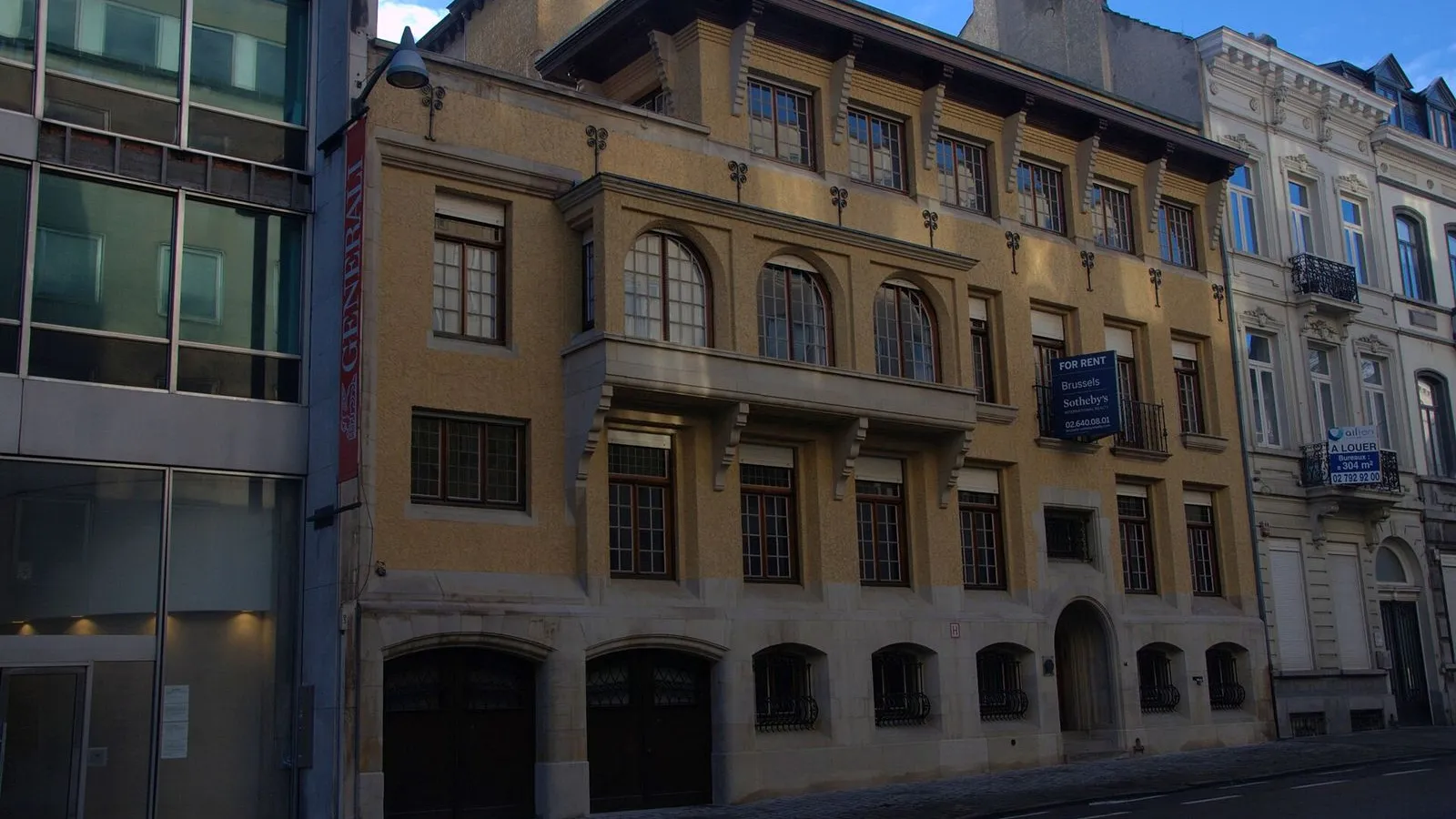
Photo by infomatique on Openverse

Saint-Gilles was a village of 41 houses in 1525 and a suburb of 60,000 people by 1910. The Art Nouveau in these streets is what that growth bought: private houses with curved ironwork, stained glass, and drawings scratched into wet plaster above the ground floor.

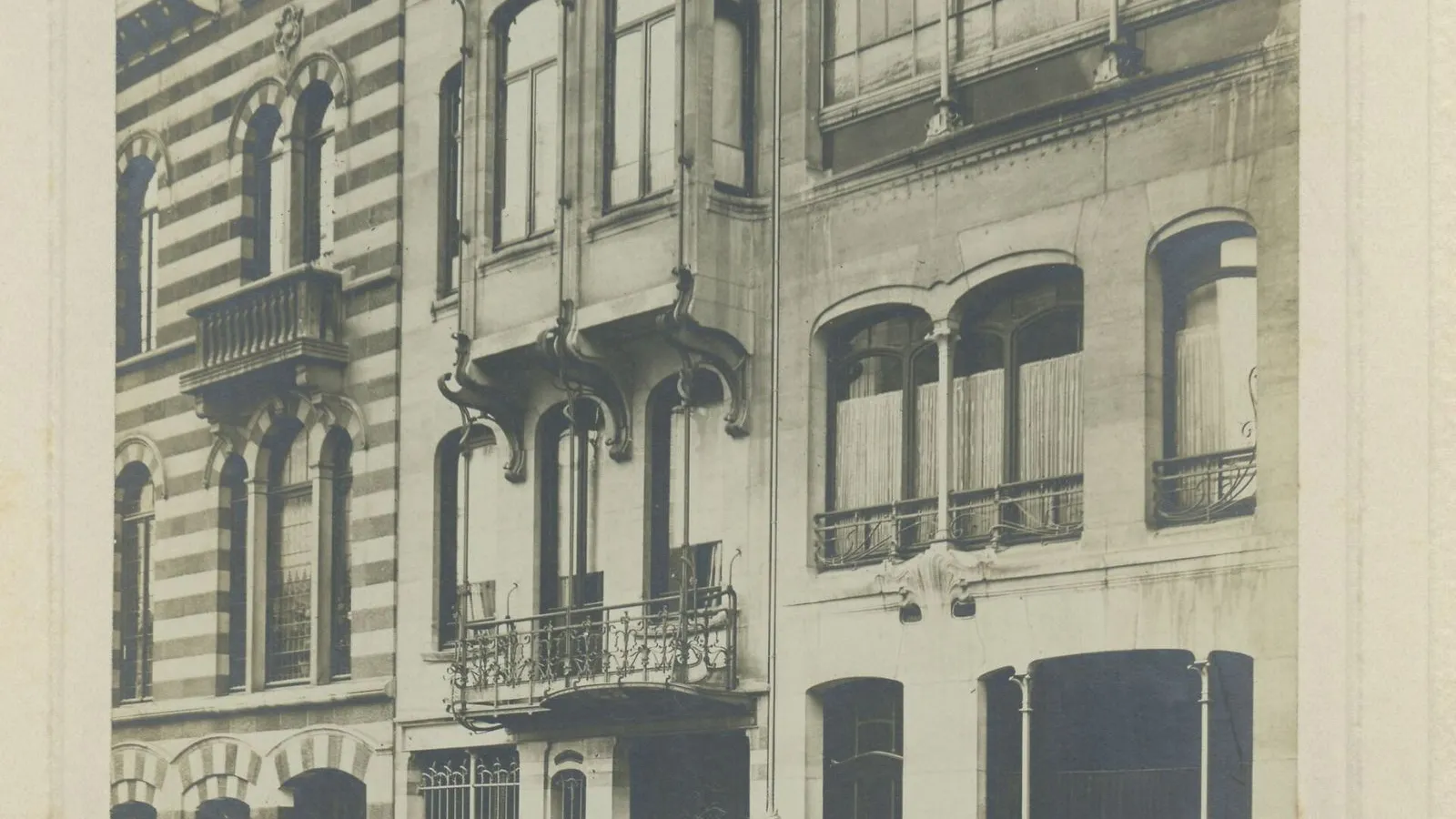
The walk starts at Maison Hannon, the house museum on Avenue de la Jonction, goes on to Victor Horta's own house and studio on Rue Américaine, and passes through the streets where the decoration sits above eye level, on Rue Defacqz, Rue Faider and Rue Africaine.

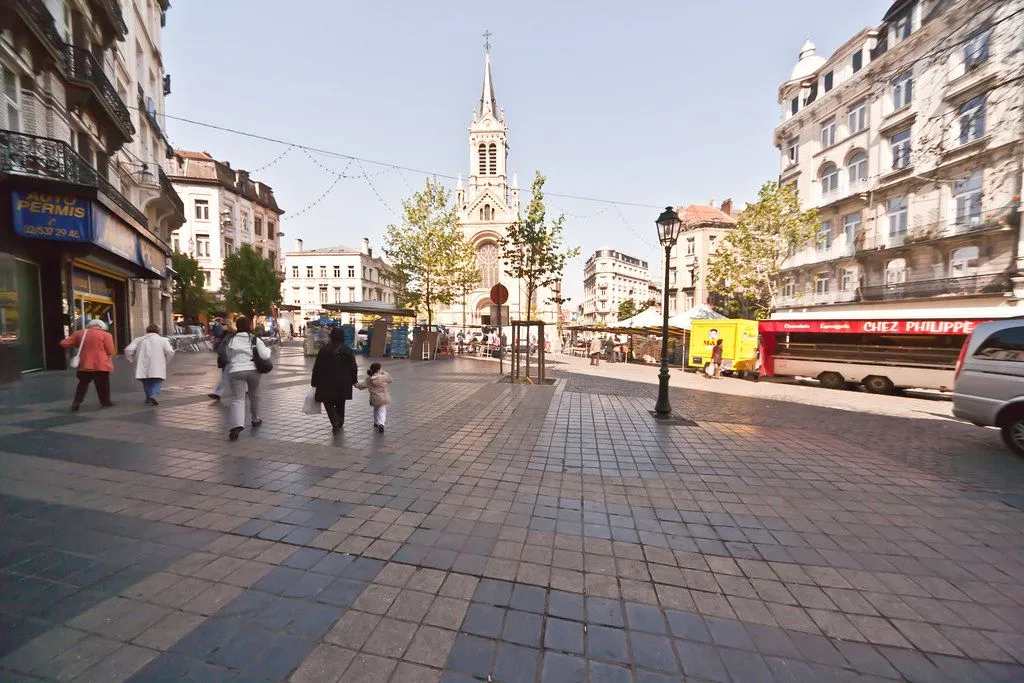
It ends downhill at the town hall of 1904, the Barrière crossroads, and the Parvis, the sloping market square where the neighbourhood still shops and drinks. Both houses need a booking, and the walk works best Thursday to Sunday afternoon, when the two are open on the same day.

Hear it on the street

Get the turn-by-turn audio guide in the app. The narration plays itself as you reach each stop, hands-free and offline.

Stop by stop

The route

Interactive map of the route. The full stop list below works without it.

Maison HannonMust see

Photo by M0tty on Wikimedia Commons

Maison Hannon

0:00

A 1902 house with a metal winter garden leaning over the street.

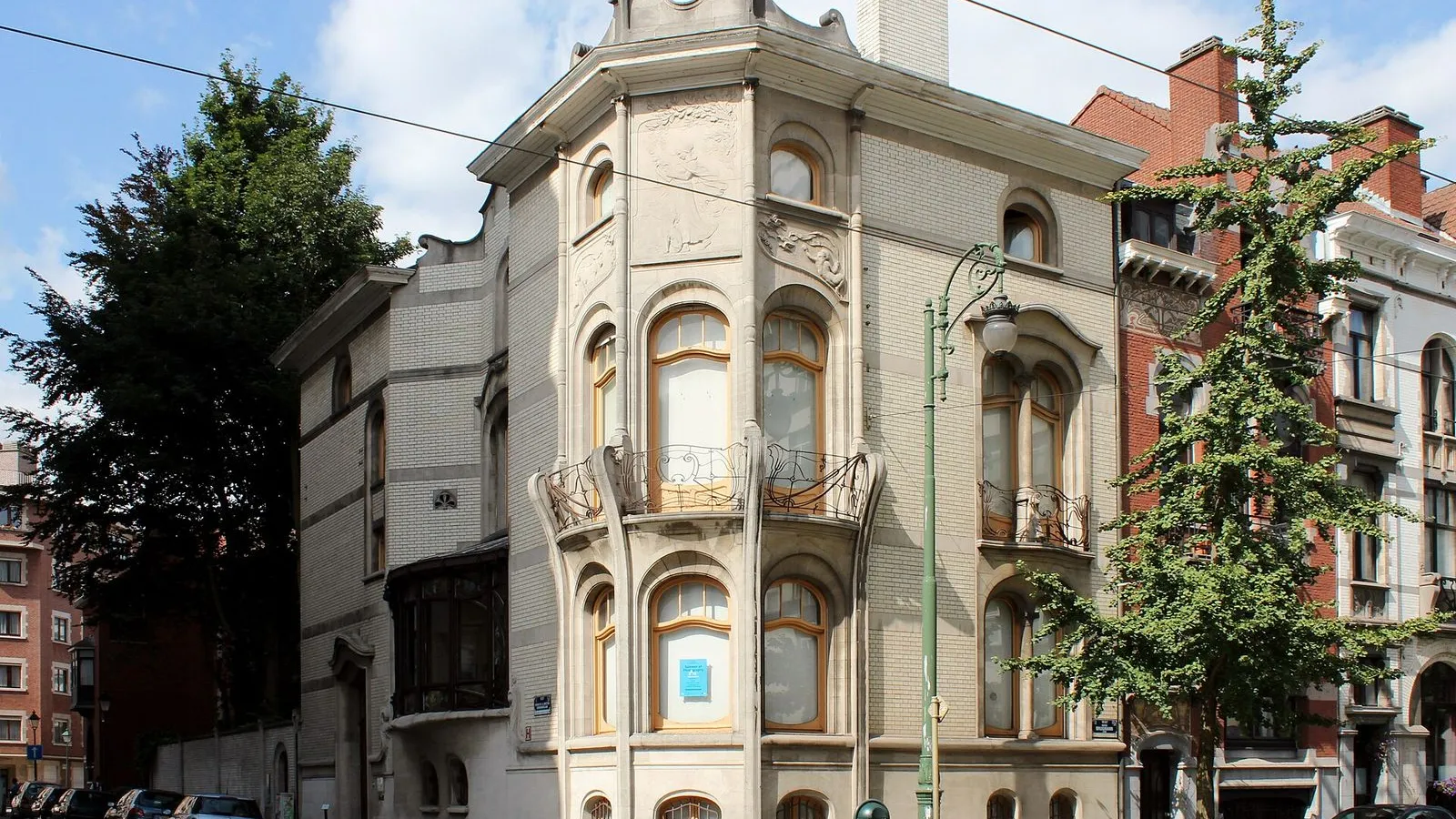
You're standing on the corner of Avenue Brugmann and Avenue de la Jonction, in front of the house Jules Brunfaut designed for Marie Debard and Édouard Hannon in 1902. Hannon was an engineer at Solvay, and the couple had come back from the Paris exhibition of 1900 with their heads full of the French Art Nouveau of Émile Gallé. They asked their friend Brunfaut for a house in the manner of Horta. It was his only Art Nouveau building, and he put everything into it: a winter garden of glass and iron that leans out over the pavement, mosaics of holly leaves underfoot, stained glass by Raphaël Évaldre in the curved bow window, frescoes by Paul Baudouin around the staircase.

On the corner above you, Victor Rousseau's relief shows time suspended at sunset. After the Hannons' daughter died in 1965 the family sold up and the house was left to vandals. The facades and roof were listed in 1976, which blocked an apartment block, and the commune bought it in 1979. The museum opened in 2023.

It's open Thursday to Sunday, and the ticket covers the Horta Museum as well, on the same day.
≈7 min walk to the next stop
Musée HortaMust see

Photo by Victor Horta on Wikimedia Commons

Musée Horta

0:00

Victor Horta's own house and studio, eleven half-floors around three stairwells.

The two buildings at 23 and 25 Rue Américaine are the house and studio Victor Horta built for himself between 1898 and 1901, the years when Brussels Art Nouveau was at its height. Number 23 was the studio, number 25 the family house, and he joined them without a visible seam. Inside, eleven half-levels climb around three narrow stairwells to a glass roof, so the daylight falls through the middle of the plan. Horta sold the house in 1919 and the furniture was dispersed.

In 1961, the centenary year of his birth, the commune of Saint-Gilles bought it, pushed by Jean Delhaye, who had been Horta's pupil and then his assistant. The museum opened on 8 March 1969, and in 2000 UNESCO listed it along with three other Horta buildings in Brussels. Fifteen people go in every fifteen minutes, so book a slot online before you come, and give the visit about 45 minutes. It's closed on Mondays.

≈8 min walk to the next stop
Rue DefacqzLocal pick

Photo by Mélioratif on Wikimedia Commons

Rue Defacqz

0:00

The street to walk with your chin up: sgraffito panels above the ground floor.

Take this street slowly and look up. Sgraffito is plaster work: a dark coat, a thin light coat over it, and a drawing scratched through while the top is still wet, the dark showing where the line was cut. Some panels were coloured afterwards, others stayed in two tones. Thousands of Brussels buildings carry them.

The house at number 71 was Paul Hankar's own, built in 1893, and the painter Adolphe Crespin filled its front with white hydrangeas, the date 1893, and four panels under the cornice: morning, a bird with chestnut leaves; day, a bird against a radiant sun; evening, a swallow; night, a bat and stars. Hankar set red brick, blue stone, pink pudding stone and pale Gobertange stone in the same wall, with cats on the balconies and insects carved into the stone brackets. Further along, the wide house that takes up two plots is the Hôtel Ciamberlani, built in 1897 for the painter Albert Ciamberlani, who drew its sgraffites himself: medallions of the labours of Hercules and, in the middle, the three ages of life. Rue Faider and Rue Africaine, a few steps away, carry the same decoration.

≈4 min walk to the next stop
Free preview ends here · stops 4 to 8 continue in the app

Hôtel Goblet d'Alviella

The oldest sgraffito facade still standing in Brussels, from 1882.

in app

Hôtel de ville de Saint-Gilles

Unveiled in 1904, the commune's showpiece on Place Van Meenen.

in app

Barrière de Saint-Gilles

A crossroads that was a windmill hill, then a toll, now a busy junction.

in app

Rue Vanderschrick

A street pushed through around 1900 and decorated in Art Nouveau plaster.

in app

Parvis de Saint-Gilles

The old village square: market stalls, café terraces, a sloping parvis.

in app
Good to know

Before you go

Do the two houses need booking?

Book the Musée Horta, which takes visitors by reservation only; for Maison Hannon, booking online is advised. The walk works best from Thursday to Sunday, in the afternoon, when the two are open on the same day.

What has happened at the Barrière de Saint-Gilles?

The statue there came down in March 2026 for the works, and it's due back in the second half of 2027. The rest of the walk is unchanged.

Where do I look for the Art Nouveau?

Above the ground floor. The sgraffito panels on Rue Defacqz, Rue Faider and Rue Africaine are drawn into the plaster, and Rue Vanderschrick is a whole street of Art Nouveau decoration from around 1900.

Keep exploring

More walks in Brussels

Mont des Arts & the Royal QuarterThe essentials

Mont des Arts & the Royal Quarter

Brussels is a city on two levels. This walk climbs from the cathedral to the palace plateau, past a gallery that hides a whole floor, a garden built over a car park, and a square laid over a palace that burned in 1731.

7 stops1.9 km30+ min
Brussels in ComicsThe local mix

Brussels in Comics

Brussels put comics on its walls. More than fifty of them since 1991, when the city peeled off its advertising hoardings and painted over the damage. One loop from Horta's comic museum to the Gauls of Rue de la Buanderie.

8 stops2.7 km45+ min
Matongé & Saint-BonifaceThe hidden side

Matongé & Saint-Boniface

An hour through Brussels' African quarter and the neo-Gothic streets beside it: hairdressers and wax fabric, Congolese kitchens, then Art Nouveau façades and café terraces. Ten minutes from the Royal Quarter, it feels like another city.

7 stops1.8 km30+ min
Sablon & the MarollesThe local mix

Sablon & the Marolles

Two markets, one hill. Up top, chocolate and antiques at weekend prices. A few streets down, the daily brol of the Marolles. Time it for a market morning and the contrast is the whole walk.

8 stops2.5 km40+ min
Cinquantenaire Park & its MuseumsThe essentials

Cinquantenaire Park & its Museums

One esplanade, three museums, a park and a rooftop more than 60 meters above Brussels. Cars, marble, aircraft and a bronze chariot keep this walk interesting when the sky gives way.

5 stops1.1 km20+ min
Grand-Place & the Lower TownThe local mix

Grand-Place & the Lower Town

A first walk through the heart of Brussels: a glass-roofed arcade, the square rebuilt in stone after 1695, and the old harbour quays where the city's fish market once stood.

8 stops1.8 km30+ min
Ixelles Ponds, Flagey & Art NouveauThe local mix

Ixelles Ponds, Flagey & Art Nouveau

On foot from a Wednesday market square to a Cistercian abbey, along the valley the Maelbeek cut: Horta's first house, the ponds, and a street of facades you read from the pavement.

8 stops3.4 km55+ min

Provenance · last verified September 27, 2026

Built from the Wayside route itself: the stops, their order, and the walk between them.

Photo by infomatique on Openverse · CC BY-SA 2.0

Photo by M0tty on Wikimedia Commons · CC BY-SA 3.0

Photo by Victor Horta on Wikimedia Commons · CC0

Photo by Mélioratif on Wikimedia Commons · CC BY-SA 4.0

Photo by TE LUN OU YANG on Unsplash

Photo by Ferran Cornellà on Wikimedia Commons · CC BY-SA 3.0

Photo by Varech on Wikimedia Commons · CC BY-SA 3.0

Photo by Flocci Nivis on Wikimedia Commons · CC BY 4.0

Photo by MJJR on Wikimedia Commons · CC BY 3.0

Photo by Virginia Marinova on Unsplash

Photo by Jopparn on Wikimedia Commons · CC BY-SA 3.0

Coming soon

Wayside isn't in the app stores yet, but it's in the works. Check back soon.