Brussels · Self-guided audio walk

Grand-Place & the Lower Town

A first walk through the heart of Brussels: a glass-roofed arcade, the square rebuilt in stone after 1695, and the old harbour quays where the city's fish market once stood.

  • 8Stops
  • 1.8 kmDistance
  • 30+ minTime

This is the walk to take on the day you arrive: under an hour of strolling and listening, longer if you go inside, all of it on flat ground, from the glass roof of the Galeries Royales Saint-Hubert to the beguinage church behind the old harbour.

You cross the Grand-Place and hear what happened in August 1695, when French guns left the square in ashes and the guilds rebuilt it in stone within about four years. You pass Saint-Nicolas, a medieval church still squeezed between its neighbours. At the Bourse, Belgian Beer World explains the national drink and pours you one on the roof.

Then the lower town opens up: the fish market square of Sainte-Catherine, a scrap of the first city wall, and the quays where Brussels' port used to be. Free to walk, and you pay only if you want to go inside.

Hear it on the street

Get the turn-by-turn audio guide in the app. The narration plays itself as you reach each stop, hands-free and offline.

Stop by stop

The route

Interactive map of the route. The full stop list below works without it.

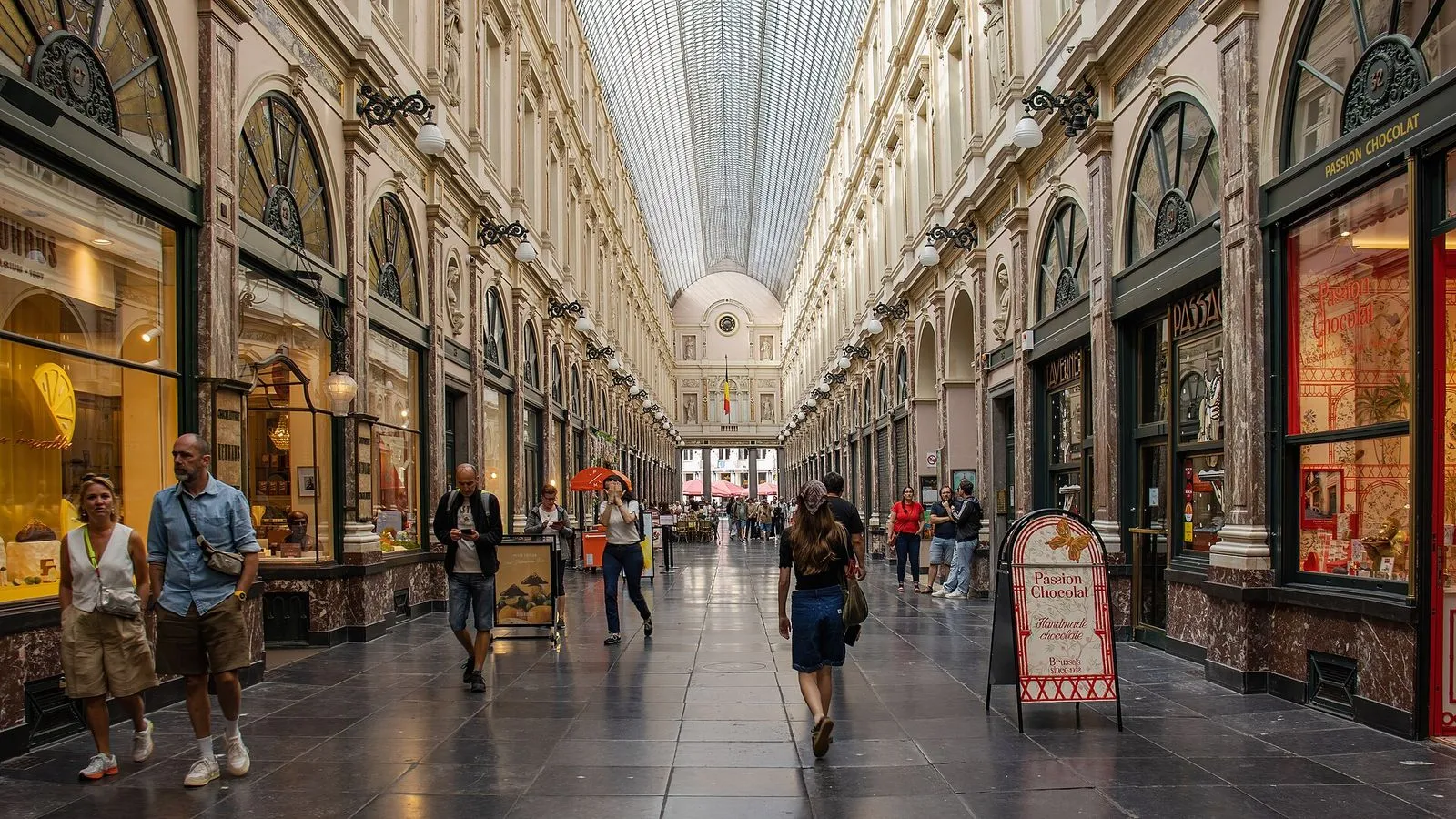
Galeries Royales Saint-HubertMust see

Photo by iMahesh on Wikimedia Commons

Galeries Royales Saint-Hubert

0:00

An 1847 shopping arcade under a roof of iron and glass.

You're standing in a street with a roof on it. The Galeries Royales Saint-Hubert opened in 1847, designed by Jean-Pierre Cluysenaar, and the idea was simple: take lanes too narrow for carriages, cover them in iron and glass, and let the shops trade in daylight whatever the weather. The glass overhead runs about 18 meters up. The Galerie du Roi and the Galerie de la Reine are each more than a hundred meters long, and the Galerie du Roi measures 213 meters end to end, a bit over eight meters wide, two city blocks under one roof.

Walk on and look to your right at number 23 in the Galerie de la Reine: Neuhaus has sold chocolate there since 1857, and it was in that shop, in 1912, that the praline was invented. You'll come out by the Grand-Place. Before you leave, look up at the central peristyle: it lost its glass in the last century and got it back in 2016, following the original drawings.

≈4 min walk to the next stop
Grand-PlaceMust see

Photo by Jonathan Ricci on Unsplash

Grand-Place

0:00

The square rebuilt in stone after the French bombardment of 1695.

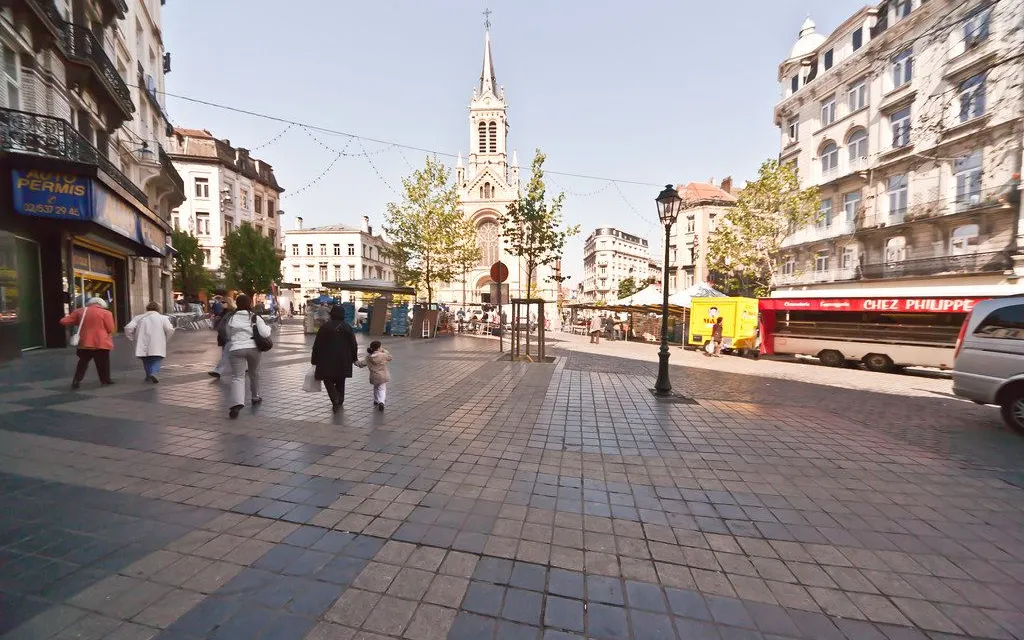
Most of what you're looking at was built after a fire. In August 1695, French artillery bombarded Brussels and left the square's wooden houses in ashes. What grew back was stone, and it grew back fast: the guild houses around you were rebuilt in stone within about four years, which is why the square reads as one family of buildings rather than a thousand years of guesswork. The Hôtel de Ville was already old when that happened.

Its left wing went up between 1401 and 1421, the right wing between 1444 and 1449, and the tower between 1449 and 1455 under Jean van Ruysbroeck, with Saint Michael and the dragon above it, made by Martin Van Rode in 1454. The figure on the tower now is a copy; the original sits in the museum on the other side of the square. That museum is the Maison du Roi, which started life as the bread hall and was rebuilt by Pierre-Victor Jamaer in the late nineteenth century, finished in 1896. UNESCO listed the square in 1998.

≈2 min walk to the next stop
Church of Saint NicholasLocal pick

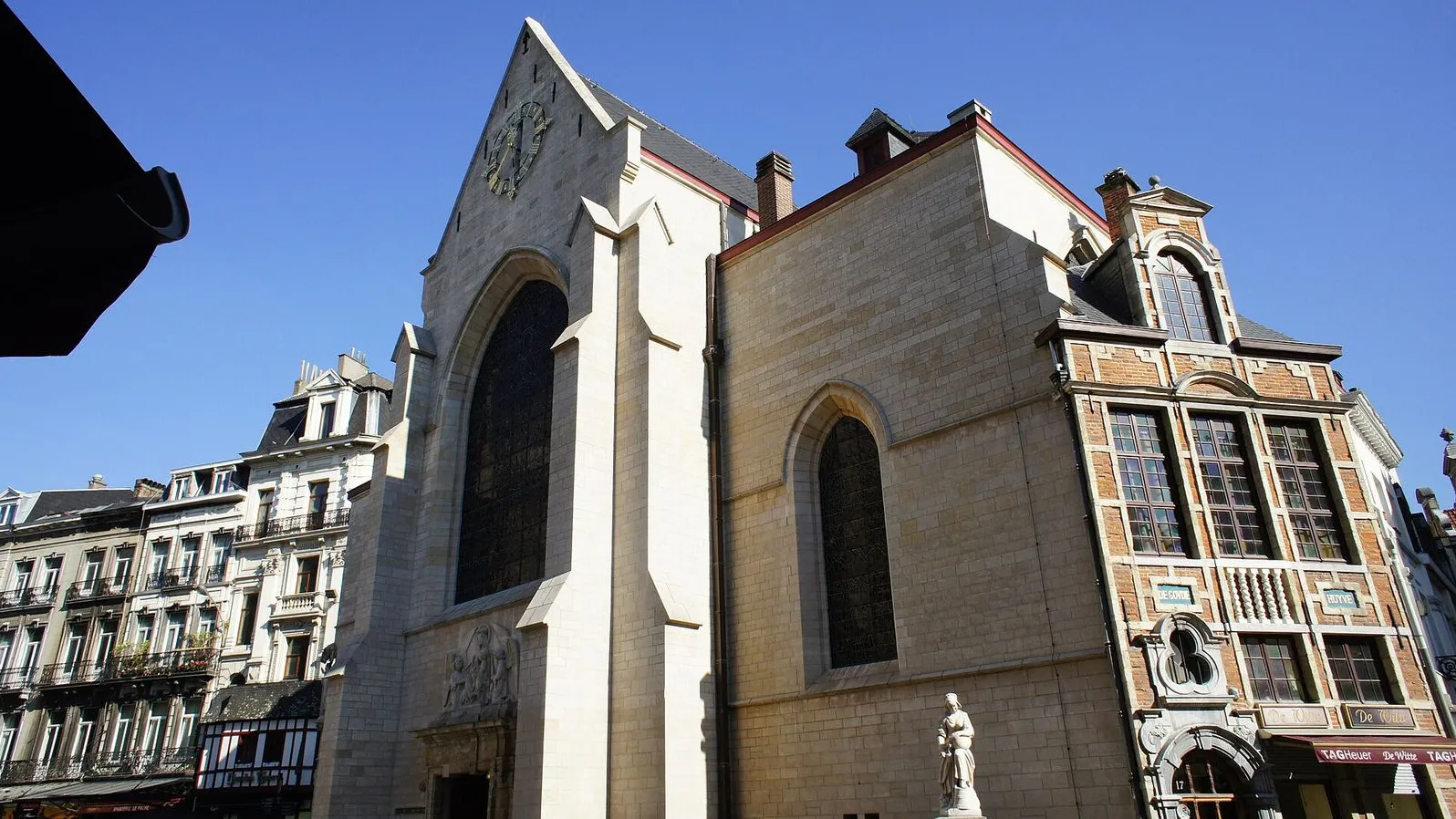
Photo by byantovez on Wikimedia Commons

Church of Saint Nicholas

0:00

A medieval merchants' church still wedged between its neighbours.

You'd walk past this one without knowing. The church of Saint Nicholas began around 1125 as a chapel for the traders who worked the market at the foot of the Grand-Place, which is why its patron is Nicholas, the saint merchants prayed to, and why the city's aldermen met inside these walls before they had a town hall of their own. A storm brought the tower down in 1367 and it was rebuilt in Gothic form by 1380. The choir, finished in 1381, still holds the oldest stones.

Since then the building has been wrecked twice: by iconoclasts in 1579 and by the French bombardment of 1695. The tower came back, then collapsed in 1714 and was never replaced, so the facade in front of you is a 1956 rebuild in pale stone. Go in if the door is open and look at the nave. It doesn't line up with the choir, and never has: the choir sits off-axis because a stream ran under the ground here and the builders went around it.

≈2 min walk to the next stop
Free preview ends here · stops 4 to 8 continue in the app

Bourse and Belgian Beer World

The 19th-century stock exchange, now Belgian Beer World and a rooftop bar.

in app

Place Sainte-Catherine

The old harbour basin, the church built on it, and the fish quarter.

in app

Black Tower

A fragment of the first city wall, hidden for centuries.

in app

Quai aux Briques

The old barge quays, now two facing rows of seafood restaurants.

in app

Church of Saint John the Baptist at the Béguinage

A baroque beguinage church, all that's left of a thousand houses.

in app
Good to know

Before you go

Can I walk this route on the day I arrive?

This is the arrival walk, built for that day: flat the whole way, public streets, and nothing to pay unless you go inside. Belgian Beer World sits at the Bourse on the route, so you can take it in and pick the walk up again afterwards.

How much is Belgian Beer World?

€21.50 for adults, €19.50 for over-60s, €15.50 for students 16 to 25, €12 for children 12 to 15 and €8 for children 4 to 11, with under-4s free. The ticket includes a tasting during the visit and a 33 cl drink on the rooftop.

SourceBelgian Beer World, practical information
When is Belgian Beer World open?

Belgian Beer World opens at 10:30 every day, closing at 19:30 with last entry at 18:30 from Monday to Thursday and Sunday, and at 20:30 with last entry at 19:30 on Friday and Saturday. The rooftop bar, The Beerlab, can also be booked for private events outside those hours.

SourceBelgian Beer World, practical information
Keep exploring

More walks in Brussels

Mont des Arts & the Royal QuarterThe essentials

Mont des Arts & the Royal Quarter

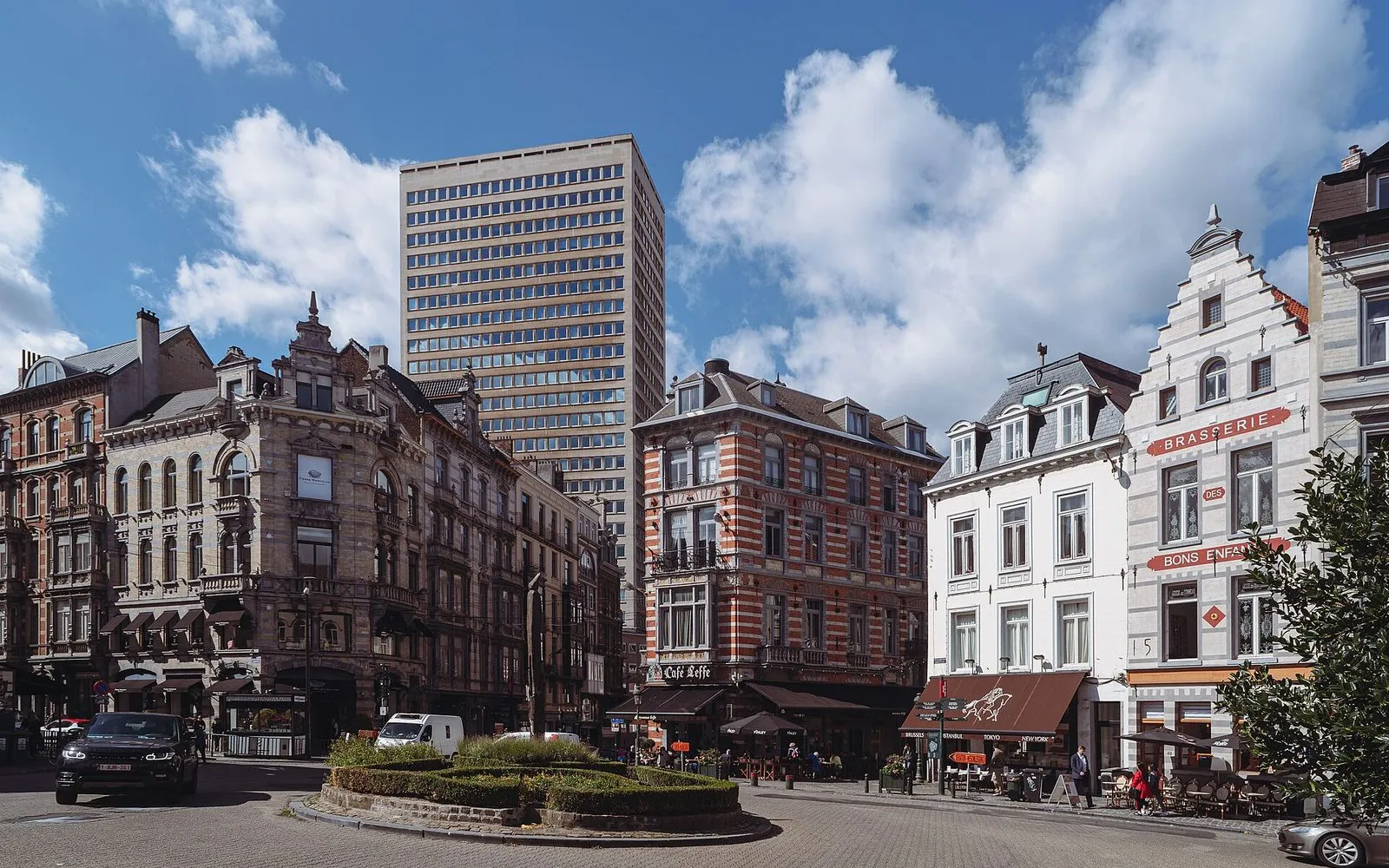
Brussels is a city on two levels. This walk climbs from the cathedral to the palace plateau, past a gallery that hides a whole floor, a garden built over a car park, and a square laid over a palace that burned in 1731.

7 stops1.9 km30+ min
Brussels in ComicsThe local mix

Brussels in Comics

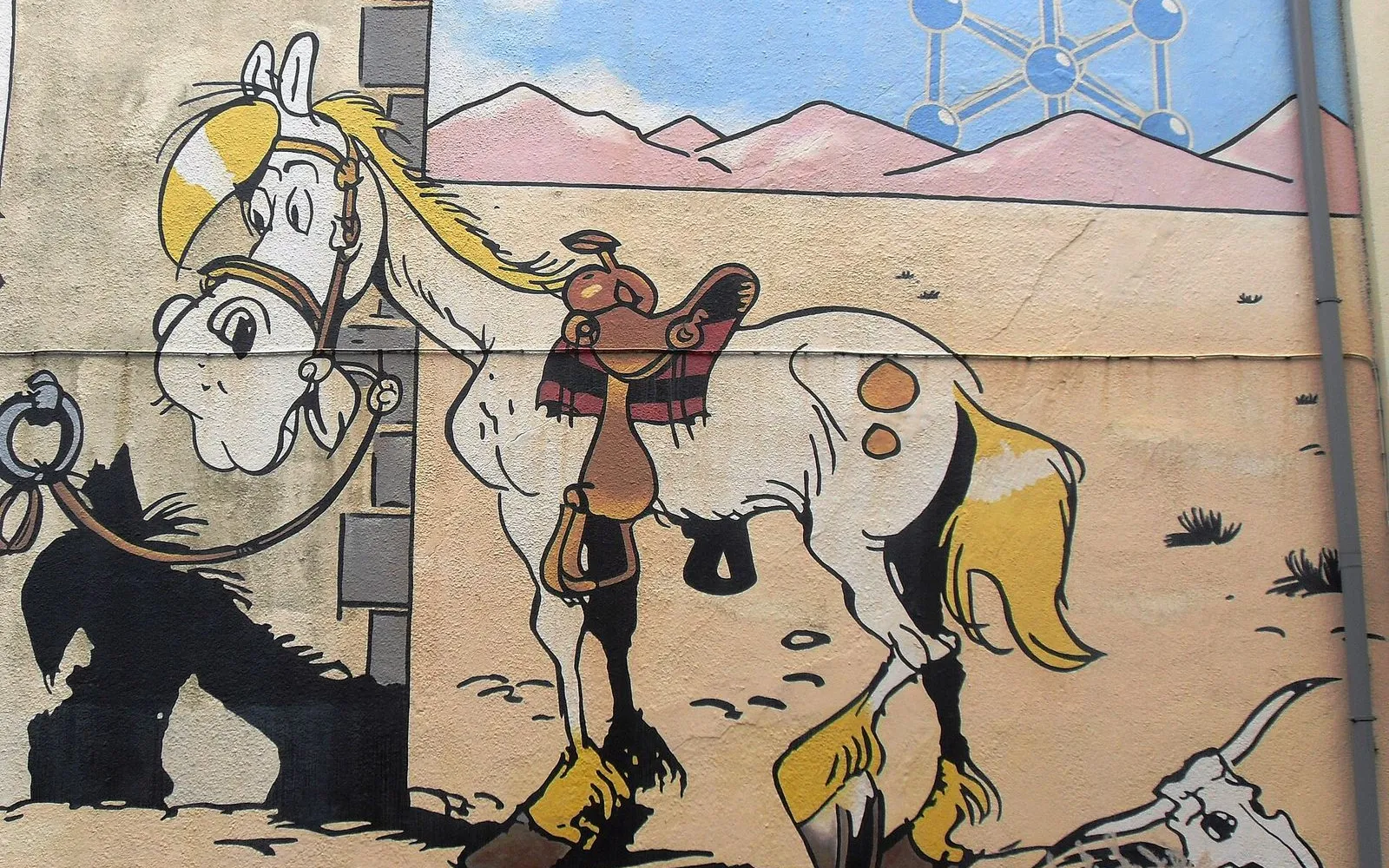
Brussels put comics on its walls. More than fifty of them since 1991, when the city peeled off its advertising hoardings and painted over the damage. One loop from Horta's comic museum to the Gauls of Rue de la Buanderie.

8 stops2.7 km45+ min
Matongé & Saint-BonifaceThe hidden side

Matongé & Saint-Boniface

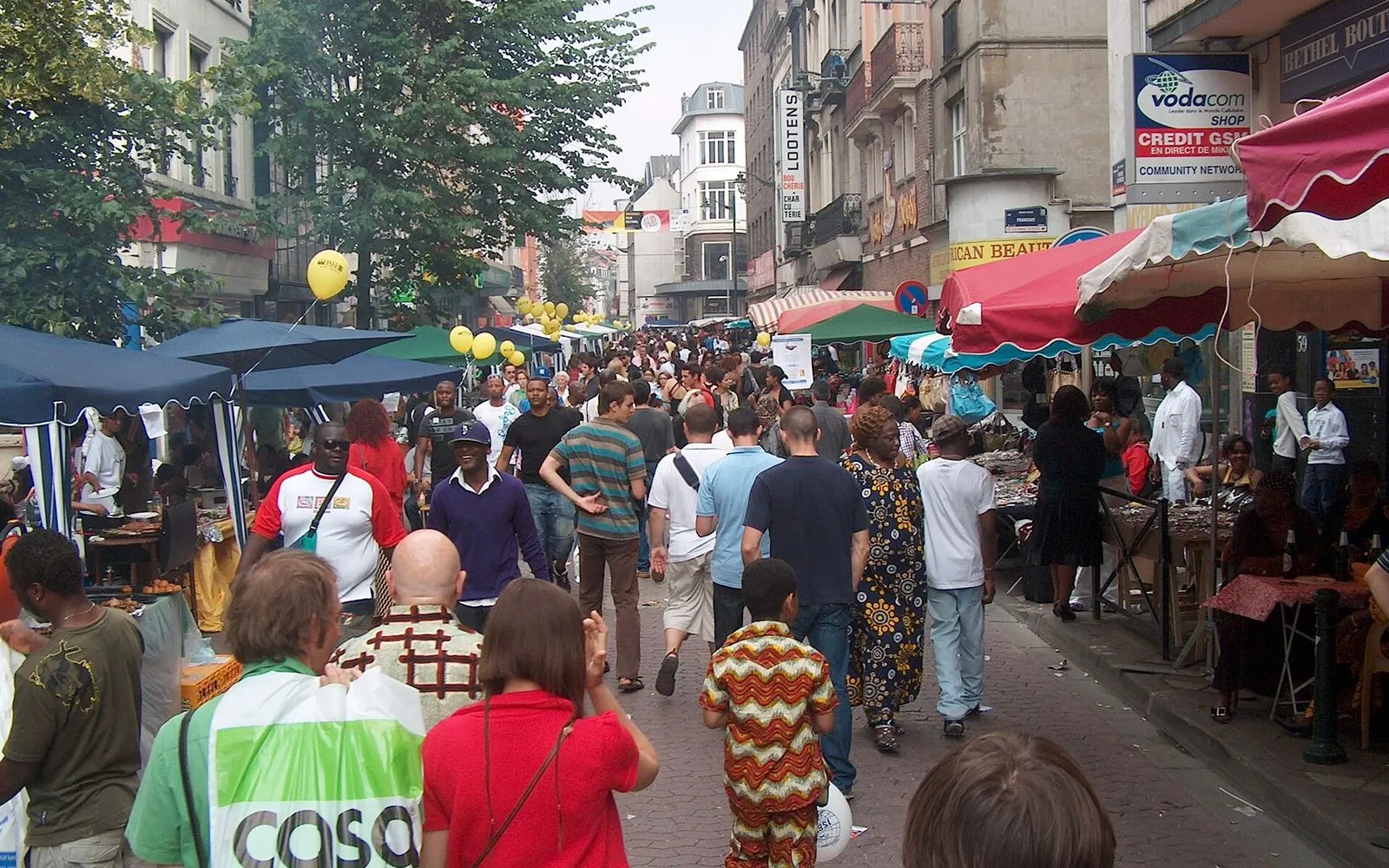
An hour through Brussels' African quarter and the neo-Gothic streets beside it: hairdressers and wax fabric, Congolese kitchens, then Art Nouveau façades and café terraces. Ten minutes from the Royal Quarter, it feels like another city.

7 stops1.8 km30+ min
Sablon & the MarollesThe local mix

Sablon & the Marolles

Two markets, one hill. Up top, chocolate and antiques at weekend prices. A few streets down, the daily brol of the Marolles. Time it for a market morning and the contrast is the whole walk.

8 stops2.5 km40+ min
Cinquantenaire Park & its MuseumsThe essentials

Cinquantenaire Park & its Museums

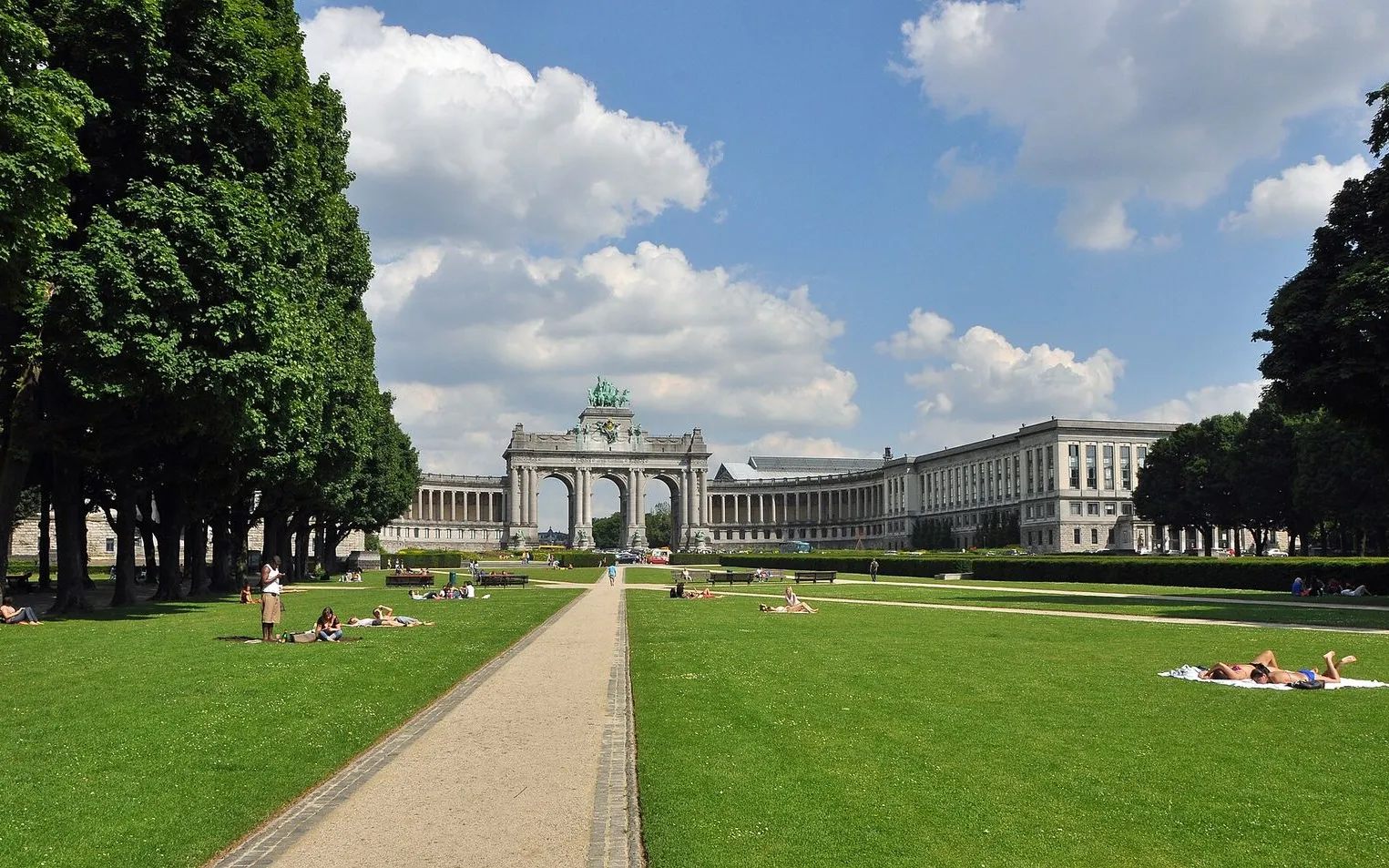
One esplanade, three museums, a park and a rooftop more than 60 meters above Brussels. Cars, marble, aircraft and a bronze chariot keep this walk interesting when the sky gives way.

5 stops1.1 km20+ min
Ixelles Ponds, Flagey & Art NouveauThe local mix

Ixelles Ponds, Flagey & Art Nouveau

On foot from a Wednesday market square to a Cistercian abbey, along the valley the Maelbeek cut: Horta's first house, the ponds, and a street of facades you read from the pavement.

8 stops3.4 km55+ min
Saint-Gilles: Horta & the ParvisThe local mix

Saint-Gilles: Horta & the Parvis

A walk south of the centre through the streets where Belgium's Art Nouveau was built, covered in sgraffito you have to look up to see, and nearly lost, ending on the market square the neighbourhood still lives on.

8 stops4.1 km60+ min

Provenance · last verified September 27, 2026

Built from the Wayside route itself: the stops, their order, and the walk between them.

Photo by Virginia Marinova on Unsplash

Photo by iMahesh on Wikimedia Commons · CC BY-SA 4.0

Photo by Jonathan Ricci on Unsplash

Photo by byantovez on Wikimedia Commons · CC BY-SA 3.0

Photo by TE LUN OU YANG on Unsplash

Photo by Ferran Cornellà on Wikimedia Commons · CC BY-SA 3.0

Photo by Varech on Wikimedia Commons · CC BY-SA 3.0

Photo by Flocci Nivis on Wikimedia Commons · CC BY 4.0

Photo by MJJR on Wikimedia Commons · CC BY 3.0

Photo by Jopparn on Wikimedia Commons · CC BY-SA 3.0

Photo by infomatique on Openverse · CC BY-SA 2.0

Coming soon

Wayside isn't in the app stores yet, but it's in the works. Check back soon.