New York City · Self-guided audio walk

Below the Grid: Downtown Villages Walk

From the East Village to the High Line, a walk through the crooked streets, cast-iron palaces, and countercultural corners the 1811 grid never tamed.

  • 7Stops
  • 6.9 kmDistance
  • 95+ minTime
Below the Grid: Downtown Villages Walk

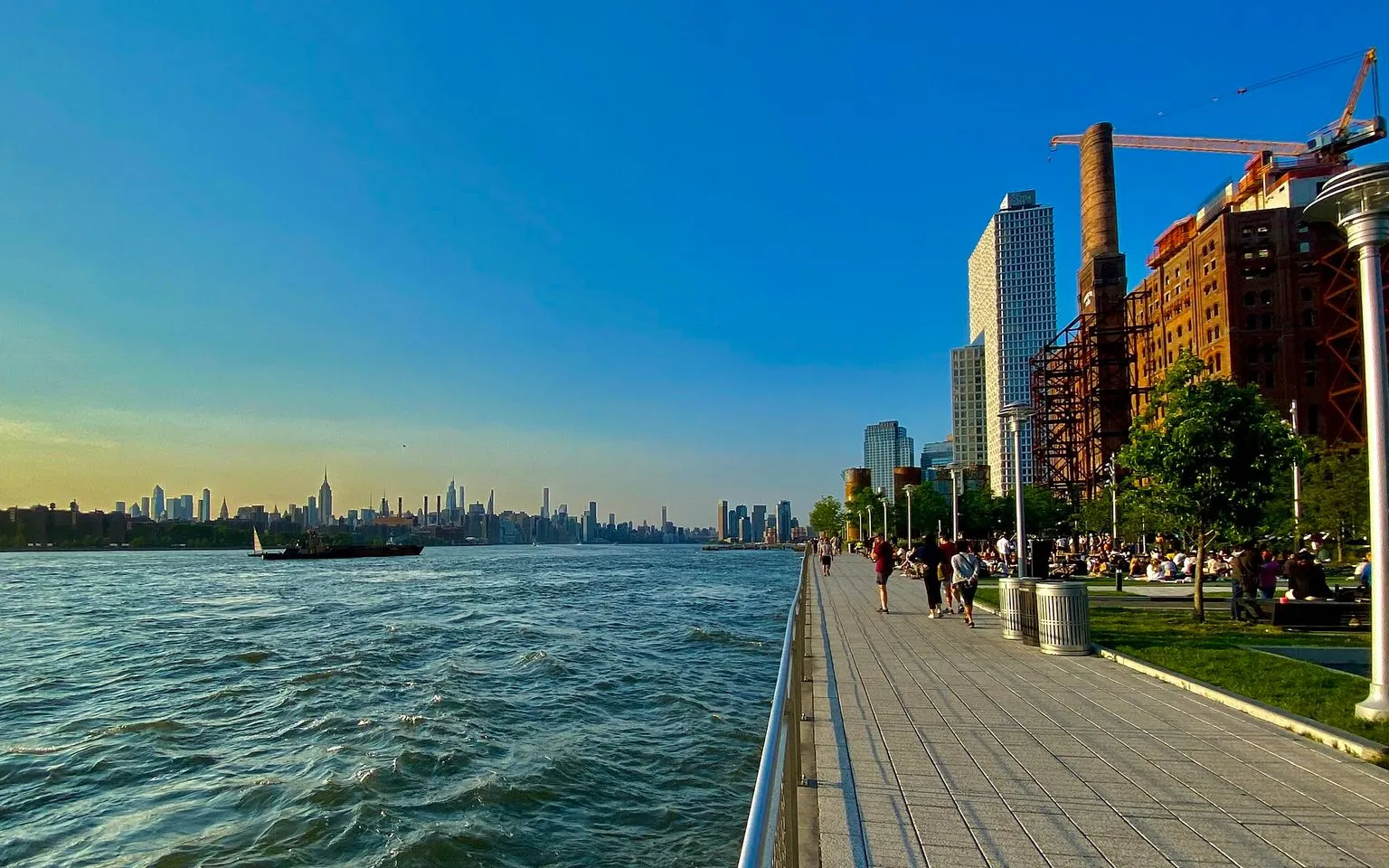
Photo by Customerly on Unsplash

A seven-stop walk below 14th Street that follows the immigrant, artistic, and activist currents that shaped the East Village, Greenwich Village, and SoHo. You start in Tompkins Square Park, cross St. Mark's Place to the Astor Place Cube, stand under the Washington Square Arch, visit the Stonewall Inn, wander the crooked lanes of the West Village, study SoHo's cast-iron masterpieces on Greene Street, and finish above the streets on the High Line. The whole thing takes about two hours of walking and looking, with plenty of benches, cafés, and barstools along the way if you want to stretch it out.

Hear it on the street

Get the turn-by-turn audio guide in the app. The narration plays itself as you reach each stop, hands-free and offline.

Stop by stop

The route

Interactive map of the route. The full stop list below works without it.

Tompkins Square ParkMust see

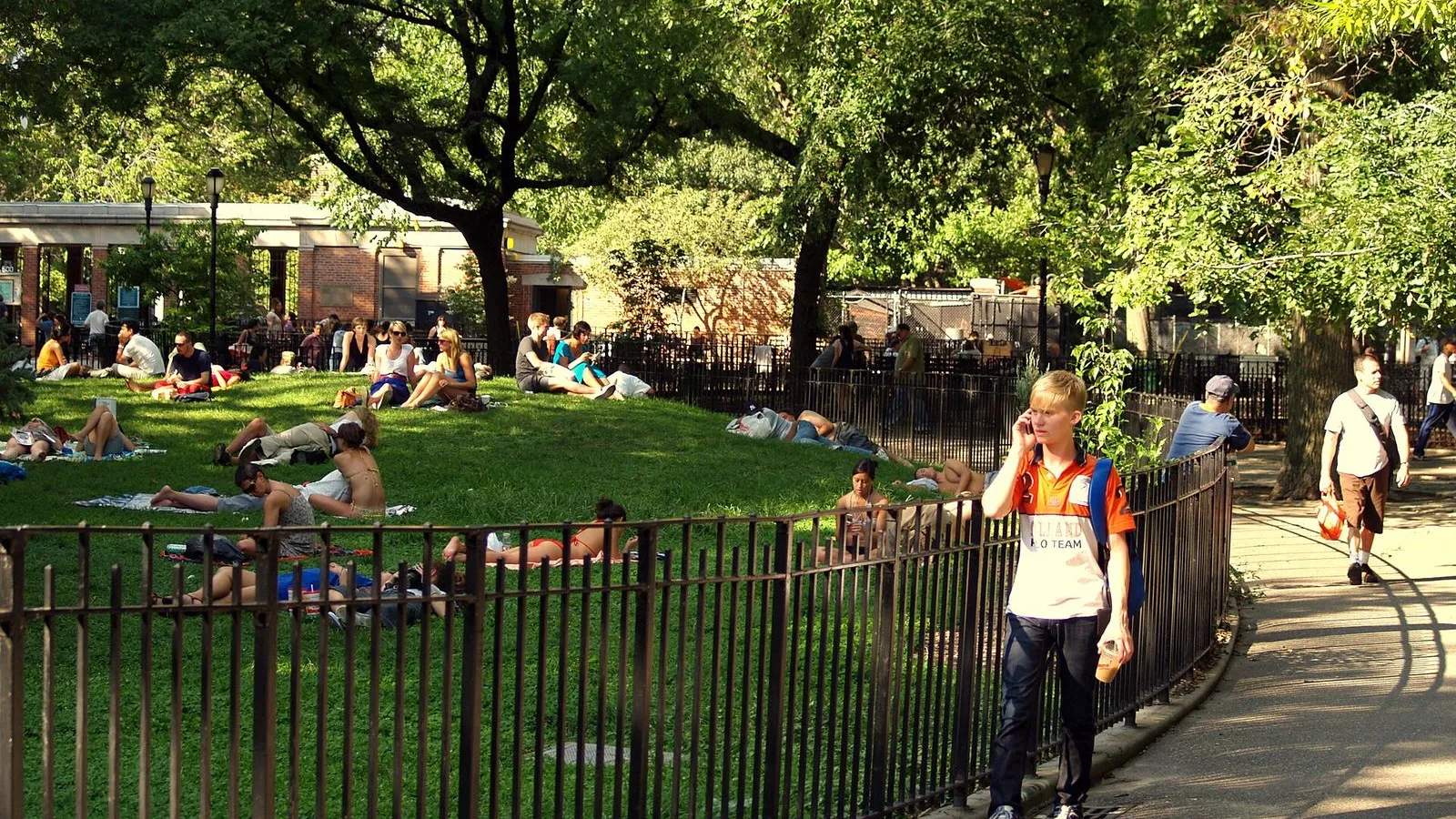
Photo by David Shankbone on Wikimedia Commons

Tompkins Square Park

0:00

The East Village's living room and its loudest soapbox. This ten-acre park has hosted labor riots, love-ins, punk shows, and the first public chanting of the Hare Krishna mantra outside India.

You're standing in a park that has been a stage for nearly every kind of New York dissent. In 1857, immigrants marched here demanding bread and work. In 1874, police clubbed thousands of workers in what became known as the Tompkins Square Riot. A century later, the Grateful Dead played the bandshell while Allen Ginsberg recited poetry on the grass.

The Hare Krishna movement traces its Western birth to an elm tree in the southern plaza, where A. C. Bhaktivedanta Swami Prabhupada sat and chanted in 1966. Look for the Temperance Fountain near the center, a cast-iron relic from 1888 when reformers campaigned against drink.

Now watch the dog run, the skateboarders, the chess tables. The park still does what it always did: gives the neighborhood a place to breathe and argue and be.
≈15 min walk to the next stop
AlamoMust see

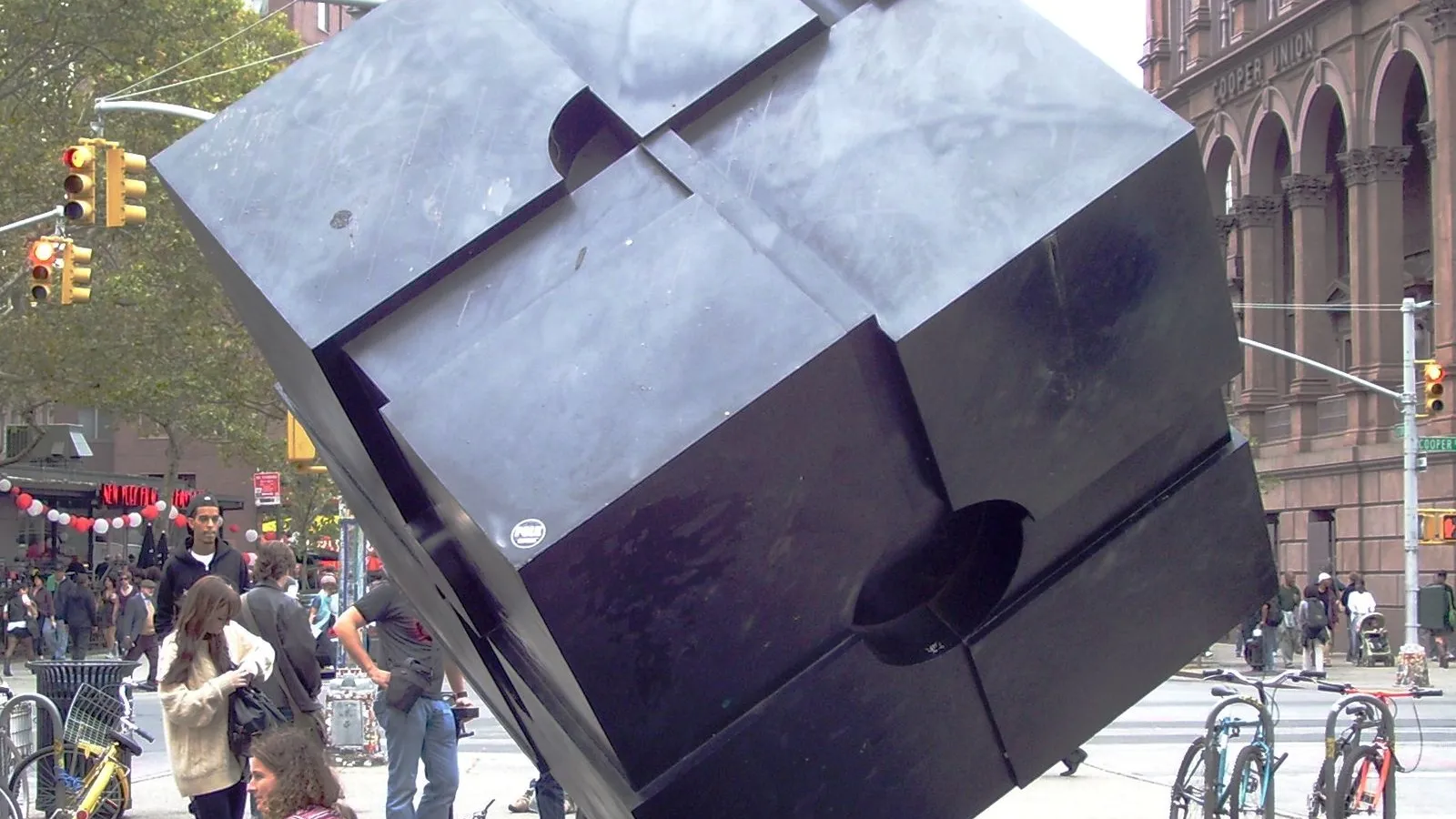
Photo by Beyond My Ken on Wikimedia Commons

Alamo

0:00

A one-ton steel cube mounted on a hidden pivot. Give it a push and it spins. Tony Rosenthal's 1967 sculpture marks the seam where the East Village, NoHo, and Greenwich Village meet, and it has been a meeting spot ever since.

Go ahead, give it a shove. It takes surprisingly little effort to set a ton of steel in motion. The artist Tony Rosenthal called this piece Alamo, and it was installed here in 1967 as part of a city program called Sculpture in Environment. It was only meant to stay for six months, but the neighborhood refused to let it go.

Behind you is the Cooper Union, the tuition-free college where Abraham Lincoln gave the speech that helped make him president in 1860. And beneath your feet, Astor Place was once the center of a working-class entertainment district, full of beer gardens and dime museums. The subway entrance across the square is a replica of a kiosk from the Budapest Metro, a gift from the city's Hungarian sister. Spin the cube once more, then head south on Lafayette Street toward the arch you can already see in the distance.

≈9 min walk to the next stop
Washington Square ParkMust see

Photo by Benjamin Ashton on Unsplash

Washington Square Park

0:00

The marble arch, the fountain, the chess hustlers, the grand piano on wheels. Once a potter's field and a parade ground, now the undisputed heart of Greenwich Village and the front lawn of NYU.

You're looking at the Washington Square Arch, a marble version of the Arc de Triomphe built in 1892 to celebrate the centennial of George Washington's inauguration. The arch you see is actually the permanent replacement. The first one was made of wood and plaster and was so popular that the city raised money to rebuild it in stone. Under your feet, the park holds some twenty thousand bodies.

It was the city's potter's field from 1797 until 1825, a burial ground for the unknown and the poor. In the twentieth century the fountain plaza became a stage: Bob Dylan played here, Joan Baez, the Beat poets. The chess tables in the southwest corner have hosted games between hustlers and grandmasters for decades; Bobby Fischer learned to play somewhere near this spot. Walk through the arch and look north up Fifth Avenue.

That view, the start of Manhattan's most famous street, framed by the arch, is one of the best in the city.

≈8 min walk to the next stop
Free preview ends here · stops 4 to 7 continue in the app

Stonewall Inn

A brick tavern at 53 Christopher Street. In the early hours of June 28, 1969, a routine police raid here met resistance, and six nights of uprising followed. The modern LGBTQ rights movement was born on this sidewalk.

in app

Gay Street

A single curved block tucked between Christopher and Waverly. The street was named for a colonial-era family, but its sign, in the heart of the Village, became an accidental symbol. The bend in the lane is pure pre-grid Manhattan.

in app

King of Greene Street

72 Greene Street, the most ornate cast-iron facade in SoHo. Built in 1873, its Second Empire wedding-cake front nearly fell to the wrecking ball in the 1960s. A block south, 28 Greene is its calmer partner, the Queen.

in app

High Line

An abandoned elevated railway turned into a linear park, rising thirty feet above the Meatpacking District. The southern entrance at Gansevoort Street is the best place to start and look back at the city you just walked through.

in app
Good to know

Before you go

Is the High Line free?

Yes, the High Line is a free public park. It is open daily from 7 a.m. to 10 p.m. in summer and until 7 p.m. in winter. Enter at Gansevoort Street in the Meatpacking District and walk north.

Can I go inside the Stonewall Inn?

The Stonewall Inn is a working bar. You can walk in for a drink any evening. The small park across the street, Christopher Park, has the Gay Liberation Monument and is the designated National Monument visitor area. The bar itself is not a museum; it is a living, crowded, noisy Greenwich Village tavern.

How long is the Downtown Villages walk?

The full walk from Tompkins Square Park to the High Line runs about two hours of walking. With stops, a coffee, and a drink along the way, plan on a half day. The East Village, Greenwich Village, and SoHo each reward slow wandering.

Provenance · last verified August 21, 2026

Built from the Wayside route itself: the stops, their order, and the walk between them.

Photo by Customerly on Unsplash

Photo by David Shankbone on Wikimedia Commons · CC BY-SA 3.0

Photo by Beyond My Ken on Wikimedia Commons · Public domain

Photo by Benjamin Ashton on Unsplash

Photo by Haydn on Unsplash

Photo by Andre Carrotflower on Wikimedia Commons · CC BY-SA 4.0

Photo by Annie Spratt on Unsplash

Photo by Florian Wehde on Unsplash

Photo by Kazuma Sako on Unsplash

Photo by Famartin on Wikimedia Commons · CC BY-SA 4.0

Photo by Jimmy Woo on Unsplash

Coming soon

Wayside isn't in the app stores yet, but it's in the works. Check back soon.