New York City · Self-guided audio walk

Brooklyn Heights: Brownstones and the Waterfront

New York's first suburb, from hidden cobblestone mews to the Promenade where Manhattan hangs across the river like a backdrop.

  • 10Stops
  • 4.2 kmDistance
  • 65+ minTime
Brooklyn Heights: Brownstones and the Waterfront

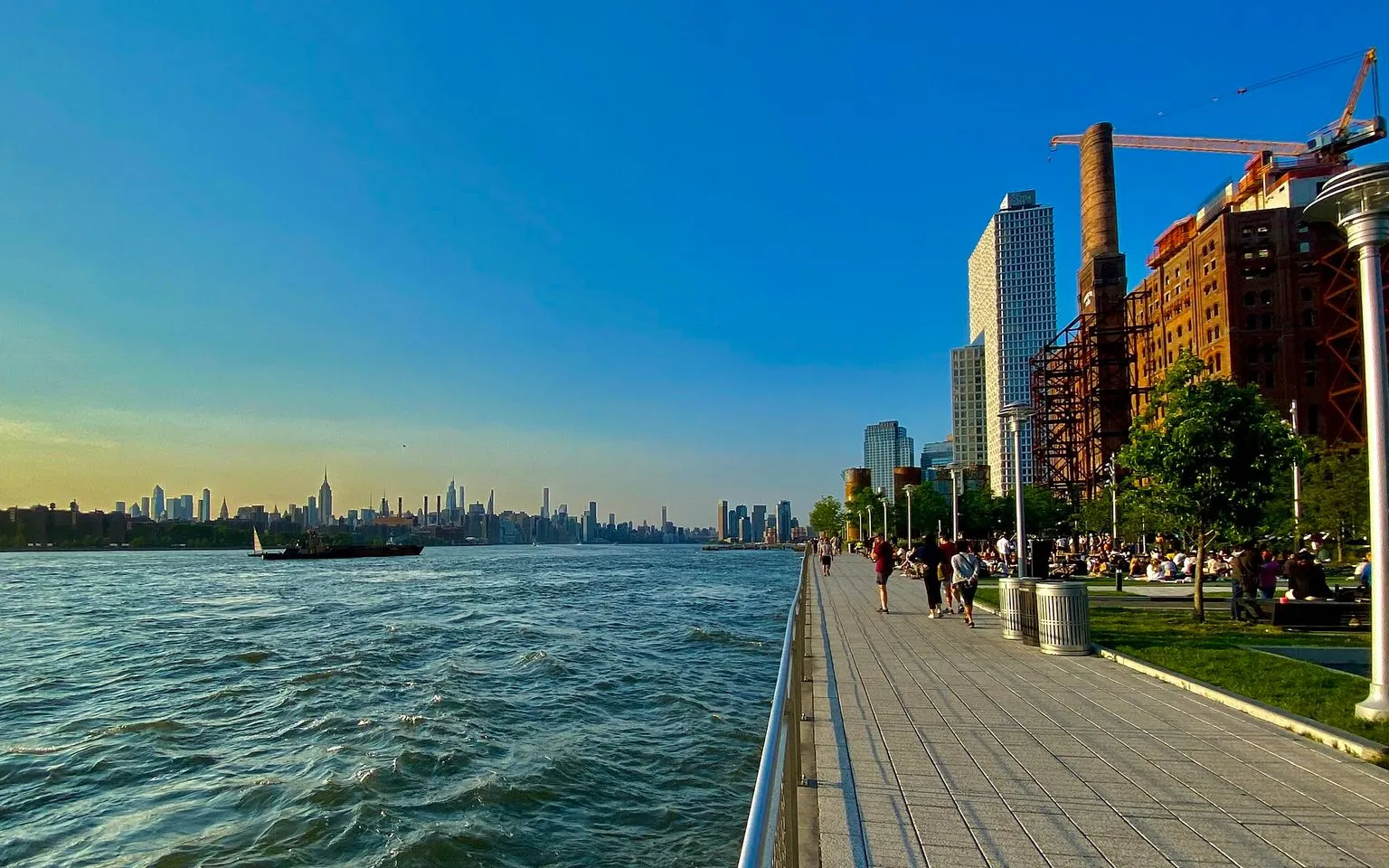
Photo by Jimmy Woo on Unsplash

Brooklyn Heights was New York's first suburb, and walking its tree-lined streets still feels like stepping back into the nineteenth century, even with the Manhattan skyline right across the water. This 100-minute walk begins at Brooklyn Borough Hall, a Greek Revival monument from when Brooklyn was its own city, then winds through the Fruit Streets past the yellow-brick mansion where Truman Capote wrote Breakfast at Tiffany's. You'll duck into Grace Court Alley and Hunts Lane, two cobblestone mews of former stables that now count among the most coveted, and quietest, addresses in the borough. Plymouth Church tells the story of abolitionist firebrand Henry Ward Beecher and the Underground Railroad. The tour peaks on the Brooklyn Heights Promenade, a walkway born from a community's fight against Robert Moses in the 1940s, before a zigzag bridge drops you into Brooklyn Bridge Park at the water's edge.

Hear it on the street

Get the turn-by-turn audio guide in the app. The narration plays itself as you reach each stop, hands-free and offline.

Stop by stop

The route

Interactive map of the route. The full stop list below works without it.

Brooklyn Borough HallMust see

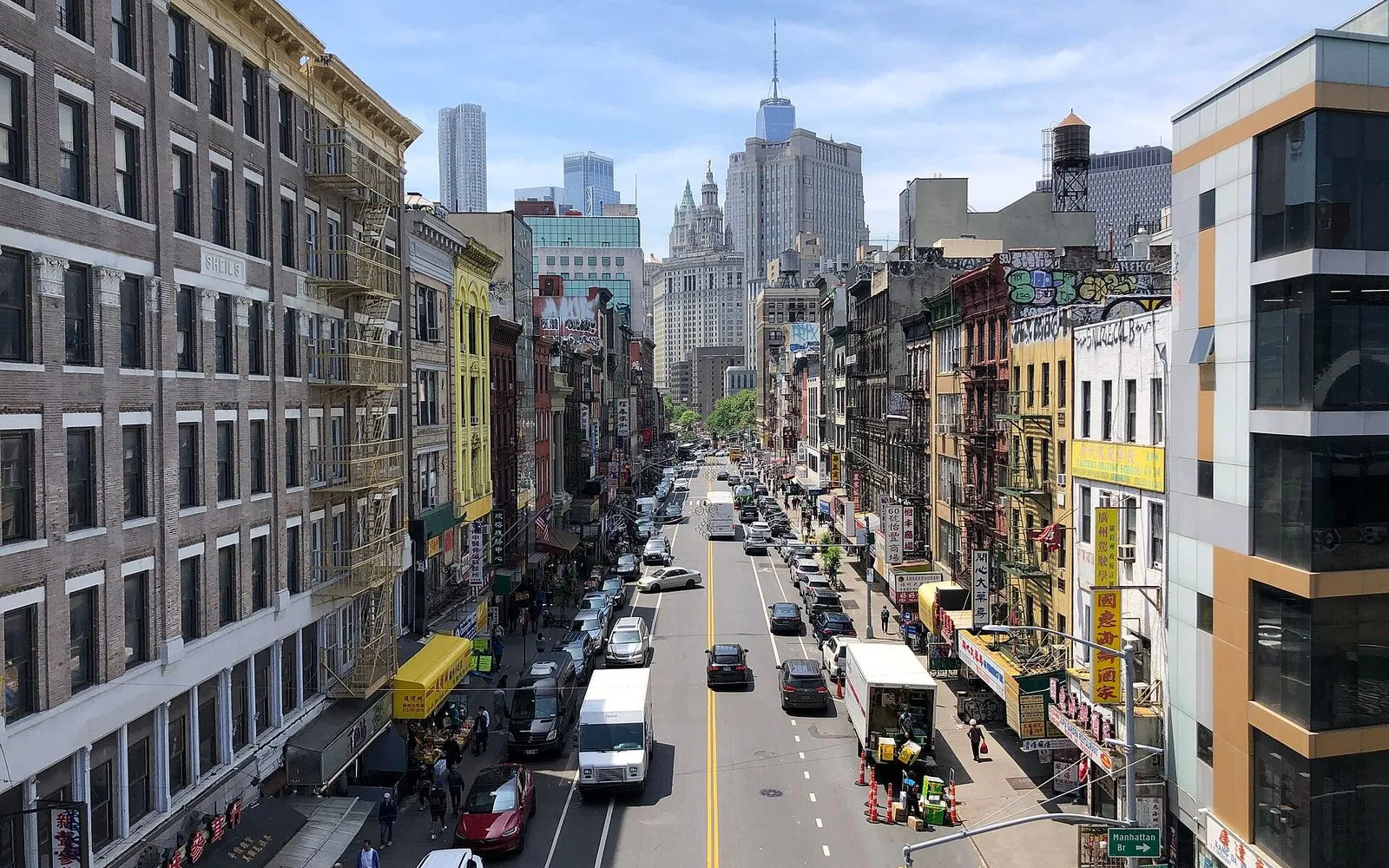
Photo by Martin Makaryan on Unsplash

Brooklyn Borough Hall

0:00

A Greek Revival temple of government, built when Brooklyn was still its own city.

You're standing before Brooklyn Borough Hall, a limestone-and-marble Greek Revival building that opened in 1848 as Brooklyn's City Hall. Brooklyn was a separate city then, the third largest in America, and this building was designed to announce that ambition. Look up at the cast-iron dome. It was added in 1898, the very year Brooklyn gave up its independence and consolidated into New York City.

The statue on top is Lady Justice, though she was originally made of painted wood and had to be replaced after decades of weather. Walk up the steps and notice the columns: they are not marble but cast iron painted to look like stone, a cost-saving trick from the original construction. The building still does civic duty today as the office of the Brooklyn Borough President. When you're ready, turn toward Court Street and walk north to Montague Street.

We're heading into the heart of the Heights.
≈5 min walk to the next stop
St. Ann & the Holy Trinity ChurchMust see

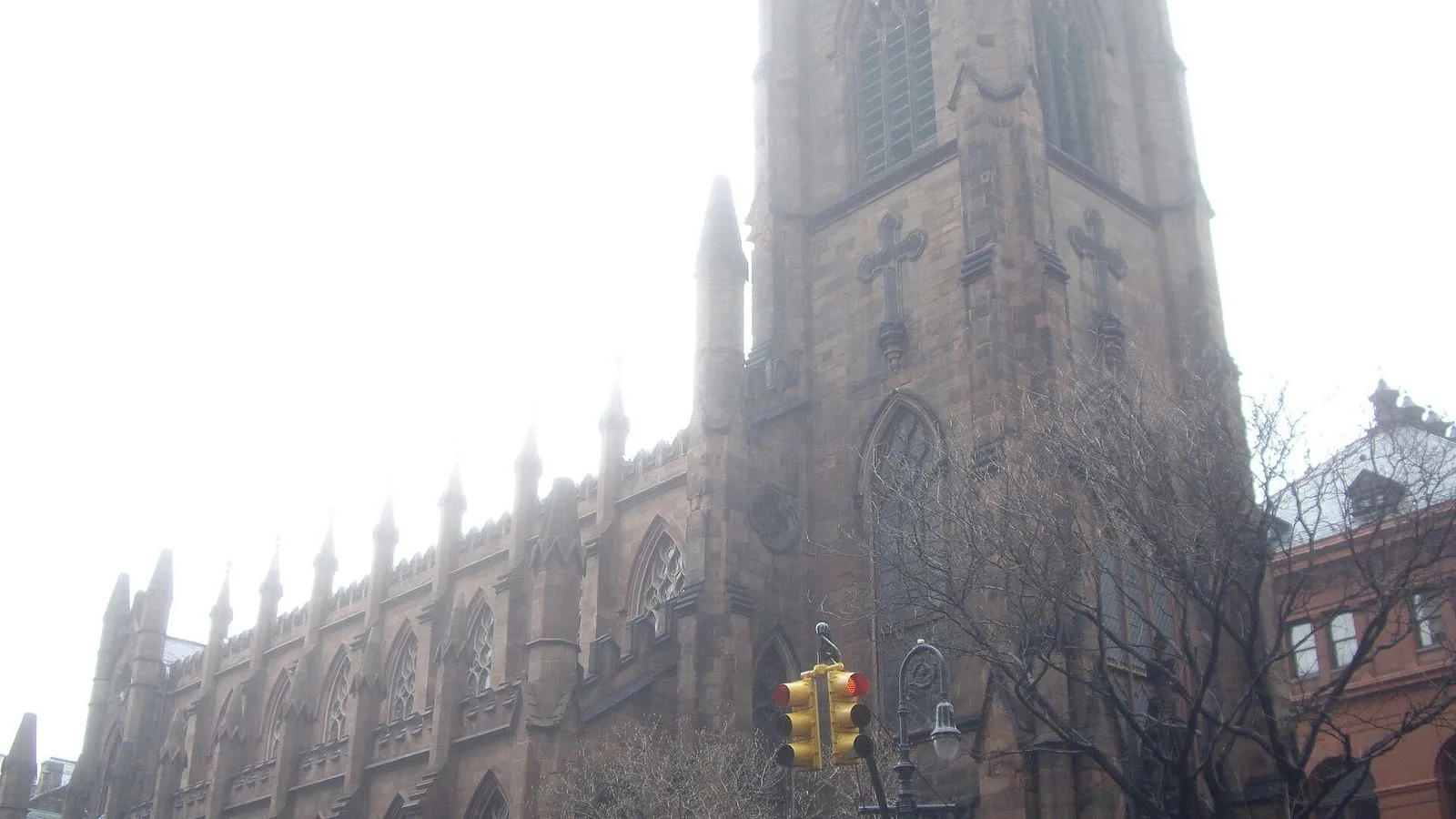
Photo by Dmadeo on Wikimedia Commons

St. Ann & the Holy Trinity Church

0:00

A Gothic Revival jewel with America's first figurative stained-glass windows, hidden in plain sight on Montague Street.

This brownstone church at the corner of Montague and Clinton looks modest from the street, but step closer. It was designed by Minard Lafever, the architect behind some of the finest Gothic Revival churches in the Northeast, and completed in 1847. Inside (and on Sundays you can still slip in) is an elaborate suite of 54 stained-glass windows by William Jay Bolton. These are the very first figurative stained-glass windows ever installed in an American church.

One suite was removed and now sits in the Metropolitan Museum of Art. For decades this building had a 275-foot spire that made it the most visible landmark in Brooklyn; ships used it to navigate the harbor. The spire was taken down in 1906 after subway construction raised fears it might collapse. The original Holy Trinity congregation folded in the 1950s, and the church sat empty until the nearby St.

Ann's parish bought it in 1969. They kept both names. When you're ready, continue west on Montague toward the river, then turn left on Willow Street.

≈9 min walk to the next stop
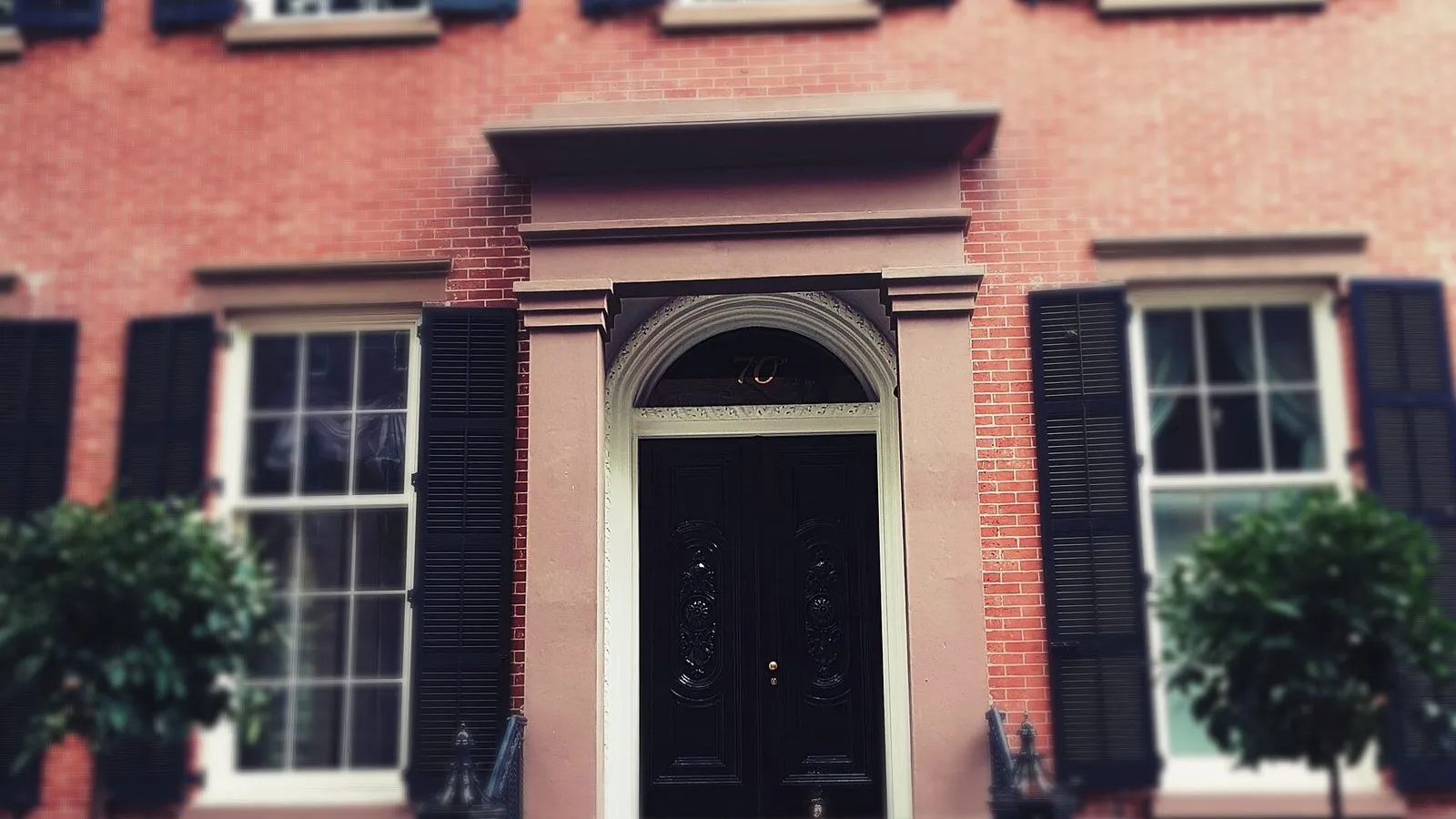
70 Willow StreetLocal pick

Photo by Francesca.hyanna19 on Wikimedia Commons

70 Willow Street

0:00

The yellow-brick Greek Revival mansion where Truman Capote wrote Breakfast at Tiffany's from a basement studio.

This yellow-brick house, set back from the street behind a wrought-iron fence, is one of the largest remaining Greek Revival houses in New York City. It was built in the 1830s for a prominent lawyer and later bought by the Broadway set designer Oliver Smith, who did the scenery for West Side Story, My Fair Lady, and On the Town. Smith had a habit of hosting artistic friends for what were supposed to be short stays. In the 1950s, a young Truman Capote asked if he could crash for a few weeks while apartment hunting.

Smith said yes. Capote moved into the basement studio and stayed for ten years. It was in that basement that he wrote Breakfast at Tiffany's, along with much of his early journalism and stories. He never owned the house: on a writer's income he could not have afforded it then, and the place is now valued around twelve million dollars.

When you're ready, walk one block east to Orange Street and turn right toward Hicks Street.

≈2 min walk to the next stop
Free preview ends here · stops 4 to 10 continue in the app

Plymouth Church

The 'Grand Central Depot' of the Underground Railroad, where Henry Ward Beecher preached abolition and Abraham Lincoln came to worship.

in app

Grace Court Alley

A hidden dead-end mews of nineteenth-century carriage houses, their hay cranes still bolted to the brickwork.

in app

Hunts Lane

Another former stable mews, quieter still, where a single scrolled wall lamp lights the cobblestones at night.

in app

31 Grace Court

The dead-end townhouse where Arthur Miller finished Death of a Salesman and later sold the keys to W.E.B. Du Bois.

in app

Brooklyn Heights Promenade

A quarter-mile walkway cantilevered over a highway, born from a neighborhood's fight against Robert Moses, and now New York's most beloved front porch.

in app

Squibb Park Bridge

A zigzag wooden footbridge that threads through the trees, dropping you from the Heights into Brooklyn Bridge Park.

in app

Brooklyn Bridge Park

Eighty-five acres of piers, lawns, and waterfront, reclaimed from the industrial shoreline at the foot of the Brooklyn Bridge.

in app
Good to know

Before you go

Is the Brooklyn Heights walk wheelchair accessible?

Mostly. Borough Hall, Montague Street, the Promenade, and Brooklyn Bridge Park are all flat and paved. Grace Court Alley and Hunts Lane are cobblestone mews and can be bumpy; you can skip them without losing the shape of the walk. Squibb Park Bridge has stairs and is the only segment that requires a detour for wheelchair users.

Can I visit the interior of Plymouth Church?

Plymouth Church is open for Sunday worship and by appointment for guided tours during the week. The churchyard and the Henry Ward Beecher statue are accessible anytime. The Underground Railroad history is told on a plaque near the front steps.

How long is the Brooklyn Heights walk?

About 90 minutes of walking at an easy pace, not counting stops. Add time for the Promenade, where the instinct to sit on a bench and stare at Manhattan is strong and worth obeying.

Provenance · last verified August 17, 2026

Built from the Wayside route itself: the stops, their order, and the walk between them.

Photo by Jimmy Woo on Unsplash

Photo by Martin Makaryan on Unsplash

Photo by Dmadeo on Wikimedia Commons · CC BY-SA 4.0

Photo by Francesca.hyanna19 on Wikimedia Commons · CC BY-SA 4.0

Photo by Haydn on Unsplash

Photo by Andre Carrotflower on Wikimedia Commons · CC BY-SA 4.0

Photo by Customerly on Unsplash

Photo by Annie Spratt on Unsplash

Photo by Florian Wehde on Unsplash

Photo by Kazuma Sako on Unsplash

Photo by Famartin on Wikimedia Commons · CC BY-SA 4.0

Coming soon

Wayside isn't in the app stores yet, but it's in the works. Check back soon.