 Must see
Photo by Neoclassicism Enthusiast on Wikimedia Commons
Stavropoleos Monastery
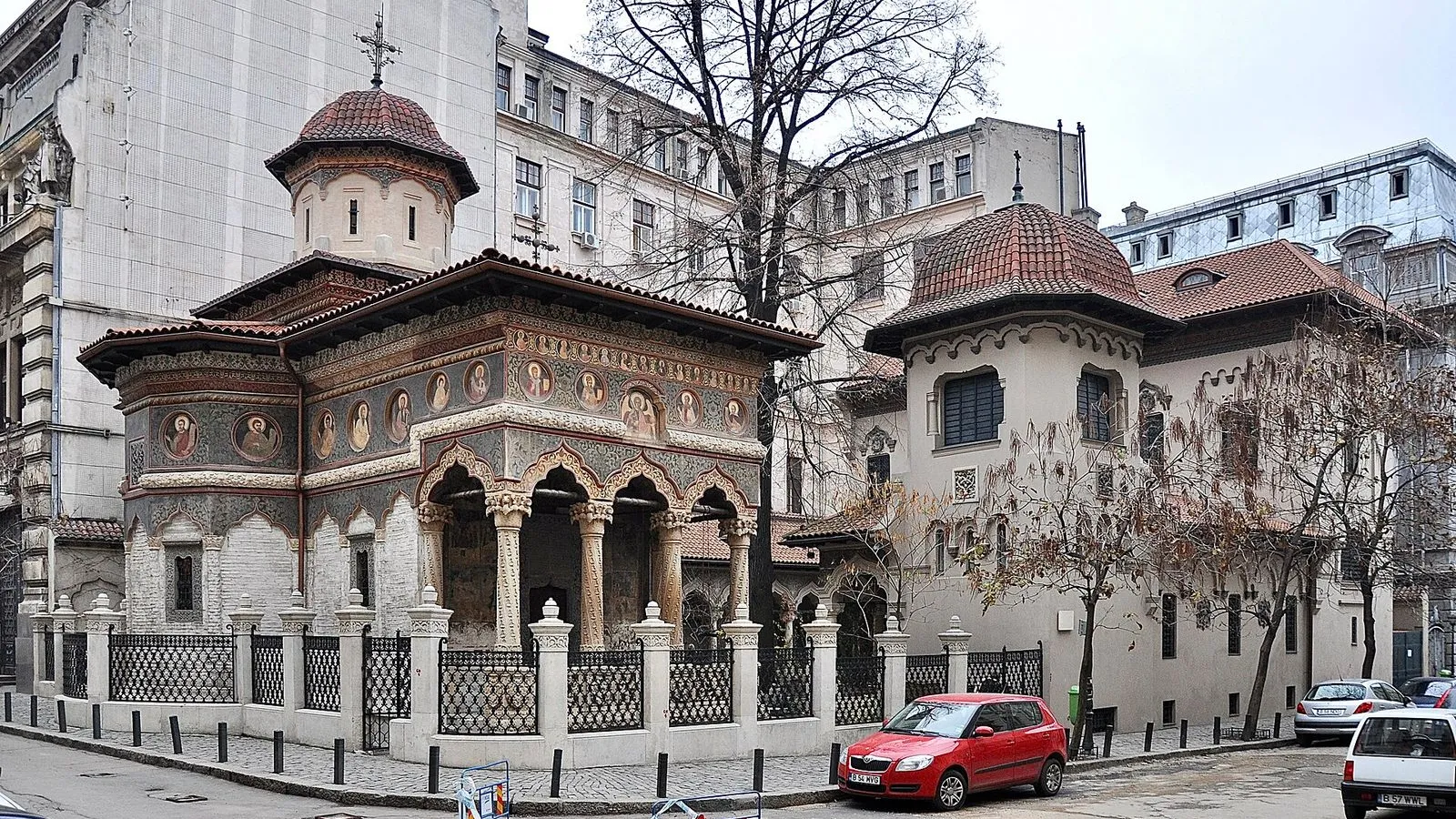
An 18th century monastery church with a carved stone façade and a colonnaded courtyard of old tombstones.
Stand on Strada Stavropoleos and look at the little church. It was finished in 1724, but its details feel older, because the style is Brâncovenesc, the Wallachian mix of Byzantine, Ottoman, and late Renaissance ornament that Prince Constantin Brâncoveanu made famous around 1700. A Greek monk from Pogoniani, Ioanichie Stratonikeas, paid for it with income from the inn he ran on this spot, and he is buried inside. Two years after the church opened, he was elected metropolitan of Stavropolis, the City of the Cross, and the monastery took that name.
Walk into the courtyard. The stone columns with flowered capitals around it were added when the architect Ion Mincu restored the complex after 1904. The yard is a small open air museum: old tombstones and fragments of churches demolished around Bucharest lean against the walls, carved in Greek, Slavonic, Romanian, and Serbian. Inside, the frescoes are small scale and intimate, and the monastery keeps Romania's largest collection of Byzantine music books.
If you are lucky, the choir is rehearsing. Then step back to the street and look up at the façade, because this is one of the finest small examples of Brâncovenesc carving in the city.