Walking tours in Romania
Romania is a country of the Carpathian arc, a Latin-speaking island in eastern Europe where brown bears still roam forests of beech and fir. The Danube braids into its delta on the Black Sea, a UNESCO-listed maze of channels, reeds, and pelicans. Transylvania keeps walled Saxon towns and their fortified churches; Maramureș, wooden churches with shingled spires; Bucovina, 16th-century monasteries whose frescoes cover the outside walls, including the Voroneț blue that nobody has managed to reproduce. Bucharest holds Belle Époque palaces along Calea Victoriei and the Palace of the Parliament, the heaviest building on earth. The food is peasant cooking, hearty and cheap: sarmale rolled in pickled cabbage, mici grilled at street stalls, ciorbă soured with borș, mămăligă with sheep's cheese. Wine has been made here for more than two thousand years, and most meals finish with a shot of plum brandy.

Photo by Andy Arbeit on Unsplash
When is the best time to visit Romania?
Spring
- Months
- March to May
- Weather
- Spring is short and warms quickly, with rain building through the season, snow still falling in the Carpathians and frost possible in the plains in March.SourceEncyclopaedia BritannicaWikipedia, Geography of Romania
- Crowds
- Orthodox Easter is the first big domestic travel push of the year, falling on 12 April in 2026, and mountain guesthouses and spa towns fill for that long weekend. Late April and May are calm, green and better value.
Summer
- Months
- June to August
- Weather
- Summers are hot in the lowlands, where temperatures can pass 36°C, while the Black Sea coast is moderated by the sea and keeps warm nights, around 21°C at Sulina.SourceWikipedia, Climate of Romania
- Crowds
- July and August are peak season on the Black Sea coast, in the Danube Delta and on the popular Carpathian trails, and coastal rooms sell out early. Bucharest and the inland cities are easier on weekdays.
Autumn
- Months
- September to November
- Weather
- Autumn runs long here, from September into November, with transitional temperatures and rainfall that varies by region; the mountains and the Carpathian passes turn first.SourceWikipedia, Geography of RomaniaEncyclopaedia Britannica
- Crowds
- Crowds thin sharply after mid-September. Early autumn is the strongest window for Bucovina's painted monasteries and the wooden churches of Maramures, and hotel prices drop outside the cities.
Winter
- Months
- December to February
- Weather
- Winters are cold and cloudy, with average temperatures between about 1°C and -10°C and roughly 30 snowy days a year in the plains, while the Carpathians take heavy snow.SourceWikipedia, Climate of Romania
- Crowds
- The cities run Christmas markets and the ski resorts fill from late December through February. Outside the Christmas weeks and the ski towns this is the quietest season, with some rural guesthouses, mountain cable cars and Delta trips closed until spring.
| Season | Months | Weather | Crowds |
|---|---|---|---|
| Spring | March to May | Spring is short and warms quickly, with rain building through the season, snow still falling in the Carpathians and frost possible in the plains in March.SourceEncyclopaedia BritannicaWikipedia, Geography of Romania | Orthodox Easter is the first big domestic travel push of the year, falling on 12 April in 2026, and mountain guesthouses and spa towns fill for that long weekend. Late April and May are calm, green and better value. |
| Summer | June to August | Summers are hot in the lowlands, where temperatures can pass 36°C, while the Black Sea coast is moderated by the sea and keeps warm nights, around 21°C at Sulina.SourceWikipedia, Climate of Romania | July and August are peak season on the Black Sea coast, in the Danube Delta and on the popular Carpathian trails, and coastal rooms sell out early. Bucharest and the inland cities are easier on weekdays. |
| Autumn | September to November | Autumn runs long here, from September into November, with transitional temperatures and rainfall that varies by region; the mountains and the Carpathian passes turn first.SourceWikipedia, Geography of RomaniaEncyclopaedia Britannica | Crowds thin sharply after mid-September. Early autumn is the strongest window for Bucovina's painted monasteries and the wooden churches of Maramures, and hotel prices drop outside the cities. |
| Winter | December to February | Winters are cold and cloudy, with average temperatures between about 1°C and -10°C and roughly 30 snowy days a year in the plains, while the Carpathians take heavy snow.SourceWikipedia, Climate of Romania | The cities run Christmas markets and the ski resorts fill from late December through February. Outside the Christmas weeks and the ski towns this is the quietest season, with some rural guesthouses, mountain cable cars and Delta trips closed until spring. |
Highlights across Romania
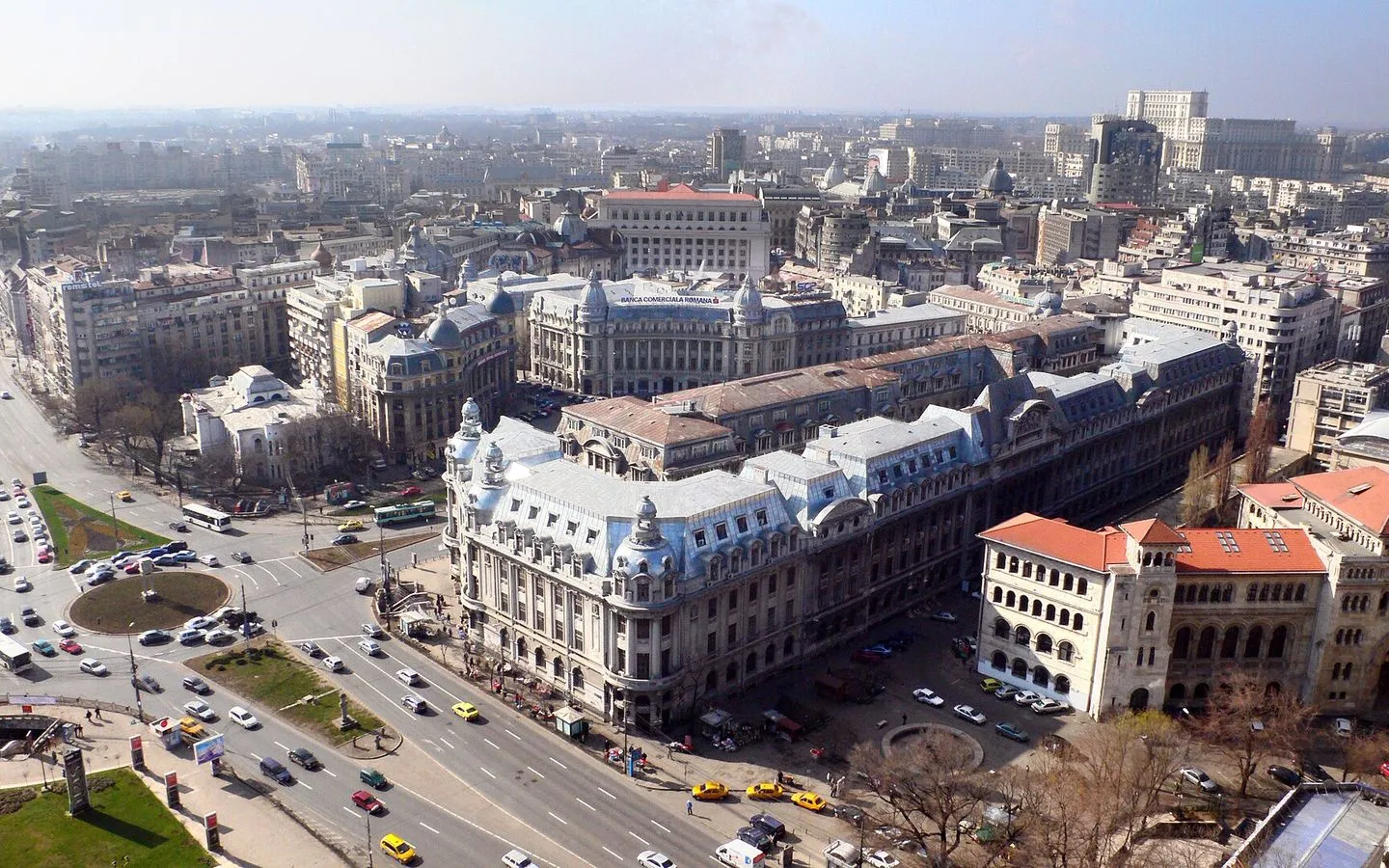
- The Palace of the Parliament, the heaviest building on earth, and Bulevardul Unirii, the wide avenue cut through the old city to face it.
- Calea Victoriei south from Revolution Square: the Romanian Athenaeum, the former royal palace, and the CEC Palace's glass dome.
- The Old Town grid around Stavropoleos Monastery and Lipscani, where Caru' cu Bere has poured beer in a neo-Gothic hall since 1899.
- The Kiseleff avenue north: the National Museum of the Romanian Peasant, the Arch of Triumph, and the Village Museum's wooden churches and watermills beside the lake.
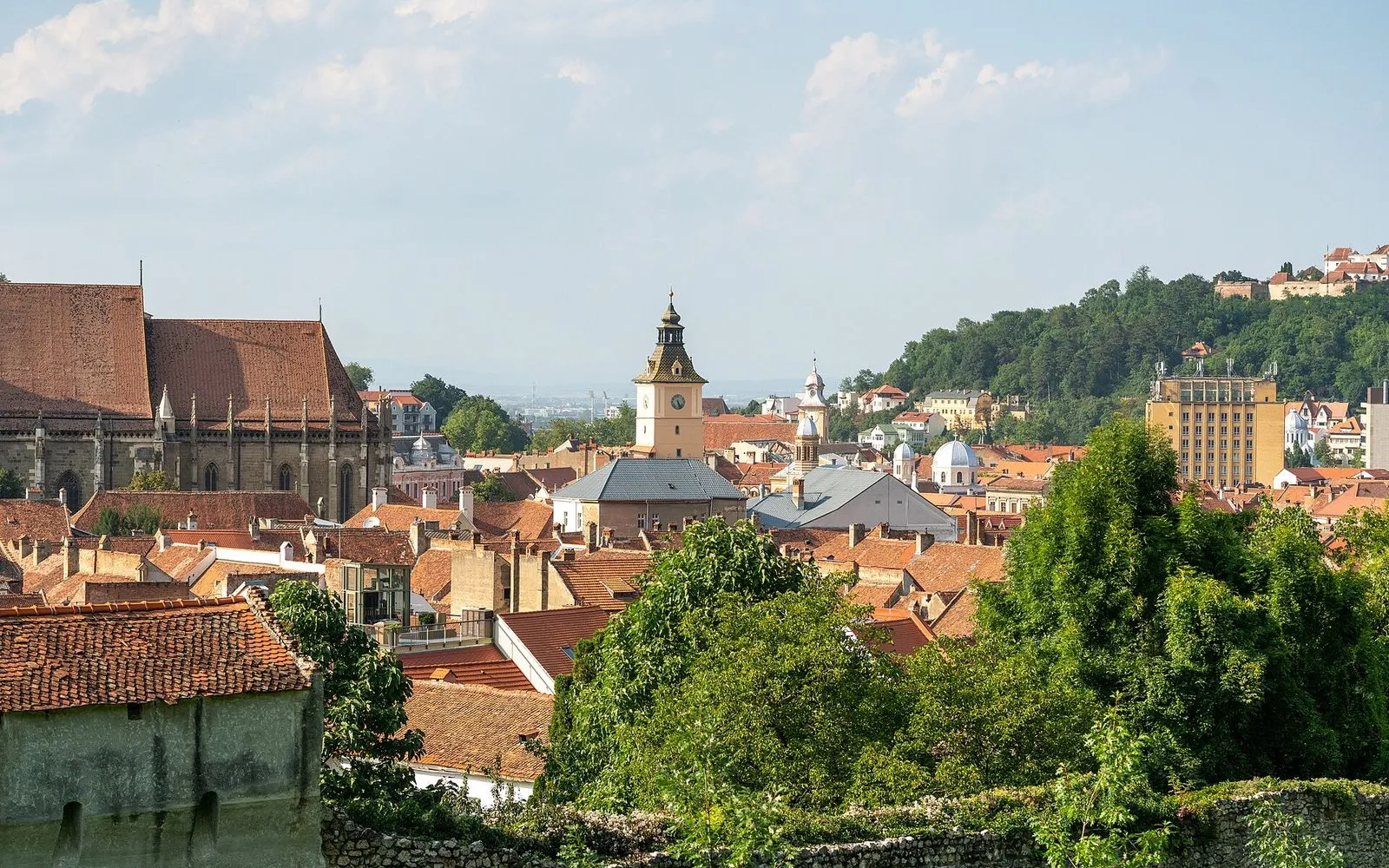
- The Black Church, blackened by the fire of 1689, with its great organ and a wall of Anatolian carpets.
- Catherine's Gate, the only medieval gate still standing, and Strada Sforii, the narrowest street in Romania.
- The Tâmpa cable car, rebuilt and reopened in 2025, and the two-minute ride over the red rooftops.
- Piața Mare, Piața Mică, and the Bridge of Lies, Romania's first cast-iron bridge, built in 1859.
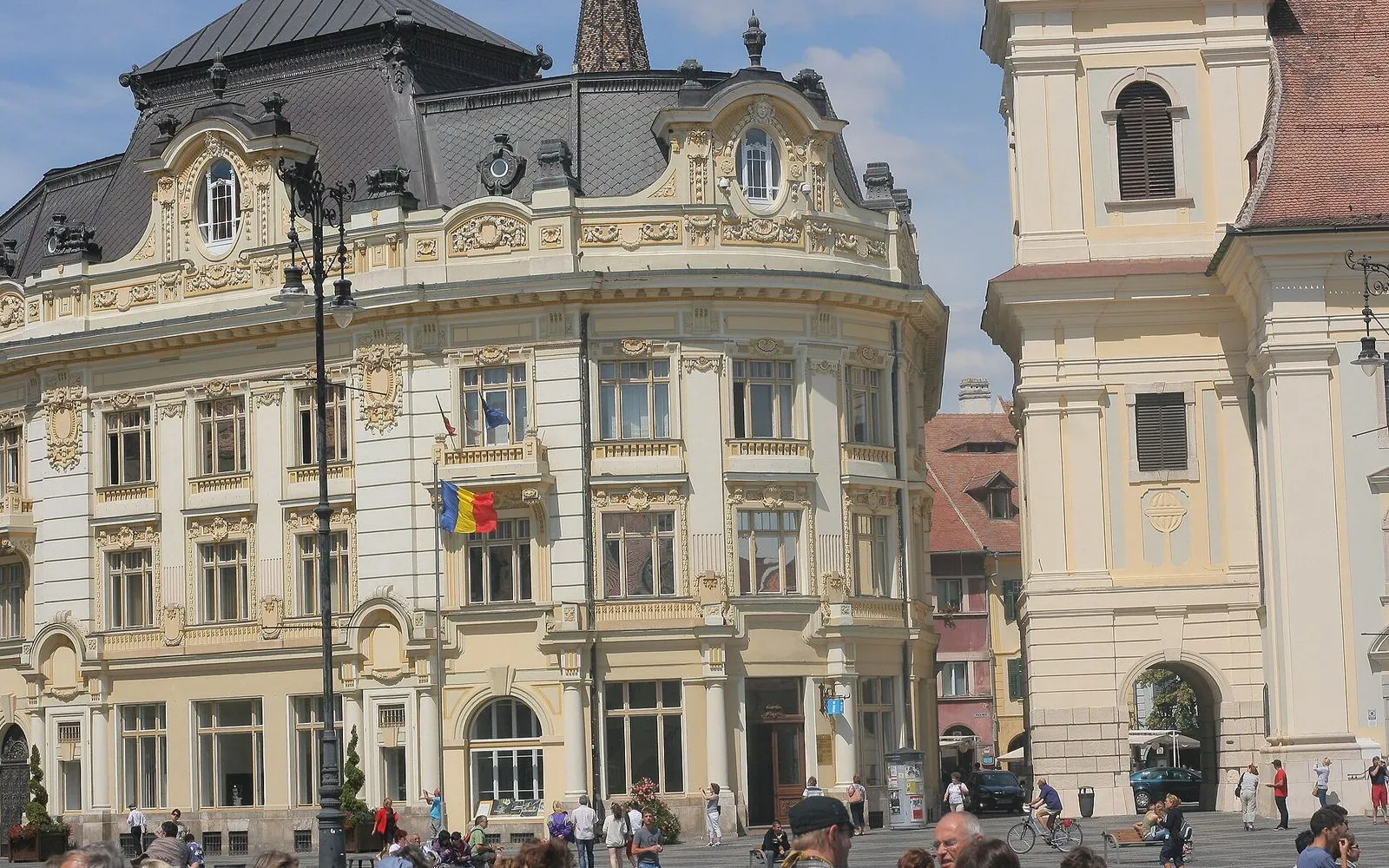
- The Brukenthal National Museum, open since 1817 in the baroque palace Governor Samuel von Brukenthal built around his own collection.
- The Council Tower and the Lutheran Cathedral, whose spire, a little over 73 metres, is the tallest in Transylvania.
Where to walk in Romania
Planning a trip to Romania
Do I need a visa for Romania?
Romania joined the Schengen area in 2024, and most visitors do not need a visa: the foreign ministry's 2026 exemption list gives US passport holders 90 days in any 180-day period, and days spent in Romania count toward the same Schengen total. Passports need at least three months of validity beyond departure, and first entry now records fingerprints and a facial image under the EU's Entry/Exit System. Check mae.ro for other nationalities.
SourceRomanian Ministry of Foreign Affairs, 2026 visa exemption listU.S. Embassy in Romania, entry and exit requirementsU.S. Department of State, travel to EuropeIs Romania expensive?
Romania is one of the cheapest countries in the EU. Mid-range travelers spend about 265 lei a day, an inexpensive restaurant meal runs around 50 lei, a draft beer costs about 11 lei, and a 90-minute ticket on Bucharest's buses, trams, and metro is 3 lei. Budget from about 2,600 lei per person for this trip once castle tickets and intercity trains are added.
SourceRomania Guidebook, Romania Trip Cost 2026When is the best time to visit Romania?
Romania is at its best for walking in April to June and September to October, with mild weather, thinner crowds, and lower prices. July and August are peak season in the mountains and on the Black Sea coast, and winter suits Christmas markets and skiing more than this route.
SourceTravel with Hello, Romania guide 2026Which cities should I visit in Romania?
Bucharest, Brașov, and Sibiu carry the strongest first visit, which is why this route uses them: the capital's boulevards and Parliament, the Saxon old towns, and the mountains in between. Cluj-Napoca is the usual next stop when a longer trip opens up.
SourceRomania Guidebook, vetted placesHow do I get around Romania without a car?
Romania's trains do most of the work: CFR Călători runs the main lines with the private operators Transferoviar and Regio Călători alongside it, second-class fares on this route run from about 25 to 30 lei, and digital tickets are sold online at bilete.cfrcalatori.ro. Buses and ride-hailing apps cover the stretches where rails do not reach.
SourceTreno, Romanian rail ticketsCFR Călători online ticketsTravel with Hello, Romania guide 2026More of Romania
- ItineraryOne week in RomaniaBucharest, Brașov, and Sibiu by train, with the Carpathians between them.
- Know before you goRomania essentialsThe national briefing for Romania: Schengen entry rules and the 90-day clock, trains between cities, the leu, plugs, public holidays, and which season suits your trip.

Plan your visit
Take Romania with you.
Download Wayside's self-guided walks for Bucharest, Brașov, and Sibiu before you land.
Provenance · last verified September 27, 2026
Researched by Wayside, with every operational fact checked against the source.
SourcesRomania TourismRough GuidesFrommer'sBucharest AirportsGOV.UK travel adviceRomanian Ministry of Internal AffairsCouncil of the European UnionYour Europe (European Union)PwC Tax SummariesEncyclopaedia BritannicaWikipedia, Geography of RomaniaWikipedia, Climate of RomaniaRomanian Ministry of Foreign Affairs, 2026 visa exemption listU.S. Embassy in Romania, entry and exit requirementsU.S. Department of State, travel to EuropeRomania Guidebook, Romania Trip Cost 2026Travel with Hello, Romania guide 2026Romania Guidebook, vetted placesTreno, Romanian rail ticketsCFR Călători online tickets
Photo by Andy Arbeit on Unsplash
Photo by Paul Colin Hennig firstdorsal.eu on Wikimedia Commons · CC BY-SA 4.0
Photo by seisdeagosto on Wikimedia Commons · CC BY-SA 2.0
Photo by Michal Gorski on Wikimedia Commons · CC BY-SA 3.0