Bucharest · Self-guided audio walk

Calea Victoriei: From Revolution to the River

Walk Bucharest's grand avenue south from Revolution Square to the river, past concert halls, palaces, a glass arcade, and two great museums.

  • 10Stops
  • 2.1 kmDistance
  • 35+ minTime
Calea Victoriei: From Revolution to the River

Photo by Jacob Fryer on Unsplash

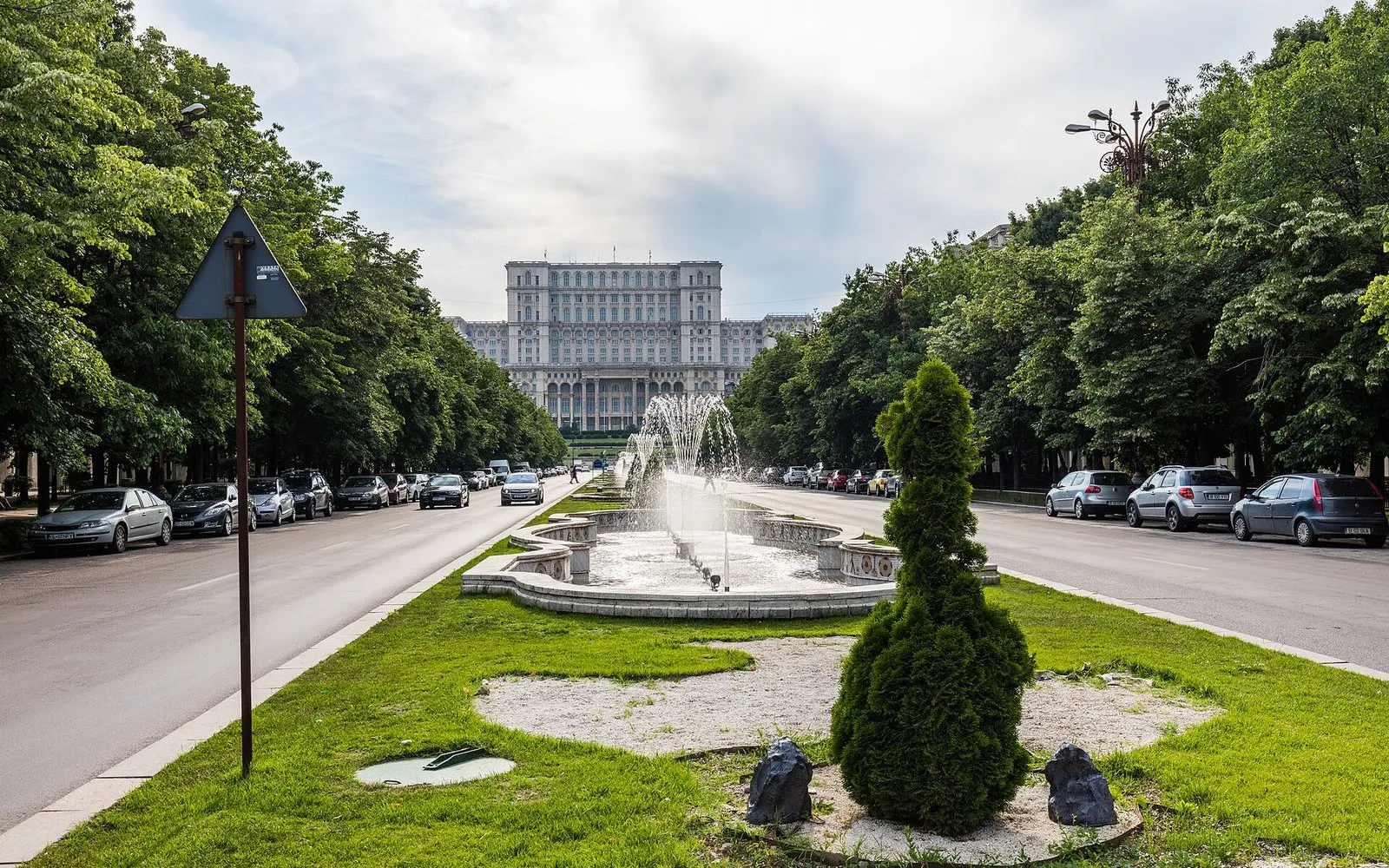
Calea Victoriei is the street where Bucharest dressed up as Little Paris, and this walk follows it south from Revolution Square to the Dâmbovița. You'll pass the round Athenaeum, the former royal palace, an Art Deco telephone tower, and the CEC Palace's glass dome, stepping inside two national museums along the way. Between them you'll cross a library that burned in the 1989 revolution and rose again, an officers' palace with a fountain where a monastery once stood, and a yellow-lit shopping passage shaped like a fork. The Memorial of Rebirth marks the square where the old order fell, and the route ends at the history museum's ten-column portico.

Plan about two and a half hours. The museums carry the longest visits, and Casa Capșa is the right place for a coffee or a slice of Joffre cake midway.

Hear it on the street

Get the turn-by-turn audio guide in the app. The narration plays itself as you reach each stop, hands-free and offline.

Stop by stop

The route

Interactive map of the route. The full stop list below works without it.

Romanian AthenaeumMust see

Photo by Diego Delso on Wikimedia Commons

Romanian Athenaeum

0:00

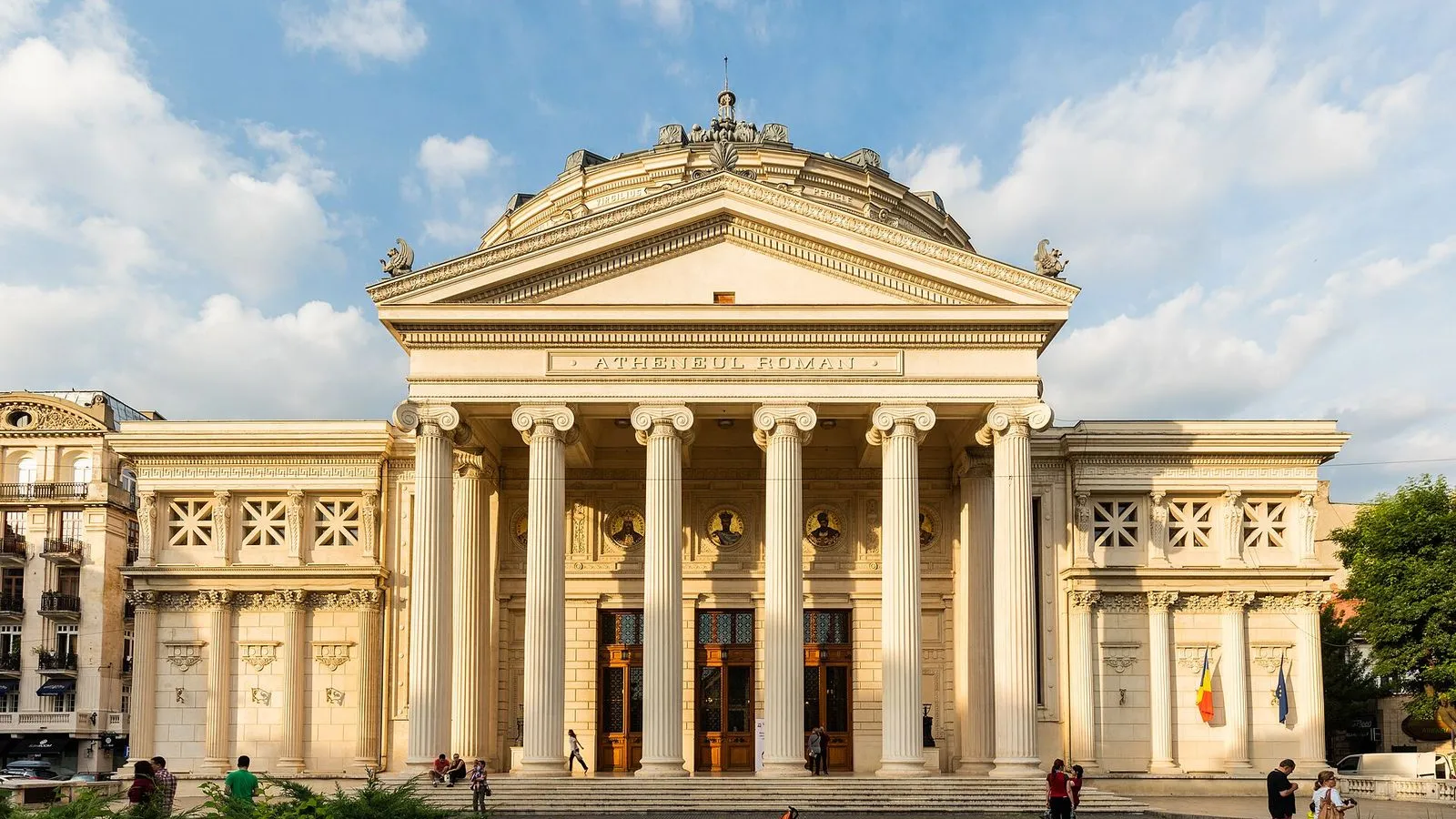
The city's round temple of music, opened in 1888 and home to the George Enescu Philharmonic.

You're standing in front of the Romanian Athenaeum, the round, domed concert hall that Bucharest built when it wanted to feel like a European capital. The French architect Albert Galleron designed it, and the money came from a public subscription that ran for decades under the slogan give a leu for the Athenaeum. Step inside when it's open and look up. The main hall is thirty meters across, ringed by boxes, and above them runs a fresco by Costin Petrescu that shows twenty-five scenes of Romanian history, from Trajan's conquest of Dacia to the Romania of 1918.

Downstairs, the circular foyer has twelve pink columns and stairs of Carrara marble. The organ you see was paid for by a campaign the composer George Enescu led, inaugurated in 1939 with 3,400 pipes. The hall nearly collapsed after decades of neglect, and a big restoration in the 1990s saved it.
≈3 min walk to the next stop
Central University LibraryLocal pick

Photo by Diego Delso on Wikimedia Commons

Central University Library

0:00

The Carol I library that burned in December 1989 and rose again, facing the Athenaeum.

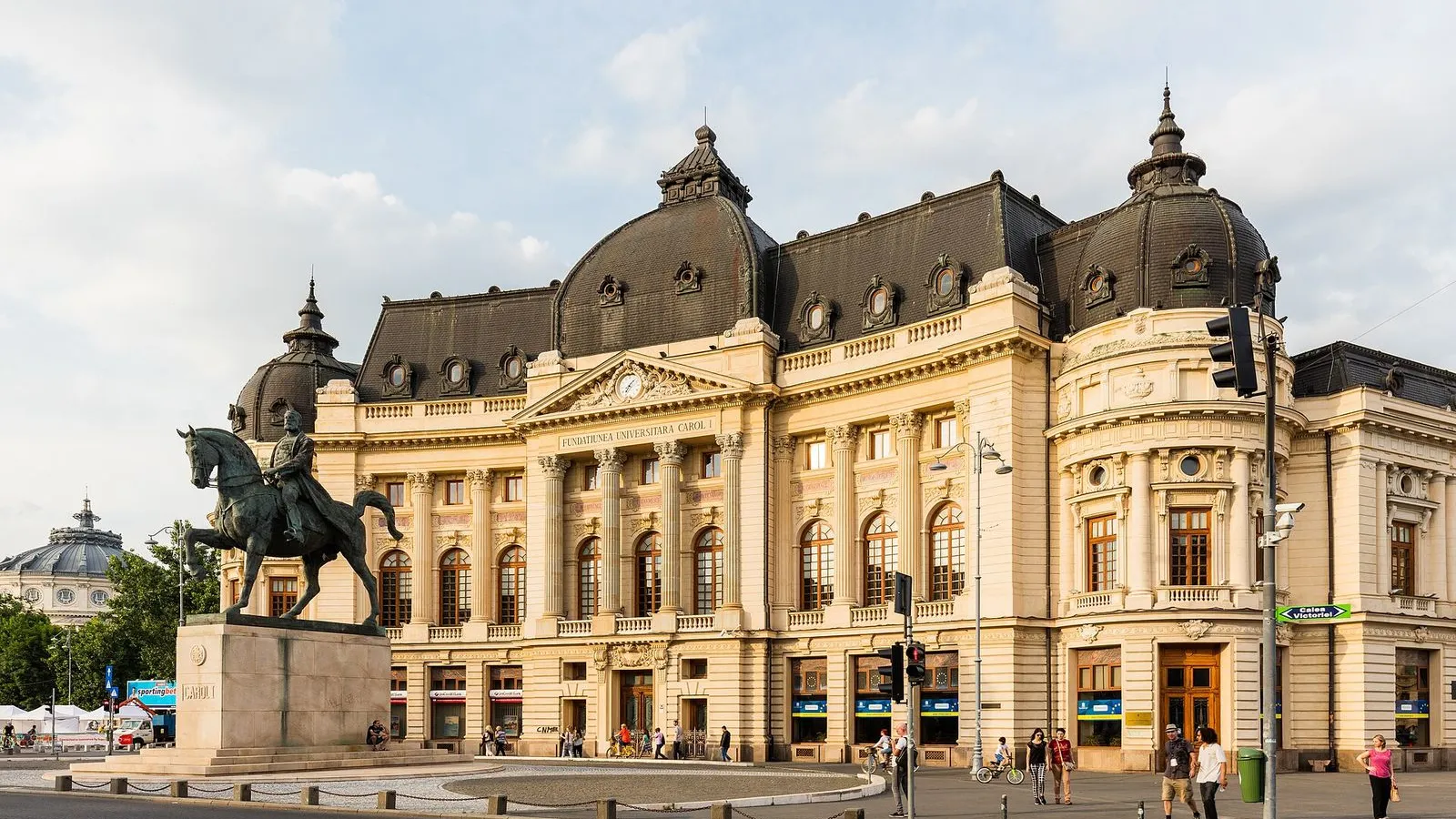
Cross Calea Victoriei to the Central University Library, the Beaux-Arts building with the long facade. King Carol I founded it for the country's university students, and the French architect Paul Gottereau designed it, the same hand behind the CEC Palace you'll see near the end of this walk. Work began in 1891, and the building opened on 14 March 1895 in the king's presence. It started with just 3,400 books and periodicals, and the same architect added a wing in 1914 with an amphitheater of more than five hundred seats and four reading rooms.

In December 1989, during the revolution, the building caught fire. More than half a million books burned, along with old maps and nearly 3,700 manuscripts, among them papers by Eminescu, Maiorescu, and Caragiale, and 52 volumes from Eminescu's own library. The library reopened on 20 November 2001 after a restoration supported by UNESCO. Look for the equestrian statue of King Carol I in the square nearby, the first king of independent Romania.

≈2 min walk to the next stop
Memorial of RebirthLocal pick

Photo by George M. Groutas on Openverse

Memorial of Rebirth

0:00

The white marble pillar in Revolution Square, remembering the 1,058 people killed in December 1989.

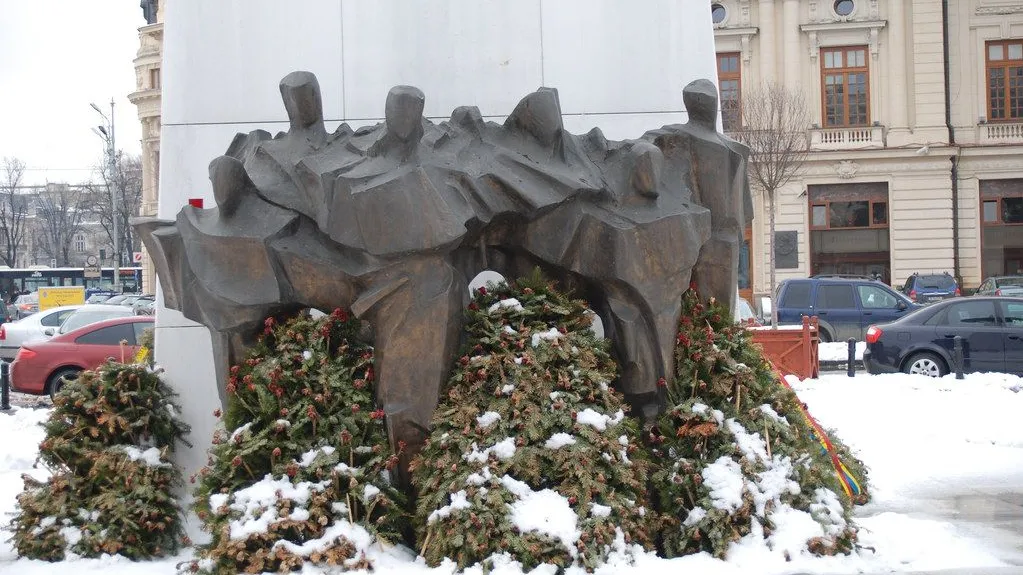
You're in Revolution Square, and the tall white marble pillar in front of you is the Memorial of Rebirth, raised in 2005. It's twenty-five meters high, with a metal crown at the top, and the wall beside it carries the names of the 1,058 people who died in the revolution of December 1989. The square itself was called Palace Square until that winter. On 21 December 1989, Nicolae Ceaușescu gave his last speech from the balcony of the old Central Committee building across the way, and the crowd's roar ended the rally he had staged.

The next day he and his wife fled from the roof by helicopter. Bucharest locals have never fully warmed to the monument; many call it the potato on a spike. It is guarded around the clock.

≈3 min walk to the next stop
Free preview ends here · stops 4 to 10 continue in the app

National Museum of Art of Romania

The former royal palace, now holding Brâncuși, Grigorescu, El Greco, and Rembrandt.

in app

Telephone Palace

The Art Deco tower that was Bucharest's tallest building, built on a steel skeleton.

in app

Casa Capsa

The pastry shop that became a hotel, where writers held their own academy.

in app

Cercul Militar National

The army's French-style palace, built over an old monastery site.

in app

Macca-Villacrosse Passage

A horseshoe of glass and iron from 1891, now filled with cafes.

in app

CEC Palace

The savings bank palace with the great glass dome, raised where a monastery once stood.

in app

National Museum of Romanian History

The old post office palace, home to Trajan's Column cast and the Crown Jewels.

in app
Good to know

Before you go

How long does the Calea Victoriei walk take?

The Calea Victoriei walk takes about two and a half hours. The two museums are the longest stops, and Casa Capșa is the right place to pause midway.

Is the Calea Victoriei walk free?

The Calea Victoriei street is free to walk. Entry to the National Museum of Art costs 60 lei, the National Museum of Romanian History costs 32 lei, and a look inside the Romanian Athenaeum costs 15 lei.

SourceNational Museum of Art of RomaniaNational Museum of Romanian HistoryGeorge Enescu Philharmonic

Provenance · last verified August 19, 2026

Built from the Wayside route itself: the stops, their order, and the walk between them.

Photo by Jacob Fryer on Unsplash

Photo by Diego Delso on Wikimedia Commons · CC BY-SA 4.0

Photo by Diego Delso on Wikimedia Commons · CC BY-SA 4.0

Photo by George M. Groutas on Openverse · CC BY 2.0

Photo by Jani Godari on Unsplash

Photo by Bekuletz on Wikimedia Commons · CC BY-SA 2.5

Photo by Diego Delso on Wikimedia Commons · CC BY-SA 4.0

Photo by Joe Mabel on Wikimedia Commons · CC BY-SA 4.0

Photo by Uladzislau Petrushkevich on Unsplash

Coming soon

Wayside isn't in the app stores yet, but it's in the works. Check back soon.