Venice · Self-guided audio walk

Arsenale and Eastern Castello

Carpaccio's painted saints, the Arsenale's stolen lions, a canal turned market street, and the quiet island that was Venice's cathedral.

  • 5Stops
  • 2.7 kmDistance
  • 40+ minTime
Arsenale and Eastern Castello

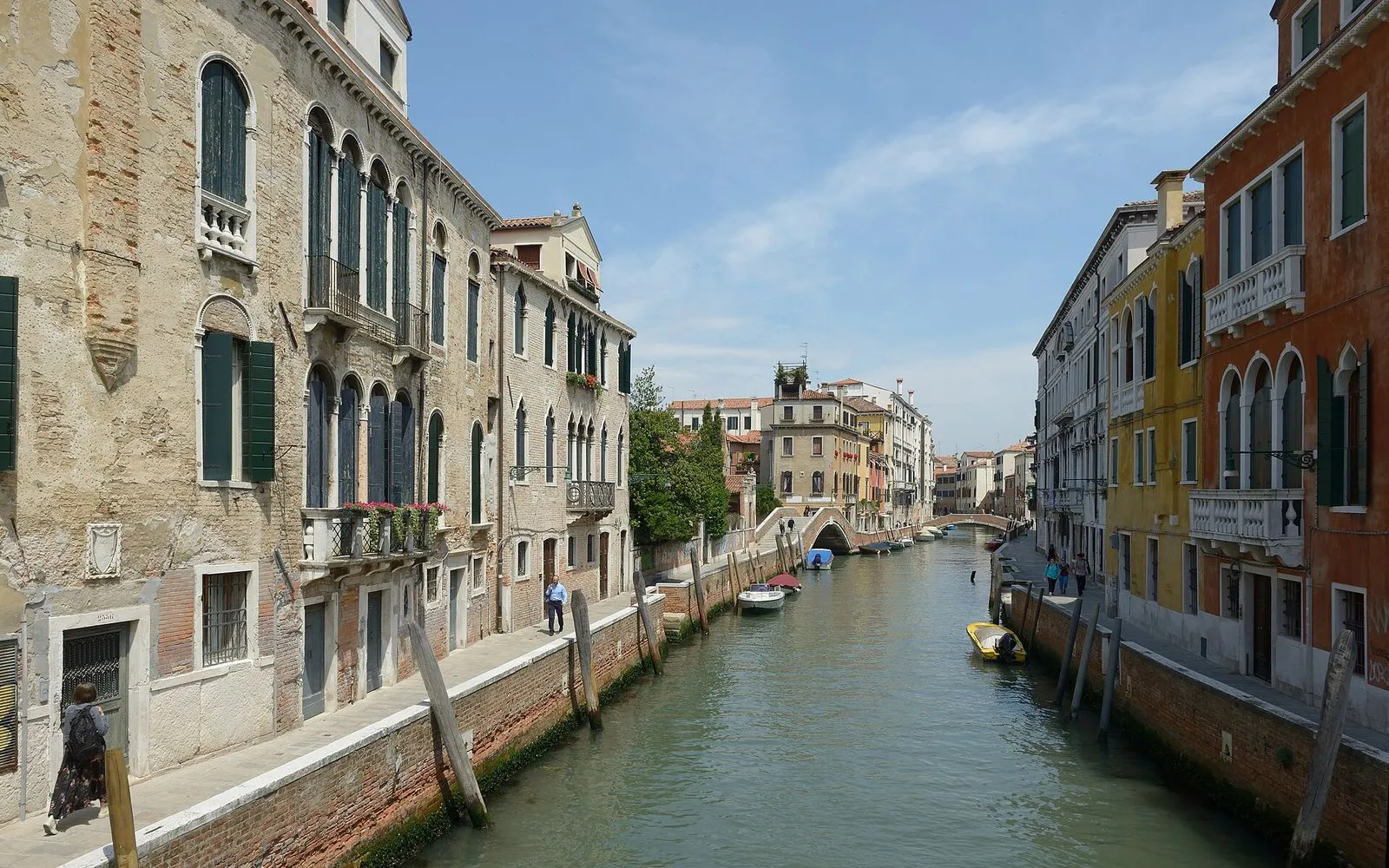
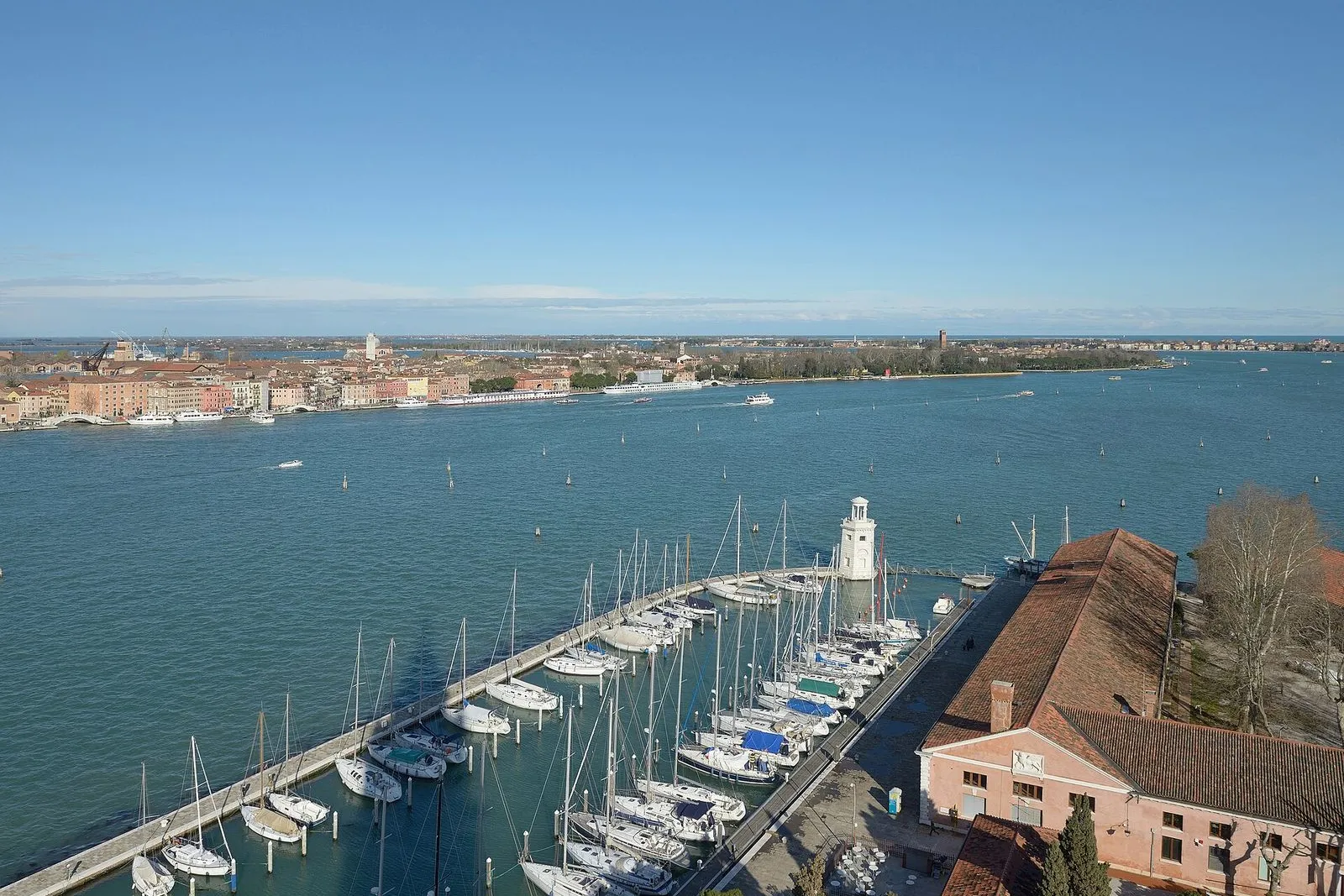
Photo by Wolfgang Moroder on Wikimedia Commons

This is the longest, greenest walk in Venice, through the Castello that Venetians actually live in. It begins in a low Dalmatian confraternity hall wrapped in Carpaccio's canvases, then skirts the Arsenale, the shipyard that built the Republic's fleet, and stops at the stone lions by its land gate.

From there it follows Via Garibaldi, a filled-in canal that now does the neighborhood's daily shopping and drinking, then spreads out into the Biennale's green gardens before ending on the island of San Pietro di Castello, the city's cathedral until 1807. Allow about two and a half hours, with time to sit, eat, and watch the working quarter go about its morning.

Hear it on the street

Get the turn-by-turn audio guide in the app. The narration plays itself as you reach each stop, hands-free and offline.

Stop by stop

The route

Interactive map of the route. The full stop list below works without it.

Scuola di San Giorgio degli SchiavoniMust see

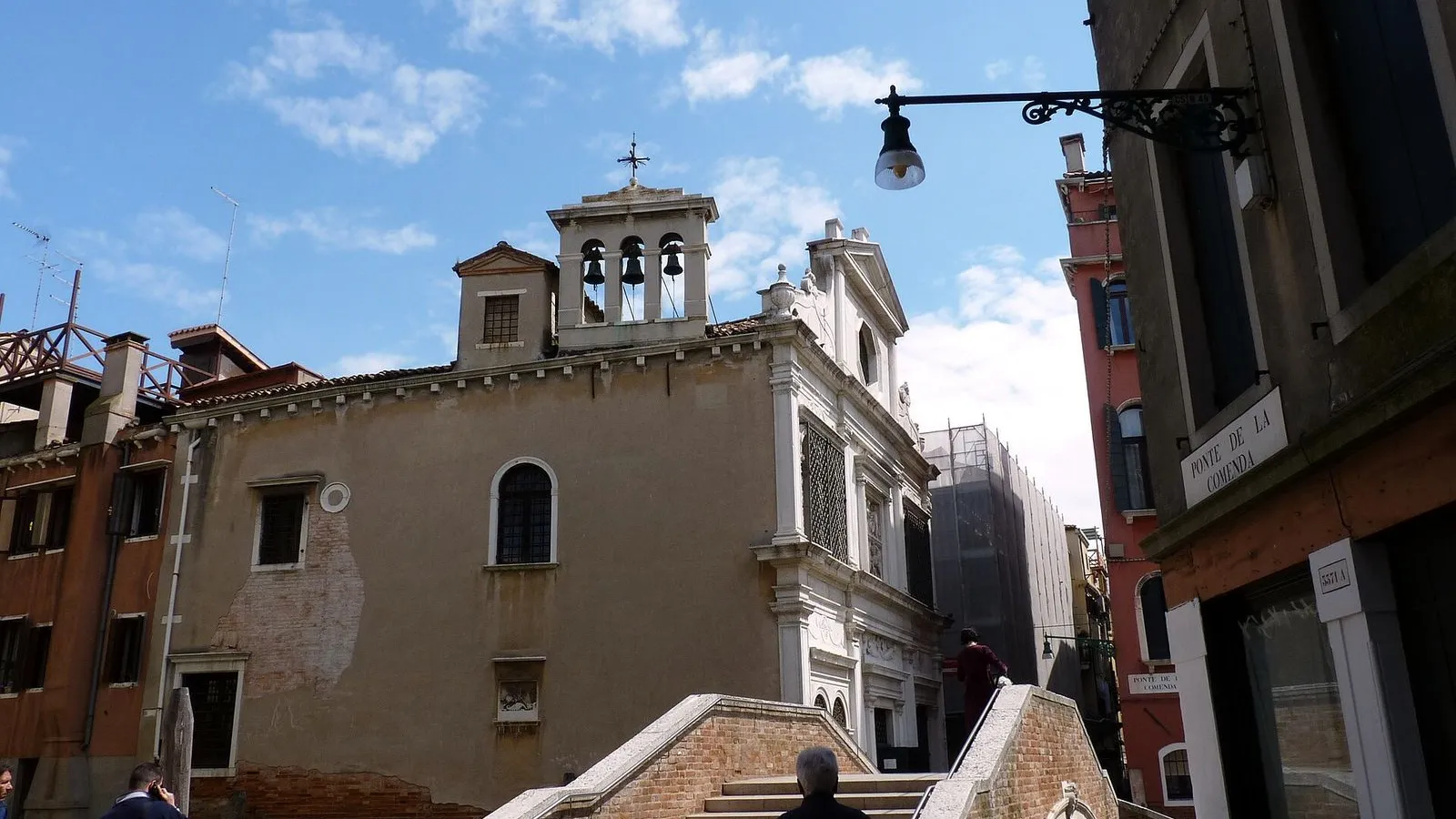
Photo by Alainauzas on Wikimedia Commons

Scuola di San Giorgio degli Schiavoni

0:00

A tiny Dalmatian confraternity hall whose ground floor holds Carpaccio's complete Saint George, Saint Jerome and Saint Tryphon cycle, still in its original room.

You're outside a low, plain building on Calle dei Furlani, easy to walk past if you don't know what's behind the door. This was the meeting house of the Schiavoni, Dalmatian sailors and artisans who settled in Venice, and their brotherhood was approved in 1451. Step inside and the ground floor hall is wrapped in nine canvases by Vittore Carpaccio, painted between 1502 and 1507 and still in the room they were made for. The benches are dark wood, the light falls through small windows, and the paintings hang close enough to study the stitching on a sleeve.

Look at Saint Augustine in his study, caught at the moment a voice interrupts his writing, or Saint George driving his lance into a dragon across a field scattered with bones. Carpaccio packed these scenes with the real texture of early sixteenth century Venice: hounds, armor, imported cloth, a glimpse of the lagoon. The brotherhood outlived the Republic and still owns this building today.
≈9 min walk to the next stop
Arsenale di VeneziaMust see

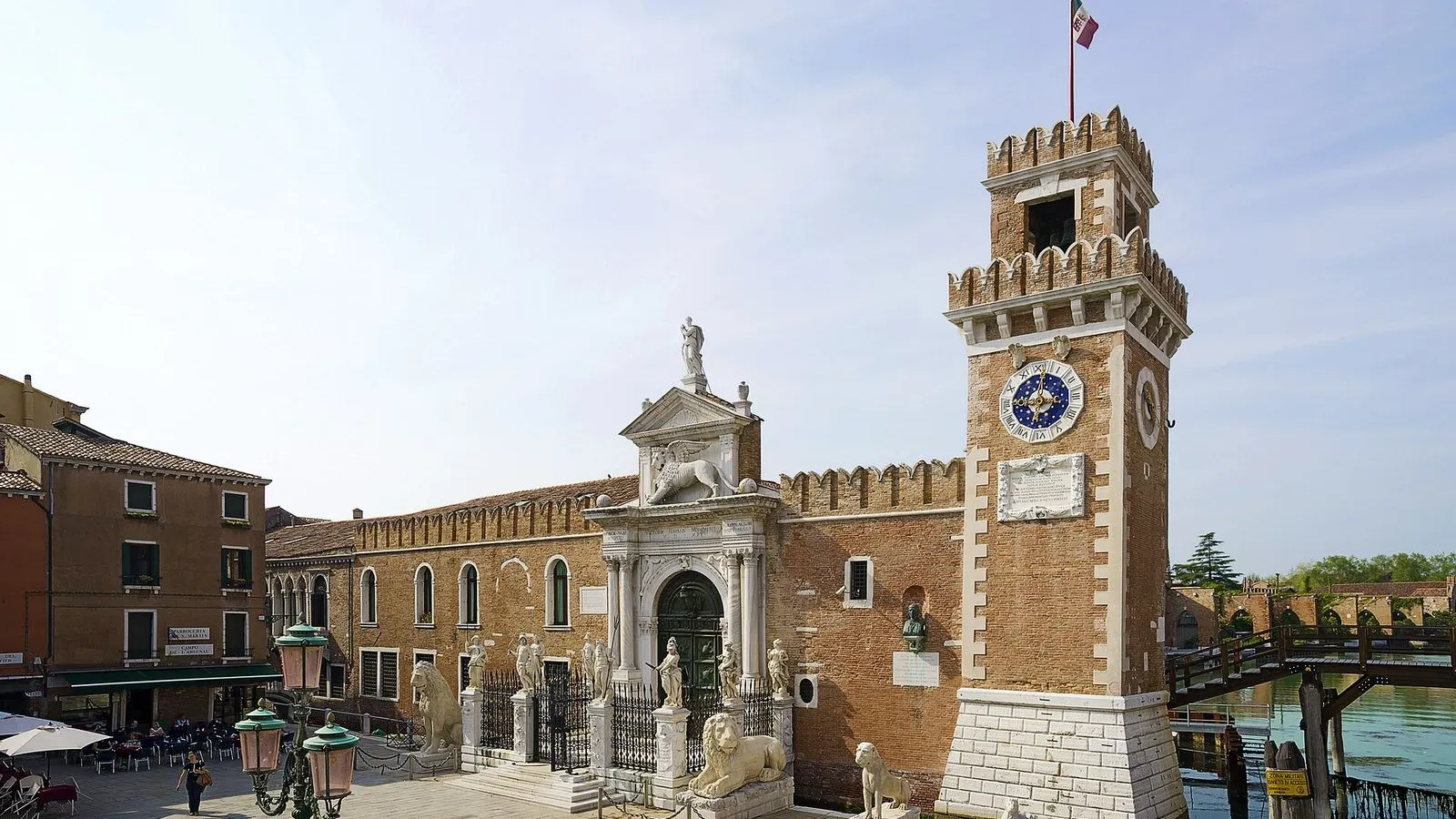
Photo by Didier Descouens on Wikimedia Commons

Arsenale di Venezia

0:00

The Arsenale's triumphal land entrance, flanked by Greek stone lions and carved with trophies from Venice's naval victories.

You're facing the Porta di Terra, the land gate of the Arsenale, and the first thing to know is that this arch was a factory entrance. Behind those copper-clad doors, Venice built the galleys that made the Republic a sea power, with thousands of workers at its peak. The gate went up around 1460, modeled on a Roman triumphal arch in Pula, and it is counted among the first Renaissance facades in the city. The winged Victories above the arch were added after the naval victory at Lepanto in 1571.

Now look at the lions. The biggest, about three meters high, came from the Greek port of Piraeus, where it sat so long that the harbor took the name Porto Leone. Francesco Morosini shipped it here in 1688. Study its haunches and you can still find runes scratched by Scandinavian mercenaries in the eleventh century.

The other lions came from Attica and the island of Delos, trophies of a city that carried its empire home piece by piece.

≈6 min walk to the next stop
Via GaribaldiLocal pick

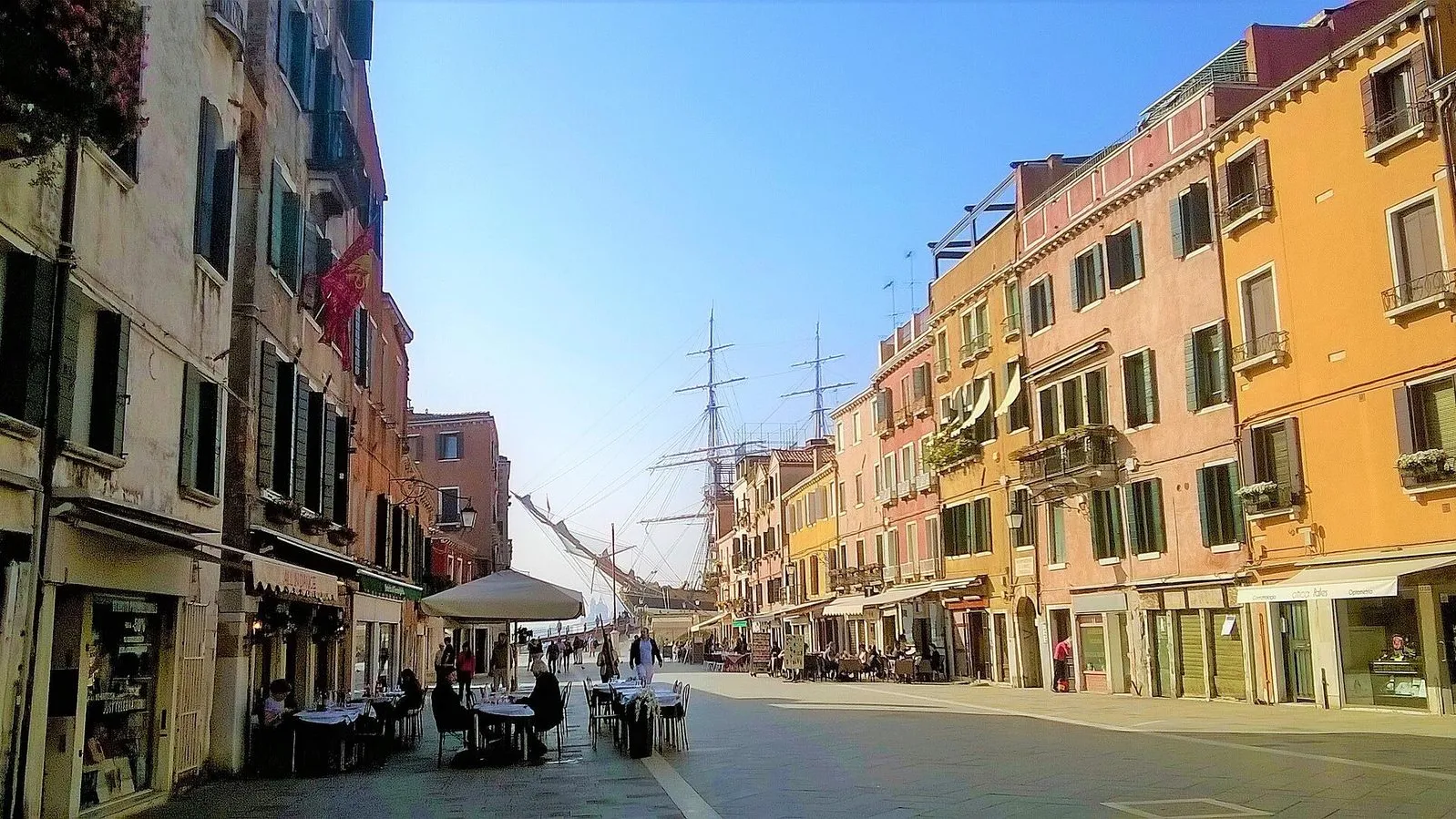
Photo by Doge e Patriarca on Wikimedia Commons

Via Garibaldi

0:00

Venice's widest street, a filled-in canal that has become Castello's market street, bar street, and daily living room.

You've stepped onto the widest, straightest street in Venice, and that width is the whole story. Until 1807 this was a canal, the Rio di Sant'Anna. Under Napoleonic rule it was filled in to make a proper boulevard, first called Via Eugenia after Napoleon's stepson and viceroy, Eugène de Beauharnais, and renamed for Garibaldi after 1866. The straight line and the trees still feel like a mainland avenue set down in the lagoon.

What hasn't changed is that this is a neighborhood's main street. In the morning the southern end fills with fruit and vegetable stalls, plus fishmongers, butchers, and bakers doing business the way Castello always has. Listen for shoppers calling out prices, a barista leaning in a doorway, kids on their way to school. Stop for a spritz and a cicchetto and watch the street work.

When you're ready, head south toward the green edge of the city, where the Giardini begin.

≈9 min walk to the next stop
Free preview ends here · stops 4 to 5 continue in the app

Giardini della Biennale

Napoleon's public garden that became the home of the Biennale, with thirty national pavilions scattered under the trees.

in app

San Pietro di Castello

Venice's cathedral until 1807, standing on the island of Olivolo with a leaning Codussi bell tower and a facade derived from Palladio.

in app
Good to know

Before you go

What is the best time for the Arsenale and Eastern Castello walk?

Walk it in the morning, when Via Garibaldi's shops and bars are waking up and the Scuola di San Giorgio degli Schiavoni is easiest to enjoy. In a Biennale year, leave extra time for the Giardini's national pavilions.

Provenance · last verified August 19, 2026

Built from the Wayside route itself: the stops, their order, and the walk between them.

Photo by Wolfgang Moroder on Wikimedia Commons · CC BY-SA 3.0

Photo by Alainauzas on Wikimedia Commons · CC BY-SA 3.0

Photo by Didier Descouens on Wikimedia Commons · CC BY-SA 4.0

Photo by Doge e Patriarca on Wikimedia Commons · CC BY-SA 4.0

Photo by Michael Heise on Unsplash

Photo by Wolfgang Moroder on Wikimedia Commons · CC BY-SA 3.0

Photo by dconvertini on Wikimedia Commons · CC BY-SA 2.0

Photo by Vyacheslav Argenberg on Wikimedia Commons · CC BY 4.0

Photo by אריה דרזי, ARIE DARZI on Wikimedia Commons · CC BY-SA 3.0

Coming soon

Wayside isn't in the app stores yet, but it's in the works. Check back soon.