Venice · Self-guided audio walk

Dorsoduro Art and Waterfront

Old masters, modern art, and a sunny canal-side walk through Venice's student quarter.

  • 7Stops
  • 2.6 kmDistance
  • 40+ minTime
Dorsoduro Art and Waterfront

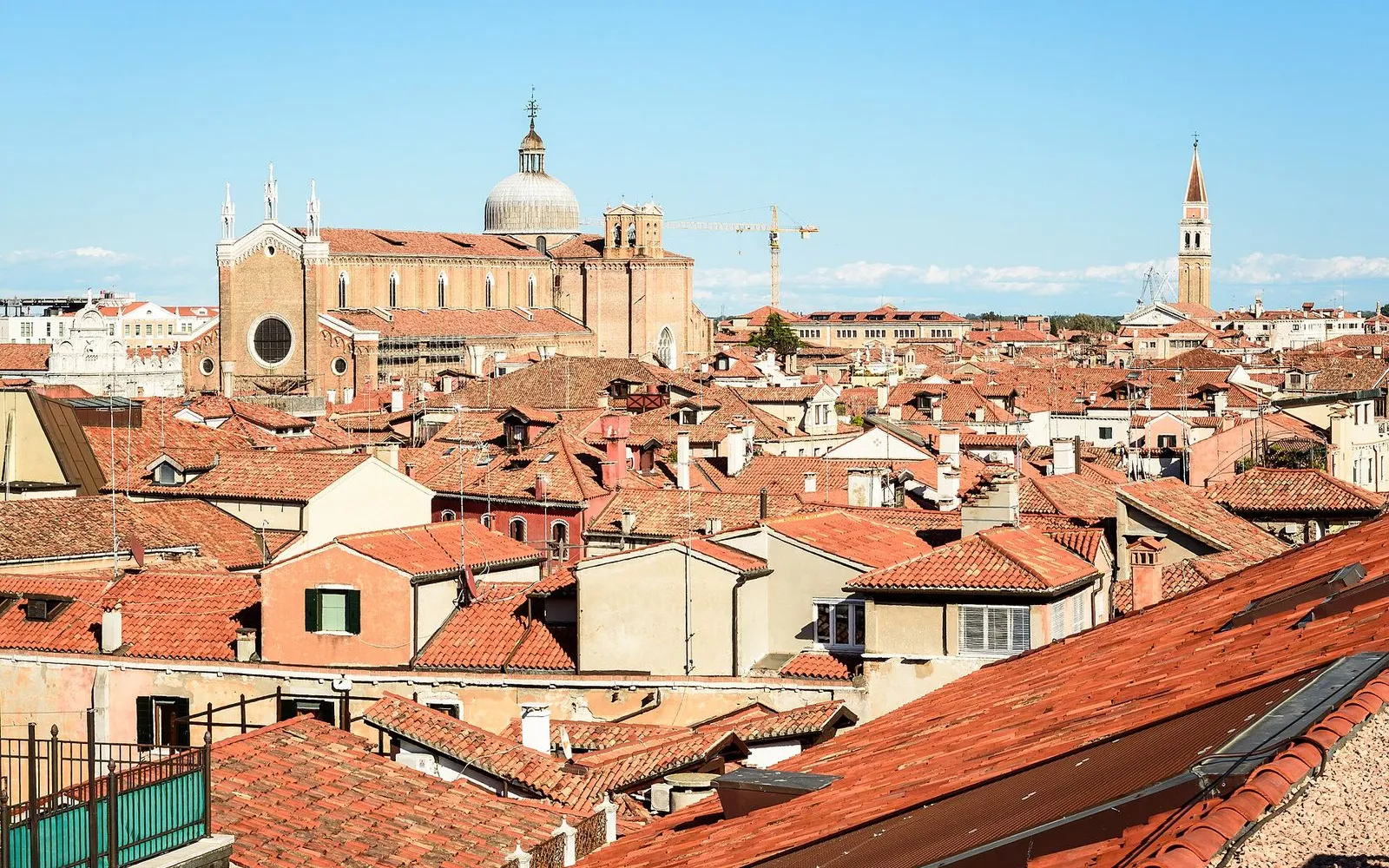
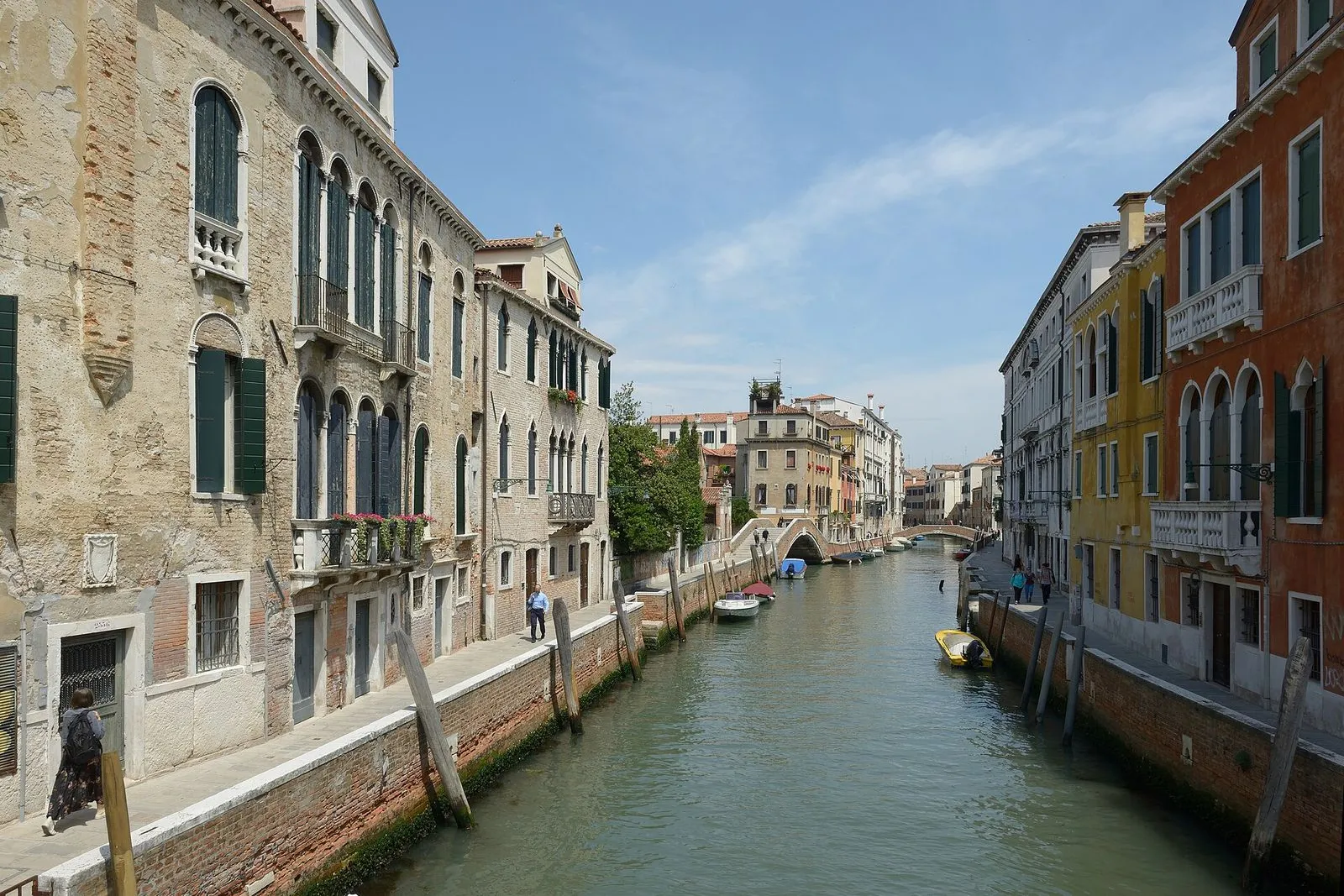
Photo by Wolfgang Moroder on Wikimedia Commons

Dorsoduro packs more art into one walkable corner than most cities manage in a lifetime. Start in the Accademia, where Bellini, Giorgione, Titian, Tintoretto, and Veronese hang a few steps from the Grand Canal. Then cross to Peggy Guggenheim's low white palazzo, a house full of Picasso, Pollock, and Magritte, before walking to the domed Salute and the old customs house that François Pinault turned into a modern art museum.

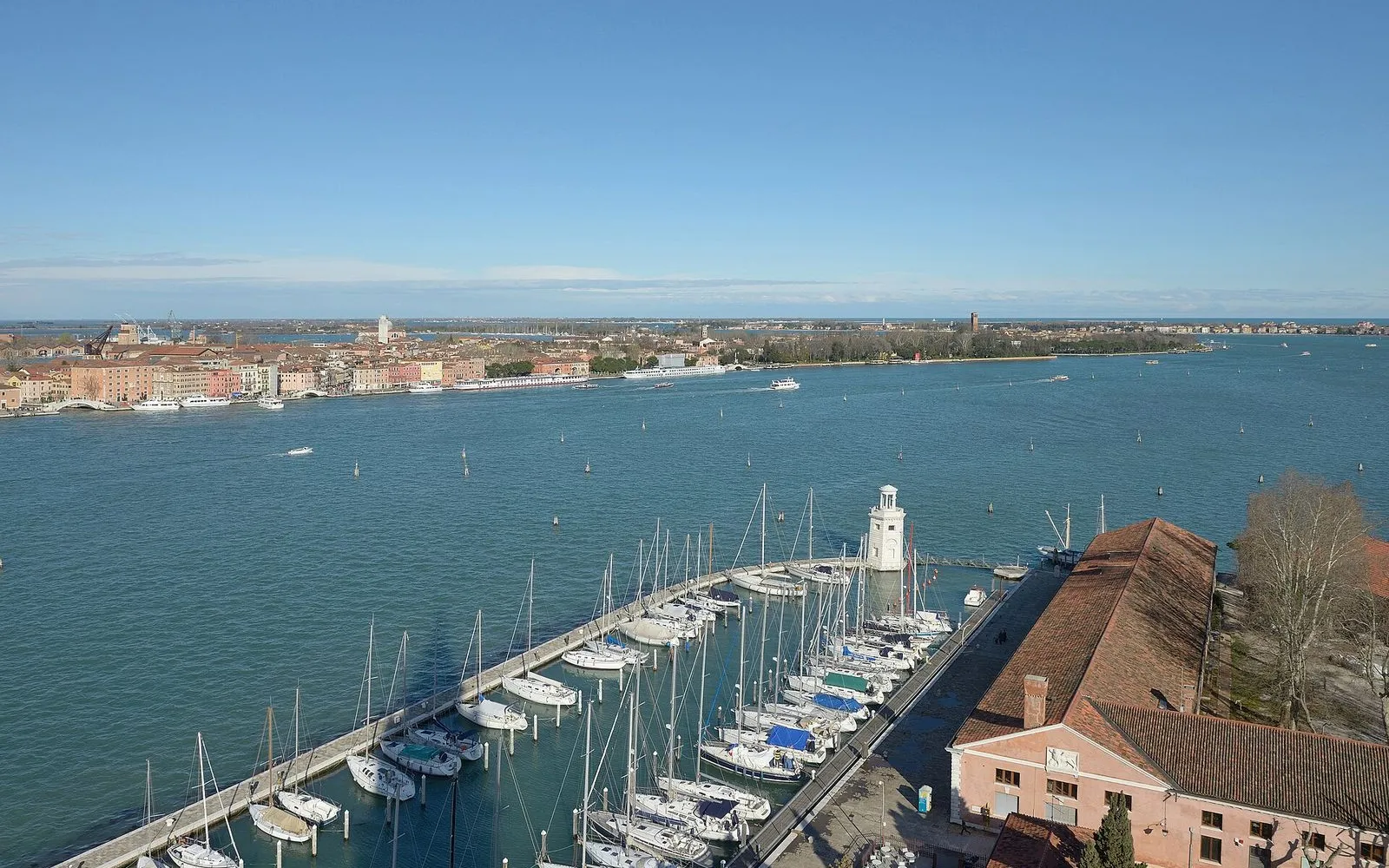
From the Punta della Dogana, follow the Zattere promenade southwest along the Giudecca Canal, with the sun on your face and the water on your left. You'll pass the last working gondola yard at San Trovaso, then finish in Campo Santa Margherita, where students and locals fill the bars as the afternoon turns to evening. Allow about two and a quarter hours.

Hear it on the street

Get the turn-by-turn audio guide in the app. The narration plays itself as you reach each stop, hands-free and offline.

Stop by stop

The route

Interactive map of the route. The full stop list below works without it.

Gallerie dell'AccademiaMust see

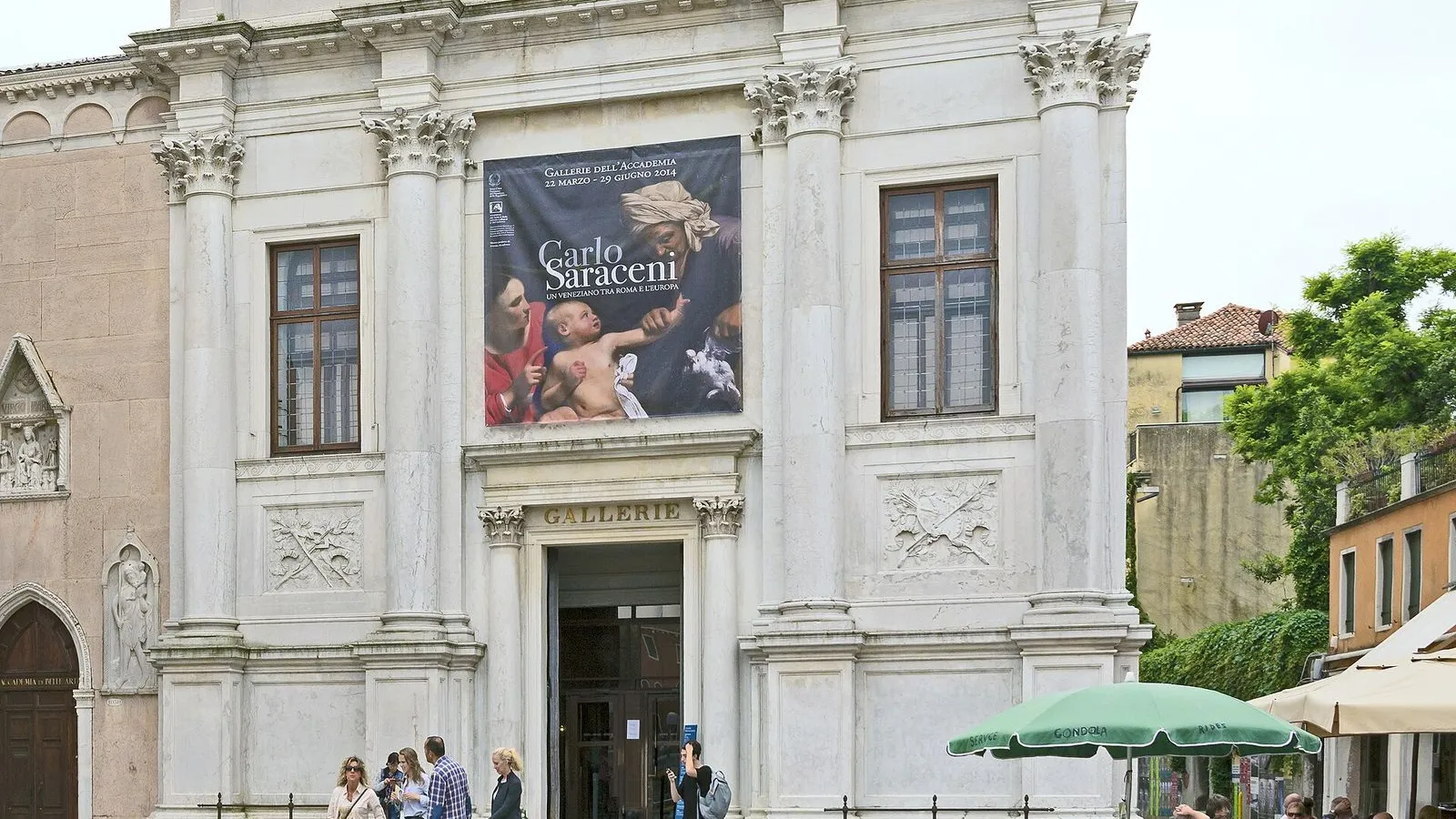
Photo by Didier Descouens on Wikimedia Commons

Gallerie dell'Accademia

0:00

Venice's greatest collection of Venetian painting, from Bellini and Giorgione to Titian and Veronese, inside a former church, monastery, and confraternity hall.

You're standing in the Campo della Carità, in front of the Gallerie dell'Accademia. This is the largest collection of Venetian painting in the world, and it fills a complex that was once a church, a monastery, and a confraternity hall. Napoleon closed the religious houses here after 1805, and in 1807 he moved the city's art academy into the buildings. The museum opened to the public in 1817.

Inside, the collection runs from the fourteenth to the eighteenth century. Giorgione's The Tempest hangs here, a small canvas with a storm in the background that people have been arguing about for five hundred years. So does Veronese's huge Feast in the House of Levi, a crowded banquet that got the artist called before the Inquisition. Titian's Pietà, the work he intended for his own tomb, is here too. Look up at the main door before you go in. The complex includes Palladio's spiral staircase, and Leonardo's drawing of the Vitruvian Man is kept in the cabinet of drawings, though it is only shown on special occasions.
≈4 min walk to the next stop
Peggy Guggenheim CollectionMust see

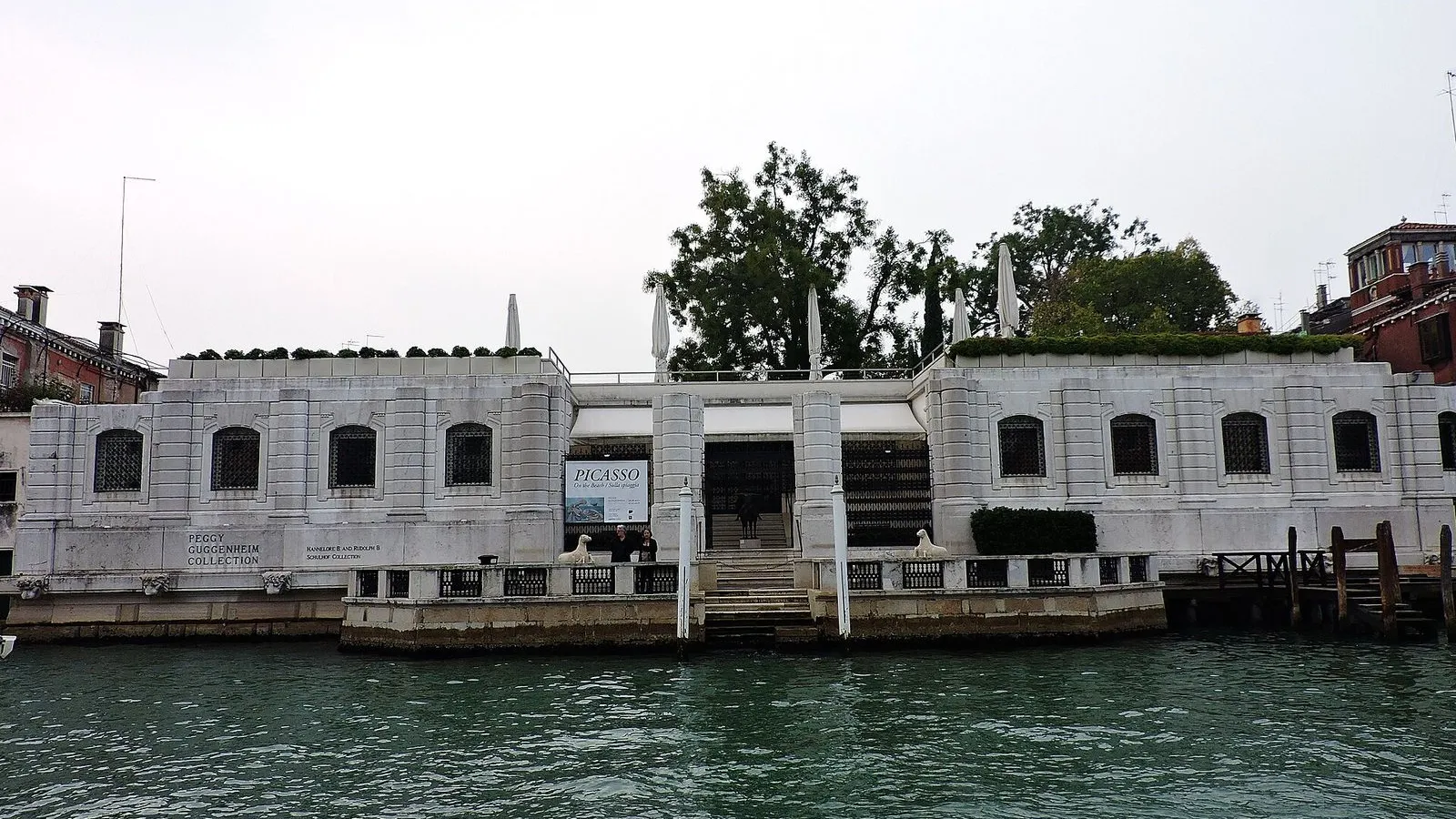
Photo by Dimitris Kamaras from Athens, Greece on Wikimedia Commons

Peggy Guggenheim Collection

0:00

Peggy Guggenheim's former home, a low unfinished Grand Canal palace full of Picasso, Pollock, and Magritte, with a sculpture garden.

You're outside the Peggy Guggenheim Collection, in the Palazzo Venier dei Leoni on the Grand Canal. The palace looks modern, but it was designed in 1749 for the Venier family and never finished. Only the ground floor was built, so the building sits unusually low among the canal palaces. The lion heads carved in Istrian stone at the waterline give it the name dei Leoni.

Peggy Guggenheim bought the place in 1949 and lived here for thirty years. She opened her home to visitors in 1951, three afternoons a week, and after her death in 1979 the collection passed to the Solomon R. Guggenheim Foundation. Inside you'll find Picasso, Kandinsky, Magritte, and the American painters she championed, including Jackson Pollock. The garden holds sculpture, and Peggy herself is buried there with her Lhasa Apso dogs. When you're done, walk back out toward the canal and turn left along the fondamenta. The water stays on your right as you follow the curve toward the big white dome of the Salute.

≈4 min walk to the next stop
Basilica di Santa Maria della SaluteMust see

Photo by Claudio Schwarz on Unsplash

Basilica di Santa Maria della Salute

0:00

The white domed votive church Venice built after the plague of 1630, set on a platform of a million wooden piles.

The Salute is Venice's thank you note to the Virgin Mary. In 1630 plague killed about forty six thousand people in the city, nearly a third of the population. On October 22 the Senate vowed to build a church if the disease lifted, and it did. The city held a competition, and the job went to Baldassare Longhena, an architect in his early thirties. He said he wanted the building to look like a crown.

Work began in 1631 and took half a century. The church is octagonal, with a huge dome and a smaller one behind, and it sits on more than a million wooden piles driven into the lagoon mud. Longhena did not live to see it finished. He died in 1682, five years before the finished church was consecrated in 1687. Every November 21, for the Festa della Salute, the city still stretches a pontoon bridge across the Grand Canal from San Marco so people can walk here to give thanks. Step inside if the doors are open. The floor, the light, and the marble all turn your eye upward.

≈2 min walk to the next stop
Free preview ends here · stops 4 to 7 continue in the app

Punta della Dogana

The old sea customs house at the tip of Dorsoduro, now a Tadao Ando space for François Pinault's contemporary art.

in app

Zattere promenade

A sunny, kilometer-long promenade along the Giudecca Canal, named for the rafts that once unloaded coal, timber, and salt here.

in app

Squero di San Trovaso

One of Venice's last working gondola yards, a wooden Alpine-looking workshop on the Rio di San Trovaso, viewed from the opposite bank.

in app

Campo Santa Margherita

Dorsoduro's big oblong square, where students gather and bars fill from late afternoon, with a radical past behind the aperitivo.

in app
Good to know

Before you go

Do the Dorsoduro museums need tickets or booking ahead?

The Accademia and the Peggy Guggenheim Collection both charge admission and are worth booking on busy days. The Zattere walk and Campo Santa Margherita cost nothing.

Provenance · last verified August 19, 2026

Built from the Wayside route itself: the stops, their order, and the walk between them.

Photo by Wolfgang Moroder on Wikimedia Commons · CC BY-SA 3.0

Photo by Didier Descouens on Wikimedia Commons · CC BY-SA 4.0

Photo by Dimitris Kamaras from Athens, Greece on Wikimedia Commons · CC BY 2.0

Photo by Claudio Schwarz on Unsplash

Photo by Michael Heise on Unsplash

Photo by dconvertini on Wikimedia Commons · CC BY-SA 2.0

Photo by Wolfgang Moroder on Wikimedia Commons · CC BY-SA 3.0

Photo by Vyacheslav Argenberg on Wikimedia Commons · CC BY 4.0

Photo by אריה דרזי, ARIE DARZI on Wikimedia Commons · CC BY-SA 3.0

Coming soon

Wayside isn't in the app stores yet, but it's in the works. Check back soon.