Venice · Self-guided audio walk

Cannaregio and the Jewish Ghetto

A lived-in corner of northern Venice: the world's first ghetto, quiet canals, and Tintoretto's parish church.

  • 6Stops
  • 1.5 kmDistance
  • 25+ minTime
Cannaregio and the Jewish Ghetto

Photo by אריה דרזי, ARIE DARZI on Wikimedia Commons

This walk starts on the Cannaregio Canal and climbs into the quarter where Venice confined its Jewish community from 1516. You cross the only three-arched bridge left in the city, stand in the tall, lived-in square that gave the word ghetto to the world, and pass the museum that guards five hidden synagogues. Then the route turns through northern Cannaregio, along the bacaro-lined Fondamenta della Misericordia, to the Campo dei Mori and the brick church of Madonna dell'Orto, where Tintoretto worshipped, painted for free, and is buried. Allow about two hours, longer if you stop for cicchetti and a glass of wine.

Hear it on the street

Get the turn-by-turn audio guide in the app. The narration plays itself as you reach each stop, hands-free and offline.

Stop by stop

The route

Interactive map of the route. The full stop list below works without it.

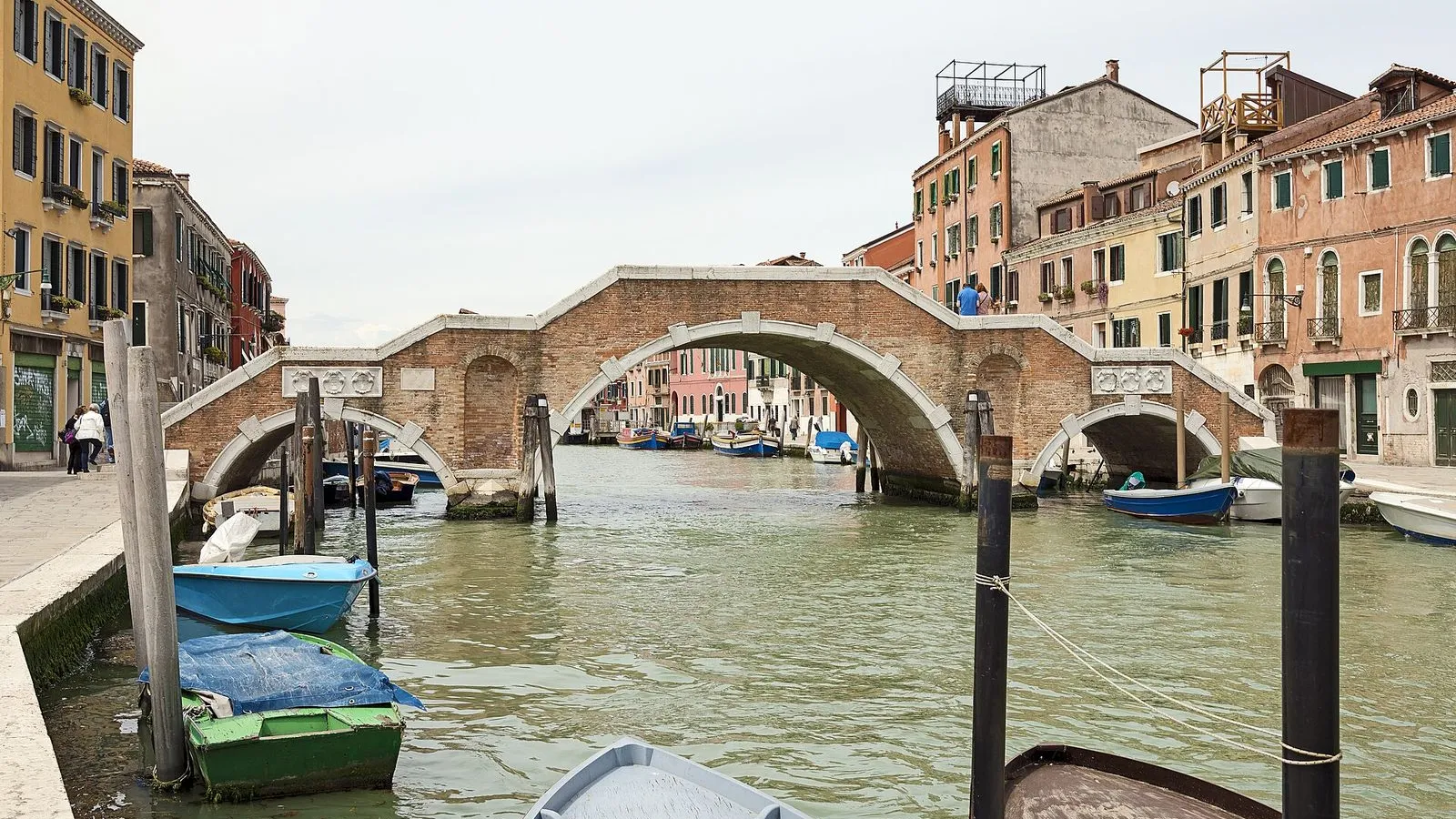
Ponte dei Tre ArchiLocal pick

Photo by Didier Descouens on Wikimedia Commons

Ponte dei Tre Archi

0:00

The only three-arched bridge left in Venice, rebuilt in 1681 over the Cannaregio Canal.

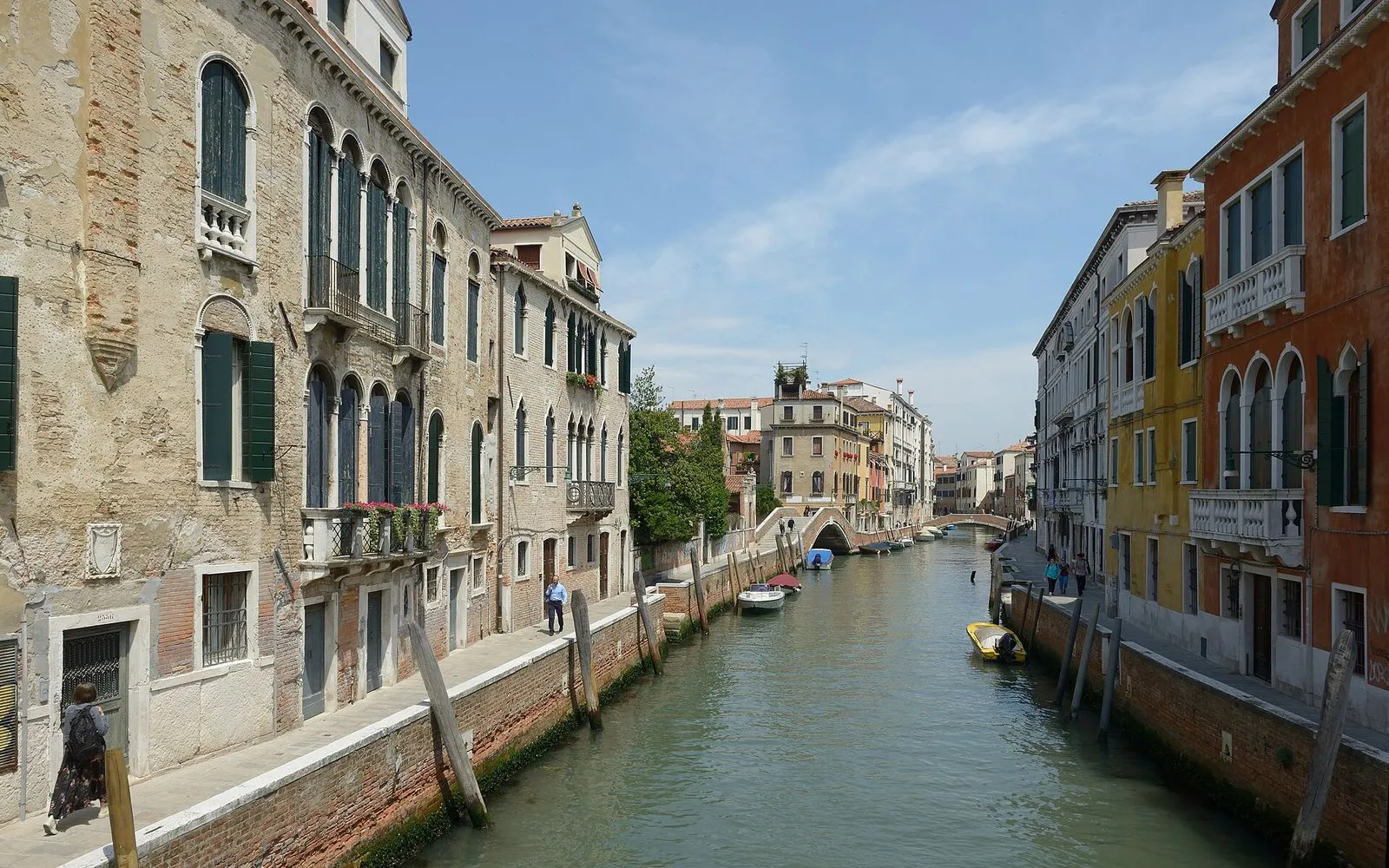
You're standing on the only three-arched bridge left in Venice. The Cannaregio Canal flows beneath you, nearly eight hundred metres of water that runs from the Grand Canal to the edge of the northern lagoon. This version of the bridge was rebuilt in 1681 to a design by Andrea Tirali, but a crossing stood here before that, close to the church of San Giobbe. Look into the arches and you can still pick out coats of arms carved in stone.

Venice once had several multi-arched bridges, and this is the only one that survives. From the centre you get the working Venice view: laundry above the water, delivery boats, and the long fondamenta that bends away toward the ghetto. The water here is tidal, so the canal level rises and falls against the brick. When you're ready, keep the canal on your left and walk north along Fondamenta di Cannaregio.

In a few minutes the street widens and the ghetto opens in front of you.
≈7 min walk to the next stop
Campo del Ghetto NuovoMust see

Photo by Wolfgang Moroder on Wikimedia Commons

Campo del Ghetto Nuovo

0:00

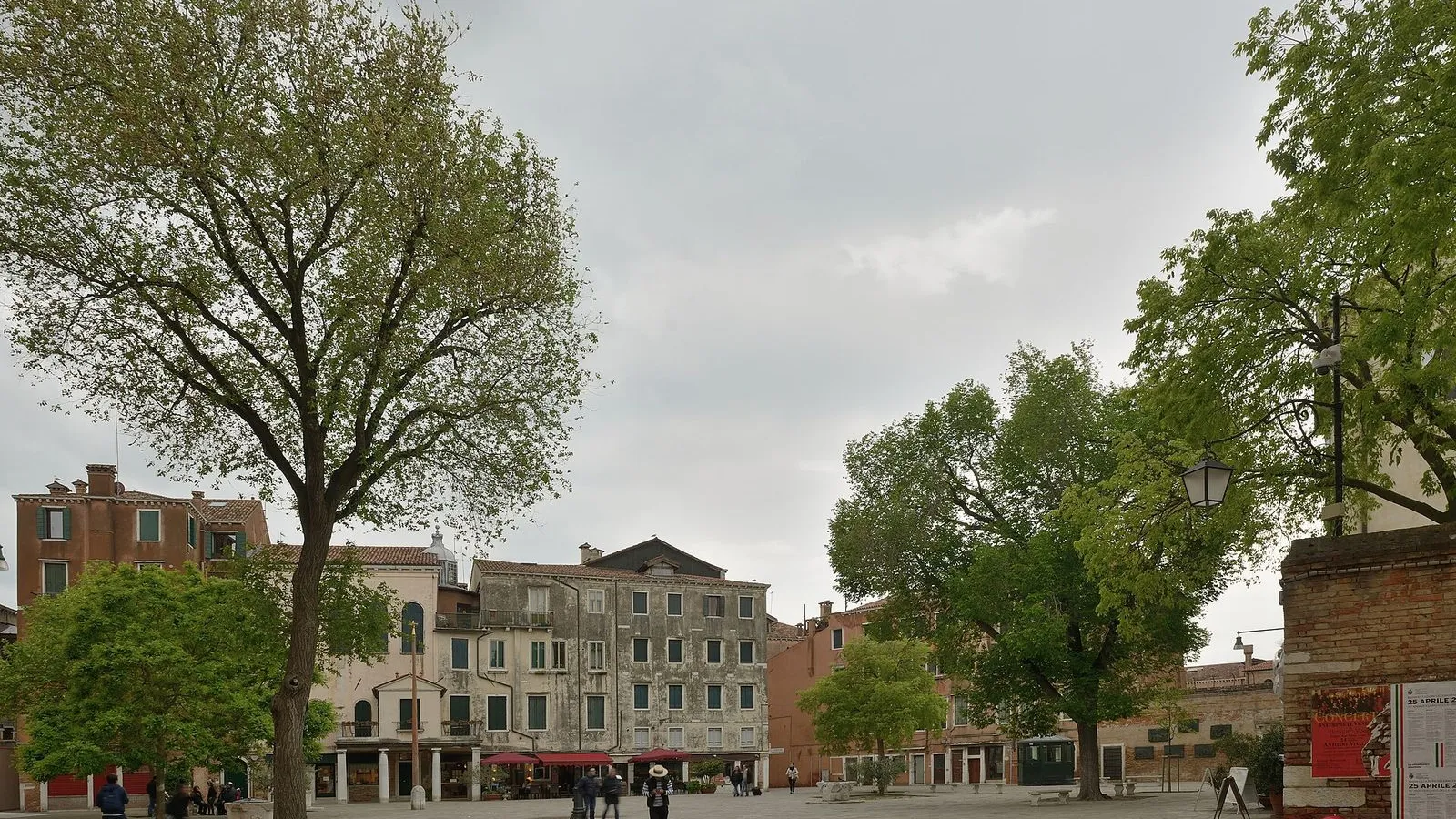
The square where Venice confined its Jews from 1516, ringed by the city's tallest houses and five hidden synagogues.

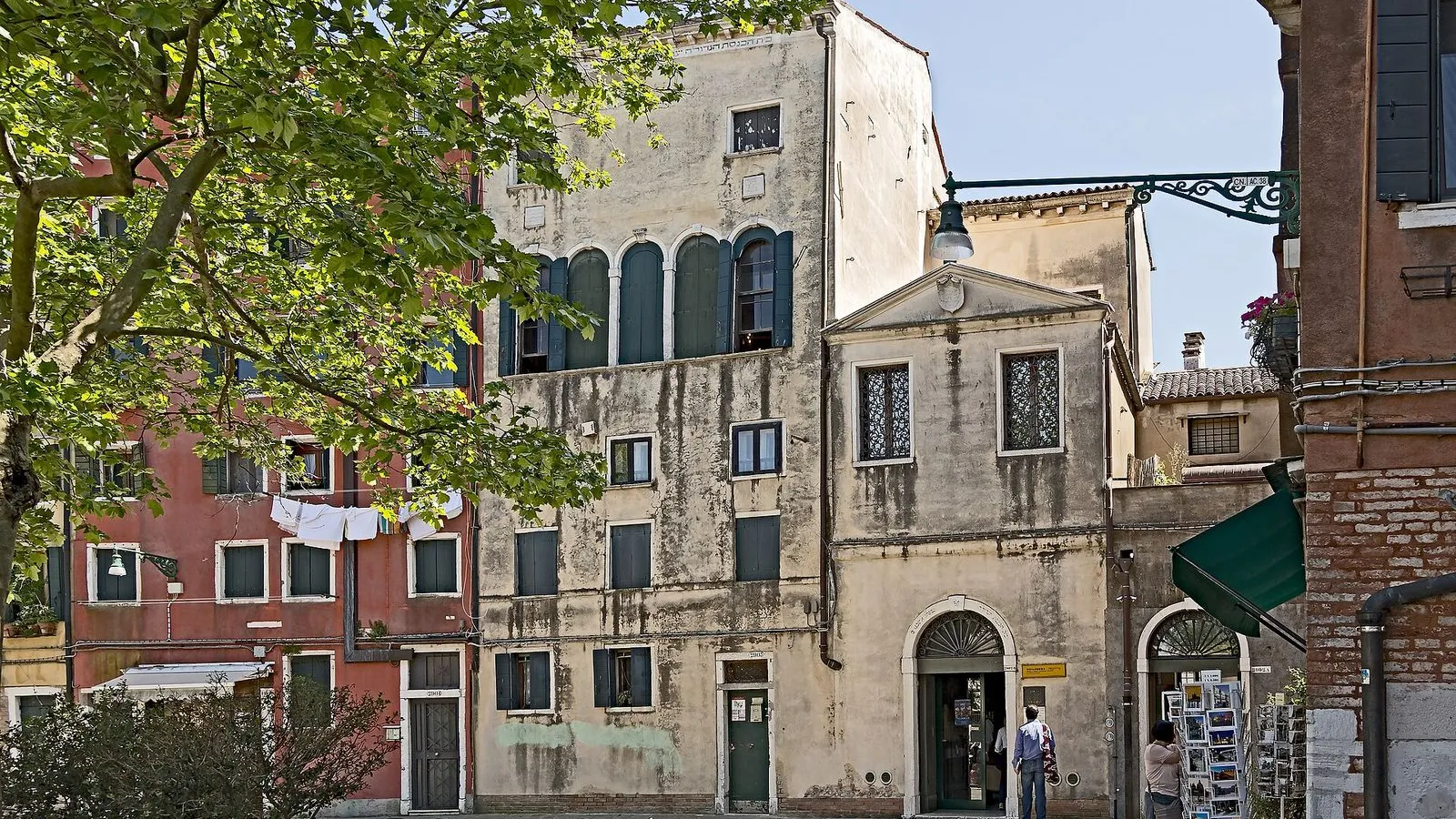
You're in Campo del Ghetto Nuovo, the square that gave the world the word ghetto. In March 1516 the Senate ordered the city's Jews to live on this one island, and the name came from geto, the Venetian word for foundry, because bronze was once cast here. The decree turned a working island into a walled quarter, its two gates opened at dawn and locked at night by Christian watchmen whose wages the Jewish community had to pay. Look up at the buildings around you.

They rise six and seven storeys, taller than almost anywhere else in Venice, because people could not spread out, only up. Five synagogues still hide on upper floors of these houses, built between the 1520s and the early 1600s by German, Italian, Spanish, and Levantine congregations. The gates came down only when Napoleon arrived in 1797. Today the campo still holds a kosher bakery, a bookshop, and the community's offices, and a few hundred Venetian Jews remain in the city.

≈1 min walk to the next stop
Museo Ebraico di VeneziaMust see

Photo by Didier Descouens on Wikimedia Commons

Museo Ebraico di Venezia

0:00

The small museum of Venetian Jewish life, and the ticket office for the ghetto's hidden synagogues.

The Jewish Museum of Venice sits at the southern edge of the campo, at Cannaregio 2902. Its small collection follows five centuries of Venetian Jewish life, from silver Hanukkah lamps and spice holders for the end of Shabbat to embroidered Torah covers and a marriage contract from 1792, though the building has been under renovation and parts of the display may still be closed. The full ticket costs twelve euros, reduced ten, with a two euro booking fee online, and admission includes an audio guide. The museum is also the only way into the synagogues hidden in the buildings around the square.

Visits run as guided tours on a rotating schedule, because two of the five still serve regular worship and the lineup changes day to day. If you go in, cover your shoulders, and men cover their heads; photography is not allowed inside the synagogues. If the museum is closed or the queue is long, you still get the point of this stop from the campo: the ghetto was dense, devout, and multilingual, and its institutions kept working here for three centuries.

≈7 min walk to the next stop
Free preview ends here · stops 4 to 6 continue in the app

Fondamenta della Misericordia

A canalside fondamenta where northern Venice gathers at bacari for cicchetti and a glass of wine.

in app

Campo dei Mori

A small square of stone figures and the doorway of Tintoretto's house.

in app

Madonna dell'Orto

Tintoretto's brick parish church, home to two vast canvases and the painter's tomb.

in app
Good to know

Before you go

Can I see the synagogues on the Cannaregio and Ghetto walk?

The five hidden synagogues are reached only on the Museo Ebraico's guided tours, so check times and book ahead. The museum closes on Saturdays and Jewish holidays, and the ghetto square is quietest first thing in the morning.

Provenance · last verified August 19, 2026

Built from the Wayside route itself: the stops, their order, and the walk between them.

Photo by אריה דרזי, ARIE DARZI on Wikimedia Commons · CC BY-SA 3.0

Photo by Didier Descouens on Wikimedia Commons · CC BY-SA 4.0

Photo by Wolfgang Moroder on Wikimedia Commons · CC BY-SA 3.0

Photo by Didier Descouens on Wikimedia Commons · CC BY-SA 4.0

Photo by Michael Heise on Unsplash

Photo by Wolfgang Moroder on Wikimedia Commons · CC BY-SA 3.0

Photo by dconvertini on Wikimedia Commons · CC BY-SA 2.0

Photo by Wolfgang Moroder on Wikimedia Commons · CC BY-SA 3.0

Photo by Vyacheslav Argenberg on Wikimedia Commons · CC BY 4.0

Coming soon

Wayside isn't in the app stores yet, but it's in the works. Check back soon.