Venice · Self-guided audio walk

Rialto Market to the Frari

Morning fish stalls and lunchtime cicchetti, then two of Venice's greatest painted rooms.

  • 6Stops
  • 1.3 kmDistance
  • 25+ minTime

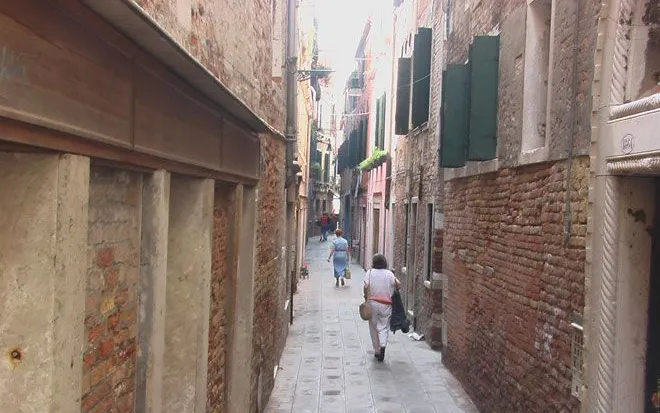
San Polo runs from the Rialto's fish and produce stalls, at their best before eleven in the morning, to two of the richest painted rooms in Venice.

This two-hour walk starts on the Rialto Bridge, dips into the Pescheria market and a five-century-old bacaro for cicchetti, then opens out into Campo San Polo before finishing before Titian's Assumption at the Frari and Tintoretto's more than fifty canvases at the Scuola Grande di San Rocco. The commercial morning and the devotional afternoon sit a short walk apart, and the quieter western streets between them tell the whole story of old Venice on foot.

Hear it on the street

Get the turn-by-turn audio guide in the app. The narration plays itself as you reach each stop, hands-free and offline.

Stop by stop

The route

Interactive map of the route. The full stop list below works without it.

Ponte di RialtoMust see

Photo by Wolfgang Moroder on Wikimedia Commons

Ponte di Rialto

0:00

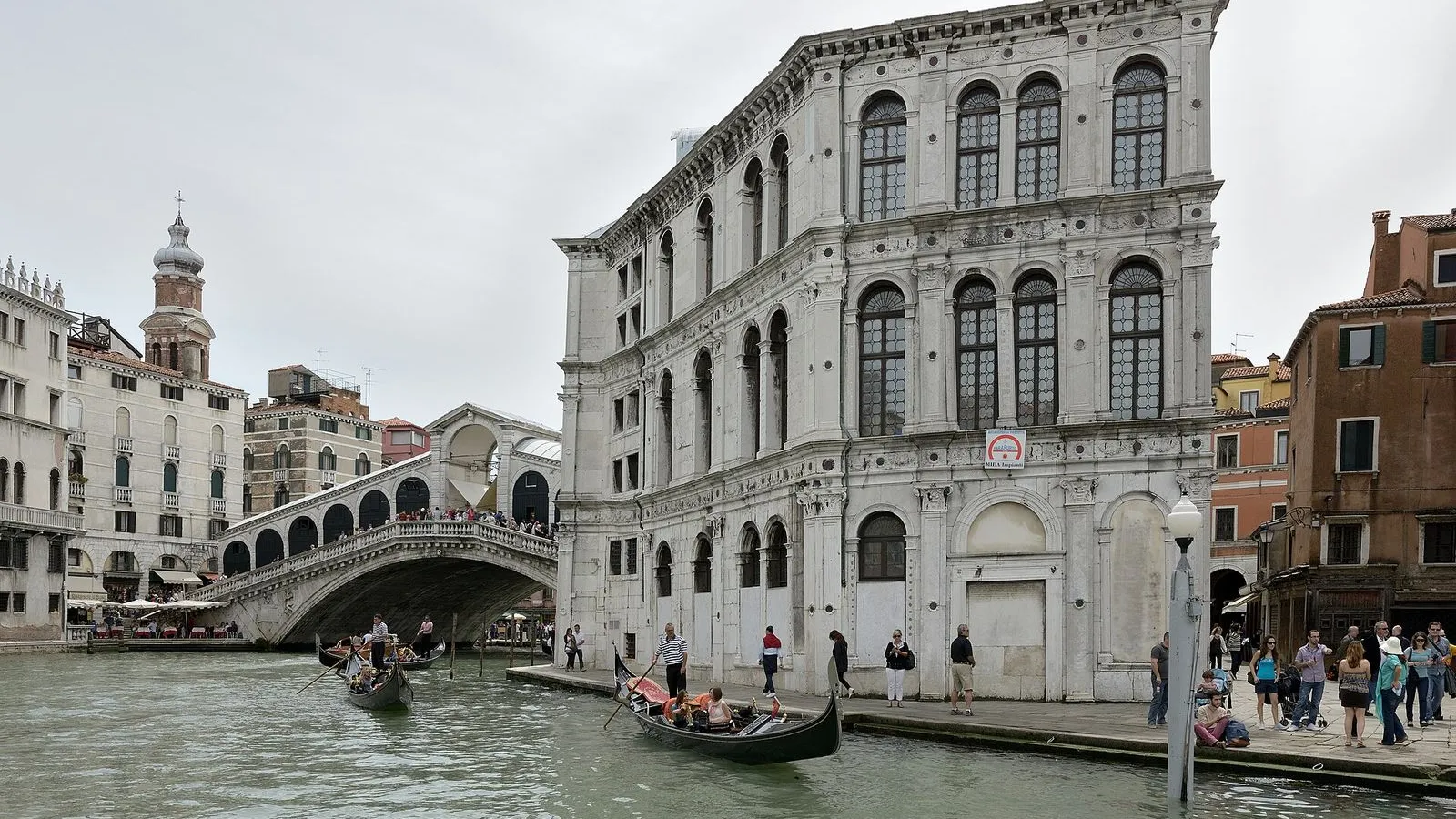
The oldest bridge across the Grand Canal, its single stone arch carrying shops and foot traffic since 1591.

You're standing on the Rialto Bridge, the oldest of the four bridges that cross the Grand Canal. The crossing began as a pontoon bridge in 1181, thrown together by Nicolò Barattieri and named the Ponte della Moneta after the mint at its eastern end. When the market on this side grew too busy for a floating bridge, Venice replaced it in 1255 with a wooden one, with a central section that could be raised to let tall ships pass. Shops were later built along its ramps, and their rents helped pay for the bridge's upkeep.

The stone bridge under your feet is the work of Antonio da Ponte, finished in 1591 after three years of building. His single arch beat proposals from Palladio, Sansovino, and Vignola, who all wanted something classical and multi-arched. Vincenzo Scamozzi predicted it would collapse. It hasn't.

Look over the water and you'll see the market starting on the San Polo bank. When you're ready, head down to the San Polo side and turn toward the fish market.
≈4 min walk to the next stop
Rialto MarketMust see

Photo by Wolfgang Moroder on Wikimedia Commons

Rialto Market

0:00

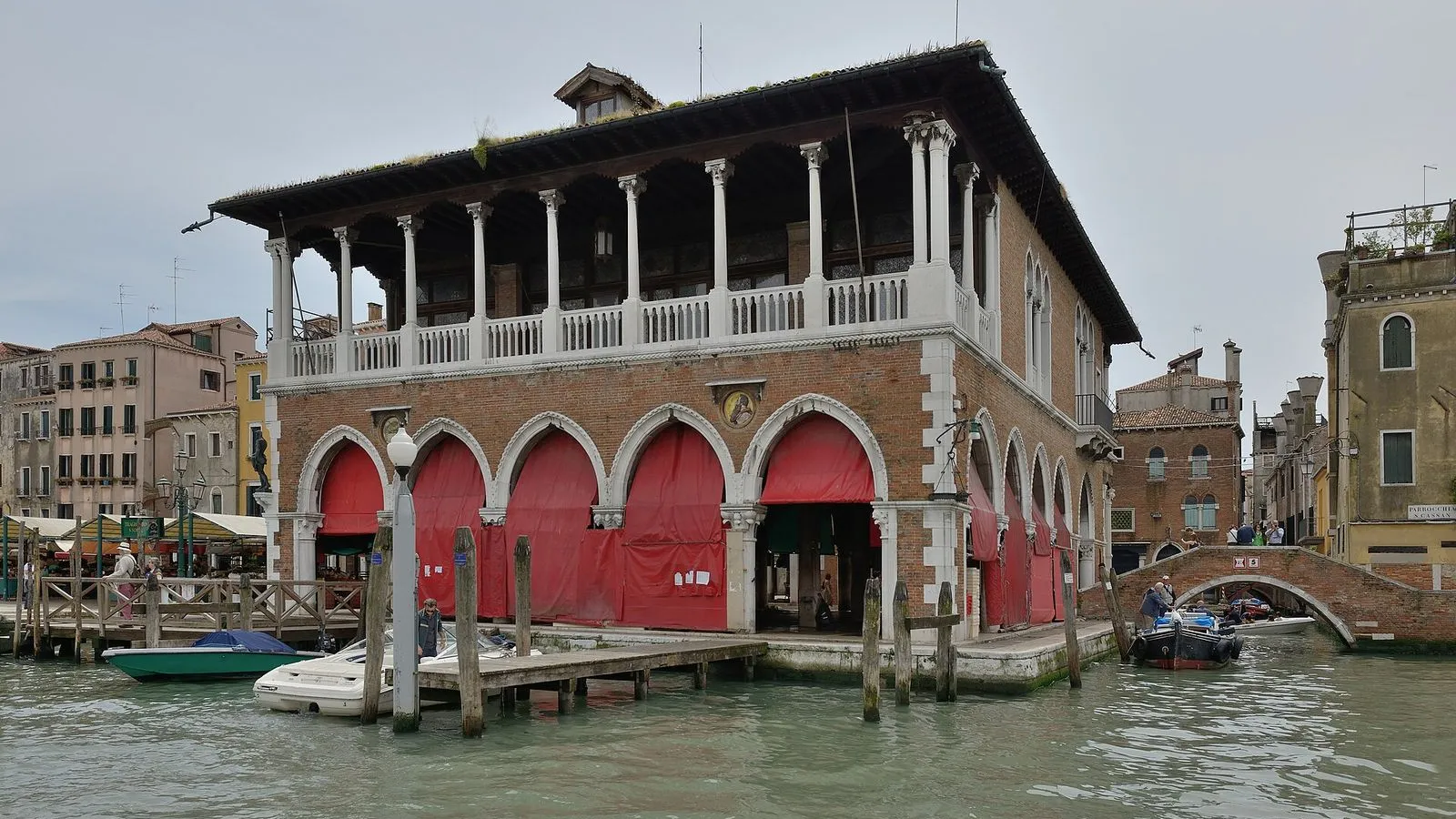
Venice's oldest market, where the Pescheria loggia and the morning fish stalls keep a nine-century rhythm.

You're in Campo de la Pescaria, the fish market of the Rialto. Venice has sold its catch here since the market settled on this high bank, the Rivoaltus, around 1097. The gothic-looking building in front of you is younger than it seems: the fish loggia went up in 1907, designed by Domenico Rupolo with the painter Cesare Laurenti. Look at the capital of the central column on the Grand Canal side.

Four carved heads watch the water, two of them portraits of those very men, and the year 1905 is cut nearby. Come before eleven, when the stallholders still shout prices and the ice beds are full of cuttlefish, squid, mullet, eels, crabs, octopus, and lobsters. Find the stone plaque on the canal side that lists minimum fish sizes, so undersized catch could be thrown back and left to breed. Just inland, the produce market, the Erberia, fills with fruit and vegetables.

Listen for the difference in sound: the fish men calling, the vegetable stalls quieter, and behind it all the water slapping the stone.

≈2 min walk to the next stop
Cantina Do SpadeLocal pick

Photo by Wolfgang Moroder on Wikimedia Commons

Cantina Do Spade

0:00

A fifteenth-century bacaro on Sword Lane for cicchetti and a glass of house wine at the counter.

This low-ceilinged bacaro has been pouring wine on Calle Do Spade since 1448, which makes it one of the oldest osterie in Venice. The name means Two Swords, and the street and the little portico outside both took their name from the sign. Step to the counter the way Venetians do, point at what looks good, and order an ombra, a small glass of wine, to go with it. The cicchetti here are the working day's lunch: fried calamari, meatballs, fried mozzarella, and the real test of any bacaro, creamed salt cod on toast.

Most of these little plates run about one euro fifty, and a glass of house wine about three euros. The back room is older than it looks; Casanova is said to have dined there, and a back door let him slip out if a jealous husband appeared. Eat standing, or take one of the benches outside if it's quiet. This is fuel for the walk, not a sit-down lunch.

When you're ready, push west into the quieter streets of San Polo.

≈6 min walk to the next stop
Free preview ends here · stops 4 to 6 continue in the app

Campo San Polo

Venice's largest campo, a wide stone living room where San Polo finally opens up.

in app

Basilica dei Frari

The Franciscans' great brick church, home to Titian's soaring Assumption and his tomb.

in app

Scuola Grande di San Rocco

Tintoretto's confraternity hall, more than fifty canvases wrapped around three rooms.

in app
Good to know

Before you go

When should I start the Rialto Market to the Frari walk?

Start before 11 to catch the Pescheria at its liveliest. The fish stalls rest on Sunday and Monday, and the Frari and San Rocco stay open into the late afternoon, so the far end of the route can wait.

Provenance · last verified August 19, 2026

Built from the Wayside route itself: the stops, their order, and the walk between them.

Photo by Michael Heise on Unsplash

Photo by Wolfgang Moroder on Wikimedia Commons · CC BY-SA 3.0

Photo by Wolfgang Moroder on Wikimedia Commons · CC BY-SA 3.0

Photo by Wolfgang Moroder on Wikimedia Commons · CC BY-SA 3.0

Photo by Wolfgang Moroder on Wikimedia Commons · CC BY-SA 3.0

Photo by dconvertini on Wikimedia Commons · CC BY-SA 2.0

Photo by Wolfgang Moroder on Wikimedia Commons · CC BY-SA 3.0

Photo by Vyacheslav Argenberg on Wikimedia Commons · CC BY 4.0

Photo by אריה דרזי, ARIE DARZI on Wikimedia Commons · CC BY-SA 3.0

Coming soon

Wayside isn't in the app stores yet, but it's in the works. Check back soon.